

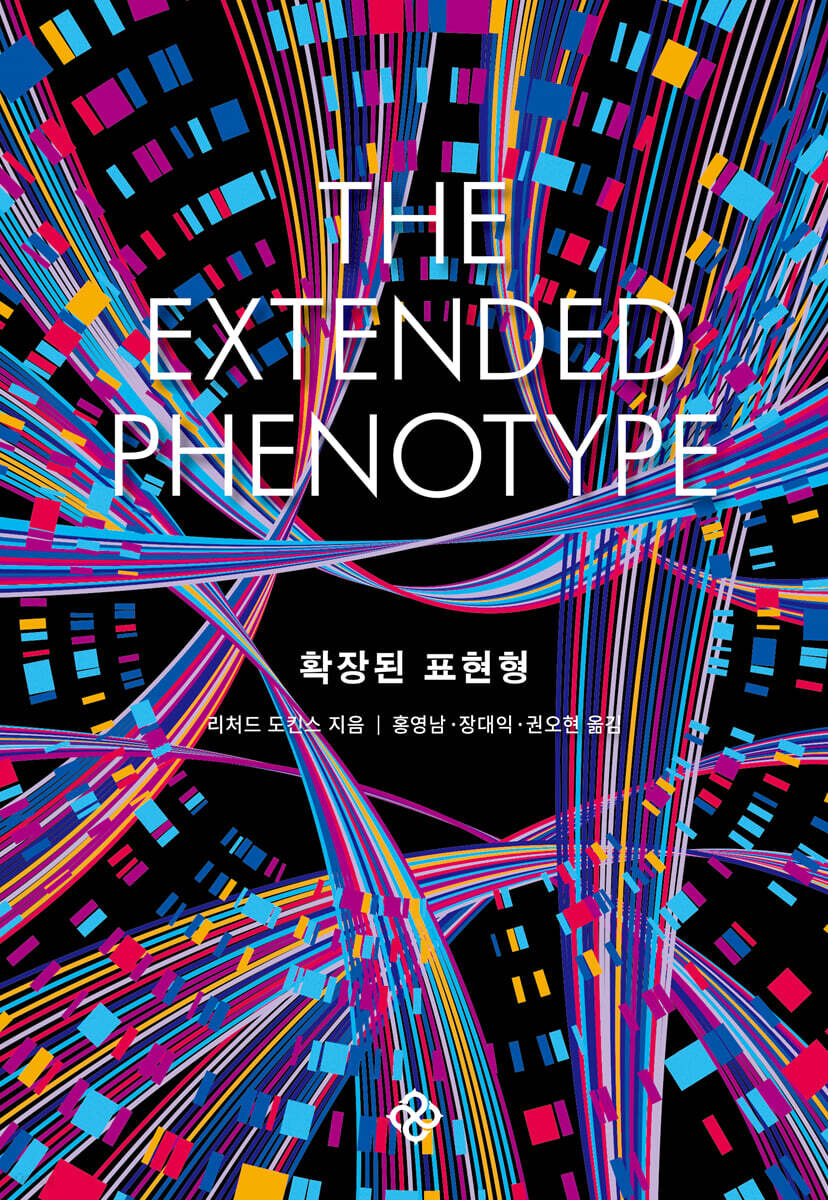
Expanded Phenotype (40th Anniversary Recover Edition)
 |
Description
Book Introduction
The Selfish Gene, Richard Dawkins' masterpiece
This book is a re-cover edition commemorating the 40th anniversary of the publication of 『The Extended Phenotype』. The format and design of the pages have been changed to match the previously published 40th anniversary edition of 『The Selfish Gene』, improving readability.
These two books are Richard Dawkins's representative works and masterpieces that fully embody his achievements as a scientist.
In particular, the author has cited "Extended Phenotypes" as his best work.
Dawkins showed his academic pride and affection by saying in the chapter “The Long Arm of the Gene” of “The Selfish Gene,” “In fact, I would recommend that you put this book down right now and read “The Extended Phenotype.”
In this book, Richard Dawkins clearly refutes the misconception that his ideas are genetic determinism.
The author argues that one reason genes are so often dismissed as a source of determinism is the confusion caused by the familiar claim that acquired traits are inherited.
Furthermore, it emphasizes that although genes passed down through generations appear at first glance to be unchanging and fixed, the phenotypic effects that genes exert on the body are by no means unchanging or fixed in nature.
Rather, it depends largely on how we were raised, what we ate, what education we received, and what other genes we possess.
Additionally, the author corrects our common misconceptions about genetics through several interesting thought experiments, such as the selection of mud used in termite mound construction and its genetic effects, and the effect of parasitic flukes on snail shells.
In addition, the book explains extended phenotypes with abundant examples and logical basis.
This clearly demonstrates how genes expand their phenotypes to influence the world, influencing not only the individual containing them but also cells and other species.
If Richard Dawkins presented a revolutionary perspective to the world with his previous work, The Selfish Gene, The Extended Phenotype is a complete work that adds depth to the author's perspective and clearly shows what he ultimately wanted to say.
This book is a re-cover edition commemorating the 40th anniversary of the publication of 『The Extended Phenotype』. The format and design of the pages have been changed to match the previously published 40th anniversary edition of 『The Selfish Gene』, improving readability.
These two books are Richard Dawkins's representative works and masterpieces that fully embody his achievements as a scientist.
In particular, the author has cited "Extended Phenotypes" as his best work.
Dawkins showed his academic pride and affection by saying in the chapter “The Long Arm of the Gene” of “The Selfish Gene,” “In fact, I would recommend that you put this book down right now and read “The Extended Phenotype.”
In this book, Richard Dawkins clearly refutes the misconception that his ideas are genetic determinism.
The author argues that one reason genes are so often dismissed as a source of determinism is the confusion caused by the familiar claim that acquired traits are inherited.
Furthermore, it emphasizes that although genes passed down through generations appear at first glance to be unchanging and fixed, the phenotypic effects that genes exert on the body are by no means unchanging or fixed in nature.
Rather, it depends largely on how we were raised, what we ate, what education we received, and what other genes we possess.
Additionally, the author corrects our common misconceptions about genetics through several interesting thought experiments, such as the selection of mud used in termite mound construction and its genetic effects, and the effect of parasitic flukes on snail shells.
In addition, the book explains extended phenotypes with abundant examples and logical basis.
This clearly demonstrates how genes expand their phenotypes to influence the world, influencing not only the individual containing them but also cells and other species.
If Richard Dawkins presented a revolutionary perspective to the world with his previous work, The Selfish Gene, The Extended Phenotype is a complete work that adds depth to the author's perspective and clearly shows what he ultimately wanted to say.
- You can preview some of the book's contents.
Preview
index
Translator's Note
introduction
Notes on Oxford Paperbacks
Chapter 1: Necker Cube and the American Bison
Chapter 2 Genetic Determinism and Genetic Selection
Chapter 3 Constraints on Perfection
Chapter 4: Arms Race and Control
Chapter 5 Active Germline Replicators
Chapter 6 Organisms, Populations, and Memes: Replicators or Carriers?
Chapter 7: Selfish Punishment or Selfish Strategy?
Chapter 8: Outlaw Genes and Change Genes
Chapter 9: Selfish DNA, Leaping Genes, and Lamarck's Fear
Chapter 10: The Suffering of the Five Kinds of Fit
Chapter 11: Genetic Evolution of Animal-Made Objects
Chapter 12: Host Phenotypes Exerted by Parasite Genes
Chapter 13 Remote Action
Chapter 14: The Rediscovery of Organisms
A review by Daniel Dennett
Glossary
References
Search
introduction
Notes on Oxford Paperbacks
Chapter 1: Necker Cube and the American Bison
Chapter 2 Genetic Determinism and Genetic Selection
Chapter 3 Constraints on Perfection
Chapter 4: Arms Race and Control
Chapter 5 Active Germline Replicators
Chapter 6 Organisms, Populations, and Memes: Replicators or Carriers?
Chapter 7: Selfish Punishment or Selfish Strategy?
Chapter 8: Outlaw Genes and Change Genes
Chapter 9: Selfish DNA, Leaping Genes, and Lamarck's Fear
Chapter 10: The Suffering of the Five Kinds of Fit
Chapter 11: Genetic Evolution of Animal-Made Objects
Chapter 12: Host Phenotypes Exerted by Parasite Genes
Chapter 13 Remote Action
Chapter 14: The Rediscovery of Organisms
A review by Daniel Dennett
Glossary
References
Search
Detailed image

Into the book
Computers and electronic 'chips' are more than capable of creating such myths because computer technology is advancing literally in the blink of an eye.
I even saw an elderly man who had been told by a reliable source that the 'chip' was taking away human functions, not only to 'drive a tractor' but also to 'make a woman pregnant'.
As we will see, genes are perhaps the source of even more serious myths than computers.
--- p.35
The world is automatically filled with germline replicators whose active phenotypic effects guarantee their successful reproduction.
These phenotypic effects are what we see as adaptations that aid survival.
If we ask who adapted to ensure their survival, the fundamental answer is neither the group nor the individual, but the replicator itself.
I previously summarized the characteristics of successful replicators as “longevity, fecundity, and fidelity”—slogans reminiscent of the French Revolution.
--- p.153
Just as every gene is the center of a sphere of influence that spreads throughout the world, every phenotypic trait is the convergence of the influences of countless genes, both within and outside the individual's body. The entire biosphere, the entire animal and plant world, seemingly related to the BBC theorem, intersects with an intricate network of genetic spheres of influence and a web of phenotypic power.
I seem to hear the following television commentary:
“Imagine shrinking down to the size of a mitochondrion and placing it outside the nuclear envelope in a human zygote, in a convenient location for observation.
We see millions of messenger RNA molecules streaming into the cytoplasm with the mission of phenotypic expression.
Now let's get into the leg buds that grow in the chick embryo as cells grow.
“Feel the chemical derivatives floating down the axial slope at a gentle slope!”
I even saw an elderly man who had been told by a reliable source that the 'chip' was taking away human functions, not only to 'drive a tractor' but also to 'make a woman pregnant'.
As we will see, genes are perhaps the source of even more serious myths than computers.
--- p.35
The world is automatically filled with germline replicators whose active phenotypic effects guarantee their successful reproduction.
These phenotypic effects are what we see as adaptations that aid survival.
If we ask who adapted to ensure their survival, the fundamental answer is neither the group nor the individual, but the replicator itself.
I previously summarized the characteristics of successful replicators as “longevity, fecundity, and fidelity”—slogans reminiscent of the French Revolution.
--- p.153
Just as every gene is the center of a sphere of influence that spreads throughout the world, every phenotypic trait is the convergence of the influences of countless genes, both within and outside the individual's body. The entire biosphere, the entire animal and plant world, seemingly related to the BBC theorem, intersects with an intricate network of genetic spheres of influence and a web of phenotypic power.
I seem to hear the following television commentary:
“Imagine shrinking down to the size of a mitochondrion and placing it outside the nuclear envelope in a human zygote, in a convenient location for observation.
We see millions of messenger RNA molecules streaming into the cytoplasm with the mission of phenotypic expression.
Now let's get into the leg buds that grow in the chick embryo as cells grow.
“Feel the chemical derivatives floating down the axial slope at a gentle slope!”
--- pp.394~395
Publisher's Review
A new paradigm with a sharp perspective
The idea that genes can break free from the cell membrane that surrounds them and express their phenotype externally is somewhat revolutionary and at first glance difficult to understand.
However, the author persistently explains his argument through various cases and friendly examples.
As the author pointed out in the introduction, this book is primarily intended for specialists in the field, but even the general public can enjoy it.
This is why Richard Dawkins included a separate dictionary of terms that are unnecessary for experts at the end of the book.
Additionally, the translator's notes are added at the bottom of the text to help readers understand content that may be unfamiliar or difficult to understand.
This helps readers who want to delve deeper into Dawkins' world, explore the humanities implications of modern evolutionary biology, or understand the meaning of "The Selfish Gene" more clearly understand the contents of this book.
Richard Dawkins begins his story in Chapter 1 with the Necker Cube analogy.
The Necker cube is a perspective drawing of a cube in which, if you look at a vertex that protrudes toward the observer, the other vertex suddenly appears to be flipped over and protruding.
The author points out that when viewed from a genetic perspective, many aspects of nature can appear as entirely new aspects, different from what was previously known.
This allows readers to see how genes within the body extend their phenotype far beyond the body, even reaching deep into the nervous systems of other organisms.
In this way, this book allows us to experience a new perspective and paradigm shift that is no less than that of The Selfish Gene.
"The Extended Phenotype" is a testament to why Richard Dawkins is still regarded today as an outstanding science writer and scholar with a revolutionary perspective, and is a masterpiece of the century.
The idea that genes can break free from the cell membrane that surrounds them and express their phenotype externally is somewhat revolutionary and at first glance difficult to understand.
However, the author persistently explains his argument through various cases and friendly examples.
As the author pointed out in the introduction, this book is primarily intended for specialists in the field, but even the general public can enjoy it.
This is why Richard Dawkins included a separate dictionary of terms that are unnecessary for experts at the end of the book.
Additionally, the translator's notes are added at the bottom of the text to help readers understand content that may be unfamiliar or difficult to understand.
This helps readers who want to delve deeper into Dawkins' world, explore the humanities implications of modern evolutionary biology, or understand the meaning of "The Selfish Gene" more clearly understand the contents of this book.
Richard Dawkins begins his story in Chapter 1 with the Necker Cube analogy.
The Necker cube is a perspective drawing of a cube in which, if you look at a vertex that protrudes toward the observer, the other vertex suddenly appears to be flipped over and protruding.
The author points out that when viewed from a genetic perspective, many aspects of nature can appear as entirely new aspects, different from what was previously known.
This allows readers to see how genes within the body extend their phenotype far beyond the body, even reaching deep into the nervous systems of other organisms.
In this way, this book allows us to experience a new perspective and paradigm shift that is no less than that of The Selfish Gene.
"The Extended Phenotype" is a testament to why Richard Dawkins is still regarded today as an outstanding science writer and scholar with a revolutionary perspective, and is a masterpiece of the century.
GOODS SPECIFICS
- Publication date: October 30, 2022
- Page count, weight, size: 488 pages | 642g | 145*210*28mm
- ISBN13: 9788932474793
- ISBN10: 8932474796
You may also like
카테고리
korean


korean

![GQ KOREA Mark (Monthly): December [2025]](http://librairie.coreenne.fr/cdn/shop/files/8ef265dbbfbf186523ed75ba7319009d.jpg?v=1765340328&width=3840)


