

Lee Jung-seob, that person
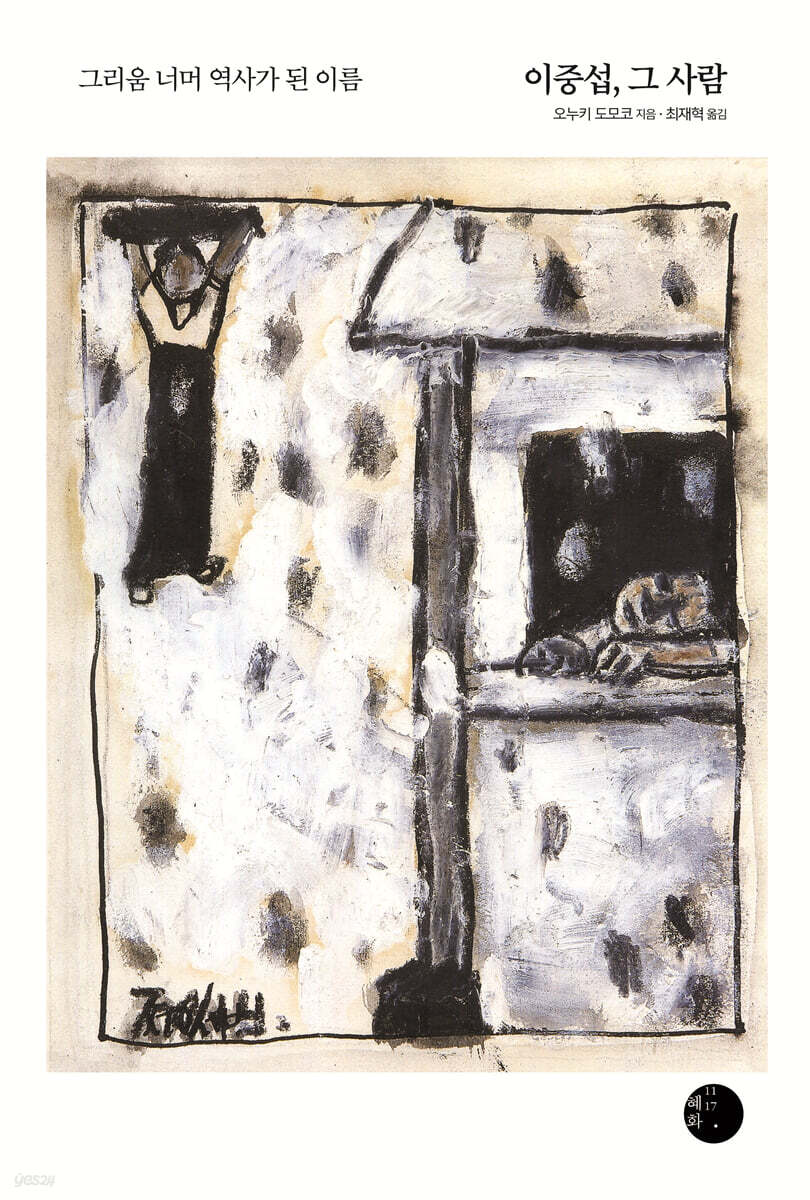 |
Description
Book Introduction
The first book about Lee Jung-seob published in Japan,
Back again and published in Korea
The National Museum of Modern and Contemporary Art's exhibition "Lee Jung-seob, A Century-Old Myth" held in 2016 to commemorate the 100th anniversary of the birth of painter Lee Jung-seob caused such a stir that long lines of visitors formed to get in.
This exhibition, which drew a huge crowd, served as a clear example of the extent of public interest in the artist Lee Jung-seob in Korea.
Among the many people who saw the exhibition at that time was reporter Tomoko Onuki, who was in Seoul as a correspondent for the Mainichi Shimbun in Japan.
Through that exhibition, reporter Tomoko Onuki first learned about Lee Jung-seop, often called the national painter and always considered the most beloved painter by Koreans, and continued to report on Lee Jung-seop's life and footsteps as an artist for about seven years.
The result of this accumulated research was selected for the 2020 Shogakukan Nonfiction Award, one of Japan's top three publishers, and was published in 2021 as Japan's first biography of Lee Jung-seop.
And this book was translated and published in Korea, the country of Lee Jung-seop, in 2023.
In other words, the book that was first published in Japan after meeting Lee Jung-seob in Korea in 2016 has returned to Korea and is now being presented to Korean readers.
Back again and published in Korea
The National Museum of Modern and Contemporary Art's exhibition "Lee Jung-seob, A Century-Old Myth" held in 2016 to commemorate the 100th anniversary of the birth of painter Lee Jung-seob caused such a stir that long lines of visitors formed to get in.
This exhibition, which drew a huge crowd, served as a clear example of the extent of public interest in the artist Lee Jung-seob in Korea.
Among the many people who saw the exhibition at that time was reporter Tomoko Onuki, who was in Seoul as a correspondent for the Mainichi Shimbun in Japan.
Through that exhibition, reporter Tomoko Onuki first learned about Lee Jung-seop, often called the national painter and always considered the most beloved painter by Koreans, and continued to report on Lee Jung-seop's life and footsteps as an artist for about seven years.
The result of this accumulated research was selected for the 2020 Shogakukan Nonfiction Award, one of Japan's top three publishers, and was published in 2021 as Japan's first biography of Lee Jung-seop.
And this book was translated and published in Korea, the country of Lee Jung-seop, in 2023.
In other words, the book that was first published in Japan after meeting Lee Jung-seob in Korea in 2016 has returned to Korea and is now being presented to Korean readers.
- You can preview some of the book's contents.
Preview
index
― That person, Lee Jung-seop's world of paintings
― To Korean readers
prolog
Chapter 1 Agori
Chapter 2: Going through the war
Chapter 3 South
Chapter 4 Displaced Persons
Chapter 5 I'll be back
Chapter 6 Letter
Chapter 7 The End
Chapter 8: The Sewing Machine on the Veranda
Epilogue
supplement
― Translator's Note
― Key chronologies of Lee Jung-seop and Yamamoto Masako
― References
― To Korean readers
prolog
Chapter 1 Agori
Chapter 2: Going through the war
Chapter 3 South
Chapter 4 Displaced Persons
Chapter 5 I'll be back
Chapter 6 Letter
Chapter 7 The End
Chapter 8: The Sewing Machine on the Veranda
Epilogue
supplement
― Translator's Note
― Key chronologies of Lee Jung-seop and Yamamoto Masako
― References
Publisher's Review
Following in the footsteps of Lee Jung-seop, I covered Seoul, Tokyo, Jeju, Tongyeong, and Busan.
The result of a Japanese journalist's persistent investigation,
Contains the previously unheard voice of Masako Yamamoto.
To us, Lee Jung-seob is a genius artist, but also the protagonist of a tragic life that can be summarized as the Korean War, refugees, separation from family, and early death.
After his death in 1956, he became a part of our history long ago, but there were still people who missed him for a long time, nearly 70 years after his passing.
This is his wife, Masako Yamamoto, whose Korean name is Namdeok Lee.
We thought we knew enough about Lee Jung-seob to consider him a national painter, but perhaps the Lee Jung-seob we know is only a cross-section of what we see from 'our' perspective.
The author of this book, Tomoko Onuki, personally visited Seoul, Jeju, Busan, and Tongyeong, where Lee Jung-seop lived, while researching Lee Jung-seop.
His Korean, which he started learning in 2011, is so fluent that he doesn't even realize he learned a foreign language as an adult, and he has no difficulty reading or writing.
Based on this Korean language ability, I interviewed people who remembered Lee Jung-seob in Korea, scholars studying the era, and experts in history and politics from all walks of life, and I studied all kinds of literature, including newspaper articles and magazines, to get closer to the full story of Lee Jung-seob's life.
Furthermore, as a Japanese person, it includes various Japanese materials that recorded the same era as well as interviews with experts who remember that era.
His struggles don't stop there.
Through an in-depth interview with Lee Jung-seob's wife, Masako Yamamoto, the only person who knew him better than anyone else, or who must have missed him the most, and through unpublished letters kept by her and her family, the author has presented to Korean readers a side of Lee Jung-seob that we had not known before.
Through this book, which is based on the author's persistent and intense research, Lee Jung-seob appears in a new light, with a more three-dimensional, vivid, and human face than Korean readers had previously known.
Through the unpublished letters owned by Yamamoto Masako's family, the contents of which are first introduced in this book, we can deeply feel his worries, conflicts, and frustrations. Another meaningful scene discovered through this book is that we can thoroughly look into the hearts and efforts of the Korean cultural and artistic figures surrounding Lee Jung-seop's family for their well-being.
And above all, through Yamamoto Masako's memories, it brings back the image of Lee Jung-seob in his youth and his daily life as he endured loneliness after being separated from his family, making us face heartbreakingly how the tragedy of the times changed the lives of two people.
A protagonist in a myth, free from the title of Korea's national painter
The emergence of a completely new biography that simply guides us through the human Lee Jung-seop.
The life story of Lee Jung-seob and his wife, delivered to both Korean and Japanese readers.
This book was published in Japan at a time when free travel between Korea and Japan was difficult due to COVID-19.
As borders that could be crossed at any time closed, unexpected separations became a common experience for everyone.
That's how the breakup between Lee Jung-seop and Yamamoto Masako began.
The hometown that he had temporarily left to escape the war had become a place he could never return to, and the family that had decided to stay away for a while to escape the hardships of life and illness had to be separated.
Unlike Korean readers, who often regard the name Lee Jung-seop as a myth, the name Lee Jung-seop was unfamiliar to Japanese readers.
For Japanese readers, Lee Jung-seob's life was conveyed with a different intensity than for Korean readers, due to the indefinite closure of borders caused by COVID-19.
Many Japanese readers expressed deep sympathy for the unfortunate lives of Japanese women and their children who married Korean men and were forced to live separated from their husbands and fathers for the rest of their lives, never to see them again. This sympathy served as a foundation for their interest in the painter Lee Jung-seop.
The author of this book, which became the first to introduce Lee Jung-seob to Japanese readers, writes about Lee Jung-seob as a human being, not as a mythical protagonist, based on his professional attitude as a journalist.
In this way, we have acquired an entirely new biography that guides us solely to Lee Jung-seob as a human being, rather than as a narrative protagonist that first discusses the meaning and world of art or focuses on the tragic situation of separation from family. Furthermore, through the lives of Yamamoto Masako, an important figure in his life, and her sons, we are able to directly encounter the very specific lives and life stories of the family hidden behind the name Lee Jung-seob.
The time we spent together as a couple was about 7 years,
Lee Jung-seop's wife, who lived alone for nearly 70 years after his death
Two books co-published by Korean and Japanese authors to mark the first anniversary of Yamamoto Masako's death.
Lee Jung-seob, who passed away on September 6, 1956, has long been a legend and a history.
But to one person, his wife, whose Korean name is Lee Nam-deok and Japanese name is Yamamoto Masako, he was still a name that was longed for in the present tense.
The couple, who married in 1945 but separated in 1952 due to the hardships of war, poverty, and illness, lived together as a couple for only about seven years.
And for nearly 70 years after Lee Jung-seob passed away, which we consider history, Yamamoto Masako lived alone, cherishing her husband in her heart.
She passed away on August 13, 2022, and their lives were finally recorded in history.
As a Japanese journalist, 『Lee Jung-seop, That Person』, which covers the life of Korean artist Lee Jung-seop, was published alongside 『Lee Jung-seop, Letter Painting』, a book by art historian Choi Yeol, a leading researcher on Lee Jung-seop in Korea.
The author of 『Lee Jung-seop, That Person』, Tomoko Onuki, served as a guide during the writing process of the book, and it is the unique book about Lee Jung-seop, 『Biography of Lee Jung-seop』, published by Choi Yeol in 2014, that shows that the relationship between the two authors, one from Korea and one from Japan, is not ordinary.
In addition, Choi Jae-hyeok, who translated this book into Korean, is a researcher of modern Korean art history, and the editor in charge of this book was also in charge of Choi Yeol's book, "Biography of Lee Jung-seop," published in 2014. Therefore, it is no exaggeration to say that reporter Tomoko Onuki's "Lee Jung-seop, That Person" is the result of layers of connections that have developed under the name of Lee Jung-seop.
Additionally, while the Korean edition of this book was being prepared, Ms. Masako Yamamoto passed away, and to commemorate the first anniversary of her death, two authors from Korea and Japan, the countries of Lee Jung-seop and Masako Yamamoto, published the book together, which is particularly significant.
In other words, thanks to the two authors who have long delved into the life of the artist Lee Jung-seop in Korea and Japan, Lee Jung-seop and Lee Nam-deok, who had not met since their separation in 1953, are now standing side by side before readers, if only through a book. That is precisely the significance of publishing this book to coincide with the first anniversary of the death of Ms. Masako Yamamoto.
Meetings with readers held in Seoul and Jeju before and after publication,
Lee Jung-seob, the man we encounter through that time, his life and art
To coincide with the book's publication, a time has already been set aside to look back on the lives of Lee Jung-seop and Yamamoto Masako.
Tomoko Onuki, author of “Lee Jung-seop, That Person,” will be visiting Korea on August 10th for a meeting with readers hosted by the Jongno Cultural Foundation (7:30 PM, Cheongun Literature Library). A week later, on August 17th, a meeting with readers by Choi Yeol, author of “Lee Jung-seop, Letter Painting,” is scheduled for the same location.
Next, around September 6th, the anniversary of the death of artist Lee Jung-seop, lectures by Tomoko Onuki and Choi Yeol will be held sequentially in libraries and bookstores in Seoul and Jeju.
The two books being published simultaneously provide a special opportunity to encounter Lee Jung-seob's life from a new perspective never seen before.
The result of a Japanese journalist's persistent investigation,
Contains the previously unheard voice of Masako Yamamoto.
To us, Lee Jung-seob is a genius artist, but also the protagonist of a tragic life that can be summarized as the Korean War, refugees, separation from family, and early death.
After his death in 1956, he became a part of our history long ago, but there were still people who missed him for a long time, nearly 70 years after his passing.
This is his wife, Masako Yamamoto, whose Korean name is Namdeok Lee.
We thought we knew enough about Lee Jung-seob to consider him a national painter, but perhaps the Lee Jung-seob we know is only a cross-section of what we see from 'our' perspective.
The author of this book, Tomoko Onuki, personally visited Seoul, Jeju, Busan, and Tongyeong, where Lee Jung-seop lived, while researching Lee Jung-seop.
His Korean, which he started learning in 2011, is so fluent that he doesn't even realize he learned a foreign language as an adult, and he has no difficulty reading or writing.
Based on this Korean language ability, I interviewed people who remembered Lee Jung-seob in Korea, scholars studying the era, and experts in history and politics from all walks of life, and I studied all kinds of literature, including newspaper articles and magazines, to get closer to the full story of Lee Jung-seob's life.
Furthermore, as a Japanese person, it includes various Japanese materials that recorded the same era as well as interviews with experts who remember that era.
His struggles don't stop there.
Through an in-depth interview with Lee Jung-seob's wife, Masako Yamamoto, the only person who knew him better than anyone else, or who must have missed him the most, and through unpublished letters kept by her and her family, the author has presented to Korean readers a side of Lee Jung-seob that we had not known before.
Through this book, which is based on the author's persistent and intense research, Lee Jung-seob appears in a new light, with a more three-dimensional, vivid, and human face than Korean readers had previously known.
Through the unpublished letters owned by Yamamoto Masako's family, the contents of which are first introduced in this book, we can deeply feel his worries, conflicts, and frustrations. Another meaningful scene discovered through this book is that we can thoroughly look into the hearts and efforts of the Korean cultural and artistic figures surrounding Lee Jung-seop's family for their well-being.
And above all, through Yamamoto Masako's memories, it brings back the image of Lee Jung-seob in his youth and his daily life as he endured loneliness after being separated from his family, making us face heartbreakingly how the tragedy of the times changed the lives of two people.
A protagonist in a myth, free from the title of Korea's national painter
The emergence of a completely new biography that simply guides us through the human Lee Jung-seop.
The life story of Lee Jung-seob and his wife, delivered to both Korean and Japanese readers.
This book was published in Japan at a time when free travel between Korea and Japan was difficult due to COVID-19.
As borders that could be crossed at any time closed, unexpected separations became a common experience for everyone.
That's how the breakup between Lee Jung-seop and Yamamoto Masako began.
The hometown that he had temporarily left to escape the war had become a place he could never return to, and the family that had decided to stay away for a while to escape the hardships of life and illness had to be separated.
Unlike Korean readers, who often regard the name Lee Jung-seop as a myth, the name Lee Jung-seop was unfamiliar to Japanese readers.
For Japanese readers, Lee Jung-seob's life was conveyed with a different intensity than for Korean readers, due to the indefinite closure of borders caused by COVID-19.
Many Japanese readers expressed deep sympathy for the unfortunate lives of Japanese women and their children who married Korean men and were forced to live separated from their husbands and fathers for the rest of their lives, never to see them again. This sympathy served as a foundation for their interest in the painter Lee Jung-seop.
The author of this book, which became the first to introduce Lee Jung-seob to Japanese readers, writes about Lee Jung-seob as a human being, not as a mythical protagonist, based on his professional attitude as a journalist.
In this way, we have acquired an entirely new biography that guides us solely to Lee Jung-seob as a human being, rather than as a narrative protagonist that first discusses the meaning and world of art or focuses on the tragic situation of separation from family. Furthermore, through the lives of Yamamoto Masako, an important figure in his life, and her sons, we are able to directly encounter the very specific lives and life stories of the family hidden behind the name Lee Jung-seob.
The time we spent together as a couple was about 7 years,
Lee Jung-seop's wife, who lived alone for nearly 70 years after his death
Two books co-published by Korean and Japanese authors to mark the first anniversary of Yamamoto Masako's death.
Lee Jung-seob, who passed away on September 6, 1956, has long been a legend and a history.
But to one person, his wife, whose Korean name is Lee Nam-deok and Japanese name is Yamamoto Masako, he was still a name that was longed for in the present tense.
The couple, who married in 1945 but separated in 1952 due to the hardships of war, poverty, and illness, lived together as a couple for only about seven years.
And for nearly 70 years after Lee Jung-seob passed away, which we consider history, Yamamoto Masako lived alone, cherishing her husband in her heart.
She passed away on August 13, 2022, and their lives were finally recorded in history.
As a Japanese journalist, 『Lee Jung-seop, That Person』, which covers the life of Korean artist Lee Jung-seop, was published alongside 『Lee Jung-seop, Letter Painting』, a book by art historian Choi Yeol, a leading researcher on Lee Jung-seop in Korea.
The author of 『Lee Jung-seop, That Person』, Tomoko Onuki, served as a guide during the writing process of the book, and it is the unique book about Lee Jung-seop, 『Biography of Lee Jung-seop』, published by Choi Yeol in 2014, that shows that the relationship between the two authors, one from Korea and one from Japan, is not ordinary.
In addition, Choi Jae-hyeok, who translated this book into Korean, is a researcher of modern Korean art history, and the editor in charge of this book was also in charge of Choi Yeol's book, "Biography of Lee Jung-seop," published in 2014. Therefore, it is no exaggeration to say that reporter Tomoko Onuki's "Lee Jung-seop, That Person" is the result of layers of connections that have developed under the name of Lee Jung-seop.
Additionally, while the Korean edition of this book was being prepared, Ms. Masako Yamamoto passed away, and to commemorate the first anniversary of her death, two authors from Korea and Japan, the countries of Lee Jung-seop and Masako Yamamoto, published the book together, which is particularly significant.
In other words, thanks to the two authors who have long delved into the life of the artist Lee Jung-seop in Korea and Japan, Lee Jung-seop and Lee Nam-deok, who had not met since their separation in 1953, are now standing side by side before readers, if only through a book. That is precisely the significance of publishing this book to coincide with the first anniversary of the death of Ms. Masako Yamamoto.
Meetings with readers held in Seoul and Jeju before and after publication,
Lee Jung-seob, the man we encounter through that time, his life and art
To coincide with the book's publication, a time has already been set aside to look back on the lives of Lee Jung-seop and Yamamoto Masako.
Tomoko Onuki, author of “Lee Jung-seop, That Person,” will be visiting Korea on August 10th for a meeting with readers hosted by the Jongno Cultural Foundation (7:30 PM, Cheongun Literature Library). A week later, on August 17th, a meeting with readers by Choi Yeol, author of “Lee Jung-seop, Letter Painting,” is scheduled for the same location.
Next, around September 6th, the anniversary of the death of artist Lee Jung-seop, lectures by Tomoko Onuki and Choi Yeol will be held sequentially in libraries and bookstores in Seoul and Jeju.
The two books being published simultaneously provide a special opportunity to encounter Lee Jung-seob's life from a new perspective never seen before.
GOODS SPECIFICS
- Date of issue: August 13, 2023
- Page count, weight, size: 380 pages | 530g | 152*225*20mm
- ISBN13: 9791191133127
- ISBN10: 1191133125
You may also like
카테고리
korean


korean

![GQ KOREA Mark (Monthly): December [2025]](http://librairie.coreenne.fr/cdn/shop/files/8ef265dbbfbf186523ed75ba7319009d.jpg?v=1765340328&width=3840)


