

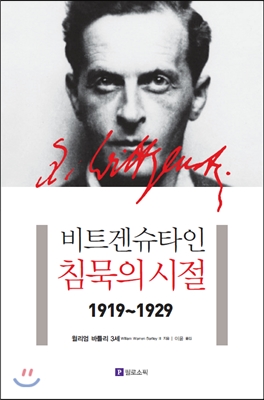
Wittgenstein, The Silent Years
 |
Description
Book Introduction
The most 'notorious' biography of Wittgenstein
This book traces Wittgenstein's life over the ten years following 1919, when he completed the Tractatus Logico-Philosophicus and is known to have 'left philosophy'.
While researching Austrian intellectuals such as Karl Popper and Hayek, the author happened to come across material from 1919 to 1929, the period known as the "dark decade" in Wittgenstein's life.
And as I researched the material about Wittgenstein's time as an elementary school teacher in an Austrian mountain village, I found that parts that had until then been disjointed and inexplicable gradually began to make sense and fall into place.
The author argues that this 'silent period' and 'lost time' is an important period that sheds light on understanding Wittgenstein's philosophy.
According to him, after the publication of the Tractatus, Wittgenstein never abandoned philosophy, but rather began to formalize the concerns that dominated his later philosophy, which appear in the Investigations.
In particular, it caused a huge sensation in the Western philosophical world and intellectual society by being the first to expose Wittgenstein's homosexuality, and the author suffered even the disgrace of being expelled from the academic society.
This book traces Wittgenstein's life over the ten years following 1919, when he completed the Tractatus Logico-Philosophicus and is known to have 'left philosophy'.
While researching Austrian intellectuals such as Karl Popper and Hayek, the author happened to come across material from 1919 to 1929, the period known as the "dark decade" in Wittgenstein's life.
And as I researched the material about Wittgenstein's time as an elementary school teacher in an Austrian mountain village, I found that parts that had until then been disjointed and inexplicable gradually began to make sense and fall into place.
The author argues that this 'silent period' and 'lost time' is an important period that sheds light on understanding Wittgenstein's philosophy.
According to him, after the publication of the Tractatus, Wittgenstein never abandoned philosophy, but rather began to formalize the concerns that dominated his later philosophy, which appear in the Investigations.
In particular, it caused a huge sensation in the Western philosophical world and intellectual society by being the first to expose Wittgenstein's homosexuality, and the author suffered even the disgrace of being expelled from the academic society.
- You can preview some of the book's contents.
Preview
index
Foreword (Walter Kaufman)
Preface to the 1985 revised edition
preface
1.
magic carpet
2.
proposition
3.
An unfathomable figure
4.
Language game
Epilogue
Post-1985: Wittgenstein and Homosexuality
Appendix: About Wittgenstein's Family
main
References
Search
Preface to the 1985 revised edition
preface
1.
magic carpet
2.
proposition
3.
An unfathomable figure
4.
Language game
Epilogue
Post-1985: Wittgenstein and Homosexuality
Appendix: About Wittgenstein's Family
main
References
Search
Into the book
In this book, I intend to cover both his early and later philosophy, that is, the ideas developed in the Tractatus Logico-Philosophicus of 1921-1922, as well as in his posthumously published works (the most important of which is the Philosophical Investigations).
However, we will focus only on the electrical aspects.
(…) Rather, I focused on his life during the ten years after World War I.
This period is a mysterious period with no written records.
There are two reasons why I emphasize this.
One is that what I know about Wittgenstein during this period may contribute to a better understanding of him, something important.
Another thing is that I have come to believe, by chance, that this transitional period was in many ways the most important in his life.
---pp.11-12
After drinking tea, I started looking around for an older man in his late fifties or early sixties who might have been a student of Wittgenstein.
In the corner of the restaurant, an old country woman wearing black clothes and a white trestle was busily sweeping the floor.
So I approached her and asked if she knew anyone named Wittgenstein, or anyone who knew him.
I expected an embarrassing excuse, but instead I heard a shocking sound.
“Wittgenstein! Ludwig Wittgenstein? That teacher! Oh, of course I know him!” / The old woman asked me how he was doing.
As it turned out, she was in her early 70s.
I should have said he died in 1951.
---p.18
Ultimately, Wittgenstein's radical efforts to reform the peasantry - even among the thousands he encountered in three villages - ended in miserable failure.
The peasants he tried to help not only rejected him, but eventually drove him out of the village.
On the other hand, his efforts may have been successful in ways he didn't realize.
Because Wittgenstein had a profound influence on the rural children he taught, and the children had a profound influence on him.
(…) In his life, Wittgenstein taught only two kinds of people.
They were privileged adults who were his students and colleagues at Cambridge, and poor rural children from Austria.
His later philosophy shows that he learned as much from children as from adults, perhaps even more.
---pp.95-96
If we want only his thoughts, we can find many other, more lucid writers.
Those who were influenced by him, especially those close to him, treated him as if he were a spiritual leader, as if he were the world soul.
As if they were almost supernatural figures, spirit guides, shamans, priests, sorcerers, mystical figures, or spirits trapped in matter.
Wittgenstein was a fascinating figure.
However, we will focus only on the electrical aspects.
(…) Rather, I focused on his life during the ten years after World War I.
This period is a mysterious period with no written records.
There are two reasons why I emphasize this.
One is that what I know about Wittgenstein during this period may contribute to a better understanding of him, something important.
Another thing is that I have come to believe, by chance, that this transitional period was in many ways the most important in his life.
---pp.11-12
After drinking tea, I started looking around for an older man in his late fifties or early sixties who might have been a student of Wittgenstein.
In the corner of the restaurant, an old country woman wearing black clothes and a white trestle was busily sweeping the floor.
So I approached her and asked if she knew anyone named Wittgenstein, or anyone who knew him.
I expected an embarrassing excuse, but instead I heard a shocking sound.
“Wittgenstein! Ludwig Wittgenstein? That teacher! Oh, of course I know him!” / The old woman asked me how he was doing.
As it turned out, she was in her early 70s.
I should have said he died in 1951.
---p.18
Ultimately, Wittgenstein's radical efforts to reform the peasantry - even among the thousands he encountered in three villages - ended in miserable failure.
The peasants he tried to help not only rejected him, but eventually drove him out of the village.
On the other hand, his efforts may have been successful in ways he didn't realize.
Because Wittgenstein had a profound influence on the rural children he taught, and the children had a profound influence on him.
(…) In his life, Wittgenstein taught only two kinds of people.
They were privileged adults who were his students and colleagues at Cambridge, and poor rural children from Austria.
His later philosophy shows that he learned as much from children as from adults, perhaps even more.
---pp.95-96
If we want only his thoughts, we can find many other, more lucid writers.
Those who were influenced by him, especially those close to him, treated him as if he were a spiritual leader, as if he were the world soul.
As if they were almost supernatural figures, spirit guides, shamans, priests, sorcerers, mystical figures, or spirits trapped in matter.
Wittgenstein was a fascinating figure.
---p.237
Publisher's Review
The most 'notorious' biography of Wittgenstein by a disciple of Karl Popper
The ten years of Wittgenstein's life after 1919, when he completed the Tractatus Logico-Philosophicus and is said to have 'left philosophy', are a mysterious period of time about which no records have been written.
William Bartley, who was researching Austrian intellectuals such as Karl Popper and Hayek, happened to come across material from 1919 to 1929, the period called the "dark decade" in Wittgenstein's life.
As I researched the material about Wittgenstein's life during his time as an elementary school teacher in a mountain village in Austria, parts that had previously seemed disjointed and inexplicable began to make sense and fall into place.
Bartley argues that this 'silent period' is a crucial period that sheds light on understanding Wittgenstein's philosophy.
According to him, after the publication of the Tractatus, Wittgenstein never abandoned philosophy, but rather began to formalize the concerns that dominated his later philosophy, as shown in the Investigations.
This book caused a huge sensation in the Western philosophical world and intellectual society, especially because it was the first to expose Wittgenstein's homosexuality, and the author suffered a series of consequences, including being expelled from the academic society.
Ten years of teaching and wandering after the Tractatus Logico-Philosophicus
A problematic work that delves into Wittgenstein's life and thoughts during his 'lost time'
While writing intellectual biographies of Austrian intellectuals such as Karl Popper and von Hayek, Bartley stumbled upon Wittgenstein's material from 1919 to 1929, the decade known as his "lost time."
There is no record of the period when Wittgenstein 'left philosophy' after completing the Tractatus, which is considered one of the most important books in the history of philosophy.
Bartley saw a connection between the Austrian school reform movement of the time, the psychology of Karl Bühler, and Wittgenstein's later thought, and to confirm this, he visited Trattenbach and Ottertal, mountain villages in Austria where Wittgenstein had worked as a teacher.
There Bartley meets Wittgenstein's former students who still remember him as their elementary school 'teacher'.
They were a woman in her seventies busily scrubbing the floor in the corner of a country restaurant, the son of the grocer where Wittgenstein had lodged, a widower in his mid-sixties whom Wittgenstein had once tried so hard to adopt, or farmers whose only education was elementary school.
From them Bartley obtains “the most detailed and factual information about a man whose name I have hitherto only encountered in books.”
Bartley also spent late nights wandering Vienna's Prater and browsing London's gay bars, gathering information from everyone who remembered Wittgenstein, from Vienna's top cultural figures to a toothless schoolmaster to an elderly gay man in his regular bar.
The resulting book sparked a heated debate in Western intellectual society immediately after its publication.
The philosophical gap between Wittgenstein's early and later thoughts revealed through diligent field research.
As is well known, Wittgenstein is considered the greatest philosopher of the 20th century and left behind two important philosophical books.
One volume is the Tractatus Logico-Philosophicus, written during World War I, and the other is the Philosophical Investigations, published posthumously and left unfinished.
Yet, surprisingly, Wittgenstein's footsteps during the period after the completion of the Tractatus, when he worked as a teacher, gardener, and architect, remained shrouded in mystery for decades after his death.
Most scholars dismissed this period as nothing more than an eccentricity or an aberration not worthy of serious study, usually describing it in a few sentences or a paragraph.
Was there any special reason why Wittgenstein's executors were silent about this period?
Through encounters with Wittgenstein's family and academic acquaintances, as well as with local residents who were his students and colleagues during his elementary school days, Bartley sheds new light on this period of Wittgenstein's life and thought, which had been shrouded in darkness.
Bartley shows that, contrary to popular belief, Wittgenstein never left philosophy, and that his teaching years were a time of silent practice of the 'philosophy of the unspeakable', as he declared at the end of the Tractatus.
It also shows that at that time, striking images were already appearing in Wittgenstein's thought that formalized the concerns that dominated his later philosophy, such as language learning, primitive language, and the possibility of private language.
By providing a missing link between Wittgenstein's early and later philosophy, Bartley overturns the popular notion that Wittgenstein's later philosophy emerged in the early 1930s.
“What are we going to do with Bartley?”
Meanwhile, in his biography of Wittgenstein, which is recognized as the definitive biography of Wittgenstein, author Ray Monk says this:
“The question I was asked most often while writing this book was, ‘What are we going to do with Bartley?’
The question was how I would deal with Bartley's claim that Wittgenstein was a promiscuous homosexual in my book." As this remark suggests, Bartley's book was the first to address the issue of Wittgenstein's homosexuality.
Even though the book's central theme was not Wittgenstein's homosexuality, it caused a huge sensation in conservative intellectual circles when it was first published in 1973.
The attacks from Wittgenstein's executor continued unabated, and Bartley suffered even expulsion from the academic society.
In response to these criticisms, Bartley revised the book, adding evidence and deepening the discussion of homosexuality, adding "After 1985: Wittgenstein and Homosexuality."
Today, there is no longer any room for debate about this, as it has been proven through Wittgenstein's coded diary that he had a homosexual relationship with Francis Skinner and others.
However, Bartley firmly draws a line against some attempts to connect homosexuality and Wittgenstein's thought and presents a meticulous counterargument.
Bartley also makes it clear that the book was not written by a follower, as he was a disciple of Karl Popper and disagreed with core assertions of Wittgenstein's early and later philosophy.
He confesses that he finds Wittgenstein's philosophy sometimes useful, but overrated.
Bartley does not offer any criticism or evaluation of Wittgenstein's life and thought, but rather focuses on establishing what his concerns were and what he said about them, thereby contributing to a clearer understanding of Wittgenstein.
Recommendation
After learning of Bartley's research on the so-called 'lost' time in Wittgenstein's life, I encouraged him to write this book.
His findings may come as a sensational shock to some readers.
- Walter Kaufman, Professor of Philosophy, Princeton University
A book full of lies and nonsense.
It is difficult to destroy Bartley's obscenities and lies.
I object to the ugliness, fabrication, and groundlessness of this book.
- John Stoneborough, Wittgenstein's nephew, The Human World
This book is more interesting and provocative than anything written about Wittgenstein.
It provides a vividly drawn portrait, one that is complete and satisfying.
This is amazing workmanship.
- Ian Zabi, philosopher, British Journal for the Philosophy of Science
What criteria did the publisher and editor use to publish and support this book? There are times when even telling the truth about some people can be abhorrent.
This book is disgusting.
- Rush Riess, Wittgenstein's disciple, The Human World
The originality of his research lies in his diligent exploration of electrical information.
Because Bartley completed field research that had been overlooked by Wittgenstein's early researchers.
-The Times Literary Supplement
The ten years of Wittgenstein's life after 1919, when he completed the Tractatus Logico-Philosophicus and is said to have 'left philosophy', are a mysterious period of time about which no records have been written.
William Bartley, who was researching Austrian intellectuals such as Karl Popper and Hayek, happened to come across material from 1919 to 1929, the period called the "dark decade" in Wittgenstein's life.
As I researched the material about Wittgenstein's life during his time as an elementary school teacher in a mountain village in Austria, parts that had previously seemed disjointed and inexplicable began to make sense and fall into place.
Bartley argues that this 'silent period' is a crucial period that sheds light on understanding Wittgenstein's philosophy.
According to him, after the publication of the Tractatus, Wittgenstein never abandoned philosophy, but rather began to formalize the concerns that dominated his later philosophy, as shown in the Investigations.
This book caused a huge sensation in the Western philosophical world and intellectual society, especially because it was the first to expose Wittgenstein's homosexuality, and the author suffered a series of consequences, including being expelled from the academic society.
Ten years of teaching and wandering after the Tractatus Logico-Philosophicus
A problematic work that delves into Wittgenstein's life and thoughts during his 'lost time'
While writing intellectual biographies of Austrian intellectuals such as Karl Popper and von Hayek, Bartley stumbled upon Wittgenstein's material from 1919 to 1929, the decade known as his "lost time."
There is no record of the period when Wittgenstein 'left philosophy' after completing the Tractatus, which is considered one of the most important books in the history of philosophy.
Bartley saw a connection between the Austrian school reform movement of the time, the psychology of Karl Bühler, and Wittgenstein's later thought, and to confirm this, he visited Trattenbach and Ottertal, mountain villages in Austria where Wittgenstein had worked as a teacher.
There Bartley meets Wittgenstein's former students who still remember him as their elementary school 'teacher'.
They were a woman in her seventies busily scrubbing the floor in the corner of a country restaurant, the son of the grocer where Wittgenstein had lodged, a widower in his mid-sixties whom Wittgenstein had once tried so hard to adopt, or farmers whose only education was elementary school.
From them Bartley obtains “the most detailed and factual information about a man whose name I have hitherto only encountered in books.”
Bartley also spent late nights wandering Vienna's Prater and browsing London's gay bars, gathering information from everyone who remembered Wittgenstein, from Vienna's top cultural figures to a toothless schoolmaster to an elderly gay man in his regular bar.
The resulting book sparked a heated debate in Western intellectual society immediately after its publication.
The philosophical gap between Wittgenstein's early and later thoughts revealed through diligent field research.
As is well known, Wittgenstein is considered the greatest philosopher of the 20th century and left behind two important philosophical books.
One volume is the Tractatus Logico-Philosophicus, written during World War I, and the other is the Philosophical Investigations, published posthumously and left unfinished.
Yet, surprisingly, Wittgenstein's footsteps during the period after the completion of the Tractatus, when he worked as a teacher, gardener, and architect, remained shrouded in mystery for decades after his death.
Most scholars dismissed this period as nothing more than an eccentricity or an aberration not worthy of serious study, usually describing it in a few sentences or a paragraph.
Was there any special reason why Wittgenstein's executors were silent about this period?
Through encounters with Wittgenstein's family and academic acquaintances, as well as with local residents who were his students and colleagues during his elementary school days, Bartley sheds new light on this period of Wittgenstein's life and thought, which had been shrouded in darkness.
Bartley shows that, contrary to popular belief, Wittgenstein never left philosophy, and that his teaching years were a time of silent practice of the 'philosophy of the unspeakable', as he declared at the end of the Tractatus.
It also shows that at that time, striking images were already appearing in Wittgenstein's thought that formalized the concerns that dominated his later philosophy, such as language learning, primitive language, and the possibility of private language.
By providing a missing link between Wittgenstein's early and later philosophy, Bartley overturns the popular notion that Wittgenstein's later philosophy emerged in the early 1930s.
“What are we going to do with Bartley?”
Meanwhile, in his biography of Wittgenstein, which is recognized as the definitive biography of Wittgenstein, author Ray Monk says this:
“The question I was asked most often while writing this book was, ‘What are we going to do with Bartley?’
The question was how I would deal with Bartley's claim that Wittgenstein was a promiscuous homosexual in my book." As this remark suggests, Bartley's book was the first to address the issue of Wittgenstein's homosexuality.
Even though the book's central theme was not Wittgenstein's homosexuality, it caused a huge sensation in conservative intellectual circles when it was first published in 1973.
The attacks from Wittgenstein's executor continued unabated, and Bartley suffered even expulsion from the academic society.
In response to these criticisms, Bartley revised the book, adding evidence and deepening the discussion of homosexuality, adding "After 1985: Wittgenstein and Homosexuality."
Today, there is no longer any room for debate about this, as it has been proven through Wittgenstein's coded diary that he had a homosexual relationship with Francis Skinner and others.
However, Bartley firmly draws a line against some attempts to connect homosexuality and Wittgenstein's thought and presents a meticulous counterargument.
Bartley also makes it clear that the book was not written by a follower, as he was a disciple of Karl Popper and disagreed with core assertions of Wittgenstein's early and later philosophy.
He confesses that he finds Wittgenstein's philosophy sometimes useful, but overrated.
Bartley does not offer any criticism or evaluation of Wittgenstein's life and thought, but rather focuses on establishing what his concerns were and what he said about them, thereby contributing to a clearer understanding of Wittgenstein.
Recommendation
After learning of Bartley's research on the so-called 'lost' time in Wittgenstein's life, I encouraged him to write this book.
His findings may come as a sensational shock to some readers.
- Walter Kaufman, Professor of Philosophy, Princeton University
A book full of lies and nonsense.
It is difficult to destroy Bartley's obscenities and lies.
I object to the ugliness, fabrication, and groundlessness of this book.
- John Stoneborough, Wittgenstein's nephew, The Human World
This book is more interesting and provocative than anything written about Wittgenstein.
It provides a vividly drawn portrait, one that is complete and satisfying.
This is amazing workmanship.
- Ian Zabi, philosopher, British Journal for the Philosophy of Science
What criteria did the publisher and editor use to publish and support this book? There are times when even telling the truth about some people can be abhorrent.
This book is disgusting.
- Rush Riess, Wittgenstein's disciple, The Human World
The originality of his research lies in his diligent exploration of electrical information.
Because Bartley completed field research that had been overlooked by Wittgenstein's early researchers.
-The Times Literary Supplement
GOODS SPECIFICS
- Date of issue: January 29, 2014
- Page count, weight, size: 276 pages | 430g | 147*220*20mm
- ISBN13: 9788998045388
- ISBN10: 8998045389
You may also like
카테고리
korean


korean

![GQ KOREA Mark (Monthly): December [2025]](http://librairie.coreenne.fr/cdn/shop/files/8ef265dbbfbf186523ed75ba7319009d.jpg?v=1765340328&width=3840)


