

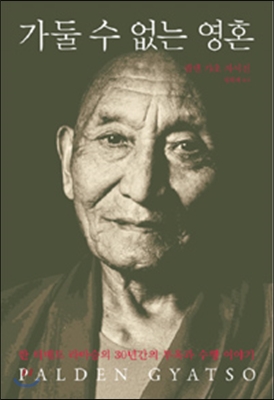
The soul that cannot be confined
 |
Description
Book Introduction
A heart of mercy and forgiveness that even 30 years of imprisonment could not restrain
Palden Gyatso was Tibet's longest-serving political prisoner and the first Tibetan to testify about the suffering in Tibet at the United Nations.
He became a monk at the age of ten, and was arrested by the Chinese government at the age of twenty-eight, when he should have been focusing on his training, and was not released until he was sixty.
He endured endless torture, starvation, forced labor, and ideological indoctrination for 31 years, but he never gave up his will to live and his hope for freedom.
Until now, most books on Tibet have been about the Dalai Lama, mystical utopias, or meditation and enlightenment.
However, this book is the first in Korea to convey the pain and reality of Tibet through the voice of a Tibetan.
It is not only a strange autobiography of a monk caught up in the turbulent waves of history, but also a collection of historical data that compiles the reality of Tibet that Tibetan exiles have been telling one by one.
This book was born at the recommendation of the Dalai Lama.
Like all Tibetans who left their homeland, Palden Gyatso also crossed the Himalayas into exile in India, where he met the Dalai Lama in Dharamsala.
At that place, the Dalai Lama advised him to write about his life and let the world know about the suffering of Tibet.
There are people like Palden Gyatso who never waver in their beliefs, no matter how painful the situation may be.
The Dalai Lama says this about him:
“Falden’s story shows us that we are never powerless, and that each individual can exert influence.” During his years in prison, his spirit was free.
Palden Gyatso was Tibet's longest-serving political prisoner and the first Tibetan to testify about the suffering in Tibet at the United Nations.
He became a monk at the age of ten, and was arrested by the Chinese government at the age of twenty-eight, when he should have been focusing on his training, and was not released until he was sixty.
He endured endless torture, starvation, forced labor, and ideological indoctrination for 31 years, but he never gave up his will to live and his hope for freedom.
Until now, most books on Tibet have been about the Dalai Lama, mystical utopias, or meditation and enlightenment.
However, this book is the first in Korea to convey the pain and reality of Tibet through the voice of a Tibetan.
It is not only a strange autobiography of a monk caught up in the turbulent waves of history, but also a collection of historical data that compiles the reality of Tibet that Tibetan exiles have been telling one by one.
This book was born at the recommendation of the Dalai Lama.
Like all Tibetans who left their homeland, Palden Gyatso also crossed the Himalayas into exile in India, where he met the Dalai Lama in Dharamsala.
At that place, the Dalai Lama advised him to write about his life and let the world know about the suffering of Tibet.
There are people like Palden Gyatso who never waver in their beliefs, no matter how painful the situation may be.
The Dalai Lama says this about him:
“Falden’s story shows us that we are never powerless, and that each individual can exert influence.” During his years in prison, his spirit was free.
- You can preview some of the book's contents.
Preview
index
The Dalai Lama's Recommendation_The World's Most Special Story
The Realm's Words: A Tragic Modern History Shrouded in Tibet's Mystery
Introduction_ A Flame Burning in the Snow
1.
A child born under a rainbow
2.
Entering the path of monkhood during turbulent times
3.
The red wind blowing through the land of snow
4.
The master accused of being a spy
5.
Monk in Prison
6.
There is no place to run under the blue sky.
7.
Even dreaming is a sin
8.
The Soul of Tibet Destroyed by the Cultural Revolution
9.
Days of Betrayal and Forgiveness
10.
Burn the Red Book and Write Posters
11.
At the crossroads of life and death
12.
Uprising breaks out in Lhasa
13.
The first Tibetan prisoner of conscience to testify at the UN
Translator's Note_ What is the quality of the soul?
The Realm's Words: A Tragic Modern History Shrouded in Tibet's Mystery
Introduction_ A Flame Burning in the Snow
1.
A child born under a rainbow
2.
Entering the path of monkhood during turbulent times
3.
The red wind blowing through the land of snow
4.
The master accused of being a spy
5.
Monk in Prison
6.
There is no place to run under the blue sky.
7.
Even dreaming is a sin
8.
The Soul of Tibet Destroyed by the Cultural Revolution
9.
Days of Betrayal and Forgiveness
10.
Burn the Red Book and Write Posters
11.
At the crossroads of life and death
12.
Uprising breaks out in Lhasa
13.
The first Tibetan prisoner of conscience to testify at the UN
Translator's Note_ What is the quality of the soul?
Publisher's Review
Palden Gyatso was Tibet's longest-serving political prisoner and the first Tibetan to testify about the suffering in Tibet at the United Nations.
He became a monk at the age of ten, and was arrested by the Chinese government at the age of twenty-eight, when he should have been focusing on his training, and was not released until he was sixty.
He endured endless torture, starvation, forced labor, and ideological indoctrination for 31 years, but he never gave up his will to live and his hope for freedom.
The Chinese government has used every means possible to arrest Tibetans and destroy Tibetan culture in an effort to prevent them from recognizing Tibet's independence.
Palden Gyatso was urged to denounce his Indian teacher as a spy.
But he never abandoned the teachings of his teacher and soul.
The price was merciless.
I had shackles on my ankles and wrists for years that dug into my flesh with every movement, so even after the handcuffs were removed, my arms and legs were frozen and I couldn't move for a long time.
All of his teeth fell out due to electric baton torture.
Severe beatings by guards were a daily occurrence.
After being assaulted, his face was swollen and covered in countless wounds, making it difficult to recognize him.
However, Tibetan prisoners of conscience, including Palden, did not yield to the brutal violence of the Chinese authorities.
“For those who use brutal violence, there is nothing more insulting than when the victim does not acknowledge their power.
The human body can withstand tremendous pain and still recover.
The wounds on the body will eventually heal.
But once the soul is destroyed, everything falls to pieces.
Because of this, we could not allow ourselves to be discouraged.
“We draw strength from our convictions and our belief that we are fighting for Tibet’s independence and justice.” - Excerpt from the text
The first book in Korea to convey the pain and reality of Tibet.
The atrocities committed by a regime in the name of progress and ideology were so brutal that it was unimaginable.
After China occupied Tibet, one-third of the Tibetan people were killed and over 6,000 monasteries were destroyed.
More than 150,000 monks were forcibly returned to secular life or sent to prison or labor camps.
Tibet, once called a hidden utopia, was thus destroyed.
The long-standing Buddhist culture and traditions were completely destroyed, and the Tibetan people, who were mostly nomadic, were forced to practice farming practices that were not suited to the geology, resulting in starvation and poverty.
That's what Tibet looked like after the Chinese occupation.
Until now, most books on Tibet have been about the Dalai Lama, mystical utopias, or meditation and enlightenment.
However, this book is the first in Korea to convey the pain and reality of Tibet through the voice of a Tibetan.
A testimony of facts that have not lost compassion and mercy
This book is not only the bizarre autobiography of a monk caught up in the turbulent waves of history, but also serves as a compilation of historical data, a compilation of the reality of Tibet that has been passed down one by one by Tibetan exiles.
This book was born at the recommendation of the Dalai Lama.
Like all Tibetans who left their homeland, Palden Gyatso also crossed the Himalayas into exile in India, where he met the Dalai Lama in Dharamsala.
At that place, the Dalai Lama advised him to write about his life and let the world know about the suffering of Tibet.
Above all, what makes this book special is that it testifies to the truth from beginning to end without losing compassion and mercy.
That compassion and mercy are not limited to those who suffer.
The fact that we must forgive and embrace those who cause us pain.
It's just that special circumstances make people unconsciously realize that they are so cruel.
Thus, rather than emphasizing the conflict between Chinese and Tibetans, it makes us reflect on humanity itself, which is easily tempted by violence and hatred.
There are people like Palden Gyatso who never waver in their beliefs, no matter how painful the situation may be.
The Dalai Lama says this about him:
“Falden’s story shows us that we are never powerless, and that each individual can exert influence.” During his years in prison, his spirit was free.
Tibetans speak of hope for humanity
Colonial rule continues unabated, whether in the name of God, or in the name of the lofty ideal of freedom, or in the name of civilizing the people who originally lived there.
Because of that, the powerless and innocent people are suffering.
It is not something that happened just yesterday or today, nor is it something that is limited to a specific place.
This can be said to be a characteristic of human history that is taking place all over the world.
But the Dalai Lama and the Tibetan people do not give up hope.
I pray that all people will be free from suffering, that innocent people will no longer be hurt, and that the day will soon come when they can live in peace in their own country, Tibet.
Palden Gyatso said that while in prison, he was greatly encouraged by foreign support for political prisoners and protests against human rights abuses in Tibet.
Translator Jeong Hee-jae, who introduced this book to Korea, said, “If people in Korea also know that there are many friends who pray for freedom and peace in Tibet, wouldn’t it be a little comforting to the Tibetan people who are suffering today?
“I wish it were so,” he wrote in the translator’s note.
Recommendation
Reading the autobiography of a man who did not stop resisting even in the face of great suffering leaves one with a lingering feeling in one's heart.
Palden chronicles not only the terrible suffering he endured, but also the reality of his devastated homeland, Tibet. — The New York Times
He became a monk at the age of ten, and was arrested by the Chinese government at the age of twenty-eight, when he should have been focusing on his training, and was not released until he was sixty.
He endured endless torture, starvation, forced labor, and ideological indoctrination for 31 years, but he never gave up his will to live and his hope for freedom.
The Chinese government has used every means possible to arrest Tibetans and destroy Tibetan culture in an effort to prevent them from recognizing Tibet's independence.
Palden Gyatso was urged to denounce his Indian teacher as a spy.
But he never abandoned the teachings of his teacher and soul.
The price was merciless.
I had shackles on my ankles and wrists for years that dug into my flesh with every movement, so even after the handcuffs were removed, my arms and legs were frozen and I couldn't move for a long time.
All of his teeth fell out due to electric baton torture.
Severe beatings by guards were a daily occurrence.
After being assaulted, his face was swollen and covered in countless wounds, making it difficult to recognize him.
However, Tibetan prisoners of conscience, including Palden, did not yield to the brutal violence of the Chinese authorities.
“For those who use brutal violence, there is nothing more insulting than when the victim does not acknowledge their power.
The human body can withstand tremendous pain and still recover.
The wounds on the body will eventually heal.
But once the soul is destroyed, everything falls to pieces.
Because of this, we could not allow ourselves to be discouraged.
“We draw strength from our convictions and our belief that we are fighting for Tibet’s independence and justice.” - Excerpt from the text
The first book in Korea to convey the pain and reality of Tibet.
The atrocities committed by a regime in the name of progress and ideology were so brutal that it was unimaginable.
After China occupied Tibet, one-third of the Tibetan people were killed and over 6,000 monasteries were destroyed.
More than 150,000 monks were forcibly returned to secular life or sent to prison or labor camps.
Tibet, once called a hidden utopia, was thus destroyed.
The long-standing Buddhist culture and traditions were completely destroyed, and the Tibetan people, who were mostly nomadic, were forced to practice farming practices that were not suited to the geology, resulting in starvation and poverty.
That's what Tibet looked like after the Chinese occupation.
Until now, most books on Tibet have been about the Dalai Lama, mystical utopias, or meditation and enlightenment.
However, this book is the first in Korea to convey the pain and reality of Tibet through the voice of a Tibetan.
A testimony of facts that have not lost compassion and mercy
This book is not only the bizarre autobiography of a monk caught up in the turbulent waves of history, but also serves as a compilation of historical data, a compilation of the reality of Tibet that has been passed down one by one by Tibetan exiles.
This book was born at the recommendation of the Dalai Lama.
Like all Tibetans who left their homeland, Palden Gyatso also crossed the Himalayas into exile in India, where he met the Dalai Lama in Dharamsala.
At that place, the Dalai Lama advised him to write about his life and let the world know about the suffering of Tibet.
Above all, what makes this book special is that it testifies to the truth from beginning to end without losing compassion and mercy.
That compassion and mercy are not limited to those who suffer.
The fact that we must forgive and embrace those who cause us pain.
It's just that special circumstances make people unconsciously realize that they are so cruel.
Thus, rather than emphasizing the conflict between Chinese and Tibetans, it makes us reflect on humanity itself, which is easily tempted by violence and hatred.
There are people like Palden Gyatso who never waver in their beliefs, no matter how painful the situation may be.
The Dalai Lama says this about him:
“Falden’s story shows us that we are never powerless, and that each individual can exert influence.” During his years in prison, his spirit was free.
Tibetans speak of hope for humanity
Colonial rule continues unabated, whether in the name of God, or in the name of the lofty ideal of freedom, or in the name of civilizing the people who originally lived there.
Because of that, the powerless and innocent people are suffering.
It is not something that happened just yesterday or today, nor is it something that is limited to a specific place.
This can be said to be a characteristic of human history that is taking place all over the world.
But the Dalai Lama and the Tibetan people do not give up hope.
I pray that all people will be free from suffering, that innocent people will no longer be hurt, and that the day will soon come when they can live in peace in their own country, Tibet.
Palden Gyatso said that while in prison, he was greatly encouraged by foreign support for political prisoners and protests against human rights abuses in Tibet.
Translator Jeong Hee-jae, who introduced this book to Korea, said, “If people in Korea also know that there are many friends who pray for freedom and peace in Tibet, wouldn’t it be a little comforting to the Tibetan people who are suffering today?
“I wish it were so,” he wrote in the translator’s note.
Recommendation
Reading the autobiography of a man who did not stop resisting even in the face of great suffering leaves one with a lingering feeling in one's heart.
Palden chronicles not only the terrible suffering he endured, but also the reality of his devastated homeland, Tibet. — The New York Times
GOODS SPECIFICS
- Date of issue: January 10, 2014
- Page count, weight, size: 356 pages | 670g | 153*224*30mm
- ISBN13: 9788990828675
- ISBN10: 8990828678
You may also like
카테고리
korean


korean

![GQ KOREA Mark (Monthly): December [2025]](http://librairie.coreenne.fr/cdn/shop/files/8ef265dbbfbf186523ed75ba7319009d.jpg?v=1765340328&width=3840)


