

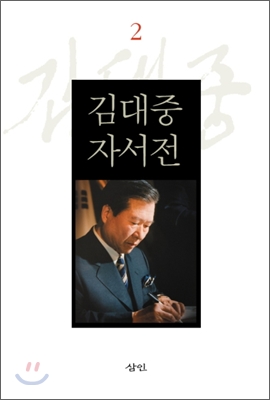
Kim Dae-jung's Autobiography 2
 |
Description
Book Introduction
A look back at the life of Kim Dae-jung, the symbol of Korean democracy.
This is a record of the life of Kim Dae-jung, the 15th President of the Republic of Korea and winner of the 2000 Nobel Peace Prize, as well as a record of modern Korean history.
Kim Dae-jung's life and struggles, born and raised during the Japanese colonial period, through the end of World War II and liberation, the Korean War and division of the Korean Peninsula, military dictatorship, and the democratization movement, are fully captured.
He also achieved the first change of government between the ruling and opposition parties in Korea in 1997, took office as president, and achieved the first inter-Korean summit in 55 years since the division of the country, thereby recording the history of bringing reconciliation and cooperation to the Korean Peninsula.
This book also contains the life of Kim Dae-jung, who lived with a "conscience that acts" without becoming frustrated or compromising with injustice despite facing countless hardships and adversities, including five near-death experiences in the fight against military dictatorship, six years in prison, and ten years in exile and under pension.
"Kim Dae-jung's Autobiography" was written by a renowned Korean writer based on Kim Dae-jung's oral history and various materials, with the plot and draft being personally reviewed and revised by Kim Dae-jung.
However, in accordance with his will to 'publish my autobiography posthumously', it has finally been published on the first anniversary of his death.
This book, following the tumultuous trajectory of Kim Dae-jung's life, will provide an opportunity to reconsider what is truly important to us today.
Volume 2 covers the period from immediately after the president's inauguration to just before his death after leaving office.
The five years of his presidency were Kim Dae-jung's first and last opportunity to realize the ideals he had conceived over the past 70 years, striving to democratize South Korea, unify the country, and improve the people's livelihoods.
Overcoming the national bankruptcy crisis that struck immediately after his election, realizing the IT powerhouse that he envisioned while in prison in the 1980s, achieving the June 15th Inter-Korean Summit, which was a turning point for reconciliation between the two Koreas through the implementation of the 'Sunshine Policy', and receiving the Nobel Peace Prize that followed, and successfully hosting the 2002 World Cup, this is the first state of affairs report heard directly from a former president and a memoir that contains the full picture of a 'successful democratic politician'.
This is a record of the life of Kim Dae-jung, the 15th President of the Republic of Korea and winner of the 2000 Nobel Peace Prize, as well as a record of modern Korean history.
Kim Dae-jung's life and struggles, born and raised during the Japanese colonial period, through the end of World War II and liberation, the Korean War and division of the Korean Peninsula, military dictatorship, and the democratization movement, are fully captured.
He also achieved the first change of government between the ruling and opposition parties in Korea in 1997, took office as president, and achieved the first inter-Korean summit in 55 years since the division of the country, thereby recording the history of bringing reconciliation and cooperation to the Korean Peninsula.
This book also contains the life of Kim Dae-jung, who lived with a "conscience that acts" without becoming frustrated or compromising with injustice despite facing countless hardships and adversities, including five near-death experiences in the fight against military dictatorship, six years in prison, and ten years in exile and under pension.
"Kim Dae-jung's Autobiography" was written by a renowned Korean writer based on Kim Dae-jung's oral history and various materials, with the plot and draft being personally reviewed and revised by Kim Dae-jung.
However, in accordance with his will to 'publish my autobiography posthumously', it has finally been published on the first anniversary of his death.
This book, following the tumultuous trajectory of Kim Dae-jung's life, will provide an opportunity to reconsider what is truly important to us today.
Volume 2 covers the period from immediately after the president's inauguration to just before his death after leaving office.
The five years of his presidency were Kim Dae-jung's first and last opportunity to realize the ideals he had conceived over the past 70 years, striving to democratize South Korea, unify the country, and improve the people's livelihoods.
Overcoming the national bankruptcy crisis that struck immediately after his election, realizing the IT powerhouse that he envisioned while in prison in the 1980s, achieving the June 15th Inter-Korean Summit, which was a turning point for reconciliation between the two Koreas through the implementation of the 'Sunshine Policy', and receiving the Nobel Peace Prize that followed, and successfully hosting the 2002 World Cup, this is the first state of affairs report heard directly from a former president and a memoir that contains the full picture of a 'successful democratic politician'.
- You can preview some of the book's contents.
Preview
index
Part 1
Long, heavy winter (1997.
12.
17-1998.
1)
“Don’t call me Your Majesty” (1998.
2. 25~5.
12)
Four major sector reforms that changed the nation's constitution (1998)
8 nights and 9 days in the US (1998.
3-1998.
6)
Part 2
Herd of cattle crosses Panmunjom (1998.
6-1998.
9)
Miracles don't come miraculously (1998.
9-1998.
10)
Geumgangsan Tourism (1998.
11-1999.
9)
Whose 21st century belongs to? (1998.
12-1999.
3)
The Knot of Four-Power Diplomacy (1999.
2-1999.
6)
Not a naive, weak government (1999.
6-1999.
9)
“If it weren’t for President Kim, 100,000 more people would have died” (1999.
11-1999.
12)
Part 3
Into the New Millennium (2000.
1~2000.
3)
Deep in the night, waiting for the special envoy who went to the North (2000.
2~2000.
6)
“You have come a fearful, scary way” (2000.
6. 13~2000.
6. 14)
100 Years of Modern History, The Best Day (2000.
6. 14~2000.
6. 15)
Part 4
Things that bloom in the sun (2000.
6~2000.
9)
Welfare is not charity, it is a human right (1998-2000.
10)
Fall 2000, the days of the gods (2000.
10)
Bill Clinton, Bush, and the Korean Peninsula (2000.
11-2000.
12)
The first drop of water is the bravest (2000.
12)
Part 5
The latecomer of the People's Government, the birth of the Ministry of Gender Equality (2000.
12-2001.
3)
The new human rights country (2001.
5-2001.
9)
Knowledge Information Powerhouse, Dream Comes True (2001.
9-2001.
11)
Resigned as Democratic Party President (2001.
11-2002.
2)
One spring day, I was sick (2002.
3-2002.
6)
Red Devils and Candles (2002.
6-2002.
10)
Leaving the Blue House (2002.
10-2003.
2)
Part 6
Embracing the World Alone (2003)
2-2005.
12)
We must be half a step ahead of the people (2006.
1-2008.
5)
Still, there are things that last forever (2008.
5-2009.
6)
The more I think about life, the more beautiful it becomes.
Until the publication of Kim Dae-jung's autobiography
Kim Dae-jung's chronology
pictorial
Long, heavy winter (1997.
12.
17-1998.
1)
“Don’t call me Your Majesty” (1998.
2. 25~5.
12)
Four major sector reforms that changed the nation's constitution (1998)
8 nights and 9 days in the US (1998.
3-1998.
6)
Part 2
Herd of cattle crosses Panmunjom (1998.
6-1998.
9)
Miracles don't come miraculously (1998.
9-1998.
10)
Geumgangsan Tourism (1998.
11-1999.
9)
Whose 21st century belongs to? (1998.
12-1999.
3)
The Knot of Four-Power Diplomacy (1999.
2-1999.
6)
Not a naive, weak government (1999.
6-1999.
9)
“If it weren’t for President Kim, 100,000 more people would have died” (1999.
11-1999.
12)
Part 3
Into the New Millennium (2000.
1~2000.
3)
Deep in the night, waiting for the special envoy who went to the North (2000.
2~2000.
6)
“You have come a fearful, scary way” (2000.
6. 13~2000.
6. 14)
100 Years of Modern History, The Best Day (2000.
6. 14~2000.
6. 15)
Part 4
Things that bloom in the sun (2000.
6~2000.
9)
Welfare is not charity, it is a human right (1998-2000.
10)
Fall 2000, the days of the gods (2000.
10)
Bill Clinton, Bush, and the Korean Peninsula (2000.
11-2000.
12)
The first drop of water is the bravest (2000.
12)
Part 5
The latecomer of the People's Government, the birth of the Ministry of Gender Equality (2000.
12-2001.
3)
The new human rights country (2001.
5-2001.
9)
Knowledge Information Powerhouse, Dream Comes True (2001.
9-2001.
11)
Resigned as Democratic Party President (2001.
11-2002.
2)
One spring day, I was sick (2002.
3-2002.
6)
Red Devils and Candles (2002.
6-2002.
10)
Leaving the Blue House (2002.
10-2003.
2)
Part 6
Embracing the World Alone (2003)
2-2005.
12)
We must be half a step ahead of the people (2006.
1-2008.
5)
Still, there are things that last forever (2008.
5-2009.
6)
The more I think about life, the more beautiful it becomes.
Until the publication of Kim Dae-jung's autobiography
Kim Dae-jung's chronology
pictorial
Into the book
Then Chairman Kim tried to persuade me.
“There are examples of the past 7/4 Joint Statement, such as Lee Hu-rak and Kim Young-joo, following the will of their superiors.
“Let’s do this: Lim Dong-won representing President Kim Dae-jung, and Kim Yong-sun representing Chairman Kim Jong-il.”
“At that time, Mr. Lee Hu-rak came, but now I, as the President, came in person and held the summit meeting.
“Please take care of the work a little more smoothly.”
Then, Director Lim Dong-won intervened.
“Shouldn’t the introduction of the declaration include the following: ‘President Kim Dae-jung of the Republic of Korea and Chairman Kim Jong-il of the National Defense Commission of the Democratic People’s Republic of Korea met in Pyongyang and held a summit meeting, and agreed as follows.’
Therefore, it is only natural that the declaration be signed and marked with the names of President Kim Dae-jung of the Republic of Korea and Chairman of the National Defense Commission of the Democratic People's Republic of Korea Kim Jong-il.
This declaration is a monumental document that opens a new chapter in the history of our people.
Shouldn't the two people who prepared this personally sign it and leave it in history?
“What a historic and proud event this is.”
“The president is very persistent, perhaps because he was born in Jeolla Province.”
It was a joke that suddenly came out of Chairman Kim's mouth.
It broke the desperate atmosphere in an instant.
I joked with him again.
“Chairman Kim is also from the Jeonju Kim clan in Jeolla Province.
Let's agree on that."
“It seems like he wants to hear the title of General of the Improvement.”
“How about giving me a chance to improve my general skills?
“I came all the way here, let me see what I can do.”
Only then did Chairman Kim smile.
The summit ended like this.
It was 7 o'clock in the evening.
It was decided that the agreement would be called the ‘Joint Declaration between the South and the North.’
---p.292-293 Part 3 "100 Years of Modern History, the Best Day"
I was worried about President-elect Lee Myung-bak's governance.
He revealed his arrogant attitude while working at a construction company in the past.
Even looking at the government reorganization plan, the atmosphere of pushing ahead with construction-style policies was strong.
The Ministry of Unification, the Ministry of Science and ICT, the Ministry of Information and Communication, and the Ministry of Gender Equality and Family were mentioned as ministries to be abolished or reduced in size.
In my view, it was the Buddha who would feed us now and in the future.
That short-sightedness seemed very precarious.
In particular, regarding North Korea, he brought up the policy of “nuclear dismantlement first, then cooperation,” which even President Bush had abandoned.
When he came to me as a presidential candidate, he said several times that he sympathized with the Sunshine Policy.
I knew him as a practical person and believed he would not go against the trend, but it seems I was wrong.
If it is practical to find the most universal path for the country and its people, he seemed to misunderstand the concept of practicality.
---p.565 Part 6: "We Must Stay Half a Step Ahead of the People"
The new year of 2009 has arrived.
My relationship with my wife has been the best it's been since we got married.
I love and respect my wife.
If it weren't for her, I wouldn't have been able to survive those difficult and desperate years of hardship.
Without my wife, it would have been difficult for me to be where I am now, and it seems like it would be difficult to live even now.
… … The very thought of life without a wife is terrifying.
I hope my wife doesn't die before me.
Sometimes I spend the whole day with my wife.
Still, I'm happy and excited.
---pp.580-581 Part 6 "Still, There Are Things That Are Eternal"
One year has passed since the Lee Myung-bak administration took office.
So many problems have been revealed so far.
Above all, the 'Denuclearization, Openness, 3000' policy was pushed forward with a Cold War mindset.
… … There was a high possibility that the worst failure in Korean diplomatic history would be repeated.
… … Is the tower of hard work that the previous two governments built over the past 10 years about to collapse?
I don't understand why we need the Ministry of Unification to return to such hostile policies.
This president has no philosophy on inter-Korean issues. ---pp. 581-582, Part 6, "Still, Some Things Are Eternal"
I have long supported a presidential system.
He fought with his life on the line to achieve this.
And he achieved a direct presidential election system together with the people and carried out his duties as president.
But what I really wanted was a presidential system.
Our country should also have a vice president.
… … It can also reduce the ceremonial burden concentrated on the president and prevent the suspension of state affairs in the event of the president’s death.
If the upper echelons of power recognize each other in this way, they may be able to overcome the ideological offensive that ruins the country and regionalism.
… … I still have the vice-presidential system in mind, but on the other hand, my thoughts have changed a lot.
There have been ten presidents under the presidential system.
Dictators like Syngman Rhee, Park Chung-hee, and Chun Doo-hwan met tragic ends, but dictators and their ilk emerged after them.
To prevent this, it is now worth considering changing the presidential system.
There is no way to hold someone accountable under the five-year single term system.
Now is the time for the dictator who does not follow the will of the people to be removed by the will of the people.
I don't think it would be a bad idea to introduce a dual executive system or a cabinet responsibility system.
---pp.586-587 Part 6 "Still, There Are Things That Are Eternal"
President Roh chose the path of death by throwing himself from the mountain in front of his hometown.
Every day must have been so harsh.
The prosecution went too far.
They investigated President Roh's wife, son, daughter, brother, nephew-in-law, etc. as if they were conducting a sweep operation.
They played with the media by releasing investigative secrets, breaking the law every day.
And they also spread various theories about President Roh's handling of his illness.
In the end, President Roh's suicide was practically forced upon him by the Lee Myung-bak administration.
President Roh's funeral committee asked me to give a eulogy.
I accepted this.
But then the government announced again that it was opposed to it.
The research I prepared ended up not being read.
Now, finally, we offer our homage to his spirit.
“There are examples of the past 7/4 Joint Statement, such as Lee Hu-rak and Kim Young-joo, following the will of their superiors.
“Let’s do this: Lim Dong-won representing President Kim Dae-jung, and Kim Yong-sun representing Chairman Kim Jong-il.”
“At that time, Mr. Lee Hu-rak came, but now I, as the President, came in person and held the summit meeting.
“Please take care of the work a little more smoothly.”
Then, Director Lim Dong-won intervened.
“Shouldn’t the introduction of the declaration include the following: ‘President Kim Dae-jung of the Republic of Korea and Chairman Kim Jong-il of the National Defense Commission of the Democratic People’s Republic of Korea met in Pyongyang and held a summit meeting, and agreed as follows.’
Therefore, it is only natural that the declaration be signed and marked with the names of President Kim Dae-jung of the Republic of Korea and Chairman of the National Defense Commission of the Democratic People's Republic of Korea Kim Jong-il.
This declaration is a monumental document that opens a new chapter in the history of our people.
Shouldn't the two people who prepared this personally sign it and leave it in history?
“What a historic and proud event this is.”
“The president is very persistent, perhaps because he was born in Jeolla Province.”
It was a joke that suddenly came out of Chairman Kim's mouth.
It broke the desperate atmosphere in an instant.
I joked with him again.
“Chairman Kim is also from the Jeonju Kim clan in Jeolla Province.
Let's agree on that."
“It seems like he wants to hear the title of General of the Improvement.”
“How about giving me a chance to improve my general skills?
“I came all the way here, let me see what I can do.”
Only then did Chairman Kim smile.
The summit ended like this.
It was 7 o'clock in the evening.
It was decided that the agreement would be called the ‘Joint Declaration between the South and the North.’
---p.292-293 Part 3 "100 Years of Modern History, the Best Day"
I was worried about President-elect Lee Myung-bak's governance.
He revealed his arrogant attitude while working at a construction company in the past.
Even looking at the government reorganization plan, the atmosphere of pushing ahead with construction-style policies was strong.
The Ministry of Unification, the Ministry of Science and ICT, the Ministry of Information and Communication, and the Ministry of Gender Equality and Family were mentioned as ministries to be abolished or reduced in size.
In my view, it was the Buddha who would feed us now and in the future.
That short-sightedness seemed very precarious.
In particular, regarding North Korea, he brought up the policy of “nuclear dismantlement first, then cooperation,” which even President Bush had abandoned.
When he came to me as a presidential candidate, he said several times that he sympathized with the Sunshine Policy.
I knew him as a practical person and believed he would not go against the trend, but it seems I was wrong.
If it is practical to find the most universal path for the country and its people, he seemed to misunderstand the concept of practicality.
---p.565 Part 6: "We Must Stay Half a Step Ahead of the People"
The new year of 2009 has arrived.
My relationship with my wife has been the best it's been since we got married.
I love and respect my wife.
If it weren't for her, I wouldn't have been able to survive those difficult and desperate years of hardship.
Without my wife, it would have been difficult for me to be where I am now, and it seems like it would be difficult to live even now.
… … The very thought of life without a wife is terrifying.
I hope my wife doesn't die before me.
Sometimes I spend the whole day with my wife.
Still, I'm happy and excited.
---pp.580-581 Part 6 "Still, There Are Things That Are Eternal"
One year has passed since the Lee Myung-bak administration took office.
So many problems have been revealed so far.
Above all, the 'Denuclearization, Openness, 3000' policy was pushed forward with a Cold War mindset.
… … There was a high possibility that the worst failure in Korean diplomatic history would be repeated.
… … Is the tower of hard work that the previous two governments built over the past 10 years about to collapse?
I don't understand why we need the Ministry of Unification to return to such hostile policies.
This president has no philosophy on inter-Korean issues. ---pp. 581-582, Part 6, "Still, Some Things Are Eternal"
I have long supported a presidential system.
He fought with his life on the line to achieve this.
And he achieved a direct presidential election system together with the people and carried out his duties as president.
But what I really wanted was a presidential system.
Our country should also have a vice president.
… … It can also reduce the ceremonial burden concentrated on the president and prevent the suspension of state affairs in the event of the president’s death.
If the upper echelons of power recognize each other in this way, they may be able to overcome the ideological offensive that ruins the country and regionalism.
… … I still have the vice-presidential system in mind, but on the other hand, my thoughts have changed a lot.
There have been ten presidents under the presidential system.
Dictators like Syngman Rhee, Park Chung-hee, and Chun Doo-hwan met tragic ends, but dictators and their ilk emerged after them.
To prevent this, it is now worth considering changing the presidential system.
There is no way to hold someone accountable under the five-year single term system.
Now is the time for the dictator who does not follow the will of the people to be removed by the will of the people.
I don't think it would be a bad idea to introduce a dual executive system or a cabinet responsibility system.
---pp.586-587 Part 6 "Still, There Are Things That Are Eternal"
President Roh chose the path of death by throwing himself from the mountain in front of his hometown.
Every day must have been so harsh.
The prosecution went too far.
They investigated President Roh's wife, son, daughter, brother, nephew-in-law, etc. as if they were conducting a sweep operation.
They played with the media by releasing investigative secrets, breaking the law every day.
And they also spread various theories about President Roh's handling of his illness.
In the end, President Roh's suicide was practically forced upon him by the Lee Myung-bak administration.
President Roh's funeral committee asked me to give a eulogy.
I accepted this.
But then the government announced again that it was opposed to it.
The research I prepared ended up not being read.
Now, finally, we offer our homage to his spirit.
---p.591 Volume 2, Part 6 "Still, There Are Things That Are Eternal"
Publisher's Review
Kim Dae-jung's Autobiography, Volumes 1 and 2, published in popular editions.
In August 2010, to commemorate the first anniversary of former President Kim Dae-jung's death, a hardcover edition of "Kim Dae-jung's Autobiography" (55,000 won) was published.
The hardcover edition received so much attention from readers that it became a bestseller immediately after its publication.
In 2011, a popular edition (32,000 won) of “Kim Dae-jung’s Autobiography” was published, which contained the same content as the hardcover version of “Kim Dae-jung’s Autobiography” except for the pictorial.
This is a popular edition released in the hope that more people will read and remember former President Kim Dae-jung's autobiography on the second anniversary of his death.
“I record everything truthfully and dedicate it to history and future generations.”
A Conscience in Action: Kim Dae-jung's Authentic Autobiography Documenting His Whole Life
Kim Dae-jung was born in 1924 on an island in the South, and until his death in August 2009 amidst worldwide mourning, he navigated the turbulent modern history of the Korean Peninsula.
He spent his childhood during the Japanese colonial period, lived through the devastation of war, and became a promising young businessman. During the 30-year military regime, he became a symbol of democracy. As we entered the 21st century, he became the 15th President of the Republic of Korea, paving the way for a new path for the nation. He lived a long and breathless life.
This book is the official autobiography of former President Kim Dae-jung, which he had been preparing for six years before his death in 2009.
Former President Kim Dae-jung left the Blue House in February 2003 and returned to Donggyo-dong. He began planning and giving oral interviews for his autobiography in 2004, conducting a total of 41 oral interviews over the course of two years.
This autobiography was compiled based on President Kim Dae-jung's oral history and by referencing records from his lifetime.
Kim Dae-jung read the manuscript of his autobiography, which was already organized, right up until his hospitalization in July 2009, personally correcting it and dictating any insufficient parts to reflect them.
And Mrs. Lee Hee-ho reviewed the manuscript and wrote an opening statement in the form of a letter.
Former US President Bill Clinton, former Soviet President Gorbachev, and former German President von Weizsäcker sent letters and published them on the front page.
“I believed in history and the people until the very end.”
Volume 1 contains the story of his life from birth to his entry into politics, his three consecutive defeats in his bid for the National Assembly in 1954, his fourth election victory but a military coup that prevented him from participating in parliamentary activities, his run as a presidential candidate in his 40s in 1971 and his run against Park Chung-hee, his multiple near-death experiences during the dictatorship, his exile to the United States, and his return to Korea, where he ran for president and became president.
Volume 1, which contains the turbulent journey of an island boy, a young businessman, a young politician, and a death row inmate to become president, faithfully recreates the turbulent lives of the Korean people and the corruption of those in power over the 70 years from the Japanese colonial period in 1924 to the dawn of the democratization era in 1997.
And we can get a glimpse of the various policies and visions for the Republic of Korea he conceived while in prison, in exile, and at home in retirement.
During this period, the body and mind of the speaker, Kim Dae-jung, were with the people who were protesting for democracy, and his gaze was sharply turned towards the powerful politicians.
Here, we can discover the light and darkness of 20th-century Korean history, and the power of 'truth' hidden behind the facade of historical 'facts.'
Volume 2 covers the period from immediately after the president's inauguration to just before his death after leaving office.
The five years of his presidency were Kim Dae-jung's first and last opportunity to realize the ideals he had conceived over the past 70 years, striving to democratize South Korea, unify the country, and improve the people's livelihoods.
Overcoming the national bankruptcy crisis that struck immediately after his election, realizing the IT powerhouse that he envisioned while in prison in the 1980s, putting the “Sunshine Policy” into practice and leading to the June 15th Inter-Korean Summit, which was a turning point for reconciliation between the two Koreas, and receiving the Nobel Peace Prize that followed, as well as the successful hosting of the 2002 World Cup, this is the first state of affairs report heard directly from a former president and a memoir that contains the full picture of a “successful democratic politician.”
From his retirement until his death, Kim Dae-jung, as a former president, devoted himself to improving inter-Korean relations, forming an East Asian community, restoring democracy in Myanmar and other countries, and achieving world peace through lectures, speeches, and interviews both domestically and internationally.
After the new government came to power in 2008, I continued to believe in the judgment of the people and history, even while observing the regression of democracy.
This book contains the final words of Kim Dae-jung, a man who dedicated his entire life to democracy, justice, peace, and the nation, to his “respected and beloved citizens.”
In August 2010, to commemorate the first anniversary of former President Kim Dae-jung's death, a hardcover edition of "Kim Dae-jung's Autobiography" (55,000 won) was published.
The hardcover edition received so much attention from readers that it became a bestseller immediately after its publication.
In 2011, a popular edition (32,000 won) of “Kim Dae-jung’s Autobiography” was published, which contained the same content as the hardcover version of “Kim Dae-jung’s Autobiography” except for the pictorial.
This is a popular edition released in the hope that more people will read and remember former President Kim Dae-jung's autobiography on the second anniversary of his death.
“I record everything truthfully and dedicate it to history and future generations.”
A Conscience in Action: Kim Dae-jung's Authentic Autobiography Documenting His Whole Life
Kim Dae-jung was born in 1924 on an island in the South, and until his death in August 2009 amidst worldwide mourning, he navigated the turbulent modern history of the Korean Peninsula.
He spent his childhood during the Japanese colonial period, lived through the devastation of war, and became a promising young businessman. During the 30-year military regime, he became a symbol of democracy. As we entered the 21st century, he became the 15th President of the Republic of Korea, paving the way for a new path for the nation. He lived a long and breathless life.
This book is the official autobiography of former President Kim Dae-jung, which he had been preparing for six years before his death in 2009.
Former President Kim Dae-jung left the Blue House in February 2003 and returned to Donggyo-dong. He began planning and giving oral interviews for his autobiography in 2004, conducting a total of 41 oral interviews over the course of two years.
This autobiography was compiled based on President Kim Dae-jung's oral history and by referencing records from his lifetime.
Kim Dae-jung read the manuscript of his autobiography, which was already organized, right up until his hospitalization in July 2009, personally correcting it and dictating any insufficient parts to reflect them.
And Mrs. Lee Hee-ho reviewed the manuscript and wrote an opening statement in the form of a letter.
Former US President Bill Clinton, former Soviet President Gorbachev, and former German President von Weizsäcker sent letters and published them on the front page.
“I believed in history and the people until the very end.”
Volume 1 contains the story of his life from birth to his entry into politics, his three consecutive defeats in his bid for the National Assembly in 1954, his fourth election victory but a military coup that prevented him from participating in parliamentary activities, his run as a presidential candidate in his 40s in 1971 and his run against Park Chung-hee, his multiple near-death experiences during the dictatorship, his exile to the United States, and his return to Korea, where he ran for president and became president.
Volume 1, which contains the turbulent journey of an island boy, a young businessman, a young politician, and a death row inmate to become president, faithfully recreates the turbulent lives of the Korean people and the corruption of those in power over the 70 years from the Japanese colonial period in 1924 to the dawn of the democratization era in 1997.
And we can get a glimpse of the various policies and visions for the Republic of Korea he conceived while in prison, in exile, and at home in retirement.
During this period, the body and mind of the speaker, Kim Dae-jung, were with the people who were protesting for democracy, and his gaze was sharply turned towards the powerful politicians.
Here, we can discover the light and darkness of 20th-century Korean history, and the power of 'truth' hidden behind the facade of historical 'facts.'
Volume 2 covers the period from immediately after the president's inauguration to just before his death after leaving office.
The five years of his presidency were Kim Dae-jung's first and last opportunity to realize the ideals he had conceived over the past 70 years, striving to democratize South Korea, unify the country, and improve the people's livelihoods.
Overcoming the national bankruptcy crisis that struck immediately after his election, realizing the IT powerhouse that he envisioned while in prison in the 1980s, putting the “Sunshine Policy” into practice and leading to the June 15th Inter-Korean Summit, which was a turning point for reconciliation between the two Koreas, and receiving the Nobel Peace Prize that followed, as well as the successful hosting of the 2002 World Cup, this is the first state of affairs report heard directly from a former president and a memoir that contains the full picture of a “successful democratic politician.”
From his retirement until his death, Kim Dae-jung, as a former president, devoted himself to improving inter-Korean relations, forming an East Asian community, restoring democracy in Myanmar and other countries, and achieving world peace through lectures, speeches, and interviews both domestically and internationally.
After the new government came to power in 2008, I continued to believe in the judgment of the people and history, even while observing the regression of democracy.
This book contains the final words of Kim Dae-jung, a man who dedicated his entire life to democracy, justice, peace, and the nation, to his “respected and beloved citizens.”
GOODS SPECIFICS
- Date of publication: July 20, 2011
- Page count, weight, size: 628 pages | 749g | 148*210*35mm
- ISBN13: 9788964360347
- ISBN10: 8964360346
You may also like
카테고리
korean


korean

![GQ KOREA Mark (Monthly): December [2025]](http://librairie.coreenne.fr/cdn/shop/files/8ef265dbbfbf186523ed75ba7319009d.jpg?v=1765340328&width=3840)


