

Isaac Newton
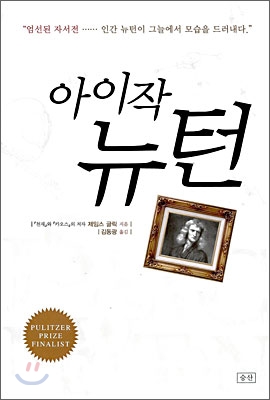 |
Description
Book Introduction
Many people consider Newton to be the greatest scientist of all time, but it would be difficult to find a figure who has been as mystified and misunderstood as he.
There have been countless books written about Newton and his theories, but most of the descriptions are based not on primary sources but on secondary and tertiary sources.
Therefore, it was true that it was not easy to distinguish where the truth ended and where fiction began.
In contrast, Glick bases his book almost entirely on primary sources.
Glick's first goal in this book was to present 'Newton as he was.'
He reveals, without hiding, another side of Newton, who was praised as the greatest figure in science.
There have been countless books written about Newton and his theories, but most of the descriptions are based not on primary sources but on secondary and tertiary sources.
Therefore, it was true that it was not easy to distinguish where the truth ended and where fiction began.
In contrast, Glick bases his book almost entirely on primary sources.
Glick's first goal in this book was to present 'Newton as he was.'
He reveals, without hiding, another side of Newton, who was praised as the greatest figure in science.
index
introduction
Chapter 1: What Job Would Suit Him?
Chapter 2 Some Philosophical Questions
Chapter 3 Problem Solving through Exercise
Chapter 4: Two Giant Orbits
Chapter 5 Body and Senses
Chapter 6: The Most Strange, If Not the Most Notable, Discovery
Chapter 7 Resistance and Backlash
Chapter 8 In the Whirlwind
Chapter 9: Everything Corrupts
Chapter 10: Heresy, Blasphemy, and Idolatry
Chapter 11 First Principle
Chapter 12 All objects maintain
Chapter 13: Is He Like Other People?
Chapter 14: No One Can Be His Own Witness
Chapter 15: The Cold-Blooded Mind
Translator's Note
Huzhou
References
Search
Chapter 1: What Job Would Suit Him?
Chapter 2 Some Philosophical Questions
Chapter 3 Problem Solving through Exercise
Chapter 4: Two Giant Orbits
Chapter 5 Body and Senses
Chapter 6: The Most Strange, If Not the Most Notable, Discovery
Chapter 7 Resistance and Backlash
Chapter 8 In the Whirlwind
Chapter 9: Everything Corrupts
Chapter 10: Heresy, Blasphemy, and Idolatry
Chapter 11 First Principle
Chapter 12 All objects maintain
Chapter 13: Is He Like Other People?
Chapter 14: No One Can Be His Own Witness
Chapter 15: The Cold-Blooded Mind
Translator's Note
Huzhou
References
Search
introduction
Chapter 1: What Job Would Suit Him?
Chapter 2 Some Philosophical Questions
Chapter 3 Problem Solving through Exercise
Chapter 4: Two Giant Orbits
Chapter 5: The Body and the Senses Chapter 6: The Most Strange, If Not the Most Notable, Discovery
Chapter 7 Resistance and Backlash
Chapter 8 In the Whirlwind
Chapter 9: Everything Corrupts
Chapter 10: Heresy, Blasphemy, and Idolatry
Chapter 11 First Principle
Chapter 12 All objects maintain
Chapter 13: Is He Like Other People?
Chapter 14: No One Can Be His Own Witness
Chapter 15: The Cold-Blooded Mind
Translator's Note
Huzhou
Acknowledgements
References
Image source
Search for Preface
Chapter 1: What Job Would Suit Him?
Chapter 2 Some Philosophical Questions
Chapter 3 Problem Solving through Exercise
Chapter 4: Two Giant Orbits
Chapter 5: The Body and the Senses Chapter 6: The Most Strange, If Not the Most Notable, Discovery
Chapter 7 Resistance and Backlash
Chapter 8 In the Whirlwind
Chapter 9: Everything Corrupts
Chapter 10: Heresy, Blasphemy, and Idolatry
Chapter 11 First Principle
Chapter 12 All objects maintain
Chapter 13: Is He Like Other People?
Chapter 14: No One Can Be His Own Witness
Chapter 15: The Cold-Blooded Mind
Translator's Note
Huzhou
Acknowledgements
References
Image source
Search
Chapter 1: What Job Would Suit Him?
Chapter 2 Some Philosophical Questions
Chapter 3 Problem Solving through Exercise
Chapter 4: Two Giant Orbits
Chapter 5: The Body and the Senses Chapter 6: The Most Strange, If Not the Most Notable, Discovery
Chapter 7 Resistance and Backlash
Chapter 8 In the Whirlwind
Chapter 9: Everything Corrupts
Chapter 10: Heresy, Blasphemy, and Idolatry
Chapter 11 First Principle
Chapter 12 All objects maintain
Chapter 13: Is He Like Other People?
Chapter 14: No One Can Be His Own Witness
Chapter 15: The Cold-Blooded Mind
Translator's Note
Huzhou
Acknowledgements
References
Image source
Search for Preface
Chapter 1: What Job Would Suit Him?
Chapter 2 Some Philosophical Questions
Chapter 3 Problem Solving through Exercise
Chapter 4: Two Giant Orbits
Chapter 5: The Body and the Senses Chapter 6: The Most Strange, If Not the Most Notable, Discovery
Chapter 7 Resistance and Backlash
Chapter 8 In the Whirlwind
Chapter 9: Everything Corrupts
Chapter 10: Heresy, Blasphemy, and Idolatry
Chapter 11 First Principle
Chapter 12 All objects maintain
Chapter 13: Is He Like Other People?
Chapter 14: No One Can Be His Own Witness
Chapter 15: The Cold-Blooded Mind
Translator's Note
Huzhou
Acknowledgements
References
Image source
Search
Publisher's Review
We are all Newtonians
James Gleick, who wrote this book, is a science writer who is very familiar to us.
The books he wrote, “Chaos” and “Genius,” were loved by many people.
In particular, 『Chaos』 created a sensation in the Korean science textbook market, which was nearly barren, and showed many people that they could gain important perspectives on the world through science books while having fun.
The Guardian, a British newspaper, aptly described the strengths of Gleick's writing as "conciseness and focus."
To put it simply, he has described one of the most important and most mysterious figures in the history of science with such clarity that it is hard to find any unnecessary details, and he covers all the topics that should be covered without being glossed over just because it is a book for the general public.
Many people consider Newton to be the greatest scientist of all time, but it would be difficult to find a figure who has been as mystified and misunderstood as he.
There have been countless books written about Newton and his theories, but most of the descriptions are based not on primary sources but on secondary and tertiary sources.
Therefore, it was true that it was not easy to distinguish where the truth ended and where fiction began.
In contrast, Glick bases his book almost entirely on primary sources.
Glick's first goal in this book was to present 'Newton as he was.'
He reveals, without hiding, another side of Newton, who was praised as the greatest figure in science.
He lived a strangely simple and obsessive life, without parents or friends, engaged in petty and inconsiderate fights with any big shot who stood in his way, was driven to the brink of madness at least once, never traveled more than 150 miles the farthest he ever traveled in his life, was certain he never touched a woman until his death, and was the last alchemist whose writings focused primarily on alchemy.
This book brilliantly restores the reader to the living, breathing Newton, a man consumed by desire and envy, who tormented himself as he straddled the line between magic and science, relying solely on his genius.
Another important feature is that Glick shows how 'Newtonianism' was formed.
He wrote in the preface:
“What Newton realized… remains the essence of our knowledge.
Newton's laws are our laws.
When we talk about force and mass, or action and reaction… … and when we feel the force of gravity everywhere, pulling us towards the Earth with outstretched arms, we become ardent and devout Newtonians.” So, in this book, we follow how Newton constructed the framework for perceiving the world, and how our own worldview has been formed.
Translator: Kim Dong-gwang
James Gleick, who wrote this book, is a science writer who is very familiar to us.
The books he wrote, “Chaos” and “Genius,” were loved by many people.
In particular, 『Chaos』 created a sensation in the Korean science textbook market, which was nearly barren, and showed many people that they could gain important perspectives on the world through science books while having fun.
The Guardian, a British newspaper, aptly described the strengths of Gleick's writing as "conciseness and focus."
To put it simply, he has described one of the most important and most mysterious figures in the history of science with such clarity that it is hard to find any unnecessary details, and he covers all the topics that should be covered without being glossed over just because it is a book for the general public.
Many people consider Newton to be the greatest scientist of all time, but it would be difficult to find a figure who has been as mystified and misunderstood as he.
There have been countless books written about Newton and his theories, but most of the descriptions are based not on primary sources but on secondary and tertiary sources.
Therefore, it was true that it was not easy to distinguish where the truth ended and where fiction began.
In contrast, Glick bases his book almost entirely on primary sources.
Glick's first goal in this book was to present 'Newton as he was.'
He reveals, without hiding, another side of Newton, who was praised as the greatest figure in science.
He lived a strangely simple and obsessive life, without parents or friends, engaged in petty and inconsiderate fights with any big shot who stood in his way, was driven to the brink of madness at least once, never traveled more than 150 miles the farthest he ever traveled in his life, was certain he never touched a woman until his death, and was the last alchemist whose writings focused primarily on alchemy.
This book brilliantly restores the reader to the living, breathing Newton, a man consumed by desire and envy, who tormented himself as he straddled the line between magic and science, relying solely on his genius.
Another important feature is that Glick shows how 'Newtonianism' was formed.
He wrote in the preface:
“What Newton realized… remains the essence of our knowledge.
Newton's laws are our laws.
When we talk about force and mass, or action and reaction… … and when we feel the force of gravity everywhere, pulling us towards the Earth with outstretched arms, we become ardent and devout Newtonians.” So, in this book, we follow how Newton constructed the framework for perceiving the world, and how our own worldview has been formed.
Translator: Kim Dong-gwang
GOODS SPECIFICS
- Date of issue: September 12, 2008
- Page count, weight, size: 319 pages | 492g | 153*224*30mm
- ISBN13: 9788961390149
- ISBN10: 8961390147
You may also like
카테고리
korean


korean

![GQ KOREA Mark (Monthly): December [2025]](http://librairie.coreenne.fr/cdn/shop/files/8ef265dbbfbf186523ed75ba7319009d.jpg?v=1765340328&width=3840)


