

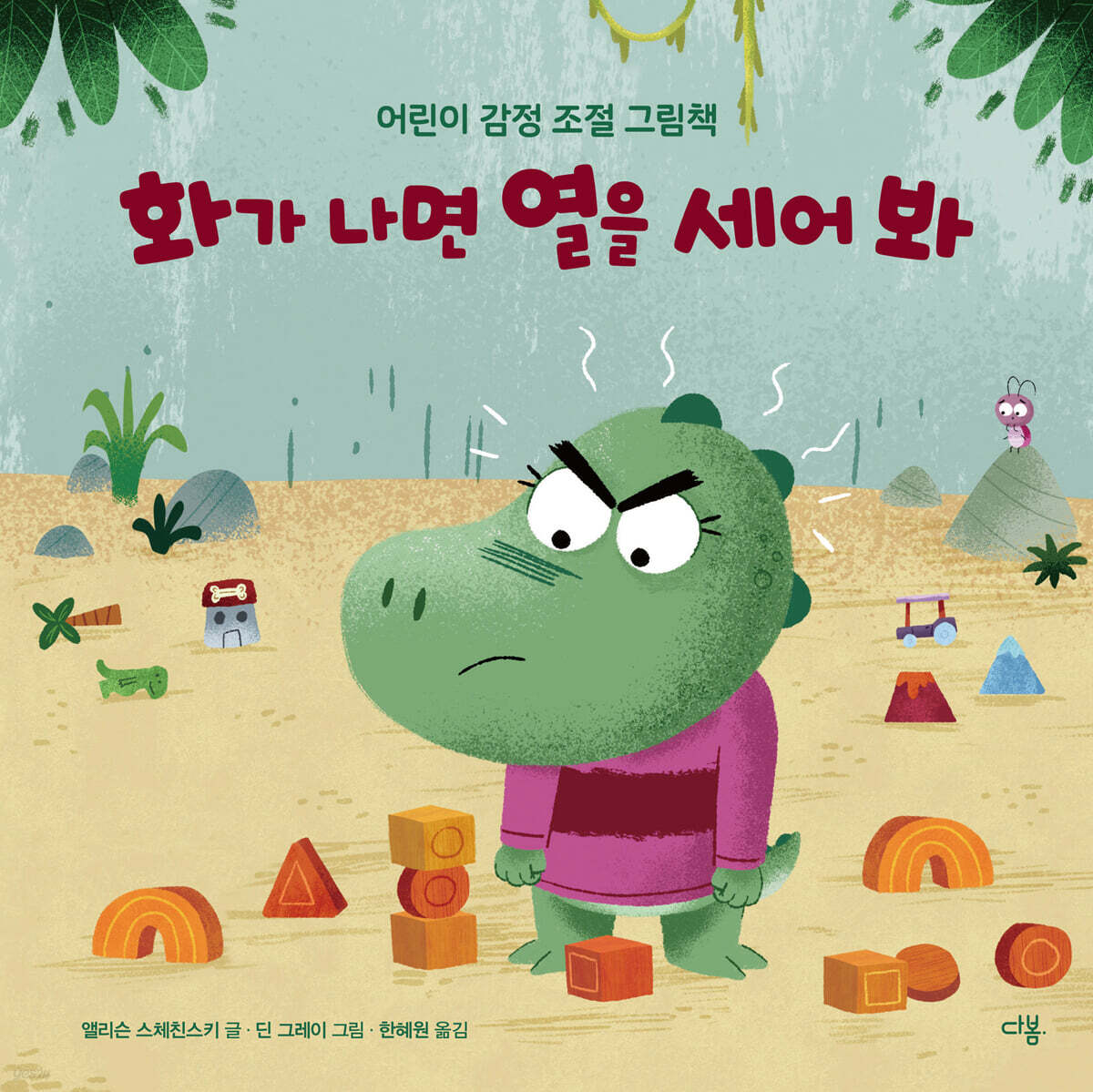
When you get angry, count to ten
 |
Description
Book Introduction
Emotion regulation is not an innate ability,
A skill developed through practice!
Anger is a natural emotion.
Help children express their anger safely.
This is a picture book that helps children express the emotion of 'anger' in a healthy way and develop the ability to control it on their own.
Instead of suppressing or denying your emotions, it teaches you how to calm yourself down by recognizing, “I’m angry right now,” and then counting numbers.
The various anger management techniques that Mr. Rex teaches in the classroom in the picture book are easy for anyone to follow and can be used anywhere, at home or in the classroom.
By experiencing the ability to pause and catch one's breath before an emotional outburst, children will develop self-regulation and resilience.
A skill developed through practice!
Anger is a natural emotion.
Help children express their anger safely.
This is a picture book that helps children express the emotion of 'anger' in a healthy way and develop the ability to control it on their own.
Instead of suppressing or denying your emotions, it teaches you how to calm yourself down by recognizing, “I’m angry right now,” and then counting numbers.
The various anger management techniques that Mr. Rex teaches in the classroom in the picture book are easy for anyone to follow and can be used anywhere, at home or in the classroom.
By experiencing the ability to pause and catch one's breath before an emotional outburst, children will develop self-regulation and resilience.
- You can preview some of the book's contents.
Preview
Detailed image

Publisher's Review
Kids who love playing the most
We grow through unexpected situations that arise while playing.
The main character of this book is Riley.
He is a cheerful and cheerful child who knows how to express his good mood by saying, "I feel like I'm flying!"
During my free time, I also know how to focus on building a cool town with blocks.
But just as he was about to finish building the two towers, his friend Parker's tail touched them and they collapsed.
Riley gets so angry that her face gets hot and her body stiffens.
He was so angry that he threw a block even though the teacher was right next to him, knocking over the remaining tower.
It was a dangerous moment that could have hurt Riley and her other friends.
This kind of scene often happens when children play together.
How should teachers, parents, guardians, and adults help an angry child at this time? And how should an angry child, or a child who has unintentionally upset a friend, express their feelings?
The language of emotions that adults must learn first and teach to children.
Instead of scolding, show empathy. Instead of violence, show pause.
When a child gets angry or irritated, it is often easy to scold or console them by saying, “Don’t be angry!” or “Don’t be irritated!”
This is especially true in crowded places or when your child is expressing anger in a violent manner.
It's because I want to quickly resolve the uncomfortable situation.
However, this type of response can deprive the child of the opportunity to recognize the emotion of "anger" and process it in a healthy way.
If the situation ends without receiving any sympathy, resentment may build up in the child's mind.
In this book, Mr. Rex approaches Riley, who is throwing a toy in anger, and asks her affectionately, “How are you feeling now?”
It gives Riley a chance to recognize her feelings.
Then, “It’s okay to be angry.
“Anyone can do that,” he says with empathy.
And it calmly teaches you how to safely express your feelings without denying them.
Social and emotional education at home and in the classroom
Emotional regulation is a skill that can be learned through education!
In recent educational settings, it is said that the ability to manage emotions and relationships is more important than knowledge.
"Count to Ten When You're Angry" is a social-emotional education picture book that can be used both at home and in the classroom.
Teachers can read this book together during class time and talk with children about “What should we do when we get angry?”, and parents can suggest things like “Let’s see what our friends did?” or “Let’s count to ten together?” when their children cry or feel upset.
You can also follow along with the pictures to learn how to regulate your emotions, such as taking deep breaths, slowly shaking your hands and arms, and imagining yourself feeling better.
The emotion regulation games and activities included in the appendix are very helpful for children who have difficulty expressing their emotions.
The ability to manage emotions is not innate.
Small, everyday habits will help your child develop lifelong skills for self-discipline, helping them grow into strong individuals who can recognize and express their emotions in a healthy way.
We grow through unexpected situations that arise while playing.
The main character of this book is Riley.
He is a cheerful and cheerful child who knows how to express his good mood by saying, "I feel like I'm flying!"
During my free time, I also know how to focus on building a cool town with blocks.
But just as he was about to finish building the two towers, his friend Parker's tail touched them and they collapsed.
Riley gets so angry that her face gets hot and her body stiffens.
He was so angry that he threw a block even though the teacher was right next to him, knocking over the remaining tower.
It was a dangerous moment that could have hurt Riley and her other friends.
This kind of scene often happens when children play together.
How should teachers, parents, guardians, and adults help an angry child at this time? And how should an angry child, or a child who has unintentionally upset a friend, express their feelings?
The language of emotions that adults must learn first and teach to children.
Instead of scolding, show empathy. Instead of violence, show pause.
When a child gets angry or irritated, it is often easy to scold or console them by saying, “Don’t be angry!” or “Don’t be irritated!”
This is especially true in crowded places or when your child is expressing anger in a violent manner.
It's because I want to quickly resolve the uncomfortable situation.
However, this type of response can deprive the child of the opportunity to recognize the emotion of "anger" and process it in a healthy way.
If the situation ends without receiving any sympathy, resentment may build up in the child's mind.
In this book, Mr. Rex approaches Riley, who is throwing a toy in anger, and asks her affectionately, “How are you feeling now?”
It gives Riley a chance to recognize her feelings.
Then, “It’s okay to be angry.
“Anyone can do that,” he says with empathy.
And it calmly teaches you how to safely express your feelings without denying them.
Social and emotional education at home and in the classroom
Emotional regulation is a skill that can be learned through education!
In recent educational settings, it is said that the ability to manage emotions and relationships is more important than knowledge.
"Count to Ten When You're Angry" is a social-emotional education picture book that can be used both at home and in the classroom.
Teachers can read this book together during class time and talk with children about “What should we do when we get angry?”, and parents can suggest things like “Let’s see what our friends did?” or “Let’s count to ten together?” when their children cry or feel upset.
You can also follow along with the pictures to learn how to regulate your emotions, such as taking deep breaths, slowly shaking your hands and arms, and imagining yourself feeling better.
The emotion regulation games and activities included in the appendix are very helpful for children who have difficulty expressing their emotions.
The ability to manage emotions is not innate.
Small, everyday habits will help your child develop lifelong skills for self-discipline, helping them grow into strong individuals who can recognize and express their emotions in a healthy way.
GOODS SPECIFICS
- Date of issue: November 10, 2025
- Format: Hardcover book binding method guide
- Pages, weight, size: 52 pages | 340g | 218*218*10mm
- ISBN13: 9791194148425
- ISBN10: 1194148425
- KC Certification: Certification Type: Conformity Confirmation
You may also like
카테고리
korean


korean

![GQ KOREA Mark (Monthly): December [2025]](http://librairie.coreenne.fr/cdn/shop/files/8ef265dbbfbf186523ed75ba7319009d.jpg?v=1765340328&width=3840)


