

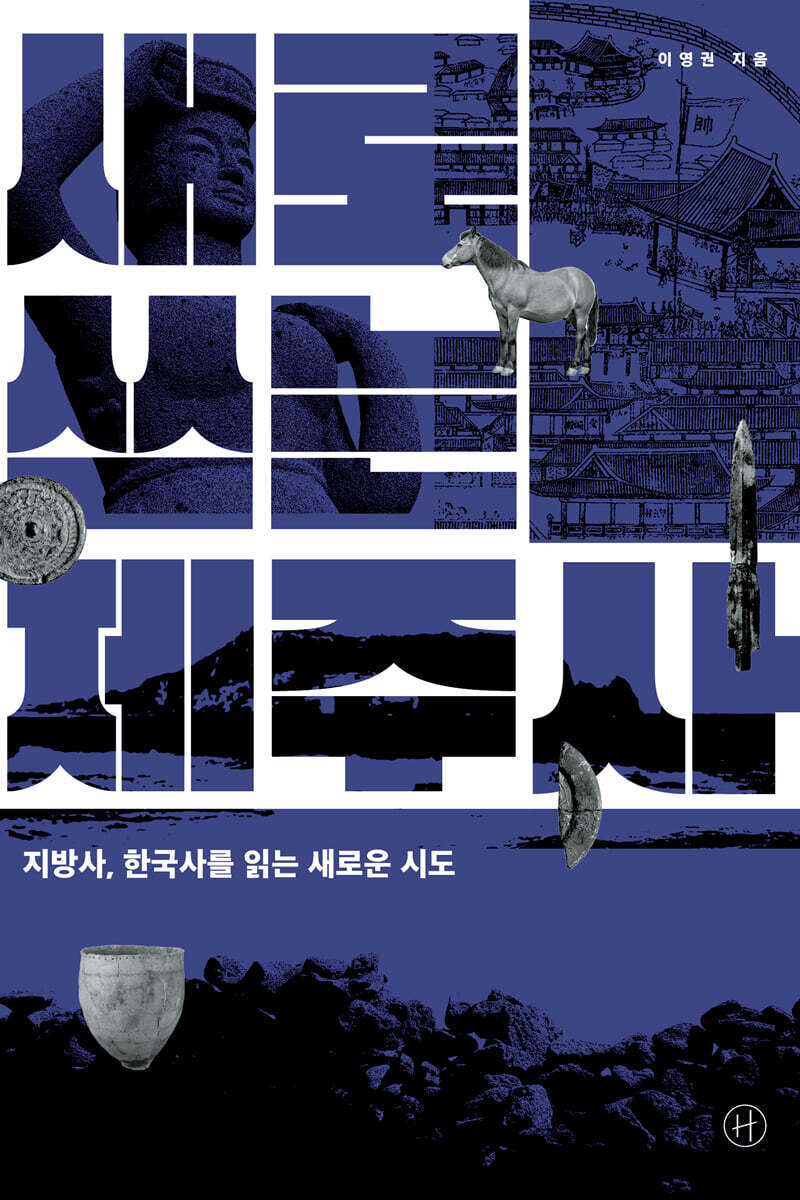
Newly written Jeju history
 |
Description
Book Introduction
This is why we need to write local history!
Rewriting Korean history from Jeju's perspective, beyond the central region.
Jeju, a remote area left out of the central history.
If you focus on Jeju's history, you will see a completely different Korean history.
Discover the true history of Jeju, unseen anywhere else, through the unique perspective and voice of Jeju.
The first edition of 『Rewriting Jeju History』, published in 2005, became a signal for the writing of local history by restoring the voices of local regions that had been marginalized in Korean history for the first time.
But now, 20 years later, it's still difficult to find "local history," and the insights this book offers remain as relevant as ever.
Just as a completely different Korean history emerges when centered on Jeju's history, a new perspective on history emerges only when read from a local perspective, breaking away from nationalism and the central government's perspective.
This is why writing local history is necessary.
This book is organized into 12 topics that follow the flow of time from Jeju's prehistoric culture to the truth about the April 3 Incident.
These twelve themes consistently present a discourse from the periphery rather than the central perspective, sharply overturning the state-centered narrative of Korean history.
The author's profound love for his hometown of Jeju is palpable, but he maintains a consistent historical perspective of "the perspective of the periphery," so he is not blind.
The true history of Jeju, unseen anywhere else, is now revealed through the unique perspective and voice of Jeju.
Rewriting Korean history from Jeju's perspective, beyond the central region.
Jeju, a remote area left out of the central history.
If you focus on Jeju's history, you will see a completely different Korean history.
Discover the true history of Jeju, unseen anywhere else, through the unique perspective and voice of Jeju.
The first edition of 『Rewriting Jeju History』, published in 2005, became a signal for the writing of local history by restoring the voices of local regions that had been marginalized in Korean history for the first time.
But now, 20 years later, it's still difficult to find "local history," and the insights this book offers remain as relevant as ever.
Just as a completely different Korean history emerges when centered on Jeju's history, a new perspective on history emerges only when read from a local perspective, breaking away from nationalism and the central government's perspective.
This is why writing local history is necessary.
This book is organized into 12 topics that follow the flow of time from Jeju's prehistoric culture to the truth about the April 3 Incident.
These twelve themes consistently present a discourse from the periphery rather than the central perspective, sharply overturning the state-centered narrative of Korean history.
The author's profound love for his hometown of Jeju is palpable, but he maintains a consistent historical perspective of "the perspective of the periphery," so he is not blind.
The true history of Jeju, unseen anywhere else, is now revealed through the unique perspective and voice of Jeju.
index
Preface: Jeju's History as Seen Through Jeju's Eyes
1.
Jeju's Prehistoric Culture Seen from the Perspective of the Frontier
Billemot Cave Disappears from Korean History Textbooks | Human Footprints from 15,000 to 6,800 Years Ago | Bronze, Iron, and Tamna
♧ Nationality of Paleolithic Culture
2.
The formation and founding myth of Tamna
Jeju Island, Rich in Mythology | The Magnificent Woman, Seolmundae Halmang
The Samseong Myth, the story of the founding of Tamna | The Three Princesses from the Sea | From the Samseong Myth to the Sameulna Myth
♧ Is it Goryangbu or Yanggobu?
3.
Goryeo, Mongolia, and Tamna
Subjugated to Goryeo | Why 'Tamna' Became 'Jeju' | The Last Battleground of the Sambyeolcho | What Does the Sambyeolcho Mean to the People of Jeju? | Hwanhae Jangseong Fortress
People go to Seoul, horses go to Jeju | Mokho's Rebellion
♧ Mokho's Rebellion and the Fall of Goryeo
4.
Buddhist culture that accompanied the rise and fall of Mongolia
Performing a ritual in front of the main Buddha statue | Full-scale introduction of Buddhism | “Jeju monks openly take wives” | “Now there are no temples, Buddhist statues, or monks” | The nun who revived Buddhism in Jeju
♧ Various views surrounding the period of introduction of Buddhism
5.
Frequent invasions and military service by Japanese pirates
The Path of the Japanese Pirates | The Cheonmipo Invasion and the Eulmyo Invasion | Women Who Fulfilled Military Service | Jeju's Defense Facilities: 3 Fortresses, 9 Garrisons, 25 Beacon Fires, and 38 Regiments | Ongseong, Moat, Chiseong, and Women's Clothing
6.
The remote island of Jeju and the nobles of Joseon
What was Jeju Island to the Joseon aristocracy? | Jeju's local officials
Government office, the center of local politics | Island of exile | Exiles of Jeju | Five wise men of Jeju?
♧ Confucian education strengthened in the late Joseon Dynasty
7.
Chusa calligraphy perfected by Jeju's cold wind
Jeju people and 'Yukjitgeot' | The role of outsiders in Jeju history | Chusa font, made in Jeju | A genius with a strange fate | From Chusa to Wandang | The pain and loneliness of exile | Only after the cold winter does one know green | Wandang and Choeui Seonsa
♧ The transmission of the “Sehando”
8.
Home of 18,000 Gods
Unwritten History | Superstition or Traditional Culture | The Evolution of Jeju Shamanism | Shrines and Danggut | Your Original Purification, Singing the History of the Gods | People Who Worship Snakes | The Main Characters of Myths Are Women | Maitreya Buddha Leaving the Temple | Confucian Fundamentalism VS Folk Beliefs | Danggut in Shamanism and Confucian-Style Poje
9.
Lee Jae-su of Jeju in the Age of Rebellion
The Dengso conspiracy disguised as a rebellion | The Jeju Uprising of the Year of the Dog
The Namhakdang and Bangseongchil Rebellions | The Rewriting of Lee Jaesu's Rebellion
♧ Characteristics of the 19th-century Jeju Uprising
10.
The lives and struggles of Jeju people during the Japanese colonial period
Elephant-shaped thermal lunchbox | Beopjeongsa anti-Japanese movement | Jeju Island's Gimi Year independence movement | Formation of the Shininhoe | Jeju Island's community tradition and anarchist movement | Self-driving movement: We're on our own ship! | The power of Jeju women that shone even in the anti-Japanese struggle | The collapse of Jeju Yacheika | Red Peasant Union movement
♧ Why don’t textbooks properly teach the anti-Japanese movement?
11.
The fate of Jeju before the whirlwind of war
War and Peace | The Aesthetics of Death Forced by Emperorism | Operation Kyeol No. 7, the Front Line for Homeland Defense | Is it the Greater East Asia War or the Pacific War? | For Jeju, the 'Island of Peace'
12.
The Truth Behind the April 3 Incident: A Tragedy in Modern Korean History
There is no modern history | The US military government and the People's Committee | The Jeju Island People's Committee | The return of 60,000 people | The fuse of April 3rd, the shooting on March 1, 1947 | The general strike of the civilian and governmental governments and the suppression of the US military government | The commotion of April 3, 1948 | The collapse of peace negotiations and the fabricated Orari arson incident | Two soldiers with polar opposites, Kim Ik-ryeol and Park Jin-gyeong | The fall of 1948, the scorched-earth operation | The tragedy that never ends | From "Uncle Sooni" to the April 3rd Special Act
♧ Incomplete liberation
References
1.
Jeju's Prehistoric Culture Seen from the Perspective of the Frontier
Billemot Cave Disappears from Korean History Textbooks | Human Footprints from 15,000 to 6,800 Years Ago | Bronze, Iron, and Tamna
♧ Nationality of Paleolithic Culture
2.
The formation and founding myth of Tamna
Jeju Island, Rich in Mythology | The Magnificent Woman, Seolmundae Halmang
The Samseong Myth, the story of the founding of Tamna | The Three Princesses from the Sea | From the Samseong Myth to the Sameulna Myth
♧ Is it Goryangbu or Yanggobu?
3.
Goryeo, Mongolia, and Tamna
Subjugated to Goryeo | Why 'Tamna' Became 'Jeju' | The Last Battleground of the Sambyeolcho | What Does the Sambyeolcho Mean to the People of Jeju? | Hwanhae Jangseong Fortress
People go to Seoul, horses go to Jeju | Mokho's Rebellion
♧ Mokho's Rebellion and the Fall of Goryeo
4.
Buddhist culture that accompanied the rise and fall of Mongolia
Performing a ritual in front of the main Buddha statue | Full-scale introduction of Buddhism | “Jeju monks openly take wives” | “Now there are no temples, Buddhist statues, or monks” | The nun who revived Buddhism in Jeju
♧ Various views surrounding the period of introduction of Buddhism
5.
Frequent invasions and military service by Japanese pirates
The Path of the Japanese Pirates | The Cheonmipo Invasion and the Eulmyo Invasion | Women Who Fulfilled Military Service | Jeju's Defense Facilities: 3 Fortresses, 9 Garrisons, 25 Beacon Fires, and 38 Regiments | Ongseong, Moat, Chiseong, and Women's Clothing
6.
The remote island of Jeju and the nobles of Joseon
What was Jeju Island to the Joseon aristocracy? | Jeju's local officials
Government office, the center of local politics | Island of exile | Exiles of Jeju | Five wise men of Jeju?
♧ Confucian education strengthened in the late Joseon Dynasty
7.
Chusa calligraphy perfected by Jeju's cold wind
Jeju people and 'Yukjitgeot' | The role of outsiders in Jeju history | Chusa font, made in Jeju | A genius with a strange fate | From Chusa to Wandang | The pain and loneliness of exile | Only after the cold winter does one know green | Wandang and Choeui Seonsa
♧ The transmission of the “Sehando”
8.
Home of 18,000 Gods
Unwritten History | Superstition or Traditional Culture | The Evolution of Jeju Shamanism | Shrines and Danggut | Your Original Purification, Singing the History of the Gods | People Who Worship Snakes | The Main Characters of Myths Are Women | Maitreya Buddha Leaving the Temple | Confucian Fundamentalism VS Folk Beliefs | Danggut in Shamanism and Confucian-Style Poje
9.
Lee Jae-su of Jeju in the Age of Rebellion
The Dengso conspiracy disguised as a rebellion | The Jeju Uprising of the Year of the Dog
The Namhakdang and Bangseongchil Rebellions | The Rewriting of Lee Jaesu's Rebellion
♧ Characteristics of the 19th-century Jeju Uprising
10.
The lives and struggles of Jeju people during the Japanese colonial period
Elephant-shaped thermal lunchbox | Beopjeongsa anti-Japanese movement | Jeju Island's Gimi Year independence movement | Formation of the Shininhoe | Jeju Island's community tradition and anarchist movement | Self-driving movement: We're on our own ship! | The power of Jeju women that shone even in the anti-Japanese struggle | The collapse of Jeju Yacheika | Red Peasant Union movement
♧ Why don’t textbooks properly teach the anti-Japanese movement?
11.
The fate of Jeju before the whirlwind of war
War and Peace | The Aesthetics of Death Forced by Emperorism | Operation Kyeol No. 7, the Front Line for Homeland Defense | Is it the Greater East Asia War or the Pacific War? | For Jeju, the 'Island of Peace'
12.
The Truth Behind the April 3 Incident: A Tragedy in Modern Korean History
There is no modern history | The US military government and the People's Committee | The Jeju Island People's Committee | The return of 60,000 people | The fuse of April 3rd, the shooting on March 1, 1947 | The general strike of the civilian and governmental governments and the suppression of the US military government | The commotion of April 3, 1948 | The collapse of peace negotiations and the fabricated Orari arson incident | Two soldiers with polar opposites, Kim Ik-ryeol and Park Jin-gyeong | The fall of 1948, the scorched-earth operation | The tragedy that never ends | From "Uncle Sooni" to the April 3rd Special Act
♧ Incomplete liberation
References
Into the book
This pottery with a hole pattern was later spread to various places in Jeju Island.
It left its traces from Hallim, Jeju City, near Sangmo-ri, to Gwakji-ri, Jeju City, and then to the southern area of the tomb site in Yongdam-dong, Jeju City.
It is particularly significant that these perforated pottery fragments were discovered in Yongdam-dong.
This is because Yongdam-dong was the main stage for the formation of Tamna Kingdom.
Ultimately, the Sangmori culture is one of the roots of the formation of Tamna, and its culture is believed to have some connection to the direct ancestors of the current Jeju people.
But it doesn't seem like any great power holders have emerged until then.
This means that even though people from the Bronze Age culture were introduced to the Korean Peninsula, they did not form a large power.
Among the relics and ruins they left behind, there is nothing that symbolizes great power.
This is well explained by the fact that it was only during the Tamna Kingdom period, which was based on the Iron Age culture, that reasonably plausible dolmens were built.
--- p.34-35 「1.
From “Jeju’s Prehistoric Culture Seen from the Perspective of the Frontier”
Jeju Island, with its unique landscapes and unique characteristics, is richer in myths than any other region in Korea.
Among the many myths of Jeju that contain the history of 18,000 gods, there is even a myth of the creation of heaven and earth called 'Cheonjiwangbonpuri'.
This Cheonjiwangbonpuri, which says that in the beginning when only darkness and chaos existed, the heaven and the earth were divided and the world was created, is sung by shamans during the Chogamje, the beginning of a large ritual.
With the exception of Jeju Island and some parts of the northern part of the Korean Peninsula, there are virtually no regions in Korea that preserve the myth of the creation of the world.
It is not very common even worldwide.
Of course, this book will only examine the myths related to the birth of Jeju Island and the creation of Tamna, the first kingdom established on Jeju Island, rather than the birth of the universe.
This is because the topic was limited to Jeju history.
--- p.45 「2.
From “The Formation and Founding Myth of Tamna”
Why did the Mokho Rebellion drag on so much longer than the Sambyeolcho Rebellion? The answer seems to lie in comparing the length of time Sambyeolcho and Mokho were stationed there.
Sambyeolcho was stationed there for a little over two years, but Mokho was stationed there for about 100 years.
It is said that Mongolians lived with Jeju people for 100 years.
This point speaks to the ‘support base of resistance’ that the Mokho forces have.
The resistance's support base? Now things get a little awkward.
What would have happened if young Mongolian soldiers had been on Jeju Island for 100 years? Records indicate that between 1,400 and 1,700 Mongolian soldiers entered the island.
It was a natural phenomenon that descendants were born between these people and the women of Tamra.
--- p.102-103 「3.
From "Goryeo, Mongolia, and Tamna"
The reason the central aristocrats were reluctant to visit Jeju Island was not only because of its poor economic power or backward culture.
Above all, it was because I took it as a demotion.
Once assigned to Jeju, opportunities to interact with influential figures in central politics were reduced, and this naturally had a negative impact on promotion.
Moreover, crossing the sea was a dangerous task that could even lead to death, so it became an object of avoidance.
… … As a result, it was rare for local officials who came to Jeju to make good decisions.
My daily routine was to just look up at the northern sky, thinking about how to return to Seoul.
The government office where the Jeju pastor worked even had a pavilion called Manggyeongru (望京樓), which means ‘a pavilion looking toward Seoul.’
It seems that it wasn't just a building that I would occasionally climb when I thought of it.
Among the government buildings in Jeju-mok, the largest was Manggyeongru.
The same goes for Yeonbukjeong (戀北亭), which means ‘pavilion that longs for the north’ in Jochon.
--- p.173-175 「6.
From “The Frontier Island of Jeju and the Yangban of Joseon”
The rebellions in the Jeju region in the 19th century were generally similar to those in Joseon.
But on the other hand, a peculiar appearance also appears.
This is because there were special circumstances unique to Jeju Island.
Representative examples include the Yang Je-hae Rebellion in 1813 and the Bang Seong-chil Rebellion in 1898, which both raised the slogan of establishing an independent nation.
The Gangje Geom Rebellion of 1862 and the Bangseongchil Rebellion of 1898, both of which were caused by the Hwajeonse incident, also show the unique social and economic conditions of Jeju Island.
Lee Jae-su's rebellion in 1901 was also unique.
Although it is similar to other civil rebellions in that it is a resistance against feudal contradictions, the aspect of resistance against foreign powers represented by Catholicism is what makes Lee Jae-su's rebellion unique.
--- p.315 「9.
From "The Age of Rebellion, Lee Jae-su of Jeju"
In the 2000s, voices began to arise calling Jeju Island the 'Island of Peace.'
… … However, it is difficult to talk about Jeju Island as an island of peace without turning a blind eye to the deep wounds of the April 3rd Incident.
Because only when those deep wounds are healed can peace come in a concrete and real way.
The image of peace is not created simply by the visits of a few world leaders.
The lives of the Jeju people who overcame the pain of April 3rd should themselves become a symbol of peace.
It would be even better if it included the scars and healing from the period before that, that is, the Japanese colonial period.
Only then can Jeju Island, a place steeped in history, overcome the madness of war and be reborn as a land that carries a true message of peace.
It left its traces from Hallim, Jeju City, near Sangmo-ri, to Gwakji-ri, Jeju City, and then to the southern area of the tomb site in Yongdam-dong, Jeju City.
It is particularly significant that these perforated pottery fragments were discovered in Yongdam-dong.
This is because Yongdam-dong was the main stage for the formation of Tamna Kingdom.
Ultimately, the Sangmori culture is one of the roots of the formation of Tamna, and its culture is believed to have some connection to the direct ancestors of the current Jeju people.
But it doesn't seem like any great power holders have emerged until then.
This means that even though people from the Bronze Age culture were introduced to the Korean Peninsula, they did not form a large power.
Among the relics and ruins they left behind, there is nothing that symbolizes great power.
This is well explained by the fact that it was only during the Tamna Kingdom period, which was based on the Iron Age culture, that reasonably plausible dolmens were built.
--- p.34-35 「1.
From “Jeju’s Prehistoric Culture Seen from the Perspective of the Frontier”
Jeju Island, with its unique landscapes and unique characteristics, is richer in myths than any other region in Korea.
Among the many myths of Jeju that contain the history of 18,000 gods, there is even a myth of the creation of heaven and earth called 'Cheonjiwangbonpuri'.
This Cheonjiwangbonpuri, which says that in the beginning when only darkness and chaos existed, the heaven and the earth were divided and the world was created, is sung by shamans during the Chogamje, the beginning of a large ritual.
With the exception of Jeju Island and some parts of the northern part of the Korean Peninsula, there are virtually no regions in Korea that preserve the myth of the creation of the world.
It is not very common even worldwide.
Of course, this book will only examine the myths related to the birth of Jeju Island and the creation of Tamna, the first kingdom established on Jeju Island, rather than the birth of the universe.
This is because the topic was limited to Jeju history.
--- p.45 「2.
From “The Formation and Founding Myth of Tamna”
Why did the Mokho Rebellion drag on so much longer than the Sambyeolcho Rebellion? The answer seems to lie in comparing the length of time Sambyeolcho and Mokho were stationed there.
Sambyeolcho was stationed there for a little over two years, but Mokho was stationed there for about 100 years.
It is said that Mongolians lived with Jeju people for 100 years.
This point speaks to the ‘support base of resistance’ that the Mokho forces have.
The resistance's support base? Now things get a little awkward.
What would have happened if young Mongolian soldiers had been on Jeju Island for 100 years? Records indicate that between 1,400 and 1,700 Mongolian soldiers entered the island.
It was a natural phenomenon that descendants were born between these people and the women of Tamra.
--- p.102-103 「3.
From "Goryeo, Mongolia, and Tamna"
The reason the central aristocrats were reluctant to visit Jeju Island was not only because of its poor economic power or backward culture.
Above all, it was because I took it as a demotion.
Once assigned to Jeju, opportunities to interact with influential figures in central politics were reduced, and this naturally had a negative impact on promotion.
Moreover, crossing the sea was a dangerous task that could even lead to death, so it became an object of avoidance.
… … As a result, it was rare for local officials who came to Jeju to make good decisions.
My daily routine was to just look up at the northern sky, thinking about how to return to Seoul.
The government office where the Jeju pastor worked even had a pavilion called Manggyeongru (望京樓), which means ‘a pavilion looking toward Seoul.’
It seems that it wasn't just a building that I would occasionally climb when I thought of it.
Among the government buildings in Jeju-mok, the largest was Manggyeongru.
The same goes for Yeonbukjeong (戀北亭), which means ‘pavilion that longs for the north’ in Jochon.
--- p.173-175 「6.
From “The Frontier Island of Jeju and the Yangban of Joseon”
The rebellions in the Jeju region in the 19th century were generally similar to those in Joseon.
But on the other hand, a peculiar appearance also appears.
This is because there were special circumstances unique to Jeju Island.
Representative examples include the Yang Je-hae Rebellion in 1813 and the Bang Seong-chil Rebellion in 1898, which both raised the slogan of establishing an independent nation.
The Gangje Geom Rebellion of 1862 and the Bangseongchil Rebellion of 1898, both of which were caused by the Hwajeonse incident, also show the unique social and economic conditions of Jeju Island.
Lee Jae-su's rebellion in 1901 was also unique.
Although it is similar to other civil rebellions in that it is a resistance against feudal contradictions, the aspect of resistance against foreign powers represented by Catholicism is what makes Lee Jae-su's rebellion unique.
--- p.315 「9.
From "The Age of Rebellion, Lee Jae-su of Jeju"
In the 2000s, voices began to arise calling Jeju Island the 'Island of Peace.'
… … However, it is difficult to talk about Jeju Island as an island of peace without turning a blind eye to the deep wounds of the April 3rd Incident.
Because only when those deep wounds are healed can peace come in a concrete and real way.
The image of peace is not created simply by the visits of a few world leaders.
The lives of the Jeju people who overcame the pain of April 3rd should themselves become a symbol of peace.
It would be even better if it included the scars and healing from the period before that, that is, the Japanese colonial period.
Only then can Jeju Island, a place steeped in history, overcome the madness of war and be reborn as a land that carries a true message of peace.
--- p.377 「11.
From “The Fate of Jeju in the Whirlwind of War”
From “The Fate of Jeju in the Whirlwind of War”
Publisher's Review
1.
Why local history?
Beyond the state-centered history, restoring the lives of ordinary people.
Now that 'balanced regional development' has once again emerged as a hot topic of the times, local governments are no longer seen as subordinate entities to the central government, but as key driving forces leading the nation's future.
In the 21st century, decentralization and balanced regional development have been important topics in our society.
Voices are beginning to emerge that history should expand its focus beyond national history-centered research and narratives to include the study of 'local history.'
Most of the known historical materials were written by the state or the ruling class to suit their ruling purposes, so they alone cannot provide us with a detailed understanding of the lives of ordinary people going about their daily lives.
『Rewriting Jeju History』 depicts the lives of our ancestors on Jeju Island as they were, with a consistent perspective of a "peripheral perspective."
The author's love for Jeju is profound, but it sets itself apart from the blind love of local historians who burn with patriotism, and presents a new direction for the writing of local history.
Of course, the current local autonomy has many limitations.
It has a strong character of being a feast for local lords who are in collusion with the central government.
Because of this, I feel that neither the history of the region nor the specific lives of the local people are being properly illuminated.
To put it another way, only when we properly write the history of the regions, when we move away from the centralized view of history and organize more specific facts, can true grassroots democracy be established.
This is precisely why, in this day and age, we need local history with a subjective perspective.
-From "Preface" (page 7)
2.
History Missed by Textbooks
- A fresh look at Korean history from a perspective of the periphery
What did the Sambyeolcho mean to the people of Jeju? Were they patriotic heroes, as we learn in textbooks? The author argues they weren't.
Sambyeolcho brought instability, crisis, and ultimately war to Jeju.
“For the people of Jeju, the very fact that Sambyeolcho entered Jeju was a disaster.”
What was the Mokho Rebellion like? Did the Jeju people of the time view it as a Mongol rebellion against the Goryeo government? Mokho lived alongside the Jeju people for approximately 100 years.
At the time when the Jeju people were mixed together for a long time and the trouble broke out, it was difficult to clearly distinguish between the Mongols and the Jeju Koryo people.
This is why, from Jeju's perspective, the Mokho Rebellion cannot simply be called a rebellion by the Mongols.
Historical narratives centered on the center and power can be easily found in textbooks.
The lives and history of local people are rarely covered.
The history of Jeju, a frontier among frontiers, is even more so.
In Jeju's history, there are lives that are very different from the common sense in centralized textbooks.
It is the virtue of local history to show that even the same event can have different perspectives and interpretations.
Through this book, you can discover the specific details of Jeju, a remote area not included in textbooks.
The history of the province is very different from the history in textbooks.
This is because what is taught in textbooks is only the history of the central powers that seized state power.
Therefore, it does not contain the specific lives of people living their daily lives.
Only history that is faithful to the national ideology and in which the position of the central ruling class is thoroughly incorporated remains.
Even though local stories sometimes appear in textbooks, they do not show the lives of local people.
So history becomes a shell, and the core dies.
The facade of a nation exists, but its true nature disappears.
-From "Preface" (page 6)
3.
Jeju's complete history, not an appendix to Korean history.
- Everything about Jeju history, read according to time and topic
Set against the backdrop of Jeju's unique natural scenery, home to over 18,000 gods, the film captures the entire story of Jeju, the "Island of History," from prehistoric times to the founding myth of Tamna, the Goryeo and Mongol periods, the invasions of Japanese pirates, the Joseon Dynasty when it became a complete frontier, the anti-Japanese struggle during the Japanese colonial period, and the April 3 Incident in modern history.
While describing Jeju's history in chronological order, it introduces characteristic events and scenes of Jeju history by topic rather than by chronology.
The author, who has taught history to students for a long time as a history teacher and has conducted numerous field trips in Jeju, uses his seasoned storytelling skills to lead readers into a vivid experience as if they were present at the historical site of Jeju.
You will encounter Jeju's history, which is complete in itself, not an appendix to Korean history.
Why local history?
Beyond the state-centered history, restoring the lives of ordinary people.
Now that 'balanced regional development' has once again emerged as a hot topic of the times, local governments are no longer seen as subordinate entities to the central government, but as key driving forces leading the nation's future.
In the 21st century, decentralization and balanced regional development have been important topics in our society.
Voices are beginning to emerge that history should expand its focus beyond national history-centered research and narratives to include the study of 'local history.'
Most of the known historical materials were written by the state or the ruling class to suit their ruling purposes, so they alone cannot provide us with a detailed understanding of the lives of ordinary people going about their daily lives.
『Rewriting Jeju History』 depicts the lives of our ancestors on Jeju Island as they were, with a consistent perspective of a "peripheral perspective."
The author's love for Jeju is profound, but it sets itself apart from the blind love of local historians who burn with patriotism, and presents a new direction for the writing of local history.
Of course, the current local autonomy has many limitations.
It has a strong character of being a feast for local lords who are in collusion with the central government.
Because of this, I feel that neither the history of the region nor the specific lives of the local people are being properly illuminated.
To put it another way, only when we properly write the history of the regions, when we move away from the centralized view of history and organize more specific facts, can true grassroots democracy be established.
This is precisely why, in this day and age, we need local history with a subjective perspective.
-From "Preface" (page 7)
2.
History Missed by Textbooks
- A fresh look at Korean history from a perspective of the periphery
What did the Sambyeolcho mean to the people of Jeju? Were they patriotic heroes, as we learn in textbooks? The author argues they weren't.
Sambyeolcho brought instability, crisis, and ultimately war to Jeju.
“For the people of Jeju, the very fact that Sambyeolcho entered Jeju was a disaster.”
What was the Mokho Rebellion like? Did the Jeju people of the time view it as a Mongol rebellion against the Goryeo government? Mokho lived alongside the Jeju people for approximately 100 years.
At the time when the Jeju people were mixed together for a long time and the trouble broke out, it was difficult to clearly distinguish between the Mongols and the Jeju Koryo people.
This is why, from Jeju's perspective, the Mokho Rebellion cannot simply be called a rebellion by the Mongols.
Historical narratives centered on the center and power can be easily found in textbooks.
The lives and history of local people are rarely covered.
The history of Jeju, a frontier among frontiers, is even more so.
In Jeju's history, there are lives that are very different from the common sense in centralized textbooks.
It is the virtue of local history to show that even the same event can have different perspectives and interpretations.
Through this book, you can discover the specific details of Jeju, a remote area not included in textbooks.
The history of the province is very different from the history in textbooks.
This is because what is taught in textbooks is only the history of the central powers that seized state power.
Therefore, it does not contain the specific lives of people living their daily lives.
Only history that is faithful to the national ideology and in which the position of the central ruling class is thoroughly incorporated remains.
Even though local stories sometimes appear in textbooks, they do not show the lives of local people.
So history becomes a shell, and the core dies.
The facade of a nation exists, but its true nature disappears.
-From "Preface" (page 6)
3.
Jeju's complete history, not an appendix to Korean history.
- Everything about Jeju history, read according to time and topic
Set against the backdrop of Jeju's unique natural scenery, home to over 18,000 gods, the film captures the entire story of Jeju, the "Island of History," from prehistoric times to the founding myth of Tamna, the Goryeo and Mongol periods, the invasions of Japanese pirates, the Joseon Dynasty when it became a complete frontier, the anti-Japanese struggle during the Japanese colonial period, and the April 3 Incident in modern history.
While describing Jeju's history in chronological order, it introduces characteristic events and scenes of Jeju history by topic rather than by chronology.
The author, who has taught history to students for a long time as a history teacher and has conducted numerous field trips in Jeju, uses his seasoned storytelling skills to lead readers into a vivid experience as if they were present at the historical site of Jeju.
You will encounter Jeju's history, which is complete in itself, not an appendix to Korean history.
GOODS SPECIFICS
- Date of issue: November 3, 2025
- Page count, weight, size: 440 pages | 566g | 142*210*27mm
- ISBN13: 9791170873877
- ISBN10: 1170873871
You may also like
카테고리
korean


korean

![GQ KOREA Mark (Monthly): December [2025]](http://librairie.coreenne.fr/cdn/shop/files/8ef265dbbfbf186523ed75ba7319009d.jpg?v=1765340328&width=3840)


