

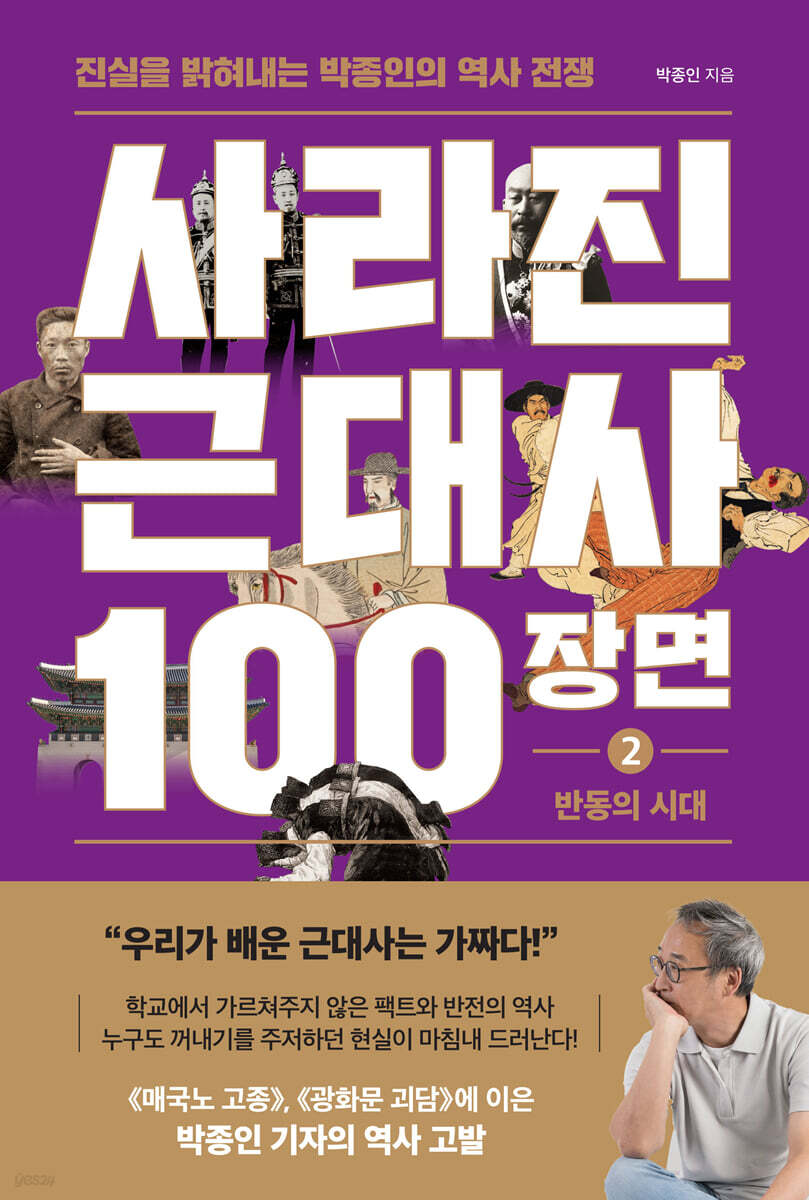
100 Lost Scenes from Modern History ② The Age of Reaction
 |
Description
Book Introduction
100 historical puzzles full of twists and shocks
On May 6, 1889, the day the Eiffel Tower, a symbol of modernity, stood tall in Europe, a lowly civil servant in Joseon was appointed as the governor of Gobu County.
The cause of the largest civil uprising in Joseon, the Donghak Peasant Revolution, is Jo Byeong-gap.
The Eiffel Tower changed the world, and so did a single person.
A year before the poor French intellectual Denis Diderot was appointed editor-in-chief of the Encyclopédie, King Yeongjo of Joseon destroyed a telescope that his subjects had obtained with difficulty from the Qing Dynasty.
It is an 'ugly' tool that dares to look straight at the sun.
The 'Encyclopedists' ushered in the Age of Enlightenment in Europe, while the broken telescope brought damp darkness to Joseon, rather than light.
During the majestic 19th century, when the entire world was rushing toward modernity, striving for wealth and a strong military, what was happening in Joseon and the world? When Newton discovered the law of universal gravitation after seeing an apple, and when Edison invented the phonograph, what did Joseon realize and invent during the same era?
At some point, history ceased to be a necessary map for moving forward into the future, but became a tool that was not afraid to be distorted for personal gain.
History exists not just for pride.
Mistakes and failures are also part of our history that we must not forget.
"100 Lost Scenes of Modern History" captures 100 scenes that changed the fate of this land during a time when the world was in turmoil due to explosive "intellect" and intense "exchange."
From the reign of King Yeongjeongjo to liberation and the founding of the nation, all 100 scenes are 'inconvenient' facts that cannot be learned in school.
The moment we properly confront the history that has been 'disappeared' by someone, things that were previously invisible begin to become visible.
On May 6, 1889, the day the Eiffel Tower, a symbol of modernity, stood tall in Europe, a lowly civil servant in Joseon was appointed as the governor of Gobu County.
The cause of the largest civil uprising in Joseon, the Donghak Peasant Revolution, is Jo Byeong-gap.
The Eiffel Tower changed the world, and so did a single person.
A year before the poor French intellectual Denis Diderot was appointed editor-in-chief of the Encyclopédie, King Yeongjo of Joseon destroyed a telescope that his subjects had obtained with difficulty from the Qing Dynasty.
It is an 'ugly' tool that dares to look straight at the sun.
The 'Encyclopedists' ushered in the Age of Enlightenment in Europe, while the broken telescope brought damp darkness to Joseon, rather than light.
During the majestic 19th century, when the entire world was rushing toward modernity, striving for wealth and a strong military, what was happening in Joseon and the world? When Newton discovered the law of universal gravitation after seeing an apple, and when Edison invented the phonograph, what did Joseon realize and invent during the same era?
At some point, history ceased to be a necessary map for moving forward into the future, but became a tool that was not afraid to be distorted for personal gain.
History exists not just for pride.
Mistakes and failures are also part of our history that we must not forget.
"100 Lost Scenes of Modern History" captures 100 scenes that changed the fate of this land during a time when the world was in turmoil due to explosive "intellect" and intense "exchange."
From the reign of King Yeongjeongjo to liberation and the founding of the nation, all 100 scenes are 'inconvenient' facts that cannot be learned in school.
The moment we properly confront the history that has been 'disappeared' by someone, things that were previously invisible begin to become visible.
- You can preview some of the book's contents.
Preview
index
② The era of reaction
Introduction: Beautiful Fake and Sacred Fact
Chapter 4: The Reform Era (Donghak and Gabo Reforms) 1889–1894
Scene 51.
The Eiffel Tower and Cho Byeong-gap's monument in Paris in 1889
Scene 52.
1894: Gobu farmer Jo Byeong-gap destroys Manseokbo
Scene 53.
Kim Ok-gyun, the traitor who died twice in 1894
Scene 54.
1894: Emperor Gojong and Lady Min summon foreign troops
Scene 55.
Gyeongbokgung Palace raided in 1894
Scene 56.
The Battle of Pungdo and the First Sino-Japanese War in 1894
Scene 57.
Kim Hong-jip and the Gabo Reforms of 1894
Scene 58.
Slaves freed after 500 years in 1894
Scene 59.
The Baektappa and the Modern Network, reincarnated in 1894
Chapter 5: The Age of Reaction, 1894–1897
Scene 60.
Joseon's fall to a protectorate in 1894 and the life of a child
Scene 61.
Japanese troops captured Buyeo by Emperor Gojong in 1894
Scene 62.
The Strange Independence of 1895: The Treaty of Shimonoseki
Scene 63.
1895 'All reforms are cancelled'
Scene 64.
The Eulmi Incident of 1895, the Danbalryeong Order, and Eom Sang-gung
Scene 65.
Abandoning the country and abandoning the people in 1896
Scene 66.
Change of the four major countries in 1896
Scene 67.
1896: Joseon people enter the modern era
Chapter 6: Imperial Era 1897–1910
Scene 68.
Establishing a one-man empire in 1897
Scene 69.
The Naked Emperor, 1897
Scene 70.
The Resurrection of the Guillotine and the Execution of the Dead in 1898
Scene 71.
1898: Letters of loyalty to the Emperor, Empress Dowager, and Tsar
Scene 72.
The candle of modernity completely extinguished in 1898
Scene 73.
The royal tomb of the Jeonju Yi clan, suddenly discovered in 1899
Scene 74.
Became a Neo-Confucian state again in 1899
Scene 75.
The birth of an anti-modern dictatorship in 1899
Scene 76.
1902 The Emperor builds his second palace
Scene 77.
1902 Emperor, special appointment of descendants of founder of Neo-Confucianism
Scene 78.
1902 Beggar Emperor's 40th Anniversary Party
Scene 79.
1903: Old warships enter port
Scene 80.
1903 Letter to the Emperor and Tsar
Scene 81.
The Emperor's 300,000 yen bribe and his change of heart in 1904
Scene 82.
The Emperor's second bribe in 1905
Scene 83.
The Eulsa Five Traitors of 1905 rebuked the emperor.
Scene 84.
Ito Hirobumi's white beard in 1905
Scene 85.
The Hague Emissary's 1907 revelations: "tyranny"
Scene 86.
1907: A puppet with a topknot becomes emperor
Scene 87.
1907 Imperial Emperor receives a 'necklace' from the Emperor
Scene 88.
1908: More Emperors
Scene 89.
The 'Scholarly Spirit' Revealed in 1908
Scene 90.
Gunshots in Harbin in 1909
Scene 91.
Summer 1910, the fish jumped in first
Scene 92.
The 1910 National Fall and the Great Medal Party
Scene 93.
The promulgation of the Annexation Treaty was delayed due to the Emperor's coronation party in 1910.
Chapter 7: Colonization and Liberation 1910–1945
Scene 94.
1910: The Joseon royal family becomes the imperial family
Scene 95.
The Zeitgeist of 1919
Scene 96.
The discovery of the Hunminjeongeum Haeryebon in 1940 and the actions of a pro-Japanese collaborator
Scene 97.
A former government official's secret visit to the royal shrine in 1941
Scene 98.
Liberation came like a thief in 1945
Scene 99.
The disappearing shadow of the old regime in 1945
Scene 100.
Republic of Korea in 1948
Introduction: Beautiful Fake and Sacred Fact
Chapter 4: The Reform Era (Donghak and Gabo Reforms) 1889–1894
Scene 51.
The Eiffel Tower and Cho Byeong-gap's monument in Paris in 1889
Scene 52.
1894: Gobu farmer Jo Byeong-gap destroys Manseokbo
Scene 53.
Kim Ok-gyun, the traitor who died twice in 1894
Scene 54.
1894: Emperor Gojong and Lady Min summon foreign troops
Scene 55.
Gyeongbokgung Palace raided in 1894
Scene 56.
The Battle of Pungdo and the First Sino-Japanese War in 1894
Scene 57.
Kim Hong-jip and the Gabo Reforms of 1894
Scene 58.
Slaves freed after 500 years in 1894
Scene 59.
The Baektappa and the Modern Network, reincarnated in 1894
Chapter 5: The Age of Reaction, 1894–1897
Scene 60.
Joseon's fall to a protectorate in 1894 and the life of a child
Scene 61.
Japanese troops captured Buyeo by Emperor Gojong in 1894
Scene 62.
The Strange Independence of 1895: The Treaty of Shimonoseki
Scene 63.
1895 'All reforms are cancelled'
Scene 64.
The Eulmi Incident of 1895, the Danbalryeong Order, and Eom Sang-gung
Scene 65.
Abandoning the country and abandoning the people in 1896
Scene 66.
Change of the four major countries in 1896
Scene 67.
1896: Joseon people enter the modern era
Chapter 6: Imperial Era 1897–1910
Scene 68.
Establishing a one-man empire in 1897
Scene 69.
The Naked Emperor, 1897
Scene 70.
The Resurrection of the Guillotine and the Execution of the Dead in 1898
Scene 71.
1898: Letters of loyalty to the Emperor, Empress Dowager, and Tsar
Scene 72.
The candle of modernity completely extinguished in 1898
Scene 73.
The royal tomb of the Jeonju Yi clan, suddenly discovered in 1899
Scene 74.
Became a Neo-Confucian state again in 1899
Scene 75.
The birth of an anti-modern dictatorship in 1899
Scene 76.
1902 The Emperor builds his second palace
Scene 77.
1902 Emperor, special appointment of descendants of founder of Neo-Confucianism
Scene 78.
1902 Beggar Emperor's 40th Anniversary Party
Scene 79.
1903: Old warships enter port
Scene 80.
1903 Letter to the Emperor and Tsar
Scene 81.
The Emperor's 300,000 yen bribe and his change of heart in 1904
Scene 82.
The Emperor's second bribe in 1905
Scene 83.
The Eulsa Five Traitors of 1905 rebuked the emperor.
Scene 84.
Ito Hirobumi's white beard in 1905
Scene 85.
The Hague Emissary's 1907 revelations: "tyranny"
Scene 86.
1907: A puppet with a topknot becomes emperor
Scene 87.
1907 Imperial Emperor receives a 'necklace' from the Emperor
Scene 88.
1908: More Emperors
Scene 89.
The 'Scholarly Spirit' Revealed in 1908
Scene 90.
Gunshots in Harbin in 1909
Scene 91.
Summer 1910, the fish jumped in first
Scene 92.
The 1910 National Fall and the Great Medal Party
Scene 93.
The promulgation of the Annexation Treaty was delayed due to the Emperor's coronation party in 1910.
Chapter 7: Colonization and Liberation 1910–1945
Scene 94.
1910: The Joseon royal family becomes the imperial family
Scene 95.
The Zeitgeist of 1919
Scene 96.
The discovery of the Hunminjeongeum Haeryebon in 1940 and the actions of a pro-Japanese collaborator
Scene 97.
A former government official's secret visit to the royal shrine in 1941
Scene 98.
Liberation came like a thief in 1945
Scene 99.
The disappearing shadow of the old regime in 1945
Scene 100.
Republic of Korea in 1948
Detailed image

Into the book
The scenes we have witnessed from the beginning of Volume 1 until now have some similarities.
The fact is that the world and Joseon took very different directions in the modern era that unfolded before our eyes.
There were communities that embraced modernity through intellect and exchange, and there were communities that rejected intellect and exchange and thus modernity.
Joseon was generally one that rejected modernity.
But in 1894, modern times exploded in Joseon.
The peasants who had been suppressing their anger took up spears, and the officials who had been bowing to the royal family shouted that they would limit the absolute monarchy.
Even if Japan forced modernization through force, how could something like this happen so suddenly?
If you look back, you can see it.
Abolition of Seowon (1871), Smallpox Law (1879), Gapsin Coup (1884), Donghak (1894).
The new zeitgeist of modernity has been quietly revealing itself little by little.
Man is the master of his own mind.
As the number of people seeking modernity increased, we finally reached the time of great change in 1894.
---「Chapter 4.
From "The Age of Reform"
Immediately after the Donghak Peasant Revolution in 1894, not only Jo Byeong-gap, but also the corrupt Min clan members such as Min Yeong-jun, who was the primary target, Min Hyeong-sik, Min Eung-sik, and Min Chi-heon were all exiled and left Seoul.
His neck was not cut off, but politically it was a death sentence.
Those ghosts were summoned back to the present world by King Gojong.
Come to think of it, the 'crimes' that King Gojong ordered to be 'excluded' five days ago did not include the crime of 'fatting one's own belly with the people's wealth and causing resentment (聚斂歸怨肥己, chwiryeomguiwonbigi)' that they were accused of.
Gojong fills his surroundings with these ghosts.
On December 16, Min Yeong-jun returns to his position as a special envoy to the Imperial Household Agency.
It's ministerial level.
On February 16th of the following year, Min Byeong-seok was appointed as a special envoy to the Imperial Household Department.
All other Mins are returning to ministerial positions one after another.
On January 2, 1898, Jo Byeong-gap, the ringleader of the Donghak Peasant Revolution, returned to his position as the Director of the Civil Affairs Bureau of the Ministry of Justice of the Korean Empire.
Even if Kim Hong-jip, full of determination, had a thousand arms, would he be able to break through that concrete wall and achieve the reforms he wants?
The resistance is too strong to break down 500 years of contradictions.
---「Chapter 5.
From "The Age of Reaction"
An unprecedented event in human history occurs where one nation is taken over by another without firing a shot.
A leader who maintained power by shifting his dependence on countries from the Qing Dynasty to Japan, Russia, and the United States, a leader who took bribes from Japan in times of crisis and gave his country's interests away, his subjects withdrew their loyalty.
Many people who upheld the principles of Neo-Confucianism shouted at King Gojong to come to his senses, but he turned a deaf ear.
The reform proposals put forward by the Independence Association were rejected, and the Korean Empire began to decline decisively.
Instead of making himself and his five great-grandfathers emperors and ruling the country, Japan prepares to cast its net as it sees him elevate his Jeonju Yi clan, revive Sungkyunkwan, promote descendants of Zhu Xi, and revert the country to its impoverished pre-modern state.
But before the net could be set, a fish jumped in.
---「Chapter 6.
From "Imperial Age"
If we limit ourselves to the perspective of intellect and exchange, South Korea has not yet achieved modernity.
Morality and good and evil, rather than efficiency and principles, serve as the standards of society.
Even if you kill someone, if there is a just cause, you will be forgiven, but even if the result is good, if the motive is impure, you will be condemned.
No faction bows its head before the nation and nationalism.
The myths of a “single ethnic group” and a “delivery ethnic group” have been erased from textbooks, but we still live shouting “we.”
Even if they are right, they are accused of being wrong because they are the ones who are right.
People who praise King Jeongjo, who suppressed intellect, as the monarch of the Renaissance, praise King Gojong, the selfish monarch who ushered in the colonial era, as an enlightened monarch, and praise the absurd remnants of Joseon, the Kim family of North Korea, as independent egalitarians, are rampant among us.
The fact is that the world and Joseon took very different directions in the modern era that unfolded before our eyes.
There were communities that embraced modernity through intellect and exchange, and there were communities that rejected intellect and exchange and thus modernity.
Joseon was generally one that rejected modernity.
But in 1894, modern times exploded in Joseon.
The peasants who had been suppressing their anger took up spears, and the officials who had been bowing to the royal family shouted that they would limit the absolute monarchy.
Even if Japan forced modernization through force, how could something like this happen so suddenly?
If you look back, you can see it.
Abolition of Seowon (1871), Smallpox Law (1879), Gapsin Coup (1884), Donghak (1894).
The new zeitgeist of modernity has been quietly revealing itself little by little.
Man is the master of his own mind.
As the number of people seeking modernity increased, we finally reached the time of great change in 1894.
---「Chapter 4.
From "The Age of Reform"
Immediately after the Donghak Peasant Revolution in 1894, not only Jo Byeong-gap, but also the corrupt Min clan members such as Min Yeong-jun, who was the primary target, Min Hyeong-sik, Min Eung-sik, and Min Chi-heon were all exiled and left Seoul.
His neck was not cut off, but politically it was a death sentence.
Those ghosts were summoned back to the present world by King Gojong.
Come to think of it, the 'crimes' that King Gojong ordered to be 'excluded' five days ago did not include the crime of 'fatting one's own belly with the people's wealth and causing resentment (聚斂歸怨肥己, chwiryeomguiwonbigi)' that they were accused of.
Gojong fills his surroundings with these ghosts.
On December 16, Min Yeong-jun returns to his position as a special envoy to the Imperial Household Agency.
It's ministerial level.
On February 16th of the following year, Min Byeong-seok was appointed as a special envoy to the Imperial Household Department.
All other Mins are returning to ministerial positions one after another.
On January 2, 1898, Jo Byeong-gap, the ringleader of the Donghak Peasant Revolution, returned to his position as the Director of the Civil Affairs Bureau of the Ministry of Justice of the Korean Empire.
Even if Kim Hong-jip, full of determination, had a thousand arms, would he be able to break through that concrete wall and achieve the reforms he wants?
The resistance is too strong to break down 500 years of contradictions.
---「Chapter 5.
From "The Age of Reaction"
An unprecedented event in human history occurs where one nation is taken over by another without firing a shot.
A leader who maintained power by shifting his dependence on countries from the Qing Dynasty to Japan, Russia, and the United States, a leader who took bribes from Japan in times of crisis and gave his country's interests away, his subjects withdrew their loyalty.
Many people who upheld the principles of Neo-Confucianism shouted at King Gojong to come to his senses, but he turned a deaf ear.
The reform proposals put forward by the Independence Association were rejected, and the Korean Empire began to decline decisively.
Instead of making himself and his five great-grandfathers emperors and ruling the country, Japan prepares to cast its net as it sees him elevate his Jeonju Yi clan, revive Sungkyunkwan, promote descendants of Zhu Xi, and revert the country to its impoverished pre-modern state.
But before the net could be set, a fish jumped in.
---「Chapter 6.
From "Imperial Age"
If we limit ourselves to the perspective of intellect and exchange, South Korea has not yet achieved modernity.
Morality and good and evil, rather than efficiency and principles, serve as the standards of society.
Even if you kill someone, if there is a just cause, you will be forgiven, but even if the result is good, if the motive is impure, you will be condemned.
No faction bows its head before the nation and nationalism.
The myths of a “single ethnic group” and a “delivery ethnic group” have been erased from textbooks, but we still live shouting “we.”
Even if they are right, they are accused of being wrong because they are the ones who are right.
People who praise King Jeongjo, who suppressed intellect, as the monarch of the Renaissance, praise King Gojong, the selfish monarch who ushered in the colonial era, as an enlightened monarch, and praise the absurd remnants of Joseon, the Kim family of North Korea, as independent egalitarians, are rampant among us.
---「Chapter 7.
From “Colonialism and Liberation”
From “Colonialism and Liberation”
Publisher's Review
The definitive edition of Park Jong-in's historical war, compiled after years of reporting!
Park Jong-in declared war on the 'fake history' that has taken root throughout South Korea.
The author, who has been working as a journalist for over 30 years, has persistently revealed the truth of history through works such as 『History of the Land 1-7』, 『The Record of the Invasion of the Republic of Korea』, 『Traitor Gojong』, and 『Gwanghwamun Ghost Story』.
In "100 Lost Scenes of Modern History," the most obscure of Korean history, "modern history," is brought to light, and 100 crucial scenes, entangled like a spider's web, are covered.
Why did Joseon, after 500 years of modernization, fall behind and collapse overnight? This book delves into the "lies" that have become truth, from the embellished horror stories surrounding Joseon to fabrications and fabrications, through extensive historical research, research, and thorough verification.
As we unfold each scene, the history we have firmly believed in is denied from the root.
But as the author says, 'only history that is faced can create the future.'
Now is the time to put this miswritten history back in its place.
Modern history as we know it is fake.
『100 Lost Scenes of Modern History』 is composed of two volumes.
Volume 1, 'The Age of Decline', collects specific scenes of Joseon's response to modernity in a world rushing toward it, from the reign of King Yeongjeongjo to the reign of King Gojong and the Min clan.
Lee Deok-mu, a 'book idiot' who died from shock due to Jeongjo's censorship of his thoughts; Jeongjo who insisted that the reason talented people disappeared was because of a 'mountain made of salt' and demanded that people find that mountain of salt; slaves who were sold off as a package, including their unborn children; Napoleon who laughed heartily at the sight of a painting of an old Joseon man wearing a hat; Queen Min who dismembered and scattered the body of a traitor on her father-in-law Daewongun's way back home...
Volume 2, 'The Age of Reaction', covers a series of events that occurred during the 'founding process' of the Republic of Korea, from the reform era (Donghak and Gabo Reforms) to colonialism and liberation.
Emperor Gojong, who held back the Japanese army who were about to withdraw by saying, “If you go, the country will perish,” and the same Emperor Gojong who pleaded with the Russian Tsar to become a protectorate of his own accord, the terrible fate of young people who dreamed of reform, the government of the Korean Empire that was disgraced by importing a cargo ship of precious stones as a warship, and even the Jeonju Yi royal family who dedicated the country to the emperor and in return enjoyed enormous wealth and status throughout the colonial period.
The scenes that unfold raw and unpacked are chillingly brutal and at times suffocatingly shocking.
Now, let's complete the big picture of modern history, a breathless series of retreats, declines, chaos, and liberation, with "100 Disappeared Scenes from Modern History."
Park Jong-in declared war on the 'fake history' that has taken root throughout South Korea.
The author, who has been working as a journalist for over 30 years, has persistently revealed the truth of history through works such as 『History of the Land 1-7』, 『The Record of the Invasion of the Republic of Korea』, 『Traitor Gojong』, and 『Gwanghwamun Ghost Story』.
In "100 Lost Scenes of Modern History," the most obscure of Korean history, "modern history," is brought to light, and 100 crucial scenes, entangled like a spider's web, are covered.
Why did Joseon, after 500 years of modernization, fall behind and collapse overnight? This book delves into the "lies" that have become truth, from the embellished horror stories surrounding Joseon to fabrications and fabrications, through extensive historical research, research, and thorough verification.
As we unfold each scene, the history we have firmly believed in is denied from the root.
But as the author says, 'only history that is faced can create the future.'
Now is the time to put this miswritten history back in its place.
Modern history as we know it is fake.
『100 Lost Scenes of Modern History』 is composed of two volumes.
Volume 1, 'The Age of Decline', collects specific scenes of Joseon's response to modernity in a world rushing toward it, from the reign of King Yeongjeongjo to the reign of King Gojong and the Min clan.
Lee Deok-mu, a 'book idiot' who died from shock due to Jeongjo's censorship of his thoughts; Jeongjo who insisted that the reason talented people disappeared was because of a 'mountain made of salt' and demanded that people find that mountain of salt; slaves who were sold off as a package, including their unborn children; Napoleon who laughed heartily at the sight of a painting of an old Joseon man wearing a hat; Queen Min who dismembered and scattered the body of a traitor on her father-in-law Daewongun's way back home...
Volume 2, 'The Age of Reaction', covers a series of events that occurred during the 'founding process' of the Republic of Korea, from the reform era (Donghak and Gabo Reforms) to colonialism and liberation.
Emperor Gojong, who held back the Japanese army who were about to withdraw by saying, “If you go, the country will perish,” and the same Emperor Gojong who pleaded with the Russian Tsar to become a protectorate of his own accord, the terrible fate of young people who dreamed of reform, the government of the Korean Empire that was disgraced by importing a cargo ship of precious stones as a warship, and even the Jeonju Yi royal family who dedicated the country to the emperor and in return enjoyed enormous wealth and status throughout the colonial period.
The scenes that unfold raw and unpacked are chillingly brutal and at times suffocatingly shocking.
Now, let's complete the big picture of modern history, a breathless series of retreats, declines, chaos, and liberation, with "100 Disappeared Scenes from Modern History."
GOODS SPECIFICS
- Date of issue: September 15, 2024
- Page count, weight, size: 340 pages | 596g | 152*225*21mm
- ISBN13: 9791189328900
- ISBN10: 1189328909
You may also like
카테고리
korean


korean

![ELLE 엘르 스페셜 에디션 A형 : 12월 [2025]](http://librairie.coreenne.fr/cdn/shop/files/b8e27a3de6c9538896439686c6b0e8fb.jpg?v=1766436872&width=3840)


