

A very brief history of the Soviet Union
 |
Description
Book Introduction
The protracted war in Ukraine, Putin, the Chernobyl nuclear power plant…
The Soviet Union, which suddenly disappeared at the end of the 20th century, continues to influence the forefront of world politics.
The Soviet Union, which had divided the world into two and maintained a socialist system as a superpower along with the United States until the 1980s, suddenly collapsed in 1991.
Will the ghost of the Soviet Union vanish as suddenly as it did when the USSR collapsed? It won't.
The invasion of Ukraine has been prolonged and continues to this day, as of 2023, thanks to Putin, who once said, “Anyone who does not regret the fall of the Soviet Union has no heart.”
To understand the history of the socialist revolution, World War II, the Cold War, and the current conflict, it is essential to understand Soviet history.
The birth of the Soviet Union, Lenin's rule and the struggle for succession, Stalinism, war, collective leadership and the Khrushchev era, the Brezhnev era, the rise of Gorbachev and the fall of the Union, and even Putin - a very brief history of the USSR, condensed into a superbly composed volume by a leading Soviet expert, unfolds right here.
The Soviet Union, which suddenly disappeared at the end of the 20th century, continues to influence the forefront of world politics.
The Soviet Union, which had divided the world into two and maintained a socialist system as a superpower along with the United States until the 1980s, suddenly collapsed in 1991.
Will the ghost of the Soviet Union vanish as suddenly as it did when the USSR collapsed? It won't.
The invasion of Ukraine has been prolonged and continues to this day, as of 2023, thanks to Putin, who once said, “Anyone who does not regret the fall of the Soviet Union has no heart.”
To understand the history of the socialist revolution, World War II, the Cold War, and the current conflict, it is essential to understand Soviet history.
The birth of the Soviet Union, Lenin's rule and the struggle for succession, Stalinism, war, collective leadership and the Khrushchev era, the Brezhnev era, the rise of Gorbachev and the fall of the Union, and even Putin - a very brief history of the USSR, condensed into a superbly composed volume by a leading Soviet expert, unfolds right here.
- You can preview some of the book's contents.
Preview
index
introduction
Chapter 1: The Birth of the Soviet Union
Chapter 2: Lenin's Rule and the Struggle for Succession
Chapter 3 Stalinism
Chapter 4: The War and Its Aftermath
Chapter 5: From 'Collective Leadership' to Khrushchev
Chapter 6: The Brezhnev Era
Chapter 7: The Fall
conclusion
Acknowledgements
References
Image source
Search
Chapter 1: The Birth of the Soviet Union
Chapter 2: Lenin's Rule and the Struggle for Succession
Chapter 3 Stalinism
Chapter 4: The War and Its Aftermath
Chapter 5: From 'Collective Leadership' to Khrushchev
Chapter 6: The Brezhnev Era
Chapter 7: The Fall
conclusion
Acknowledgements
References
Image source
Search
Detailed image
.jpg)
Into the book
Historians, by their very nature, tend to describe historical events as if they were inevitable.
The better the explanation, the more likely the reader is to feel that no other outcome could have been possible.
But that is not my intention in writing this book.
I believe that few events in human history are inevitable, just as the lives of individuals make up human history.
Barring a chance encounter, a global cataclysm, a death, a divorce, or a global pandemic, things could always have turned out differently.
Moreover, in the case of the Soviet Union we have to deal with Marxist revolutionaries.
These are people who think they know roughly what will happen at a certain historical stage.
--- From the "Introduction"
The 'bourgeoisie' often criticizes Lenin for saying that "even a cook can run a government," but what he actually said was different.
He was neither so foolish as to think that any cook could run a country without training, nor so narrow-minded as to think that only those born into privilege could run a country.
The Bolshevik strategy was to use the 'conscious' industrial workers as a recruiting force for the administrative bureaucracy.
Chefs could only be promoted after receiving training and raising their level of consciousness.
--- From "Lenin's Rule and the Struggle for Succession"
Stalin was no ordinary man.
He was neither stupid nor a worthless person.
While others played a more luminous role in the policy debates of the 1920s, it was Stalin who drew simple and clear conclusions for a successful future.
Lenin led the party in the October political revolution, but the economic revolution, the core of Marxism, had not yet been achieved.
Stalin was the man to lead the economic revolution.
--- From "Lenin's Rule and the Struggle for Succession"
Before the war, the Soviet Union was something of a pariah on the international stage.
But after the war, the Soviet Union became a new superpower.
Stalin, Churchill, and Roosevelt met in Yalta, Crimea, in February 1945 and outlined the postwar world order.
--- From "War and Its Aftermath"
The area in which Khrushchev most ambitiously pursued social welfare was urban housing.
Since the 1920s, virtually no new housing has been built, and city dwellers live in crowded communal apartments, while students and single workers newly arrived from the countryside live in dormitories and barracks.
Khrushchev launched a massive construction program using prefabricated building materials, moving more than 100 million people into new apartments between 1956 and 1965.
--- From “Collective Leadership System” to Khrushchev
According to Marx's theory, the economic system destined for collapse was capitalism.
Therefore, it was completely inconceivable to Soviet leaders and citizens that the opposite phenomenon could occur.
Moreover, it was inconceivable that such an event could occur even though the United States had not committed any wrongdoing, such as dropping nuclear bombs on a rival nation.
History was on the side of socialism.
But suddenly, and for seemingly no apparent reason, history took a strange turn.
--- From "The Fall"
As a respectable Soviet citizen who had studied Marxism-Leninism in school, Putin once firmly believed in historical inevitability.
But I don't believe it anymore.
He changed after witnessing the unstoppable, decisive force of the state of emergency in 1989-91.
He said in a 2000 interview:
“You know, a lot of things happen that are impossible and unbelievable.
Boom! Look what happened in the Soviet Union.
Who could have imagined that the Soviet Union would collapse so easily?”
The better the explanation, the more likely the reader is to feel that no other outcome could have been possible.
But that is not my intention in writing this book.
I believe that few events in human history are inevitable, just as the lives of individuals make up human history.
Barring a chance encounter, a global cataclysm, a death, a divorce, or a global pandemic, things could always have turned out differently.
Moreover, in the case of the Soviet Union we have to deal with Marxist revolutionaries.
These are people who think they know roughly what will happen at a certain historical stage.
--- From the "Introduction"
The 'bourgeoisie' often criticizes Lenin for saying that "even a cook can run a government," but what he actually said was different.
He was neither so foolish as to think that any cook could run a country without training, nor so narrow-minded as to think that only those born into privilege could run a country.
The Bolshevik strategy was to use the 'conscious' industrial workers as a recruiting force for the administrative bureaucracy.
Chefs could only be promoted after receiving training and raising their level of consciousness.
--- From "Lenin's Rule and the Struggle for Succession"
Stalin was no ordinary man.
He was neither stupid nor a worthless person.
While others played a more luminous role in the policy debates of the 1920s, it was Stalin who drew simple and clear conclusions for a successful future.
Lenin led the party in the October political revolution, but the economic revolution, the core of Marxism, had not yet been achieved.
Stalin was the man to lead the economic revolution.
--- From "Lenin's Rule and the Struggle for Succession"
Before the war, the Soviet Union was something of a pariah on the international stage.
But after the war, the Soviet Union became a new superpower.
Stalin, Churchill, and Roosevelt met in Yalta, Crimea, in February 1945 and outlined the postwar world order.
--- From "War and Its Aftermath"
The area in which Khrushchev most ambitiously pursued social welfare was urban housing.
Since the 1920s, virtually no new housing has been built, and city dwellers live in crowded communal apartments, while students and single workers newly arrived from the countryside live in dormitories and barracks.
Khrushchev launched a massive construction program using prefabricated building materials, moving more than 100 million people into new apartments between 1956 and 1965.
--- From “Collective Leadership System” to Khrushchev
According to Marx's theory, the economic system destined for collapse was capitalism.
Therefore, it was completely inconceivable to Soviet leaders and citizens that the opposite phenomenon could occur.
Moreover, it was inconceivable that such an event could occur even though the United States had not committed any wrongdoing, such as dropping nuclear bombs on a rival nation.
History was on the side of socialism.
But suddenly, and for seemingly no apparent reason, history took a strange turn.
--- From "The Fall"
As a respectable Soviet citizen who had studied Marxism-Leninism in school, Putin once firmly believed in historical inevitability.
But I don't believe it anymore.
He changed after witnessing the unstoppable, decisive force of the state of emergency in 1989-91.
He said in a 2000 interview:
“You know, a lot of things happen that are impossible and unbelievable.
Boom! Look what happened in the Soviet Union.
Who could have imagined that the Soviet Union would collapse so easily?”
--- From "Conclusion"
Publisher's Review
A country that disappeared but never disappeared, a turbulent era that still captivates.
Excellent composition, outstanding insight, and 50 rich images
The best Soviet history book!
Vividly captured by the best Soviet experts
75 years of communist rule and the collapse of the empire
In 1980, 58 years after the birth of the Soviet Union, the Soviet Union finally felt relieved that the worst was over.
Under Brezhnev's stable leadership, the domestic situation returned to normal, and it was clear that better times were ahead.
Internationally, after World War II, it became a superpower on par with the United States, and militarily, it was finally equal.
At a conference on Soviet Studies held in the United States, mainstream scholars unanimously agreed that “there is absolutely no possibility that the Soviet Union will become a political democracy or collapse in the near future.”
But then one of the most surprising and unexpected events in modern history occurred.
In 1991, Soviet socialism collapsed, yielding to capitalism.
Fifteen new countries, including the Russian Federation, suddenly emerged into the light of freedom.
The author, a recognized authority in the field of Soviet social history who pioneered several pioneering studies that have become classics, has compiled a vivid and engaging introduction to the Soviet Union, covering 75 years of communist rule and the collapse of the empire, from the revolution and Lenin to Stalin's Great Purges, and from World War II to Gorbachev's Perestroika policies.
In particular, the author shows the fate of non-Russian republics, often overlooked in discussions of Soviet history, and provides vivid portraits of key figures.
It also traces the unexpected consequences of the Soviet Union's collapse, including the rise of Vladimir Putin, a product of the Soviet system but not steeped in Soviet nostalgia.
The author also describes the history of the Soviet Union's socialist experiment, addressing the question, "What is socialism?" from a historical anthropological rather than a political philosophical perspective.
Whatever the principled meaning of socialism, the clumsily named "actual socialism" actually emerged in the Soviet Union in the 1980s, and Soviet history cannot be understood without the story of the society and people who lived through it.
Socialist Revolution and Lenin and Stalin
The Russian Revolution was expected to be the spark that would spread revolution throughout Europe, but by the early 1920s, the postwar revolutionary wave in Europe had died down, and Russia was left to go its own way.
The Bolsheviks, who came to power through revolution, gave birth to the Soviet Union Socialist Republic.
The capital was Moscow, and St. Petersburg, the capital of the Russian Empire, became the second largest city.
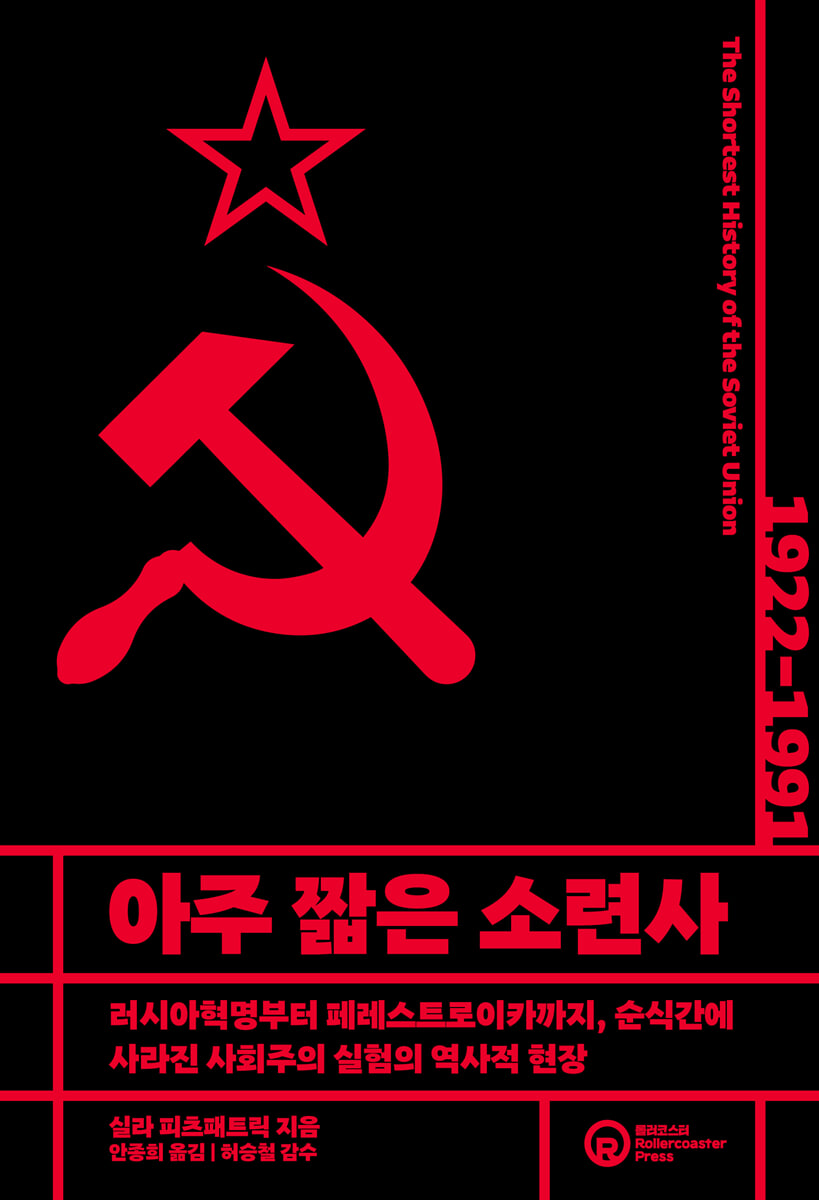
The symbol was the hammer and sickle, and the slogan was “Workers of the world, unite!”
Lenin and the Bolsheviks established a counterrevolutionary organization called the Cheka to fight the "class enemies"—the old ruling class, the landlord class, and the urban bourgeoisie—and forcibly confiscated the property of the bourgeoisie and the nobility in the name of social justice.
Factional fighting broke out among the leadership struggling to operate a new system called the 'dictatorship of the proletariat', and after Lenin's death, an unexpected person became the successor to power.
Lenin led the party in the October political revolution, but the economic revolution, the core of Marxism, had not yet been achieved.
The person who led the economic revolution was Stalin.
What was unique about Stalin's economic transformation program was that he implemented it through means akin to revolution.
For example, Stalin mobilized the party and its supporters to use violence against the opposition to achieve his goals.
Such violence exploded into the Great Purge of 1937.
Stalin achieved full employment from the beginning and solved the unemployment problem, but social welfare programs suffered from chronic underfunding due to the investment of capital in heavy industry, and agricultural collectivization was a major failure.
Collectivization hindered the development of Soviet agriculture for decades, alienated peasants, and created food shortages in urban areas.
And then the war came.
A new power emerged in the heart of Europe, Nazi Germany, with a strong anti-communist and anti-Soviet stance.
World War II, the Cold War, and the sudden collapse
Since World War II, which brought the world to ruin, international tensions between the superpowers, the United States and the Soviet Union, have steadily increased.
The American Republican Party, fearing the global spread of communism, rejected the Yalta Agreement and insisted on liberating the "captive nations" from the communist bloc.
There was widespread belief that the United States would invade the Soviet Union and war would break out, but that did not happen.
However, on March 5, 1953, Stalin died and Soviet politics came to a sudden halt.
After Stalin's death, it was Khrushchev who took the initiative.
His 'secret speech' criticizing the Stalinist regime at the 1956 Party Congress spread rapidly throughout Western society.
Khrushchev was a passionate innovator who led the Soviet Union to its greatest economic success for a long time.
During his time, the gross national product increased significantly, bringing the country closer to catching up with the United States, which had been far ahead in the 1920s, and a period of cultural thaw.
The only time it actually seemed plausible that the Soviet Union would soon catch up and overtake the West was when a triumphant sense of anything was possible emerged in the Soviet Union.
However, the Politburo dismissed Khrushchev for "violating the principle of comradely cooperation," and Brezhnev's "collective leadership system" was launched.
The Brezhnev era was a good time for ordinary Soviet citizens.
By then, the universal "welfare state" promised since the early days of Soviet rule had been fully realized, with minimum wages and pensions raised and social disparities reduced.
Brezhnev declared that he would intervene to save 'socialism' whenever it was threatened, meaning that all countries within the Soviet bloc had to stay within it.
Discontent among many countries arose under the Brezhnev Doctrine.
Meanwhile, after Brezhnev, Gorbachev advocated perestroika (reconstruction) and glasnost (reform and openness), but the Chernobyl nuclear power plant explosion occurred, and the reputation and morale of the Communist Party, one of his power bases, rapidly declined.
As Gorbachev and the Soviet system's legitimacy collapsed, a coup naturally occurred, and in its aftermath, Yeltsin, the head of the Russian Republic, suspended Communist Party activities within the republic's territory.
Yeltsin secretly convened leaders of Russia, Ukraine, and Belarus to agree on replacing the Soviet system with a drastically reduced Commonwealth of Independent States, maintaining a unified military but eliminating a centralized presidency or parliament.
Just a decade earlier, the Soviet Union had been a seemingly stable superpower with a powerful army, police force, and a ruling party of some 20 million members, but it had self-destructed without firing a shot to prevent its collapse.
Excellent composition, outstanding insight, and 50 rich images
The best Soviet history book!
Vividly captured by the best Soviet experts
75 years of communist rule and the collapse of the empire
In 1980, 58 years after the birth of the Soviet Union, the Soviet Union finally felt relieved that the worst was over.
Under Brezhnev's stable leadership, the domestic situation returned to normal, and it was clear that better times were ahead.
Internationally, after World War II, it became a superpower on par with the United States, and militarily, it was finally equal.
At a conference on Soviet Studies held in the United States, mainstream scholars unanimously agreed that “there is absolutely no possibility that the Soviet Union will become a political democracy or collapse in the near future.”
But then one of the most surprising and unexpected events in modern history occurred.
In 1991, Soviet socialism collapsed, yielding to capitalism.
Fifteen new countries, including the Russian Federation, suddenly emerged into the light of freedom.
The author, a recognized authority in the field of Soviet social history who pioneered several pioneering studies that have become classics, has compiled a vivid and engaging introduction to the Soviet Union, covering 75 years of communist rule and the collapse of the empire, from the revolution and Lenin to Stalin's Great Purges, and from World War II to Gorbachev's Perestroika policies.
In particular, the author shows the fate of non-Russian republics, often overlooked in discussions of Soviet history, and provides vivid portraits of key figures.
It also traces the unexpected consequences of the Soviet Union's collapse, including the rise of Vladimir Putin, a product of the Soviet system but not steeped in Soviet nostalgia.
The author also describes the history of the Soviet Union's socialist experiment, addressing the question, "What is socialism?" from a historical anthropological rather than a political philosophical perspective.
Whatever the principled meaning of socialism, the clumsily named "actual socialism" actually emerged in the Soviet Union in the 1980s, and Soviet history cannot be understood without the story of the society and people who lived through it.
Socialist Revolution and Lenin and Stalin
The Russian Revolution was expected to be the spark that would spread revolution throughout Europe, but by the early 1920s, the postwar revolutionary wave in Europe had died down, and Russia was left to go its own way.
The Bolsheviks, who came to power through revolution, gave birth to the Soviet Union Socialist Republic.
The capital was Moscow, and St. Petersburg, the capital of the Russian Empire, became the second largest city.
The symbol was the hammer and sickle, and the slogan was “Workers of the world, unite!”
Lenin and the Bolsheviks established a counterrevolutionary organization called the Cheka to fight the "class enemies"—the old ruling class, the landlord class, and the urban bourgeoisie—and forcibly confiscated the property of the bourgeoisie and the nobility in the name of social justice.
Factional fighting broke out among the leadership struggling to operate a new system called the 'dictatorship of the proletariat', and after Lenin's death, an unexpected person became the successor to power.
Lenin led the party in the October political revolution, but the economic revolution, the core of Marxism, had not yet been achieved.
The person who led the economic revolution was Stalin.
What was unique about Stalin's economic transformation program was that he implemented it through means akin to revolution.
For example, Stalin mobilized the party and its supporters to use violence against the opposition to achieve his goals.
Such violence exploded into the Great Purge of 1937.
Stalin achieved full employment from the beginning and solved the unemployment problem, but social welfare programs suffered from chronic underfunding due to the investment of capital in heavy industry, and agricultural collectivization was a major failure.
Collectivization hindered the development of Soviet agriculture for decades, alienated peasants, and created food shortages in urban areas.
And then the war came.
A new power emerged in the heart of Europe, Nazi Germany, with a strong anti-communist and anti-Soviet stance.
World War II, the Cold War, and the sudden collapse
Since World War II, which brought the world to ruin, international tensions between the superpowers, the United States and the Soviet Union, have steadily increased.
The American Republican Party, fearing the global spread of communism, rejected the Yalta Agreement and insisted on liberating the "captive nations" from the communist bloc.
There was widespread belief that the United States would invade the Soviet Union and war would break out, but that did not happen.
However, on March 5, 1953, Stalin died and Soviet politics came to a sudden halt.
After Stalin's death, it was Khrushchev who took the initiative.
His 'secret speech' criticizing the Stalinist regime at the 1956 Party Congress spread rapidly throughout Western society.
Khrushchev was a passionate innovator who led the Soviet Union to its greatest economic success for a long time.
During his time, the gross national product increased significantly, bringing the country closer to catching up with the United States, which had been far ahead in the 1920s, and a period of cultural thaw.
The only time it actually seemed plausible that the Soviet Union would soon catch up and overtake the West was when a triumphant sense of anything was possible emerged in the Soviet Union.
However, the Politburo dismissed Khrushchev for "violating the principle of comradely cooperation," and Brezhnev's "collective leadership system" was launched.
The Brezhnev era was a good time for ordinary Soviet citizens.
By then, the universal "welfare state" promised since the early days of Soviet rule had been fully realized, with minimum wages and pensions raised and social disparities reduced.
Brezhnev declared that he would intervene to save 'socialism' whenever it was threatened, meaning that all countries within the Soviet bloc had to stay within it.
Discontent among many countries arose under the Brezhnev Doctrine.
Meanwhile, after Brezhnev, Gorbachev advocated perestroika (reconstruction) and glasnost (reform and openness), but the Chernobyl nuclear power plant explosion occurred, and the reputation and morale of the Communist Party, one of his power bases, rapidly declined.
As Gorbachev and the Soviet system's legitimacy collapsed, a coup naturally occurred, and in its aftermath, Yeltsin, the head of the Russian Republic, suspended Communist Party activities within the republic's territory.
Yeltsin secretly convened leaders of Russia, Ukraine, and Belarus to agree on replacing the Soviet system with a drastically reduced Commonwealth of Independent States, maintaining a unified military but eliminating a centralized presidency or parliament.
Just a decade earlier, the Soviet Union had been a seemingly stable superpower with a powerful army, police force, and a ruling party of some 20 million members, but it had self-destructed without firing a shot to prevent its collapse.
GOODS SPECIFICS
- Date of issue: September 15, 2023
- Page count, weight, size: 308 pages | 442g | 140*205*20mm
- ISBN13: 9791191311273
You may also like
카테고리
korean


korean

![GQ KOREA Mark (Monthly): December [2025]](http://librairie.coreenne.fr/cdn/shop/files/8ef265dbbfbf186523ed75ba7319009d.jpg?v=1765340328&width=3840)


