

Archaeology in daily life, the Silla-Tang War, and King Munmu
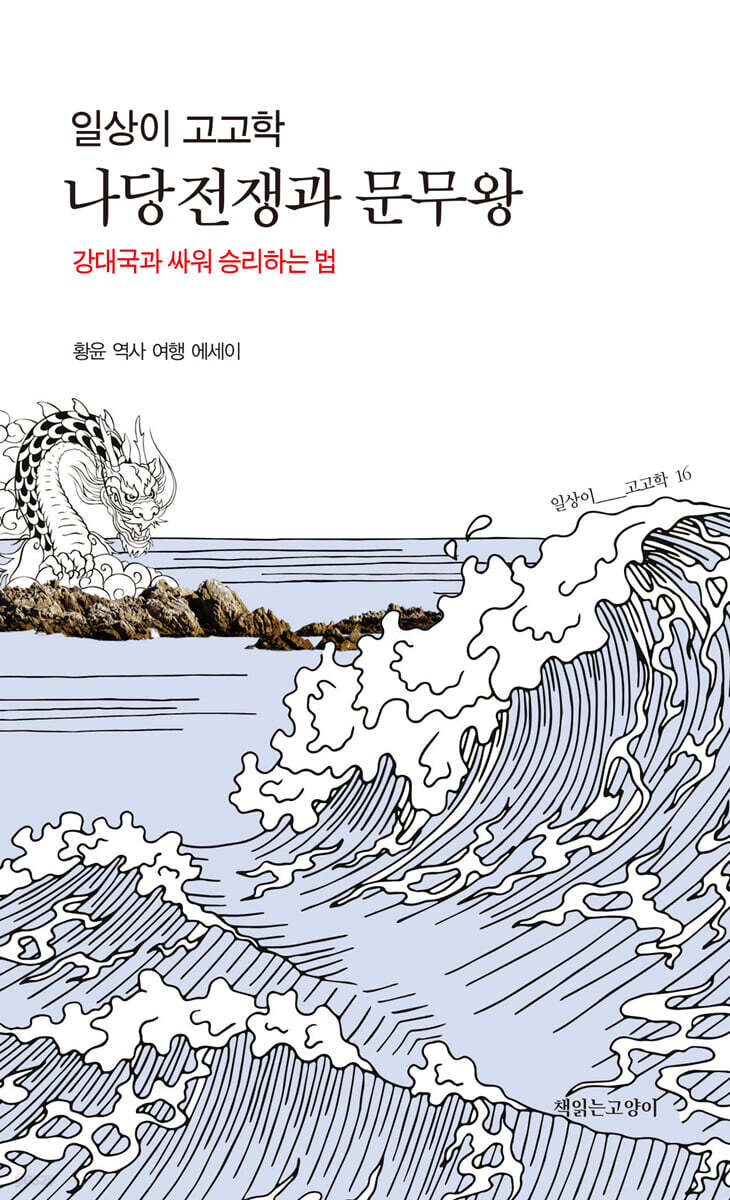 |
Description
Book Introduction
The Tang-Silla War and the Lessons from King Munmu on Fighting and Winning Against Great Powers
In an era of US-China hegemony competition and a tariff war, what should the nation do to protect its national interests?
『Daily Life as Archaeology: The Tang-Silla War and King Munmu』 sheds new light on the Tang-Silla War and King Munmu, historical events that today's Republic of Korea must remember in the midst of a jungle-like world situation, thereby suggesting ways to win against great powers.
Faced with the national task of actively utilizing foreign powers to advance national interests in a cold-blooded international society, the film vividly captures the historical moments of King Munmu of Silla, from his victory over the superpower Tang Dynasty to his establishment of the first unified nation on the Korean Peninsula, through direct visits to the site and clear verification of historical documents.
In an era of US-China hegemony competition and a tariff war, what should the nation do to protect its national interests?
『Daily Life as Archaeology: The Tang-Silla War and King Munmu』 sheds new light on the Tang-Silla War and King Munmu, historical events that today's Republic of Korea must remember in the midst of a jungle-like world situation, thereby suggesting ways to win against great powers.
Faced with the national task of actively utilizing foreign powers to advance national interests in a cold-blooded international society, the film vividly captures the historical moments of King Munmu of Silla, from his victory over the superpower Tang Dynasty to his establishment of the first unified nation on the Korean Peninsula, through direct visits to the site and clear verification of historical documents.
- You can preview some of the book's contents.
Preview
index
prolog
1.
The Tang-Nam alliance and Deokjeokdo
Bangamari Port Passenger Ship Terminal
Operation of the Tang-Silla Allied Forces
The sons of King Taejong Muyeol
coastal routes and trans-ocean routes
Arrival at Deokjeokdo Island
Kim Yu-sin's wrath
2.
Tangcheng, the road to China
Gyerimdo Grand Commander
Party and Manghaeruji
Silla as seen from the Tang Dynasty
Silla's persistent diplomacy
3.
Sacheonwangsa Temple, a place filled with a history of victory
Maritime supply
Munduru Secret Law
The amazing power of the Four Heavenly Kings
The cheerful monk and the Buddhist sutra of enlightenment
4.
An idea to end conflict and division and achieve harmony
Silla and Goguryeo alliance
Wonhyo and the Skull Water
Wonhyo's book, "Panbiryangron"
Wonhyo's "Ten Cultural Debates" and the Thought of Reconciliation
Wonhyo Daesa enters the people
5.
Yeoncheon Horogoru Fortress
Arriving at Horogoru Castle
Horogoru Fortress
Silla troops crossing the Imjin River
Tang Dynasty's deliberate ignorance
Goguryeo revival army and Silla
6.
Paju Chiljungseong
Silla's diversionary operation
Reserve Army Cemetery Name
Seven Stars and Bunker
Defeat at the Battle of Seokmun
King Munmu's apology
7.
Maesoseong and Yeoncheon Daejeonri Mountain Fortress
King Munmu's second apology
Tang Dynasty's two fronts
Yeoncheon Daejeonri Mountain Fortress
Battle of Maesoseong
Battle of Gibeolpo
8.
Namhansanseong Fortress
The Tang-Silla War and Namhansanseong Fortress
Silla city walls
Gu Jin-cheon's Kang No
pike unit
The end of the Tang-Silla War
Unification of the Three Kingdoms
King Munmu's will
Epilogue
References
Search
1.
The Tang-Nam alliance and Deokjeokdo
Bangamari Port Passenger Ship Terminal
Operation of the Tang-Silla Allied Forces
The sons of King Taejong Muyeol
coastal routes and trans-ocean routes
Arrival at Deokjeokdo Island
Kim Yu-sin's wrath
2.
Tangcheng, the road to China
Gyerimdo Grand Commander
Party and Manghaeruji
Silla as seen from the Tang Dynasty
Silla's persistent diplomacy
3.
Sacheonwangsa Temple, a place filled with a history of victory
Maritime supply
Munduru Secret Law
The amazing power of the Four Heavenly Kings
The cheerful monk and the Buddhist sutra of enlightenment
4.
An idea to end conflict and division and achieve harmony
Silla and Goguryeo alliance
Wonhyo and the Skull Water
Wonhyo's book, "Panbiryangron"
Wonhyo's "Ten Cultural Debates" and the Thought of Reconciliation
Wonhyo Daesa enters the people
5.
Yeoncheon Horogoru Fortress
Arriving at Horogoru Castle
Horogoru Fortress
Silla troops crossing the Imjin River
Tang Dynasty's deliberate ignorance
Goguryeo revival army and Silla
6.
Paju Chiljungseong
Silla's diversionary operation
Reserve Army Cemetery Name
Seven Stars and Bunker
Defeat at the Battle of Seokmun
King Munmu's apology
7.
Maesoseong and Yeoncheon Daejeonri Mountain Fortress
King Munmu's second apology
Tang Dynasty's two fronts
Yeoncheon Daejeonri Mountain Fortress
Battle of Maesoseong
Battle of Gibeolpo
8.
Namhansanseong Fortress
The Tang-Silla War and Namhansanseong Fortress
Silla city walls
Gu Jin-cheon's Kang No
pike unit
The end of the Tang-Silla War
Unification of the Three Kingdoms
King Munmu's will
Epilogue
References
Search
Detailed image

Publisher's Review
How Silla Utilized the Tang Dynasty, the Powerhouse, for National Interest
In the 7th century, King Munmu of Silla was able to achieve national success by winning the Silla-Tang War and unifying the three kingdoms by appropriately deploying the double-edged sword of cooperation and confrontation against the Tang Dynasty, the most powerful nation, according to national interests.
This book presents a blueprint for victory for us today who must stand up to great powers by showing the flawless side of Silla that did not neglect anything for the sake of national survival and securing practical benefits, including its stance and diplomatic prowess in facing crises during this process, the unification of public opinion based on the Buddhist ideology of Wonhyo, a monk who received worldwide attention, its watertight defenses built by densely stacking mountain fortresses in preparation for each battlefield, its accurate analysis and utilization of terrain and climate, its intelligence power that even grasped the situation of the Tang Dynasty's western front with a broader worldview, and its flexibility that sometimes even knew how to retreat a step for the sake of national interest and ultimate victory.
In this respect, this book presents the positive function of reading history to discover the present through history.
This book, which depicts the conquest of Baekje and Goguryeo and the victory in the Silla-Tang War, differs from other history books in that it travels to the places we live in today and conducts research through literature, thereby not only increasing understanding but also adding to the charm of archaeology.
By going up to Deokjeokdo, which was the gathering place of the Silla-Tang allied forces, and Dangseong Fortress, which monitored the west coast, which was the route of the 7th century battle, it shows how the Tang perspective on Silla and the Silla perspective on Tang differed, and also explains the big picture of Tang's intentions, which were ready to attack Silla at any time while participating in the Silla-Tang alliance, and Silla's persistent diplomatic skills despite clearly understanding this, showing the advantage of approaching ancient history in a realistic way.
Meanwhile, the journey to Horogoru Fortress in Yeoncheon and Chiljungseong Fortress in Paju, which are located in the Imjin River basin, which can be called the DMZ of the Three Kingdoms period, unravels the process of the Silla-Tang War from the moment of deciding to stand against the Tang Dynasty, and more closely depicts the process of meticulous battles based on national interest, pride, and just cause while steadily progressing with the unification of Goguryeo and Baekje.
Not only is it exciting to read about Silla's cunning tactics to buy time when times are tough, but it also conveys a sense of realism by vividly describing the characteristics of Silla's weapons and units, to the point where it brings to mind actual battlefields. This is a major feature of this book.
The advanced leadership demonstrated by Silla, such as the psychological warfare through Buddhism, such as the Munduru Secret Law, to boost morale, and the use of the 『Sipmunjaengron』 by Wonhyo, a world-renowned Silla monk, is enough to show the strength of Silla, which was able to maintain peace for 200 years, compared to Goguryeo, which had the same experience of defeating the Tang Dynasty but could only maintain peace for 20 years.
A history of victory that South Korea should pay attention to today.
Goguryeo, Baekje, and Silla were each independent nations, but they were recognized by neighboring countries at the time as a group of nations with homogeneous characteristics in terms of society, culture, language, and race.
In this respect, Silla's unification of the three kingdoms cannot be anything other than a monumental event that marks a turning point in the history of the Korean Peninsula.
However, there are some aspects of Silla's unification of the three kingdoms that have been underestimated due to the addition of the label of the Silla-Tang alliance.
After conquering Baekje and Goguryeo through the Silla-Tang alliance in the 7th century, Silla won the seven-year Silla-Tang War against the Tang Dynasty and achieved the unification of the three kingdoms through its own efforts. However, Silla's meticulous survival skills have not received much attention, and it is regrettable that they have not been utilized to help the Korean Peninsula dream of a greater national status.
Even considering that domestic research on the Tang-Silla War only began to sprout in the 1980s, it can be seen that it failed to generate much interest in the outcomes of the war.
This book examines the significance of the victory in the Tang-Silla War and the unification of the Three Kingdoms, which have been underestimated, by incorporating the latest research and presenting the results of advanced research on the Tang-Silla War.
Author Hwang Yun, who has studied history, fascinated by the unification of the Three Kingdoms and the distinctive leadership of King Munmu, suggests that now, when South Korea is brimming with the energy to leap forward even amidst an unstable international order, is the right time to re-evaluate the history of Silla's victory in the Tang-Silla War.
In the 7th century, King Munmu of Silla was able to achieve national success by winning the Silla-Tang War and unifying the three kingdoms by appropriately deploying the double-edged sword of cooperation and confrontation against the Tang Dynasty, the most powerful nation, according to national interests.
This book presents a blueprint for victory for us today who must stand up to great powers by showing the flawless side of Silla that did not neglect anything for the sake of national survival and securing practical benefits, including its stance and diplomatic prowess in facing crises during this process, the unification of public opinion based on the Buddhist ideology of Wonhyo, a monk who received worldwide attention, its watertight defenses built by densely stacking mountain fortresses in preparation for each battlefield, its accurate analysis and utilization of terrain and climate, its intelligence power that even grasped the situation of the Tang Dynasty's western front with a broader worldview, and its flexibility that sometimes even knew how to retreat a step for the sake of national interest and ultimate victory.
In this respect, this book presents the positive function of reading history to discover the present through history.
This book, which depicts the conquest of Baekje and Goguryeo and the victory in the Silla-Tang War, differs from other history books in that it travels to the places we live in today and conducts research through literature, thereby not only increasing understanding but also adding to the charm of archaeology.
By going up to Deokjeokdo, which was the gathering place of the Silla-Tang allied forces, and Dangseong Fortress, which monitored the west coast, which was the route of the 7th century battle, it shows how the Tang perspective on Silla and the Silla perspective on Tang differed, and also explains the big picture of Tang's intentions, which were ready to attack Silla at any time while participating in the Silla-Tang alliance, and Silla's persistent diplomatic skills despite clearly understanding this, showing the advantage of approaching ancient history in a realistic way.
Meanwhile, the journey to Horogoru Fortress in Yeoncheon and Chiljungseong Fortress in Paju, which are located in the Imjin River basin, which can be called the DMZ of the Three Kingdoms period, unravels the process of the Silla-Tang War from the moment of deciding to stand against the Tang Dynasty, and more closely depicts the process of meticulous battles based on national interest, pride, and just cause while steadily progressing with the unification of Goguryeo and Baekje.
Not only is it exciting to read about Silla's cunning tactics to buy time when times are tough, but it also conveys a sense of realism by vividly describing the characteristics of Silla's weapons and units, to the point where it brings to mind actual battlefields. This is a major feature of this book.
The advanced leadership demonstrated by Silla, such as the psychological warfare through Buddhism, such as the Munduru Secret Law, to boost morale, and the use of the 『Sipmunjaengron』 by Wonhyo, a world-renowned Silla monk, is enough to show the strength of Silla, which was able to maintain peace for 200 years, compared to Goguryeo, which had the same experience of defeating the Tang Dynasty but could only maintain peace for 20 years.
A history of victory that South Korea should pay attention to today.
Goguryeo, Baekje, and Silla were each independent nations, but they were recognized by neighboring countries at the time as a group of nations with homogeneous characteristics in terms of society, culture, language, and race.
In this respect, Silla's unification of the three kingdoms cannot be anything other than a monumental event that marks a turning point in the history of the Korean Peninsula.
However, there are some aspects of Silla's unification of the three kingdoms that have been underestimated due to the addition of the label of the Silla-Tang alliance.
After conquering Baekje and Goguryeo through the Silla-Tang alliance in the 7th century, Silla won the seven-year Silla-Tang War against the Tang Dynasty and achieved the unification of the three kingdoms through its own efforts. However, Silla's meticulous survival skills have not received much attention, and it is regrettable that they have not been utilized to help the Korean Peninsula dream of a greater national status.
Even considering that domestic research on the Tang-Silla War only began to sprout in the 1980s, it can be seen that it failed to generate much interest in the outcomes of the war.
This book examines the significance of the victory in the Tang-Silla War and the unification of the Three Kingdoms, which have been underestimated, by incorporating the latest research and presenting the results of advanced research on the Tang-Silla War.
Author Hwang Yun, who has studied history, fascinated by the unification of the Three Kingdoms and the distinctive leadership of King Munmu, suggests that now, when South Korea is brimming with the energy to leap forward even amidst an unstable international order, is the right time to re-evaluate the history of Silla's victory in the Tang-Silla War.
GOODS SPECIFICS
- Date of issue: December 1, 2025
- Page count, weight, size: 324 pages | 312g | 112*184*21mm
- ISBN13: 9791192753430
- ISBN10: 1192753437
You may also like
카테고리
korean


korean

![GQ KOREA Mark (Monthly): December [2025]](http://librairie.coreenne.fr/cdn/shop/files/8ef265dbbfbf186523ed75ba7319009d.jpg?v=1765340328&width=3840)


