

The Epic of Gilgamesh
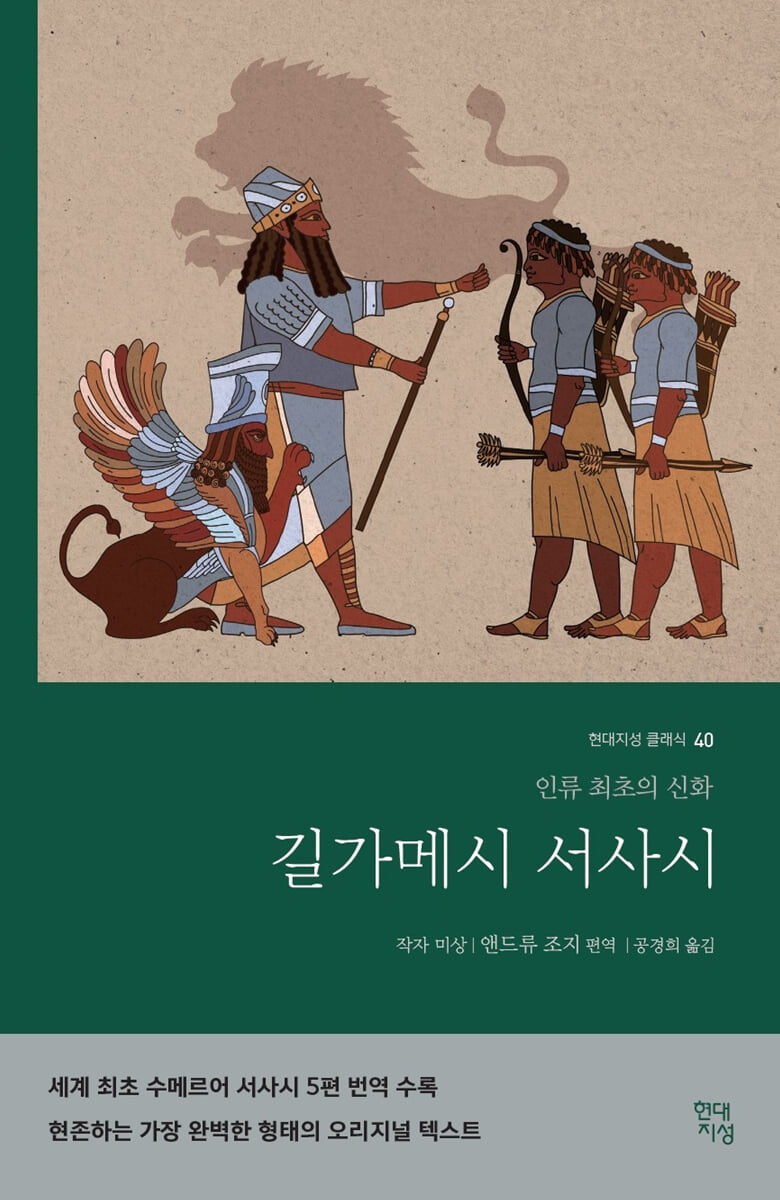 |
Description
Book Introduction
Gilgamesh, from Tyrant to Wise
A story that contains the archetype of human independence and growth.
The Epic of Gilgamesh is the first epic and heroic myth of mankind, containing the story of adventures, failures, and growth experienced by a man who was nothing more than a tyrant until he rose to the position of a wise man and god in ancient times.
When the poet Rainer Maria Rilke encountered an early translation of the original epic, he was so overcome with joy and wonder that he exclaimed to everyone he met, “This is truly wonderful!”
Because the ancient magic that had been dormant for four thousand years has been released.
Humanity's concerns about the essence of life and growth have been similar then and now.
This epic exquisitely blends humanistic reflections—the human yearning for eternal life, the agony and struggle of those facing death, and the path to enlightenment after experiencing human limitations—with a thrilling adventure story.
The story of the great flood that the gods caused in the early days of human history to destroy humanity and the description of the gloomy world of the dead are also fascinating.
At the end of the world, Gilgamesh restores the temples and ideal pre-flood rituals of the land, thanks to the wisdom he gains from Uttanapishti, a survivor of the great flood.
He is also listed in the lists of kings recorded by the ancients, so it is highly likely that he existed like King Arthur.
In this book, translator Andrew George presents the most complete collection of Akkadian Babylonian standard editions and Sumerian poetry, bringing together nearly all of his research in one volume.
In particular, we translated the original Sumerian and Akkadian texts into English line by line based on literal translations, paying particular attention to the order of the translated words.
Rather than filling in the damaged parts of the cuneiform tablet with excessive interpretations and embellishments, we tried to leave them as they were, so that readers could experience the thrill of seeing the original tablet in person.
The translator of the Korean version also respected the intent of the original text, which was written in verse, and followed the word order of the original text as much as possible.
The 『Epic of Gilgamesh』 introduced in the modern intellectual classics has carefully reflected the latest research results and newly discovered clay tablet interpretation opinions of dozens of researchers, and is confidently presented as “the most complete translation available to readers,” including a detailed commentary of over 50 pages that includes the epic in the context of mythology, religion, and wisdom, its literary background in ancient Mesopotamia, and its humanistic significance that is still applicable today.
A story that contains the archetype of human independence and growth.
The Epic of Gilgamesh is the first epic and heroic myth of mankind, containing the story of adventures, failures, and growth experienced by a man who was nothing more than a tyrant until he rose to the position of a wise man and god in ancient times.
When the poet Rainer Maria Rilke encountered an early translation of the original epic, he was so overcome with joy and wonder that he exclaimed to everyone he met, “This is truly wonderful!”
Because the ancient magic that had been dormant for four thousand years has been released.
Humanity's concerns about the essence of life and growth have been similar then and now.
This epic exquisitely blends humanistic reflections—the human yearning for eternal life, the agony and struggle of those facing death, and the path to enlightenment after experiencing human limitations—with a thrilling adventure story.
The story of the great flood that the gods caused in the early days of human history to destroy humanity and the description of the gloomy world of the dead are also fascinating.
At the end of the world, Gilgamesh restores the temples and ideal pre-flood rituals of the land, thanks to the wisdom he gains from Uttanapishti, a survivor of the great flood.
He is also listed in the lists of kings recorded by the ancients, so it is highly likely that he existed like King Arthur.
In this book, translator Andrew George presents the most complete collection of Akkadian Babylonian standard editions and Sumerian poetry, bringing together nearly all of his research in one volume.
In particular, we translated the original Sumerian and Akkadian texts into English line by line based on literal translations, paying particular attention to the order of the translated words.
Rather than filling in the damaged parts of the cuneiform tablet with excessive interpretations and embellishments, we tried to leave them as they were, so that readers could experience the thrill of seeing the original tablet in person.
The translator of the Korean version also respected the intent of the original text, which was written in verse, and followed the word order of the original text as much as possible.
The 『Epic of Gilgamesh』 introduced in the modern intellectual classics has carefully reflected the latest research results and newly discovered clay tablet interpretation opinions of dozens of researchers, and is confidently presented as “the most complete translation available to readers,” including a detailed commentary of over 50 pages that includes the epic in the context of mythology, religion, and wisdom, its literary background in ancient Mesopotamia, and its humanistic significance that is still applicable today.
- You can preview some of the book's contents.
Preview
index
Before reading this book
Preface to the Revised Edition
Preface to the first edition
About translation and text format
map
Part 1.
The Man Who Saw the Abyss: The Babylonian Standard Edition of the Epic of Gilgamesh
Tablet I.
Enkidu's appearance
Tablet II.
The Taming of Enkidu
Tablet III.
Preparing for an expedition to the cedar forest
Tablet IV.
Expedition to the Cedar Forest
Tablet V.
The fight with Humbaba
Tablet VI.
Ishtar and the Celestial Bull
Tablet VII.
The Death of Enkidu
Tablet VIII.
Enkidu's funeral
Tablet IX.
Gilgamesh's Wanderings
Tablet X.
At the edge of the world
Tablet XI.
Eternal life denied
Tablet XII.
supplement
Part 2.
Sumerian Gilgamesh poems
Gilgamesh and Akka: The Akka Envoys
Gilgamesh and Huwawa: 'The King Who Goes to the Mountain of the Living' and 'Long Live!'
Gilgamesh and the Bull of Heaven: 'War Heroes'
Gilgamesh and the Underworld: 'In the Day of That Time, In the Day of That Time'
The Death of Gilgamesh: 'The Great Wild Bull Lies'
Part 3.
Fragments of an older version of the Babylonian Epic of Gilgamesh
prolog
The Creation of Enkidu
Enkidu becomes human
Gilgamesh Dreams of Enkidu: Enkidu Arrives in Uruk
Enkidu Becomes Gilgamesh's Brother: Preparing for the Expedition to the Cedar Forest
The first and second dreams I had on the way to the cedar forest
The third and fourth dreams I had on the way to the cedar forest
Another dream I had on my way to the cedar forest
Cut down the cedar forest guard
Fallen trees in a cedar forest
Enkidu curses the hunter and the prostitute
Gilgamesh, at the end of the world
Part 4.
Various Babylonian fragments
Ugarit Tablets
Hatusa fragments
Emar fragments
Megiddo Tablet
Sealand Tablet
Release | Andrew George
Chronology
Image source and commentary
Explanation of Proper Nouns
References
For further research
Preface to the Revised Edition
Preface to the first edition
About translation and text format
map
Part 1.
The Man Who Saw the Abyss: The Babylonian Standard Edition of the Epic of Gilgamesh
Tablet I.
Enkidu's appearance
Tablet II.
The Taming of Enkidu
Tablet III.
Preparing for an expedition to the cedar forest
Tablet IV.
Expedition to the Cedar Forest
Tablet V.
The fight with Humbaba
Tablet VI.
Ishtar and the Celestial Bull
Tablet VII.
The Death of Enkidu
Tablet VIII.
Enkidu's funeral
Tablet IX.
Gilgamesh's Wanderings
Tablet X.
At the edge of the world
Tablet XI.
Eternal life denied
Tablet XII.
supplement
Part 2.
Sumerian Gilgamesh poems
Gilgamesh and Akka: The Akka Envoys
Gilgamesh and Huwawa: 'The King Who Goes to the Mountain of the Living' and 'Long Live!'
Gilgamesh and the Bull of Heaven: 'War Heroes'
Gilgamesh and the Underworld: 'In the Day of That Time, In the Day of That Time'
The Death of Gilgamesh: 'The Great Wild Bull Lies'
Part 3.
Fragments of an older version of the Babylonian Epic of Gilgamesh
prolog
The Creation of Enkidu
Enkidu becomes human
Gilgamesh Dreams of Enkidu: Enkidu Arrives in Uruk
Enkidu Becomes Gilgamesh's Brother: Preparing for the Expedition to the Cedar Forest
The first and second dreams I had on the way to the cedar forest
The third and fourth dreams I had on the way to the cedar forest
Another dream I had on my way to the cedar forest
Cut down the cedar forest guard
Fallen trees in a cedar forest
Enkidu curses the hunter and the prostitute
Gilgamesh, at the end of the world
Part 4.
Various Babylonian fragments
Ugarit Tablets
Hatusa fragments
Emar fragments
Megiddo Tablet
Sealand Tablet
Release | Andrew George
Chronology
Image source and commentary
Explanation of Proper Nouns
References
For further research
Detailed image

Into the book
A man who saw the abyss, the foundation of the nation,
[He knew the proper way,] and was wise in everything!
[He] searched for [power] in all directions
And I knew all the wisdom
He saw the secret, he discovered the hidden.
He came back with a story from before the flood.
--- p.25, 「Part 1.
The Man Who Saw the Abyss: From Tablet 1: The Appearance of Enkidu
In the cedar forest where [Humbaba] lives,
Let us raid him in his dwelling!
Enkidu opened his mouth
Say to Gilgamesh
“I was wandering around in the highlands with herds of animals,
I knew him, my friend.
The forest is 60 leagues wild,
Who would take an adventure in it?
--- p.50, 「Part 1.
From "The Man Who Saw the Abyss: The Taming of Enkidu" in Tablet 2
Enkidu opened his mouth to speak.
[To Gilgamesh] say
“Friend, Humbaba, guardian of the [cedar] forest,
[Kill him], cut him down, [take away his power!]
The majestic [Enlil] heard our actions,
And before the [great] gods become angry with us and fight against us,
Enlil in Nippur, Shamash in Larsa…
To establish an infinite [fame] for eternity
How Gilgamesh slew the [fierce] Humbaba!”
Humbaba heard [how Enkidu spoke ill of him]
Humbaba raised his head [and wept before Shamash]
[Under the sunlight] [His tears flowed.]
--- p.90, 「Part 1.
From "The Man Who Saw the Abyss: The Battle with Humbaba" in Tablet 5
He went to the twin mountains of Mashu
The mountains that protect the rising sun every day,
Its top [supports] the structure of the sky.
That floor goes down to the afterlife.
There were scorpion men guarding that door.
The terror they gave was intense, their gaze was death.
Their brilliance was fearful and overwhelmed the mountains.
At sunrise and sunset they escorted the sun.
Gilgamesh saw them and covered his face in fear and horror.
Then, using his wisdom, he came closer to their presence.
The scorpion man called his mate.
“Those who come to us have bodies that are the flesh of gods.”
--- p.128, 「Part 1.
The Man Who Saw the Abyss: From Tablet 9 Gilgamesh's Wanderings
A strong wind blew all day, [destroying] the country.
A strong wind blew [and then a great flood came]
Like a battle, [a great upheaval] passed over the people.
I couldn't tell the difference between this person and that person.
In the midst of the great destruction, people were not distinguished.
Even the gods were terrified by the flood.
Leave and ascend to the sky of Anu
I lay down like a dog crouching in the open air
The goddesses cry like women in labor,
Bellet--- p. Illi's voice was so sweet.
(…)
But when the third day came
The strong winds have died down, the flood has receded.
The sea, which was tossing and turning like a woman in labor, became calm.
The storm has calmed down, the flood has receded.
(…)
It's been a week
I took out the dove and released it
The dove flew away, but then came back.
There is no place to settle down, so it comes back to me.
(…)
Gilgamesh said to him, Utanapishti the Faraway One,
“Uttanapishti, what should I do and where should I go?
Did a thief take my flesh?
Death dwells in the bedroom
“Wherever I turn, there too there is death.”
[He knew the proper way,] and was wise in everything!
[He] searched for [power] in all directions
And I knew all the wisdom
He saw the secret, he discovered the hidden.
He came back with a story from before the flood.
--- p.25, 「Part 1.
The Man Who Saw the Abyss: From Tablet 1: The Appearance of Enkidu
In the cedar forest where [Humbaba] lives,
Let us raid him in his dwelling!
Enkidu opened his mouth
Say to Gilgamesh
“I was wandering around in the highlands with herds of animals,
I knew him, my friend.
The forest is 60 leagues wild,
Who would take an adventure in it?
--- p.50, 「Part 1.
From "The Man Who Saw the Abyss: The Taming of Enkidu" in Tablet 2
Enkidu opened his mouth to speak.
[To Gilgamesh] say
“Friend, Humbaba, guardian of the [cedar] forest,
[Kill him], cut him down, [take away his power!]
The majestic [Enlil] heard our actions,
And before the [great] gods become angry with us and fight against us,
Enlil in Nippur, Shamash in Larsa…
To establish an infinite [fame] for eternity
How Gilgamesh slew the [fierce] Humbaba!”
Humbaba heard [how Enkidu spoke ill of him]
Humbaba raised his head [and wept before Shamash]
[Under the sunlight] [His tears flowed.]
--- p.90, 「Part 1.
From "The Man Who Saw the Abyss: The Battle with Humbaba" in Tablet 5
He went to the twin mountains of Mashu
The mountains that protect the rising sun every day,
Its top [supports] the structure of the sky.
That floor goes down to the afterlife.
There were scorpion men guarding that door.
The terror they gave was intense, their gaze was death.
Their brilliance was fearful and overwhelmed the mountains.
At sunrise and sunset they escorted the sun.
Gilgamesh saw them and covered his face in fear and horror.
Then, using his wisdom, he came closer to their presence.
The scorpion man called his mate.
“Those who come to us have bodies that are the flesh of gods.”
--- p.128, 「Part 1.
The Man Who Saw the Abyss: From Tablet 9 Gilgamesh's Wanderings
A strong wind blew all day, [destroying] the country.
A strong wind blew [and then a great flood came]
Like a battle, [a great upheaval] passed over the people.
I couldn't tell the difference between this person and that person.
In the midst of the great destruction, people were not distinguished.
Even the gods were terrified by the flood.
Leave and ascend to the sky of Anu
I lay down like a dog crouching in the open air
The goddesses cry like women in labor,
Bellet--- p. Illi's voice was so sweet.
(…)
But when the third day came
The strong winds have died down, the flood has receded.
The sea, which was tossing and turning like a woman in labor, became calm.
The storm has calmed down, the flood has receded.
(…)
It's been a week
I took out the dove and released it
The dove flew away, but then came back.
There is no place to settle down, so it comes back to me.
(…)
Gilgamesh said to him, Utanapishti the Faraway One,
“Uttanapishti, what should I do and where should I go?
Did a thief take my flesh?
Death dwells in the bedroom
“Wherever I turn, there too there is death.”
--- p.158, 166「Part 1.
The Man Who Saw the Abyss: From Tablet 11: The Rejected Eternal Life
The Man Who Saw the Abyss: From Tablet 11: The Rejected Eternal Life
Publisher's Review
From Tyrant to Wise: Gilgamesh's Abyss Experience
The Epic of Gilgamesh is, in a word, the story of how Gilgamesh, who was nothing more than a scoundrel and a tyrant, grew through various stages to become a wise man and rise to the ranks of gods.
Gilgamesh, who was not afraid of anything, encounters Enkidu, an opponent who is his equal for the first time in his life, and they fight to the death.
In the end, Gilgamesh wins, but Enkidu's presence opens up a new path in life for him.
A challenging goal has emerged in a life that was so boring.
He sets out on a long journey with Enkidu to defeat the monster Humbaba, which he would never have dared to defeat alone.
And because he incurred the wrath of the gods for killing Humbaba, he lost his soulmate Enkidu, and thus opened his eyes to the path to eternal life.
The Epic of Gilgamesh is a rare work of Babylonian literature that can be read and enjoyed without any special knowledge of its origins.
Although the characters' names are unfamiliar and the locations are strange, the epic's themes include ordinary life experiences, making it easy to empathize with the protagonist's aspirations, sorrows, and despair.
What was the abyss that completely changed Gilgamesh's life? Let's examine the emotional transformation he experienced as he ascended from a mere rascal to the ranks of the gods, and discover the path to wisdom contained in humanity's first epic.
Although dressed in the clothes of a myth,
A story about human independence and growth
While the fear of death is a fundamental theme that runs throughout the work, the epic goes beyond that.
Exploring the human yearning for eternal life, the poem weaves into a grand epic the heroic struggle of one man against death, the despair of man in the face of colossal failure, and the path to enlightenment that leaves behind a legacy of achievement and eternal fame.
The epic shows the process of struggling so desperately toward eternal life, only to have it taken away in vain, and makes us realize the truth about the human condition.
Although the plot is simple, the turbulent journey that Gilgamesh experienced is very similar to the theme of the Book of Ecclesiastes in the Hebrew Bible, which is a compilation of the wise king Solomon's words after his life's experiences.
Gilgamesh, who had been wandering aimlessly in life, experiences a new world through his soul mate and is transformed. The exciting adventures he encounters there, Gilgamesh develops a new desire beyond human limitations, and his adventures in the other world (the afterlife) continue in a thrilling manner.
In addition, the story of the great flood that the gods caused in the early days of human history to destroy humanity and the description of the gloomy world of the dead are artistically woven together.
Thorkild Jakobson, a scholar of ancient Mesopotamia, described the epic as “a story about learning to face reality, a story about growing up.”
Gilgamesh begins as an immature and foolish youth, but eventually comes to terms with the power and reality of death and attains maturity.
In recording the hero's footsteps, the poet deeply reflects on youth and old age, victory and despair, humanity and god, life and death.
It focuses not only on Gilgamesh's glorious deeds, but also on the pain and suffering that keep him on his hopeless quest.
The most perfect form
A translation of the Epic of Gilgamesh
The Epic of Gilgamesh, which had been asleep for over 4,000 years, has only been revealed to the world for about 150 years.
As the path to deciphering cuneiform script opens, hundreds of scholars are studying individual clay tablets scattered across ancient Mesopotamia (near present-day Iraq), revealing new facts line by line.
The field of ancient languages is not one of genius, but rather one of sincerity and expertise among numerous scholars, who complement each other, cross-check, and fill in any gaps.
The Epic of Gilgamesh is still actively being excavated today in the form of clay tablets in three or four different languages from three or four different periods.
This book distinguishes between various original texts and, divided into four parts, sufficiently introduces the diversity of epic poetry while also reflecting the latest academic research findings.
The original text of Part 1 is in Akkadian, the standard language of Babylonia and Assyria in the 10th century BC, with some gaps (damaged areas of the clay tablets) filled in by reference to older sources.
This book takes this text as the standard version.
The standard edition is organized into a total of 73 extant manuscripts.
Part 2 consists of five Sumerian poems, and in this book, Andrew George has translated all five Sumerian epics into English and published them in one place for the first time in the world.
Unlike Part 1, it consists of individual stories without a common theme.
It is known to be a manuscript created by Babylonian scribe apprentices in the 18th century BC.
Part 3 is in Akkadian and is a translation of older material than Part 1.
Part IV contains Akkadian fragments from the 20th century BC that are not in Part III, as well as several fragments of poetry from the ancient western regions (the Levant and Anatolia).
Even 70 years ago, the text had to be reconstructed from fewer than 40 manuscripts, leaving large holes in the story.
But now the number of recovered manuscripts has increased to 73, and the number of holes has been greatly reduced.
As time goes by, the number of useful sources steadily increases.
As more of the text becomes known, one day the epic will be complete again, as it once was in the distant past.
Author Andrew George, who has taught Akkadian and Sumerian at the University of London since 1983 and was elected a Fellow of the British Academy in 2006, has translated the latest manuscripts collected up to 2019 into English based on literal translations of the original Sumerian and Akkadian texts, and provided detailed commentary.
The Korean translator also respected the original text's intent in verse and followed the original's word order as much as possible in the Korean translation.
As new manuscripts are discovered, this translation will be replaced by a new one.
Until then, this translation, which was based on direct research of almost all sources, both published and unpublished, is the most complete form of the Epic of Gilgamesh.
Even if you read a text from 30 years ago, there are more than a few awkward and embarrassing parts, but the Epic of Gilgamesh was delivered to us over a whopping 4,000 years of time and space.
But even if I read it now, it doesn't feel awkward at all.
This work, which offers children adventure and fun, young adults the meaning and challenge of life, and the elderly a broad understanding of eternity and the transience of life, will continue to be loved and moved a thousand years from now.
The Epic of Gilgamesh is, in a word, the story of how Gilgamesh, who was nothing more than a scoundrel and a tyrant, grew through various stages to become a wise man and rise to the ranks of gods.
Gilgamesh, who was not afraid of anything, encounters Enkidu, an opponent who is his equal for the first time in his life, and they fight to the death.
In the end, Gilgamesh wins, but Enkidu's presence opens up a new path in life for him.
A challenging goal has emerged in a life that was so boring.
He sets out on a long journey with Enkidu to defeat the monster Humbaba, which he would never have dared to defeat alone.
And because he incurred the wrath of the gods for killing Humbaba, he lost his soulmate Enkidu, and thus opened his eyes to the path to eternal life.
The Epic of Gilgamesh is a rare work of Babylonian literature that can be read and enjoyed without any special knowledge of its origins.
Although the characters' names are unfamiliar and the locations are strange, the epic's themes include ordinary life experiences, making it easy to empathize with the protagonist's aspirations, sorrows, and despair.
What was the abyss that completely changed Gilgamesh's life? Let's examine the emotional transformation he experienced as he ascended from a mere rascal to the ranks of the gods, and discover the path to wisdom contained in humanity's first epic.
Although dressed in the clothes of a myth,
A story about human independence and growth
While the fear of death is a fundamental theme that runs throughout the work, the epic goes beyond that.
Exploring the human yearning for eternal life, the poem weaves into a grand epic the heroic struggle of one man against death, the despair of man in the face of colossal failure, and the path to enlightenment that leaves behind a legacy of achievement and eternal fame.
The epic shows the process of struggling so desperately toward eternal life, only to have it taken away in vain, and makes us realize the truth about the human condition.
Although the plot is simple, the turbulent journey that Gilgamesh experienced is very similar to the theme of the Book of Ecclesiastes in the Hebrew Bible, which is a compilation of the wise king Solomon's words after his life's experiences.
Gilgamesh, who had been wandering aimlessly in life, experiences a new world through his soul mate and is transformed. The exciting adventures he encounters there, Gilgamesh develops a new desire beyond human limitations, and his adventures in the other world (the afterlife) continue in a thrilling manner.
In addition, the story of the great flood that the gods caused in the early days of human history to destroy humanity and the description of the gloomy world of the dead are artistically woven together.
Thorkild Jakobson, a scholar of ancient Mesopotamia, described the epic as “a story about learning to face reality, a story about growing up.”
Gilgamesh begins as an immature and foolish youth, but eventually comes to terms with the power and reality of death and attains maturity.
In recording the hero's footsteps, the poet deeply reflects on youth and old age, victory and despair, humanity and god, life and death.
It focuses not only on Gilgamesh's glorious deeds, but also on the pain and suffering that keep him on his hopeless quest.
The most perfect form
A translation of the Epic of Gilgamesh
The Epic of Gilgamesh, which had been asleep for over 4,000 years, has only been revealed to the world for about 150 years.
As the path to deciphering cuneiform script opens, hundreds of scholars are studying individual clay tablets scattered across ancient Mesopotamia (near present-day Iraq), revealing new facts line by line.
The field of ancient languages is not one of genius, but rather one of sincerity and expertise among numerous scholars, who complement each other, cross-check, and fill in any gaps.
The Epic of Gilgamesh is still actively being excavated today in the form of clay tablets in three or four different languages from three or four different periods.
This book distinguishes between various original texts and, divided into four parts, sufficiently introduces the diversity of epic poetry while also reflecting the latest academic research findings.
The original text of Part 1 is in Akkadian, the standard language of Babylonia and Assyria in the 10th century BC, with some gaps (damaged areas of the clay tablets) filled in by reference to older sources.
This book takes this text as the standard version.
The standard edition is organized into a total of 73 extant manuscripts.
Part 2 consists of five Sumerian poems, and in this book, Andrew George has translated all five Sumerian epics into English and published them in one place for the first time in the world.
Unlike Part 1, it consists of individual stories without a common theme.
It is known to be a manuscript created by Babylonian scribe apprentices in the 18th century BC.
Part 3 is in Akkadian and is a translation of older material than Part 1.
Part IV contains Akkadian fragments from the 20th century BC that are not in Part III, as well as several fragments of poetry from the ancient western regions (the Levant and Anatolia).
Even 70 years ago, the text had to be reconstructed from fewer than 40 manuscripts, leaving large holes in the story.
But now the number of recovered manuscripts has increased to 73, and the number of holes has been greatly reduced.
As time goes by, the number of useful sources steadily increases.
As more of the text becomes known, one day the epic will be complete again, as it once was in the distant past.
Author Andrew George, who has taught Akkadian and Sumerian at the University of London since 1983 and was elected a Fellow of the British Academy in 2006, has translated the latest manuscripts collected up to 2019 into English based on literal translations of the original Sumerian and Akkadian texts, and provided detailed commentary.
The Korean translator also respected the original text's intent in verse and followed the original's word order as much as possible in the Korean translation.
As new manuscripts are discovered, this translation will be replaced by a new one.
Until then, this translation, which was based on direct research of almost all sources, both published and unpublished, is the most complete form of the Epic of Gilgamesh.
Even if you read a text from 30 years ago, there are more than a few awkward and embarrassing parts, but the Epic of Gilgamesh was delivered to us over a whopping 4,000 years of time and space.
But even if I read it now, it doesn't feel awkward at all.
This work, which offers children adventure and fun, young adults the meaning and challenge of life, and the elderly a broad understanding of eternity and the transience of life, will continue to be loved and moved a thousand years from now.
GOODS SPECIFICS
- Publication date: October 12, 2021
- Page count, weight, size: 416 pages | 618g | 150*225*24mm
- ISBN13: 9791139700107
- ISBN10: 1139700103
You may also like
카테고리
korean


korean

![GQ KOREA Mark (Monthly): December [2025]](http://librairie.coreenne.fr/cdn/shop/files/8ef265dbbfbf186523ed75ba7319009d.jpg?v=1765340328&width=3840)


