

Discourse on Roman History
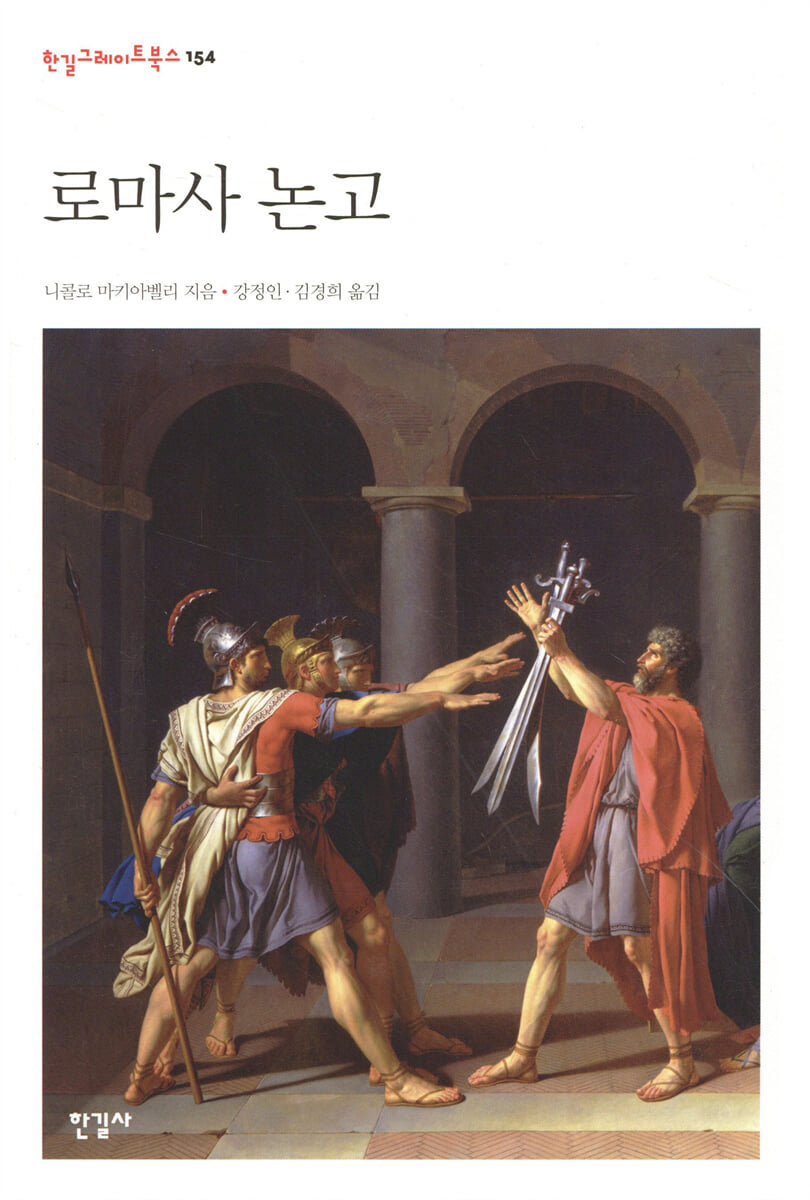 |
Description
Book Introduction
『Discourses on the History of Rome』 is a book in which Niccolo Machiavelli analyzes the greatness of the Roman Republic from a political philosophical perspective.
Machiavelli directly refuted the conventional argument that Rome's glory was simply due to good fortune, and emphasized freedom and independence.
In his view, freedom and independence were the most essential virtues that a republic must uphold, and it was a sincere piece of advice given to the Medici family, who at the time proclaimed themselves a republic but in reality wielded dictatorial power.
Machiavelli's 『Discourses on Roman History』 deals in great detail with what a republic should do based on the values of freedom and independence in each field, from military to internal affairs.
As many countries today proclaim themselves to be 'republics', this is a must-read for citizens.
The 『Discourses on a Roman History』 being published this time is a revised version of the first edition published in 2003. While the first edition was based on the Mansfield and Tarkov editions, which are the most authoritative English editions of 『Discourses on a Roman History』, the revised edition was created based on the Italian edition.
Here, we present a much more accurate translation by referring to the Mansfield edition, the Tarkov edition, and the German edition.
In this extension, the core concepts of Machiavelli's political thought, such as virtu, were translated more clearly.
Machiavelli directly refuted the conventional argument that Rome's glory was simply due to good fortune, and emphasized freedom and independence.
In his view, freedom and independence were the most essential virtues that a republic must uphold, and it was a sincere piece of advice given to the Medici family, who at the time proclaimed themselves a republic but in reality wielded dictatorial power.
Machiavelli's 『Discourses on Roman History』 deals in great detail with what a republic should do based on the values of freedom and independence in each field, from military to internal affairs.
As many countries today proclaim themselves to be 'republics', this is a must-read for citizens.
The 『Discourses on a Roman History』 being published this time is a revised version of the first edition published in 2003. While the first edition was based on the Mansfield and Tarkov editions, which are the most authoritative English editions of 『Discourses on a Roman History』, the revised edition was created based on the Italian edition.
Here, we present a much more accurate translation by referring to the Mansfield edition, the Tarkov edition, and the German edition.
In this extension, the core concepts of Machiavelli's political thought, such as virtu, were translated more clearly.
- You can preview some of the book's contents.
Preview
index
Machiavelli's Political Thought and the Discourses on Roman History│Kang Jeong-in
Greetings from Niccolò Machiavelli to the Zanobi Buondelmonti and Cosimo Rucellai
Volume 1
The Value of Western History
Chapter 1: On the Origin of Cities in General, and of Rome in Particular
Chapter 2 How many kinds of states are there, and to what kind does the Roman Republic belong?
Chapter 3: The Establishment of the Tribunal in Rome? An Event That Made the State More Perfect
Chapter 4: The Conflict Between the Plebs and the Senate Made the Roman Republic Free and Powerful
Chapter 5. Which side, the people or the nobles, more securely protects liberty? And which side is the cause of strife, those who seek new power or those who seek to retain existing power?
Chapter 6: Could a government have been established in Rome that would have eliminated the conflict between the people and the Senate?
Chapter 7. In a Republic, the right to accuse and denounce is essential for the protection of freedom.
Chapter 8: While accusations and accusations are beneficial to the state, slander is harmful.
Chapter 9. The task of creating a new republic or thoroughly overthrowing the old system and reforming it must be undertaken by one person alone.
Chapter 10: The founders of republics and kingdoms deserve fame, while the founders of tyrannies deserve blame.
Chapter 11: On the Religion of the Romans
Chapter 12: How important it is to allow religion to exercise a great influence, and how Italy was ruined by the conduct of the Roman Church.
Chapter 13: How the Romans Used Religion to Reform City Institutions, Conduct Business, and Resolve Internal Disputes
Chapter 14 The Romans interpreted divination according to the circumstances, and even when they were forced to disregard the requirements of their religion, they carefully maintained an appearance of religious observance; and if anyone was too hasty to disregard their religion, they punished him.
Chapter 15: The Samnites Turned to Religion as a Last Resort to Overcome Their Crisis
Chapter 16: A people accustomed to monarchy will have difficulty maintaining their freedom even if it is restored by chance.
Chapter 17: It is very difficult for a corrupt people to maintain their freedom even when they gain it.
Chapter 18: How a free government, if it already exists in a corrupt city, can be maintained; and how it can be established if it does not already exist.
Chapter 19: Even a weak monarch can maintain his position if he succeeds a strong monarch. However, if weak monarchs succeed one another, the kingdom can no longer be maintained.
Chapter 20: When two capable monarchs succeed each other, great achievements are achieved; a well-organized republic inevitably produces a succession of capable rulers, and as a result, the national power is greatly enhanced.
Chapter 21: A prince or republic that does not have an army of its own is to be condemned severely.
Chapter 22: What is remarkable about the duel that took place between the three warriors of the Horatii family of Rome and the three warriors of the Curiatii family of Alba?
Chapter 23: A general should not risk his entire fortunes in a battle in which he has not fully exerted his full strength; for the same reason, it is extremely dangerous to defend only strategic points.
Chapter 24: A well-organized republic has a clear system of rewards and punishments for its citizens, and does not condone wrongdoing for meritorious deeds.
Chapter 25. He who would reform a long-established government in a free country must at least preserve the appearance of the old system.
Chapter 26: A new prince must reorganize everything in the city or territory he conquers.
Chapter 27: It is rare for a person to be completely evil or completely good.
Chapter 28: Why were the Romans less ungrateful to their own people than the Athenians?
Chapter 29: Which is more ungrateful, the people or the monarch?
Chapter 30: How Princes and Republics May Avoid the Vice of Ingratitude, and How Citizens and Generals May Avoid the Harm of Ingratitude
Chapter 31 Roman generals were never excessively punished for their mistakes; even if their incompetence or faulty plans caused damage to Rome, they were not punished for it.
Chapter 32 A republic or a prince should not delay in bestowing favors upon the people until it is absolutely necessary to do so.
Chapter 33: When a great danger looms over a nation, whether from within or without, it is much safer to deal with it and delay its progress than to attack it directly.
Chapter 34: The power of the temporary dictatorship of the consuls was useful, not harmful, to the Roman Republic; and it was not the power given by free elections, but the power usurped by the citizens themselves, that destroyed the civil government.
Chapter 35: How the Roman Ten, though elected by free and universal suffrage, became so detrimental to the liberty of the Republic
Chapter 36: Citizens in high positions should not look down on those in low positions.
Chapter 37. What Discord the Agrarian Laws Caused in Rome; The enactment of laws with retroactive effects, contrary to ancient customs, causes discord in the Republic.
Chapter 38: Weak republics are indecisive and indecisive; and even when they do make decisions, they are imposed by necessity rather than by choice.
Chapter 39 The same thing often happens among different peoples.
Chapter 40: The Creation of the Council of Ten at Rome, and What We Should Learn from That Event; and, above all, how such an event might either save the Republic or drive it into Tyranny.
Chapter 41: It is rash and useless to turn from humility to arrogance, from mercy to cruelty, without taking the appropriate intermediate steps.
Chapter 42: How Easily Can Humans Be Bought?
Chapter 43: Those who fight for their own glory are truly good and loyal soldiers.
Chapter 44: A multitude without a leader is powerless; do not first threaten and then demand power.
Chapter 45: It is a bad precedent for a ruler to disobey a law, especially one who has made it; and it is very dangerous for a ruler to daily commit new misdeeds and harass the people.
Chapter 46: Man leaps from one ambition to another; at first he seeks not to be attacked, but later he seeks to attack.
Chapter 47: Humans may be easily fooled by generalities, but they are not easily fooled by specifics.
Chapter 48: Whoever wishes that an office not be conferred upon a mean or wicked person, should ask that it be conferred upon a much more mean and wicked person, or upon a very noble and good person.
Chapter 49: If even cities that started out as free, like Rome, find it very difficult to enact laws that would preserve them, cities that have just emerged from slavery are even less likely to do so.
Chapter 50 No commission or office shall have the power to suspend the government of the state.
Chapter 51: Whether a monarch or a republic, even when forced to take certain measures, must show a willingness to do so. 55
Chapter 52. If one wishes to suppress the ambition of any one who would rise to the highest position of power in a republic, there is no surer, less dangerous means than to block his way to that power.
Chapter 53: People, deceived by superficial beauty, often order things that lead to their own ruin; and they are easily moved by high hopes and strong promises.
Chapter 54: The Power of Influential Persons to Control Excited Crowds
Chapter 55: In a city where the people are not corrupted, public affairs are easily managed; where there is equality, a monarchy cannot be established, and where there is no equality, a republic cannot be established.
Chapter 56: Before a major event occurs in a city or region, there is always an omen or a prophet who announces it.
Chapter 57: Commoners are bold in groups, but timid individually.
Chapter 58: The multitude is wiser and more stable than a prince.
Chapter 59: Which Alliance Is More Trustworthy: The Alliance with the Republic or the Alliance with the Monarch?
Chapter 60: In Rome, there was no age restriction in the appointment of consuls and other officials.
Volume 2
introduction
Chapter 1: Did the Romans expand their empire by virtue of virtuosity or by luck?
Chapter 2. What peoples had the Romans to fight against, and how stubbornly they resisted to preserve their freedom?
Chapter 3 Rome became a great city by conquering surrounding cities and readily accepting foreigners into high positions.
Chapter 4 The Republic has used three methods to expand its territory.
Chapter 5: The Flood and the Black Death, along with changes in religion and language, destroy historical records.
Chapter 6: How the Romans Waged War
Chapter 7: How Much Land Did the Romans Give to Colonists?
Chapter 8: Why do peoples leave their birthplaces and migrate to other countries?
Chapter 9: Why Wars Usually Occur Between Great Powers
Chapter 10: Contrary to popular belief, money is not the driving force behind war.
Chapter 11: It is unwise to ally with a prince whose reputation exceeds his ability.
Chapter 12: When you fear being attacked, which is better: starting a war or waiting for it?
Chapter 13: People often transform lowly fortunes into high fortunes through trickery rather than skill.
Chapter 14: Many people ultimately ruin themselves by believing that they can overcome arrogance with humility.
Chapter 15: A weak nation is always indecisive in making decisions, and delayed decisions are always harmful.
Chapter 16: How the Soldiers of Our Time Have Disregarded the Discipline of Ancient Times
Chapter 17: How do today's armies view cannons, and are the prevailing views about them valid?
Chapter 18: Following the authority of the Romans and the precedents of ancient armies, infantry should be valued more highly than cavalry.
Chapter 19: When a republic without a good legal system and without the Romans' ability to conquer new territories, it will not bring prosperity but ruin.
Chapter 20. The Kinds of Dangers Which Princes or Republics Experiencing by Using Reinforcements or Mercenaries Are Exposed to
Chapter 21 The first country to which the Romans sent a consul abroad was Capua; and this was four hundred years after the war with Capua.
Chapter 22: How often do people's opinions err greatly in judging important matters?
Chapter 23: When it was necessary to punish conquered peoples, the Romans avoided half-measures.
Chapter 24: Fortresses are often more harmful than useful.
Chapter 25 It is foolish to attack a divided city, hoping to take advantage of its internal strife and gain control of it.
Chapter 26: Contempt and insult without any benefit to oneself only breed hatred.
Chapter 27 A wise prince or republic is always content with winning; otherwise, he is bound to suffer losses.
Chapter 28 It is dangerous for a republic or a monarch to fail to redress the harm suffered by the public or private.
Chapter 29: When fate wants people to do something that goes against her plans, she paralyzes their intellect.
Chapter 30: Truly strong republics and princes do not buy their allies with money, but rather acquire them through virtue and a reputation for power.
Chapter 31: It's Dangerous to Trust Exiled People
Chapter 32: The Various Methods the Romans Used to Conquer Other Cities
Chapter 33: The Romans gave their military generals full authority.
Volume 3
Chapter 1: For a religion or nation to survive for a long time, it must often return to its origins.
Chapter 2: It is very wise to feign insanity at the right time.
Chapter 3: To maintain their newly restored freedom, Brutus's sons had to be killed.
Chapter 4. A prince who usurps a kingdom is not safe while the usurper lives.
Chapter 5: Why Do Kings Lose Their Hereditary Kingdoms?
Chapter 6: On Conspiracy
Chapter 7: Why the transition from freedom to slavery, and from slavery to freedom, is sometimes accompanied by bloodshed and sometimes not.
Chapter 8: He who seeks to change the government of a nation must consider its material.
Chapter 9: Those who always expect to be lucky must change with the times.
Chapter 10: When the enemy uses all means to initiate battle, the general cannot avoid it.
Chapter 11: He who must fight against many enemies, even when he is at a disadvantage, will be victorious if he can repel the first attack.
Chapter 12: A wise general uses every means to impress upon his own soldiers the necessity of battle and to deprive the enemy of that necessity.
Chapter 13: Which is more trustworthy: a good general with a weak army or a weak general with a good army?
Chapter 14: On the Effects of Using New Strategies or Shouting Unexpectedly in Battle
Chapter 15: One general, not many, should lead an army; too many captains will cause the ship to sink.
Chapter 16: In difficult times, people are sought after for their true ability (virtuosity), while in normal times, those with wealth or family connections, rather than those with ability, are highly sought after.
Chapter 17: Never entrust important tasks or commands to someone who has already lost their mind.
Chapter 18: A General's Most Important Duty Is to Detect the Enemy's Strategic Plans
Chapter 19: Is leniency more necessary than punishment to control the majority?
Chapter 20: The Case of the Falisci, Whose Good Will Was More Effective Than All the Force of Rome
Chapter 21: Hannibal's actions were different from Scipio's, and why did Hannibal achieve the same results in Spain as Scipio?
Chapter 22: The ruthlessness of Manlius Torquatus and the gentleness of Valerius Corvinus brought them equal glory.
Chapter 23: Why Camillus Was Banished from Rome
Chapter 24: Rome was enslaved by the extension of the term of office of the supreme commander.
Chapter 25: The Poverty of Cincinnatus and Many Other Roman Citizens
Chapter 26: How a Nation Is Ruined Because of Women
Chapter 27: How to Unify a Divided City; The View That a Ruler Must Divide a City to Rule It Is False
Chapter 28: Citizens must be careful about their actions, for often the seeds of tyranny are hidden in acts of mercy.
Chapter 29: The Sins of the People Originate from the Monarch
Chapter 30: If a citizen in a republic wishes to use his influence to do any good, he must first get rid of envy; and how the defense of a city should be organized when an enemy advances.
Chapter 31: Strong republics and outstanding men maintain a consistent spirit and dignity, no matter what fate may befall them.
Chapter 32: Concerning the Methods of Obstructing Treaties
Chapter 33: To win a battle, it is essential to make the army trust itself and its general.
Chapter 34: What kind of reputation, rumor, or opinion makes the people more inclined to favor a citizen; and whether the people are much wiser in appointing officials than the prince.
Chapter 35: The Dangers of Taking the Lead in Giving Advice; The More Unusual the Advice, the Greater the Danger
Chapter 36: Why are the Gauls so masculine at the start of battle, yet so feminine later on, and why is this still the case?
Chapter 37: Is a Skirmish Necessary Before a Battle? How to Learn About a New Enemy While Avoiding Skirmishes
Chapter 38: Qualities of a General Who Inspires Trust in the Army
Chapter 39: A General Must Understand the Terrain
Chapter 40: The Use of Deception in War is Worth the Fame
Chapter 41. The Fatherland Must Be Defended, Whether with Ignorance or Glory; Whatever the Method, if it is successful, it is appropriate.
Chapter 42: Do Not Keep Coerced Promises
Chapter 43: People born in the same region show almost the same nature throughout all ages.
Chapter 44: Through violence and boldness, we frequently obtain what we could never obtain by ordinary means.
Chapter 45: Which is a better tactic in war: to receive and then counter the enemy's attack, or to attack the enemy fiercely from the beginning?
Chapter 46: Why do families in some cities maintain the same habits for so long?
Chapter 47: A good citizen who loves the city of his birth must forget personal grudges.
Chapter 48: When the enemy appears to be making a major mistake, we should suspect that he is concealing a deception.
Chapter 49. That a republic, if it is to remain free, requires ever-forward new action; and what excellent qualities caused Quintius Fabius to be called Maximus.
Machiavelli's Chronology
Translator's Note
Translator's Note for the Revised Edition
Search
Greetings from Niccolò Machiavelli to the Zanobi Buondelmonti and Cosimo Rucellai
Volume 1
The Value of Western History
Chapter 1: On the Origin of Cities in General, and of Rome in Particular
Chapter 2 How many kinds of states are there, and to what kind does the Roman Republic belong?
Chapter 3: The Establishment of the Tribunal in Rome? An Event That Made the State More Perfect
Chapter 4: The Conflict Between the Plebs and the Senate Made the Roman Republic Free and Powerful
Chapter 5. Which side, the people or the nobles, more securely protects liberty? And which side is the cause of strife, those who seek new power or those who seek to retain existing power?
Chapter 6: Could a government have been established in Rome that would have eliminated the conflict between the people and the Senate?
Chapter 7. In a Republic, the right to accuse and denounce is essential for the protection of freedom.
Chapter 8: While accusations and accusations are beneficial to the state, slander is harmful.
Chapter 9. The task of creating a new republic or thoroughly overthrowing the old system and reforming it must be undertaken by one person alone.
Chapter 10: The founders of republics and kingdoms deserve fame, while the founders of tyrannies deserve blame.
Chapter 11: On the Religion of the Romans
Chapter 12: How important it is to allow religion to exercise a great influence, and how Italy was ruined by the conduct of the Roman Church.
Chapter 13: How the Romans Used Religion to Reform City Institutions, Conduct Business, and Resolve Internal Disputes
Chapter 14 The Romans interpreted divination according to the circumstances, and even when they were forced to disregard the requirements of their religion, they carefully maintained an appearance of religious observance; and if anyone was too hasty to disregard their religion, they punished him.
Chapter 15: The Samnites Turned to Religion as a Last Resort to Overcome Their Crisis
Chapter 16: A people accustomed to monarchy will have difficulty maintaining their freedom even if it is restored by chance.
Chapter 17: It is very difficult for a corrupt people to maintain their freedom even when they gain it.
Chapter 18: How a free government, if it already exists in a corrupt city, can be maintained; and how it can be established if it does not already exist.
Chapter 19: Even a weak monarch can maintain his position if he succeeds a strong monarch. However, if weak monarchs succeed one another, the kingdom can no longer be maintained.
Chapter 20: When two capable monarchs succeed each other, great achievements are achieved; a well-organized republic inevitably produces a succession of capable rulers, and as a result, the national power is greatly enhanced.
Chapter 21: A prince or republic that does not have an army of its own is to be condemned severely.
Chapter 22: What is remarkable about the duel that took place between the three warriors of the Horatii family of Rome and the three warriors of the Curiatii family of Alba?
Chapter 23: A general should not risk his entire fortunes in a battle in which he has not fully exerted his full strength; for the same reason, it is extremely dangerous to defend only strategic points.
Chapter 24: A well-organized republic has a clear system of rewards and punishments for its citizens, and does not condone wrongdoing for meritorious deeds.
Chapter 25. He who would reform a long-established government in a free country must at least preserve the appearance of the old system.
Chapter 26: A new prince must reorganize everything in the city or territory he conquers.
Chapter 27: It is rare for a person to be completely evil or completely good.
Chapter 28: Why were the Romans less ungrateful to their own people than the Athenians?
Chapter 29: Which is more ungrateful, the people or the monarch?
Chapter 30: How Princes and Republics May Avoid the Vice of Ingratitude, and How Citizens and Generals May Avoid the Harm of Ingratitude
Chapter 31 Roman generals were never excessively punished for their mistakes; even if their incompetence or faulty plans caused damage to Rome, they were not punished for it.
Chapter 32 A republic or a prince should not delay in bestowing favors upon the people until it is absolutely necessary to do so.
Chapter 33: When a great danger looms over a nation, whether from within or without, it is much safer to deal with it and delay its progress than to attack it directly.
Chapter 34: The power of the temporary dictatorship of the consuls was useful, not harmful, to the Roman Republic; and it was not the power given by free elections, but the power usurped by the citizens themselves, that destroyed the civil government.
Chapter 35: How the Roman Ten, though elected by free and universal suffrage, became so detrimental to the liberty of the Republic
Chapter 36: Citizens in high positions should not look down on those in low positions.
Chapter 37. What Discord the Agrarian Laws Caused in Rome; The enactment of laws with retroactive effects, contrary to ancient customs, causes discord in the Republic.
Chapter 38: Weak republics are indecisive and indecisive; and even when they do make decisions, they are imposed by necessity rather than by choice.
Chapter 39 The same thing often happens among different peoples.
Chapter 40: The Creation of the Council of Ten at Rome, and What We Should Learn from That Event; and, above all, how such an event might either save the Republic or drive it into Tyranny.
Chapter 41: It is rash and useless to turn from humility to arrogance, from mercy to cruelty, without taking the appropriate intermediate steps.
Chapter 42: How Easily Can Humans Be Bought?
Chapter 43: Those who fight for their own glory are truly good and loyal soldiers.
Chapter 44: A multitude without a leader is powerless; do not first threaten and then demand power.
Chapter 45: It is a bad precedent for a ruler to disobey a law, especially one who has made it; and it is very dangerous for a ruler to daily commit new misdeeds and harass the people.
Chapter 46: Man leaps from one ambition to another; at first he seeks not to be attacked, but later he seeks to attack.
Chapter 47: Humans may be easily fooled by generalities, but they are not easily fooled by specifics.
Chapter 48: Whoever wishes that an office not be conferred upon a mean or wicked person, should ask that it be conferred upon a much more mean and wicked person, or upon a very noble and good person.
Chapter 49: If even cities that started out as free, like Rome, find it very difficult to enact laws that would preserve them, cities that have just emerged from slavery are even less likely to do so.
Chapter 50 No commission or office shall have the power to suspend the government of the state.
Chapter 51: Whether a monarch or a republic, even when forced to take certain measures, must show a willingness to do so. 55
Chapter 52. If one wishes to suppress the ambition of any one who would rise to the highest position of power in a republic, there is no surer, less dangerous means than to block his way to that power.
Chapter 53: People, deceived by superficial beauty, often order things that lead to their own ruin; and they are easily moved by high hopes and strong promises.
Chapter 54: The Power of Influential Persons to Control Excited Crowds
Chapter 55: In a city where the people are not corrupted, public affairs are easily managed; where there is equality, a monarchy cannot be established, and where there is no equality, a republic cannot be established.
Chapter 56: Before a major event occurs in a city or region, there is always an omen or a prophet who announces it.
Chapter 57: Commoners are bold in groups, but timid individually.
Chapter 58: The multitude is wiser and more stable than a prince.
Chapter 59: Which Alliance Is More Trustworthy: The Alliance with the Republic or the Alliance with the Monarch?
Chapter 60: In Rome, there was no age restriction in the appointment of consuls and other officials.
Volume 2
introduction
Chapter 1: Did the Romans expand their empire by virtue of virtuosity or by luck?
Chapter 2. What peoples had the Romans to fight against, and how stubbornly they resisted to preserve their freedom?
Chapter 3 Rome became a great city by conquering surrounding cities and readily accepting foreigners into high positions.
Chapter 4 The Republic has used three methods to expand its territory.
Chapter 5: The Flood and the Black Death, along with changes in religion and language, destroy historical records.
Chapter 6: How the Romans Waged War
Chapter 7: How Much Land Did the Romans Give to Colonists?
Chapter 8: Why do peoples leave their birthplaces and migrate to other countries?
Chapter 9: Why Wars Usually Occur Between Great Powers
Chapter 10: Contrary to popular belief, money is not the driving force behind war.
Chapter 11: It is unwise to ally with a prince whose reputation exceeds his ability.
Chapter 12: When you fear being attacked, which is better: starting a war or waiting for it?
Chapter 13: People often transform lowly fortunes into high fortunes through trickery rather than skill.
Chapter 14: Many people ultimately ruin themselves by believing that they can overcome arrogance with humility.
Chapter 15: A weak nation is always indecisive in making decisions, and delayed decisions are always harmful.
Chapter 16: How the Soldiers of Our Time Have Disregarded the Discipline of Ancient Times
Chapter 17: How do today's armies view cannons, and are the prevailing views about them valid?
Chapter 18: Following the authority of the Romans and the precedents of ancient armies, infantry should be valued more highly than cavalry.
Chapter 19: When a republic without a good legal system and without the Romans' ability to conquer new territories, it will not bring prosperity but ruin.
Chapter 20. The Kinds of Dangers Which Princes or Republics Experiencing by Using Reinforcements or Mercenaries Are Exposed to
Chapter 21 The first country to which the Romans sent a consul abroad was Capua; and this was four hundred years after the war with Capua.
Chapter 22: How often do people's opinions err greatly in judging important matters?
Chapter 23: When it was necessary to punish conquered peoples, the Romans avoided half-measures.
Chapter 24: Fortresses are often more harmful than useful.
Chapter 25 It is foolish to attack a divided city, hoping to take advantage of its internal strife and gain control of it.
Chapter 26: Contempt and insult without any benefit to oneself only breed hatred.
Chapter 27 A wise prince or republic is always content with winning; otherwise, he is bound to suffer losses.
Chapter 28 It is dangerous for a republic or a monarch to fail to redress the harm suffered by the public or private.
Chapter 29: When fate wants people to do something that goes against her plans, she paralyzes their intellect.
Chapter 30: Truly strong republics and princes do not buy their allies with money, but rather acquire them through virtue and a reputation for power.
Chapter 31: It's Dangerous to Trust Exiled People
Chapter 32: The Various Methods the Romans Used to Conquer Other Cities
Chapter 33: The Romans gave their military generals full authority.
Volume 3
Chapter 1: For a religion or nation to survive for a long time, it must often return to its origins.
Chapter 2: It is very wise to feign insanity at the right time.
Chapter 3: To maintain their newly restored freedom, Brutus's sons had to be killed.
Chapter 4. A prince who usurps a kingdom is not safe while the usurper lives.
Chapter 5: Why Do Kings Lose Their Hereditary Kingdoms?
Chapter 6: On Conspiracy
Chapter 7: Why the transition from freedom to slavery, and from slavery to freedom, is sometimes accompanied by bloodshed and sometimes not.
Chapter 8: He who seeks to change the government of a nation must consider its material.
Chapter 9: Those who always expect to be lucky must change with the times.
Chapter 10: When the enemy uses all means to initiate battle, the general cannot avoid it.
Chapter 11: He who must fight against many enemies, even when he is at a disadvantage, will be victorious if he can repel the first attack.
Chapter 12: A wise general uses every means to impress upon his own soldiers the necessity of battle and to deprive the enemy of that necessity.
Chapter 13: Which is more trustworthy: a good general with a weak army or a weak general with a good army?
Chapter 14: On the Effects of Using New Strategies or Shouting Unexpectedly in Battle
Chapter 15: One general, not many, should lead an army; too many captains will cause the ship to sink.
Chapter 16: In difficult times, people are sought after for their true ability (virtuosity), while in normal times, those with wealth or family connections, rather than those with ability, are highly sought after.
Chapter 17: Never entrust important tasks or commands to someone who has already lost their mind.
Chapter 18: A General's Most Important Duty Is to Detect the Enemy's Strategic Plans
Chapter 19: Is leniency more necessary than punishment to control the majority?
Chapter 20: The Case of the Falisci, Whose Good Will Was More Effective Than All the Force of Rome
Chapter 21: Hannibal's actions were different from Scipio's, and why did Hannibal achieve the same results in Spain as Scipio?
Chapter 22: The ruthlessness of Manlius Torquatus and the gentleness of Valerius Corvinus brought them equal glory.
Chapter 23: Why Camillus Was Banished from Rome
Chapter 24: Rome was enslaved by the extension of the term of office of the supreme commander.
Chapter 25: The Poverty of Cincinnatus and Many Other Roman Citizens
Chapter 26: How a Nation Is Ruined Because of Women
Chapter 27: How to Unify a Divided City; The View That a Ruler Must Divide a City to Rule It Is False
Chapter 28: Citizens must be careful about their actions, for often the seeds of tyranny are hidden in acts of mercy.
Chapter 29: The Sins of the People Originate from the Monarch
Chapter 30: If a citizen in a republic wishes to use his influence to do any good, he must first get rid of envy; and how the defense of a city should be organized when an enemy advances.
Chapter 31: Strong republics and outstanding men maintain a consistent spirit and dignity, no matter what fate may befall them.
Chapter 32: Concerning the Methods of Obstructing Treaties
Chapter 33: To win a battle, it is essential to make the army trust itself and its general.
Chapter 34: What kind of reputation, rumor, or opinion makes the people more inclined to favor a citizen; and whether the people are much wiser in appointing officials than the prince.
Chapter 35: The Dangers of Taking the Lead in Giving Advice; The More Unusual the Advice, the Greater the Danger
Chapter 36: Why are the Gauls so masculine at the start of battle, yet so feminine later on, and why is this still the case?
Chapter 37: Is a Skirmish Necessary Before a Battle? How to Learn About a New Enemy While Avoiding Skirmishes
Chapter 38: Qualities of a General Who Inspires Trust in the Army
Chapter 39: A General Must Understand the Terrain
Chapter 40: The Use of Deception in War is Worth the Fame
Chapter 41. The Fatherland Must Be Defended, Whether with Ignorance or Glory; Whatever the Method, if it is successful, it is appropriate.
Chapter 42: Do Not Keep Coerced Promises
Chapter 43: People born in the same region show almost the same nature throughout all ages.
Chapter 44: Through violence and boldness, we frequently obtain what we could never obtain by ordinary means.
Chapter 45: Which is a better tactic in war: to receive and then counter the enemy's attack, or to attack the enemy fiercely from the beginning?
Chapter 46: Why do families in some cities maintain the same habits for so long?
Chapter 47: A good citizen who loves the city of his birth must forget personal grudges.
Chapter 48: When the enemy appears to be making a major mistake, we should suspect that he is concealing a deception.
Chapter 49. That a republic, if it is to remain free, requires ever-forward new action; and what excellent qualities caused Quintius Fabius to be called Maximus.
Machiavelli's Chronology
Translator's Note
Translator's Note for the Revised Edition
Search
Publisher's Review
Machiavelli,
The greatest political thinker of Renaissance Italy
Machiavelli was an Italian writer, politician, and political theorist of the Renaissance.
In 1498, at the age of 30, he joined the Florentine Republic and was sent on a diplomatic mission to the court of Louis XII of France.
The main task of the Florentine envoy at the time was to seek French military cooperation in connection with Florence's attack on Pisa.
In 1503 he was sent to Rome, where he had the opportunity to see Pope Julius II at close range.
Julius II became pope with the help of Cesare Borgia, son of the previous pope, Alexander VI, and later grew in power through decisive action.
Machiavelli appears to have been greatly influenced by Julius II's worldly wisdom.
The Prince, which he later wrote, is based on his vivid experiences and observations as a diplomatic envoy.
When the Medici family regained control of Florence in 1512, Machiavelli was expelled from public office.
To make matters worse, the following year he was arrested, tortured, and imprisoned on suspicion of involvement in a failed plot to overthrow the Medici family.
Soon after being released as a special pardon, he began to plan for public office, and as part of this plan, he wrote The Prince around the end of 1513.
However, Machiavelli's plan ended in failure as Lorenzo de Medici, to whom the book was dedicated, reportedly did not even look at it.
However, during this period, Machiavelli began to meet with republicans, and through his interactions with them, he became aware of the meaning and value of a republic.
Based on this, he wrote a commentary on the first ten books of Titus Livius's 『Roman History』, which is 『Discourses on Roman History』.
This book, Machiavelli's greatest work, is considered to be an original work in many ways.
Machiavelli and Machiavellianism,
Opening the Origin of Modernity
Machiavelli's outstanding contribution to the history of modern political thought was that he clearly stated that politics is distinct from other areas such as ethics and religion, and further argued that it should be free from religion and ethics.
In this way, he was able to ideologically represent the political thought of realism and politically defend the legitimacy of the centralized modern state that was emerging at the time.
This is because Machiavelli was evaluated as the figure who opened the origin of modern times in the history of Western political thought, as he thoroughly pursued and implemented the secularization trend that had been developing since the Renaissance in the political sphere.
In this extension, there is ‘Machiavellianism’.
Machiavellianism, simply put, means “considering only efficiency and utility, regardless of the moral goodness or evil of the means, for the public good, especially the national interest.”
This attitude of Machiavelli is also well revealed in the 『Discourses on Roman History』.
“When the safety of one's own country is absolutely at stake, there is absolutely no need to consider whether something is just or unjust, merciful or cruel, praiseworthy or shameful.
Instead, setting aside all qualms of conscience, man must follow whatever plan he can, whatever it may be, to the greatest extent possible to preserve the survival and freedom of his country.
This theory determines the words and actions that the French use to defend the majesty of the king and the power of the kingdom.” _ p. 633
In this way, the core of Machiavellianism is ‘public interest.’
But many people misunderstand this part.
That is, “pursuing only the interests of an individual or a faction” or “a way of life in society in which one does not hesitate to sacrifice others for one’s own interests.”
However, this attitude was strongly criticized by Machiavelli.
Of course, Machiavelli is also responsible for the misuse and confusion of Machiavellianism.
This is because he did not clearly distinguish what political attitudes should be maintained at various levels of life, such as the public and private levels. The Discourses on Roman History are of great help in accurately understanding Machiavellianism.
“Those born in the Republic should follow this pattern and strive to distinguish themselves by some extraordinary act in their youth.
Many Romans gained fame in their youth by proposing laws for the public good, by accusing some prominent citizen of breaking the law, or by some other notable and novel act that brought them to the attention of the populace.” _ p. 611
The greatest political thinker of Renaissance Italy
Machiavelli was an Italian writer, politician, and political theorist of the Renaissance.
In 1498, at the age of 30, he joined the Florentine Republic and was sent on a diplomatic mission to the court of Louis XII of France.
The main task of the Florentine envoy at the time was to seek French military cooperation in connection with Florence's attack on Pisa.
In 1503 he was sent to Rome, where he had the opportunity to see Pope Julius II at close range.
Julius II became pope with the help of Cesare Borgia, son of the previous pope, Alexander VI, and later grew in power through decisive action.
Machiavelli appears to have been greatly influenced by Julius II's worldly wisdom.
The Prince, which he later wrote, is based on his vivid experiences and observations as a diplomatic envoy.
When the Medici family regained control of Florence in 1512, Machiavelli was expelled from public office.
To make matters worse, the following year he was arrested, tortured, and imprisoned on suspicion of involvement in a failed plot to overthrow the Medici family.
Soon after being released as a special pardon, he began to plan for public office, and as part of this plan, he wrote The Prince around the end of 1513.
However, Machiavelli's plan ended in failure as Lorenzo de Medici, to whom the book was dedicated, reportedly did not even look at it.
However, during this period, Machiavelli began to meet with republicans, and through his interactions with them, he became aware of the meaning and value of a republic.
Based on this, he wrote a commentary on the first ten books of Titus Livius's 『Roman History』, which is 『Discourses on Roman History』.
This book, Machiavelli's greatest work, is considered to be an original work in many ways.
Machiavelli and Machiavellianism,
Opening the Origin of Modernity
Machiavelli's outstanding contribution to the history of modern political thought was that he clearly stated that politics is distinct from other areas such as ethics and religion, and further argued that it should be free from religion and ethics.
In this way, he was able to ideologically represent the political thought of realism and politically defend the legitimacy of the centralized modern state that was emerging at the time.
This is because Machiavelli was evaluated as the figure who opened the origin of modern times in the history of Western political thought, as he thoroughly pursued and implemented the secularization trend that had been developing since the Renaissance in the political sphere.
In this extension, there is ‘Machiavellianism’.
Machiavellianism, simply put, means “considering only efficiency and utility, regardless of the moral goodness or evil of the means, for the public good, especially the national interest.”
This attitude of Machiavelli is also well revealed in the 『Discourses on Roman History』.
“When the safety of one's own country is absolutely at stake, there is absolutely no need to consider whether something is just or unjust, merciful or cruel, praiseworthy or shameful.
Instead, setting aside all qualms of conscience, man must follow whatever plan he can, whatever it may be, to the greatest extent possible to preserve the survival and freedom of his country.
This theory determines the words and actions that the French use to defend the majesty of the king and the power of the kingdom.” _ p. 633
In this way, the core of Machiavellianism is ‘public interest.’
But many people misunderstand this part.
That is, “pursuing only the interests of an individual or a faction” or “a way of life in society in which one does not hesitate to sacrifice others for one’s own interests.”
However, this attitude was strongly criticized by Machiavelli.
Of course, Machiavelli is also responsible for the misuse and confusion of Machiavellianism.
This is because he did not clearly distinguish what political attitudes should be maintained at various levels of life, such as the public and private levels. The Discourses on Roman History are of great help in accurately understanding Machiavellianism.
“Those born in the Republic should follow this pattern and strive to distinguish themselves by some extraordinary act in their youth.
Many Romans gained fame in their youth by proposing laws for the public good, by accusing some prominent citizen of breaking the law, or by some other notable and novel act that brought them to the attention of the populace.” _ p. 611
GOODS SPECIFICS
- Date of publication: February 22, 2018
- Format: Hardcover book binding method guide
- Page count, weight, size: 680 pages | 1,116g | 153*224*35mm
- ISBN13: 9788935664740
- ISBN10: 893566474X
You may also like
카테고리
korean


korean

![ELLE 엘르 스페셜 에디션 A형 : 12월 [2025]](http://librairie.coreenne.fr/cdn/shop/files/b8e27a3de6c9538896439686c6b0e8fb.jpg?v=1766436872&width=3840)


