

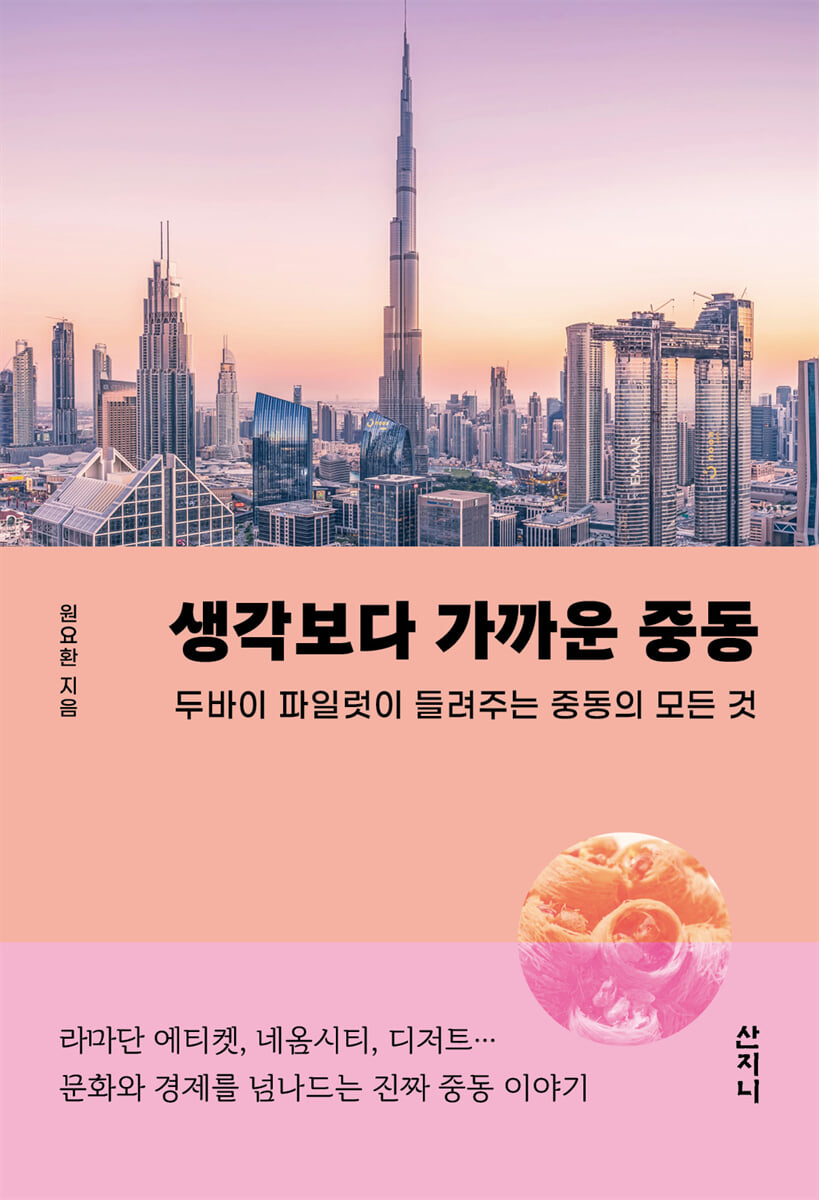
The Middle East is closer than you think
 |
Description
Book Introduction
Why the Middle East now?
Where more than half of the world's oil reserves are concentrated.
The place where more than 70% of the crude oil imported by our country comes from.
NEOM, a place preparing for AI investment, sports diplomacy, and oil phase-out.
It's the Middle East.
How much do we know about the Middle East, such an important region?
Beyond the fragmentary conflict news and vague images, do we truly understand the lives, culture, economic systems, and future vision of the people there?
The Middle East is a key route in the global supply chain and a backdrop for international oil price fluctuations.
The driving forces of the global economy are no longer confined to the West.
As the world's center is being reorganized, understanding the Middle East means reading the world's changes.
The author of 『The Middle East is Closer Than You Think』, Won Yo-hwan, is a Middle East economics journalist and pilot living in Dubai.
With the unique identity of a Korean journalist-turned-pilot, he looks at Middle Eastern culture and introduces the Middle East's power of change.
The Middle East that the author shows is not a 'faraway place difficult to understand', but rather a 'place that is interesting and closer than you think' if you know about it.
From sweet desserts to cutting-edge smart city blueprints.
This book vividly portrays the real Middle East, as seen, heard, and experienced by the author himself.
Where more than half of the world's oil reserves are concentrated.
The place where more than 70% of the crude oil imported by our country comes from.
NEOM, a place preparing for AI investment, sports diplomacy, and oil phase-out.
It's the Middle East.
How much do we know about the Middle East, such an important region?
Beyond the fragmentary conflict news and vague images, do we truly understand the lives, culture, economic systems, and future vision of the people there?
The Middle East is a key route in the global supply chain and a backdrop for international oil price fluctuations.
The driving forces of the global economy are no longer confined to the West.
As the world's center is being reorganized, understanding the Middle East means reading the world's changes.
The author of 『The Middle East is Closer Than You Think』, Won Yo-hwan, is a Middle East economics journalist and pilot living in Dubai.
With the unique identity of a Korean journalist-turned-pilot, he looks at Middle Eastern culture and introduces the Middle East's power of change.
The Middle East that the author shows is not a 'faraway place difficult to understand', but rather a 'place that is interesting and closer than you think' if you know about it.
From sweet desserts to cutting-edge smart city blueprints.
This book vividly portrays the real Middle East, as seen, heard, and experienced by the author himself.
- You can preview some of the book's contents.
Preview
index
prolog
Part 1: Living in Dubai, the Land of Opportunity
Surviving in Dubai without speaking Arabic
Nine Reasons Why Koreans Living in Dubai Are Happy
"Hurry up, hurry up!" Arabs have personalities similar to Koreans.
Ramadan Experience at Pilot School
Ramadan Etiquette for Koreans
4 Arabian Desserts That Will Make Your Blood Scream with Sweetness
Common Mistakes Koreans Make in Dubai
Dubai vs. Seoul: Which is more expensive?
'Abu Muhammad Hassan ibn Hussein ibn Khalil al-Qudsi'... is that just one person's name?
What's happening with polygamy in the Middle East?
Things that are only available in Korea and not in Dubai
Dubai's laws are groundbreaking even to Koreans.
What Makes Dubai, a "Parenting Paradise," Different?
Part 2: The Middle East: A World We Never Knew
Arab and Middle Eastern: What's the difference?
I'm going to travel to the Middle East… Do I have to wear a hijab?
Understanding Saudi Arabia is key to understanding NEOM.
Mohammed bin Salman, father of Neom
Four Key Words to Understanding the Middle Eastern IT Industry
The oil empire is changing.
For Korean companies wishing to advance into the Middle East
Why are Israel and Iran's relations like this?
Triangular diplomacy between the United Arab Emirates, Saudi Arabia, and Qatar
Did the Arab countries benefit from the Russo-Russian War? The misconception and the truth...
In the Middle East, warring parties work together… Four ways to view it
The oil money battle among Middle Eastern royals unfolds in the English Premier League.
The IMF's Economic Outlook for Saudi Arabia
Dubai vs. Riyadh: Which is the Best City in the Arab World?
How Qatar, a small but strong country, survived
Why are the descendants of the prosperous Middle Eastern empires so poor?
References
Part 1: Living in Dubai, the Land of Opportunity
Surviving in Dubai without speaking Arabic
Nine Reasons Why Koreans Living in Dubai Are Happy
"Hurry up, hurry up!" Arabs have personalities similar to Koreans.
Ramadan Experience at Pilot School
Ramadan Etiquette for Koreans
4 Arabian Desserts That Will Make Your Blood Scream with Sweetness
Common Mistakes Koreans Make in Dubai
Dubai vs. Seoul: Which is more expensive?
'Abu Muhammad Hassan ibn Hussein ibn Khalil al-Qudsi'... is that just one person's name?
What's happening with polygamy in the Middle East?
Things that are only available in Korea and not in Dubai
Dubai's laws are groundbreaking even to Koreans.
What Makes Dubai, a "Parenting Paradise," Different?
Part 2: The Middle East: A World We Never Knew
Arab and Middle Eastern: What's the difference?
I'm going to travel to the Middle East… Do I have to wear a hijab?
Understanding Saudi Arabia is key to understanding NEOM.
Mohammed bin Salman, father of Neom
Four Key Words to Understanding the Middle Eastern IT Industry
The oil empire is changing.
For Korean companies wishing to advance into the Middle East
Why are Israel and Iran's relations like this?
Triangular diplomacy between the United Arab Emirates, Saudi Arabia, and Qatar
Did the Arab countries benefit from the Russo-Russian War? The misconception and the truth...
In the Middle East, warring parties work together… Four ways to view it
The oil money battle among Middle Eastern royals unfolds in the English Premier League.
The IMF's Economic Outlook for Saudi Arabia
Dubai vs. Riyadh: Which is the Best City in the Arab World?
How Qatar, a small but strong country, survived
Why are the descendants of the prosperous Middle Eastern empires so poor?
References
Into the book
Although it is not well known to us, the Middle East has long been famous for its delicious desserts.
Arabs, who have lived a nomadic life for a long time in hot desert climates, have developed and consumed many sweet desserts by pouring sugar into their food, which is high in calories and prevents food from spoiling.
Some explain this as a cultural connection, saying that since most of the region is an Islamic country, pork and non-halal meats, as well as entertainment such as drinking, are strictly prohibited, so they went 'all in' to create delicious desserts in search of other pleasures.
--- p.46~47
The Dubai government still appears to be placing more emphasis on actively attracting investment and easing regulations.
Any crimes or side effects that may arise during the process are immediately corrected and supplemented as problems are predicted.
This is a method that is possible because it is a monarchy with quick decision-making.
--- p.81
Western media outlets have raised suspicions that Bin Salman wields "black power" by engaging in all kinds of political maneuvering, suppressing political opponents, and distorting public opinion behind the image of a reformist monarch. However, Bin Salman has succeeded in centralizing all power in Saudi Arabia by consistently eliminating opposing forces.
In September 2022, King Salman transferred the prime ministership to Crown Prince Mohammed bin Salman.
In Saudi Arabia, the king traditionally also holds the position of prime minister, which suggests that bin Salman's power is comparable to or even greater than that of the king.
The era of Bin Salman has finally begun.
--- p.129
Many people view the oil-producing countries of the Middle East as one lump sum.
But if you look closely, their diplomatic strategies are different.
In particular, the three countries of the United Arab Emirates (UAE), Saudi Arabia, and Qatar are neighbors who share the Persian Gulf, but they are taking completely different paths.
--- p.163
When the now thriving Middle Eastern cities of Dubai and Qatar were nothing more than small villages without even a name, these cities boasted truly splendid civilizations and were megapolises where countless people traded and formed vast spaces.
From here, curiosity arises.
Why have these people who were once successful fallen so completely?
And why are Dubai, Qatar, and Riyadh, then little-known names, doing so well? Simply attributing it to oil isn't enough.
There must be other reasons, of course.
So, is it inevitable that these cities will eventually be completely destroyed?
So what is the reason?
Arabs, who have lived a nomadic life for a long time in hot desert climates, have developed and consumed many sweet desserts by pouring sugar into their food, which is high in calories and prevents food from spoiling.
Some explain this as a cultural connection, saying that since most of the region is an Islamic country, pork and non-halal meats, as well as entertainment such as drinking, are strictly prohibited, so they went 'all in' to create delicious desserts in search of other pleasures.
--- p.46~47
The Dubai government still appears to be placing more emphasis on actively attracting investment and easing regulations.
Any crimes or side effects that may arise during the process are immediately corrected and supplemented as problems are predicted.
This is a method that is possible because it is a monarchy with quick decision-making.
--- p.81
Western media outlets have raised suspicions that Bin Salman wields "black power" by engaging in all kinds of political maneuvering, suppressing political opponents, and distorting public opinion behind the image of a reformist monarch. However, Bin Salman has succeeded in centralizing all power in Saudi Arabia by consistently eliminating opposing forces.
In September 2022, King Salman transferred the prime ministership to Crown Prince Mohammed bin Salman.
In Saudi Arabia, the king traditionally also holds the position of prime minister, which suggests that bin Salman's power is comparable to or even greater than that of the king.
The era of Bin Salman has finally begun.
--- p.129
Many people view the oil-producing countries of the Middle East as one lump sum.
But if you look closely, their diplomatic strategies are different.
In particular, the three countries of the United Arab Emirates (UAE), Saudi Arabia, and Qatar are neighbors who share the Persian Gulf, but they are taking completely different paths.
--- p.163
When the now thriving Middle Eastern cities of Dubai and Qatar were nothing more than small villages without even a name, these cities boasted truly splendid civilizations and were megapolises where countless people traded and formed vast spaces.
From here, curiosity arises.
Why have these people who were once successful fallen so completely?
And why are Dubai, Qatar, and Riyadh, then little-known names, doing so well? Simply attributing it to oil isn't enough.
There must be other reasons, of course.
So, is it inevitable that these cities will eventually be completely destroyed?
So what is the reason?
--- p.230
Publisher's Review
'Yala Yala': Entering Dubai's Everyday Life
Can you survive in the Middle East without speaking a word of Arabic? Is it really impossible to drink even a sip of water during Ramadan? Is polygamy still common? Most of the questions we harbor about the Middle East remain vague speculations.
Part 1, 'Living in Dubai, the Land of Opportunity,' contains the author's vivid daily experiences as a resident of Dubai.
The Middle East I encountered as a Korean was different yet similar, and similar yet different.
Just like Koreans who always say “hurry up, hurry up”, Middle Easterners also often use “yalla yalla” to mean “let’s go quickly” or “let’s do it quickly.”
Even though it feels familiar, it becomes unfamiliar when it is difficult to find pork and alcohol or when it becomes clear that it is a monarchy.
The author unravels these cultural differences in an accessible yet profound way.
The meaning of Ramadan, experienced firsthand at Pilot School, the meaning of long Middle Eastern names, and even the transportation systems and laws of the Middle East.
It introduces every nook and cranny of Middle Eastern life in an easy and fun way.
The Middle East is no longer a distant place for us.
By understanding the Middle Eastern culture we encounter as travel destinations, workplaces, travelers, and neighbors, we can overcome prejudice and see its true nature.
When you understand culture, you see people, and when you understand people, society opens up.
As you turn the pages, you will encounter a Middle East that is not a distant desert city, but rather unfamiliar yet fascinating, alien yet understandable.
The Middle East's Future Strategy: Preparing for a Post-Oil Future
When you think of the Middle East, the first image that comes to mind is probably 'oil'.
But the Middle East is already preparing for the post-oil era.
Saudi Arabia's NEOM, the United Arab Emirates' IT industry development, and Qatar's strategic diplomacy are boldly investing capital accumulated through oil money in future industries, restructuring their economies.
Part 2, "The Middle East: A World We Never Knew," delves into the core of the changing Middle Eastern economy and diplomatic relations.
The goals of Saudi Crown Prince Mohammed bin Salman, who leads the NEOM project, and the key keywords driving the Middle East's IT industry, the way oil money is reshaping soccer leagues and global corporations, the subtle triangular diplomacy between the United Arab Emirates, Saudi Arabia, and Qatar, and even the complex relationship between Israel and Iran.
The author sharply analyzes the Middle East's shift to the center of the world stage and helps readers understand the changes in the region at a glance.
The author reveals the intertwining of cultural and economic values and diplomatic pragmatism in preparing for the post-oil era, and interprets it clearly from the perspective of an economics journalist.
Signs of change and real-world data observed on the ground will provide concrete answers to the question, "Why is the Middle East important now?" and serve as a helpful guide for readers encountering the Middle East for the first time.
Now is the time to go with the Middle East
Understanding the Middle East means understanding our economic partners and deepening our perspective on the world.
The relationship between Korea and the Middle East is already deep.
The relationship that began with the Middle East construction boom in the 1970s has expanded into various fields today.
The areas of contact continue to expand, from energy cooperation to construction, IT, cultural content, and sports.
The Middle East is no longer a source of oil imports, but a partner in building the future together.
"The Middle East is Closer Than You Think" dispels stereotypes and prejudices and reveals the true face of the Middle East.
The reporter's cool analysis, the pilot's vivid experience, and the warm perspective of one person living there combine to create a three-dimensional view of the Middle East.
This book, which covers international affairs, economy, culture, and life, is the first step toward viewing the Middle East not as a stranger but as a "neighbor with whom we must live together."
For readers who feel unfamiliar with complex international issues, "The Middle East: Closer Than You Think" will provide an interesting and friendly starting point.
Can you survive in the Middle East without speaking a word of Arabic? Is it really impossible to drink even a sip of water during Ramadan? Is polygamy still common? Most of the questions we harbor about the Middle East remain vague speculations.
Part 1, 'Living in Dubai, the Land of Opportunity,' contains the author's vivid daily experiences as a resident of Dubai.
The Middle East I encountered as a Korean was different yet similar, and similar yet different.
Just like Koreans who always say “hurry up, hurry up”, Middle Easterners also often use “yalla yalla” to mean “let’s go quickly” or “let’s do it quickly.”
Even though it feels familiar, it becomes unfamiliar when it is difficult to find pork and alcohol or when it becomes clear that it is a monarchy.
The author unravels these cultural differences in an accessible yet profound way.
The meaning of Ramadan, experienced firsthand at Pilot School, the meaning of long Middle Eastern names, and even the transportation systems and laws of the Middle East.
It introduces every nook and cranny of Middle Eastern life in an easy and fun way.
The Middle East is no longer a distant place for us.
By understanding the Middle Eastern culture we encounter as travel destinations, workplaces, travelers, and neighbors, we can overcome prejudice and see its true nature.
When you understand culture, you see people, and when you understand people, society opens up.
As you turn the pages, you will encounter a Middle East that is not a distant desert city, but rather unfamiliar yet fascinating, alien yet understandable.
The Middle East's Future Strategy: Preparing for a Post-Oil Future
When you think of the Middle East, the first image that comes to mind is probably 'oil'.
But the Middle East is already preparing for the post-oil era.
Saudi Arabia's NEOM, the United Arab Emirates' IT industry development, and Qatar's strategic diplomacy are boldly investing capital accumulated through oil money in future industries, restructuring their economies.
Part 2, "The Middle East: A World We Never Knew," delves into the core of the changing Middle Eastern economy and diplomatic relations.
The goals of Saudi Crown Prince Mohammed bin Salman, who leads the NEOM project, and the key keywords driving the Middle East's IT industry, the way oil money is reshaping soccer leagues and global corporations, the subtle triangular diplomacy between the United Arab Emirates, Saudi Arabia, and Qatar, and even the complex relationship between Israel and Iran.
The author sharply analyzes the Middle East's shift to the center of the world stage and helps readers understand the changes in the region at a glance.
The author reveals the intertwining of cultural and economic values and diplomatic pragmatism in preparing for the post-oil era, and interprets it clearly from the perspective of an economics journalist.
Signs of change and real-world data observed on the ground will provide concrete answers to the question, "Why is the Middle East important now?" and serve as a helpful guide for readers encountering the Middle East for the first time.
Now is the time to go with the Middle East
Understanding the Middle East means understanding our economic partners and deepening our perspective on the world.
The relationship between Korea and the Middle East is already deep.
The relationship that began with the Middle East construction boom in the 1970s has expanded into various fields today.
The areas of contact continue to expand, from energy cooperation to construction, IT, cultural content, and sports.
The Middle East is no longer a source of oil imports, but a partner in building the future together.
"The Middle East is Closer Than You Think" dispels stereotypes and prejudices and reveals the true face of the Middle East.
The reporter's cool analysis, the pilot's vivid experience, and the warm perspective of one person living there combine to create a three-dimensional view of the Middle East.
This book, which covers international affairs, economy, culture, and life, is the first step toward viewing the Middle East not as a stranger but as a "neighbor with whom we must live together."
For readers who feel unfamiliar with complex international issues, "The Middle East: Closer Than You Think" will provide an interesting and friendly starting point.
GOODS SPECIFICS
- Date of issue: October 31, 2025
- Page count, weight, size: 256 pages | 140*205*16mm
- ISBN13: 9791168615298
You may also like
카테고리
korean


korean

![GQ KOREA Mark (Monthly): December [2025]](http://librairie.coreenne.fr/cdn/shop/files/8ef265dbbfbf186523ed75ba7319009d.jpg?v=1765340328&width=3840)


