

A country that draws a line
 |
Description
Book Introduction
Why do nations conflict and divide?
Looking at the line of identity
The Differing Paths of Asia's Newly Independent States
Many Asian colonial countries gained independence after World War II.
Although independence was achieved around the same time, the paths to modernization that these countries took were different.
While some newly independent nations still struggle with periods of conflict and turmoil, South Korea has had a relatively remarkable historical journey in many areas, including democracy, K-culture, and economic growth.
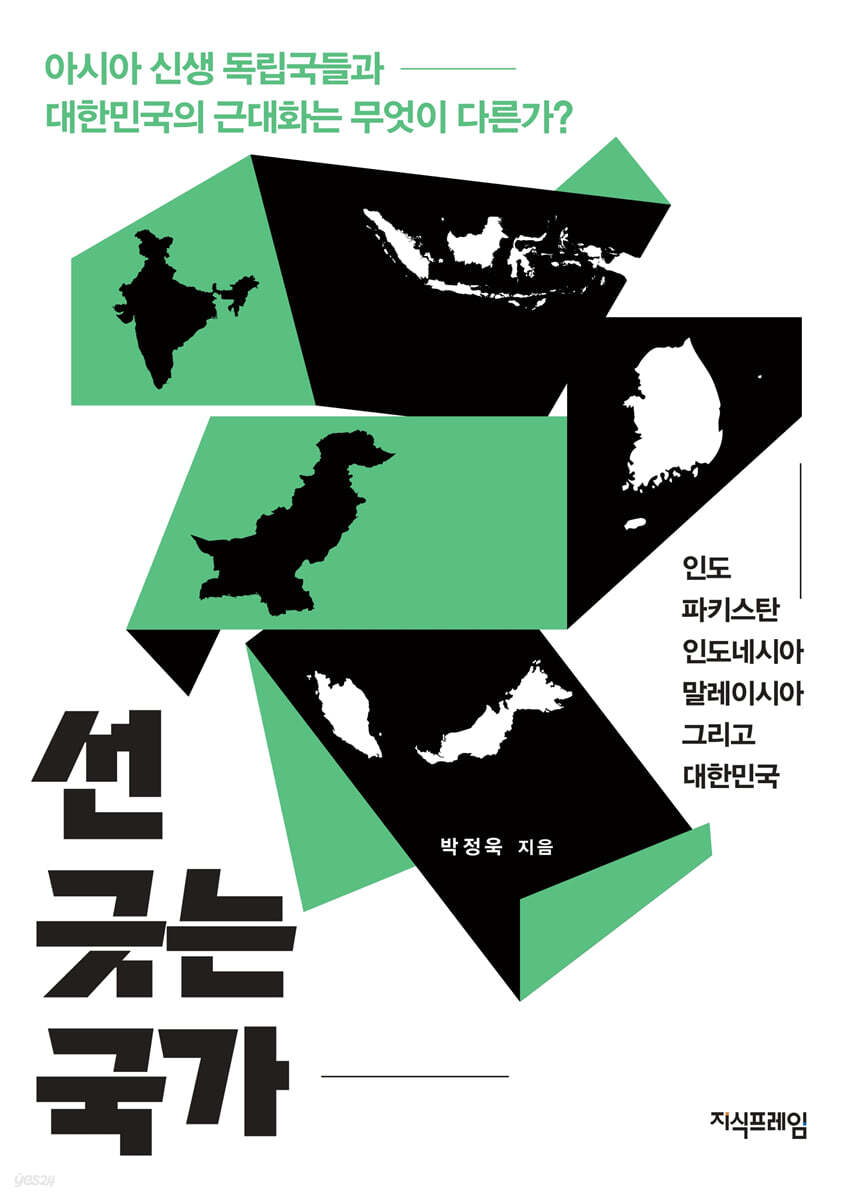
So, what were the differences in the modernization processes of these countries after independence? Why do so many newly independent Asian nations still harbor internal conflicts and divisions? By comparison, what paths and processes did South Korea take to achieve its current democracy and economic growth? This book closely examines the modern and contemporary histories of four newly independent Asian nations (India, Pakistan, Indonesia, and Malaysia) and deeply traces the modernization process of "Korean exceptionalism," which took a different path from these countries.
Through this, we examine how effectively drawing and erasing internal identity lines can impact national development, as well as what pitfalls South Korea should be wary of and discussed going forward.
Looking at the line of identity
The Differing Paths of Asia's Newly Independent States
Many Asian colonial countries gained independence after World War II.
Although independence was achieved around the same time, the paths to modernization that these countries took were different.
While some newly independent nations still struggle with periods of conflict and turmoil, South Korea has had a relatively remarkable historical journey in many areas, including democracy, K-culture, and economic growth.
So, what were the differences in the modernization processes of these countries after independence? Why do so many newly independent Asian nations still harbor internal conflicts and divisions? By comparison, what paths and processes did South Korea take to achieve its current democracy and economic growth? This book closely examines the modern and contemporary histories of four newly independent Asian nations (India, Pakistan, Indonesia, and Malaysia) and deeply traces the modernization process of "Korean exceptionalism," which took a different path from these countries.
Through this, we examine how effectively drawing and erasing internal identity lines can impact national development, as well as what pitfalls South Korea should be wary of and discussed going forward.
- You can preview some of the book's contents.
Preview
index
Introduction 004
Part 1.
Country and Line
A Nation Drawn by Lines, a Divided People 021ㆍRace, Ethnicity, and the People 026ㆍCentralized States and Ethnicity 036ㆍWho Are "Our People"? 041ㆍThe Side Effects of "Patronage" 048ㆍWhat Makes Korea Different? 051ㆍThe Secret of Multi-Ethnic Singapore 059
Part 2.
Modern and contemporary history of postcolonial Asian countries
Chapter 1.
India - Lines of Race, Caste and Religion
Pre-modern India 071ㆍThe Formation of the 'Indian Nation' during the British Colonial Period 083ㆍThe Division of National Identity and the Conflict between Hindus and Muslims 092ㆍIndependence That Failed to Unify: The Establishment of the Partition of India and Pakistan 099ㆍThe Nehru-Gandhi Family and the Privatization of Politics 107ㆍThe Reemergence of Caste Identity 116ㆍThe Conflict Between Secularism and Hindu Nationalism 121ㆍNarendra Modi and the Rise of Hindu Nationalism 131
Chapter 2.
Pakistan: The Earthquake and the Aftershocks That Struggled to Create a Nation
Pre-Indian Muslim History 154ㆍPakistan's Establishment 163ㆍFrom Democracy to Military Authoritarianism 177ㆍConflict and Division between East and West Pakistan 184ㆍBhutto's Failure and the Reemergence of the Military 190ㆍThe Chaotic Era of Civilian Government 200ㆍMusharraf and the War on Terror 208ㆍIs Pakistani Democracy Developing? 219
Chapter 3.
Indonesia - The Shadow of KKN, Born from a Complex Identity
Politics and Culture of the Malay Archipelago 233ㆍDutch Rule 239ㆍThe Founding of Indonesia and the War of Independence 248ㆍConflicts of Identity and Internal Rebellion 259ㆍSukarno's Politics: Failed to Clear the Line 266ㆍCoup and Massacre 277ㆍSuharto and the New Order Regime 283ㆍAfter the Collapse of Centralism 293ㆍThe Survival of the Old Regime 297ㆍContinued Corruption and Political Succession 307
Chapter 4.
Malaysia - Conservative modernization through compromise from above
The Malay Peninsula before British rule 326ㆍThe Sultanate of Johor and British Malaya 329ㆍThe Rise of Chinese and Indian Immigrants 333ㆍThe Rise of Malay Identity 339ㆍThe Japanese Occupation of Malaya 344ㆍThe British Reoccupation and the Union of Malaya 350ㆍThe Federation of Malaya and UMNO 355ㆍSingapore and Borneo 367ㆍThe Birth of Malaysia 371ㆍThe May 13 Incident and the New Economic Policy 378ㆍThe Conflict between Mahathir and Anwar 388ㆍUnfinished Reforms: Is the Good Weakening? 395
Part 3.
Korean exceptionalism
Chapter 1.
The Old New World - A Thousand-Year Tradition of Centralized State
Experience of a Centralized State for Over a Thousand Years 413ㆍPre-Modern Nation-States on the Korean Peninsula: From Silla to Joseon 417ㆍThe Discontinuation of Nation-States and the Japanese Colonial Period 434
Chapter 2.
Two-Way Constraints - The US and North Korea
Division and the Gap 451ㆍTransplanted Democracy 459ㆍDeepening Dependence on the United States 464ㆍWhy Did Korea Support 'Western Modernization'? 469ㆍTwo-Way Constraints 476
Chapter 3.
Homogeneous Modernization - Koreans Standing at the Same Starting Line
Has the Traditional Ruling Power Collapsed? 497ㆍLand Reform and Homogenization in South Korea 500ㆍEgalitarianism and Hereditary Politics 512ㆍHomogeneous Modernization and Beyond 517ㆍLand Reform in Foreign Countries 520
Chapter 4.
The Trap of Korean Exceptionalism: A Dismal Self-Portrait of the 21st Century
The Age of Spoon Class Theory: Is "Homogeneous Modernization" Over? 536ㆍThe Decline of "National" Identity, Regionalism 538ㆍSocial Media, YouTube, and Political Tribalism 548
Note 554
Part 1.
Country and Line
A Nation Drawn by Lines, a Divided People 021ㆍRace, Ethnicity, and the People 026ㆍCentralized States and Ethnicity 036ㆍWho Are "Our People"? 041ㆍThe Side Effects of "Patronage" 048ㆍWhat Makes Korea Different? 051ㆍThe Secret of Multi-Ethnic Singapore 059
Part 2.
Modern and contemporary history of postcolonial Asian countries
Chapter 1.
India - Lines of Race, Caste and Religion
Pre-modern India 071ㆍThe Formation of the 'Indian Nation' during the British Colonial Period 083ㆍThe Division of National Identity and the Conflict between Hindus and Muslims 092ㆍIndependence That Failed to Unify: The Establishment of the Partition of India and Pakistan 099ㆍThe Nehru-Gandhi Family and the Privatization of Politics 107ㆍThe Reemergence of Caste Identity 116ㆍThe Conflict Between Secularism and Hindu Nationalism 121ㆍNarendra Modi and the Rise of Hindu Nationalism 131
Chapter 2.
Pakistan: The Earthquake and the Aftershocks That Struggled to Create a Nation
Pre-Indian Muslim History 154ㆍPakistan's Establishment 163ㆍFrom Democracy to Military Authoritarianism 177ㆍConflict and Division between East and West Pakistan 184ㆍBhutto's Failure and the Reemergence of the Military 190ㆍThe Chaotic Era of Civilian Government 200ㆍMusharraf and the War on Terror 208ㆍIs Pakistani Democracy Developing? 219
Chapter 3.
Indonesia - The Shadow of KKN, Born from a Complex Identity
Politics and Culture of the Malay Archipelago 233ㆍDutch Rule 239ㆍThe Founding of Indonesia and the War of Independence 248ㆍConflicts of Identity and Internal Rebellion 259ㆍSukarno's Politics: Failed to Clear the Line 266ㆍCoup and Massacre 277ㆍSuharto and the New Order Regime 283ㆍAfter the Collapse of Centralism 293ㆍThe Survival of the Old Regime 297ㆍContinued Corruption and Political Succession 307
Chapter 4.
Malaysia - Conservative modernization through compromise from above
The Malay Peninsula before British rule 326ㆍThe Sultanate of Johor and British Malaya 329ㆍThe Rise of Chinese and Indian Immigrants 333ㆍThe Rise of Malay Identity 339ㆍThe Japanese Occupation of Malaya 344ㆍThe British Reoccupation and the Union of Malaya 350ㆍThe Federation of Malaya and UMNO 355ㆍSingapore and Borneo 367ㆍThe Birth of Malaysia 371ㆍThe May 13 Incident and the New Economic Policy 378ㆍThe Conflict between Mahathir and Anwar 388ㆍUnfinished Reforms: Is the Good Weakening? 395
Part 3.
Korean exceptionalism
Chapter 1.
The Old New World - A Thousand-Year Tradition of Centralized State
Experience of a Centralized State for Over a Thousand Years 413ㆍPre-Modern Nation-States on the Korean Peninsula: From Silla to Joseon 417ㆍThe Discontinuation of Nation-States and the Japanese Colonial Period 434
Chapter 2.
Two-Way Constraints - The US and North Korea
Division and the Gap 451ㆍTransplanted Democracy 459ㆍDeepening Dependence on the United States 464ㆍWhy Did Korea Support 'Western Modernization'? 469ㆍTwo-Way Constraints 476
Chapter 3.
Homogeneous Modernization - Koreans Standing at the Same Starting Line
Has the Traditional Ruling Power Collapsed? 497ㆍLand Reform and Homogenization in South Korea 500ㆍEgalitarianism and Hereditary Politics 512ㆍHomogeneous Modernization and Beyond 517ㆍLand Reform in Foreign Countries 520
Chapter 4.
The Trap of Korean Exceptionalism: A Dismal Self-Portrait of the 21st Century
The Age of Spoon Class Theory: Is "Homogeneous Modernization" Over? 536ㆍThe Decline of "National" Identity, Regionalism 538ㆍSocial Media, YouTube, and Political Tribalism 548
Note 554
Into the book
Not only do postcolonial Asian nations struggle to erase the lines of their internal, multilayered identities and integrate them into a single national identity, but political elites are creating various problems by drawing lines for their own benefit.
Within a country where lines are drawn like this, patronage grows.
It is no exaggeration to say that the modern history of postcolonial Asian countries is a process of responding to problems arising from the conflict between the forces that seek to erase lines and the forces that seek to draw them.
On the other hand, Korea is drawing the trajectory of modern history along a completely different path from these.
The success of erasing the line between historically accumulated heritage and the coincidences of modern and contemporary history is the secret to Korea's successful democratization in modern history and also the secret to its rapid economic growth.
--- 「Part 1.
From “Country and Line”
Before independence, British India was divided administratively into governor-general's dominions and over 500 principalities.
Many of these principalities joined the Republic of India under pressure and persuasion from the government of the Republic of India.
If the central government of the Republic of India had attempted to rule them authoritarianly, it would have faced considerable resistance.
To suppress this resistance and successfully implement a centralized and unilateral authoritarian regime, an extreme and totalitarian dictatorship like the Soviet Union under Stalin would have to be established.
But India was too populous and its population too diverse to go in that direction.
In short, it was too large and complex for a dictatorship to take hold.
--- 「Part 2.
Modern and Contemporary History of Postcolonial Asian Countries | Chapter 1.
From "India"
The Zia-ul-Haq regime came to an end in a sudden plane crash, and democratic institutions were restored in Pakistan in 1988.
But democratic politics degenerated into a rivalry between the Bhutto and Sharif families.
In 1999, Chairman of the Joint Chiefs of Staff Musharraf staged a coup, establishing another military regime and halting democracy.
The Pakistani people staged powerful protests for the restoration of democracy, which ultimately led to a return to civilian politics with the 2008 general elections.
However, Pakistan's politics are once again dominated by a small number of political families, and the country's deep-rooted clientelism is running rampant, hindering social progress.
Additionally, the military, which has seemingly withdrawn from politics, has seized powerful economic interests and is forming a large vested interest group in Pakistan, which is also evaluated as an obstacle to the development of democracy.
--- 「Part 2.
Modern and Contemporary History of Postcolonial Asian Countries | Chapter 2.
From "Pakistan"
Indonesia was founded by a force that attempted to erase internal boundaries through force and violence, resulting in the outward appearance of a nation-state.
But integrating those living within the territory as actual Indonesian citizens was another matter.
The military was at the center of integration.
Indonesia's military has grown into a force with a certain degree of autonomy from central government control.
The Indonesian military was deeply involved in politics for a time, but withdrew from politics after the collapse of the Suharto regime.
However, military personnel still wield strong influence in politics and government.
Even democratically elected governments have compromised with senior military figures rather than challenging the military's vested interests.
From the outset, Indonesia's military regional commands have procured a significant portion of their budgets locally.
Despite the steady increase in government support for the military budget, this practice persists to this day, fostering a patron-client relationship between local power brokers and senior military commanders in regional military commands.
This again created a massive patronage politics by connecting with military personnel who had advanced into central government and government positions.
--- 「Part 2.
Modern and Contemporary History of Postcolonial Asian Countries | Chapter 3.
From Indonesia
Japan's colonial rule influenced modern Korean history, just as a billiard ball hit with a billiard cue ball repeatedly hits other balls.
Japan's colonial rule pushed the Korean Peninsula toward division, placing South Korea under the powerful influence of the United States while also forcing it to constantly be aware of the hostile power of North Korea.
The division led to the Korean War, and Korea's dependence on the United States deepened.
This again influenced the democratization of South Korea.
Even if the war had not occurred, the division of the Korean Peninsula would likely have led to conflict between South Korea and North Korea.
Since then, the United States and North Korea have each restricted South Korean politics from different directions, and these restrictions have ultimately become a major factor in determining the path to democracy.
While the long history of maintaining a centralized state has erased ethnic lines and formed a nation on the Korean Peninsula, the two-way constraints from the United States and North Korea have weakened ideological lines in South Korea.
Within a country where lines are drawn like this, patronage grows.
It is no exaggeration to say that the modern history of postcolonial Asian countries is a process of responding to problems arising from the conflict between the forces that seek to erase lines and the forces that seek to draw them.
On the other hand, Korea is drawing the trajectory of modern history along a completely different path from these.
The success of erasing the line between historically accumulated heritage and the coincidences of modern and contemporary history is the secret to Korea's successful democratization in modern history and also the secret to its rapid economic growth.
--- 「Part 1.
From “Country and Line”
Before independence, British India was divided administratively into governor-general's dominions and over 500 principalities.
Many of these principalities joined the Republic of India under pressure and persuasion from the government of the Republic of India.
If the central government of the Republic of India had attempted to rule them authoritarianly, it would have faced considerable resistance.
To suppress this resistance and successfully implement a centralized and unilateral authoritarian regime, an extreme and totalitarian dictatorship like the Soviet Union under Stalin would have to be established.
But India was too populous and its population too diverse to go in that direction.
In short, it was too large and complex for a dictatorship to take hold.
--- 「Part 2.
Modern and Contemporary History of Postcolonial Asian Countries | Chapter 1.
From "India"
The Zia-ul-Haq regime came to an end in a sudden plane crash, and democratic institutions were restored in Pakistan in 1988.
But democratic politics degenerated into a rivalry between the Bhutto and Sharif families.
In 1999, Chairman of the Joint Chiefs of Staff Musharraf staged a coup, establishing another military regime and halting democracy.
The Pakistani people staged powerful protests for the restoration of democracy, which ultimately led to a return to civilian politics with the 2008 general elections.
However, Pakistan's politics are once again dominated by a small number of political families, and the country's deep-rooted clientelism is running rampant, hindering social progress.
Additionally, the military, which has seemingly withdrawn from politics, has seized powerful economic interests and is forming a large vested interest group in Pakistan, which is also evaluated as an obstacle to the development of democracy.
--- 「Part 2.
Modern and Contemporary History of Postcolonial Asian Countries | Chapter 2.
From "Pakistan"
Indonesia was founded by a force that attempted to erase internal boundaries through force and violence, resulting in the outward appearance of a nation-state.
But integrating those living within the territory as actual Indonesian citizens was another matter.
The military was at the center of integration.
Indonesia's military has grown into a force with a certain degree of autonomy from central government control.
The Indonesian military was deeply involved in politics for a time, but withdrew from politics after the collapse of the Suharto regime.
However, military personnel still wield strong influence in politics and government.
Even democratically elected governments have compromised with senior military figures rather than challenging the military's vested interests.
From the outset, Indonesia's military regional commands have procured a significant portion of their budgets locally.
Despite the steady increase in government support for the military budget, this practice persists to this day, fostering a patron-client relationship between local power brokers and senior military commanders in regional military commands.
This again created a massive patronage politics by connecting with military personnel who had advanced into central government and government positions.
--- 「Part 2.
Modern and Contemporary History of Postcolonial Asian Countries | Chapter 3.
From Indonesia
Japan's colonial rule influenced modern Korean history, just as a billiard ball hit with a billiard cue ball repeatedly hits other balls.
Japan's colonial rule pushed the Korean Peninsula toward division, placing South Korea under the powerful influence of the United States while also forcing it to constantly be aware of the hostile power of North Korea.
The division led to the Korean War, and Korea's dependence on the United States deepened.
This again influenced the democratization of South Korea.
Even if the war had not occurred, the division of the Korean Peninsula would likely have led to conflict between South Korea and North Korea.
Since then, the United States and North Korea have each restricted South Korean politics from different directions, and these restrictions have ultimately become a major factor in determining the path to democracy.
While the long history of maintaining a centralized state has erased ethnic lines and formed a nation on the Korean Peninsula, the two-way constraints from the United States and North Korea have weakened ideological lines in South Korea.
--- 「Part 3.
Korean Exceptionalism | Chapter 2.
Among the “two-way constraints”
Korean Exceptionalism | Chapter 2.
Among the “two-way constraints”
Publisher's Review
Why can't they be one nation?
What if diverse ethnic groups who had never formed a single nation suddenly became one? For those of us who have taken mono-ethnic nations for granted, this would be a truly unfamiliar sight.
However, many newly independent Asian countries are multi-ethnic nations like this.
As races and religions became entangled along lines arbitrarily drawn by colonial powers, they were suddenly forced to become one nation, creating countless lines of conflict and confrontation that fractured the nation.
The main keyword that runs through this book is ‘line of identity.’
Many newly independent nations in Asia are not free from this line of identity.
In these countries, the diverse lines of identity divided by race, religion, culture, and ideology serve as a major obstacle to national unification.
From the central government's perspective, the integration process is inevitably necessary, requiring a lot of effort and time.
This ultimately helped the rise of military regimes that prioritized power and gave rise to the evil of clientelism, which allowed them to exert influence in specific regions and communities.
Before explaining the modernization process of the Republic of Korea, this book closely examines the modernization processes of newly independent Asian countries.
The Asian countries that gained independence after World War II, especially those that were not communist, include India, Pakistan, Indonesia, and Malaysia.
These countries, which had different origins from South Korea, are still going through a turbulent modern history.
This book examines the process and background from an interesting perspective and viewpoint called the 'line of identity.'
Drawing and Erasing Lines in Postcolonial Asia
The greatest challenge for newly independent Asian nations, plagued by constant conflict and chaos, is erasing the lines drawn between their people.
But the problem is not that simple.
Drawing and erasing lines within a nation is inevitably a highly political undertaking, and politics is a question of how to change the lines on the playing field of history inherited from the past.
In this process, political, social, and economic discrimination and conflict arise between the divided people.
India is showing signs of strengthening caste politics, and the conflict between Hindu nationalism and Muslims is dividing the entire country.
In Pakistan, the military is deeply involved in politics and the economy in response to the secession of Balochistan and Pashtuns and in suppressing it.
Indonesia is a multi-ethnic nation as complex and diverse as its 18,000 islands. Since the Suharto regime, local autonomy has been strengthened, central authority has weakened, and the fragmented legal order has somewhat weakened the momentum of democracy.
Malaysia is experiencing political discontent due to the various preferential treatment given to the Malay community, and the conflict between the Malay community's vested interests and the reformist forces advocating for equality as a single nation, Malaysian people, is forming a structure of conflict.
What these countries that failed to erase the line have in common is that clientelism and political hereditary succession are strongly holding back national development.
As a result, although it appears to be a democratic system, it still appears to be lagging behind in terms of the actual content of democracy.
Korean exceptionalism and its pitfalls
The Republic of Korea has a distinctly different trajectory of modern history from the other newly independent Asian countries introduced in this book.
Unlike other newly independent Asian nations with no clear origins, we have over a thousand years of experience as a centralized state.
This is much older than England, which is said to have formed the earliest pre-modern nation-state in Europe.
This book examines, through historical research, how the centralized system was established and developed throughout our history, from Silla to Joseon.
Unlike previous nations where the lines of identity were divided, we had the concept of a single nation under a centralized system established early on.
Although Korea was once under Japanese colonial rule, the unique nationalist spirit of the Korean people became the foundation of a strong independence movement against Japan's oppression and assimilation policies.
Because South Korea had a single ethnicity and a single language, there was no need for any wasteful procedures or processes to unify its people.
After the Korean War, the twin constraints of the United States and North Korea ironically accelerated the establishment of modernization and democracy, and the uniform modernization resulting from land reform became a major driving force behind South Korea's development by helping all citizens compete from an equal starting line.
Of course, we cannot say with certainty that the current state of politics and society in South Korea will remain rosy in the future.
The author cautiously warns that now that the common goals of modernization and democracy have disappeared, the lines of fake news and political tribalism, manifested through exclusion and hatred, that have emerged with the development of social media, could fracture our society at any time.
What if diverse ethnic groups who had never formed a single nation suddenly became one? For those of us who have taken mono-ethnic nations for granted, this would be a truly unfamiliar sight.
However, many newly independent Asian countries are multi-ethnic nations like this.
As races and religions became entangled along lines arbitrarily drawn by colonial powers, they were suddenly forced to become one nation, creating countless lines of conflict and confrontation that fractured the nation.
The main keyword that runs through this book is ‘line of identity.’
Many newly independent nations in Asia are not free from this line of identity.
In these countries, the diverse lines of identity divided by race, religion, culture, and ideology serve as a major obstacle to national unification.
From the central government's perspective, the integration process is inevitably necessary, requiring a lot of effort and time.
This ultimately helped the rise of military regimes that prioritized power and gave rise to the evil of clientelism, which allowed them to exert influence in specific regions and communities.
Before explaining the modernization process of the Republic of Korea, this book closely examines the modernization processes of newly independent Asian countries.
The Asian countries that gained independence after World War II, especially those that were not communist, include India, Pakistan, Indonesia, and Malaysia.
These countries, which had different origins from South Korea, are still going through a turbulent modern history.
This book examines the process and background from an interesting perspective and viewpoint called the 'line of identity.'
Drawing and Erasing Lines in Postcolonial Asia
The greatest challenge for newly independent Asian nations, plagued by constant conflict and chaos, is erasing the lines drawn between their people.
But the problem is not that simple.
Drawing and erasing lines within a nation is inevitably a highly political undertaking, and politics is a question of how to change the lines on the playing field of history inherited from the past.
In this process, political, social, and economic discrimination and conflict arise between the divided people.
India is showing signs of strengthening caste politics, and the conflict between Hindu nationalism and Muslims is dividing the entire country.
In Pakistan, the military is deeply involved in politics and the economy in response to the secession of Balochistan and Pashtuns and in suppressing it.
Indonesia is a multi-ethnic nation as complex and diverse as its 18,000 islands. Since the Suharto regime, local autonomy has been strengthened, central authority has weakened, and the fragmented legal order has somewhat weakened the momentum of democracy.
Malaysia is experiencing political discontent due to the various preferential treatment given to the Malay community, and the conflict between the Malay community's vested interests and the reformist forces advocating for equality as a single nation, Malaysian people, is forming a structure of conflict.
What these countries that failed to erase the line have in common is that clientelism and political hereditary succession are strongly holding back national development.
As a result, although it appears to be a democratic system, it still appears to be lagging behind in terms of the actual content of democracy.
Korean exceptionalism and its pitfalls
The Republic of Korea has a distinctly different trajectory of modern history from the other newly independent Asian countries introduced in this book.
Unlike other newly independent Asian nations with no clear origins, we have over a thousand years of experience as a centralized state.
This is much older than England, which is said to have formed the earliest pre-modern nation-state in Europe.
This book examines, through historical research, how the centralized system was established and developed throughout our history, from Silla to Joseon.
Unlike previous nations where the lines of identity were divided, we had the concept of a single nation under a centralized system established early on.
Although Korea was once under Japanese colonial rule, the unique nationalist spirit of the Korean people became the foundation of a strong independence movement against Japan's oppression and assimilation policies.
Because South Korea had a single ethnicity and a single language, there was no need for any wasteful procedures or processes to unify its people.
After the Korean War, the twin constraints of the United States and North Korea ironically accelerated the establishment of modernization and democracy, and the uniform modernization resulting from land reform became a major driving force behind South Korea's development by helping all citizens compete from an equal starting line.
Of course, we cannot say with certainty that the current state of politics and society in South Korea will remain rosy in the future.
The author cautiously warns that now that the common goals of modernization and democracy have disappeared, the lines of fake news and political tribalism, manifested through exclusion and hatred, that have emerged with the development of social media, could fracture our society at any time.
GOODS SPECIFICS
- Date of issue: September 10, 2025
- Page count, weight, size: 584 pages | 148*210*35mm
- ISBN13: 9791199291911
- ISBN10: 1199291919
You may also like
카테고리
korean


korean

![GQ KOREA Mark (Monthly): December [2025]](http://librairie.coreenne.fr/cdn/shop/files/8ef265dbbfbf186523ed75ba7319009d.jpg?v=1765340328&width=3840)


