

Claude Monet
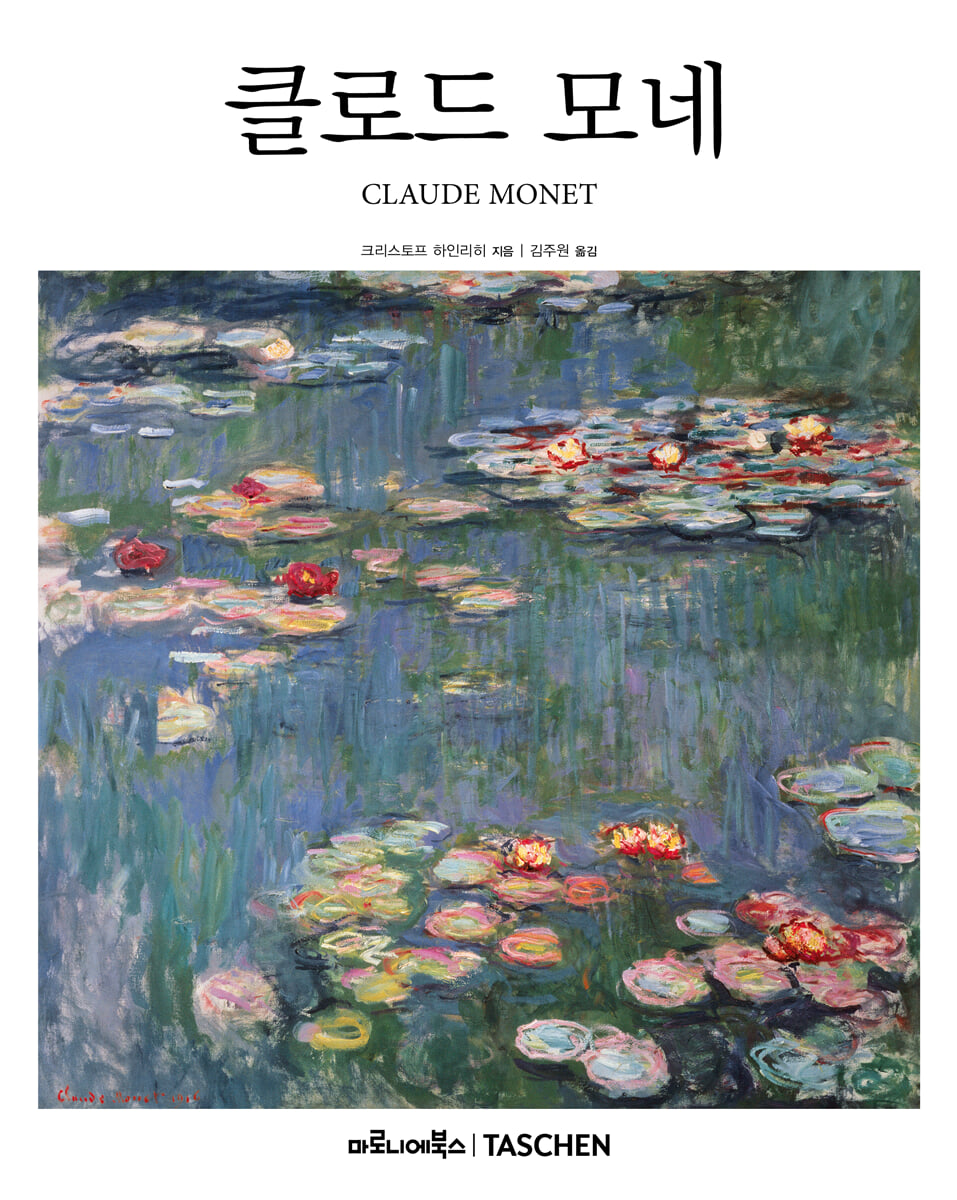 |
Description
Book Introduction
From the Renaissance to the present day,
A basic art series where you can meet the masters of art history!
Returning with larger format and illustrations
The Basic Art Series began in 1985 with a collection of Picasso works and has since grown into a best-selling art book collection.
Since then, over 200 concise and thin books by each author have been produced and published in over 20 languages.
The series has excellent production values, excellent artwork, and intelligent content.
The thematic awareness of each book is vibrant yet accessible, making it easy to approach.
It has been republished 15 years after the first Korean edition was published in 2005.
This [Basic Art 2.0] series delivers more vivid images of the artwork to readers with larger formats and illustrations than before.
A basic art series where you can meet the masters of art history!
Returning with larger format and illustrations
The Basic Art Series began in 1985 with a collection of Picasso works and has since grown into a best-selling art book collection.
Since then, over 200 concise and thin books by each author have been produced and published in over 20 languages.
The series has excellent production values, excellent artwork, and intelligent content.
The thematic awareness of each book is vibrant yet accessible, making it easy to approach.
It has been republished 15 years after the first Korean edition was published in 2005.
This [Basic Art 2.0] series delivers more vivid images of the artwork to readers with larger formats and illustrations than before.
index
Page 6
Success in the salon
Page 16
Discover the topic
Page 24
A world like Sunday afternoon
Page 34
Bridge of Argenteuil
Page 44
Winter in Vetheuil
Page 54
The era of concentration, repetition, and serial work
Page 62
Different areas and different lights
Page 72
Gardens of Giverny
Page 92
Claude Monet (1840-1926)
Life and Works
Success in the salon
Page 16
Discover the topic
Page 24
A world like Sunday afternoon
Page 34
Bridge of Argenteuil
Page 44
Winter in Vetheuil
Page 54
The era of concentration, repetition, and serial work
Page 62
Different areas and different lights
Page 72
Gardens of Giverny
Page 92
Claude Monet (1840-1926)
Life and Works
Detailed image
.jpg)
Into the book
The smooth, shiny paint, the dull velvet hat, the stiff book covers, and the meticulously painted objects such as guns and swords attest to the artistic talent latent in the young Monet.
The contrast between the grayish living utensils and the lush tropical riverside landscape, and the antique clay tones of the interior decorations and the ornate wallpaper also contribute to the extraordinary nature of this painting.
What is remarkable about this early work is its captivating brilliance.
On the palette, there is a layer of wet white paint along with green, red, and black paints.
The light emitted by white illuminates the entire painting.
A fresh white light fills the entire space and, furthermore, soars throughout the painter's artistic life.
This light is the painter's declaration.
---From "Success in the Salon"
The theme of the garden, which is inseparable from Monet's life, was discovered that summer in Saint-Adresse.
The vitality and light of a garden filled with colorful flowers motivated Monet to explore the power and effects of light to create a dazzling display of color.
In “The Blooming Garden” (page 20), sunlight awakens the colors that had been dormant in the ground by the realist painter.
Pure red is made even more intense by white and especially by its complementary color, green.
In “The Garden at Saint-Adresse” (page 21), flowers and light are combined with water, which was Monet’s first subject.
---From "Discovering the Topic"
Monet observed objects, water, and air with colors reproduced through light, and captured those impressions on canvas.
Cezanne said of his friend Monet, “He is an eye.
But what wonderful eyes!” he said.
This accurately points out Monet's main interest.
As Monet himself later said, recreating the moment was the task of his life.
But Monet was always gripped by despair.
Because fixing something that disappears in an instant is an insurmountable contradiction.
---From "A World Like Sunday Afternoon"
When appreciating Monet's work, it is easy to think of it as a snapshot of a moment, due to the immediacy of the motifs.
However, there is a risk of missing the fact that the composition of the painting was intentional.
Monet quite frequently used the principle of composition using the axis of symmetry, which academic painters tried to avoid whenever possible.
Monet found this interesting.
It was a flatness that seemed to spread the entire painting out on canvas.
The Bridge of Argenteuil (above, page 40) in the Kunsthalle in Munich clearly demonstrates this.
Monet fixes the composition on a flat surface by strictly intersecting horizontal and vertical lines and creating a firmly connected composition.
And by using color on that plane, we get spatial depth.
The contrast between the grayish living utensils and the lush tropical riverside landscape, and the antique clay tones of the interior decorations and the ornate wallpaper also contribute to the extraordinary nature of this painting.
What is remarkable about this early work is its captivating brilliance.
On the palette, there is a layer of wet white paint along with green, red, and black paints.
The light emitted by white illuminates the entire painting.
A fresh white light fills the entire space and, furthermore, soars throughout the painter's artistic life.
This light is the painter's declaration.
---From "Success in the Salon"
The theme of the garden, which is inseparable from Monet's life, was discovered that summer in Saint-Adresse.
The vitality and light of a garden filled with colorful flowers motivated Monet to explore the power and effects of light to create a dazzling display of color.
In “The Blooming Garden” (page 20), sunlight awakens the colors that had been dormant in the ground by the realist painter.
Pure red is made even more intense by white and especially by its complementary color, green.
In “The Garden at Saint-Adresse” (page 21), flowers and light are combined with water, which was Monet’s first subject.
---From "Discovering the Topic"
Monet observed objects, water, and air with colors reproduced through light, and captured those impressions on canvas.
Cezanne said of his friend Monet, “He is an eye.
But what wonderful eyes!” he said.
This accurately points out Monet's main interest.
As Monet himself later said, recreating the moment was the task of his life.
But Monet was always gripped by despair.
Because fixing something that disappears in an instant is an insurmountable contradiction.
---From "A World Like Sunday Afternoon"
When appreciating Monet's work, it is easy to think of it as a snapshot of a moment, due to the immediacy of the motifs.
However, there is a risk of missing the fact that the composition of the painting was intentional.
Monet quite frequently used the principle of composition using the axis of symmetry, which academic painters tried to avoid whenever possible.
Monet found this interesting.
It was a flatness that seemed to spread the entire painting out on canvas.
The Bridge of Argenteuil (above, page 40) in the Kunsthalle in Munich clearly demonstrates this.
Monet fixes the composition on a flat surface by strictly intersecting horizontal and vertical lines and creating a firmly connected composition.
And by using color on that plane, we get spatial depth.
---From "The Bridge of Argenteuil"
Publisher's Review
The Crown Prince of Impressionism
Capturing the ever-changing face of reality
Claude Monet (1840-1926), known as the “Prince of Impressionism,” completely changed the expectations of painting.
Ignoring the precedents established over centuries, Monet sought not to follow reality alone, but to pursue and realize the act of perception itself.
He focused on plein air painting with quick, impulsive brushstrokes, observing the movement of light through the tones, patterns, contours, and visual impressions it casts on the eye.
Monet's interest “between motif and artist” embraces the fleeting nature of the kind of images we gaze upon.
In his beloved Water Lilies series and works such as Poplars, Haystacks and Rouen Cathedral, he painted the same motifs in different seasons, weather and time of day to express the constant change of the visual environment.
This book shows the intention of the work and its reflection on the changing times, and contains an introduction to artists who decisively changed the history of art.
Capturing the ever-changing face of reality
Claude Monet (1840-1926), known as the “Prince of Impressionism,” completely changed the expectations of painting.
Ignoring the precedents established over centuries, Monet sought not to follow reality alone, but to pursue and realize the act of perception itself.
He focused on plein air painting with quick, impulsive brushstrokes, observing the movement of light through the tones, patterns, contours, and visual impressions it casts on the eye.
Monet's interest “between motif and artist” embraces the fleeting nature of the kind of images we gaze upon.
In his beloved Water Lilies series and works such as Poplars, Haystacks and Rouen Cathedral, he painted the same motifs in different seasons, weather and time of day to express the constant change of the visual environment.
This book shows the intention of the work and its reflection on the changing times, and contains an introduction to artists who decisively changed the history of art.
GOODS SPECIFICS
- Publication date: September 30, 2022
- Format: Hardcover book binding method guide
- Page count, weight, size: 96 pages | 608g | 210*260*12mm
- ISBN13: 9788960536241
- ISBN10: 8960536245
You may also like
카테고리
korean


korean

![GQ KOREA Mark (Monthly): December [2025]](http://librairie.coreenne.fr/cdn/shop/files/8ef265dbbfbf186523ed75ba7319009d.jpg?v=1765340328&width=3840)


