

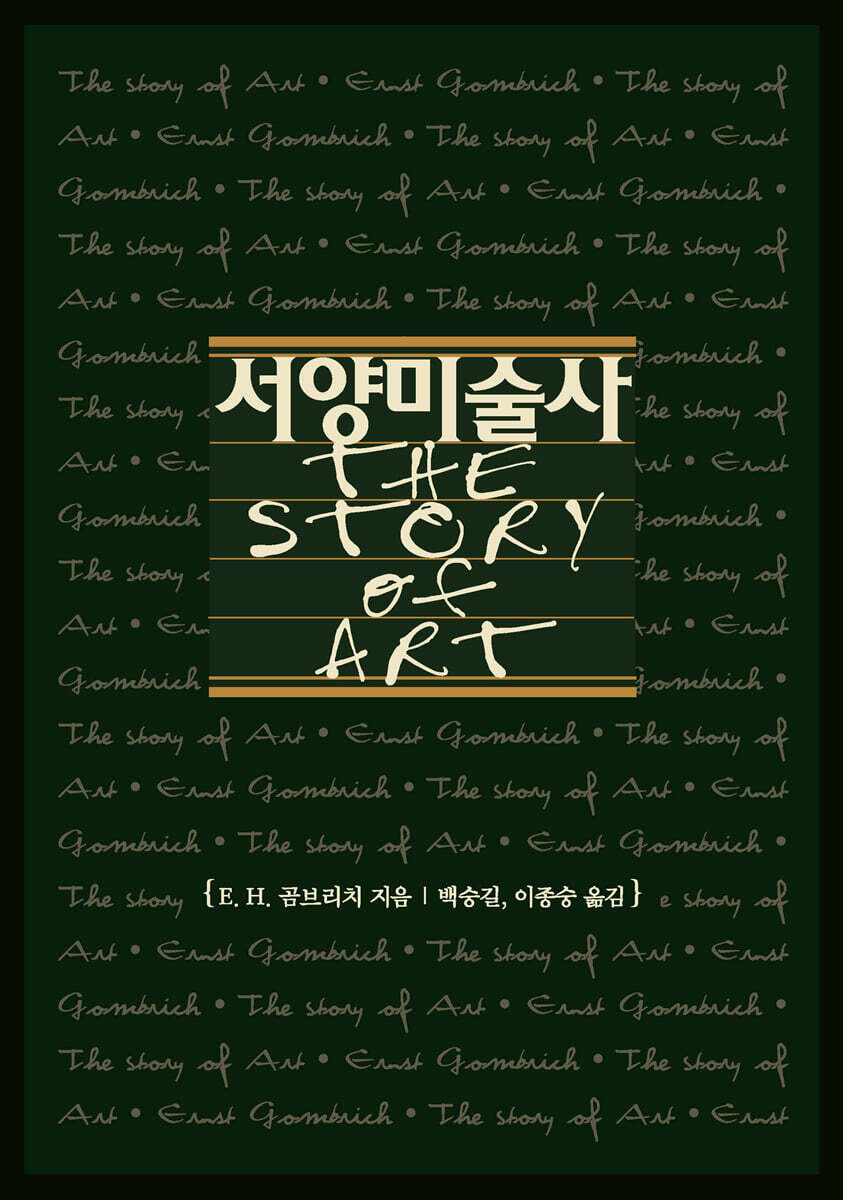
Western art history
 |
Description
Book Introduction
In an age overflowing with images, the bridge between seeing and knowing
An introductory book that outlines Western art and the best humanities book that contains everything.
From prehistoric times to modern art, the vast history of Western art is completed in 700 pages and 413 color plates.
The world's best-selling art book, translated into 19 languages and selling over 8 million copies worldwide, a book that makes a great gift, a book that recipients actually read, a book that will change your life, the best humanities book that has it all… … .
As many people as there have been in the book's long history have read Gombrich's "A History of Western Art" and have showered it with praise.
All of these words are crucial words that run through this book, but if I had to choose just one, it would be 'A must-read for an introduction to Western art history.'
The closer we are to the truth, the more universal and ordinary the words that express that truth must be.
Gombrich's "A History of Western Art" is a must-read book for anyone wanting to understand Western art.
Because it is best for those who are new to the field of art and need some theoretical training.
Covering a wide range of topics from prehistoric cave paintings to experimental modern art, it presents great and outstanding works from throughout art history, organized by period, style, title, and artist on each page, helping readers understand the systematic order of Western art.
Only Gombrich's "A History of Western Art" can contain such a vast history in one volume that will be read for a long time.
There is no such thing as art.
'There are only artists.' This is the first sentence of the preface to 'A History of Western Art.'
When you open a book, the illustrations catch your eye first, but as you read the text, you feel the people.
When you read and think about why the artist painted, what concerns he had while painting, and the relationship between the subject in the painting and the artist, you will see the painting again.
The story of a person, told in plain language, eventually becomes a story of art, and the history of art becomes the history of people.
If you follow this flow, you will not be able to let go of books, art, art, and life.
This is why I believe that Gombrich's "A History of Western Art" will always be with us in future history.
“The whole history of art
It's not a story of progress in technical proficiency,
“It’s about changing thoughts and needs.”
- E.
H. Gombrich
An introductory book that outlines Western art and the best humanities book that contains everything.
From prehistoric times to modern art, the vast history of Western art is completed in 700 pages and 413 color plates.
The world's best-selling art book, translated into 19 languages and selling over 8 million copies worldwide, a book that makes a great gift, a book that recipients actually read, a book that will change your life, the best humanities book that has it all… … .
As many people as there have been in the book's long history have read Gombrich's "A History of Western Art" and have showered it with praise.
All of these words are crucial words that run through this book, but if I had to choose just one, it would be 'A must-read for an introduction to Western art history.'
The closer we are to the truth, the more universal and ordinary the words that express that truth must be.
Gombrich's "A History of Western Art" is a must-read book for anyone wanting to understand Western art.
Because it is best for those who are new to the field of art and need some theoretical training.
Covering a wide range of topics from prehistoric cave paintings to experimental modern art, it presents great and outstanding works from throughout art history, organized by period, style, title, and artist on each page, helping readers understand the systematic order of Western art.
Only Gombrich's "A History of Western Art" can contain such a vast history in one volume that will be read for a long time.
There is no such thing as art.
'There are only artists.' This is the first sentence of the preface to 'A History of Western Art.'
When you open a book, the illustrations catch your eye first, but as you read the text, you feel the people.
When you read and think about why the artist painted, what concerns he had while painting, and the relationship between the subject in the painting and the artist, you will see the painting again.
The story of a person, told in plain language, eventually becomes a story of art, and the history of art becomes the history of people.
If you follow this flow, you will not be able to let go of books, art, art, and life.
This is why I believe that Gombrich's "A History of Western Art" will always be with us in future history.
“The whole history of art
It's not a story of progress in technical proficiency,
“It’s about changing thoughts and needs.”
- E.
H. Gombrich
index
introduction
introduction
- About art and artists
1. Origins shrouded in mystery
- Prehistoric and primitive tribes: Ancient America
2 Art for Eternity
- Egypt, Mesopotamia, Crete
3 Great Awakening
- 7th century BC to 5th century BC: Greece
4 The World of Beauty
- From the 4th century BC to the 1st century AD: Greece and the Greek world
5 Conquerors of the World
- From the 1st to the 4th century AD: Roman, Buddhist, Jewish, and Christian art
Art at a Crossroads
- From the 5th to the 13th centuries: Rome and Byzantium
7 Oriental Art
- From the 2nd to the 13th centuries: Islam and China
8 Western Art in the Chaos Era
- 6th to 11th centuries: Europe
9 Militant Church
- 12th century
10 The Victory of the Church
- 13th century
11 Nobles and Citizens
- 14th century
12 Conquest of Reality
- Early 15th century
13 Tradition and Innovation I
- Late 15th century: Italy
14 Tradition and Innovation II
- 15th century: Northern Europe
15 Achieving Harmony
- Early 16th century: Tuscany and Rome
16 Light and Color
- Early 16th century: Venice and northern Italy
17 Diffusion of new knowledge
- Early 16th century: Germany and the Netherlands
18 The Crisis of Art
- Late 16th century: Europe
19 The evolving visual world
- First half of the 17th century: Europe under the Catholic Church
20 Mirror of Nature
- 17th century: Netherlands
21 The Art of Power and Glory I
- Late 17th and 18th centuries: Italy
22 The Art of Power and Glory II
- Late 17th and early 18th centuries: France, Germany, Austria
23 The Age of Reason
- 18th century: England and France
24 Break from tradition
- Late 18th century, early 19th century: England, the United States, and France
25 Endless Transformation
- 19th century
26 In search of new norms
- Late 19th century
27 Experimental Art
- First half of the 20th century
28 The Neverending Story
- The triumph of modernism
- Another trend change
- The changing past
About references
Chronology
map
List of plates by location
index
introduction
- About art and artists
1. Origins shrouded in mystery
- Prehistoric and primitive tribes: Ancient America
2 Art for Eternity
- Egypt, Mesopotamia, Crete
3 Great Awakening
- 7th century BC to 5th century BC: Greece
4 The World of Beauty
- From the 4th century BC to the 1st century AD: Greece and the Greek world
5 Conquerors of the World
- From the 1st to the 4th century AD: Roman, Buddhist, Jewish, and Christian art
Art at a Crossroads
- From the 5th to the 13th centuries: Rome and Byzantium
7 Oriental Art
- From the 2nd to the 13th centuries: Islam and China
8 Western Art in the Chaos Era
- 6th to 11th centuries: Europe
9 Militant Church
- 12th century
10 The Victory of the Church
- 13th century
11 Nobles and Citizens
- 14th century
12 Conquest of Reality
- Early 15th century
13 Tradition and Innovation I
- Late 15th century: Italy
14 Tradition and Innovation II
- 15th century: Northern Europe
15 Achieving Harmony
- Early 16th century: Tuscany and Rome
16 Light and Color
- Early 16th century: Venice and northern Italy
17 Diffusion of new knowledge
- Early 16th century: Germany and the Netherlands
18 The Crisis of Art
- Late 16th century: Europe
19 The evolving visual world
- First half of the 17th century: Europe under the Catholic Church
20 Mirror of Nature
- 17th century: Netherlands
21 The Art of Power and Glory I
- Late 17th and 18th centuries: Italy
22 The Art of Power and Glory II
- Late 17th and early 18th centuries: France, Germany, Austria
23 The Age of Reason
- 18th century: England and France
24 Break from tradition
- Late 18th century, early 19th century: England, the United States, and France
25 Endless Transformation
- 19th century
26 In search of new norms
- Late 19th century
27 Experimental Art
- First half of the 20th century
28 The Neverending Story
- The triumph of modernism
- Another trend change
- The changing past
About references
Chronology
map
List of plates by location
index
Detailed image

Into the book
The constant stream of technical jargon and superficial sentiments has become a pernicious habit, leading many young people to dismiss all art books as being the same throughout their lives... To avoid this pitfall, I've made a sincere effort to use plain language, even at the risk of appearing overly prosaic and unprofessional.
In the preface
Caravaggio, a young painter with a rich imagination and uncompromising spirit, was struggling to imagine what it would be like for Matteo, an old, poor laborer and simple tax collector, to suddenly sit down and write.
So he drew himself, bald and barefoot, awkwardly clutching a large book, his brow furrowed anxiously from the nervousness of writing in an unfamiliar language.
Next to him was a young, beautiful angel who had just descended from heaven and was politely leading the worker by the hand, as a teacher would a child.
When Caravaggio delivered this painting to the cathedral to be hung above the altar, people were outraged, saying that it lacked respect for the saints.
The painting was not accepted, so Caravaggio had to repaint it.
This time he didn't take any chances.
He strictly adhered to conventional notions of what angels and saints should look like.
Caravaggio, a young painter with a rich imagination and uncompromising spirit, was struggling to imagine what it would be like for Matteo, an old, poor laborer and simple tax collector, to suddenly sit down and write.
So he drew himself, bald and barefoot, awkwardly clutching a large book, his brow furrowed anxiously from the nervousness of writing in an unfamiliar language.
Next to him was a young, beautiful angel who had just descended from heaven and was politely leading the worker by the hand, as a teacher would a child.
When Caravaggio delivered this painting to the cathedral to be hung above the altar, people were outraged, saying that it lacked respect for the saints.
The painting was not accepted, so Caravaggio had to repaint it.
This time he didn't take any chances.
He strictly adhered to conventional notions of what angels and saints should look like.
So he drew himself, bald and barefoot, awkwardly clutching a large book, his brow furrowed anxiously from the nervousness of writing in an unfamiliar language.
Next to him was a young, beautiful angel who had just descended from heaven and was politely leading the worker by the hand, as a teacher would a child.
When Caravaggio delivered this painting to the cathedral to be hung above the altar, people were outraged, saying that it lacked respect for the saints.
The painting was not accepted, so Caravaggio had to repaint it.
This time he didn't take any chances.
He strictly adhered to conventional notions of what angels and saints should look like.
Caravaggio, a young painter with a rich imagination and uncompromising spirit, was struggling to imagine what it would be like for Matteo, an old, poor laborer and simple tax collector, to suddenly sit down and write.
So he drew himself, bald and barefoot, awkwardly clutching a large book, his brow furrowed anxiously from the nervousness of writing in an unfamiliar language.
Next to him was a young, beautiful angel who had just descended from heaven and was politely leading the worker by the hand, as a teacher would a child.
When Caravaggio delivered this painting to the cathedral to be hung above the altar, people were outraged, saying that it lacked respect for the saints.
The painting was not accepted, so Caravaggio had to repaint it.
This time he didn't take any chances.
He strictly adhered to conventional notions of what angels and saints should look like.
--- p.31
Versailles is Baroque not so much because of its decorative details as because of its sheer scale.
The architects divided the massive mass of the building into left and right wings, focusing on giving each wing a noble and majestic appearance.
Versailles is Baroque not so much because of its decorative details as because of its sheer scale.
The architects divided the massive mass of the building into left and right wings, focusing on giving each wing a noble and majestic appearance.
The architects divided the massive mass of the building into left and right wings, focusing on giving each wing a noble and majestic appearance.
Versailles is Baroque not so much because of its decorative details as because of its sheer scale.
The architects divided the massive mass of the building into left and right wings, focusing on giving each wing a noble and majestic appearance.
--- p.447
Publisher's Review
This book is one of the most popular books on art ever published, and since its first edition in England in 1950, it has become a must-read for introductory courses on Western art history worldwide.
Covering a wide range of topics from prehistoric cave art to today's experimental art, this introductory book will reveal to readers of all ages and across the globe that the author is a master of both extensive knowledge and wisdom, possessing a profound love of art.
The author organizes great and outstanding works throughout art history into easy-to-understand sections on each page, organized by period, style, title, or artist, while also establishing an intellectually ordered system of Western art.
This allows readers to recognize that the history of art is a history of tradition, constantly composed and changing, with each work hinting at the future through its connection to the past, and a living link connecting the era we live in with the Pyramid Age.
This book is written for those who are new to the unfamiliar yet fascinating field of art and need some theoretical training.
Therefore, this book guides newcomers to the world of art to see the outline of Western art without getting caught up in details and becoming confused.
The complex and intricate names of people and styles of each era are organized in an easy-to-understand manner, which will be of great help in delving into more specialized books later on.
Gombrich points out, through his own experience, that the use of technical terms and superficial descriptions is a bad habit that instills in many young people the lifelong prejudice that all art books are similar.
To avoid these pitfalls, he tried to use plain language, even though it risked appearing overly ordinary and unprofessional.
However, on the other hand, he did not avoid difficult ideas outright, and he made it clear that he wanted to be wary of overusing academic terminology to help readers understand.
Covering a wide range of topics from prehistoric cave art to today's experimental art, this introductory book will reveal to readers of all ages and across the globe that the author is a master of both extensive knowledge and wisdom, possessing a profound love of art.
The author organizes great and outstanding works throughout art history into easy-to-understand sections on each page, organized by period, style, title, or artist, while also establishing an intellectually ordered system of Western art.
This allows readers to recognize that the history of art is a history of tradition, constantly composed and changing, with each work hinting at the future through its connection to the past, and a living link connecting the era we live in with the Pyramid Age.
This book is written for those who are new to the unfamiliar yet fascinating field of art and need some theoretical training.
Therefore, this book guides newcomers to the world of art to see the outline of Western art without getting caught up in details and becoming confused.
The complex and intricate names of people and styles of each era are organized in an easy-to-understand manner, which will be of great help in delving into more specialized books later on.
Gombrich points out, through his own experience, that the use of technical terms and superficial descriptions is a bad habit that instills in many young people the lifelong prejudice that all art books are similar.
To avoid these pitfalls, he tried to use plain language, even though it risked appearing overly ordinary and unprofessional.
However, on the other hand, he did not avoid difficult ideas outright, and he made it clear that he wanted to be wary of overusing academic terminology to help readers understand.
GOODS SPECIFICS
- Date of issue: July 10, 2003
- Format: Paperback book binding method guide
- Page count, weight, size: 688 pages | 1,660g | 172*245*38mm
- ISBN13: 9788970840659
- ISBN10: 8970840656
You may also like
카테고리
korean


korean

![GQ KOREA Mark (Monthly): December [2025]](http://librairie.coreenne.fr/cdn/shop/files/8ef265dbbfbf186523ed75ba7319009d.jpg?v=1765340328&width=3840)


