

Practice speaking without getting hurt and without hurting your friends.
 |
Description
Book Introduction
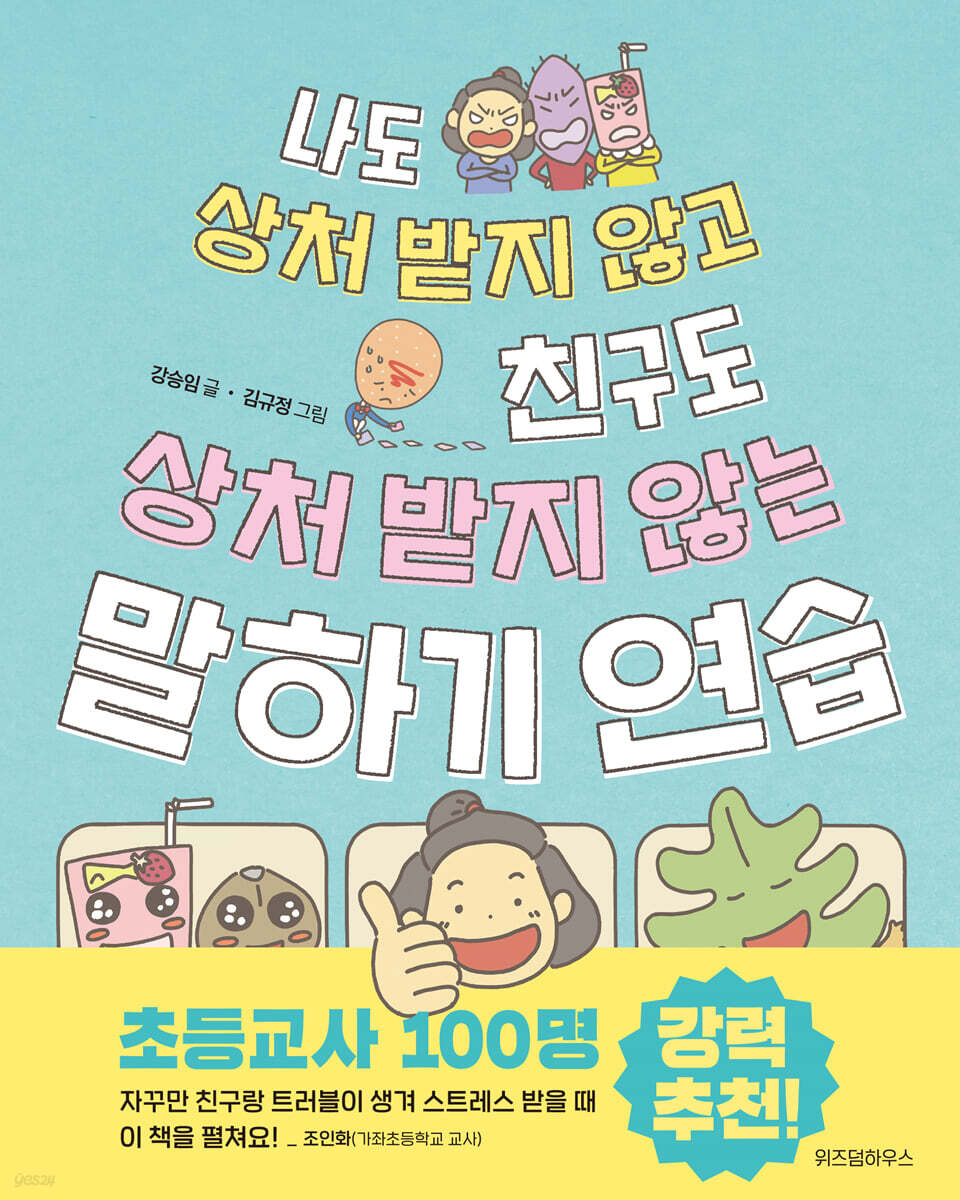
Highly recommended by 100 elementary school teachers! When I'm stressed out from constant trouble with friends, I open this book! _ Jo In-hwa, teacher at Gajwa Elementary School Three years into the COVID-19 pandemic, elementary school students' friendships are in jeopardy! More and more children are experiencing communication difficulties, such as being embarrassed by a friend's mistake and then becoming angry, or struggling to even approach a friend they want to become close to. This is because there are fewer opportunities to develop social skills by hanging out with friends. What advice can we offer to children struggling with these conflicts, big and small? Let's give this book a try! It received strong reviews from 100 elementary school teachers, who praised it as "a book that reduces children's worries by half" and "a prescription for when they're struggling." This book examines the struggles of children who hurt each other because they struggle to express themselves, and suggests ways to resolve conflicts with friends on their own. It is easy to empathize with the various cases of children who have difficulty speaking, such as children who say things that are different from what they mean, children who get annoyed and angry before speaking, and children who are too timid to speak. It also provides comfort to children who are confused by a complicated relationship, responds to their concerns, and guides them on wise speaking methods to build good relationships. |
- You can preview some of the book's contents.
Preview
index
Author's Note
Introducing friends who can share their concerns with you!
Chapter 1: Words that are different from my heart come out
1 I feel sorry, but I don't want to apologize.
2 I'm jealous inside, but I pretend not to be.
3 I start to act like I'm better than others without realizing it.
4. In a sad atmosphere, strange words come out.
5 I keep bothering my friend I like
6. Don't complain to your loved ones for no reason.
I could say it in two words, but I'm already angry
1 I get annoyed when things don't go my way.
2 When I get teased, my fists automatically clench.
3 I feel really bad when someone touches my stuff.
4 I can't understand a friend whose words and actions are different.
5 I want to scold my friend for not doing things right.
6 I'm going to study on my own, but I get upset when people nag me.
Chapter 3 It's so hard to open your mouth
1 I feel frustrated with myself for not being able to refuse.
2. Be mindful when asking a friend to borrow something.
3 Every time I make a presentation, my stomach churns
4 When the teacher speaks to me, my body shrinks.
5 My mind goes blank when I have to speak English
6 I feel uncomfortable greeting people I'm not close with.
Chapter 4 I don't know what to say in times like this.
1 I met a friend I knew in an unfamiliar place
2 I have a friend I want to be close with.
3 It's awkward when there's a pause in conversation.
4. My heart flutters when I hear compliments.
5 I want to comfort a friend who is upset
6 I want to ask for help, but I can't find the words.
7 It's hard when I have to be honest
Introducing friends who can share their concerns with you!
Chapter 1: Words that are different from my heart come out
1 I feel sorry, but I don't want to apologize.
2 I'm jealous inside, but I pretend not to be.
3 I start to act like I'm better than others without realizing it.
4. In a sad atmosphere, strange words come out.
5 I keep bothering my friend I like
6. Don't complain to your loved ones for no reason.
I could say it in two words, but I'm already angry
1 I get annoyed when things don't go my way.
2 When I get teased, my fists automatically clench.
3 I feel really bad when someone touches my stuff.
4 I can't understand a friend whose words and actions are different.
5 I want to scold my friend for not doing things right.
6 I'm going to study on my own, but I get upset when people nag me.
Chapter 3 It's so hard to open your mouth
1 I feel frustrated with myself for not being able to refuse.
2. Be mindful when asking a friend to borrow something.
3 Every time I make a presentation, my stomach churns
4 When the teacher speaks to me, my body shrinks.
5 My mind goes blank when I have to speak English
6 I feel uncomfortable greeting people I'm not close with.
Chapter 4 I don't know what to say in times like this.
1 I met a friend I knew in an unfamiliar place
2 I have a friend I want to be close with.
3 It's awkward when there's a pause in conversation.
4. My heart flutters when I hear compliments.
5 I want to comfort a friend who is upset
6 I want to ask for help, but I can't find the words.
7 It's hard when I have to be honest
Detailed image

Publisher's Review
“Words that are different from what I think come out.”
“I could just say it, but I get angry.”
“It’s so hard to open my mouth.”
“I don’t know what to say.”
A Guide to Affectionate Speaking for Children Who Have Difficulty Expressing Their Feelings
There are children who hurt their friends and are at a loss as to how to deal with it.
On the other hand, there are children who are hurt by their friends' words or attitudes but cannot say anything for fear of being scolded.
Communication is still awkward, each person has a different personality, and the level of consideration and understanding is very different, so minor misunderstandings and conflicts can arise.
But in order to grow into a good adult, you have to learn how to deal with these misunderstandings and conflicts!
The author recommends that children who experience conflicts due to the outburst of negative emotions such as anger, jealousy, sadness, irritation, and fear practice speaking so that they do not get hurt and their friends do not get hurt.
It reveals how a single careless word can lead to misunderstandings and conflicts, and what kind of feelings are hidden beneath those negative expressions.
Then, he gives advice on how to manage those negative emotions and how to express them.
You can learn essential conversation skills in human relationships, such as politely apologizing, expressing gratitude, and gently declining something.
Kang Seung-im, author of the best-selling book “Twelve Words That Protect Me” and a speech education expert, has incorporated her extensive field experience into this book.
The right words are empathy, encouragement, and advice, spoken as if talking directly to the children while making eye contact.
“Oh, this is my story?”
100% relatable stories of children's concerns through comics
The book depicts the big and small conflicts that children experience in their daily lives in the form of cartoons.
These are stories closely related to daily life, as if they were found in a child's diary.
Miyeogi, who made a mistake and wanted to apologize but couldn't, Sol, who got annoyed because she thought she would lose the game, Seokbing, who was frustrated because she couldn't refuse her friend's request, Godi, who gave advice to her upset friend instead of comforting him, and Taru, who felt awkward because his conversation was interrupted, appear in this story with various friendly characters, each of whom tells their own story.
Through this cartoon, children can recall upsetting memories, empathize with them, and see the position of a friend who was hurt by one of their words.
Author Kim Gyu-jeong vividly captured children's worries with cute and lovely drawings.
In particular, it is impressive that the characters are depicted as seaweed, waffles, mackerel, etc., which not only adds to the fun but also avoids stigmatizing them by associating their appearance with their personality.
The author's delicate gaze toward children is clearly felt.
“How about saying it like this in the future?”
Practice resolving conflicts with friends on your own
The advice this book offers is quite specific and practical.
However, we have not set a set correct answer for 'In this situation, say this!'
We remain true to our role as guides, helping children resolve conflicts on their own, in accordance with their own circumstances.
For a child who scolds a friend who made a mistake in group activities, explain that each person completes a task at different speeds, and encourage them to recall a time when they received kind help and imitate it.
In addition, it provides hints by showing how the results change when the main characters in the cartoon speak differently in the same situation.
All of this advice is based on the warm encouragement that while it's difficult to get it right all at once, practicing slowly can lead to a healthy relationship where neither person hurts the other.
“I could just say it, but I get angry.”
“It’s so hard to open my mouth.”
“I don’t know what to say.”
A Guide to Affectionate Speaking for Children Who Have Difficulty Expressing Their Feelings
There are children who hurt their friends and are at a loss as to how to deal with it.
On the other hand, there are children who are hurt by their friends' words or attitudes but cannot say anything for fear of being scolded.
Communication is still awkward, each person has a different personality, and the level of consideration and understanding is very different, so minor misunderstandings and conflicts can arise.
But in order to grow into a good adult, you have to learn how to deal with these misunderstandings and conflicts!
The author recommends that children who experience conflicts due to the outburst of negative emotions such as anger, jealousy, sadness, irritation, and fear practice speaking so that they do not get hurt and their friends do not get hurt.
It reveals how a single careless word can lead to misunderstandings and conflicts, and what kind of feelings are hidden beneath those negative expressions.
Then, he gives advice on how to manage those negative emotions and how to express them.
You can learn essential conversation skills in human relationships, such as politely apologizing, expressing gratitude, and gently declining something.
Kang Seung-im, author of the best-selling book “Twelve Words That Protect Me” and a speech education expert, has incorporated her extensive field experience into this book.
The right words are empathy, encouragement, and advice, spoken as if talking directly to the children while making eye contact.
“Oh, this is my story?”
100% relatable stories of children's concerns through comics
The book depicts the big and small conflicts that children experience in their daily lives in the form of cartoons.
These are stories closely related to daily life, as if they were found in a child's diary.
Miyeogi, who made a mistake and wanted to apologize but couldn't, Sol, who got annoyed because she thought she would lose the game, Seokbing, who was frustrated because she couldn't refuse her friend's request, Godi, who gave advice to her upset friend instead of comforting him, and Taru, who felt awkward because his conversation was interrupted, appear in this story with various friendly characters, each of whom tells their own story.
Through this cartoon, children can recall upsetting memories, empathize with them, and see the position of a friend who was hurt by one of their words.
Author Kim Gyu-jeong vividly captured children's worries with cute and lovely drawings.
In particular, it is impressive that the characters are depicted as seaweed, waffles, mackerel, etc., which not only adds to the fun but also avoids stigmatizing them by associating their appearance with their personality.
The author's delicate gaze toward children is clearly felt.
“How about saying it like this in the future?”
Practice resolving conflicts with friends on your own
The advice this book offers is quite specific and practical.
However, we have not set a set correct answer for 'In this situation, say this!'
We remain true to our role as guides, helping children resolve conflicts on their own, in accordance with their own circumstances.
For a child who scolds a friend who made a mistake in group activities, explain that each person completes a task at different speeds, and encourage them to recall a time when they received kind help and imitate it.
In addition, it provides hints by showing how the results change when the main characters in the cartoon speak differently in the same situation.
All of this advice is based on the warm encouragement that while it's difficult to get it right all at once, practicing slowly can lead to a healthy relationship where neither person hurts the other.
GOODS SPECIFICS
- Date of issue: February 27, 2023
- Pages, weight, size: 116 pages | 292g | 168*210*8mm
- ISBN13: 9791168125933
- ISBN10: 1168125936
- KC Certification: Certification Type: Conformity Confirmation
You may also like
카테고리
korean


korean

![ELLE 엘르 스페셜 에디션 A형 : 12월 [2025]](http://librairie.coreenne.fr/cdn/shop/files/b8e27a3de6c9538896439686c6b0e8fb.jpg?v=1766436872&width=3840)


