

People of Wonmi-dong
 |
Description
Book Introduction
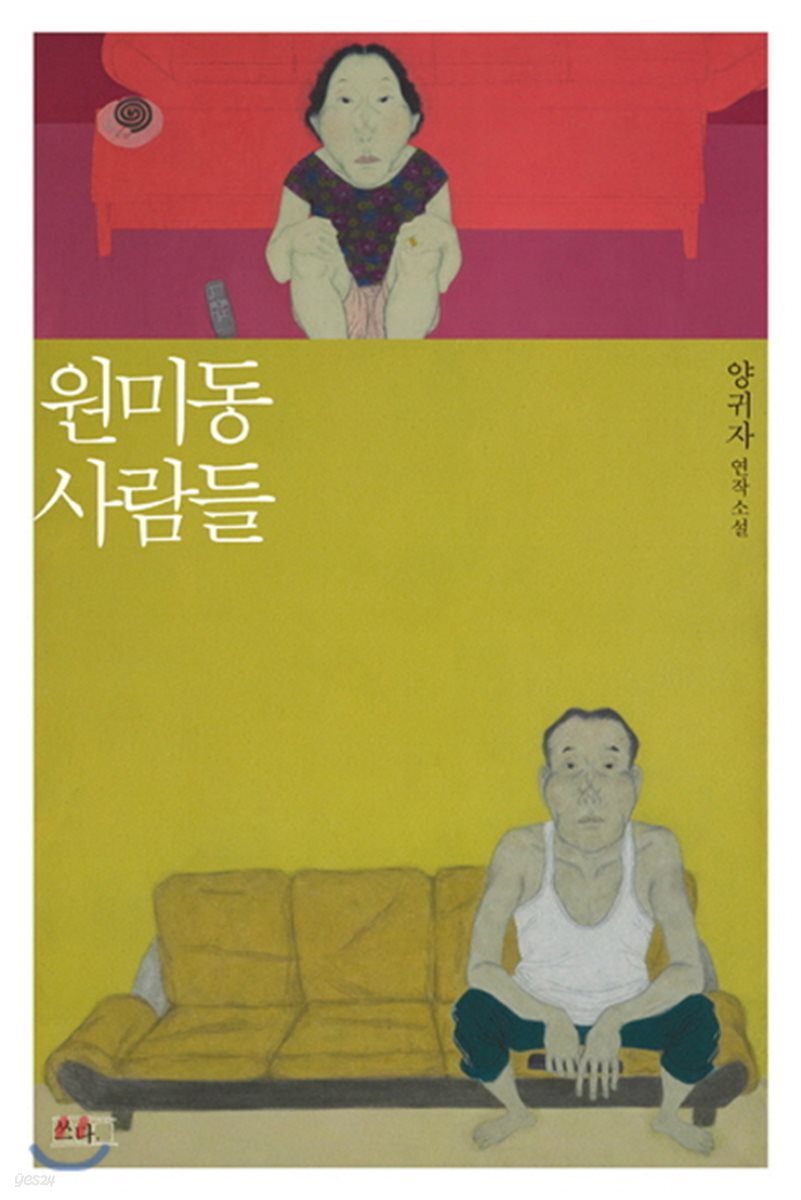
This is a collection of short stories written by author Yang Gui-ja that condenses the lives of the common people in the 1980s into a living space called Wonmi-dong, Bucheon-si, Gyeonggi-do.
The 11 novels included in 『People of Wonmi-dong』 were published intensively in literary magazines from March 1986 to August 1987. Each time a novel was published, it received significant attention from the literary world, establishing itself as a controversial work.
The first edition of 『People of Wonmi-dong』 was published by Munhak-kwa-Jiseongsa in 1987, and has been printed a total of 111 times to date, and is still a steady seller in bookstores, transcending the barrier of time.
The 4th edition, recently published by Ssuda Publishing in a new form, meets readers with an even more readable editing.
The 11 novels included in 『People of Wonmi-dong』 were published intensively in literary magazines from March 1986 to August 1987. Each time a novel was published, it received significant attention from the literary world, establishing itself as a controversial work.
The first edition of 『People of Wonmi-dong』 was published by Munhak-kwa-Jiseongsa in 1987, and has been printed a total of 111 times to date, and is still a steady seller in bookstores, transcending the barrier of time.
The 4th edition, recently published by Ssuda Publishing in a new form, meets readers with an even more readable editing.
- You can preview some of the book's contents.
Preview
index
A distant and beautiful town
spark
The Last Land
Poet Wonmi-dong
A pilgrim mouse
On rainy days, you must go to Garibong-dong.
aberdevine
Teahouse Girl
daily bread
underground dwellers
Limit line
spark
The Last Land
Poet Wonmi-dong
A pilgrim mouse
On rainy days, you must go to Garibong-dong.
aberdevine
Teahouse Girl
daily bread
underground dwellers
Limit line
Into the book
『People of Wonmi-dong』 changes clothes for the fourth time.
I can't go against the flow of time, so I've changed my appearance.
The content was left entirely intact.
As countless reading notes have said,
We cannot foresee what lies ahead of us
The bare daily life symbolized by ‘Wonmi-dong’ still continues.
It is even considered that it has become more severe.
This is why no corrections or revisions were made when publishing the revised edition.
- A note from the author on the revised edition of "People of Wonmi-dong"
Seoul pushed them out without mercy.
After using all sorts of tricks to drive them away, he bade them a sinister farewell.
He was loaded into the back of a moving truck and greeted by the city of Bucheon.
welcome.
He gazed at the unfolding new scenery, trembling with anxiety, or rather, shivering from the cold, wondering what kind of deception lay within that dazzling greeting.
- From “A Far and Beautiful Village”
People must think of me as just another seven-year-old girl with no shortcomings, but I am by no means just another child.
If it's presumptuous to say that you know everything about how the world works, at least you're bright enough to know the circumstances of your family or the inner thoughts of the people in your neighborhood.
That's understandable, because to tell the truth, I'm either eight or nine years old.
- From “Wonmi-dong Poet”
The owner of Singsing Fruit and Vegetable Shop had just moved in and seemed completely unaware of the neighborhood.
If they had just sold fruit pancakes, it might have been okay, but without even realizing it, they put up a note that said, "All side dishes are in the store," and started selling all kinds of side dishes, not just side dishes like green onions, bean sprouts, tofu, lettuce, and onions.
It was really frustrating.
There was no way they could be safe, as they had hung a note about no-cooking food in front of two stores that were as sharp as a needle in securing customers, right in the middle of Gimpo Supermarket and Hyungje Supermarket.
- From “Daily Bread”
“Anyway, if you have any reason to come to Seoul in the future, come to our cafe.
It's easy to find because it's right in front of the Sinsa-dong rotary.
It will open in a week.
I've even decided on a name.
I don't know if the writer likes it.
I named it 'a good country', so I can't do anything about it even if you don't like it.
“What, they even put up a sign already.”
Come to a good country.
Don't forget.
Good country.
The hermit hung up the phone, repeating his resolve.
I didn't mind at all that she named the cafe 'Good Country'.
What a great name.
It was just uncertain whether I would be able to find that good country, or whether I would be able to enter that good country and meet it.
-From “Limit Age”
I can't go against the flow of time, so I've changed my appearance.
The content was left entirely intact.
As countless reading notes have said,
We cannot foresee what lies ahead of us
The bare daily life symbolized by ‘Wonmi-dong’ still continues.
It is even considered that it has become more severe.
This is why no corrections or revisions were made when publishing the revised edition.
- A note from the author on the revised edition of "People of Wonmi-dong"
Seoul pushed them out without mercy.
After using all sorts of tricks to drive them away, he bade them a sinister farewell.
He was loaded into the back of a moving truck and greeted by the city of Bucheon.
welcome.
He gazed at the unfolding new scenery, trembling with anxiety, or rather, shivering from the cold, wondering what kind of deception lay within that dazzling greeting.
- From “A Far and Beautiful Village”
People must think of me as just another seven-year-old girl with no shortcomings, but I am by no means just another child.
If it's presumptuous to say that you know everything about how the world works, at least you're bright enough to know the circumstances of your family or the inner thoughts of the people in your neighborhood.
That's understandable, because to tell the truth, I'm either eight or nine years old.
- From “Wonmi-dong Poet”
The owner of Singsing Fruit and Vegetable Shop had just moved in and seemed completely unaware of the neighborhood.
If they had just sold fruit pancakes, it might have been okay, but without even realizing it, they put up a note that said, "All side dishes are in the store," and started selling all kinds of side dishes, not just side dishes like green onions, bean sprouts, tofu, lettuce, and onions.
It was really frustrating.
There was no way they could be safe, as they had hung a note about no-cooking food in front of two stores that were as sharp as a needle in securing customers, right in the middle of Gimpo Supermarket and Hyungje Supermarket.
- From “Daily Bread”
“Anyway, if you have any reason to come to Seoul in the future, come to our cafe.
It's easy to find because it's right in front of the Sinsa-dong rotary.
It will open in a week.
I've even decided on a name.
I don't know if the writer likes it.
I named it 'a good country', so I can't do anything about it even if you don't like it.
“What, they even put up a sign already.”
Come to a good country.
Don't forget.
Good country.
The hermit hung up the phone, repeating his resolve.
I didn't mind at all that she named the cafe 'Good Country'.
What a great name.
It was just uncertain whether I would be able to find that good country, or whether I would be able to enter that good country and meet it.
-From “Limit Age”
--- From the text
Publisher's Review
Wonmi-dong, a place considered a literary and historical site
In the 1980s, Wonmi-dong in Bucheon was a neighborhood where people who wanted to be incorporated into the great city of dreams called Seoul, or who had spent countless nights in nightmares in the great city called Seoul, lived together.
Of course, people whose hometown was Wonmi-dong and whose land was their hometown also lived with them as neighbors.
This kind of life scene in the 80s was everywhere.
The arduous path of earning a living, the simple and small dreams that we can never let go of, and the lonely demise of those small dreams that never come true were a self-portrait of all of us living in that era.
And it was a place where one must live while realizing that the superficial life of today's Korean society and the phenomenon of its progress are summarized.
The eleven short stories included in 『People of Wonmi-dong』 achieved an overwhelming literary achievement by successfully visualizing such a space as a literary map.
-The lives of the "People of Wonmi-dong" still continue.
The reason why 『People of Wonmi-dong』 has been widely read as a classic of our time, having been reprinted 111 times, and why “Daily Bread,” one of the novels in the series, was included in full in the national Korean language textbook and became required reading for middle school students from 2004 to 2010, is not simply because of its literary achievement.
Although much time has passed, reality still frequently betrays those who live diligently, dreaming of a minimum level of humanity. The conflict between the periphery and the center has deepened day by day, and tangible and intangible violence has become more sophisticated.
Because of such realistic situations, the illustrations in the novel still feel familiar and familiar, like scenes from our neighbors.
A few years ago, the author said in an interview that he had recently been receiving a huge amount of book reviews from all over the country, and that most of them were from middle school students.
The fact that the most frequently found sentences in the reading notes were, "This happened in my neighborhood too," and "I thought it was a very old story, but it's very similar to the present," also supports this situation.
-The unique characteristics of 'Yang Gui-ja's novels': the power of the story that draws you in.
"People of Wonmi-dong" is by no means a novel that can be read cheerfully.
Each novel continues with desolate illustrations of people crossing the threshold of despair.
Nevertheless, you can fully enjoy the novel's most important virtue, "fun," through the dynamic writing style unique to Yang Gui-ja's novels, sentences that demand deep reflection, lively humor that exploits gaps, and lively story development with repeated small twists.
'Yang Gui-ja's novels do not deal with grand narratives or exaggeration, but they have the power to resonate deeply with the world through small stories.
That may be the biggest reason why the novel “People of Wonmi-dong” has stayed with us for a long time.
In the 1980s, Wonmi-dong in Bucheon was a neighborhood where people who wanted to be incorporated into the great city of dreams called Seoul, or who had spent countless nights in nightmares in the great city called Seoul, lived together.
Of course, people whose hometown was Wonmi-dong and whose land was their hometown also lived with them as neighbors.
This kind of life scene in the 80s was everywhere.
The arduous path of earning a living, the simple and small dreams that we can never let go of, and the lonely demise of those small dreams that never come true were a self-portrait of all of us living in that era.
And it was a place where one must live while realizing that the superficial life of today's Korean society and the phenomenon of its progress are summarized.
The eleven short stories included in 『People of Wonmi-dong』 achieved an overwhelming literary achievement by successfully visualizing such a space as a literary map.
-The lives of the "People of Wonmi-dong" still continue.
The reason why 『People of Wonmi-dong』 has been widely read as a classic of our time, having been reprinted 111 times, and why “Daily Bread,” one of the novels in the series, was included in full in the national Korean language textbook and became required reading for middle school students from 2004 to 2010, is not simply because of its literary achievement.
Although much time has passed, reality still frequently betrays those who live diligently, dreaming of a minimum level of humanity. The conflict between the periphery and the center has deepened day by day, and tangible and intangible violence has become more sophisticated.
Because of such realistic situations, the illustrations in the novel still feel familiar and familiar, like scenes from our neighbors.
A few years ago, the author said in an interview that he had recently been receiving a huge amount of book reviews from all over the country, and that most of them were from middle school students.
The fact that the most frequently found sentences in the reading notes were, "This happened in my neighborhood too," and "I thought it was a very old story, but it's very similar to the present," also supports this situation.
-The unique characteristics of 'Yang Gui-ja's novels': the power of the story that draws you in.
"People of Wonmi-dong" is by no means a novel that can be read cheerfully.
Each novel continues with desolate illustrations of people crossing the threshold of despair.
Nevertheless, you can fully enjoy the novel's most important virtue, "fun," through the dynamic writing style unique to Yang Gui-ja's novels, sentences that demand deep reflection, lively humor that exploits gaps, and lively story development with repeated small twists.
'Yang Gui-ja's novels do not deal with grand narratives or exaggeration, but they have the power to resonate deeply with the world through small stories.
That may be the biggest reason why the novel “People of Wonmi-dong” has stayed with us for a long time.
GOODS SPECIFICS
- Date of publication: December 25, 2012
- Page count, weight, size: 427 pages | 612g | 142*216*30mm
- ISBN13: 9788998441005
- ISBN10: 8998441004
You may also like
카테고리
korean


korean

![ELLE 엘르 스페셜 에디션 A형 : 12월 [2025]](http://librairie.coreenne.fr/cdn/shop/files/b8e27a3de6c9538896439686c6b0e8fb.jpg?v=1766436872&width=3840)


