

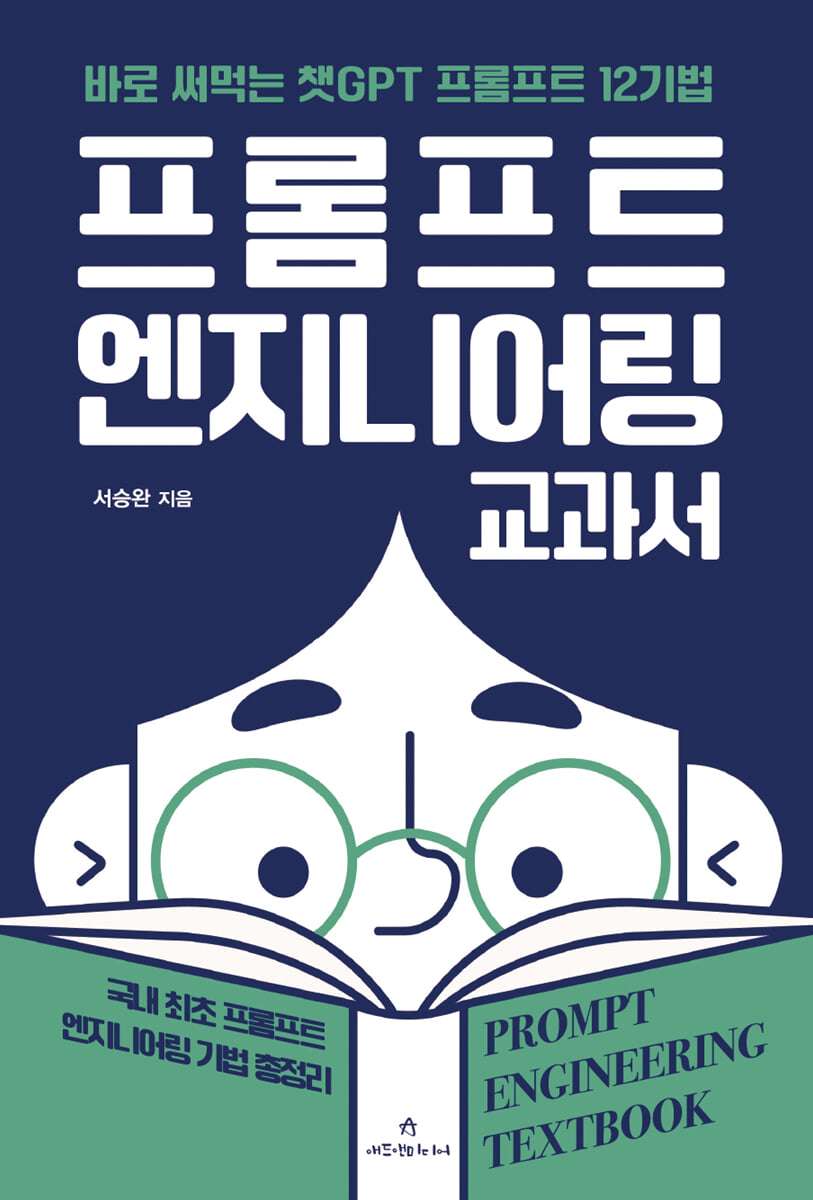
Prompt Engineering Textbook
 |
Description
Book Introduction
* Korea's first comprehensive summary of prompt techniques * Prompt engineering know-how proven by various companies * Comparative analysis of Chatgpt, Bard, Claude, and ClovaX * Know-how to create natural Korean sentences * Know-how to reduce hallucination This book was written by the author to share with the public the prompt engineering know-how and secrets he gained while developing actual AI model-based products and interacting with overseas prompt engineers. The author transforms potentially technically complex content into something easily usable within the ChatGPT platform, categorizing it into 12 techniques and providing application examples. This book is particularly significant in that it is the first in-depth approach to prompt engineering in Korea. Moving beyond the common view that prompt engineering is simply about "how to use ChatGPT," it presents the core principles and strategies needed to effectively manipulate and improve AI models. The book's content is based on a curriculum that has been verified by various companies and institutions, making it accessible to readers of all skill levels, from beginners to experts. From beginning to end, the author dissects the complex techniques of prompt engineering with systematic and clear explanations, and explores how to structure and adjust prompts in various situations, including 'How to Make Korean Sound Natural', 'How to Reduce Hallucination', and 'Prompt Engineering in Bard, Claude, and ClovaX', as well as real-world examples. "Prompt Engineering Textbook" will be a valuable guide for those new to prompt engineering, as well as anyone interested in AI development and the business applications of ChatGPT. |
- You can preview some of the book's contents.
Preview
index
prolog
Chapter 1: Understanding Prompts and Concepts
The concept of prompt engineering
Prompt Engineering Fundamentals
ChatGPT Prompt Engineering
Prompt Engineering Essential Concepts
What is Prompt Engineering Technique?
Chapter 2: 12 Techniques of Prompt Engineering
Few Shot Technique
Role assignment technique
Markdown Utilization Techniques
Fukatsu prompt technique
Formatting techniques
Shunsuke template technique
Q&A technique
Continuation technique
Chain of Thought technique
Multi-persona technique
Hallucination induction technique
ReAct technique
Chapter 3: Prompt Engineering Know-How
Creating Natural Korean Sentences
Reduce hallucinations
Using custom instructions
Bard, Claude, Clova X Prompt Engineering
Appendix: Questions About Prompt Engineering
Practice Problem Answers
Prompt Engineering Table
References
Chapter 1: Understanding Prompts and Concepts
The concept of prompt engineering
Prompt Engineering Fundamentals
ChatGPT Prompt Engineering
Prompt Engineering Essential Concepts
What is Prompt Engineering Technique?
Chapter 2: 12 Techniques of Prompt Engineering
Few Shot Technique
Role assignment technique
Markdown Utilization Techniques
Fukatsu prompt technique
Formatting techniques
Shunsuke template technique
Q&A technique
Continuation technique
Chain of Thought technique
Multi-persona technique
Hallucination induction technique
ReAct technique
Chapter 3: Prompt Engineering Know-How
Creating Natural Korean Sentences
Reduce hallucinations
Using custom instructions
Bard, Claude, Clova X Prompt Engineering
Appendix: Questions About Prompt Engineering
Practice Problem Answers
Prompt Engineering Table
References
Detailed image

Into the book
Actually, connecting to the API itself wasn't particularly difficult. The challenge was always providing clear and effective instructions to the AI.
The challenge of producing high-quality results, tailored to a variety of categories, has always been challenging.
My staff and I used to wrestle with this idea for several nights, and it turned out to be called "prompt engineering."
--- p.5
For many, 'prompt engineering' remains a difficult area.
Even though they knew its importance, most people didn't know how to get started, and some even doubted its utility and value.
Looking at the discussions that mainly take place in the English-speaking world, it was easy to get that impression because they often focused on 'implementation in the development department' rather than 'the perspective of general users.'
But what contrasts with this is the discussion of the Japanese who are 'obsessed with manualizing and templating prompts.'
The techniques (called 'methods' in Japanese) and templates they independently organized were very impressive, but they were somewhat fragmented and not well known in Korea.
I felt the need to collect and organize their discussions and adapt them to Korean.
--- p.6
Prompt engineering is a new field, and much research still needs to be done.
There are many theories about its concept and application, and it may be absurd to try to manualize and standardize it.
However, to ensure that more people could participate in the ecosystem, someone had to do it, and they worked tirelessly, even though they knew it was not enough.
--- p.7
The concept of prompt in artificial intelligence is sometimes confused with the 'Command Prom--- pt' in the CLI (Command Line Interface) environment.
The command prompt is a concept that means 'a state or signal waiting for instructions from the user.'
While similar in concept, it differs from the concept of prompts in AI, which refers to instructions themselves. Language models like GPT are capable of "in-context learning."
This means learning the given context and reflecting it in your answer.
Of course, this learning is only temporary.
However, this means that the model's response can be completely different depending on small changes in the examples, commands, or word choices included in the given prompt, so it is necessary to design good prompts to achieve the desired results.
The challenge of producing high-quality results, tailored to a variety of categories, has always been challenging.
My staff and I used to wrestle with this idea for several nights, and it turned out to be called "prompt engineering."
--- p.5
For many, 'prompt engineering' remains a difficult area.
Even though they knew its importance, most people didn't know how to get started, and some even doubted its utility and value.
Looking at the discussions that mainly take place in the English-speaking world, it was easy to get that impression because they often focused on 'implementation in the development department' rather than 'the perspective of general users.'
But what contrasts with this is the discussion of the Japanese who are 'obsessed with manualizing and templating prompts.'
The techniques (called 'methods' in Japanese) and templates they independently organized were very impressive, but they were somewhat fragmented and not well known in Korea.
I felt the need to collect and organize their discussions and adapt them to Korean.
--- p.6
Prompt engineering is a new field, and much research still needs to be done.
There are many theories about its concept and application, and it may be absurd to try to manualize and standardize it.
However, to ensure that more people could participate in the ecosystem, someone had to do it, and they worked tirelessly, even though they knew it was not enough.
--- p.7
The concept of prompt in artificial intelligence is sometimes confused with the 'Command Prom--- pt' in the CLI (Command Line Interface) environment.
The command prompt is a concept that means 'a state or signal waiting for instructions from the user.'
While similar in concept, it differs from the concept of prompts in AI, which refers to instructions themselves. Language models like GPT are capable of "in-context learning."
This means learning the given context and reflecting it in your answer.
Of course, this learning is only temporary.
However, this means that the model's response can be completely different depending on small changes in the examples, commands, or word choices included in the given prompt, so it is necessary to design good prompts to achieve the desired results.
--- p.17
Publisher's Review
How do I become a prompt engineer?
Seungwan Seo, co-author of "Prompt Engineer, a New Job Launched by ChatGPT," generously shares his experience and know-how with those who dream of becoming prompt engineers through this book, "Prompt Engineering Textbook."
While the previous book provided an overview of prompt engineering and its potential as a career, this book delves deeper into practical prompt engineering techniques.
The author provides numerous examples and application cases to show readers how to construct and use prompts in real-world situations.
"Prompt Engineering Textbook" is the ultimate guidebook for anyone who wants to grow as a prompt engineer, offering an easy and enjoyable approach.
12 Techniques You Can Use Right Away at Work
The "Prompt Engineering Textbook" is designed to make prompt engineering accessible even to those with limited technical background.
Not only does it provide detailed examples and a variety of problem-solving problems based on ChatGPT, it also provides various tips that professional developers can apply to product development.
It also doesn't miss out on content aimed at Bard, Claude, and Clova X.
In particular, the author's unique classification of 12 prompt techniques not only helps you systematically understand the core principles of prompt engineering, but also fosters the ability to apply them directly to actual work.
Practical know-how proven domestically and internationally
The 『Prompt Engineering Textbook』 contains the solid curriculum of 『Prompt Engineer Korea (PPEKR)』, the only prompt specialist brand in Korea and the number one choice for corporate recruitment in the prompt field.
It is based on practical experience and know-how gained through exchanges with overseas prompt engineers from Japan, the United States, and Norway.
Readers will also gain insight into global technology trends and insights through the Prompt Engineering Textbook.
Seungwan Seo, co-author of "Prompt Engineer, a New Job Launched by ChatGPT," generously shares his experience and know-how with those who dream of becoming prompt engineers through this book, "Prompt Engineering Textbook."
While the previous book provided an overview of prompt engineering and its potential as a career, this book delves deeper into practical prompt engineering techniques.
The author provides numerous examples and application cases to show readers how to construct and use prompts in real-world situations.
"Prompt Engineering Textbook" is the ultimate guidebook for anyone who wants to grow as a prompt engineer, offering an easy and enjoyable approach.
12 Techniques You Can Use Right Away at Work
The "Prompt Engineering Textbook" is designed to make prompt engineering accessible even to those with limited technical background.
Not only does it provide detailed examples and a variety of problem-solving problems based on ChatGPT, it also provides various tips that professional developers can apply to product development.
It also doesn't miss out on content aimed at Bard, Claude, and Clova X.
In particular, the author's unique classification of 12 prompt techniques not only helps you systematically understand the core principles of prompt engineering, but also fosters the ability to apply them directly to actual work.
Practical know-how proven domestically and internationally
The 『Prompt Engineering Textbook』 contains the solid curriculum of 『Prompt Engineer Korea (PPEKR)』, the only prompt specialist brand in Korea and the number one choice for corporate recruitment in the prompt field.
It is based on practical experience and know-how gained through exchanges with overseas prompt engineers from Japan, the United States, and Norway.
Readers will also gain insight into global technology trends and insights through the Prompt Engineering Textbook.
GOODS SPECIFICS
- Date of issue: September 5, 2023
- Page count, weight, size: 196 pages | 152*225*20mm
- ISBN13: 9791198240828
- ISBN10: 1198240822
You may also like
카테고리
korean


korean

![GQ KOREA Mark (Monthly): December [2025]](http://librairie.coreenne.fr/cdn/shop/files/8ef265dbbfbf186523ed75ba7319009d.jpg?v=1765340328&width=3840)


