

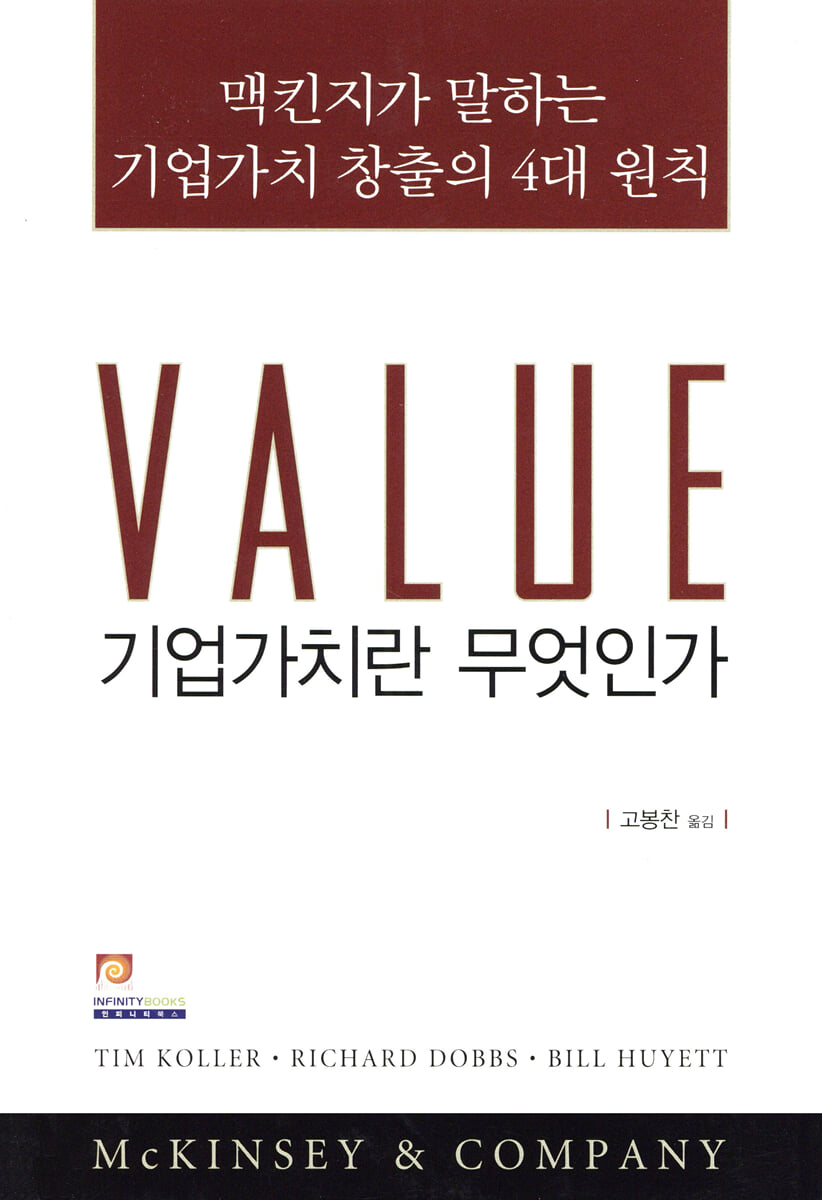
What is corporate value?
 |
Description
Book Introduction
A must-read for business executives seeking to create corporate value.
The four principles of value creation will guide you on your path to wise decision-making.
Business leaders often encounter conventional wisdom and half-truths about value creation.
They often give flawed advice about what is attractive to investors and contradict management's judgment about what creates lasting value for the company and the economy as a whole.
This book provides practical guidance and strategic direction for business managers when faced with decisions that impact corporate value, including which alternatives to choose and where to prioritize for value creation.
Based on the core theories of corporate finance that are already well known, they combine their own practical consulting experience and data to propose four intuitive and persuasive principles of value creation. They also explain persuasively through real-life cases how these four principles are applied and utilized in important corporate finance phenomena and decision-making that managers face, such as capital structure, dividends, return on capital, growth rate, earnings management, investor communication, and stock market bubbles.
In particular, in the conflict between short-term financial performance and long-term value creation, managers must possess the courage and independence to break through the complexity of the relevant management process by segmenting and making it transparent, and only then can they achieve sustainable value creation.
Therefore, it is expected to be of great help to managers, practitioners, and academic readers who are eager to develop financial strategies for long-term value creation for companies.
The four core principles for value creation discussed in the book are the 'core of value', which states that corporate value is determined by cash flow, which is the result of growth rate and return on capital; 'value preservation', which states that corporate value increases only when more cash flow is generated and is not created simply by reallocating investors' claims on cash flow; the 'expectation treadmill', which states that changes in a company's stock price reflect not only corporate performance but also changes in expectations formed in the stock market; and the 'best owner', which states that corporate value is not given as an absolute value but changes depending on who manages it and what strategy is implemented.
Through these four pillars, this book will provide managers with an integrated view of their companies.
The four principles of value creation will guide you on your path to wise decision-making.
Business leaders often encounter conventional wisdom and half-truths about value creation.
They often give flawed advice about what is attractive to investors and contradict management's judgment about what creates lasting value for the company and the economy as a whole.
This book provides practical guidance and strategic direction for business managers when faced with decisions that impact corporate value, including which alternatives to choose and where to prioritize for value creation.
Based on the core theories of corporate finance that are already well known, they combine their own practical consulting experience and data to propose four intuitive and persuasive principles of value creation. They also explain persuasively through real-life cases how these four principles are applied and utilized in important corporate finance phenomena and decision-making that managers face, such as capital structure, dividends, return on capital, growth rate, earnings management, investor communication, and stock market bubbles.
In particular, in the conflict between short-term financial performance and long-term value creation, managers must possess the courage and independence to break through the complexity of the relevant management process by segmenting and making it transparent, and only then can they achieve sustainable value creation.
Therefore, it is expected to be of great help to managers, practitioners, and academic readers who are eager to develop financial strategies for long-term value creation for companies.
The four core principles for value creation discussed in the book are the 'core of value', which states that corporate value is determined by cash flow, which is the result of growth rate and return on capital; 'value preservation', which states that corporate value increases only when more cash flow is generated and is not created simply by reallocating investors' claims on cash flow; the 'expectation treadmill', which states that changes in a company's stock price reflect not only corporate performance but also changes in expectations formed in the stock market; and the 'best owner', which states that corporate value is not given as an absolute value but changes depending on who manages it and what strategy is implemented.
Through these four pillars, this book will provide managers with an integrated view of their companies.
index
Part 1: The Four Principles of Value
Chapter 1 Why are values important?
Chapter 2: The Core of Value
Chapter 3: Preservation of Value
Chapter 4: The Expectation Hamster Wheel
Chapter 5 The Best Owner
Part 2: Stock Market
Chapter 6 Who are the stock market participants?
Chapter 7: Stock Market and the Real Economy
Chapter 8: Stock Market Bubble
Chapter 9 Profit Adjustment
Part 3: Value Creation Management
Chapter 10 Return on Capital
Chapter 11 Growth
Chapter 12 Business Portfolio
Chapter 13 Mergers and Acquisitions
Chapter 14 Risk
Chapter 15 Capital Structure
Chapter 16: Investor Communication
Chapter 17: Management for Value Creation
Appendix A.
Value formula
Appendix B.
Proper Use of Profit Multiples
Chapter 1 Why are values important?
Chapter 2: The Core of Value
Chapter 3: Preservation of Value
Chapter 4: The Expectation Hamster Wheel
Chapter 5 The Best Owner
Part 2: Stock Market
Chapter 6 Who are the stock market participants?
Chapter 7: Stock Market and the Real Economy
Chapter 8: Stock Market Bubble
Chapter 9 Profit Adjustment
Part 3: Value Creation Management
Chapter 10 Return on Capital
Chapter 11 Growth
Chapter 12 Business Portfolio
Chapter 13 Mergers and Acquisitions
Chapter 14 Risk
Chapter 15 Capital Structure
Chapter 16: Investor Communication
Chapter 17: Management for Value Creation
Appendix A.
Value formula
Appendix B.
Proper Use of Profit Multiples
GOODS SPECIFICS
- Date of issue: November 23, 2011
- Page count, weight, size: 276 pages | 152*224*20mm
- ISBN13: 9788992649704
- ISBN10: 8992649703
You may also like
카테고리
korean


korean

![GQ KOREA Mark (Monthly): December [2025]](http://librairie.coreenne.fr/cdn/shop/files/8ef265dbbfbf186523ed75ba7319009d.jpg?v=1765340328&width=3840)


