![NewPhilosopher (Quarterly): Vol. 26 [2024]](http://librairie.coreenne.fr/cdn/shop/files/a0e86f5b55784ae049256255c495c1b8.jpg?v=1765378300&width=3840)

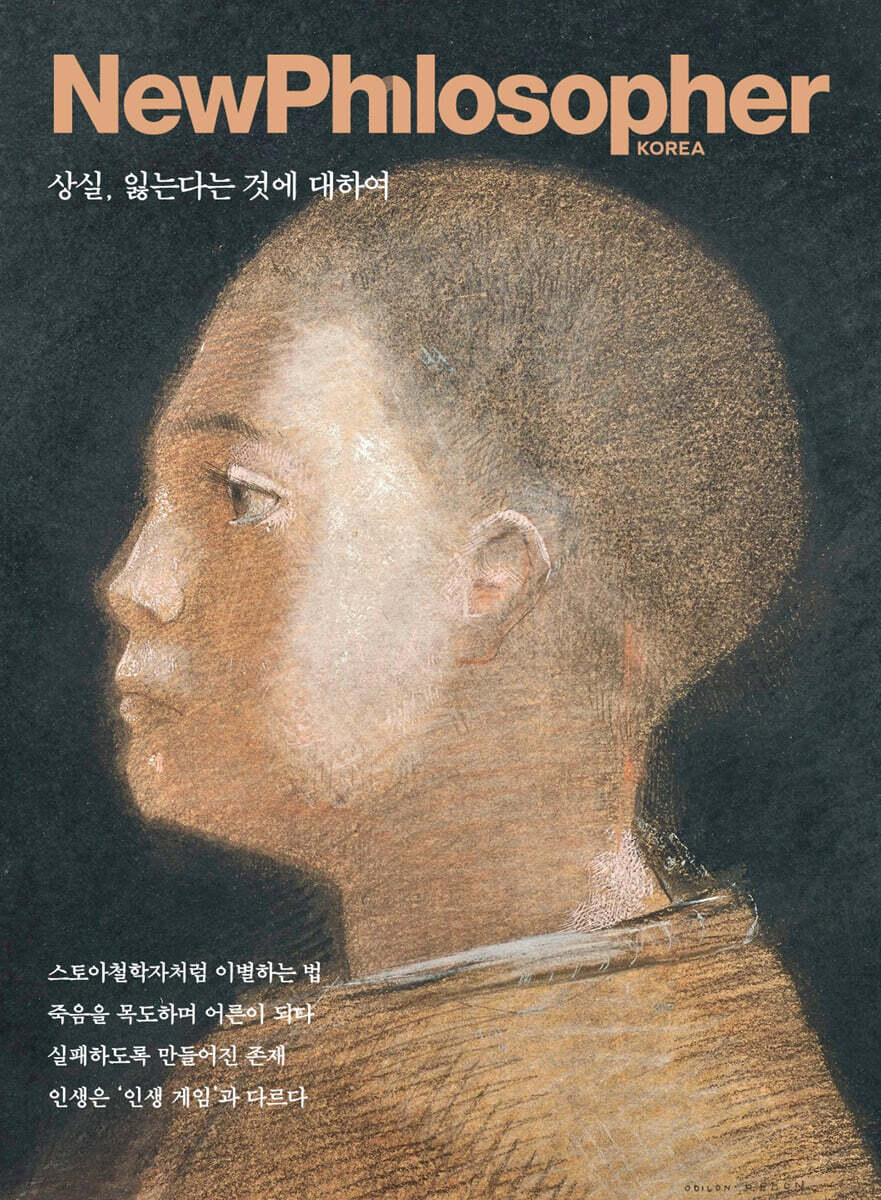
NewPhilosopher (Quarterly): Vol. 26 [2024]
 |
Description
Book Introduction
Life philosophy magazine 『New Philosopher』
vol.
26: About Loss, About Losing
There is a psychological study that shows that the frustration and sense of loss that comes from losing something is several times stronger than the joy that comes from gaining something.
Loss, or rather, the law of nature, is an unchangeable law of humankind, and that if something is gained, something is lost. This is an immutable principle of life in this world.
Objects of loss are constantly emerging like a flower pot.
Death can lead to the loss of someone precious, or the loss of a relationship with someone, whether intentionally or unintentionally.
You will lose your assets, you will lose your youth, you will lose your health.
This issue of "New Philosopher" explores the thoughts and advice of various philosophers on the topic of loss, under the title "On Loss and Being Lost."
As Schopenhauer and Nietzsche both noted, life is a series of losses, and we have no choice but to accept that life itself is suffering.
However, it is not a matter of self-deprecating resignation, but rather how positive and constructive the way and process of accepting and coping with loss can be.
vol.
26: About Loss, About Losing
There is a psychological study that shows that the frustration and sense of loss that comes from losing something is several times stronger than the joy that comes from gaining something.
Loss, or rather, the law of nature, is an unchangeable law of humankind, and that if something is gained, something is lost. This is an immutable principle of life in this world.
Objects of loss are constantly emerging like a flower pot.
Death can lead to the loss of someone precious, or the loss of a relationship with someone, whether intentionally or unintentionally.
You will lose your assets, you will lose your youth, you will lose your health.
This issue of "New Philosopher" explores the thoughts and advice of various philosophers on the topic of loss, under the title "On Loss and Being Lost."
As Schopenhauer and Nietzsche both noted, life is a series of losses, and we have no choice but to accept that life itself is suffering.
However, it is not a matter of self-deprecating resignation, but rather how positive and constructive the way and process of accepting and coping with loss can be.
- You can preview some of the book's contents.
Preview
index
8 _ News from Nowhere
14 _ Intro _ Life is a series of losses _ Jean Borg
18 _ Voice _ How to Break Up Like a Stoic _ Mariana Alessandri
24 _ Philosophy _ The Asymmetry Between Happiness and Unhappiness _ Patrick Stokes
30 _ Opinion _ The Age of Agephobia _ Clarissa Seebeck Montefiore
38 _ Game _ Life is not like the 'game of life' _ Tom Chatfield
50 _ Interview _ Forget the sadness, but not the person _ Michael Cholbey
66 _ Photo _ Remember the Dead _ William H.
Stop
70 _ Society _ Scientific solutions for living in an age of distrust _ André Dao
78 _ Classics _ Orpheus and Eurydice _ Thomas Bulfinch
80 _ Aging _ Loss is also transferred _ Marina Benjamin
90 _ Certainty _ Lost in the Hallways of Memory _ Maggie Jackson
100 _ Artist _ Growing Up While Witnessing Death _ Phil Tyler
108 _ Philosophy _ People with a Great Sense of Self _ Matthew Beard
116 _ Interview _ Relationships Have Changed, Not Stopped _ Mary-Frances O'Connor
132 _ Humanity _ Made to Fail _ Costa Bradatan
140 _ Memory _ Outsourced Memory _ Nigel Warburton
148 _ Thinking in picture _ To cry again _ Park Bona
154 _ A novel read by a poet _ Record only facts _ Heo Yeon
162 _ Space and _ Funeral of Loss _ Im and
170 _ Our library
14 _ Intro _ Life is a series of losses _ Jean Borg
18 _ Voice _ How to Break Up Like a Stoic _ Mariana Alessandri
24 _ Philosophy _ The Asymmetry Between Happiness and Unhappiness _ Patrick Stokes
30 _ Opinion _ The Age of Agephobia _ Clarissa Seebeck Montefiore
38 _ Game _ Life is not like the 'game of life' _ Tom Chatfield
50 _ Interview _ Forget the sadness, but not the person _ Michael Cholbey
66 _ Photo _ Remember the Dead _ William H.
Stop
70 _ Society _ Scientific solutions for living in an age of distrust _ André Dao
78 _ Classics _ Orpheus and Eurydice _ Thomas Bulfinch
80 _ Aging _ Loss is also transferred _ Marina Benjamin
90 _ Certainty _ Lost in the Hallways of Memory _ Maggie Jackson
100 _ Artist _ Growing Up While Witnessing Death _ Phil Tyler
108 _ Philosophy _ People with a Great Sense of Self _ Matthew Beard
116 _ Interview _ Relationships Have Changed, Not Stopped _ Mary-Frances O'Connor
132 _ Humanity _ Made to Fail _ Costa Bradatan
140 _ Memory _ Outsourced Memory _ Nigel Warburton
148 _ Thinking in picture _ To cry again _ Park Bona
154 _ A novel read by a poet _ Record only facts _ Heo Yeon
162 _ Space and _ Funeral of Loss _ Im and
170 _ Our library
Detailed image

Into the book
“I will only take care of him as much as he gives me.
“As if it were not mine, as if I were a traveler staying at an inn for a while and then leaving.” ……The feeling of losing someone arises from the confusion between what is ‘mine’ and what is ‘not mine.’
My mother's son was never my mother's property, and my mother was never mine.
Both of them are still just temporary presences at the inn where I am staying.
Epictetus concluded that if we accept death as a part of life, as the fate of human existence, we will not have to feel pity and say, "Ah, poor me!"
--- p.21 From “How to Break Up Like a Stoic Philosopher _ Mariana Alessandri”
Who would truly avoid the pain of losing a loved one and forsake the opportunity to love them? Tennyson asks us to compare a world where a particular love has been lost with a world where that love never began.
Surely he would say that we can know that the former is better than the latter? But when we start comparing what exists with what doesn't, something strange happens to our moral calculus.
The asymmetry between good and bad, loss and gain, can lead us down some very dark alleys.
--- p.27 From “The Asymmetry Between Happiness and Unhappiness _ Patrick Stokes”
Old age is not something you can choose.
But we have another choice.
You can choose to be grateful every day, to believe that as you grow older, you gain experience and wisdom, and to not yearn for the impossible.
Woolfelt says:
“In a culture that avoids aging, it takes courage to truly age gracefully.
Just accept being alive and living as an honor and a privilege.
“If we accept it honestly, aging can be a beautiful process.”
--- p.35 From “The Age of Aging Aversion _ Clarissa Seebeck Montefiore”
People who have suffered extreme grief from loss are definitely different from before when they come out of that grief.
My hope is that people will embrace positive change as they grieve loss and use their grief as a springboard for self-understanding and self-reflection.
In fact, while mourning a death, people begin to perceive themselves from a different perspective than usual.
Even in a moral sense, the way we understand the world changes significantly.
Mourning changes people's interests, attachments, and even their way of living.
--- pp.52-53 From “Forget the sadness, but not the person _ Interview with Michael Cholbey”
How democratic is a parliament, where elected positions are held by a tiny minority of people, truly? How free is a media owned by a few billionaires? And what about universities and research institutes? Can we trust the knowledge produced by these institutions, plagued by the personal ambitions and professional ambitions of their academics, the ambiguity of their terminology, the arbitrary nature of their research projects, and the various biases and contradictions of Western philosophy?
--- p.75 From “The Scientific Solution for Living in an Age of Distrust _ André Dao”
Having a strong sense of self essentially means knowing what makes you who you are, what you believe in, what you stand for, what you care about, and what you want to achieve in life.
It means not giving in to the expectations of others who demand that you change.
People with a strong sense of self do not give up their values and beliefs even when pressure to change their minds comes up.
Even in the face of suffering that brings existential and moral anxiety, one does not lose oneself.
--- p.110 From “People with a Great Sense of Self _ Matthew Beard”
Living through daily life with losses both big and small is an inevitable process, and we will undoubtedly continue to be drawn into new losses as long as we live.
Each time, loss will strike the side of everyday life in different shapes, densities, and volumes.
No loss can ever completely pass, but if it fades just enough to make daily life no longer difficult, that might be enough.
“As if it were not mine, as if I were a traveler staying at an inn for a while and then leaving.” ……The feeling of losing someone arises from the confusion between what is ‘mine’ and what is ‘not mine.’
My mother's son was never my mother's property, and my mother was never mine.
Both of them are still just temporary presences at the inn where I am staying.
Epictetus concluded that if we accept death as a part of life, as the fate of human existence, we will not have to feel pity and say, "Ah, poor me!"
--- p.21 From “How to Break Up Like a Stoic Philosopher _ Mariana Alessandri”
Who would truly avoid the pain of losing a loved one and forsake the opportunity to love them? Tennyson asks us to compare a world where a particular love has been lost with a world where that love never began.
Surely he would say that we can know that the former is better than the latter? But when we start comparing what exists with what doesn't, something strange happens to our moral calculus.
The asymmetry between good and bad, loss and gain, can lead us down some very dark alleys.
--- p.27 From “The Asymmetry Between Happiness and Unhappiness _ Patrick Stokes”
Old age is not something you can choose.
But we have another choice.
You can choose to be grateful every day, to believe that as you grow older, you gain experience and wisdom, and to not yearn for the impossible.
Woolfelt says:
“In a culture that avoids aging, it takes courage to truly age gracefully.
Just accept being alive and living as an honor and a privilege.
“If we accept it honestly, aging can be a beautiful process.”
--- p.35 From “The Age of Aging Aversion _ Clarissa Seebeck Montefiore”
People who have suffered extreme grief from loss are definitely different from before when they come out of that grief.
My hope is that people will embrace positive change as they grieve loss and use their grief as a springboard for self-understanding and self-reflection.
In fact, while mourning a death, people begin to perceive themselves from a different perspective than usual.
Even in a moral sense, the way we understand the world changes significantly.
Mourning changes people's interests, attachments, and even their way of living.
--- pp.52-53 From “Forget the sadness, but not the person _ Interview with Michael Cholbey”
How democratic is a parliament, where elected positions are held by a tiny minority of people, truly? How free is a media owned by a few billionaires? And what about universities and research institutes? Can we trust the knowledge produced by these institutions, plagued by the personal ambitions and professional ambitions of their academics, the ambiguity of their terminology, the arbitrary nature of their research projects, and the various biases and contradictions of Western philosophy?
--- p.75 From “The Scientific Solution for Living in an Age of Distrust _ André Dao”
Having a strong sense of self essentially means knowing what makes you who you are, what you believe in, what you stand for, what you care about, and what you want to achieve in life.
It means not giving in to the expectations of others who demand that you change.
People with a strong sense of self do not give up their values and beliefs even when pressure to change their minds comes up.
Even in the face of suffering that brings existential and moral anxiety, one does not lose oneself.
--- p.110 From “People with a Great Sense of Self _ Matthew Beard”
Living through daily life with losses both big and small is an inevitable process, and we will undoubtedly continue to be drawn into new losses as long as we live.
Each time, loss will strike the side of everyday life in different shapes, densities, and volumes.
No loss can ever completely pass, but if it fades just enough to make daily life no longer difficult, that might be enough.
--- p.
168 From "The Funeral of Loss _ Im Yirang"
168 From "The Funeral of Loss _ Im Yirang"
Publisher's Review
How Stoics Dealt with Breakups
_ 'It was never mine to begin with, so there is no loss.'
Author Mariana Alessandri, who has always expressed her cool-headed perception of reality and philosophical understanding in her writing, calmly tells the story of her mother, who was battling terminal cancer.
When news of the cancer's recurrence reached her, her children and close friends sent her encouragement, telling her not to give up, but her mother, the patient herself, answered without a second thought to look into hospice care.
Just as it is one's own decision to end one's life, not the decisions of family or friends, my mother accepts the end of life without resistance.
And, as the Stoics argued about death and loss, they do not think of it as 'losing life', but rather recognize and speak of it as 'giving life back'.
This New Philosopher, which speaks of loss, particularly the loss of life, that is, death and bereavement, which occupy a large portion of the text, gives us this warning:
It may not be the right answer, but what if we accepted the way of separation and loss suggested by the Stoic philosophers?
Epictetus, a representative Stoic philosopher, says that the sadness of loss and grief comes to humans because of “the desire to choose when we have no choice, and the desire to desire what is not ours.”
Death is a natural part of life and is a natural process, so it is not right to accept it as 'I have lost my life'.
It means that since it wasn't mine to begin with, I won't lose it.
The same would be true for the death of a loved one.
Loss is an absolutely essential element in the journey of human life and an inevitable ending that cannot be ignored.
If you can't ignore or avoid it, you have no choice but to change how you accept and perceive loss.
Although not Stoic philosophers, later philosophers Schopenhauer and Nietzsche also agreed that the first step to accepting suffering is to 'accept loss.'
Ultimately, what matters to us living beings is how we react to loss, how we adapt, and how we embrace change.
Let us turn our attention to Arthur Schopenhauer and Friedrich Nietzsche.
Both philosophers viewed life as a series of losses, and argued that life itself is suffering.
However, unlike Schopenhauer's somewhat pessimistic philosophy, Nietzsche believed that facing hardship makes us who we are.
For Nietzsche, suffering was “a hammer and a tool that could give one new wings.”
(Page 15)
People who study universal human sorrow
"The relationship has changed, it hasn't stopped."
The book contains two interviews.
The main characters are Michael Cholbey, a philosophy professor who focuses on the philosophical understanding of death and dying, and Mary-Frances O'Connor, a clinical psychologist who studies the psychological wounds and feelings of isolation in people who have lost family members to death.
Both are intellectuals who strive to provide minimal help and solutions to those crushed by the great rock of 'loss'.
Michael Cholbey focuses specifically on the time of 'mourning' for those who have experienced loss.
This mourning process was not just a time of tears and despair, but also a time of struggle for those who had lost the support of their lives to overcome their current grief and start a new life.
His admonition that “mourning is a process of imprinting loss and a process that helps us face it” leads to the conclusion that after sufficient time of mourning, there is a high possibility that you will meet yourself with a more mature perspective and mindset on the world as you move forward.
Mary Frances O'Connor, whose profound loss led her to delve deeply into how our brains work, says that when the bond with someone is severed, the brain begins to figure out how to function again to replace the damaged one.
In other words, it means that new bonds and relationships are desperately needed.
We can be summarized as the sum total of our relationships, and even if we can no longer maintain a relationship with someone due to the loss of a connection, this means that the relationship has 'changed', not 'stopped'.
A healthy mind that can be distressed, that can remember all the wonderful and difficult times of that time, and at the same time, can be completely immersed in the present experience and the people around you.
(Page 128)
Loss, the beginning of another gain
"My appearance in the face of loss is more important than the loss itself."
Of course, death is not the only loss we experience.
Losses, big and small, those forgotten in minutes and those that last for decades, occur countless times throughout our lives.
The philosophers of "New Philosopher" also discuss various types of loss other than death, and they also develop their thoughts by searching for traces of failure and extinction that go beyond loss.
It talks about the current state of affairs where various health information, products, and even medical procedures are inundated in an attempt to delay aging even a little, and it worries about the psychology of modern people who reject and hate aging so much because they believe that the loss of youth is aging itself.
If we cannot avoid losing our youth, we should embrace the natural process of aging and, while still alive, practice "aging gracefully" as much as possible.
He also mentions what can be expected from the media and science in an age of distrust, where both social and scientific faith have been lost, and confesses the reality that artificial persuasion is unavoidable in the process of establishing facts.
It reveals how the human 'memory' function is actually a collection of imperfect and inaccurate errors, and suggests that we acknowledge the 'loss' of memory as a natural experience that we cannot help but experience as humans, rather than memory loss as a disease.
But in the face of continued loss, we have no choice but to repeat the cycle of 'acceptance' and 'breaking through.'
I think the author's closing remarks, the last part of the book, are ultimately the conclusion of this issue of "New Philosopher."
“When the days come when I feel overwhelmed by grief and unable to come to my senses, I try to remember that what I can control is not the loss itself, but my attitude toward it.”
_ 'It was never mine to begin with, so there is no loss.'
Author Mariana Alessandri, who has always expressed her cool-headed perception of reality and philosophical understanding in her writing, calmly tells the story of her mother, who was battling terminal cancer.
When news of the cancer's recurrence reached her, her children and close friends sent her encouragement, telling her not to give up, but her mother, the patient herself, answered without a second thought to look into hospice care.
Just as it is one's own decision to end one's life, not the decisions of family or friends, my mother accepts the end of life without resistance.
And, as the Stoics argued about death and loss, they do not think of it as 'losing life', but rather recognize and speak of it as 'giving life back'.
This New Philosopher, which speaks of loss, particularly the loss of life, that is, death and bereavement, which occupy a large portion of the text, gives us this warning:
It may not be the right answer, but what if we accepted the way of separation and loss suggested by the Stoic philosophers?
Epictetus, a representative Stoic philosopher, says that the sadness of loss and grief comes to humans because of “the desire to choose when we have no choice, and the desire to desire what is not ours.”
Death is a natural part of life and is a natural process, so it is not right to accept it as 'I have lost my life'.
It means that since it wasn't mine to begin with, I won't lose it.
The same would be true for the death of a loved one.
Loss is an absolutely essential element in the journey of human life and an inevitable ending that cannot be ignored.
If you can't ignore or avoid it, you have no choice but to change how you accept and perceive loss.
Although not Stoic philosophers, later philosophers Schopenhauer and Nietzsche also agreed that the first step to accepting suffering is to 'accept loss.'
Ultimately, what matters to us living beings is how we react to loss, how we adapt, and how we embrace change.
Let us turn our attention to Arthur Schopenhauer and Friedrich Nietzsche.
Both philosophers viewed life as a series of losses, and argued that life itself is suffering.
However, unlike Schopenhauer's somewhat pessimistic philosophy, Nietzsche believed that facing hardship makes us who we are.
For Nietzsche, suffering was “a hammer and a tool that could give one new wings.”
(Page 15)
People who study universal human sorrow
"The relationship has changed, it hasn't stopped."
The book contains two interviews.
The main characters are Michael Cholbey, a philosophy professor who focuses on the philosophical understanding of death and dying, and Mary-Frances O'Connor, a clinical psychologist who studies the psychological wounds and feelings of isolation in people who have lost family members to death.
Both are intellectuals who strive to provide minimal help and solutions to those crushed by the great rock of 'loss'.
Michael Cholbey focuses specifically on the time of 'mourning' for those who have experienced loss.
This mourning process was not just a time of tears and despair, but also a time of struggle for those who had lost the support of their lives to overcome their current grief and start a new life.
His admonition that “mourning is a process of imprinting loss and a process that helps us face it” leads to the conclusion that after sufficient time of mourning, there is a high possibility that you will meet yourself with a more mature perspective and mindset on the world as you move forward.
Mary Frances O'Connor, whose profound loss led her to delve deeply into how our brains work, says that when the bond with someone is severed, the brain begins to figure out how to function again to replace the damaged one.
In other words, it means that new bonds and relationships are desperately needed.
We can be summarized as the sum total of our relationships, and even if we can no longer maintain a relationship with someone due to the loss of a connection, this means that the relationship has 'changed', not 'stopped'.
A healthy mind that can be distressed, that can remember all the wonderful and difficult times of that time, and at the same time, can be completely immersed in the present experience and the people around you.
(Page 128)
Loss, the beginning of another gain
"My appearance in the face of loss is more important than the loss itself."
Of course, death is not the only loss we experience.
Losses, big and small, those forgotten in minutes and those that last for decades, occur countless times throughout our lives.
The philosophers of "New Philosopher" also discuss various types of loss other than death, and they also develop their thoughts by searching for traces of failure and extinction that go beyond loss.
It talks about the current state of affairs where various health information, products, and even medical procedures are inundated in an attempt to delay aging even a little, and it worries about the psychology of modern people who reject and hate aging so much because they believe that the loss of youth is aging itself.
If we cannot avoid losing our youth, we should embrace the natural process of aging and, while still alive, practice "aging gracefully" as much as possible.
He also mentions what can be expected from the media and science in an age of distrust, where both social and scientific faith have been lost, and confesses the reality that artificial persuasion is unavoidable in the process of establishing facts.
It reveals how the human 'memory' function is actually a collection of imperfect and inaccurate errors, and suggests that we acknowledge the 'loss' of memory as a natural experience that we cannot help but experience as humans, rather than memory loss as a disease.
But in the face of continued loss, we have no choice but to repeat the cycle of 'acceptance' and 'breaking through.'
I think the author's closing remarks, the last part of the book, are ultimately the conclusion of this issue of "New Philosopher."
“When the days come when I feel overwhelmed by grief and unable to come to my senses, I try to remember that what I can control is not the loss itself, but my attitude toward it.”
GOODS SPECIFICS
- Date of issue: April 3, 2024
- Page count, weight, size: 172 pages | 478g | 180*245*11mm
- ISBN13: 9772586476005
- ISBN10: 25864769
You may also like
카테고리
korean


korean

![GQ KOREA Mark (Monthly): December [2025]](http://librairie.coreenne.fr/cdn/shop/files/8ef265dbbfbf186523ed75ba7319009d.jpg?v=1765340328&width=3840)


