

Anatomy of Ballet
 |
Description
Book Introduction
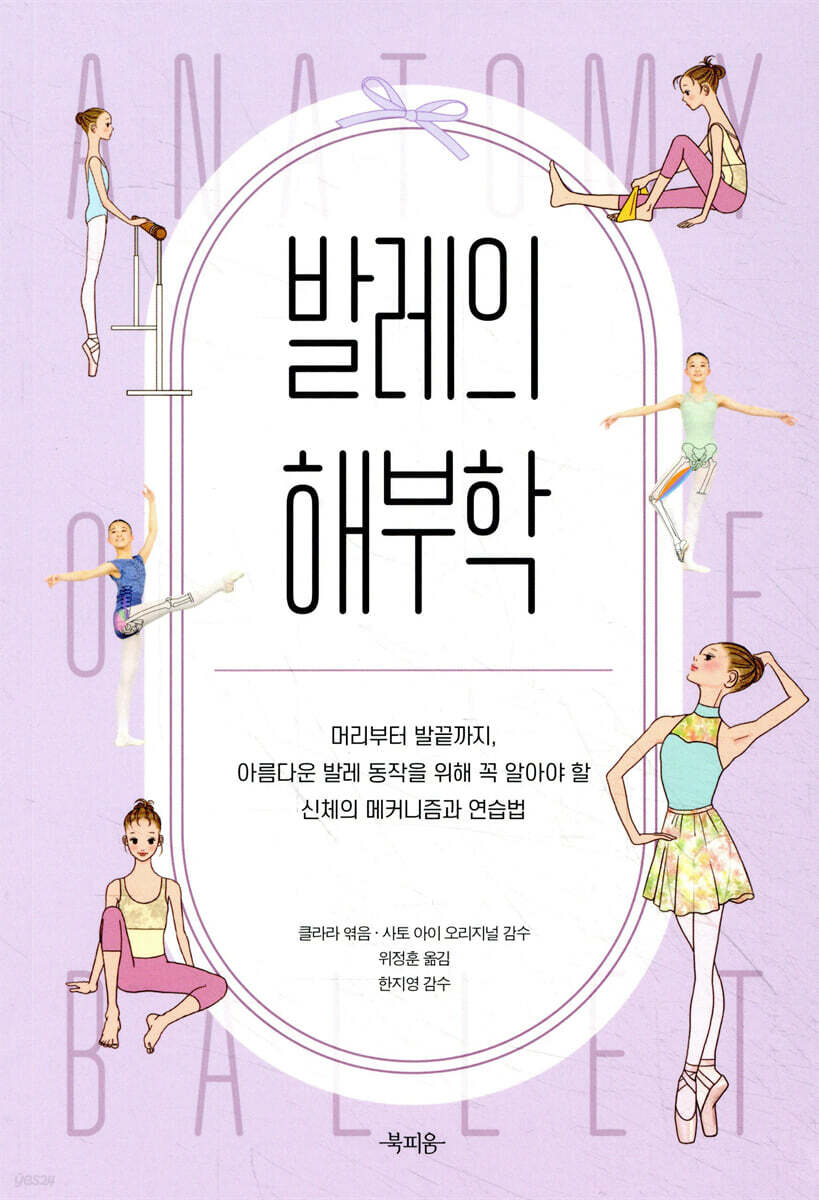
The ballet boom is strong.
Many people start ballet as a hobby as adults and then become completely captivated by its charm. Many toddlers and elementary school students also learn ballet because it helps them develop a beautiful body, correct their posture, and grow taller.
Ballet, an art form symbolizing the extremes of beauty, has come down to earth and come to us from heaven.
People who are romantic about ballet will start learning ballet imagining themselves wearing pointe shoes, a white tutu, and striking wonderful poses like arabesques or attitudes.
But once you start learning, the difficult struggle begins.
And then, you realize.
There is no royal road to ballet.
Ballet, or the ballet movements we think of in our heads, is a series of difficulties, starting from the most basic postures that must be achieved.
This is because the way ballet uses the body is ‘unusual’.
Many people start ballet as a hobby as adults and then become completely captivated by its charm. Many toddlers and elementary school students also learn ballet because it helps them develop a beautiful body, correct their posture, and grow taller.
Ballet, an art form symbolizing the extremes of beauty, has come down to earth and come to us from heaven.
People who are romantic about ballet will start learning ballet imagining themselves wearing pointe shoes, a white tutu, and striking wonderful poses like arabesques or attitudes.
But once you start learning, the difficult struggle begins.
And then, you realize.
There is no royal road to ballet.
Ballet, or the ballet movements we think of in our heads, is a series of difficulties, starting from the most basic postures that must be achieved.
This is because the way ballet uses the body is ‘unusual’.
- You can preview some of the book's contents.
Preview
index
Recommendations from Ballet Influencers
preface
Check before class! Muscles and bones used in ballet
Check out the ballet standing technique before class!
Lesson 1 Leg Position: Six Muscles of the Spine and Hips
Lesson 2 Arm Position: Shoulder Joint, Chest Muscles
Lesson 3 Plie: Adductors, Leg Muscles
Lesson 4: Tangdui: Foot bones, soleus muscles
Lesson 5: Abdominals, Adductors
Lesson 6 Long de Jangbe a Terre: Pelvis, Hip Joints
Lesson 7 Fondue: Knee Joints, Ischial Bones
Lesson 8: Long stretches of the psoas major and obliques
Lesson 9 Frappe: Muscles of the Toe Joints and Peach Bone
Lesson 10: Petit Bateman: Muscles of the Ankle and Back of the Thigh
Lesson 11: Devlopé: Psoas and gluteal muscles
Lesson 12 Grand Bateman: Latissimus dorsi, leg muscles
Special Lesson: Standing Correctly in Pointe Shoes: Peach Bone Muscles, Proprioceptive Muscles of the Foot, Leg Bones
Conclusion
Original notation of ballet terms in this book
Special Appendix
preface
Check before class! Muscles and bones used in ballet
Check out the ballet standing technique before class!
Lesson 1 Leg Position: Six Muscles of the Spine and Hips
Lesson 2 Arm Position: Shoulder Joint, Chest Muscles
Lesson 3 Plie: Adductors, Leg Muscles
Lesson 4: Tangdui: Foot bones, soleus muscles
Lesson 5: Abdominals, Adductors
Lesson 6 Long de Jangbe a Terre: Pelvis, Hip Joints
Lesson 7 Fondue: Knee Joints, Ischial Bones
Lesson 8: Long stretches of the psoas major and obliques
Lesson 9 Frappe: Muscles of the Toe Joints and Peach Bone
Lesson 10: Petit Bateman: Muscles of the Ankle and Back of the Thigh
Lesson 11: Devlopé: Psoas and gluteal muscles
Lesson 12 Grand Bateman: Latissimus dorsi, leg muscles
Special Lesson: Standing Correctly in Pointe Shoes: Peach Bone Muscles, Proprioceptive Muscles of the Foot, Leg Bones
Conclusion
Original notation of ballet terms in this book
Special Appendix
Detailed image
Into the book
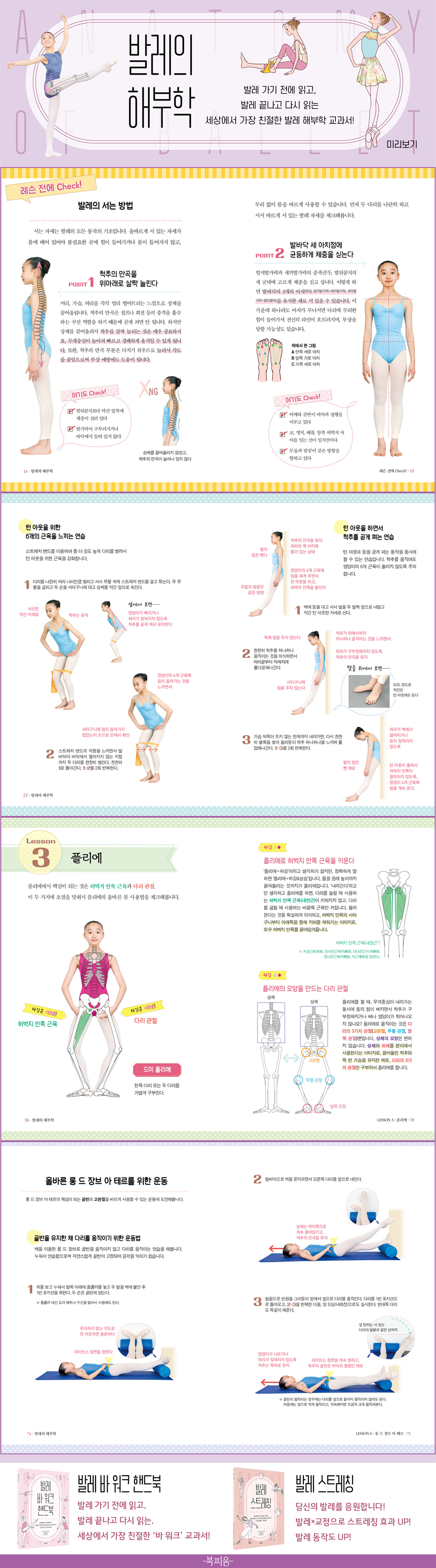
Distribute your weight evenly across the three arches of your feet - the metatarsal heads of your big toe, little toe, and heel.
This allows you to stand while maintaining the three arches of your foot (arch of the foot, big toe to little toe, little toe to heel).
If even one of these arches collapses, excessive force will be applied to the legs, disrupting the lines of the entire body and possibly causing injury.
--- p.15
Turn out is not a 'posture' where your legs are turned outwards from your groin, but rather a 'movement' where your legs are turned outwards from your groin.
So there's no need to aim for perfect form.
Since there are steps in ballet that do not involve a turn out, it is important to turn out when there are steps that require a turn out while moving rather than always dancing ballet with a turn out.
--- p.24
It is easy to think that 'plié = descent', but to be precise, it is 'plié = descent & ascent'.
Plie is the act of raising the body to its original height.
If you only think about 'going down' and do the plie, the inner thigh muscles (adductors) used to extend the legs will not grow, and only the outer thigh muscles used to bend the legs will grow.
Be sure to be conscious of the fact that it is coming up, and pull the inner thighs on both sides with the image of zipping up from the groin area on the inner thighs downwards.
--- p.39
When we think of abdominal muscles (abdominal muscles), we tend to think only of the abdominal muscles at the front of the body, but in fact, there are three muscles deep within that wrap around the stomach like a corset from the sides or obliquely upwards.
These four muscles support the torso by connecting the ribs and pelvis, so if you don't use them, your torso will sway during the joo-te and you won't be able to move your legs quickly.
Try doing the jute while supporting your torso with the awareness of connecting your ribs and pelvis straight with your abdominal muscles.
This allows you to stand while maintaining the three arches of your foot (arch of the foot, big toe to little toe, little toe to heel).
If even one of these arches collapses, excessive force will be applied to the legs, disrupting the lines of the entire body and possibly causing injury.
--- p.15
Turn out is not a 'posture' where your legs are turned outwards from your groin, but rather a 'movement' where your legs are turned outwards from your groin.
So there's no need to aim for perfect form.
Since there are steps in ballet that do not involve a turn out, it is important to turn out when there are steps that require a turn out while moving rather than always dancing ballet with a turn out.
--- p.24
It is easy to think that 'plié = descent', but to be precise, it is 'plié = descent & ascent'.
Plie is the act of raising the body to its original height.
If you only think about 'going down' and do the plie, the inner thigh muscles (adductors) used to extend the legs will not grow, and only the outer thigh muscles used to bend the legs will grow.
Be sure to be conscious of the fact that it is coming up, and pull the inner thighs on both sides with the image of zipping up from the groin area on the inner thighs downwards.
--- p.39
When we think of abdominal muscles (abdominal muscles), we tend to think only of the abdominal muscles at the front of the body, but in fact, there are three muscles deep within that wrap around the stomach like a corset from the sides or obliquely upwards.
These four muscles support the torso by connecting the ribs and pelvis, so if you don't use them, your torso will sway during the joo-te and you won't be able to move your legs quickly.
Try doing the jute while supporting your torso with the awareness of connecting your ribs and pelvis straight with your abdominal muscles.
--- p.61
Publisher's Review
Remember that plie is the 'adductor', tangdwi is the 'proprioceptor', and jute is the 'abdominal'.
So, to do ballet properly, basic knowledge of anatomy is essential.
"Anatomy of Ballet" is a gem of a book that explains in detail how "ballet muscles" work in each movement from an anatomical perspective, helping you create precise and beautiful ballet movements and perform ballet safely without injury.
In ballet, muscles, bones, and joints are used differently than in everyday life, so the terms "ballet muscles" and "ballet joints" are often used.
From the standing posture in ballet, you must use these ballet muscles.
The long, slender necks and slender figures of ballerinas begin with the ballet's characteristic standing posture.
In the standing position of ballet, the upper body is raised with the feeling of the head, chest, and waist being far apart. It is very important to raise the upper body and slightly lengthen the spine at this time.
This is because the center of gravity must be raised to allow for quick and nimble movement.
The correct ballet standing posture is the first secret to a beautiful ballerina's body.
To perform the plie, which is one of the most basic movements in ballet, you need strength in the inner thigh muscles and proper movement of the leg joints, and when performing the tangdwi, the foot bones and the intrinsic muscles of the sole are key.
In the jute, the core is the abdominals and inner thigh muscles, while in the long de jangbe à terre, the core is the pelvis and hip joints.
『Anatomy of Ballet』 starts with the standing posture and explains the principles of 12 ballet movements, including correct leg and arm positions, plié, tandu, fondue, rond de zanve, frappe, deblopé, and batteman, as well as the structure of our body, through illustrations. It also presents 33 exercises to help you perform the movements well, with photos and videos as appendices.
Another great advantage is that it includes the correct posture when wearing pointe shoes (toe shoes), which is the greatest dream and goal of amateur ballet dancers, and muscle strengthening exercises to properly wear pointe shoes.
If you memorize which muscles, bones, and joints are involved in each movement, from the plié to the battement, which is an essential course of ballet barre work and a 'warm-up' for center work, ballet will become much easier and safer.
From now on, when you do barre work, try to visualize the exact matching of ballet movements and ballet muscles in your head.
They are called 'Plie - Adductor', 'Tandui - Proprioceptor', 'Jute - Abdominal and Adductor', and 'Longe de Jangve a Terre - Pelvis and Hip Joint'.
The beautiful combination of 'muscles' and 'movement' - ballet becomes easier when you know anatomy!
In this way, 『Anatomy of Ballet』 presents the body usage in ballet in an intuitive way through neat color illustrations and abundant pictures, so it helps ballet beginners learn accurate ballet movements more quickly, and helps those with 2-3 years of ballet experience to perform smoother and more beautiful movements.
If there are movements that you can't seem to improve even after practicing ballet for a long time, following the solutions presented in the book will definitely be effective.
It can be a very helpful teaching material not only for ballet learners but also for teachers.
If you want to make barre work easier and center work smooth and elegant, be sure to pack "Anatomy of Ballet" in your ballet bag along with your leotard, tights, and shoes.
This is another essential ballet book that you can read before going to the ballet and read again afterward.
So, to do ballet properly, basic knowledge of anatomy is essential.
"Anatomy of Ballet" is a gem of a book that explains in detail how "ballet muscles" work in each movement from an anatomical perspective, helping you create precise and beautiful ballet movements and perform ballet safely without injury.
In ballet, muscles, bones, and joints are used differently than in everyday life, so the terms "ballet muscles" and "ballet joints" are often used.
From the standing posture in ballet, you must use these ballet muscles.
The long, slender necks and slender figures of ballerinas begin with the ballet's characteristic standing posture.
In the standing position of ballet, the upper body is raised with the feeling of the head, chest, and waist being far apart. It is very important to raise the upper body and slightly lengthen the spine at this time.
This is because the center of gravity must be raised to allow for quick and nimble movement.
The correct ballet standing posture is the first secret to a beautiful ballerina's body.
To perform the plie, which is one of the most basic movements in ballet, you need strength in the inner thigh muscles and proper movement of the leg joints, and when performing the tangdwi, the foot bones and the intrinsic muscles of the sole are key.
In the jute, the core is the abdominals and inner thigh muscles, while in the long de jangbe à terre, the core is the pelvis and hip joints.
『Anatomy of Ballet』 starts with the standing posture and explains the principles of 12 ballet movements, including correct leg and arm positions, plié, tandu, fondue, rond de zanve, frappe, deblopé, and batteman, as well as the structure of our body, through illustrations. It also presents 33 exercises to help you perform the movements well, with photos and videos as appendices.
Another great advantage is that it includes the correct posture when wearing pointe shoes (toe shoes), which is the greatest dream and goal of amateur ballet dancers, and muscle strengthening exercises to properly wear pointe shoes.
If you memorize which muscles, bones, and joints are involved in each movement, from the plié to the battement, which is an essential course of ballet barre work and a 'warm-up' for center work, ballet will become much easier and safer.
From now on, when you do barre work, try to visualize the exact matching of ballet movements and ballet muscles in your head.
They are called 'Plie - Adductor', 'Tandui - Proprioceptor', 'Jute - Abdominal and Adductor', and 'Longe de Jangve a Terre - Pelvis and Hip Joint'.
The beautiful combination of 'muscles' and 'movement' - ballet becomes easier when you know anatomy!
In this way, 『Anatomy of Ballet』 presents the body usage in ballet in an intuitive way through neat color illustrations and abundant pictures, so it helps ballet beginners learn accurate ballet movements more quickly, and helps those with 2-3 years of ballet experience to perform smoother and more beautiful movements.
If there are movements that you can't seem to improve even after practicing ballet for a long time, following the solutions presented in the book will definitely be effective.
It can be a very helpful teaching material not only for ballet learners but also for teachers.
If you want to make barre work easier and center work smooth and elegant, be sure to pack "Anatomy of Ballet" in your ballet bag along with your leotard, tights, and shoes.
This is another essential ballet book that you can read before going to the ballet and read again afterward.
GOODS SPECIFICS
- Date of issue: January 22, 2025
- Page count, weight, size: 168 pages | 318g | 150*220*11mm
- ISBN13: 9791198762948
- ISBN10: 1198762942
You may also like
카테고리
korean


korean

![GQ KOREA Mark (Monthly): December [2025]](http://librairie.coreenne.fr/cdn/shop/files/8ef265dbbfbf186523ed75ba7319009d.jpg?v=1765340328&width=3840)


