

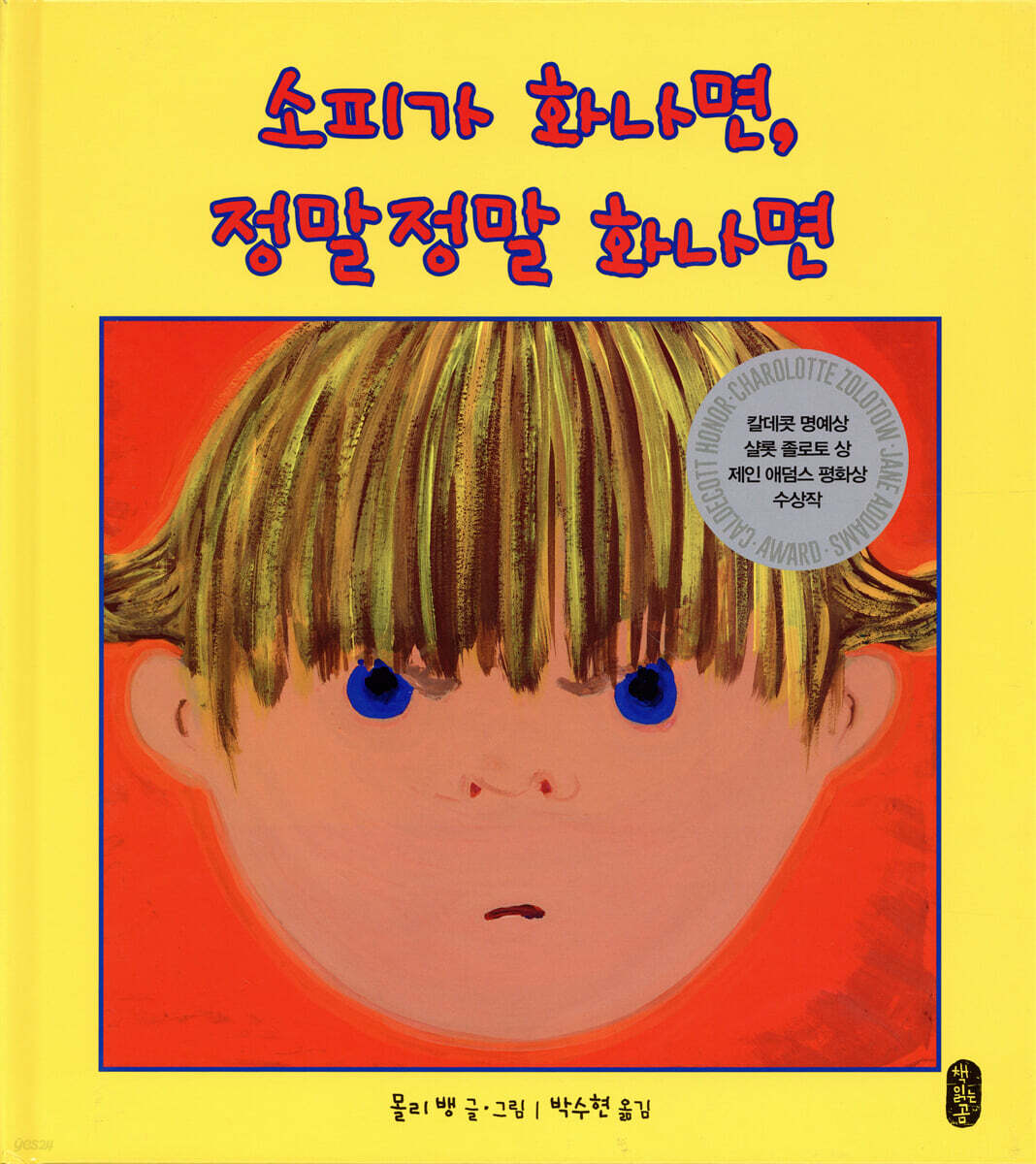
When Sophie gets angry, she gets really, really angry
 |
Description
Book Introduction
Winner of the Caldecott Honor, Charlotte Zolotow Award, and Jane Addams Peace Award
One of the reasons this picture book is so beloved is that it vividly depicts children's anger with strong lines and colors that even children who can't read can quickly recognize.
While the text describes the situation calmly, concisely, and without fuss, the illustrations are vibrant and reveal Sophie's emotions as they are.
But as I turn the pages of the book, my mind lost in the picture, by the time I close the book, my anger, like Sophie's, has subsided.
Because books know my heart.
Anger tends to disappear as soon as someone, whether it be myself, someone else, or even a book, recognizes it.
For that reason alone, this book deserves to be called one of the greatest picture books of this century.
It is said that many of Molly Bang's picture books were inspired by her daughter Monica (Monica Bang Campbell is said to have become a children's book writer under the influence of her mother).
The most representative example is "When Sophie Gets Angry, Really, Really Angry."
The reason this book has resonated with and been supported by countless children over a long period of time is probably because it was written and illustrated with the intention of observing children closely and understanding their feelings.
One of the reasons this picture book is so beloved is that it vividly depicts children's anger with strong lines and colors that even children who can't read can quickly recognize.
While the text describes the situation calmly, concisely, and without fuss, the illustrations are vibrant and reveal Sophie's emotions as they are.
But as I turn the pages of the book, my mind lost in the picture, by the time I close the book, my anger, like Sophie's, has subsided.
Because books know my heart.
Anger tends to disappear as soon as someone, whether it be myself, someone else, or even a book, recognizes it.
For that reason alone, this book deserves to be called one of the greatest picture books of this century.
It is said that many of Molly Bang's picture books were inspired by her daughter Monica (Monica Bang Campbell is said to have become a children's book writer under the influence of her mother).
The most representative example is "When Sophie Gets Angry, Really, Really Angry."
The reason this book has resonated with and been supported by countless children over a long period of time is probably because it was written and illustrated with the intention of observing children closely and understanding their feelings.
- You can preview some of the book's contents.
Preview
Detailed image
Publisher's Review
Winner of the Caldecott Honor, Charlotte Zolotow Award, and Jane Addams Peace Award
When Sophie gets angry, she runs outside.
I climb my favorite tree,
People deal with anger in different ways.
What do you do when you get angry?
As we live in this world, there are more than one or two things that make us angry.
I wonder if there is even a single day that goes by without me getting angry.
I don't think that would be much different for children.
I get angry because it seems like my parents only take my older sibling's side, I get angry because I can't have what I want, I get angry because it seems like no one understands my feelings...
The reason Sophie is upset today is because of her sister and mother.
While Sophie was playing, her sister came over and grabbed the gorilla doll.
“It’s my turn!” he said.
That alone is infuriating, but my mom is taking my sister's side, making me even more angry.
“It’s your turn now, Sophie,” he said.
As soon as Mom finished speaking, my sister snatched the doll away.
As a result, Sophie falls over onto the toy truck.
That was the moment when my anger exploded.
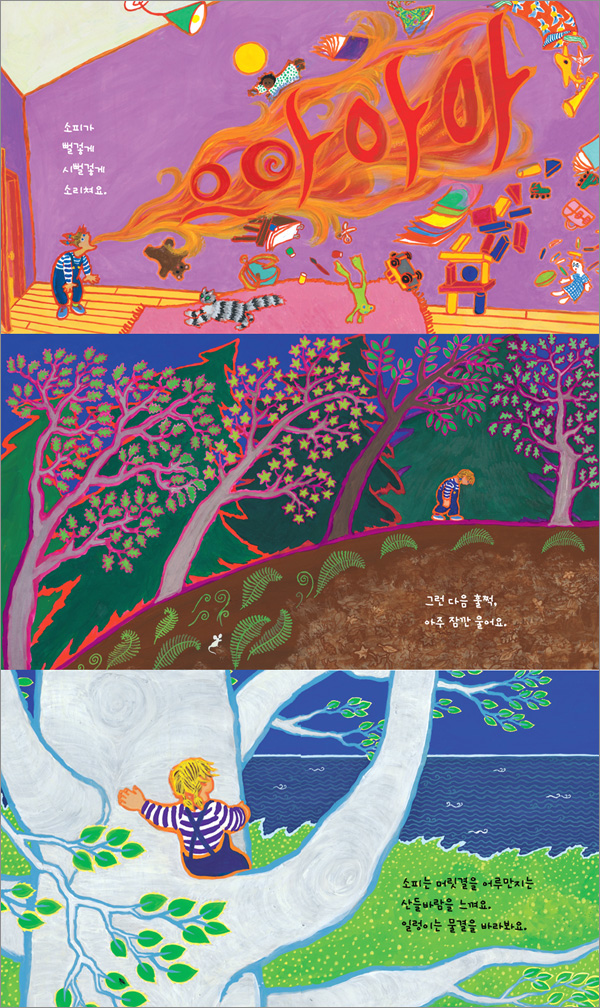
Sophie's blue eyes turn even bluer, and she stamps her feet, swings her fists, and screams.
“Eww!” He screams, turning red and bloodshot.
Then I run out of the house and run, run, run until my legs give out and I collapse.
The place Sophie ran so hard to reach was the forest near her house.
Sophie walks along the forest path and cries, just for a moment.
When anger subsides, sadness tends to creep in.
Then, trees, rocks, and ferns that had never been seen before come into view, and the sounds of birds that had never been heard before come into my ears.
Sophie walks slowly along the forest path to find a beautiful beech tree.
As you sit on the oak tree, feeling the breeze caressing your hair and watching the waves ripple, your anger seems to wash away and happiness comes over you.
No one can live without getting angry.
If you hold in your anger, you will become sick.
So what should we do with that anger? Anger is like a tantrum, so pretending not to notice or trying to suppress it only causes bigger problems.
Just like Sophie, you need to understand my angry heart, comfort me, and let me go.
Then you can regain the small happinesses that you missed when anger blocked your vision.
Just as Sophie returned home in a good mood, seeing trees, rocks, and ferns that she had not seen before, and hearing the sounds of birds and squirrels that she had not heard at first.
One of the greatest charms of "When Sophie Gets Angry, Really, Really Angry" is that it vividly expresses children's anger with strong lines and colors that even children who can't read can immediately recognize.
While the text describes the situation calmly, concisely, and without fuss, the illustrations are vibrant and reveal Sophie's emotions as they are.
But as I turn the pages of the book, my mind lost in the picture, by the time I close the book, my anger, like Sophie's, has subsided.
Because books know my heart.
Anger tends to disappear as soon as someone, whether it be myself, someone else, or even a book, recognizes it.
For that reason alone, this book deserves to be called one of the greatest picture books of this century.
It is said that many of Molly Bang's picture books were inspired by her daughter Monica (Monica Bang Campbell is said to have become a children's book writer under the influence of her mother).
The most representative example is "When Sophie Gets Angry, Really, Really Angry."
The reason this book has resonated with and been supported by countless children over a long period of time is probably because it was written and illustrated with the intention of observing children closely and understanding their feelings.
When Sophie gets angry, she runs outside.
I climb my favorite tree,
People deal with anger in different ways.
What do you do when you get angry?
As we live in this world, there are more than one or two things that make us angry.
I wonder if there is even a single day that goes by without me getting angry.
I don't think that would be much different for children.
I get angry because it seems like my parents only take my older sibling's side, I get angry because I can't have what I want, I get angry because it seems like no one understands my feelings...
The reason Sophie is upset today is because of her sister and mother.
While Sophie was playing, her sister came over and grabbed the gorilla doll.
“It’s my turn!” he said.
That alone is infuriating, but my mom is taking my sister's side, making me even more angry.
“It’s your turn now, Sophie,” he said.
As soon as Mom finished speaking, my sister snatched the doll away.
As a result, Sophie falls over onto the toy truck.
That was the moment when my anger exploded.
Sophie's blue eyes turn even bluer, and she stamps her feet, swings her fists, and screams.
“Eww!” He screams, turning red and bloodshot.
Then I run out of the house and run, run, run until my legs give out and I collapse.
The place Sophie ran so hard to reach was the forest near her house.
Sophie walks along the forest path and cries, just for a moment.
When anger subsides, sadness tends to creep in.
Then, trees, rocks, and ferns that had never been seen before come into view, and the sounds of birds that had never been heard before come into my ears.
Sophie walks slowly along the forest path to find a beautiful beech tree.
As you sit on the oak tree, feeling the breeze caressing your hair and watching the waves ripple, your anger seems to wash away and happiness comes over you.
No one can live without getting angry.
If you hold in your anger, you will become sick.
So what should we do with that anger? Anger is like a tantrum, so pretending not to notice or trying to suppress it only causes bigger problems.
Just like Sophie, you need to understand my angry heart, comfort me, and let me go.
Then you can regain the small happinesses that you missed when anger blocked your vision.
Just as Sophie returned home in a good mood, seeing trees, rocks, and ferns that she had not seen before, and hearing the sounds of birds and squirrels that she had not heard at first.
One of the greatest charms of "When Sophie Gets Angry, Really, Really Angry" is that it vividly expresses children's anger with strong lines and colors that even children who can't read can immediately recognize.
While the text describes the situation calmly, concisely, and without fuss, the illustrations are vibrant and reveal Sophie's emotions as they are.
But as I turn the pages of the book, my mind lost in the picture, by the time I close the book, my anger, like Sophie's, has subsided.
Because books know my heart.
Anger tends to disappear as soon as someone, whether it be myself, someone else, or even a book, recognizes it.
For that reason alone, this book deserves to be called one of the greatest picture books of this century.
It is said that many of Molly Bang's picture books were inspired by her daughter Monica (Monica Bang Campbell is said to have become a children's book writer under the influence of her mother).
The most representative example is "When Sophie Gets Angry, Really, Really Angry."
The reason this book has resonated with and been supported by countless children over a long period of time is probably because it was written and illustrated with the intention of observing children closely and understanding their feelings.
GOODS SPECIFICS
- Publication date: November 26, 2013
- Format: Hardcover book binding method guide
- Page count, weight, size: 32 pages | 410g | 228*225*15mm
- ISBN13: 9788993242935
- ISBN10: 8993242933
You may also like
카테고리
korean


korean

![GQ KOREA Mark (Monthly): December [2025]](http://librairie.coreenne.fr/cdn/shop/files/8ef265dbbfbf186523ed75ba7319009d.jpg?v=1765340328&width=3840)


