

The power of flexibility
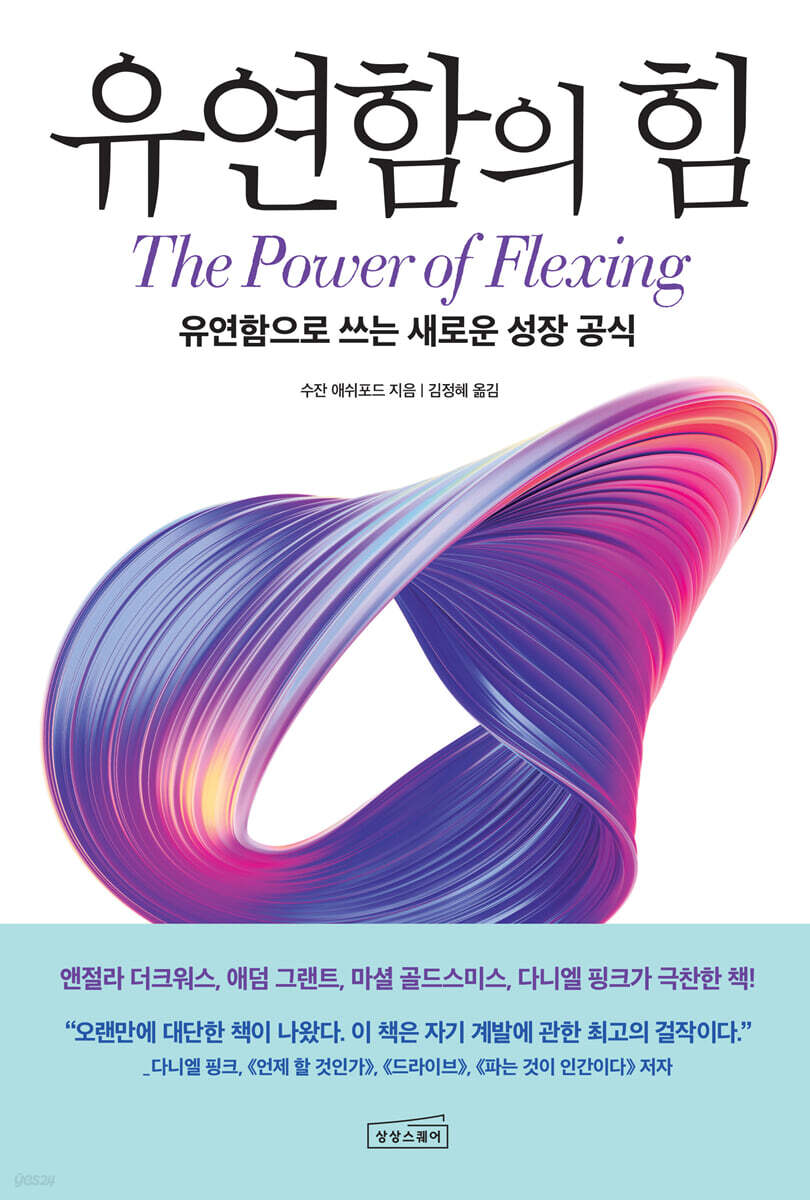 |
Description
Book Introduction
The Secrets to Success from a Leadership Expert with Decades of Experience Simple tips to change your behavior, develop soft skills, and grow in work and life. Try the 'Technique of Flexibility', a small experiment in everyday life! ■ You suddenly become a leader without preparation due to personnel changes within the organization. ■ Your boss points out that you seem inhuman during a meeting. ■ To make a project successful, you need to gain support from the local community. ■ I am very embarrassed because I am facing unexpected difficulties while raising my children. If you've encountered unexpected obstacles or want to develop your interpersonal skills for growth, look no further. By applying the 'art of flexibility', anyone can become the master of growth and self-development. The first step on Ashford's growth journey is to set goals for increased flexibility. You can decide for yourself what you want to learn and how you want to change. Next, create an experimental plan, put it into practice, and ask people around you for feedback on the experiment. Additionally, you can observe and track the progress throughout the process and modify the experiment as needed. The art of flexibility is a fundamental framework that guides the path to growth, and can be modified to suit your own circumstances at any time. The beauty of this technology lies in leveraging the lessons learned from your own experiences in the future. The Art of Flexibility is a comprehensive toolset of practical methods for maintaining a growth mindset in life and work, and a shortcut to realizing your best self. Ashford's practical, up-to-date growth guide provides the perfect answer to these challenges. Whether you're an individual or an organization, this book will serve as a solid guide when you seek to maximize your capabilities. |
- You can preview some of the book's contents.
Preview
index
About the Author
About the Translator
Prologue: Why We Need the Art of Flexibility
Chapter 1.
Experience is the best teacher: only the flexible learn from experience.
Chapter 2.
A Mindset That Invites Learning: Experience is the Mother of Learning
Chapter 3.
How to Kill Two Birds: Performance and Growth: Focus Your Learning on Flexibility Goals
Chapter 4.
Unleash Your Inner Scientist: Planning and Conducting Experiments
Chapter 5.
Build a Growth Community: Feedback Maximizes Learning
Chapter 6.
Find meaning in your experiences: Look far ahead and reflect systematically.
Chapter 7.
How to Use Emotions as Learning Lever: Become the Master of Your Emotions, Not Their Slave
Chapter 8.
Don't be swayed by your circumstances, use them: Find lessons even in painful experiences.
Chapter 9.
Become a coach who teaches the art of flexibility: To create a society that grows together.
Chapter 10.
Flexibility is the competitive edge of organizations: Employee development programs that leverage the skills of flexibility.
Chapter 11.
Learning Organizations and the Art of Flexibility: The Case of Microsoft
Epilogue: To continue growing life
Acknowledgements
References
About the Translator
Prologue: Why We Need the Art of Flexibility
Chapter 1.
Experience is the best teacher: only the flexible learn from experience.
Chapter 2.
A Mindset That Invites Learning: Experience is the Mother of Learning
Chapter 3.
How to Kill Two Birds: Performance and Growth: Focus Your Learning on Flexibility Goals
Chapter 4.
Unleash Your Inner Scientist: Planning and Conducting Experiments
Chapter 5.
Build a Growth Community: Feedback Maximizes Learning
Chapter 6.
Find meaning in your experiences: Look far ahead and reflect systematically.
Chapter 7.
How to Use Emotions as Learning Lever: Become the Master of Your Emotions, Not Their Slave
Chapter 8.
Don't be swayed by your circumstances, use them: Find lessons even in painful experiences.
Chapter 9.
Become a coach who teaches the art of flexibility: To create a society that grows together.
Chapter 10.
Flexibility is the competitive edge of organizations: Employee development programs that leverage the skills of flexibility.
Chapter 11.
Learning Organizations and the Art of Flexibility: The Case of Microsoft
Epilogue: To continue growing life
Acknowledgements
References
Detailed image

Into the book
The art of flexibility guides you to be more efficient in your work and life.
In other words, it is effective not only for individuals but also for members of an organization, and anyone can demonstrate more effective leadership.
---From "Prologue - Why We Need the Skill of Flexibility" p.12
Everyone has the same desire to do well at work.
However, the performance-proving mindset is nothing more or less than a desire to prove to others how great one is.
If you focus solely on proving your abilities, actions that will benefit you in the long run may be pushed to the back burner.
---From "Chapter 2, Mindset that Invites Learning - Experience is the Mother of Learning" p.73
When we find purpose in our suffering, whether psychological or physical, we seek change to reduce the suffering we inflict on ourselves and those around us.
For this reason, if you set specific goals for yourself that you want to achieve in your future experiences, pain can become a powerful stimulus for growth.
---From "Chapter 3, How to Kill Two Birds: Performance and Growth - Focus Learning on the Goal of Strengthening Flexibility" p.114
Make regular reflection a part of your daily life.
Soon, you'll accept the slight discomfort that comes with unfamiliar awareness as a sign that you're learning and growing.
And eventually, you will welcome that discomfort with open arms.
---From "Chapter 6, Find Meaning in Experience - Reflect Systematically with a Long-Term Perspective" p.234
Rotation programs that incorporate flexibility have a long-term impact on employees.
Even after new employees have shed their rookie labels, they join specific groups to form strong intellectual, social, and psychological bonds and share learning, growth, and challenging experiences.
Moreover, whether employees or leaders, they build strong relationships based on two commonalities: having long learned the art of flexibility and being well-versed in the process of self-growth.
That relationship itself becomes a strong support that allows them to continue to grow.
Even other employees have the potential to grow by emulating them as role models.
---From "Chapter 10, Flexibility is the Organization's Competitive Edge - Employee Development Programs Using Flexibility Technologies" p.352
To grow, you must delve deeper into who you are.
You also have to take risks and think of yourself as less than perfect in your efforts to become better.
And we must recognize and dissect the areas of our mind and spirit that need improvement.
Arming yourself with a learning mindset can help you navigate those sometimes painful challenges more easily.
In other words, it is effective not only for individuals but also for members of an organization, and anyone can demonstrate more effective leadership.
---From "Prologue - Why We Need the Skill of Flexibility" p.12
Everyone has the same desire to do well at work.
However, the performance-proving mindset is nothing more or less than a desire to prove to others how great one is.
If you focus solely on proving your abilities, actions that will benefit you in the long run may be pushed to the back burner.
---From "Chapter 2, Mindset that Invites Learning - Experience is the Mother of Learning" p.73
When we find purpose in our suffering, whether psychological or physical, we seek change to reduce the suffering we inflict on ourselves and those around us.
For this reason, if you set specific goals for yourself that you want to achieve in your future experiences, pain can become a powerful stimulus for growth.
---From "Chapter 3, How to Kill Two Birds: Performance and Growth - Focus Learning on the Goal of Strengthening Flexibility" p.114
Make regular reflection a part of your daily life.
Soon, you'll accept the slight discomfort that comes with unfamiliar awareness as a sign that you're learning and growing.
And eventually, you will welcome that discomfort with open arms.
---From "Chapter 6, Find Meaning in Experience - Reflect Systematically with a Long-Term Perspective" p.234
Rotation programs that incorporate flexibility have a long-term impact on employees.
Even after new employees have shed their rookie labels, they join specific groups to form strong intellectual, social, and psychological bonds and share learning, growth, and challenging experiences.
Moreover, whether employees or leaders, they build strong relationships based on two commonalities: having long learned the art of flexibility and being well-versed in the process of self-growth.
That relationship itself becomes a strong support that allows them to continue to grow.
Even other employees have the potential to grow by emulating them as role models.
---From "Chapter 10, Flexibility is the Organization's Competitive Edge - Employee Development Programs Using Flexibility Technologies" p.352
To grow, you must delve deeper into who you are.
You also have to take risks and think of yourself as less than perfect in your efforts to become better.
And we must recognize and dissect the areas of our mind and spirit that need improvement.
Arming yourself with a learning mindset can help you navigate those sometimes painful challenges more easily.
---From "Epilogue - To Continue a Growing Life" p.406
Publisher's Review
Continuous growth is the only shortcut to success!
A guide for anyone who dreams of a life filled with success and fulfillment.
Everyone dreams of a better future than the present.
Everyone wants to achieve their personal goals, do well at work, and be recognized by others.
However, today, everything surrounding us is changing rapidly, and as we go through life, we are bound to face unexpected difficulties.
When faced with a seemingly insurmountable challenge, some overcome it and grow from that experience, while others become frustrated and give up.
When you're faced with a new challenge, completely unprepared, or facing challenges in unexpected ways, how can you overcome your fears and move toward success?
The goal of this book is to teach you how to continuously learn and grow from every experience in life.
This is true not only from a personal perspective but also from a business perspective.
The author believes that everyone can grow and become more effective than they are now.
Growth occurs through processes such as careful action and reflection, reflection on successes and failures, time to process emotions, and planning follow-up actions—all of which become skills in flexibility.
Chapters 1 through 8 of the book delve into how to approach problems using flexibility techniques, including learning through experience, developing a learning mindset, experimenting with new behaviors, feedback, and systematic reflection.
First, set goals for yourself about what you want to learn and how you want to change, then create an experiment plan, execute it, and get feedback from those around you.
During the process, you can change the experiment or change the goal at any time depending on the situation.
The important thing is to learn from all those processes and experiences and move forward in a better direction.
Chapters 9 through 11 that follow present ways to grow beyond individuals and build a growth-oriented organizational culture with other members.
The art of flexibility is unique in that it is accessible to everyone and can be learned and grown from every experience of daily life.
You can plan, execute, and reflect on experiments to solve problems in a way that suits your situation and improve them.
It doesn't require a once-in-a-lifetime project or special experience.
You can try to change every experience you encounter in your daily life.
The process is neither difficult nor painful.
It will be an enjoyable process to follow the results of each small experiment.
If you want to succeed and keep up in this world of constant change and competition, if you want to become a better version of yourself than you were yesterday, use the skill of flexibility in your daily life to cultivate continuous learning and growth.
We must not avoid difficulties and constantly learn from failures.
You also need to understand yourself more deeply, face your vulnerabilities, and improve them.
If you repeat this process, you will be able to enjoy every experience and grow even if you are thrown into a new situation without any preparation.
A guide for anyone who dreams of a life filled with success and fulfillment.
Everyone dreams of a better future than the present.
Everyone wants to achieve their personal goals, do well at work, and be recognized by others.
However, today, everything surrounding us is changing rapidly, and as we go through life, we are bound to face unexpected difficulties.
When faced with a seemingly insurmountable challenge, some overcome it and grow from that experience, while others become frustrated and give up.
When you're faced with a new challenge, completely unprepared, or facing challenges in unexpected ways, how can you overcome your fears and move toward success?
The goal of this book is to teach you how to continuously learn and grow from every experience in life.
This is true not only from a personal perspective but also from a business perspective.
The author believes that everyone can grow and become more effective than they are now.
Growth occurs through processes such as careful action and reflection, reflection on successes and failures, time to process emotions, and planning follow-up actions—all of which become skills in flexibility.
Chapters 1 through 8 of the book delve into how to approach problems using flexibility techniques, including learning through experience, developing a learning mindset, experimenting with new behaviors, feedback, and systematic reflection.
First, set goals for yourself about what you want to learn and how you want to change, then create an experiment plan, execute it, and get feedback from those around you.
During the process, you can change the experiment or change the goal at any time depending on the situation.
The important thing is to learn from all those processes and experiences and move forward in a better direction.
Chapters 9 through 11 that follow present ways to grow beyond individuals and build a growth-oriented organizational culture with other members.
The art of flexibility is unique in that it is accessible to everyone and can be learned and grown from every experience of daily life.
You can plan, execute, and reflect on experiments to solve problems in a way that suits your situation and improve them.
It doesn't require a once-in-a-lifetime project or special experience.
You can try to change every experience you encounter in your daily life.
The process is neither difficult nor painful.
It will be an enjoyable process to follow the results of each small experiment.
If you want to succeed and keep up in this world of constant change and competition, if you want to become a better version of yourself than you were yesterday, use the skill of flexibility in your daily life to cultivate continuous learning and growth.
We must not avoid difficulties and constantly learn from failures.
You also need to understand yourself more deeply, face your vulnerabilities, and improve them.
If you repeat this process, you will be able to enjoy every experience and grow even if you are thrown into a new situation without any preparation.
GOODS SPECIFICS
- Date of issue: May 10, 2023
- Page count, weight, size: 448 pages | 652g | 152*225*22mm
- ISBN13: 9791192389073
- ISBN10: 1192389077
You may also like
카테고리
korean


korean

![GQ KOREA Mark (Monthly): December [2025]](http://librairie.coreenne.fr/cdn/shop/files/8ef265dbbfbf186523ed75ba7319009d.jpg?v=1765340328&width=3840)


