

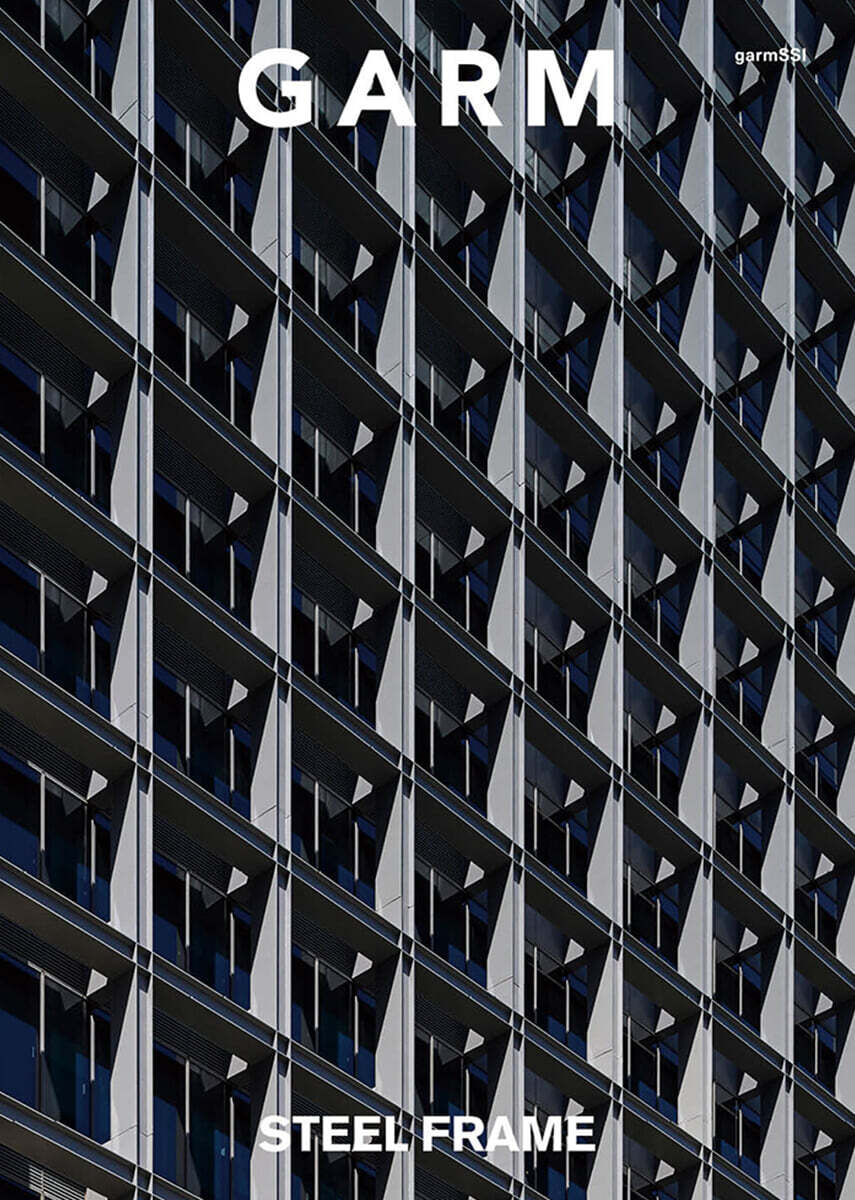
GARM Magazine 26. Steel Frame
 |
Description
Book Introduction
In an era of rising construction costs, what are the alternatives? "GARM 26 Steel Structure"
'GARM', which means material in pure Korean, is a one-topic magazine series that introduces one building material and construction technology per volume.
Starting with an exploration of materials and technologies, the smallest units of architecture, we guide you through the minimal methods of creating your own space.
The new book, "GARM 26 Steel Structure," begins with the real-world concerns facing the domestic architecture and construction industry.
The per-unit construction cost of large-scale apartment complexes has long since exceeded 10 million won.
At the same time, with labor costs rising at a frightening rate, how can construction companies generate profits through safe and precise construction? Furthermore, how can building owners secure stable profitability?
The answer was surprisingly close.
Steel structures have been excluded from small and medium-sized buildings due to the prejudice that they are expensive.
Steel structures have the advantages of precise construction through factory manufacturing, shortened construction periods, and minimal on-site manpower.
Steel structures, which were often overlooked due to their reinforced concrete-centered construction infrastructure and unfamiliar process management, can be competitive regardless of the scale of construction as long as they are meticulously designed and prepared in advance.
'GARM', which means material in pure Korean, is a one-topic magazine series that introduces one building material and construction technology per volume.
Starting with an exploration of materials and technologies, the smallest units of architecture, we guide you through the minimal methods of creating your own space.
The new book, "GARM 26 Steel Structure," begins with the real-world concerns facing the domestic architecture and construction industry.
The per-unit construction cost of large-scale apartment complexes has long since exceeded 10 million won.
At the same time, with labor costs rising at a frightening rate, how can construction companies generate profits through safe and precise construction? Furthermore, how can building owners secure stable profitability?
The answer was surprisingly close.
Steel structures have been excluded from small and medium-sized buildings due to the prejudice that they are expensive.
Steel structures have the advantages of precise construction through factory manufacturing, shortened construction periods, and minimal on-site manpower.
Steel structures, which were often overlooked due to their reinforced concrete-centered construction infrastructure and unfamiliar process management, can be competitive regardless of the scale of construction as long as they are meticulously designed and prepared in advance.
index
1.
Chronicle
14 History
History of steel construction
20 Development
Introduction and evolution of domestic steel structures
2.
Theory & Generalization
26 Genealogy
Type: Seven stories extending from a steel structure
32 Outline
Structure: Chapters of Architecture
38 Element
Absence: Specific materials that realize the steel structure
44 Connection
Connections: Joints and Splices
50 Manufacture
Production: From factory to site
3.
Reportage
58 Record
Steel Frame, a record of production
4.
Project
70 Linear
Refined Lines of Architecture: Teo 101
82 Color
A Red Frame That Illuminates the City: Space Un Gallery
92 Challenge
A lush forest grown from a seed called steel: STEEL TEBAH
104 Frame
Re-examining the Boundaries of Structure and Architecture: HD Hyundai Global R&D Center
122 High-rise
Super-tall building completed with a steel frame system: PARC ONE
5.
Knowledge
140 Protection
Technology to protect structures from fire
144 Technology
Scan to BIM, a technology that changes the design process
150 Q&A
10 Questions About Steel Structures
6.
Supplement
158 Space
Steel Experience: A Space Completed with Structure
Chronicle
14 History
History of steel construction
20 Development
Introduction and evolution of domestic steel structures
2.
Theory & Generalization
26 Genealogy
Type: Seven stories extending from a steel structure
32 Outline
Structure: Chapters of Architecture
38 Element
Absence: Specific materials that realize the steel structure
44 Connection
Connections: Joints and Splices
50 Manufacture
Production: From factory to site
3.
Reportage
58 Record
Steel Frame, a record of production
4.
Project
70 Linear
Refined Lines of Architecture: Teo 101
82 Color
A Red Frame That Illuminates the City: Space Un Gallery
92 Challenge
A lush forest grown from a seed called steel: STEEL TEBAH
104 Frame
Re-examining the Boundaries of Structure and Architecture: HD Hyundai Global R&D Center
122 High-rise
Super-tall building completed with a steel frame system: PARC ONE
5.
Knowledge
140 Protection
Technology to protect structures from fire
144 Technology
Scan to BIM, a technology that changes the design process
150 Q&A
10 Questions About Steel Structures
6.
Supplement
158 Space
Steel Experience: A Space Completed with Structure
Into the book
“Ultimately, ‘steel structure’ is not simply the act of erecting steel; it is a system in which the entire process, from design to manufacturing, transportation, and assembly, is linked in a precise sequence.”
--- p.50
“Ultimately, architects must design in various ways in order to be able to suggest better options to the building owner based on their experience.
To unlock the constraints of a project, it's not enough to rely solely on tools you're comfortable with.
Even if it is an unfamiliar tool, it is necessary to go through the process of directly encountering it and gaining experience.
Especially in a situation like today where labor costs are steadily rising and on-site conditions are challenging, there are clear limitations to using reinforced concrete alone.
“Steel structures can be a sufficient alternative under these realistic conditions,” said Lee Jeong-hoon, principal architect at Joho Architects.
--- p.101
“Not all materials are suitable for digitization.
The irregular surfaces of concrete, the organic grain of wood, and the irregularity of soil make standardization difficult, limiting the direct application of scan data to BIM.
But steel is different.
“The clearly defined cross-sections and the joints distinguished by bolts and welds have a relatively regular and digitally-friendly language.” Kim Ho-joong, CEO of ABIM Architectural Research Institute
--- p.50
“Ultimately, architects must design in various ways in order to be able to suggest better options to the building owner based on their experience.
To unlock the constraints of a project, it's not enough to rely solely on tools you're comfortable with.
Even if it is an unfamiliar tool, it is necessary to go through the process of directly encountering it and gaining experience.
Especially in a situation like today where labor costs are steadily rising and on-site conditions are challenging, there are clear limitations to using reinforced concrete alone.
“Steel structures can be a sufficient alternative under these realistic conditions,” said Lee Jeong-hoon, principal architect at Joho Architects.
--- p.101
“Not all materials are suitable for digitization.
The irregular surfaces of concrete, the organic grain of wood, and the irregularity of soil make standardization difficult, limiting the direct application of scan data to BIM.
But steel is different.
“The clearly defined cross-sections and the joints distinguished by bolts and welds have a relatively regular and digitally-friendly language.” Kim Ho-joong, CEO of ABIM Architectural Research Institute
--- p.148
Publisher's Review
GARM's twenty-sixth story explores the technical, economic, and architectural possibilities of steel structures, reconstructed into six parts: concept, history, technology, project, knowledge, and appendix.
From innovations in steel production technology during the Industrial Revolution to BIM-based design processes in modern architecture.
Could steel structures become the new standard in today's architecture and construction industries?
The domestic steel structure construction projects introduced in this new book are also particularly noteworthy.
'Teo 101', which harmonizes with the aesthetics of unique lines within the existing local context; 'Space Un Gallery', which reveals a bright red presence in the city center; 'STEEL TEBAH', which started and ended with steel; 'HD Hyundai Global R&D Center', which embodies steel structure as an architectural language; and 'PARC ONE', which encompasses all of the high-rise technology.
These five projects reveal that the stories surrounding steel structures vary depending on the scale and purpose of the building.
One common thread runs through these five different scenes.
It is a systematic process unique to steel structures: ‘pre-design – factory production – on-site assembly.’
GARM, a one-topic magazine series that highlights building materials and technologies, is considered a must-read in the construction industry and is recognized as a book that connects industry professionals and consumers.
『GARM 26 Steel Structure』 is available for purchase at online and offline bookstores such as Kyobo Bookstore, Aladdin, Yes24, and the official Naver Smart Store of Gam Magazine.
Steel structure of Gam26:
Breaking the stereotype and going with Plan A
It is true that steel structures have been excluded from the design planning stage due to the preconception that they are more expensive than reinforced concrete structures and the infrastructure that is tailored to this.
However, in the face of the reality of steep rises in labor costs and construction costs, the systematic process of steel structures is once again receiving attention.
Prefabricated construction methods and lightweight composite materials increase on-site transparency and sustainability, minimize waste generation, and reduce labor costs.
Through a thorough understanding of steel structures, detailed design, and close collaboration during the manufacturing phase, new systems can be implemented even in small and medium-sized buildings.
From the innovations in steel production technology that accompanied the 19th-century Industrial Revolution to BIM-based design processes in modern architecture, discover the new possibilities opened up by steel structures.
From innovations in steel production technology during the Industrial Revolution to BIM-based design processes in modern architecture.
Could steel structures become the new standard in today's architecture and construction industries?
The domestic steel structure construction projects introduced in this new book are also particularly noteworthy.
'Teo 101', which harmonizes with the aesthetics of unique lines within the existing local context; 'Space Un Gallery', which reveals a bright red presence in the city center; 'STEEL TEBAH', which started and ended with steel; 'HD Hyundai Global R&D Center', which embodies steel structure as an architectural language; and 'PARC ONE', which encompasses all of the high-rise technology.
These five projects reveal that the stories surrounding steel structures vary depending on the scale and purpose of the building.
One common thread runs through these five different scenes.
It is a systematic process unique to steel structures: ‘pre-design – factory production – on-site assembly.’
GARM, a one-topic magazine series that highlights building materials and technologies, is considered a must-read in the construction industry and is recognized as a book that connects industry professionals and consumers.
『GARM 26 Steel Structure』 is available for purchase at online and offline bookstores such as Kyobo Bookstore, Aladdin, Yes24, and the official Naver Smart Store of Gam Magazine.
Steel structure of Gam26:
Breaking the stereotype and going with Plan A
It is true that steel structures have been excluded from the design planning stage due to the preconception that they are more expensive than reinforced concrete structures and the infrastructure that is tailored to this.
However, in the face of the reality of steep rises in labor costs and construction costs, the systematic process of steel structures is once again receiving attention.
Prefabricated construction methods and lightweight composite materials increase on-site transparency and sustainability, minimize waste generation, and reduce labor costs.
Through a thorough understanding of steel structures, detailed design, and close collaboration during the manufacturing phase, new systems can be implemented even in small and medium-sized buildings.
From the innovations in steel production technology that accompanied the 19th-century Industrial Revolution to BIM-based design processes in modern architecture, discover the new possibilities opened up by steel structures.
GOODS SPECIFICS
- Date of issue: October 24, 2025
- Page count, weight, size: 164 pages | 170*240*20mm
- ISBN13: 9791189485276
- ISBN10: 1189485273
You may also like
카테고리
korean


korean

![GQ KOREA Mark (Monthly): December [2025]](http://librairie.coreenne.fr/cdn/shop/files/8ef265dbbfbf186523ed75ba7319009d.jpg?v=1765340328&width=3840)


