

Psychology of Wisdom
 |
Description
Book Introduction
A journey into cognitive psychology in search of wisdom!
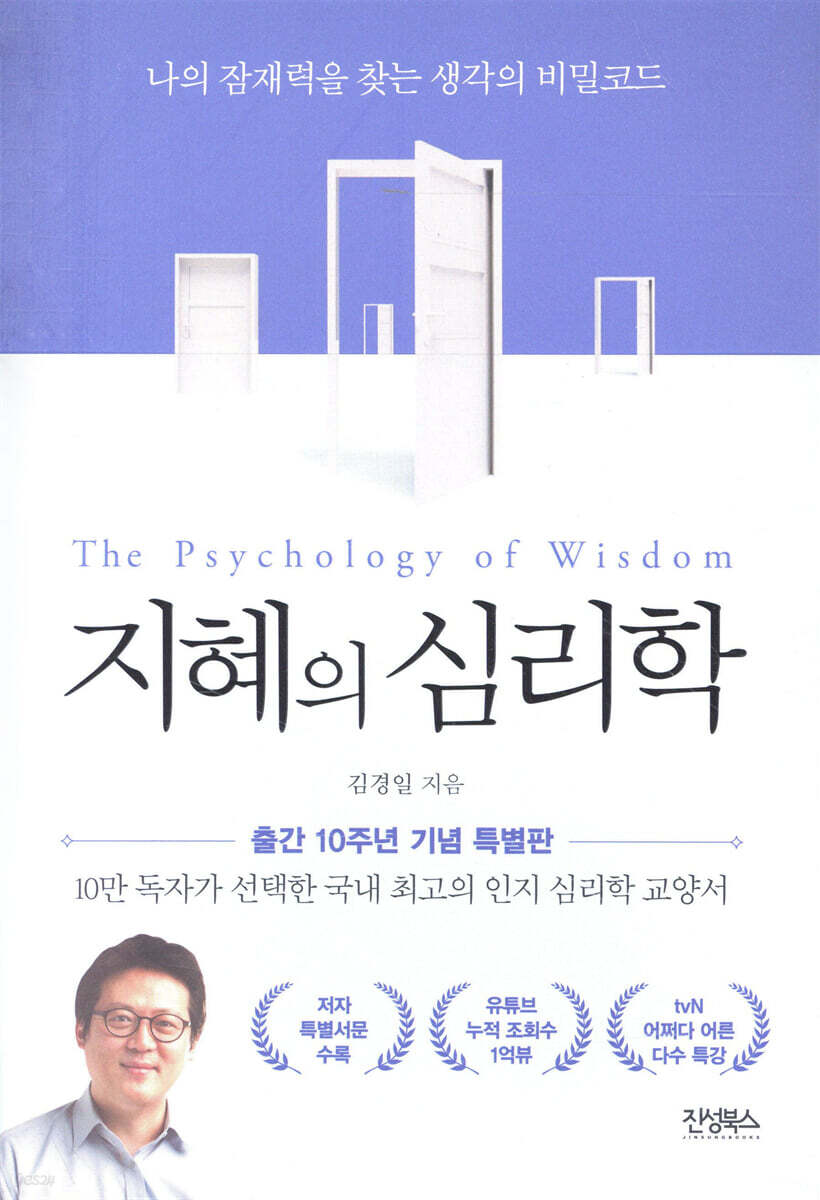
『Psychology of Wisdom』, which contains the ‘core’ of national mentor Kim Kyung-il
Meet the 10th anniversary edition!
The secret code of thought that unlocks your potential! Filled with gratitude and sincerity for the past decade since its publication, "The Psychology of Wisdom: 10th Anniversary Edition" is a book based on Professor Kim Kyung-il, Korea's leading cognitive psychologist, who personally researched the principles of thought. Through clear logic, it explains our thoughts in an easily understandable way.
Over the past decade, Professor Kim Kyung-il has been presenting the principles of thought, along with rich real-life examples, to countless readers who have been confronted with the stifling wall of thought, starting with the various theories and examples contained in this book.
In this 10th anniversary edition, the author, as always, explains the laws of thought, including the fundamental anxieties, cognitive stinginess, fixations, and limitations inherent in humans that we were previously unaware of. Through in-depth discussions of motivation and creativity, he reveals the principles of becoming a wise person and achieving happiness.
By focusing on the causes at the origin of all results, we will guide readers into the world of true wisdom, where they can correctly understand the principles of thought and wisely apply them in their daily lives.
『Psychology of Wisdom』, which contains the ‘core’ of national mentor Kim Kyung-il
Meet the 10th anniversary edition!
The secret code of thought that unlocks your potential! Filled with gratitude and sincerity for the past decade since its publication, "The Psychology of Wisdom: 10th Anniversary Edition" is a book based on Professor Kim Kyung-il, Korea's leading cognitive psychologist, who personally researched the principles of thought. Through clear logic, it explains our thoughts in an easily understandable way.
Over the past decade, Professor Kim Kyung-il has been presenting the principles of thought, along with rich real-life examples, to countless readers who have been confronted with the stifling wall of thought, starting with the various theories and examples contained in this book.
In this 10th anniversary edition, the author, as always, explains the laws of thought, including the fundamental anxieties, cognitive stinginess, fixations, and limitations inherent in humans that we were previously unaware of. Through in-depth discussions of motivation and creativity, he reveals the principles of becoming a wise person and achieving happiness.
By focusing on the causes at the origin of all results, we will guide readers into the world of true wisdom, where they can correctly understand the principles of thought and wisely apply them in their daily lives.
index
Special preface commemorating the 10th anniversary
prolog
A Journey into Cognitive Psychology in Search of Happiness
Chapter 1 We often make mistakes and misunderstand.
-Thinking errors and how they work
1.
unrest
- “It’s better to get hit first!”
- Uncertainty and ambiguity that maximize anxiety
- The most unwanted state for humans
2.
cognitive miser
- The 'brain' is diligent, but the 'thinking' is lazy.
- I hate complicated things
3.
fixation
- Humans hate change.
- Is it better to sit and take it?
4.
The misconception about multitasking
- Are we capable of multitasking?
- The difference between a 10,000 won ticket and a 10,000 won movie ticket
- Will I be able to study better if I listen to music?
5.
The habit of not being able to express one's thoughts
- “Why didn’t I think of that then?”
- To remove cancer cells with a laser
- Make your thoughts into objects.
6.
rationality
- Innate negative emotions vs.
Positive emotions that come with effort
- What on earth do humans judge?
7.
regret
- The illusion that a decision without regrets brings satisfaction
- Regret created by comparison, satisfaction given by the object itself
- Avoid making decisions when you are excited.
8.
The Trap of Judgment
- Ale's Paradox
- The choices can vary greatly
- High quality expensive brands vs.
Average quality cheap brand
- A human being who becomes a slave to vividness
- Gambler's Fallacy
- Hot hand error
- People who are swayed by a '50% discount'
- No opinion is also an opinion
9.
Computer vs.
human intelligence
- Memory and Evaluation
- What is the name of the 7th largest city in Guatemala?
10.
An easier way
- What is a heuristic?
- How many ways are there to get from Gwanghwamun to Deoksugung?
Find your Thinking Point aptitude
Chapter 2: What Moves Me
-The Two Faces of Motivation: Approach and Avoidance
1.
The results vary depending on the direction of motivation.
- Meet your classmates
- Higgins' theory
- Motivation prevents the spread of indifference, and strong motivation absorbs even indifference.
TIP Why were the results of the experiment at the beginning and end of the semester different?
2.
Approach and avoidance motivations
- Pulling approach motivation, pushing avoidance motivation
- A game where you 'receive' gift certificates and a game where you 'lose' them
3.
The emotional difference between approach and avoidance
- Joy and sadness vs.
Relief and anxiety
- Emotions that determine behavior
- The tremendous power of the emotion of reaction
4.
Approach and avoidance that interact with time
- Performance evaluations vary depending on the evaluation cycle.
- Where is approach motivation useful?
- Where is avoidance motivation useful?
5.
Approach and avoidance patterns interacting with thinking styles
- Approach motivation makes you see the forest, avoidance motivation makes you see the trees.
6.
Approach and avoidance that also interacts with space
Approach motivation fosters imagination, while avoidance motivation fosters meticulous completion.
7.
Broaden your approach and narrow your avoidance
- Adventurous approach motivation, avoidance motivation that knocks even on a stone bridge
- When to narrow and when to broaden
8.
Comparison is an avoidance motivation, while new things are an approach motivation.
- Comparative advantage vs.
qualitative difference
9.
The wrong meeting of motives leads to bias and errors.
- Stimulus-response compatibility and the Stroop effect
- Are tennis players also good at badminton?
10.
How are failures created?
- Avoidance motivation that interferes with familiar tasks
- Why daughters-in-law often hurt their hands during the holidays
11.
Are motivations always good?
- Approach motivation that makes it easy to give up
- Approach motive that prevents violation of regulations from being seen
12.
The power of praise
- People never change.
- Two compliments at once
- In the end, there are three types of praise.
13.
Motivation that Leaders Need to Know
- Limitations of self-help books
- Dongjang-level market
- Mom has an avoidance motivation, Dad has an approach motivation
- Is the most ideal father a father who dies young?
- A society that is more sensitive to prevention than achievement
Why blocking avoidance motivation comes before finding a good role model
- 30 minutes vs.
Only 30 minutes
Writing a Thinking Point Diary
Chapter 3: Thoughts Control Life
-Creativity is a combination of motivation, emotion, and cognition.
1.
Creative code from metaphor and abstraction
- What is creativity?
- Analogy, the driving force of creative thinking
- Metaphor practice in childhood, analogy in adulthood
- A metaphor not found in dictionaries or private education
- Metaphors create emotions.
- The power of metaphor and abstract thinking
- The gift and insight that the incubator gives us
- We are either uncreative or creative
2.
How are creative ideas generated?
It's not that there are no creative ideas, it's that they can't be brought out.
- Habits and environment that 'bring out' creative ideas
- Energy for idea generation, motivation for approach
- Politeness for creativity and innovation
- Why organizations need to be altruistic
3.
Execution and completion of creative ideas
- The correlation between the execution of ideas and language
- The secret of the top 0.1% of national mock exams
If you can't explain it, you don't know it.
- The power of questions
- When you need to look at the tree for avoidance motivation
- Creativity and the Three Mosaic
4.
It's more important to have an eye for discovering creativity.
- Are creative people a pain in the ass?
- What's more important than being creative?
- Can we recognize something creative?
Thinking Point: Becoming Smarter
Chapter 4: Unraveling the Secret of Happiness
How to 'create' happiness through thought
1.
How much happiness can money buy?
- Money only prevents misfortune.
- Why does money often backfire?
- 'Untitled' money is an anxiety reliever
2.
Happiness comes from relationships
- The foolishness of ignoring the present for the future
- Relationship difficulties
3.
Happiness is something you feel
- Grow your own database
4.
Happiness is a memory, but it shouldn't be a memory.
- Memories governed by time
- 'Experience' and 'memory' are separate issues.
5.
Happiness doesn't move on its own.
- Three Aspects of a Happy Life
- Happiness is created
Thinking Point: Comparison: The Hurting Effect of Happiness
Epilogue
Will you be the master of your thoughts or a bystander?
- main
prolog
A Journey into Cognitive Psychology in Search of Happiness
Chapter 1 We often make mistakes and misunderstand.
-Thinking errors and how they work
1.
unrest
- “It’s better to get hit first!”
- Uncertainty and ambiguity that maximize anxiety
- The most unwanted state for humans
2.
cognitive miser
- The 'brain' is diligent, but the 'thinking' is lazy.
- I hate complicated things
3.
fixation
- Humans hate change.
- Is it better to sit and take it?
4.
The misconception about multitasking
- Are we capable of multitasking?
- The difference between a 10,000 won ticket and a 10,000 won movie ticket
- Will I be able to study better if I listen to music?
5.
The habit of not being able to express one's thoughts
- “Why didn’t I think of that then?”
- To remove cancer cells with a laser
- Make your thoughts into objects.
6.
rationality
- Innate negative emotions vs.
Positive emotions that come with effort
- What on earth do humans judge?
7.
regret
- The illusion that a decision without regrets brings satisfaction
- Regret created by comparison, satisfaction given by the object itself
- Avoid making decisions when you are excited.
8.
The Trap of Judgment
- Ale's Paradox
- The choices can vary greatly
- High quality expensive brands vs.
Average quality cheap brand
- A human being who becomes a slave to vividness
- Gambler's Fallacy
- Hot hand error
- People who are swayed by a '50% discount'
- No opinion is also an opinion
9.
Computer vs.
human intelligence
- Memory and Evaluation
- What is the name of the 7th largest city in Guatemala?
10.
An easier way
- What is a heuristic?
- How many ways are there to get from Gwanghwamun to Deoksugung?
Find your Thinking Point aptitude
Chapter 2: What Moves Me
-The Two Faces of Motivation: Approach and Avoidance
1.
The results vary depending on the direction of motivation.
- Meet your classmates
- Higgins' theory
- Motivation prevents the spread of indifference, and strong motivation absorbs even indifference.
TIP Why were the results of the experiment at the beginning and end of the semester different?
2.
Approach and avoidance motivations
- Pulling approach motivation, pushing avoidance motivation
- A game where you 'receive' gift certificates and a game where you 'lose' them
3.
The emotional difference between approach and avoidance
- Joy and sadness vs.
Relief and anxiety
- Emotions that determine behavior
- The tremendous power of the emotion of reaction
4.
Approach and avoidance that interact with time
- Performance evaluations vary depending on the evaluation cycle.
- Where is approach motivation useful?
- Where is avoidance motivation useful?
5.
Approach and avoidance patterns interacting with thinking styles
- Approach motivation makes you see the forest, avoidance motivation makes you see the trees.
6.
Approach and avoidance that also interacts with space
Approach motivation fosters imagination, while avoidance motivation fosters meticulous completion.
7.
Broaden your approach and narrow your avoidance
- Adventurous approach motivation, avoidance motivation that knocks even on a stone bridge
- When to narrow and when to broaden
8.
Comparison is an avoidance motivation, while new things are an approach motivation.
- Comparative advantage vs.
qualitative difference
9.
The wrong meeting of motives leads to bias and errors.
- Stimulus-response compatibility and the Stroop effect
- Are tennis players also good at badminton?
10.
How are failures created?
- Avoidance motivation that interferes with familiar tasks
- Why daughters-in-law often hurt their hands during the holidays
11.
Are motivations always good?
- Approach motivation that makes it easy to give up
- Approach motive that prevents violation of regulations from being seen
12.
The power of praise
- People never change.
- Two compliments at once
- In the end, there are three types of praise.
13.
Motivation that Leaders Need to Know
- Limitations of self-help books
- Dongjang-level market
- Mom has an avoidance motivation, Dad has an approach motivation
- Is the most ideal father a father who dies young?
- A society that is more sensitive to prevention than achievement
Why blocking avoidance motivation comes before finding a good role model
- 30 minutes vs.
Only 30 minutes
Writing a Thinking Point Diary
Chapter 3: Thoughts Control Life
-Creativity is a combination of motivation, emotion, and cognition.
1.
Creative code from metaphor and abstraction
- What is creativity?
- Analogy, the driving force of creative thinking
- Metaphor practice in childhood, analogy in adulthood
- A metaphor not found in dictionaries or private education
- Metaphors create emotions.
- The power of metaphor and abstract thinking
- The gift and insight that the incubator gives us
- We are either uncreative or creative
2.
How are creative ideas generated?
It's not that there are no creative ideas, it's that they can't be brought out.
- Habits and environment that 'bring out' creative ideas
- Energy for idea generation, motivation for approach
- Politeness for creativity and innovation
- Why organizations need to be altruistic
3.
Execution and completion of creative ideas
- The correlation between the execution of ideas and language
- The secret of the top 0.1% of national mock exams
If you can't explain it, you don't know it.
- The power of questions
- When you need to look at the tree for avoidance motivation
- Creativity and the Three Mosaic
4.
It's more important to have an eye for discovering creativity.
- Are creative people a pain in the ass?
- What's more important than being creative?
- Can we recognize something creative?
Thinking Point: Becoming Smarter
Chapter 4: Unraveling the Secret of Happiness
How to 'create' happiness through thought
1.
How much happiness can money buy?
- Money only prevents misfortune.
- Why does money often backfire?
- 'Untitled' money is an anxiety reliever
2.
Happiness comes from relationships
- The foolishness of ignoring the present for the future
- Relationship difficulties
3.
Happiness is something you feel
- Grow your own database
4.
Happiness is a memory, but it shouldn't be a memory.
- Memories governed by time
- 'Experience' and 'memory' are separate issues.
5.
Happiness doesn't move on its own.
- Three Aspects of a Happy Life
- Happiness is created
Thinking Point: Comparison: The Hurting Effect of Happiness
Epilogue
Will you be the master of your thoughts or a bystander?
- main
Publisher's Review
“A single thought can determine happiness or unhappiness.”
The Wisdom of Cognitive Psychology, now available in a new 10th anniversary edition!
"The Psychology of Wisdom," which has cultivated the power of thought through exploration of the principles of thought, has now celebrated its 10th anniversary.
The author has been emphasizing that there are limits to changing yourself and achieving what you want just by reading the numerous self-help books available.
And through this book, 『Psychology of Wisdom』, I focused on the cause (Why) that is at the starting point of all results.
Just as someone who has learned how to fish can fish for the rest of their lives, anyone who properly understands and utilizes the principles of thinking can easily achieve what they intend.
To understand humans, we must first understand their thinking, and to understand their thinking, we must first understand the basic tendencies that constitute their thinking.
So, what fundamentally influences our thinking? The author begins his journey into the laws of thought by exploring the fundamental human anxieties, cognitive stinginess, fixations, and limitations we were previously unaware of. He then delves into motivation and creativity, and finally, presents the principles for achieving a wise life and happiness, his ultimate goal.
Once again, readers will gain insight into where and why fundamental change must begin through "The Psychology of Wisdom."
By applying it repeatedly every day, you will have an excellent life prescription that will guide you on the path to wisdom.
We are still only focusing on the How without the Why.
When it comes to thinking, humans are still selfish and dualistic.
Because they desperately want to make fundamental changes in their thoughts and lives, while ignoring deep thoughts.
It's still not difficult to resist the sweet temptation of the countless self-help books that occupy the best spots in bookstores.
But how many people have actually read self-help books and achieved fundamental change and improvement in their thinking? The uncomfortable truth is, "never."
The way humans think can be broadly divided into how and why.
For example, if you want to use a new smartphone, you have to think about a lot of "how"-related things, such as how to access individual functions, how to press buttons, and how to move to other functions.
The same goes for humans.
To use the human brain, you have to think about how.
But sometimes the equipment breaks down.
The more sophisticated the equipment, the more likely it is to break down.
Just like how we feel embarrassed when our smartphone won't turn on even though it's fully charged.
What we need is more than just 'how', it's 'why'.
This is because there can be many causes that can create this 'unable to turn on' state, and the causes that created the cause before.
When you think about 'why', the answer 'because' is born, and this in turn gives rise to another 'why' that is a question about an earlier cause, and the 'because's' that follow.
Only by properly understanding the countless causes and effects—what we call causality—can we fix a broken smartphone, or even create a new one.
Between someone who can simply use anything and someone who can understand the causal relationships that make it happen, fix it, and create something new, we naturally want to be the latter.
Wisdom's Clues in Cognitive Psychology
As we live, we encounter various difficulties.
At this time, we often face difficulties that we cannot understand or solve with only the various “hows” we have accumulated throughout our lives.
Therefore, we must have an answer to the Why that can understand and connect these Hows.
The Psychology of Wisdom has been informing us of this very point.
This book has developed our interest with the idea that 'there is a reason for this'.
And it opened our eyes to why those reasons are so firmly established and why they exert such a stubborn force deep within our minds.
Meanwhile, 『Psychology of Wisdom』 has guided countless readers into the world of wise cognitive psychology with clear logic based on the direct research of Professor Kim Kyung-il, Korea's leading cognitive psychologist, on the principles of thought.
And going forward, we will continue to provide new readers with unparalleled wisdom, empowering them with the confidence to truly challenge themselves and achieve.
The Wisdom of Cognitive Psychology, now available in a new 10th anniversary edition!
"The Psychology of Wisdom," which has cultivated the power of thought through exploration of the principles of thought, has now celebrated its 10th anniversary.
The author has been emphasizing that there are limits to changing yourself and achieving what you want just by reading the numerous self-help books available.
And through this book, 『Psychology of Wisdom』, I focused on the cause (Why) that is at the starting point of all results.
Just as someone who has learned how to fish can fish for the rest of their lives, anyone who properly understands and utilizes the principles of thinking can easily achieve what they intend.
To understand humans, we must first understand their thinking, and to understand their thinking, we must first understand the basic tendencies that constitute their thinking.
So, what fundamentally influences our thinking? The author begins his journey into the laws of thought by exploring the fundamental human anxieties, cognitive stinginess, fixations, and limitations we were previously unaware of. He then delves into motivation and creativity, and finally, presents the principles for achieving a wise life and happiness, his ultimate goal.
Once again, readers will gain insight into where and why fundamental change must begin through "The Psychology of Wisdom."
By applying it repeatedly every day, you will have an excellent life prescription that will guide you on the path to wisdom.
We are still only focusing on the How without the Why.
When it comes to thinking, humans are still selfish and dualistic.
Because they desperately want to make fundamental changes in their thoughts and lives, while ignoring deep thoughts.
It's still not difficult to resist the sweet temptation of the countless self-help books that occupy the best spots in bookstores.
But how many people have actually read self-help books and achieved fundamental change and improvement in their thinking? The uncomfortable truth is, "never."
The way humans think can be broadly divided into how and why.
For example, if you want to use a new smartphone, you have to think about a lot of "how"-related things, such as how to access individual functions, how to press buttons, and how to move to other functions.
The same goes for humans.
To use the human brain, you have to think about how.
But sometimes the equipment breaks down.
The more sophisticated the equipment, the more likely it is to break down.
Just like how we feel embarrassed when our smartphone won't turn on even though it's fully charged.
What we need is more than just 'how', it's 'why'.
This is because there can be many causes that can create this 'unable to turn on' state, and the causes that created the cause before.
When you think about 'why', the answer 'because' is born, and this in turn gives rise to another 'why' that is a question about an earlier cause, and the 'because's' that follow.
Only by properly understanding the countless causes and effects—what we call causality—can we fix a broken smartphone, or even create a new one.
Between someone who can simply use anything and someone who can understand the causal relationships that make it happen, fix it, and create something new, we naturally want to be the latter.
Wisdom's Clues in Cognitive Psychology
As we live, we encounter various difficulties.
At this time, we often face difficulties that we cannot understand or solve with only the various “hows” we have accumulated throughout our lives.
Therefore, we must have an answer to the Why that can understand and connect these Hows.
The Psychology of Wisdom has been informing us of this very point.
This book has developed our interest with the idea that 'there is a reason for this'.
And it opened our eyes to why those reasons are so firmly established and why they exert such a stubborn force deep within our minds.
Meanwhile, 『Psychology of Wisdom』 has guided countless readers into the world of wise cognitive psychology with clear logic based on the direct research of Professor Kim Kyung-il, Korea's leading cognitive psychologist, on the principles of thought.
And going forward, we will continue to provide new readers with unparalleled wisdom, empowering them with the confidence to truly challenge themselves and achieve.
GOODS SPECIFICS
- Date of issue: October 6, 2023
- Page count, weight, size: 340 pages | 646g | 152*225*30mm
- ISBN13: 9788997743582
- ISBN10: 8997743589
You may also like
카테고리
korean


korean

![ELLE 엘르 스페셜 에디션 A형 : 12월 [2025]](http://librairie.coreenne.fr/cdn/shop/files/b8e27a3de6c9538896439686c6b0e8fb.jpg?v=1766436872&width=3840)


