

Human Body Structure Textbook
 |
Description
Book Introduction
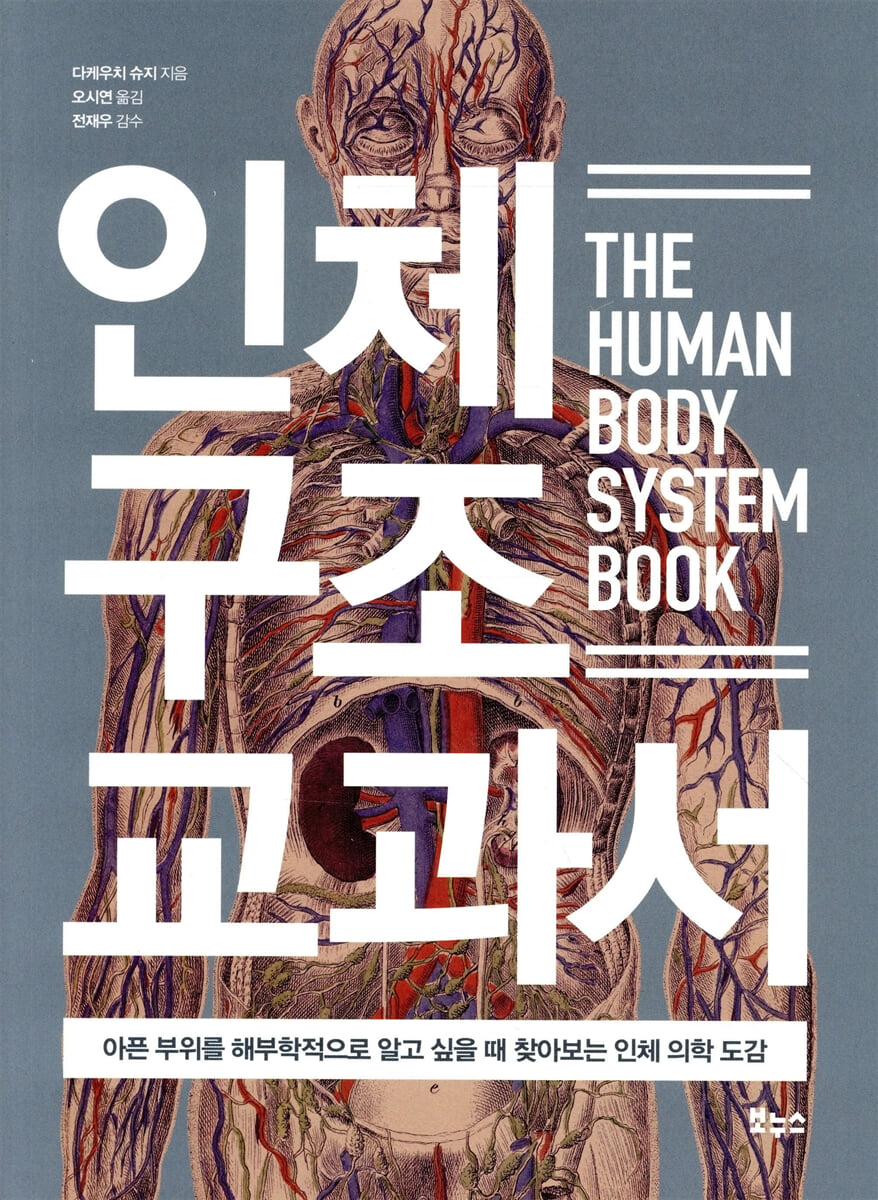
『Textbook of Human Body Structure』 is a book compiled by an author who has taught anatomy at medical schools for decades, compiling anatomy knowledge for the general public.
The author's message is that anyone can live a healthy life by understanding the structure and function of the human body and responding accordingly.
Each organ and part is organized with over 160 illustrations and friendly explanations.
The author's message is that anyone can live a healthy life by understanding the structure and function of the human body and responding accordingly.
Each organ and part is organized with over 160 illustrations and friendly explanations.
- You can preview some of the book's contents.
Preview
index
Introduction: Knowing the structure and function of the human body can extend your healthy lifespan.
Chapter 1 Abdomen
Digests food and sterilizes it with powerful stomach acid
The liver is the body's chemical factory and performs various functions.
The pancreas secretes pancreatic juice, a digestive fluid, and the hormone insulin.
The small intestine completely digests food and absorbs nutrients.
The large intestine absorbs water and creates stool
The kidneys excrete waste products through urine .
An organ other than the spleen , digestive organ, or urinary organ
Endocrine gland that secretes adrenal hormones
The navel and umbilical cord are the connecting link between the fetus and the mother.
Abdominal muscles
Inside Body Hernias occur in various parts of the body.
Chapter 2 Pelvic region
The pelvis is open at the top and bottom in the shape of a flower pot.
The rectum and anus, the last part of the digestive tract
urethra The passage that discharges urine
The male reproductive organ produces and transports sperm
The female reproductive organ produces eggs and develops fertilized eggs and fetuses.
Inside Body The tailbone, also found in humans
Chapter 3 Chest
The heart circulates blood throughout our body and acts as a pump.
Tubes through which arterial and venous blood passes
Lymphatic fluid distributed throughout the body
Exchange oxygen and carbon dioxide in the lungs
The organs of the body that make up the larynx, trachea, and bronchi
The esophagus passes through the throat and descends into the chest cavity.
The rib cage contains the lungs and heart.
The parts of the body that move during thoracic and abdominal breathing are different.
skeletal muscles within the diaphragm cavity
Inside the body, there is a hole inside the fetus's heart.
Chapter 4 Head, Face, and Neck
The brain interprets and commands collected information.
The eye perceives the shape, brightness, and color of objects.
Listen to your ears and maintain your balance
The nasal passage and olfactory organ
Mouth The door through which food enters
There are teeth in the jaw that bite and crush food.
It is involved in the digestive tract and respiratory tract.
The part of the cervical spine that supports the head
Inside Body Are you born with your head not completely covered by bones?
Chapter 5 Arms and Legs
Grab an object, hold it, and throw it
Hip, knee, and ankle joints required for walking and running
Chapter 6 Overview of Our Body and Organ Systems
The structural units of our body classified by function and form : cells, organs, and systems
The skeletal system consists of about 200 bones that support the body.
Muscles responsible for musculoskeletal movements
The circulatory system circulates blood and lymph throughout the body.
The respiratory system takes in oxygen and expels carbon dioxide.
The digestive system absorbs nutrients and expels waste.
The urinary system produces and excretes urine to remove waste products.
The reproductive system is involved in the formation, fertilization, and development of sperm and eggs.
Secretes endocrine hormones to control various body functions
The nervous system transmits stimuli inside and outside the body and issues appropriate commands.
Receives sensory stimulation and transmits it to the central nervous system
Chapter 1 Abdomen
Digests food and sterilizes it with powerful stomach acid
The liver is the body's chemical factory and performs various functions.
The pancreas secretes pancreatic juice, a digestive fluid, and the hormone insulin.
The small intestine completely digests food and absorbs nutrients.
The large intestine absorbs water and creates stool
The kidneys excrete waste products through urine .
An organ other than the spleen , digestive organ, or urinary organ
Endocrine gland that secretes adrenal hormones
The navel and umbilical cord are the connecting link between the fetus and the mother.
Abdominal muscles
Inside Body Hernias occur in various parts of the body.
Chapter 2 Pelvic region
The pelvis is open at the top and bottom in the shape of a flower pot.
The rectum and anus, the last part of the digestive tract
urethra The passage that discharges urine
The male reproductive organ produces and transports sperm
The female reproductive organ produces eggs and develops fertilized eggs and fetuses.
Inside Body The tailbone, also found in humans
Chapter 3 Chest
The heart circulates blood throughout our body and acts as a pump.
Tubes through which arterial and venous blood passes
Lymphatic fluid distributed throughout the body
Exchange oxygen and carbon dioxide in the lungs
The organs of the body that make up the larynx, trachea, and bronchi
The esophagus passes through the throat and descends into the chest cavity.
The rib cage contains the lungs and heart.
The parts of the body that move during thoracic and abdominal breathing are different.
skeletal muscles within the diaphragm cavity
Inside the body, there is a hole inside the fetus's heart.
Chapter 4 Head, Face, and Neck
The brain interprets and commands collected information.
The eye perceives the shape, brightness, and color of objects.
Listen to your ears and maintain your balance
The nasal passage and olfactory organ
Mouth The door through which food enters
There are teeth in the jaw that bite and crush food.
It is involved in the digestive tract and respiratory tract.
The part of the cervical spine that supports the head
Inside Body Are you born with your head not completely covered by bones?
Chapter 5 Arms and Legs
Grab an object, hold it, and throw it
Hip, knee, and ankle joints required for walking and running
Chapter 6 Overview of Our Body and Organ Systems
The structural units of our body classified by function and form : cells, organs, and systems
The skeletal system consists of about 200 bones that support the body.
Muscles responsible for musculoskeletal movements
The circulatory system circulates blood and lymph throughout the body.
The respiratory system takes in oxygen and expels carbon dioxide.
The digestive system absorbs nutrients and expels waste.
The urinary system produces and excretes urine to remove waste products.
The reproductive system is involved in the formation, fertilization, and development of sperm and eggs.
Secretes endocrine hormones to control various body functions
The nervous system transmits stimuli inside and outside the body and issues appropriate commands.
Receives sensory stimulation and transmits it to the central nervous system
Detailed image

Publisher's Review
What is the problem that makes it hurt?
When you are curious about where it hurts, look it up
Optimal anatomy knowledge
As we age, we experience pain in various parts of our bodies.
In common parlance, the body is not what it used to be.
As of 2017, the life expectancy of Koreans was 82.7 years.
However, the healthy life expectancy falls short of that, and it is said that people live in unhealthy conditions for about 15 to 20 years.
Perhaps because of this, people's desire to live healthy lives is greater than ever, and their interest is also high.
But people don't really know how their bodies work.
We eat foods that are good for our bodies and exercise without even knowing how the human body is structured or what functions it has.
It's like asking someone who knows nothing about cars to do your car maintenance.
If you do this, you won't even be able to guess what the problem is when you're sick, and sometimes you might end up getting caught up in out-of-the-blue health advice and end up harming your body.
Of course, if you get sick, you should go to the hospital and consult a doctor.
But the first person who needs to take care of their body is none other than themselves.
Armed with anatomy knowledge that you can use whenever you're curious about where something hurts, you can take more proactive steps to manage your health.
Understanding the structure and function of my body
The true nature of the disease is revealed
The author, who has taught anatomy at medical schools for a long time, has compiled useful anatomy knowledge for the general public to take care of and maintain their health into the 『Textbook of Human Structure』.
This medical textbook contains the author's message that anyone can live a healthy life if they properly understand the intricate structure of the human body and pay attention to exercise and nutrition.
It is extremely difficult to fully understand the complex structure of the human body unless you are a doctor.
The author took this point into full consideration, assumed the scope of knowledge that the general public should know, and organized the book accordingly.
In general anatomy textbooks, the human body is sometimes examined by system, such as the circulatory system, respiratory system, and urinary system.
In contrast, this book divides the human body into parts that the general public intuitively recognizes, such as the head, limbs, and abdomen, and organizes anatomical knowledge corresponding to those parts.
The goal is to clarify the location and role of each organ and learn in detail about its structure and function.
Of course, the basic systems (10 types) that make up the human body are also organized without exception.
If you understand the structure of the human body, you can see the true nature of the disease.
This book explains the structure of the human body, along with the representative diseases that can occur in each area, their causes, and treatment methods.
For example, when explaining the structure of the 'stomach', you might explain how reflux esophagitis occurs, when introducing the kidneys, you might mention artificial dialysis, and when describing the structure of the heart, you might mention balloon angioplasty to treat myocardial infarction.
Why is it important to know the relationship between human body structure and disease?
One in seven adults in Korea suffers from reflux esophagitis.
Although it is such a common disease, not many people understand that esophagitis is caused by an abnormality in the peristalsis and muscle that make up the esophagus and stomach.
People who know the cause of esophagitis and those who don't have it have different attitudes and responses to the disease.
Anyone who notices that something is wrong with their joint movements actively takes appropriate measures.
The more you understand the causes of disease, the more you can put in effort to regain and maintain your health.
Our body's errors and shortcomings
Various diseases that come because of it
The author says there's more we need to know about our bodies to live a healthy life.
These are the many sides of our body.
The human body is very sophisticated, but at the same time, it is not perfect.
A typical example is upright walking.
We don't usually think of the fact that we walk on two legs as anything special, but let's remember that humans are the only animals that walk on two legs.
Thanks to upright walking, humans gained free arms and high intelligence, but also developed chronic back problems.
The load starting from the heavy head is concentrated on the waist rather than the limbs, causing us constant pain and discomfort.
This type of back pain is, of course, a disease that other animals do not suffer from.
This is a disease that only humans experience because we walk on two legs.
These errors and flaws, like light and shadow or two sides of a coin, exist throughout our bodies.
The optic nerve of the eye passes through the retina, creating a blind spot, and the esophagus and trachea are not completely separated, which often causes us to have suffocation.
And that's not all.
Humans have lost the ability to synthesize essential nutrients, such as vitamin C, in the course of evolution.
Because of this, humans must adhere to a very diverse diet to obtain various nutrients.
The Human Body Structure Textbook says that to fully understand our bodies, we must also know these characteristics.
Even such imperfections are a characteristic of our bodies, but some of the diseases we encounter are caused by these errors or provide a cause for the disease.
If we recognize and deal with the imperfections that exist in our bodies, we will be able to maintain good health for a long time.
Anatomy general education lecture in 45 chapters
Over 160 illustrations showing the body structure at a glance
The author has tried to convey the core message as concisely as possible, and has used over 160 illustrations in the text to facilitate a more intuitive understanding.
All illustrations are thoroughly focused on expressing the structure and function of body organs, so even readers with no medical knowledge can easily understand the book's contents.
This book also makes us realize common sense mistakes we have had and things we did not know about our bodies.
It reveals to us the intricate and astonishing world of the human body, such as the fact that when a baby is born, the entire head is not yet encased in bone, or that a boy's testicles are originally located under the kidneys but later move to the scrotum.
The author's 45 selected anatomy lectures will help you understand the structure and function of the human body correctly and accurately.
Understanding your body in this way will be the first step toward taking care of your health.
Let's properly understand our bodies with the "Human Body Structure Textbook."
Clear medical knowledge will help us break free from health misconceptions and provide valuable insights into how to maintain our health.
When you are curious about where it hurts, look it up
Optimal anatomy knowledge
As we age, we experience pain in various parts of our bodies.
In common parlance, the body is not what it used to be.
As of 2017, the life expectancy of Koreans was 82.7 years.
However, the healthy life expectancy falls short of that, and it is said that people live in unhealthy conditions for about 15 to 20 years.
Perhaps because of this, people's desire to live healthy lives is greater than ever, and their interest is also high.
But people don't really know how their bodies work.
We eat foods that are good for our bodies and exercise without even knowing how the human body is structured or what functions it has.
It's like asking someone who knows nothing about cars to do your car maintenance.
If you do this, you won't even be able to guess what the problem is when you're sick, and sometimes you might end up getting caught up in out-of-the-blue health advice and end up harming your body.
Of course, if you get sick, you should go to the hospital and consult a doctor.
But the first person who needs to take care of their body is none other than themselves.
Armed with anatomy knowledge that you can use whenever you're curious about where something hurts, you can take more proactive steps to manage your health.
Understanding the structure and function of my body
The true nature of the disease is revealed
The author, who has taught anatomy at medical schools for a long time, has compiled useful anatomy knowledge for the general public to take care of and maintain their health into the 『Textbook of Human Structure』.
This medical textbook contains the author's message that anyone can live a healthy life if they properly understand the intricate structure of the human body and pay attention to exercise and nutrition.
It is extremely difficult to fully understand the complex structure of the human body unless you are a doctor.
The author took this point into full consideration, assumed the scope of knowledge that the general public should know, and organized the book accordingly.
In general anatomy textbooks, the human body is sometimes examined by system, such as the circulatory system, respiratory system, and urinary system.
In contrast, this book divides the human body into parts that the general public intuitively recognizes, such as the head, limbs, and abdomen, and organizes anatomical knowledge corresponding to those parts.
The goal is to clarify the location and role of each organ and learn in detail about its structure and function.
Of course, the basic systems (10 types) that make up the human body are also organized without exception.
If you understand the structure of the human body, you can see the true nature of the disease.
This book explains the structure of the human body, along with the representative diseases that can occur in each area, their causes, and treatment methods.
For example, when explaining the structure of the 'stomach', you might explain how reflux esophagitis occurs, when introducing the kidneys, you might mention artificial dialysis, and when describing the structure of the heart, you might mention balloon angioplasty to treat myocardial infarction.
Why is it important to know the relationship between human body structure and disease?
One in seven adults in Korea suffers from reflux esophagitis.
Although it is such a common disease, not many people understand that esophagitis is caused by an abnormality in the peristalsis and muscle that make up the esophagus and stomach.
People who know the cause of esophagitis and those who don't have it have different attitudes and responses to the disease.
Anyone who notices that something is wrong with their joint movements actively takes appropriate measures.
The more you understand the causes of disease, the more you can put in effort to regain and maintain your health.
Our body's errors and shortcomings
Various diseases that come because of it
The author says there's more we need to know about our bodies to live a healthy life.
These are the many sides of our body.
The human body is very sophisticated, but at the same time, it is not perfect.
A typical example is upright walking.
We don't usually think of the fact that we walk on two legs as anything special, but let's remember that humans are the only animals that walk on two legs.
Thanks to upright walking, humans gained free arms and high intelligence, but also developed chronic back problems.
The load starting from the heavy head is concentrated on the waist rather than the limbs, causing us constant pain and discomfort.
This type of back pain is, of course, a disease that other animals do not suffer from.
This is a disease that only humans experience because we walk on two legs.
These errors and flaws, like light and shadow or two sides of a coin, exist throughout our bodies.
The optic nerve of the eye passes through the retina, creating a blind spot, and the esophagus and trachea are not completely separated, which often causes us to have suffocation.
And that's not all.
Humans have lost the ability to synthesize essential nutrients, such as vitamin C, in the course of evolution.
Because of this, humans must adhere to a very diverse diet to obtain various nutrients.
The Human Body Structure Textbook says that to fully understand our bodies, we must also know these characteristics.
Even such imperfections are a characteristic of our bodies, but some of the diseases we encounter are caused by these errors or provide a cause for the disease.
If we recognize and deal with the imperfections that exist in our bodies, we will be able to maintain good health for a long time.
Anatomy general education lecture in 45 chapters
Over 160 illustrations showing the body structure at a glance
The author has tried to convey the core message as concisely as possible, and has used over 160 illustrations in the text to facilitate a more intuitive understanding.
All illustrations are thoroughly focused on expressing the structure and function of body organs, so even readers with no medical knowledge can easily understand the book's contents.
This book also makes us realize common sense mistakes we have had and things we did not know about our bodies.
It reveals to us the intricate and astonishing world of the human body, such as the fact that when a baby is born, the entire head is not yet encased in bone, or that a boy's testicles are originally located under the kidneys but later move to the scrotum.
The author's 45 selected anatomy lectures will help you understand the structure and function of the human body correctly and accurately.
Understanding your body in this way will be the first step toward taking care of your health.
Let's properly understand our bodies with the "Human Body Structure Textbook."
Clear medical knowledge will help us break free from health misconceptions and provide valuable insights into how to maintain our health.
GOODS SPECIFICS
- Date of issue: March 4, 2019
- Page count, weight, size: 208 pages | 562g | 172*235*15mm
- ISBN13: 9788964943687
- ISBN10: 8964943686
You may also like
카테고리
korean


korean

![GQ KOREA Mark (Monthly): December [2025]](http://librairie.coreenne.fr/cdn/shop/files/8ef265dbbfbf186523ed75ba7319009d.jpg?v=1765340328&width=3840)


