

The Wisdom of the Enneagram
 |
Description
Book Introduction
"The Anthropology of Intuition," Proven for Two Thousand Years
The journey to know my true self begins!
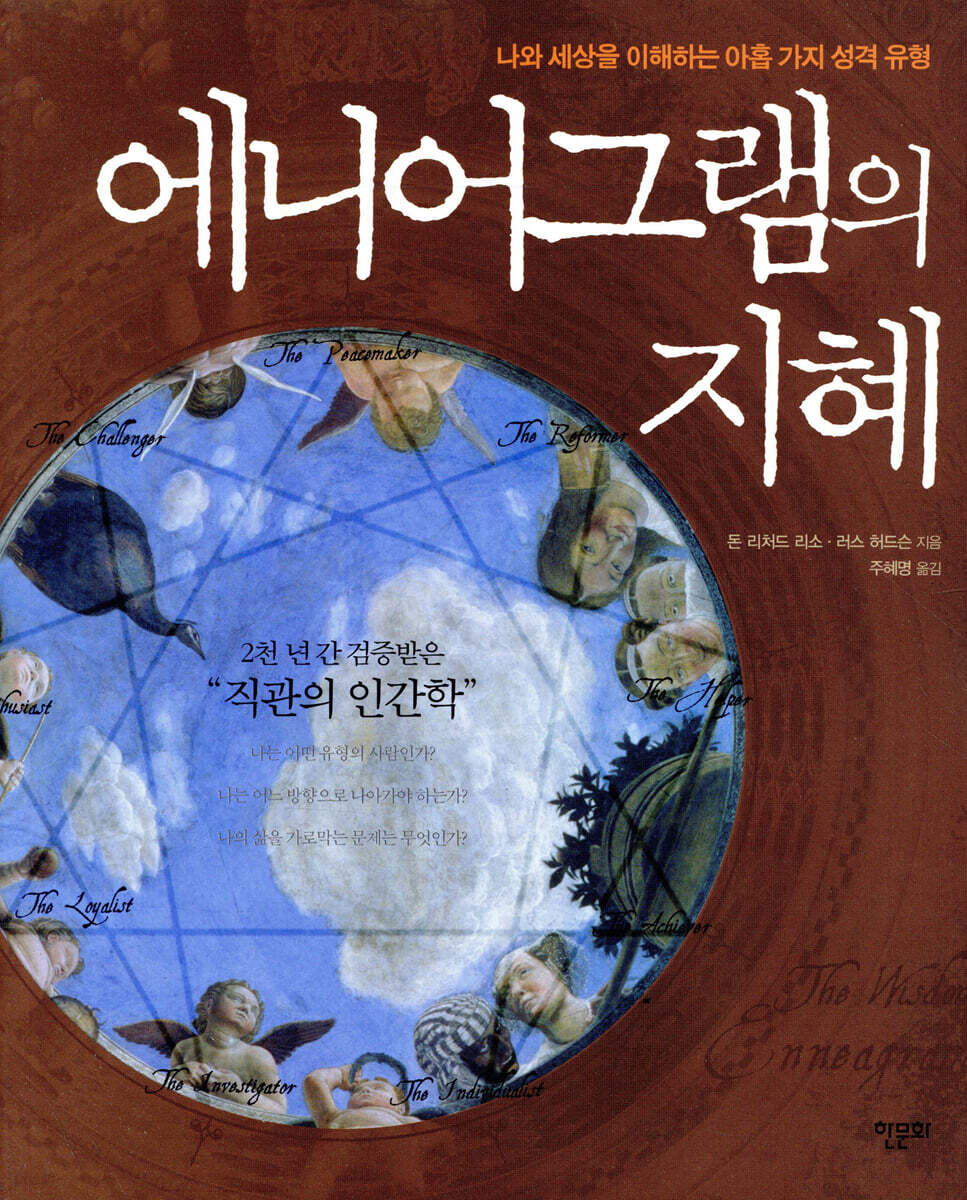
Enneagram is a compound word of the Greek word 'ennea' meaning '9' and 'gram' meaning 'picture', and refers to 'a picture with nine dots'.
Although it is a simple shape consisting of only a circle, nine dots, and lines connecting the dots, it contains all of the laws of the universe and human psychology, so in ancient societies it was secretly passed down to only a few people as a manual for nurturing leaders.
The Enneagram, which originated from ancient wisdom, continued to develop while blending with various religious traditions, and in the 20th century, it was reborn as a unique and profound personality typology through combination with psychology.
“Humans are classified into nine personality types, and everyone is born with one of them.” This is the basic principle of the Enneagram.
Just as men and women are born in a nearly equal ratio, the number of each type is said to be divided equally into nine in all regions of the world.
Currently, the Enneagram has become so popular that many people, including religious people seeking the path of enlightenment, office workers, students, and housewives, use it as a guide for their lives and work.
It has become an essential resource, especially for new employee recruitment, personnel management, and organizational operations at large corporations, and many large corporations, including General Motors and AT&T, are proving its effectiveness.
The journey to know my true self begins!
Enneagram is a compound word of the Greek word 'ennea' meaning '9' and 'gram' meaning 'picture', and refers to 'a picture with nine dots'.
Although it is a simple shape consisting of only a circle, nine dots, and lines connecting the dots, it contains all of the laws of the universe and human psychology, so in ancient societies it was secretly passed down to only a few people as a manual for nurturing leaders.
The Enneagram, which originated from ancient wisdom, continued to develop while blending with various religious traditions, and in the 20th century, it was reborn as a unique and profound personality typology through combination with psychology.
“Humans are classified into nine personality types, and everyone is born with one of them.” This is the basic principle of the Enneagram.
Just as men and women are born in a nearly equal ratio, the number of each type is said to be divided equally into nine in all regions of the world.
Currently, the Enneagram has become so popular that many people, including religious people seeking the path of enlightenment, office workers, students, and housewives, use it as a guide for their lives and work.
It has become an essential resource, especially for new employee recruitment, personnel management, and organizational operations at large corporations, and many large corporations, including General Motors and AT&T, are proving its effectiveness.
- You can preview some of the book's contents.
Preview
index
preface
Part 1: An Inner Journey
Chapter 1.
Find your personality type
Nine Types | Two Questionnaires | What You Need to Know About Personality Types | Categorizing Others | The True Purpose of the Enneagram? Easily Find Your Enneagram Type
Chapter 2.
Ancient Wisdom, Modern Insight
Chapter 3.
Essence and character
Sacred Psychology | Personality Doesn't Disappear | Nine Types of Fears and Desires | Essence Suppressed by Personality | Essence Doesn't Disappear or Disintegrate
Chapter 4.
Become aware
Becoming aware of yourself through action | Waking up | What is consciousness? | Observe and let go | The inner observer | The fear of being present | Consciousness leads us to be present.
Chapter 5.
Three selves
instinct-centered | emotion-centered | thinking-centered
Chapter 6.
Variations of the Enneagram
Self-preserving transformation | Social transformation | Sexual transformation | Developmental level | Average range | Unhealthy range | Healthy range | Level of freedom | Direction of non-integration | Direction of integration
Part 2: The Nine Personality Types
Chapter 7.
Type 1: Reformer
Type 1: The Reformer | Childhood Patterns | Type 1 with a Nine-Wing - Idealist | Type 1 with a Two-Wing - Social Activist | Type 1's Self-Preservation Instinct | Type 1's Social Instinct | Type 1's Sexual Instinct | Awakening Signs of Type 1 - Strong Sense of Duty | Type 1's Innate Strengths | Your Essence Revealed
Chapter 8.
Type 2: Helper
Type Two: The Helper | Childhood Patterns | Two with a 1-Wing - The Servant | Two with a 3-Wing - The Hostess | Type Two's Self-Preservation Instinct | Type Two's Social Instinct | Type Two's Sexual Instinct | Type Two's Awakening Signs - Catering to Others' Moods | Your Essence Revealed
Chapter 9.
Type 3: Achievers
Type 3: The Achiever | Childhood Patterns | Type 3 with a Two-Wing - The Charmer | Type 3 with a Four-Wing - The Professional | Type 3 with a Self-Preservation Instinct | Type 3 with a Social Instinct | Type 3 with a Sexual Instinct | Awakening Signs of Type 3 - My Value Depends on My Success | Your Essence Revealed
Chapter 10.
Type 4: Individualist
Type Four: The Individualist | Childhood Patterns | Four with a Three-Wing - The Aristocrat | Four with a Five-Wing - The Bohemian | Type Four's Self-Preservation Instinct | Type Four's Social Instinct | Type Four's Sexual Instinct | Awakening Signs of Type Four - Intensifying Emotions Through Imagination | The Essence Revealed
Chapter 11.
Type 5: The Explorer
Type Five: The Explorer | Childhood Patterns | Five with a Four-Wing - The Iconoclast | Five with a Six-Wing - The Problem Solver | Type Five with a Self-Preservation Instinct | Type Five with a Social Instinct | Type Five with a Sexual Instinct | Awakening Signs of Type Five - Withdrawing into Thought | The Essence Revealed
Chapter 12.
Type 6: The Loyal Person
Type Six: The Loyal One | Childhood Patterns | Six with a Five-Wing - The Defender | Six with a Seven-Wing - The Friend | Type Six: The Self-Preservation Instinct | Type Six: The Social Instinct | Type Six: The Sexual Instinct | Awakening Signs of Type Six - Seeking the Certain | The Essence Revealed
Chapter 13.
Type 7: The Passionate
Type Seven: The Passionate One | Childhood Patterns | Seven with a Six-Wing? The Entertainer | Seven with an Eight-Wing - The Realist | Type Seven with a Self-Preservation Instinct | Type Seven with a Social Instinct | Type Seven with a Sexual Instinct | Awakening Signs of Type Seven - "The Grass is Always Greener on the Other Side!" | The Essence Revealed
Chapter 14.
Type 8: The Challenger
Type Eight: The Challenger | Childhood Patterns | Eight with Seven Wings - The Independent | Eight with Nine Wings - The Bear | Eight with Self-Preservation | Eight with Social Instincts | Eight with Sexual Instincts | Eight Awakening Signs - The Struggle for Self-Fulfillment | The Essence Revealed
Chapter 15.
Type 9: Pacifist
Type Nine: The Pacifist | Childhood Patterns | Nine with an Eight Wing - The Peacemaker | Nine with an I Wing - The Dreamer | Type Nine: Self-Preservation | Type Nine: Social Instincts | Type Nine: Sexual Instincts | Awakening Signs of Type Nine - Getting Along with Others | Your Essence Revealed
Part 3: Tools for Transforming Consciousness
Chapter 16.
Practices for Spiritual Growth
Various Practices for Spiritual Growth | Seven Tools for Growing Consciousness | Dealing with the Superego | Dealing with the Body | Developing a Quiet Mind | Opening the Humidifier | The Enneagram of Letting Go
Chapter 17.
Spiritual Journey - Always Now
Letting Go of Suffering | Discovering Your True Self | Beyond Personality
Translator's Note
References
Part 1: An Inner Journey
Chapter 1.
Find your personality type
Nine Types | Two Questionnaires | What You Need to Know About Personality Types | Categorizing Others | The True Purpose of the Enneagram? Easily Find Your Enneagram Type
Chapter 2.
Ancient Wisdom, Modern Insight
Chapter 3.
Essence and character
Sacred Psychology | Personality Doesn't Disappear | Nine Types of Fears and Desires | Essence Suppressed by Personality | Essence Doesn't Disappear or Disintegrate
Chapter 4.
Become aware
Becoming aware of yourself through action | Waking up | What is consciousness? | Observe and let go | The inner observer | The fear of being present | Consciousness leads us to be present.
Chapter 5.
Three selves
instinct-centered | emotion-centered | thinking-centered
Chapter 6.
Variations of the Enneagram
Self-preserving transformation | Social transformation | Sexual transformation | Developmental level | Average range | Unhealthy range | Healthy range | Level of freedom | Direction of non-integration | Direction of integration
Part 2: The Nine Personality Types
Chapter 7.
Type 1: Reformer
Type 1: The Reformer | Childhood Patterns | Type 1 with a Nine-Wing - Idealist | Type 1 with a Two-Wing - Social Activist | Type 1's Self-Preservation Instinct | Type 1's Social Instinct | Type 1's Sexual Instinct | Awakening Signs of Type 1 - Strong Sense of Duty | Type 1's Innate Strengths | Your Essence Revealed
Chapter 8.
Type 2: Helper
Type Two: The Helper | Childhood Patterns | Two with a 1-Wing - The Servant | Two with a 3-Wing - The Hostess | Type Two's Self-Preservation Instinct | Type Two's Social Instinct | Type Two's Sexual Instinct | Type Two's Awakening Signs - Catering to Others' Moods | Your Essence Revealed
Chapter 9.
Type 3: Achievers
Type 3: The Achiever | Childhood Patterns | Type 3 with a Two-Wing - The Charmer | Type 3 with a Four-Wing - The Professional | Type 3 with a Self-Preservation Instinct | Type 3 with a Social Instinct | Type 3 with a Sexual Instinct | Awakening Signs of Type 3 - My Value Depends on My Success | Your Essence Revealed
Chapter 10.
Type 4: Individualist
Type Four: The Individualist | Childhood Patterns | Four with a Three-Wing - The Aristocrat | Four with a Five-Wing - The Bohemian | Type Four's Self-Preservation Instinct | Type Four's Social Instinct | Type Four's Sexual Instinct | Awakening Signs of Type Four - Intensifying Emotions Through Imagination | The Essence Revealed
Chapter 11.
Type 5: The Explorer
Type Five: The Explorer | Childhood Patterns | Five with a Four-Wing - The Iconoclast | Five with a Six-Wing - The Problem Solver | Type Five with a Self-Preservation Instinct | Type Five with a Social Instinct | Type Five with a Sexual Instinct | Awakening Signs of Type Five - Withdrawing into Thought | The Essence Revealed
Chapter 12.
Type 6: The Loyal Person
Type Six: The Loyal One | Childhood Patterns | Six with a Five-Wing - The Defender | Six with a Seven-Wing - The Friend | Type Six: The Self-Preservation Instinct | Type Six: The Social Instinct | Type Six: The Sexual Instinct | Awakening Signs of Type Six - Seeking the Certain | The Essence Revealed
Chapter 13.
Type 7: The Passionate
Type Seven: The Passionate One | Childhood Patterns | Seven with a Six-Wing? The Entertainer | Seven with an Eight-Wing - The Realist | Type Seven with a Self-Preservation Instinct | Type Seven with a Social Instinct | Type Seven with a Sexual Instinct | Awakening Signs of Type Seven - "The Grass is Always Greener on the Other Side!" | The Essence Revealed
Chapter 14.
Type 8: The Challenger
Type Eight: The Challenger | Childhood Patterns | Eight with Seven Wings - The Independent | Eight with Nine Wings - The Bear | Eight with Self-Preservation | Eight with Social Instincts | Eight with Sexual Instincts | Eight Awakening Signs - The Struggle for Self-Fulfillment | The Essence Revealed
Chapter 15.
Type 9: Pacifist
Type Nine: The Pacifist | Childhood Patterns | Nine with an Eight Wing - The Peacemaker | Nine with an I Wing - The Dreamer | Type Nine: Self-Preservation | Type Nine: Social Instincts | Type Nine: Sexual Instincts | Awakening Signs of Type Nine - Getting Along with Others | Your Essence Revealed
Part 3: Tools for Transforming Consciousness
Chapter 16.
Practices for Spiritual Growth
Various Practices for Spiritual Growth | Seven Tools for Growing Consciousness | Dealing with the Superego | Dealing with the Body | Developing a Quiet Mind | Opening the Humidifier | The Enneagram of Letting Go
Chapter 17.
Spiritual Journey - Always Now
Letting Go of Suffering | Discovering Your True Self | Beyond Personality
Translator's Note
References
Into the book
The most important insight the Enneagram can provide is the realization that we are not our personalities.
To understand this, we must experience a change in our perception of ourselves.
Only when we understand that we are not our personality do we realize that we 'have' a personality and that we are spiritual beings who express ourselves through that personality.
Miracles happen when we stop identifying with our personality and stop defending our personality.
Our true nature is revealed naturally and changes us.
--- From “Chapter 3 Essence and Character”
In the Enneagram, human personality types are first classified into three groups: instinctive, feeling, and thinking.
These three functions are associated with subtle 'centers' of the human body.
So personality fixation is primarily related to one of these three centers.
(……) Modern medicine also divides the human brain into three basic components.
The cerebrum, or the brain of instinct, the medulla oblongata, or the brain of emotion, and the cerebral cortex, or the brain of thought.
Some Enneagram instructors refer to the three centers as the head center, the heart center, and the gut center.
--- Chapter 5 Three Selves
Emotion-focused types offer us three solutions to this dilemma.
The solution is to please people so they will like you (Type Two), to become an accomplished person so that people will praise and acknowledge you (Type Three), and to talk about yourself and attach great importance to all your traits (Type Four).
--- From "Chapter 5: Three Selves"
If maintaining a sense of self is important for instinct-oriented people and maintaining a sense of personal identity is important for feeling-oriented people, then finding trust in inner guidance and support is important for thinking-oriented people.
(……) In other words, instinct-centered types resist reality.
Because the self-image of feeling-centered types is formed from memories and interpretations of the past, they are all past-centered.
Thinking-focused types are more concerned with the future.
--- From "Chapter 5: Three Selves"
The superego is the inner voice that either berates us when we don't perform up to certain standards or rewards us when we meet its demands.
(……) It is the ‘internalized voice’ of those who have authority over us, including our parents.
The original function of the superego is to guide us into behaviors that we believe will make our parents love and protect us.
We unconsciously identify with their voices and integrate them into ourselves, thus ensuring that we do not lose our parents' love and support.
And rather than having our parents punish us, we learn to punish ourselves.
--- From “Chapter 16: Practices for Spiritual Growth”
One of the most important tools for entering a state of quiet mind is ‘not knowing.’
Normally, our minds are filled with all sorts of thoughts about who we are, what we are doing, what is important and what is not, what is right and wrong, and what the outcome of something should be.
Our minds are so full of opinions and thoughts that we have no inner space to receive the fresh impressions of the real world around us.
I don't learn anything new.
(……) ‘Not knowing’ is what allows us to reserve our opinions and let curiosity guide us within the realm of the quiet mind.
Then we begin to trust the deeper wisdom within ourselves.
When we are curious and open-minded, the knowledge we need to know arises naturally.
--- From “Chapter 16: Practices for Spiritual Growth”
Gurdjieff said something very strange, paradoxical - the last thing a human being lets go of is suffering.
Is this true? If so, why? First, we are accustomed to suffering.
This is something we know, and that is why we feel safer than other unknown conditions.
Second, perhaps we worry that if we give up our suffering, something new and worse will take over.
(……) Much of our identity comes from holding on to our own pain – from all the complaints, tensions, conflicts, blame, rationalizations, projections, justifications, and the ‘energy’ that allows suffering to occur.
You could say that this is the root of our personality.
But if our suffering and everything surrounding it were to disappear, who would we be?
To understand this, we must experience a change in our perception of ourselves.
Only when we understand that we are not our personality do we realize that we 'have' a personality and that we are spiritual beings who express ourselves through that personality.
Miracles happen when we stop identifying with our personality and stop defending our personality.
Our true nature is revealed naturally and changes us.
--- From “Chapter 3 Essence and Character”
In the Enneagram, human personality types are first classified into three groups: instinctive, feeling, and thinking.
These three functions are associated with subtle 'centers' of the human body.
So personality fixation is primarily related to one of these three centers.
(……) Modern medicine also divides the human brain into three basic components.
The cerebrum, or the brain of instinct, the medulla oblongata, or the brain of emotion, and the cerebral cortex, or the brain of thought.
Some Enneagram instructors refer to the three centers as the head center, the heart center, and the gut center.
--- Chapter 5 Three Selves
Emotion-focused types offer us three solutions to this dilemma.
The solution is to please people so they will like you (Type Two), to become an accomplished person so that people will praise and acknowledge you (Type Three), and to talk about yourself and attach great importance to all your traits (Type Four).
--- From "Chapter 5: Three Selves"
If maintaining a sense of self is important for instinct-oriented people and maintaining a sense of personal identity is important for feeling-oriented people, then finding trust in inner guidance and support is important for thinking-oriented people.
(……) In other words, instinct-centered types resist reality.
Because the self-image of feeling-centered types is formed from memories and interpretations of the past, they are all past-centered.
Thinking-focused types are more concerned with the future.
--- From "Chapter 5: Three Selves"
The superego is the inner voice that either berates us when we don't perform up to certain standards or rewards us when we meet its demands.
(……) It is the ‘internalized voice’ of those who have authority over us, including our parents.
The original function of the superego is to guide us into behaviors that we believe will make our parents love and protect us.
We unconsciously identify with their voices and integrate them into ourselves, thus ensuring that we do not lose our parents' love and support.
And rather than having our parents punish us, we learn to punish ourselves.
--- From “Chapter 16: Practices for Spiritual Growth”
One of the most important tools for entering a state of quiet mind is ‘not knowing.’
Normally, our minds are filled with all sorts of thoughts about who we are, what we are doing, what is important and what is not, what is right and wrong, and what the outcome of something should be.
Our minds are so full of opinions and thoughts that we have no inner space to receive the fresh impressions of the real world around us.
I don't learn anything new.
(……) ‘Not knowing’ is what allows us to reserve our opinions and let curiosity guide us within the realm of the quiet mind.
Then we begin to trust the deeper wisdom within ourselves.
When we are curious and open-minded, the knowledge we need to know arises naturally.
--- From “Chapter 16: Practices for Spiritual Growth”
Gurdjieff said something very strange, paradoxical - the last thing a human being lets go of is suffering.
Is this true? If so, why? First, we are accustomed to suffering.
This is something we know, and that is why we feel safer than other unknown conditions.
Second, perhaps we worry that if we give up our suffering, something new and worse will take over.
(……) Much of our identity comes from holding on to our own pain – from all the complaints, tensions, conflicts, blame, rationalizations, projections, justifications, and the ‘energy’ that allows suffering to occur.
You could say that this is the root of our personality.
But if our suffering and everything surrounding it were to disappear, who would we be?
--- From "Chapter 17: Spiritual Journey - Always Now"
Publisher's Review
The nine personality types revealed by the Enneagram
Reformer #1 “I want everything to be right.”
You can have high character and reason, or you can be perfectionist and angry.
Examples) Gandhi, Thoreau, Chomsky, Hillary Clinton, Celine Dion, Emma Thompson, Joan Baez
Helper number 2 “Come to me.
“I can help you.”
You may have healing powers and generosity, or you may be possessive and flattering towards people.
Examples: Mother Teresa, Eleanor Roosevelt, Nightingale, Schweitzer, John Denver
3. Achiever: “I have to be the best.”
You can be extraordinary and genuine, or you can blindly pursue success and status.
Examples: Oprah Winfrey, Bill Clinton, Tom Cruise, Madonna, Richard Gere, Michael Jordan
4. Individualist “I am a secret even to myself.”
You can be creative and intuitive, or you can be depressed and self-conscious.
Examples: Johnny Depp, Edgar Allan Poe, Sylvia Plath, Tennessee Williams, Bob Dylan
Explorer 5: “Don’t disturb me.
“I need time alone to think.”
You can be intelligent and creative, or you can be an eccentric recluse.
Examples: Jane Goodall, Stephen Hawking, David Lynch, Tim Burton, Van Gogh, Bill Gates, Charles Darwin
Number 6: The Faithful Person “No matter what happens, I will do my duty.”
You can have courage and dedication, or you can have rebellion and anxiety.
Examples) Richard Nixon, Malcolm X, Mel Gibson, Tom Hanks, Princess Diana
Number 7: Passionate Person “I will experience all the pleasures of life.”
You can be versatile and passionate, or impulsive and impatient.
Example) John F.
Kennedy, Robin Williams, Spielberg, Mozart, Benjamin Franklin
Challenger number 8: “I am the master of my own destiny.”
You can be a strong and generous leader, or you can be a tyrant who threatens and controls people.
Examples: Martin Luther King, Gorbachev, Roosevelt, Frank Sinatra, Sean Connery, Paul Newman
Number 9: Pacifist “I am not revealed, I just go with the flow.”
It can bring people together and heal conflicts, or it can make people passive and stubborn.
Examples: Carl Jung, Audrey Hepburn, Reagan, Kevin Costner, Whoopi Goldberg, Lincoln
Reformer #1 “I want everything to be right.”
You can have high character and reason, or you can be perfectionist and angry.
Examples) Gandhi, Thoreau, Chomsky, Hillary Clinton, Celine Dion, Emma Thompson, Joan Baez
Helper number 2 “Come to me.
“I can help you.”
You may have healing powers and generosity, or you may be possessive and flattering towards people.
Examples: Mother Teresa, Eleanor Roosevelt, Nightingale, Schweitzer, John Denver
3. Achiever: “I have to be the best.”
You can be extraordinary and genuine, or you can blindly pursue success and status.
Examples: Oprah Winfrey, Bill Clinton, Tom Cruise, Madonna, Richard Gere, Michael Jordan
4. Individualist “I am a secret even to myself.”
You can be creative and intuitive, or you can be depressed and self-conscious.
Examples: Johnny Depp, Edgar Allan Poe, Sylvia Plath, Tennessee Williams, Bob Dylan
Explorer 5: “Don’t disturb me.
“I need time alone to think.”
You can be intelligent and creative, or you can be an eccentric recluse.
Examples: Jane Goodall, Stephen Hawking, David Lynch, Tim Burton, Van Gogh, Bill Gates, Charles Darwin
Number 6: The Faithful Person “No matter what happens, I will do my duty.”
You can have courage and dedication, or you can have rebellion and anxiety.
Examples) Richard Nixon, Malcolm X, Mel Gibson, Tom Hanks, Princess Diana
Number 7: Passionate Person “I will experience all the pleasures of life.”
You can be versatile and passionate, or impulsive and impatient.
Example) John F.
Kennedy, Robin Williams, Spielberg, Mozart, Benjamin Franklin
Challenger number 8: “I am the master of my own destiny.”
You can be a strong and generous leader, or you can be a tyrant who threatens and controls people.
Examples: Martin Luther King, Gorbachev, Roosevelt, Frank Sinatra, Sean Connery, Paul Newman
Number 9: Pacifist “I am not revealed, I just go with the flow.”
It can bring people together and heal conflicts, or it can make people passive and stubborn.
Examples: Carl Jung, Audrey Hepburn, Reagan, Kevin Costner, Whoopi Goldberg, Lincoln
GOODS SPECIFICS
- Date of issue: April 30, 2015
- Page count, weight, size: 508 pages | 971g | 187*232*23mm
- ISBN13: 9788956992129
- ISBN10: 8956992126
You may also like
카테고리
korean


korean

![GQ KOREA Mark (Monthly): December [2025]](http://librairie.coreenne.fr/cdn/shop/files/8ef265dbbfbf186523ed75ba7319009d.jpg?v=1765340328&width=3840)


