

Cooking
 |
Description
Book Introduction
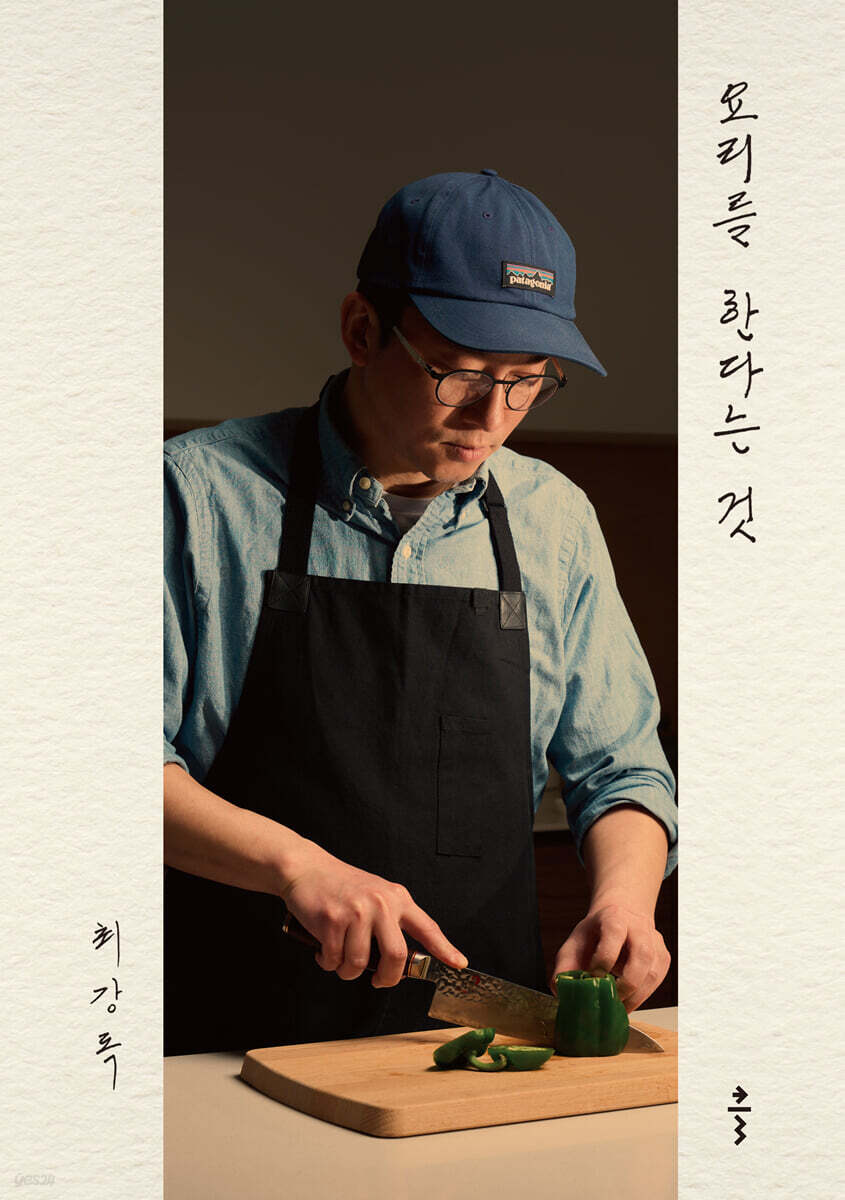
An autobiographical essay by Chef Choi Kang-rok, winner of MasterChef Korea 2 and who appeared in Black and White Chef and Please Take Care of My Refrigerator.
It contains daily life from the past and present with four keywords: food, cooking, restaurant, and chef.
As a professional chef and an ordinary person who loves to eat, the joys and sorrows, hopes and worries written in a calm and honest manner increase readers' immersion and empathy.
Heart-wrenching scenes shine through amidst Choi Kang-rok's signature humor that stands out throughout the book.
Reading this honest essay will make you think about what food and cooking are, and what work and career mean.
It contains daily life from the past and present with four keywords: food, cooking, restaurant, and chef.
As a professional chef and an ordinary person who loves to eat, the joys and sorrows, hopes and worries written in a calm and honest manner increase readers' immersion and empathy.
Heart-wrenching scenes shine through amidst Choi Kang-rok's signature humor that stands out throughout the book.
Reading this honest essay will make you think about what food and cooking are, and what work and career mean.
- You can preview some of the book's contents.
Preview
index
prolog
The thing called food
1. Eating
2-sided life - Ramen
3-Noodle Life - Udon, Jajangmyeon, Jjamppong
4-Noodle Life - Buckwheat Noodles
5 drinks
6 Special Foods for an Ordinary Day
7 Ordinary Food for Special Days
8 Dining out with family
9 Eating alone
10 Memories of Taste
Cooking
1. Braised
2 sashimi
3 grilled
4 steamed
5 broth
6 Fried
7. Undercut
8 swords
9 Bowls and Tools
10 Developing a Menu
11 My Cooking
Running a restaurant
1. Go to work
2 Views
3. Material preparation
4 Lunch and Afternoon
5. Welcoming guests
6 Menu
7 Business hours
8 Deadline
9. Leave work
10 Restaurant Neo
11 My Restaurant
Living as a chef
1. Talent of a Chef - For those who dream of becoming a chef
2 Becoming a Chef
3 worry, worry, worry
4 Small pleasures
5 Frustration
6 Things I Did as a Chef - School Lectures
7 Things I Did After Becoming a Chef - Survival Program
8 Things I Did as a Chef - Cooking Programs
9 Things I Did After Becoming a Chef - YouTube and Books
10 I am a cook
The thing called food
1. Eating
2-sided life - Ramen
3-Noodle Life - Udon, Jajangmyeon, Jjamppong
4-Noodle Life - Buckwheat Noodles
5 drinks
6 Special Foods for an Ordinary Day
7 Ordinary Food for Special Days
8 Dining out with family
9 Eating alone
10 Memories of Taste
Cooking
1. Braised
2 sashimi
3 grilled
4 steamed
5 broth
6 Fried
7. Undercut
8 swords
9 Bowls and Tools
10 Developing a Menu
11 My Cooking
Running a restaurant
1. Go to work
2 Views
3. Material preparation
4 Lunch and Afternoon
5. Welcoming guests
6 Menu
7 Business hours
8 Deadline
9. Leave work
10 Restaurant Neo
11 My Restaurant
Living as a chef
1. Talent of a Chef - For those who dream of becoming a chef
2 Becoming a Chef
3 worry, worry, worry
4 Small pleasures
5 Frustration
6 Things I Did as a Chef - School Lectures
7 Things I Did After Becoming a Chef - Survival Program
8 Things I Did as a Chef - Cooking Programs
9 Things I Did After Becoming a Chef - YouTube and Books
10 I am a cook
Detailed image
.jpg)
Into the book
When I come out after eating, if I think the food was 'reasonable' rather than making detailed judgments like 'the seasoning was exquisite' or 'the sauce was delicious', then I recognize that place as a good restaurant.
‘Reasonable’ is a different standard from ‘cost-effectiveness’.
There are places where you feel uneasy after eating there, even if it's cheap and delicious, and there are places where you spend a lot of money and say, "It was okay."
I will give a comprehensive evaluation of my time there, including the taste of the food as well as the price.
In other words, what matters is overall satisfaction.
Eating seems to be more than just putting delicious food in our mouths; it's also about adding another satisfying moment to our lives.
--- From "Eating"
The key point of Egg Porridge Ramen is that the ramen soup acknowledges that it is the fruit of researchers.
I just dissolved it in water and it tastes like this.
So, you can think of it as adding egg to the broth, which is the essence of ramen flavor, to thicken it.
How delicious it would be if the egg contained all the broth.
The noodles are coated in some places with the egg that has become a thick sauce.
You should roll the rice when there is about 1/10 of the noodles left.
Egg porridge ramen is complete when eaten with the remaining noodles and rice.
With a bowl like this, even if it's ramen, it feels like you haven't eaten enough.
Because you get enough egg protein.
(On the other hand, there is a downside that you end up eating all the sodium in the soup and the carbohydrates double.)
--- From "A Life of Face-to-face Meeting - Ramen"
As Koreans, we can all experience the charm of charcoal, even if we are not chefs.
This is because I instinctively try to find the best conditions that charcoal can create by grilling meat at a restaurant near my house and flipping it over.
I wanted to compare charcoal to life because it has a peak point, a prime, the best moment of one's life, but it also has the futility of eventually turning to ash.
--- From "Grilled"
A restaurant is a place that serves a set menu of food in a fixed location.
If I have a role in that space, I just have to be faithful to that role.
When the role begins, the buttocks become tense and the greeting “Welcome!” is also loud.
Then, when the role is over, you repeat that life where you lose all your strength.
If you're an introvert, you'll know.
We go out to the square to live a social life, play 'role-playing' diligently and diligently, and then come back into the cave.
--- From "Welcoming Guests"
When naming a dish, the basics are 'listing the ingredients and the recipe'.
Asparagus fritters, sugar syrup, these names, if you look at them, are actually a combination of ingredients and cooking methods.
However, although it is a word commonly used to express the distinction between main and secondary ingredients, the word 'side dish' is not used as much as possible.
It doesn't come out of my mouth naturally anymore.
In a restaurant, I consciously use different words for fear of appearing like I'm fooling around.
Of course, there are guests who are waiting for this to be said.
--- From the "Menu"
My child always asks me this when he comes back from recording.
“Did you lose or did you win?” I didn’t know that children liked competition this much.
Even though I told him it was a fantasy, he always took it seriously.
But the reaction is not great.
When I win, I am quietly happy, and when I lose, I am quietly upset.
Even when we go to the market together, if we see a cutlassfish, we say, “Dad, you won with that,” and if we see a cauliflower, we say, “You lost with that.”
Ingredients have become the key to victory.
The child enjoys his father's competition, but has no interest in cooking.
‘Reasonable’ is a different standard from ‘cost-effectiveness’.
There are places where you feel uneasy after eating there, even if it's cheap and delicious, and there are places where you spend a lot of money and say, "It was okay."
I will give a comprehensive evaluation of my time there, including the taste of the food as well as the price.
In other words, what matters is overall satisfaction.
Eating seems to be more than just putting delicious food in our mouths; it's also about adding another satisfying moment to our lives.
--- From "Eating"
The key point of Egg Porridge Ramen is that the ramen soup acknowledges that it is the fruit of researchers.
I just dissolved it in water and it tastes like this.
So, you can think of it as adding egg to the broth, which is the essence of ramen flavor, to thicken it.
How delicious it would be if the egg contained all the broth.
The noodles are coated in some places with the egg that has become a thick sauce.
You should roll the rice when there is about 1/10 of the noodles left.
Egg porridge ramen is complete when eaten with the remaining noodles and rice.
With a bowl like this, even if it's ramen, it feels like you haven't eaten enough.
Because you get enough egg protein.
(On the other hand, there is a downside that you end up eating all the sodium in the soup and the carbohydrates double.)
--- From "A Life of Face-to-face Meeting - Ramen"
As Koreans, we can all experience the charm of charcoal, even if we are not chefs.
This is because I instinctively try to find the best conditions that charcoal can create by grilling meat at a restaurant near my house and flipping it over.
I wanted to compare charcoal to life because it has a peak point, a prime, the best moment of one's life, but it also has the futility of eventually turning to ash.
--- From "Grilled"
A restaurant is a place that serves a set menu of food in a fixed location.
If I have a role in that space, I just have to be faithful to that role.
When the role begins, the buttocks become tense and the greeting “Welcome!” is also loud.
Then, when the role is over, you repeat that life where you lose all your strength.
If you're an introvert, you'll know.
We go out to the square to live a social life, play 'role-playing' diligently and diligently, and then come back into the cave.
--- From "Welcoming Guests"
When naming a dish, the basics are 'listing the ingredients and the recipe'.
Asparagus fritters, sugar syrup, these names, if you look at them, are actually a combination of ingredients and cooking methods.
However, although it is a word commonly used to express the distinction between main and secondary ingredients, the word 'side dish' is not used as much as possible.
It doesn't come out of my mouth naturally anymore.
In a restaurant, I consciously use different words for fear of appearing like I'm fooling around.
Of course, there are guests who are waiting for this to be said.
--- From the "Menu"
My child always asks me this when he comes back from recording.
“Did you lose or did you win?” I didn’t know that children liked competition this much.
Even though I told him it was a fantasy, he always took it seriously.
But the reaction is not great.
When I win, I am quietly happy, and when I lose, I am quietly upset.
Even when we go to the market together, if we see a cutlassfish, we say, “Dad, you won with that,” and if we see a cauliflower, we say, “You lost with that.”
Ingredients have become the key to victory.
The child enjoys his father's competition, but has no interest in cooking.
--- From "What I Did After Becoming a Chef - Cooking Program"
Publisher's Review
Sparkling humor and deep emotion amidst serious sentences!
The silent struggle of an introverted chef who is endlessly cautious about his career and life.
Chef Choi Kang-rok, known for his serious attitude and solid skills through cooking programs such as “MasterChef Korea 2,” “Black and White Chef,” and “Please Take Care of My Refrigerator,” is already the author of a bestseller chosen by 40,000 readers and is also a translator of Japanese cookbooks.
If the previous work, "Choi Kang-rok's Cooking Notes," explained detailed and useful tips on ingredients, this book, "On Cooking," is an autobiographical essay by Choi Kang-rok about his life as a chef.
The daily life of introvert Choi Kang-rok, which is honestly expressed through four keywords: food, cooking, restaurant, and chef, may seem calm, but underneath it all, it is tightly woven with joys and sorrows, hopes and worries about his career and life.
As you read the calm sentences with empathy, Choi Kang-rok's humor and hand-drawn drawings appear here and there, drawing readers even further into the story.
Then, unexpectedly, poignant scenes strike the heart and leave a deep impression.
In 'Food', we reflect on the meaning of eating by introducing foods we encountered on our journey to find flavors.
'Cooking' is a full-fledged cooking story.
When you think of 'Choi Kang-rok', you can get a glimpse of his unique perspective on various cooking methods and tools, including braised dishes.
"Running a Restaurant," which describes the daily experiences of running a restaurant until recently, is a complete and precious "career essay" that unfilteredly reveals the points where reality and ideals collide.
Lastly, in 'Living as a Chef', I share the achievements, frustrations, and new experiences I encountered while living as a chef.
It is more interesting to read because it contains stories from broadcasts and books that we are familiar with.
In this simple essay, author Choi Kang-rok shares his daily life without any unnecessary details, prompting readers to reflect on what food, work, and career mean in our lives.
The silent struggle of an introverted chef who is endlessly cautious about his career and life.
Chef Choi Kang-rok, known for his serious attitude and solid skills through cooking programs such as “MasterChef Korea 2,” “Black and White Chef,” and “Please Take Care of My Refrigerator,” is already the author of a bestseller chosen by 40,000 readers and is also a translator of Japanese cookbooks.
If the previous work, "Choi Kang-rok's Cooking Notes," explained detailed and useful tips on ingredients, this book, "On Cooking," is an autobiographical essay by Choi Kang-rok about his life as a chef.
The daily life of introvert Choi Kang-rok, which is honestly expressed through four keywords: food, cooking, restaurant, and chef, may seem calm, but underneath it all, it is tightly woven with joys and sorrows, hopes and worries about his career and life.
As you read the calm sentences with empathy, Choi Kang-rok's humor and hand-drawn drawings appear here and there, drawing readers even further into the story.
Then, unexpectedly, poignant scenes strike the heart and leave a deep impression.
In 'Food', we reflect on the meaning of eating by introducing foods we encountered on our journey to find flavors.
'Cooking' is a full-fledged cooking story.
When you think of 'Choi Kang-rok', you can get a glimpse of his unique perspective on various cooking methods and tools, including braised dishes.
"Running a Restaurant," which describes the daily experiences of running a restaurant until recently, is a complete and precious "career essay" that unfilteredly reveals the points where reality and ideals collide.
Lastly, in 'Living as a Chef', I share the achievements, frustrations, and new experiences I encountered while living as a chef.
It is more interesting to read because it contains stories from broadcasts and books that we are familiar with.
In this simple essay, author Choi Kang-rok shares his daily life without any unnecessary details, prompting readers to reflect on what food, work, and career mean in our lives.
GOODS SPECIFICS
- Date of issue: June 23, 2025
- Page count, weight, size: 224 pages | 286g | 128*182*15mm
- ISBN13: 9791194374299
- ISBN10: 1194374298
You may also like
카테고리
korean


korean

![GQ KOREA Mark (Monthly): December [2025]](http://librairie.coreenne.fr/cdn/shop/files/8ef265dbbfbf186523ed75ba7319009d.jpg?v=1765340328&width=3840)


