

On a Good Death
 |
Description
Book Introduction
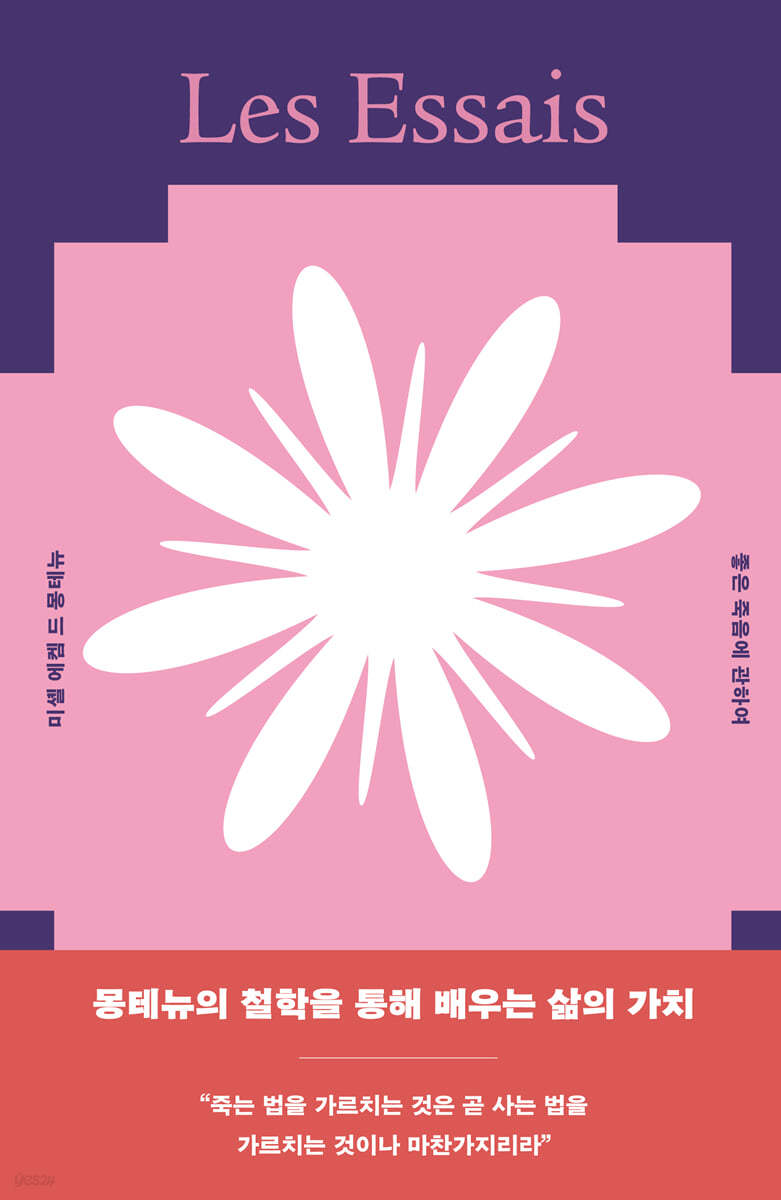
★ A masterpiece curation by Professor Jae-Chan Jeong of Hanyang University's Department of Korean Language Education and author of "To You Who Forgot Poetry"! ★ A classic masterpiece that contains Montaigne's philosophy of talking about death for the sake of life! Learning the value of life through Montaigne's philosophy! “Teaching how to die is like teaching how to live.” Death is a shadow of life that no one can avoid. However, the depth and meaning of our lives can change depending on how we accept and prepare for death. In his masterpiece, Esses, Montaigne, the great 16th-century French thinker, offers us wisdom on how to live not only the last moments of our lives, but also the present moment, through his honest and profound reflections on death. Rather than fearing and avoiding death, Montaigne tried to accept and understand it as a natural process of life. He reflects on the value of life through death and emphasizes the attitude of living faithfully in the present. His essays dispel the vague anxiety about death and give us the courage to live every moment of life to the fullest. Through penetrating questions like "If we could choose the time and place of our death, how would we end our lives?" and "When will we die?", Montaigne leads us to profound reflections that transcend the boundaries between life and death and penetrate the essence of life. "On a Good Death" is a collection of carefully selected essays from Montaigne's "Esses" that contain Montaigne's insights into the "good death." Let's make our present life more loving and valuable through the wise voice of Montaigne. This book will be a warm companion that will guide you to live each moment to the fullest, without losing hope, even in the face of life's limitations. With Montaigne, let us gain strength to live today and hope for tomorrow. |
- You can preview some of the book's contents.
Preview
index
Introduction: Now is the time to read Montaigne's essays.
Chapter 1 Life and Death Are Not Yours Anyway
1.
To you who tosses and turns all night worrying about tomorrow
2.
In the face of death, we are all beginners.
3.
We're all being pushed to the same place.
4.
Death, as always, comes unexpectedly.
5.
You should always be ready to put on your shoes and go.
6.
Don't make plans that take too long
7.
No matter when life ends, your life is already complete.
Chapter 2: When Life's Waves Are High, We Learn to Live Truly
1.
I will finally find true freedom.
2.
Don't base your happiness on the opinions and judgments of others.
3.
The true self I encounter in solitude
4.
Misfortune and suffering are ultimately created by thoughts.
5.
No pain can torment us forever.
6.
Your soul is stronger than you think
7.
Happiness is a subjective feeling, not an objective condition.
8.
No matter how many tears I shed, I will not be shaken.
9.
Happiness or unhappiness depends solely on ourselves.
10.
When I dance, I just dance, and when I sleep, I just sleep.
Chapter 3: Do not lament the past, nor fear the future.
1.
Isn't the world a swing that swings forever?
2.
I have no regrets about what has passed.
3.
You can't be free if you look back on what you left behind.
4.
The value of youth reflected in the passage of time
5.
Life is ultimately a journey to get to know myself.
6.
Finding myself beyond the world around me
7.
My life as I describe it
Chapter 4: From the moment we are born, we move toward death.
1.
On the border between life and death
2.
The perfection of life begins with death.
3.
What do we ask in the face of death?
4.
The beginning and the end are connected as one.
6.
I will learn death passionately.
5.
Living your life calmly
7.
Valuable and enjoyable, that's life.
main
Chapter 1 Life and Death Are Not Yours Anyway
1.
To you who tosses and turns all night worrying about tomorrow
2.
In the face of death, we are all beginners.
3.
We're all being pushed to the same place.
4.
Death, as always, comes unexpectedly.
5.
You should always be ready to put on your shoes and go.
6.
Don't make plans that take too long
7.
No matter when life ends, your life is already complete.
Chapter 2: When Life's Waves Are High, We Learn to Live Truly
1.
I will finally find true freedom.
2.
Don't base your happiness on the opinions and judgments of others.
3.
The true self I encounter in solitude
4.
Misfortune and suffering are ultimately created by thoughts.
5.
No pain can torment us forever.
6.
Your soul is stronger than you think
7.
Happiness is a subjective feeling, not an objective condition.
8.
No matter how many tears I shed, I will not be shaken.
9.
Happiness or unhappiness depends solely on ourselves.
10.
When I dance, I just dance, and when I sleep, I just sleep.
Chapter 3: Do not lament the past, nor fear the future.
1.
Isn't the world a swing that swings forever?
2.
I have no regrets about what has passed.
3.
You can't be free if you look back on what you left behind.
4.
The value of youth reflected in the passage of time
5.
Life is ultimately a journey to get to know myself.
6.
Finding myself beyond the world around me
7.
My life as I describe it
Chapter 4: From the moment we are born, we move toward death.
1.
On the border between life and death
2.
The perfection of life begins with death.
3.
What do we ask in the face of death?
4.
The beginning and the end are connected as one.
6.
I will learn death passionately.
5.
Living your life calmly
7.
Valuable and enjoyable, that's life.
main
Detailed image

Into the book
We never stay in our own homes, we always wander beyond them.
Fear, desire, and hope drive us into the future and rob us of the meaning of the present, so we cannot live properly in the present, worrying not only about the near future but also about what will happen after we die, when we ourselves will no longer exist.
(…) In order to do the work given to you, it is most important to first know who you are and what work is suitable for you.
A person who knows himself does not care about what others do, loves himself, and focuses on himself above all else.
He does not engage in useless work, vain thoughts, or claims.
A foolish person is never satisfied even when he gets what he wants, but a wise person is content with what he has and is never disappointed in himself.
--pp.17-18 From "Chapter 1: To You Who Toss and Turns All Night Worrying About Tomorrow"
Death is less important than nothingness.
If there is anything more insignificant than nothing.
Death has nothing to do with us, neither when we die nor when we live.
Because you are alive when you are alive, and because you are dead when you are dead.
No one dies before their time.
Just as the time before you were born is not yours, the time you leave behind is not yours either.
Now that time has nothing to do with you.
When your life ends, it is already complete.
The value of a life is not determined by how long one lives, but by what kind of life one lives.
There are people who have lived long lives but actually lived short lives.
When life is within you, focus entirely on that life.
A satisfying life depends not on the number of years you have lived, but on your will.
---p.46 From “Chapter 1: When Life Ends, Your Life Is Already Complete”
You need to have your own little room where you can enjoy true freedom.
A precious refuge where we can be alone, where we can enjoy freedom.
Right there, we must talk every day, facing ourselves alone, without any interaction or contact with the outside world.
He must speak and laugh alone as if he had no wife, no children, no property, no servants, no attendants.
So that when the time comes to lose them, it won't be a new experience to have to live without them.
We have a soul that can delve into ourselves.
The soul can have companions, attack and defend itself, and converse with itself.
So, you don't have to worry that being alone will lead to lethargy and lethargy.
---p.55 From “Chapter 2: Finally Finding True Freedom”
Our views give value to things.
Often times, we judge not only the value of an object, but also how it will affect us.
We don't care about the properties or usefulness of things, but only about the money we have to pay to have them.
As if price were part of the essence of the thing.
And what we call its value is not really what the thing gives us, but what we give to the thing.
So we have to be very careful when we spend.
The usefulness of a thing is determined by its value, and we never tolerate the value of a thing being needlessly inflated.
The value of a diamond is determined by its price, the value of virtue by its difficulties, the value of piety by its pain, and the value of medicine by its bitterness.
---p.95 From “Chapter 2 Happiness is not an objective condition, but a subjective feeling”
If we, like ourselves, live an inner life that only we can know, we must establish internal standards that can serve as a touchstone for our own actions, and we must be able to praise ourselves and scold ourselves according to those standards.
I have my own laws and courts to judge me, and I rely on them more than on anything else.
When I meet other people's standards, my actions are limited, but when I meet my own standards, my actions become freer.
---p.135 From “Chapter 3: Isn’t the world a swing that sways forever?”
Whatever it is, I don't really regret anything that has happened.
If you think that it was something that had to happen anyway, the pain will disappear.
Now, the matter is part of the great flow of the universe, the chain of cause and effect as spoken of in Stoic philosophy.
Unless the laws of the universe completely reverse the past and future, no matter how much you think, wish, or imagine, you will not be able to change a single part of what has already happened.
---p.149 From “Chapter 3: I Don’t Regret What Has Past”
Many things seem bigger in the imagination than in reality.
I have spent most of my life in excellent health, and not just healthy, but energetic and full of life.
I was so healthy and happy living that the thought of getting sick was terrifying.
But when I actually got sick, I realized that the effects of what I had feared were trivial and insignificant compared to what I had feared.
---p.202 From “Chapter 4: On the Borderline of Life and Death”
Knowing how to be content with yourself as you are is the very essence of flawless perfection and divinity.
Because we do not seek to know our own way of being, we seek other ways; because we do not know what is happening within us, we seek to escape from ourselves.
No matter how long you climb to the top of a wooden pole, you'll still end up walking on your own legs.
Even if I sit on the highest throne in the world, I'm still just sitting on my butt.
In my opinion, the most beautiful life is one that is ordinary and befitting of human nature, one that is neither special nor excessive, but lives according to the natural order of things.
Fear, desire, and hope drive us into the future and rob us of the meaning of the present, so we cannot live properly in the present, worrying not only about the near future but also about what will happen after we die, when we ourselves will no longer exist.
(…) In order to do the work given to you, it is most important to first know who you are and what work is suitable for you.
A person who knows himself does not care about what others do, loves himself, and focuses on himself above all else.
He does not engage in useless work, vain thoughts, or claims.
A foolish person is never satisfied even when he gets what he wants, but a wise person is content with what he has and is never disappointed in himself.
--pp.17-18 From "Chapter 1: To You Who Toss and Turns All Night Worrying About Tomorrow"
Death is less important than nothingness.
If there is anything more insignificant than nothing.
Death has nothing to do with us, neither when we die nor when we live.
Because you are alive when you are alive, and because you are dead when you are dead.
No one dies before their time.
Just as the time before you were born is not yours, the time you leave behind is not yours either.
Now that time has nothing to do with you.
When your life ends, it is already complete.
The value of a life is not determined by how long one lives, but by what kind of life one lives.
There are people who have lived long lives but actually lived short lives.
When life is within you, focus entirely on that life.
A satisfying life depends not on the number of years you have lived, but on your will.
---p.46 From “Chapter 1: When Life Ends, Your Life Is Already Complete”
You need to have your own little room where you can enjoy true freedom.
A precious refuge where we can be alone, where we can enjoy freedom.
Right there, we must talk every day, facing ourselves alone, without any interaction or contact with the outside world.
He must speak and laugh alone as if he had no wife, no children, no property, no servants, no attendants.
So that when the time comes to lose them, it won't be a new experience to have to live without them.
We have a soul that can delve into ourselves.
The soul can have companions, attack and defend itself, and converse with itself.
So, you don't have to worry that being alone will lead to lethargy and lethargy.
---p.55 From “Chapter 2: Finally Finding True Freedom”
Our views give value to things.
Often times, we judge not only the value of an object, but also how it will affect us.
We don't care about the properties or usefulness of things, but only about the money we have to pay to have them.
As if price were part of the essence of the thing.
And what we call its value is not really what the thing gives us, but what we give to the thing.
So we have to be very careful when we spend.
The usefulness of a thing is determined by its value, and we never tolerate the value of a thing being needlessly inflated.
The value of a diamond is determined by its price, the value of virtue by its difficulties, the value of piety by its pain, and the value of medicine by its bitterness.
---p.95 From “Chapter 2 Happiness is not an objective condition, but a subjective feeling”
If we, like ourselves, live an inner life that only we can know, we must establish internal standards that can serve as a touchstone for our own actions, and we must be able to praise ourselves and scold ourselves according to those standards.
I have my own laws and courts to judge me, and I rely on them more than on anything else.
When I meet other people's standards, my actions are limited, but when I meet my own standards, my actions become freer.
---p.135 From “Chapter 3: Isn’t the world a swing that sways forever?”
Whatever it is, I don't really regret anything that has happened.
If you think that it was something that had to happen anyway, the pain will disappear.
Now, the matter is part of the great flow of the universe, the chain of cause and effect as spoken of in Stoic philosophy.
Unless the laws of the universe completely reverse the past and future, no matter how much you think, wish, or imagine, you will not be able to change a single part of what has already happened.
---p.149 From “Chapter 3: I Don’t Regret What Has Past”
Many things seem bigger in the imagination than in reality.
I have spent most of my life in excellent health, and not just healthy, but energetic and full of life.
I was so healthy and happy living that the thought of getting sick was terrifying.
But when I actually got sick, I realized that the effects of what I had feared were trivial and insignificant compared to what I had feared.
---p.202 From “Chapter 4: On the Borderline of Life and Death”
Knowing how to be content with yourself as you are is the very essence of flawless perfection and divinity.
Because we do not seek to know our own way of being, we seek other ways; because we do not know what is happening within us, we seek to escape from ourselves.
No matter how long you climb to the top of a wooden pole, you'll still end up walking on your own legs.
Even if I sit on the highest throne in the world, I'm still just sitting on my butt.
In my opinion, the most beautiful life is one that is ordinary and befitting of human nature, one that is neither special nor excessive, but lives according to the natural order of things.
---p.246 From “Chapter 4: Accepting with a Willing Heart and Being Grateful”
Publisher's Review
- Montaigne, the pioneer who created a new genre called the essay and established its spirit!
★ A great French intellectual admired by Shakespeare, Nietzsche, and Virginia Woolf!
★ A luxury curation featuring the author of “To You Who Forgot Poetry” and Professor Jae-Chan Jeong of Hanyang University’s Department of Korean Language Education!
Montaigne offers warm comfort to those seeking answers to the question, "How should we live?"
“Death is not the purpose of life, but the knowledge of death is a way of understanding life.”
Why We Should Read Montaigne Now
Montaigne, a representative thinker and moralist of 16th century France, left behind 『Esse』, which can be said to be the origin of the writing genre called 'Essai'.
『Essays』, better known in Korea as 『Susangrok』, contains deep reflections on human existence and life, and is particularly famous for its profound insight into ‘death.’
Montaigne received Latin education from childhood and studied law at the University of Toulouse.
In 1557 he became an examiner at the Parlement of Bordeaux, and in 1571 he succeeded his father as Lord of Montaigne.
However, Montaigne was not interested in political life, and at the age of 38, he retired from all public office and lived in seclusion in his hometown, Château de Montaigne, devoting himself to writing.
There are several reasons why Montaigne became obsessed with the subject of 'death'.
First, Montaigne lived in a turbulent time, rife with religious wars and plague.
After suffering a near-death experience in a horse-riding accident at the age of 38, he began to contemplate life and death even more deeply.
Second, Montaigne, who was sickly from childhood, witnessed the deaths of countless loved ones.
The death of a close friend in particular had a profound impact on him.
Third, Montaigne was deeply influenced by Stoic philosophy and tried to accept death as a natural part of life.
Rather than fearing death, he sought to understand it as a way to enrich life.
Against this backdrop, Montaigne illuminates death from various angles.
Through his reflections on the inevitability of death, the fear of death, the attitude of preparing for death, and the world after death, he constantly reminds us of the finiteness of human existence and emphasizes living faithfully in the present.
The 16th century, in which Montaigne lived, was a time of religious wars and plague, casting a dark shadow of death.
But today, our society is also filled with anxiety and uncertainty due to pandemics, climate change, and social conflict.
In this reality, Montaigne's message resonates deeply with us, transcending time.
We, living in these uncertain times, are encouraged to reflect on death, rediscover the value of life, and live faithfully in the present.
His essays go beyond simple comfort or advice; they ask profound questions about the nature of life and show the process of finding the answers for oneself.
Reading Montaigne's essays is like embarking on a journey to discover one's true self in the face of life's anxieties and loneliness.
Now is the time to read Montaigne's essays and gain wisdom for life.
Montaigne's constant meditation on a 'good death'
Montaigne said, "To study philosophy is to prepare for death."
He constantly explores the subject of death and asks the question of what a 'good death' is.
For Montaigne, death was not simply the end of life, but an important process of reflecting on and completing the meaning of life.
He said, "We are constantly moving towards death.
But in the process, you discover life," he said, emphasizing that being aware of death is the way to enrich life.
Montaigne believed that a 'good death' was not simply about the peace of mind at the moment of death, but was connected to an attitude that permeates one's entire life.
For him, a 'good death' is a death that comes naturally after living the life given to oneself faithfully without losing one's subjectivity until the last moment of life.
He emphasized the attitude of living passionately until the last moment of life, saying, "The most noble death is not dying in one's bed, but dying in the battle of life."
Finally, Montaigne argues that rather than fearing or avoiding death, we should accept it as a part of life and constantly reflect on it.
Through deep reflection on death, we can realize the finiteness of life and feel the preciousness of the present more keenly.
In this way, Montaigne paradoxically elevates the value of life through death and guides us to live every moment meaningfully.
As he said, "If we were not afraid of death, we would truly live." A proper understanding of death leads to a deeper insight into life.
The launching work of the 'Esse' series, a prose piece that opens a new door to life.
Inviting readers into the world of essays, starting with Montaigne's philosophy.
"On a Good Death" presents readers with a selection of Montaigne's core thoughts on 'death' from his extensive "Essays."
It not only serves as an excellent introductory text for readers who find it difficult to directly read Montaigne's original text, but also provides an opportunity to savor the essence of Montaigne's philosophy.
This book addresses fundamental questions of human existence, such as life and death, suffering and happiness, and freedom, in Montaigne's characteristically honest and insightful style.
As Montaigne said, "I have learned more from exploring myself than from any book in the world," he attempts to have a sincere conversation with his readers by honestly revealing his life experiences and inner world.
The 'Essays' series, which begins with Montaigne's 'On a Good Death', touches the honest confessions and traces of reflection of classical writers that were sleeping in faded bookshelves, and their writings transcend time to comfort our hearts and awaken us to the essence of life.
Readers will also find themselves shedding tears at Montaigne's calm reflections, feeling their hearts race at Thoreau's free cries, and smiling at Alain's warm consolation, along with the 'Esse' series.
I hope that you will pause with 'Esse', reflect on your busy day, listen to your inner voice, and discover new meaning in life.
★ A great French intellectual admired by Shakespeare, Nietzsche, and Virginia Woolf!
★ A luxury curation featuring the author of “To You Who Forgot Poetry” and Professor Jae-Chan Jeong of Hanyang University’s Department of Korean Language Education!
Montaigne offers warm comfort to those seeking answers to the question, "How should we live?"
“Death is not the purpose of life, but the knowledge of death is a way of understanding life.”
Why We Should Read Montaigne Now
Montaigne, a representative thinker and moralist of 16th century France, left behind 『Esse』, which can be said to be the origin of the writing genre called 'Essai'.
『Essays』, better known in Korea as 『Susangrok』, contains deep reflections on human existence and life, and is particularly famous for its profound insight into ‘death.’
Montaigne received Latin education from childhood and studied law at the University of Toulouse.
In 1557 he became an examiner at the Parlement of Bordeaux, and in 1571 he succeeded his father as Lord of Montaigne.
However, Montaigne was not interested in political life, and at the age of 38, he retired from all public office and lived in seclusion in his hometown, Château de Montaigne, devoting himself to writing.
There are several reasons why Montaigne became obsessed with the subject of 'death'.
First, Montaigne lived in a turbulent time, rife with religious wars and plague.
After suffering a near-death experience in a horse-riding accident at the age of 38, he began to contemplate life and death even more deeply.
Second, Montaigne, who was sickly from childhood, witnessed the deaths of countless loved ones.
The death of a close friend in particular had a profound impact on him.
Third, Montaigne was deeply influenced by Stoic philosophy and tried to accept death as a natural part of life.
Rather than fearing death, he sought to understand it as a way to enrich life.
Against this backdrop, Montaigne illuminates death from various angles.
Through his reflections on the inevitability of death, the fear of death, the attitude of preparing for death, and the world after death, he constantly reminds us of the finiteness of human existence and emphasizes living faithfully in the present.
The 16th century, in which Montaigne lived, was a time of religious wars and plague, casting a dark shadow of death.
But today, our society is also filled with anxiety and uncertainty due to pandemics, climate change, and social conflict.
In this reality, Montaigne's message resonates deeply with us, transcending time.
We, living in these uncertain times, are encouraged to reflect on death, rediscover the value of life, and live faithfully in the present.
His essays go beyond simple comfort or advice; they ask profound questions about the nature of life and show the process of finding the answers for oneself.
Reading Montaigne's essays is like embarking on a journey to discover one's true self in the face of life's anxieties and loneliness.
Now is the time to read Montaigne's essays and gain wisdom for life.
Montaigne's constant meditation on a 'good death'
Montaigne said, "To study philosophy is to prepare for death."
He constantly explores the subject of death and asks the question of what a 'good death' is.
For Montaigne, death was not simply the end of life, but an important process of reflecting on and completing the meaning of life.
He said, "We are constantly moving towards death.
But in the process, you discover life," he said, emphasizing that being aware of death is the way to enrich life.
Montaigne believed that a 'good death' was not simply about the peace of mind at the moment of death, but was connected to an attitude that permeates one's entire life.
For him, a 'good death' is a death that comes naturally after living the life given to oneself faithfully without losing one's subjectivity until the last moment of life.
He emphasized the attitude of living passionately until the last moment of life, saying, "The most noble death is not dying in one's bed, but dying in the battle of life."
Finally, Montaigne argues that rather than fearing or avoiding death, we should accept it as a part of life and constantly reflect on it.
Through deep reflection on death, we can realize the finiteness of life and feel the preciousness of the present more keenly.
In this way, Montaigne paradoxically elevates the value of life through death and guides us to live every moment meaningfully.
As he said, "If we were not afraid of death, we would truly live." A proper understanding of death leads to a deeper insight into life.
The launching work of the 'Esse' series, a prose piece that opens a new door to life.
Inviting readers into the world of essays, starting with Montaigne's philosophy.
"On a Good Death" presents readers with a selection of Montaigne's core thoughts on 'death' from his extensive "Essays."
It not only serves as an excellent introductory text for readers who find it difficult to directly read Montaigne's original text, but also provides an opportunity to savor the essence of Montaigne's philosophy.
This book addresses fundamental questions of human existence, such as life and death, suffering and happiness, and freedom, in Montaigne's characteristically honest and insightful style.
As Montaigne said, "I have learned more from exploring myself than from any book in the world," he attempts to have a sincere conversation with his readers by honestly revealing his life experiences and inner world.
The 'Essays' series, which begins with Montaigne's 'On a Good Death', touches the honest confessions and traces of reflection of classical writers that were sleeping in faded bookshelves, and their writings transcend time to comfort our hearts and awaken us to the essence of life.
Readers will also find themselves shedding tears at Montaigne's calm reflections, feeling their hearts race at Thoreau's free cries, and smiling at Alain's warm consolation, along with the 'Esse' series.
I hope that you will pause with 'Esse', reflect on your busy day, listen to your inner voice, and discover new meaning in life.
GOODS SPECIFICS
- Date of issue: November 30, 2024
- Format: Hardcover book binding method guide
- Page count, weight, size: 256 pages | 132*204*20mm
- ISBN13: 9791171178643
- ISBN10: 1171178646
You may also like
카테고리
korean


korean

![GQ KOREA Mark (Monthly): December [2025]](http://librairie.coreenne.fr/cdn/shop/files/8ef265dbbfbf186523ed75ba7319009d.jpg?v=1765340328&width=3840)


