

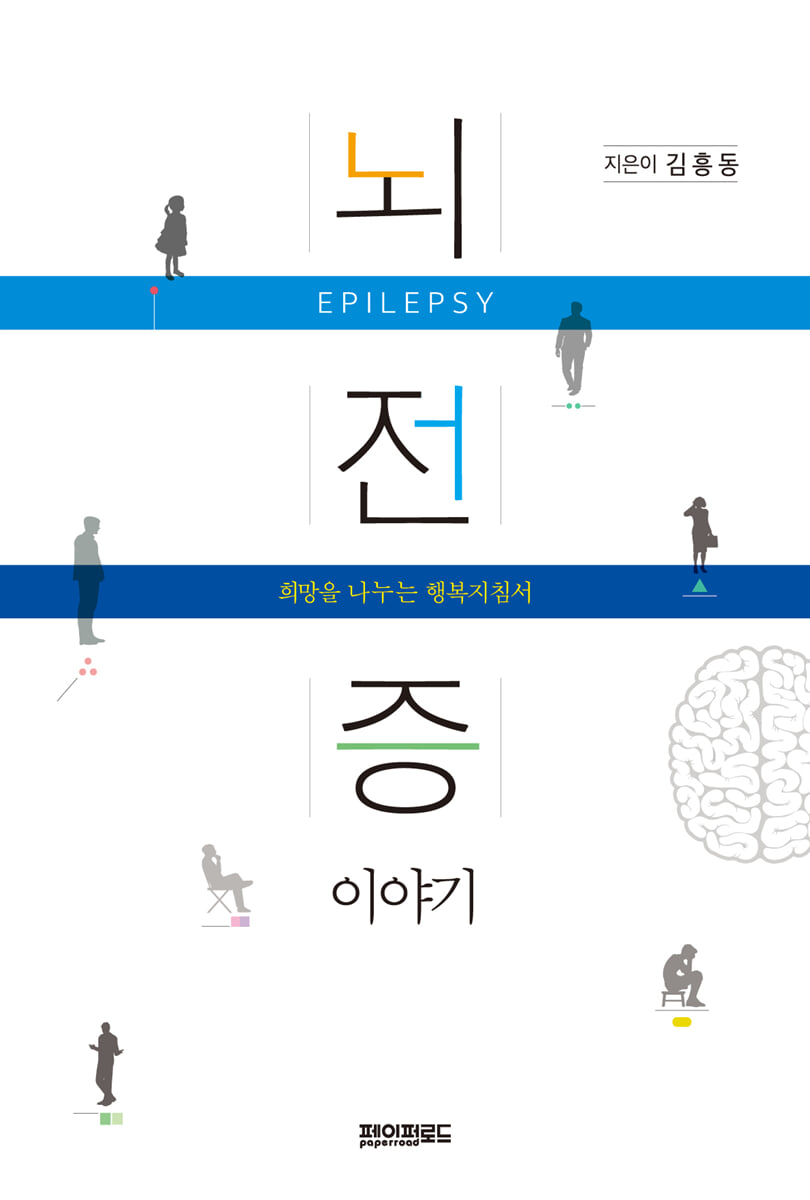
Epilepsy Story
 |
Description
Book Introduction
“I hope this book can help patients suffering from epilepsy.
"
Dr. Kim Heung-dong, who has been an epilepsy specialist for decades
Telling the truth about epilepsy, a disease marred by prejudice and misunderstanding!
Dr. Kim Heung-dong, who has treated epilepsy patients throughout his life, has published a book titled “Epilepsy Story” containing his experiences and knowledge.
Chapter 1, “Epilepsy Story,” contains essential information about epilepsy, including the definition of the disease, symptoms of epilepsy, treatment methods, and information for patients.
Chapter 2, “Brain Science Stories,” contains the latest scientific information to help you understand epilepsy more easily.
Despite being such a specialized field, the author's extensive knowledge and detailed explanations make the content easy to understand and the storyline interesting.
The reason why Dr. Kim Heung-dong wrote this book is clear.
This book aims to create a world where epilepsy patients do not have to hide the fact that they are suffering from the disease.
Chapter 3, “A Story about the Rights of Epilepsy Patients,” discusses the social problems faced by epilepsy patients in Korea and the measures needed to improve them.
The appendix, “Patients’ Stories,” which follows, is a collection of essays from patients with epilepsy and their guardians, and is a “true voice of epilepsy” that will touch the hearts of readers.
We still don't know what epilepsy is, and we don't hesitate to discriminate against people with epilepsy.
To create a world where epilepsy patients can live together as fellow citizens, Dr. Kim Heung-dong takes up his pen instead of his scalpel to completely erase the stain of prejudice and misunderstanding that has stained epilepsy.
"
Dr. Kim Heung-dong, who has been an epilepsy specialist for decades
Telling the truth about epilepsy, a disease marred by prejudice and misunderstanding!
Dr. Kim Heung-dong, who has treated epilepsy patients throughout his life, has published a book titled “Epilepsy Story” containing his experiences and knowledge.
Chapter 1, “Epilepsy Story,” contains essential information about epilepsy, including the definition of the disease, symptoms of epilepsy, treatment methods, and information for patients.
Chapter 2, “Brain Science Stories,” contains the latest scientific information to help you understand epilepsy more easily.
Despite being such a specialized field, the author's extensive knowledge and detailed explanations make the content easy to understand and the storyline interesting.
The reason why Dr. Kim Heung-dong wrote this book is clear.
This book aims to create a world where epilepsy patients do not have to hide the fact that they are suffering from the disease.
Chapter 3, “A Story about the Rights of Epilepsy Patients,” discusses the social problems faced by epilepsy patients in Korea and the measures needed to improve them.
The appendix, “Patients’ Stories,” which follows, is a collection of essays from patients with epilepsy and their guardians, and is a “true voice of epilepsy” that will touch the hearts of readers.
We still don't know what epilepsy is, and we don't hesitate to discriminate against people with epilepsy.
To create a world where epilepsy patients can live together as fellow citizens, Dr. Kim Heung-dong takes up his pen instead of his scalpel to completely erase the stain of prejudice and misunderstanding that has stained epilepsy.
- You can preview some of the book's contents.
Preview
index
Recommendation… 5p
Preface … 7p
Chapter 1: The Story of Epilepsy
The History of Epilepsy… 16p
Causes of epilepsy… 20p
Symptoms of epilepsy… 25p
Diagnosing Epilepsy, and Diagnostic Errors… 30p
The Reality of EEG… 35p
Treatment of epilepsy… 39p
Pharmacological treatment of epilepsy… 44p
Dietary Treatment for Epilepsy… 48p
Surgical treatment for epilepsy… 61p
Hippocampal sclerosis surgery story… 65p
Daily Care for Epilepsy Patients… 70p
Psychological, Emotional, and Behavioral Management of Patients with Epilepsy… 75p
Infantile spasms and Lennox-Gastaut syndrome… 79p
Febrile convulsions… 82p
Chapter 2: Brain Science Stories
Brain Structure - Focusing on Developmental Structure and Function… 93p
Abnormalities of the Cerebral Nervous System… 102p
Brain Science Story… 104p
Memory and Learning… 108p
The Happiness Guide… 112p
The Secret to Brain Health (The Doctrine of the Mean) … 116p
Chapter 3: The Rights of Epilepsy Patients
A brief reflection on health insurance coverage… 123p
Blow up the arbitration board… 125p
Drug Abuse and Proper Drug Use… 129p
Urging the Enactment of the Epilepsy Support Act… 132 pages
Public health care for epilepsy patients… 141p
About the Korean Epilepsy Association… 145p
Conclusion… 150p
Appendix_Patient Stories… 155p
Preface … 7p
Chapter 1: The Story of Epilepsy
The History of Epilepsy… 16p
Causes of epilepsy… 20p
Symptoms of epilepsy… 25p
Diagnosing Epilepsy, and Diagnostic Errors… 30p
The Reality of EEG… 35p
Treatment of epilepsy… 39p
Pharmacological treatment of epilepsy… 44p
Dietary Treatment for Epilepsy… 48p
Surgical treatment for epilepsy… 61p
Hippocampal sclerosis surgery story… 65p
Daily Care for Epilepsy Patients… 70p
Psychological, Emotional, and Behavioral Management of Patients with Epilepsy… 75p
Infantile spasms and Lennox-Gastaut syndrome… 79p
Febrile convulsions… 82p
Chapter 2: Brain Science Stories
Brain Structure - Focusing on Developmental Structure and Function… 93p
Abnormalities of the Cerebral Nervous System… 102p
Brain Science Story… 104p
Memory and Learning… 108p
The Happiness Guide… 112p
The Secret to Brain Health (The Doctrine of the Mean) … 116p
Chapter 3: The Rights of Epilepsy Patients
A brief reflection on health insurance coverage… 123p
Blow up the arbitration board… 125p
Drug Abuse and Proper Drug Use… 129p
Urging the Enactment of the Epilepsy Support Act… 132 pages
Public health care for epilepsy patients… 141p
About the Korean Epilepsy Association… 145p
Conclusion… 150p
Appendix_Patient Stories… 155p
Into the book
Most epilepsy is a condition characterized by repeated, short-term seizures that last about 3 to 5 minutes.
Having this level of seizures two or three times a year could be seen as nothing serious.
However, even for patients who experience seizures of this severity, the psychological burden they feel is beyond imagination.
The unpredictable nature of the symptoms, such as sudden loss of consciousness, collapse, and grand mal seizures, causes serious psychological burden.
Due to these effects, patients with epilepsy often have poor psycho-emotional health and a severely reduced quality of life.
Pediatric patients have six times the rate of behavioral disorders, including psychological and emotional abnormalities, compared to general children, and more than three times the rate compared to children with other chronic diseases, such as juvenile diabetes.
Psycho-emotional disorders manifest as depression or anxiety.
In this state of problems, it is impossible to maintain a healthy state even if the epilepsy is perfectly controlled.
This is also the reason why the suicide rate among epilepsy patients is higher than that of the general population.
And this psychological state affects family members and those around them, causing serious negative effects on family health and social interactions.
--- p.75, from “Psychological-Emotional-Behavioral Management of Epilepsy”
In fact, I have seen many patients who suffered from dozens of seizures a day and suffered from intellectual disability due to the aftereffects of these seizures, but who recovered as if by magic after taking cannabidiol (a medicinal ingredient extracted from hemp seed oil).
The problem is that health insurance does not yet cover this drug.
Patients and their parents, who are burdened by the monthly medication costs of 1 to 3 million won, are having a very difficult time.
The Ministry of Health and Welfare and the Health Insurance Review and Assessment Service (HIRA) have been delaying the decision to cover this drug due to concerns that its high cost will strain the insurance finances.
The number of children suffering from severe, intractable epilepsy in our country does not exceed 5,000 at most.
Also, among them, no more than 20% of children receive clear help from this drug and must continue taking it.
Even though the number of children who will continue to use this medicine is not that large, their right to health is being treated like scraps of paper in the name of ‘stabilizing insurance finances.’
--- p.123, from “Thoughts on Health Insurance Coverage”
To be covered by insurance for cannabidiol use, patients must have either Lennox-Gastaut syndrome or Dravet syndrome, which are known as the most common forms of intractable epilepsy.
Additionally, patients must have been treated with at least five drugs from the list of drugs designated by the Health Insurance Review & Assessment Service prior to taking this drug.
After starting treatment, the number of seizures must not be reduced by more than 50%, and in pediatric patients, the drug 'Clobazam' must be used concurrently to be approved.
However, clobazam can easily cause pneumonia as a respiratory side effect in children and causes significant fatigue.
The use of this clobazam drug is not recommended by international academic societies or many countries.
This is a drug recommended only by the American Epilepsy Society, but in Korea, it has been set as a standard that must be followed.
Given these circumstances, absurd cases of insurance benefits not being recognized are constantly being reported.
The reality is that insurance coverage is not recognized for reasons such as the seizure symptoms have already been controlled by more than 50% with existing medication, clobazam with serious side effects was not used, other treatments (surgery or diet) other than prescribed drug therapy are not applicable, and Lennox-Gastaut syndrome is not applicable because it is a 'generalized epilepsy' even though the patient's focal epilepsy has secondarily progressed to Lennox-Gastaut syndrome.
--- p.127, from "Blow Up the Jury"
The process of establishing insurance coverage for cannabidiol is chaired by a less specialized adult neurologist, while the opinions of more specialized pediatric neurologists are excluded due to the "additional cost burden."
As a result, stricter standards are set to help insurance finances, and drug costs are reduced as much as possible based on those standards.
The current behavior of continuously ignoring the voices of more professional groups who constantly call for a relaxation of standards is a tearful and painful effort by the judging panel.
--- p.128, from "Blow Up the Jury"
The WHO has declared epilepsy a disease of national importance and issued a statement urging health authorities in each country to do so.
The Korean Epilepsy Association, which works to protect the rights of epilepsy patients in Korea, also participated as the Korean branch of the International Epilepsy Association.
While the government has been neglecting its role, the Korean Epilepsy Association, which is responsible for the health of epilepsy patients, has been continuously urging the government to pay attention to the issue along with the Korean Epilepsy Society for the past 20 years.
The disease name, previously called 'epilepsy', was changed to the scientific term 'epilepsy', and efforts were continuously made through broadcasts, social media, and petitions to the National Assembly to overcome the social prejudice surrounding epilepsy.
But so far, the changes have been minimal.
In order to create a world where patients can live as healthy members of society without hiding their disease and by raising awareness, the government must directly allocate a budget to accurately inform and educate civil society about this disease.
This is the conclusion I have drawn from my activities so far.
--- p.142, from “Public Health Care for Epilepsy Patients”
Epilepsy, epilepsy, convulsions… … .
No matter how I put it, it's a painful word.
In fact, I still haven't gotten over the various contexts that those words give.
But I desperately want to overcome it.
Not only me, but my son and my husband are also affected.
--- p.203, from “Patients’ Stories - About the Hope That Comes to Us”
A while ago, there was a new patient in the ward.
The child looked bright and innocent for his age.
Even his speech was childish and unbecoming of his age.
The mother of the child held the child and repeatedly explained to us, “My child has a disability.”
As you know, our ward specializes in epilepsy, so we regularly see children with similar conditions.
So none of our nurses care about that problem.
Still, it seemed like the child's mother needed more time to relax.
Looking at that scene, I realized that the world outside this ward still looks at epilepsy patients with uncomfortable eyes.
I have changed a lot, but the world hasn't changed much.
Having this level of seizures two or three times a year could be seen as nothing serious.
However, even for patients who experience seizures of this severity, the psychological burden they feel is beyond imagination.
The unpredictable nature of the symptoms, such as sudden loss of consciousness, collapse, and grand mal seizures, causes serious psychological burden.
Due to these effects, patients with epilepsy often have poor psycho-emotional health and a severely reduced quality of life.
Pediatric patients have six times the rate of behavioral disorders, including psychological and emotional abnormalities, compared to general children, and more than three times the rate compared to children with other chronic diseases, such as juvenile diabetes.
Psycho-emotional disorders manifest as depression or anxiety.
In this state of problems, it is impossible to maintain a healthy state even if the epilepsy is perfectly controlled.
This is also the reason why the suicide rate among epilepsy patients is higher than that of the general population.
And this psychological state affects family members and those around them, causing serious negative effects on family health and social interactions.
--- p.75, from “Psychological-Emotional-Behavioral Management of Epilepsy”
In fact, I have seen many patients who suffered from dozens of seizures a day and suffered from intellectual disability due to the aftereffects of these seizures, but who recovered as if by magic after taking cannabidiol (a medicinal ingredient extracted from hemp seed oil).
The problem is that health insurance does not yet cover this drug.
Patients and their parents, who are burdened by the monthly medication costs of 1 to 3 million won, are having a very difficult time.
The Ministry of Health and Welfare and the Health Insurance Review and Assessment Service (HIRA) have been delaying the decision to cover this drug due to concerns that its high cost will strain the insurance finances.
The number of children suffering from severe, intractable epilepsy in our country does not exceed 5,000 at most.
Also, among them, no more than 20% of children receive clear help from this drug and must continue taking it.
Even though the number of children who will continue to use this medicine is not that large, their right to health is being treated like scraps of paper in the name of ‘stabilizing insurance finances.’
--- p.123, from “Thoughts on Health Insurance Coverage”
To be covered by insurance for cannabidiol use, patients must have either Lennox-Gastaut syndrome or Dravet syndrome, which are known as the most common forms of intractable epilepsy.
Additionally, patients must have been treated with at least five drugs from the list of drugs designated by the Health Insurance Review & Assessment Service prior to taking this drug.
After starting treatment, the number of seizures must not be reduced by more than 50%, and in pediatric patients, the drug 'Clobazam' must be used concurrently to be approved.
However, clobazam can easily cause pneumonia as a respiratory side effect in children and causes significant fatigue.
The use of this clobazam drug is not recommended by international academic societies or many countries.
This is a drug recommended only by the American Epilepsy Society, but in Korea, it has been set as a standard that must be followed.
Given these circumstances, absurd cases of insurance benefits not being recognized are constantly being reported.
The reality is that insurance coverage is not recognized for reasons such as the seizure symptoms have already been controlled by more than 50% with existing medication, clobazam with serious side effects was not used, other treatments (surgery or diet) other than prescribed drug therapy are not applicable, and Lennox-Gastaut syndrome is not applicable because it is a 'generalized epilepsy' even though the patient's focal epilepsy has secondarily progressed to Lennox-Gastaut syndrome.
--- p.127, from "Blow Up the Jury"
The process of establishing insurance coverage for cannabidiol is chaired by a less specialized adult neurologist, while the opinions of more specialized pediatric neurologists are excluded due to the "additional cost burden."
As a result, stricter standards are set to help insurance finances, and drug costs are reduced as much as possible based on those standards.
The current behavior of continuously ignoring the voices of more professional groups who constantly call for a relaxation of standards is a tearful and painful effort by the judging panel.
--- p.128, from "Blow Up the Jury"
The WHO has declared epilepsy a disease of national importance and issued a statement urging health authorities in each country to do so.
The Korean Epilepsy Association, which works to protect the rights of epilepsy patients in Korea, also participated as the Korean branch of the International Epilepsy Association.
While the government has been neglecting its role, the Korean Epilepsy Association, which is responsible for the health of epilepsy patients, has been continuously urging the government to pay attention to the issue along with the Korean Epilepsy Society for the past 20 years.
The disease name, previously called 'epilepsy', was changed to the scientific term 'epilepsy', and efforts were continuously made through broadcasts, social media, and petitions to the National Assembly to overcome the social prejudice surrounding epilepsy.
But so far, the changes have been minimal.
In order to create a world where patients can live as healthy members of society without hiding their disease and by raising awareness, the government must directly allocate a budget to accurately inform and educate civil society about this disease.
This is the conclusion I have drawn from my activities so far.
--- p.142, from “Public Health Care for Epilepsy Patients”
Epilepsy, epilepsy, convulsions… … .
No matter how I put it, it's a painful word.
In fact, I still haven't gotten over the various contexts that those words give.
But I desperately want to overcome it.
Not only me, but my son and my husband are also affected.
--- p.203, from “Patients’ Stories - About the Hope That Comes to Us”
A while ago, there was a new patient in the ward.
The child looked bright and innocent for his age.
Even his speech was childish and unbecoming of his age.
The mother of the child held the child and repeatedly explained to us, “My child has a disability.”
As you know, our ward specializes in epilepsy, so we regularly see children with similar conditions.
So none of our nurses care about that problem.
Still, it seemed like the child's mother needed more time to relax.
Looking at that scene, I realized that the world outside this ward still looks at epilepsy patients with uncomfortable eyes.
I have changed a lot, but the world hasn't changed much.
--- p.252, from “Patients’ Stories - Enduring Tears and Forging the Light to Arrive”
Publisher's Review
Epilepsy, a disease both unfamiliar and familiar
Epilepsy.
It is a disease that affects approximately 370,000 patients in Korea.
It affects 5 to 7 out of every 1,000 people worldwide, and is one of the three major brain diseases along with dementia and stroke.
Yet, the majority of Korean citizens still do not even know the name of this disease.
When you hear the old name for epilepsy, a familiar image immediately comes to mind.
The old name for epilepsy was 'epilepsy'.
It is a disease whose name itself is used as a stigma.
Patients with this disease suffered from unscientific stereotypes that they were "demon-possessed" due to their frequent seizures, and not only did they not receive proper treatment, they were also socially isolated, which often ruined their lives.
Decades have passed since missionary Robinson brought anti-epileptic drugs to Korea and organized the Rose Society, a group for epilepsy patients.
However, even today, the health rights of epilepsy patients are not guaranteed, and social prejudice remains unresolved.
Dr. Kim Heung-dong's "Epilepsy Story" was published to dispel the fears and misconceptions surrounding epilepsy patients.
Chapter 1, “Epilepsy Story,” contains all the information about the disease called epilepsy, and Chapter 2, “Brain Science Story,” contains information for understanding the human “brain.”
This book may feel unfamiliar because it deals with specialized terminology and difficult topics, but its strength is that it is not difficult to read thanks to the expert's easy-to-understand explanations and extensive knowledge.
We anticipate that this will help us put aside unfounded fears and misconceptions about epilepsy.
So that people with epilepsy can live as equal citizens
Chapter 3, “A Story about the Rights of Epilepsy Patients,” addresses the social issues faced by epilepsy patients.
The problems faced by patients and their families are numerous.
These include the exclusion of medications necessary for a healthy life from health insurance coverage, the failure to guarantee the health rights of epilepsy patients, and the isolation of epilepsy patients and their families.
Despite the world's most advanced healthcare systems, people with epilepsy are still not recognized as equal citizens.
It means that we are not living as equal members within the same country.
Author Kim Heung-dong, who has treated epilepsy patients throughout his life, has personally championed the enactment of the Epilepsy Support Act as president of the Korean Epilepsy Association. He also joined the WHO in issuing a statement urging governments around the world to "establish a systematic support system for epilepsy patients," and has continued to actively pursue the enactment of the Epilepsy Support Act until recently.
The reason he worked so hard for patients was because he witnessed firsthand the difficulties that epilepsy patients and their families face.
Chapter 3 will help you understand the financial and psychological difficulties that epilepsy patients and their families face, as well as ways to address them.
Patient Stories: The True Voices of Epilepsy
The appendix to this book contains testimonials from patients and their families who overcame epilepsy with the help of Dr. Kim Heung-dong.
All the stories are vivid and colorful at the same time.
The discrimination and suffering experienced while suffering from epilepsy are fully contained in this book.
It is a detailed and unvarnished account of how the family members were treated for epilepsy, what symptoms they experienced as a result of their epilepsy, and how their lives changed afterward.
It can be called the 'true voice of epilepsy' that touches the hearts of readers.
This is why it is recommended to read even if you are not a medical professional.
If you read several essays, you can see some commonalities.
This is the world's wrong view of epilepsy and the resulting fear that patients and their families feel.
I couldn't bring myself to confide in anyone, and I couldn't ask for comfort, saying that it was difficult and hard.
Most of those who wrote the journal entries have either recovered from epilepsy or experienced significant relief from their symptoms, but it is easy to imagine the suffering endured by the countless other epilepsy patients who have not.
Just as people become comrades by empathizing with and comforting each other's pain, I hope that we can listen to the stories of those with epilepsy around us and welcome them as proud members of our community.
Epilepsy.
It is a disease that affects approximately 370,000 patients in Korea.
It affects 5 to 7 out of every 1,000 people worldwide, and is one of the three major brain diseases along with dementia and stroke.
Yet, the majority of Korean citizens still do not even know the name of this disease.
When you hear the old name for epilepsy, a familiar image immediately comes to mind.
The old name for epilepsy was 'epilepsy'.
It is a disease whose name itself is used as a stigma.
Patients with this disease suffered from unscientific stereotypes that they were "demon-possessed" due to their frequent seizures, and not only did they not receive proper treatment, they were also socially isolated, which often ruined their lives.
Decades have passed since missionary Robinson brought anti-epileptic drugs to Korea and organized the Rose Society, a group for epilepsy patients.
However, even today, the health rights of epilepsy patients are not guaranteed, and social prejudice remains unresolved.
Dr. Kim Heung-dong's "Epilepsy Story" was published to dispel the fears and misconceptions surrounding epilepsy patients.
Chapter 1, “Epilepsy Story,” contains all the information about the disease called epilepsy, and Chapter 2, “Brain Science Story,” contains information for understanding the human “brain.”
This book may feel unfamiliar because it deals with specialized terminology and difficult topics, but its strength is that it is not difficult to read thanks to the expert's easy-to-understand explanations and extensive knowledge.
We anticipate that this will help us put aside unfounded fears and misconceptions about epilepsy.
So that people with epilepsy can live as equal citizens
Chapter 3, “A Story about the Rights of Epilepsy Patients,” addresses the social issues faced by epilepsy patients.
The problems faced by patients and their families are numerous.
These include the exclusion of medications necessary for a healthy life from health insurance coverage, the failure to guarantee the health rights of epilepsy patients, and the isolation of epilepsy patients and their families.
Despite the world's most advanced healthcare systems, people with epilepsy are still not recognized as equal citizens.
It means that we are not living as equal members within the same country.
Author Kim Heung-dong, who has treated epilepsy patients throughout his life, has personally championed the enactment of the Epilepsy Support Act as president of the Korean Epilepsy Association. He also joined the WHO in issuing a statement urging governments around the world to "establish a systematic support system for epilepsy patients," and has continued to actively pursue the enactment of the Epilepsy Support Act until recently.
The reason he worked so hard for patients was because he witnessed firsthand the difficulties that epilepsy patients and their families face.
Chapter 3 will help you understand the financial and psychological difficulties that epilepsy patients and their families face, as well as ways to address them.
Patient Stories: The True Voices of Epilepsy
The appendix to this book contains testimonials from patients and their families who overcame epilepsy with the help of Dr. Kim Heung-dong.
All the stories are vivid and colorful at the same time.
The discrimination and suffering experienced while suffering from epilepsy are fully contained in this book.
It is a detailed and unvarnished account of how the family members were treated for epilepsy, what symptoms they experienced as a result of their epilepsy, and how their lives changed afterward.
It can be called the 'true voice of epilepsy' that touches the hearts of readers.
This is why it is recommended to read even if you are not a medical professional.
If you read several essays, you can see some commonalities.
This is the world's wrong view of epilepsy and the resulting fear that patients and their families feel.
I couldn't bring myself to confide in anyone, and I couldn't ask for comfort, saying that it was difficult and hard.
Most of those who wrote the journal entries have either recovered from epilepsy or experienced significant relief from their symptoms, but it is easy to imagine the suffering endured by the countless other epilepsy patients who have not.
Just as people become comrades by empathizing with and comforting each other's pain, I hope that we can listen to the stories of those with epilepsy around us and welcome them as proud members of our community.
GOODS SPECIFICS
- Date of issue: August 21, 2023
- Page count, weight, size: 256 pages | 406g | 152*225*17mm
- ISBN13: 9791192376288
- ISBN10: 1192376285
You may also like
카테고리
korean


korean

![GQ KOREA Mark (Monthly): December [2025]](http://librairie.coreenne.fr/cdn/shop/files/8ef265dbbfbf186523ed75ba7319009d.jpg?v=1765340328&width=3840)


