

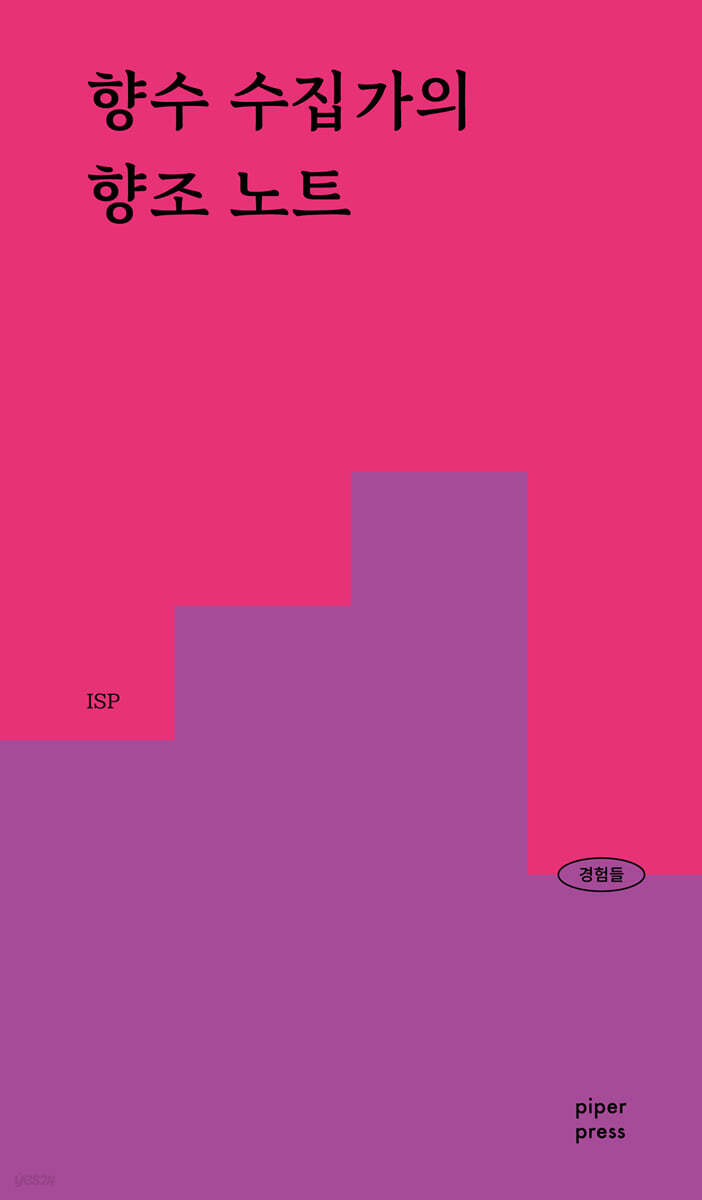
A Perfume Collector's Fragrance Notes
 |
Description
Book Introduction
108 scents and 189 fragrances guided by vintage perfume collector ISP
From the raw materials and history of perfume to the products and their characteristics
The basics of perfume life: everything about fragrance, starting with the scent notes.
Bergamot, cedarwood, white musk.
These terms are called notes or fragrances.
This is an expression used to distinguish between the various scents contained in one perfume.
Jo Malone's 'Lime Basil & Mandarin' contains notes of mandarin, basil, and amberwood.
We will take a closer look at popular and diverse fragrance families such as citrus, woody, animalic, and floral, as well as families that may feel relatively unfamiliar, such as chypre, marine, and gourmand.
By the time you finish reading, you will feel as if you are smelling the fragrance just by reading or hearing the description.
From the raw materials and history of perfume to the products and their characteristics
The basics of perfume life: everything about fragrance, starting with the scent notes.
Bergamot, cedarwood, white musk.
These terms are called notes or fragrances.
This is an expression used to distinguish between the various scents contained in one perfume.
Jo Malone's 'Lime Basil & Mandarin' contains notes of mandarin, basil, and amberwood.
We will take a closer look at popular and diverse fragrance families such as citrus, woody, animalic, and floral, as well as families that may feel relatively unfamiliar, such as chypre, marine, and gourmand.
By the time you finish reading, you will feel as if you are smelling the fragrance just by reading or hearing the description.
- You can preview some of the book's contents.
Preview
index
prolog.
You need to know the fragrance to predict the scent.
1 citrus
A refreshing summer in Southern Europe
Create a first impression of your perfume
Bergamot
lemon, lime
orange
blood orange
Citrus changes quickly
2 Woody
The magic of the smell of the temple
Patchouli
Vetiver
Oud
Sandalwood
Cedarwood
cypress
pine, fir
Gaiac Wood
Rosewood
Akigala wood, cashmere wood, ebony wood
3 Animalic
From the soft fur to the smell of sweat
Musk
civet
Castorium
Ambergris
Hyracium
Ambrette
Costus
birch tar
4 Amberley
Amber or Oriental
Labdanum
Benzoin
Balsam
vanilla
Tonka Bean
5 spices
From dental smells to coriander, mala-tang, and lamb skewers
cardamom
Juniper berries
coriander seeds
Ginger
Pepper
Cinnamon
Nutmeg
clove
black pepper
anise
Cumin
6 Green, Aromatic
green
Galbanum
Violet Leaf
Blackcurrant Leaf
Aromatic herbs
lavender
Rosemary
time
sage
Artemisia
Basil, tarragon
Mint
7 Fougeres
Lavender-oakmoss-coumarin
8 sipre
Moss and the island of Cyprus
Bergamot-Ladanum-Oakmoss
Chypre and oakmoss
9 Fruity
Sweet and refreshing scent of the future
Berry
Rich
Apples, peaches, plums, apricots, pears
Melon, watermelon
tropical fruits
Coconut, fig
10 Guermand
The sweetness of dessert in the scent
cotton candy, chocolate
milk, cream, yogurt
nuts
alcohol
11 Floral
Rosy Floral
rose
geranium
Peony
Green floral
lily of the valley
daffodil
Freesia
hyacinth
White floral
Jasmine
Tuberose
Gardenia
Orange Blossom
Tiare, frangipani
lily
Ylang ylang
Honeysuckle
Spicy Floral
carnation
Immortel
Powdery floral
Iris
Violet
heliotrope
Mimosa
Osmanthus
Champaka
Water lily, lotus
12 Aquatic
The refreshing scent of water
Calon
Aquatic, Marine, Ozonic
13 Powdery
The scent of powder and soap
14 Aldehydes
The sharp coolness of disinfectant
Epilogue.
Synthetic vs. Natural Fragrances
supplement.
Search by perfume name
You need to know the fragrance to predict the scent.
1 citrus
A refreshing summer in Southern Europe
Create a first impression of your perfume
Bergamot
lemon, lime
orange
blood orange
Citrus changes quickly
2 Woody
The magic of the smell of the temple
Patchouli
Vetiver
Oud
Sandalwood
Cedarwood
cypress
pine, fir
Gaiac Wood
Rosewood
Akigala wood, cashmere wood, ebony wood
3 Animalic
From the soft fur to the smell of sweat
Musk
civet
Castorium
Ambergris
Hyracium
Ambrette
Costus
birch tar
4 Amberley
Amber or Oriental
Labdanum
Benzoin
Balsam
vanilla
Tonka Bean
5 spices
From dental smells to coriander, mala-tang, and lamb skewers
cardamom
Juniper berries
coriander seeds
Ginger
Pepper
Cinnamon
Nutmeg
clove
black pepper
anise
Cumin
6 Green, Aromatic
green
Galbanum
Violet Leaf
Blackcurrant Leaf
Aromatic herbs
lavender
Rosemary
time
sage
Artemisia
Basil, tarragon
Mint
7 Fougeres
Lavender-oakmoss-coumarin
8 sipre
Moss and the island of Cyprus
Bergamot-Ladanum-Oakmoss
Chypre and oakmoss
9 Fruity
Sweet and refreshing scent of the future
Berry
Rich
Apples, peaches, plums, apricots, pears
Melon, watermelon
tropical fruits
Coconut, fig
10 Guermand
The sweetness of dessert in the scent
cotton candy, chocolate
milk, cream, yogurt
nuts
alcohol
11 Floral
Rosy Floral
rose
geranium
Peony
Green floral
lily of the valley
daffodil
Freesia
hyacinth
White floral
Jasmine
Tuberose
Gardenia
Orange Blossom
Tiare, frangipani
lily
Ylang ylang
Honeysuckle
Spicy Floral
carnation
Immortel
Powdery floral
Iris
Violet
heliotrope
Mimosa
Osmanthus
Champaka
Water lily, lotus
12 Aquatic
The refreshing scent of water
Calon
Aquatic, Marine, Ozonic
13 Powdery
The scent of powder and soap
14 Aldehydes
The sharp coolness of disinfectant
Epilogue.
Synthetic vs. Natural Fragrances
supplement.
Search by perfume name
Detailed image

Into the book
Bergamot, like other citrus fruits, has a clean, cool, and tart scent, but it also has grassy, herbal, lavender-like notes and floral notes.
So it gives a much more complex and rich scent, which creates a beautiful effect when used in perfume.
--- p.18, from "Citrus"
Oud is a fragrance created when mold or bacteria invade agarwood.
The scent comes from the resin, a substance that trees make to protect themselves.
Agarwood that has not undergone a bacterial invasion process has no scent.
--- p.31, from "Woody"
Just because leather scents are included in perfume doesn't mean that actual leather is soaked in alcohol to extract the scent.
Chanel's 'Cur de Russie' uses the scent of birch tar to create the scent of leather.
Le Labo's 'Patchouli 24' also contains a birch scent.
--- p.66, from "Animalic"
Other citrus fruits are sometimes used in place of bergamot, and blends of patchouli, vetiver, and musk are sometimes used to recreate the rich, dark feeling that oakmoss imparts.
Of course, those who love the unique feel of oakmoss will not like it at all.
--- p.103, from "Cypre"
The perfume that first sparked the gourmand fragrance boom was Thierry Mugler's 'Angel'.
It has notes of patchouli, cotton candy, and chocolate.
It expressed the contrast between the sweet cotton candy scent and the bitter, dark, woody patchouli, and after the release of this perfume, many perfumes began to use sweet dessert scents.
--- p.112, from "Guermande"
Some people wonder if tuberose is related to roses because of its name.
It's a completely unrelated plant.
Unlike roses, it is a bulbous plant.
It is difficult to obtain fresh flowers in Korea because they are native to Mexico and cannot survive the winter in Korea.
--- p.129, from "Floral"
Immortelle flowers have a very peculiar fragrance.
There are floral notes, but also spicy notes like tobacco, hay, and curry, and very sweet notes like honey or maple syrup.
--- p.137~138, from "Floral"
Calon, a chemical used to describe the scent of water, was developed by Pfizer in 1951.
They said that they had been researching it for use as a medicinal herb, but as they were not seeing much effect in that regard, they began to look for a method and began to pay attention to its unique scent.
It went on sale in 1966 and was patented in 1970.
A perfume that became a huge hit with its aquatic scent was Davidoff's 'Cool Water' released in 1988.
--- p.147, from "Aquatic"
When talking about aldehydes, you can't leave out Chanel 'No. 5'.
If you've ever smelled Chanel 'No. 5', you'll remember that it initially smells very cold and crisp.
It's aldehyde.
--- p.154, from "Aldehyde"
“If you change one or two ingredients (of a perfume), especially if they play a big role in defining the scent, it becomes difficult to perfectly reproduce the perfume,” said Maurice Roussel, a famous perfumer who created fragrances such as Guerlain’s ‘Insolence,’ Le Labo’s ‘Jasmine 17’ and ‘Ladanum 18,’ and Frédéric Malle’s ‘Musc Lavageur.’ He pointed out that “big brands ask me to change this and that, but keep the scent and production costs the same.”
So it gives a much more complex and rich scent, which creates a beautiful effect when used in perfume.
--- p.18, from "Citrus"
Oud is a fragrance created when mold or bacteria invade agarwood.
The scent comes from the resin, a substance that trees make to protect themselves.
Agarwood that has not undergone a bacterial invasion process has no scent.
--- p.31, from "Woody"
Just because leather scents are included in perfume doesn't mean that actual leather is soaked in alcohol to extract the scent.
Chanel's 'Cur de Russie' uses the scent of birch tar to create the scent of leather.
Le Labo's 'Patchouli 24' also contains a birch scent.
--- p.66, from "Animalic"
Other citrus fruits are sometimes used in place of bergamot, and blends of patchouli, vetiver, and musk are sometimes used to recreate the rich, dark feeling that oakmoss imparts.
Of course, those who love the unique feel of oakmoss will not like it at all.
--- p.103, from "Cypre"
The perfume that first sparked the gourmand fragrance boom was Thierry Mugler's 'Angel'.
It has notes of patchouli, cotton candy, and chocolate.
It expressed the contrast between the sweet cotton candy scent and the bitter, dark, woody patchouli, and after the release of this perfume, many perfumes began to use sweet dessert scents.
--- p.112, from "Guermande"
Some people wonder if tuberose is related to roses because of its name.
It's a completely unrelated plant.
Unlike roses, it is a bulbous plant.
It is difficult to obtain fresh flowers in Korea because they are native to Mexico and cannot survive the winter in Korea.
--- p.129, from "Floral"
Immortelle flowers have a very peculiar fragrance.
There are floral notes, but also spicy notes like tobacco, hay, and curry, and very sweet notes like honey or maple syrup.
--- p.137~138, from "Floral"
Calon, a chemical used to describe the scent of water, was developed by Pfizer in 1951.
They said that they had been researching it for use as a medicinal herb, but as they were not seeing much effect in that regard, they began to look for a method and began to pay attention to its unique scent.
It went on sale in 1966 and was patented in 1970.
A perfume that became a huge hit with its aquatic scent was Davidoff's 'Cool Water' released in 1988.
--- p.147, from "Aquatic"
When talking about aldehydes, you can't leave out Chanel 'No. 5'.
If you've ever smelled Chanel 'No. 5', you'll remember that it initially smells very cold and crisp.
It's aldehyde.
--- p.154, from "Aldehyde"
“If you change one or two ingredients (of a perfume), especially if they play a big role in defining the scent, it becomes difficult to perfectly reproduce the perfume,” said Maurice Roussel, a famous perfumer who created fragrances such as Guerlain’s ‘Insolence,’ Le Labo’s ‘Jasmine 17’ and ‘Ladanum 18,’ and Frédéric Malle’s ‘Musc Lavageur.’ He pointed out that “big brands ask me to change this and that, but keep the scent and production costs the same.”
--- p.162, from “Epilogue: Synthetic Fragrance vs. Natural Fragrance”
Publisher's Review
Ranked #1 in paid sales for nonfiction platform Piper series
Everything You Need to Know Before Choosing a Perfume
Niche perfume brands such as Le Labo and Jo Malone often use the names of their fragrances or ingredients as their product names.
It has names like Gaiac, Bergamot, and Hinoki.
Without knowing the fragrance and ingredients, it is difficult to find the fragrance you want and enjoy it.
A collector and perfume enthusiast of vintage perfumes discontinued decades ago, the author ISP vividly describes the scents of various perfumes based on the characteristics of their raw materials and fragrance notes.
It covers a whopping 108 fragrances and 189 perfumes, so you can easily find your preferred fragrance and ingredients.
The author is an expert who has grown plants that are used as raw materials for perfume to smell their scents and has also tried extracting the scents at home.
From familiar scents like citrus, oud, freesia, and musk to lesser-known scents like castoreum, ambergris, cotton candy, chocolate, and calone, it explains the process of scent discovery, scent extraction methods, and the characteristics of perfume in an easy and friendly manner.
You can find vivid stories and carefully selected information that only those who love something can experience and explore it firsthand.
Piper Press's "Experiences" series
True knowledge comes from experience.
〈Experiences〉 is a dictionary of practical experiences written by people who have experienced it firsthand.
Between books and wikis, we provide practical knowledge with the perspective of an experienced person.
Discover vivid knowledge and practical fun.
1.
A Perfume Collector's Fragrance Notes
2.
Tokyo this weekend
3.
A Guide to Magical Musical Life
Novel Writing for Non-Majors (Basic)
Seoul Architectural Tour (Basic)
Everything You Need to Know Before Choosing a Perfume
Niche perfume brands such as Le Labo and Jo Malone often use the names of their fragrances or ingredients as their product names.
It has names like Gaiac, Bergamot, and Hinoki.
Without knowing the fragrance and ingredients, it is difficult to find the fragrance you want and enjoy it.
A collector and perfume enthusiast of vintage perfumes discontinued decades ago, the author ISP vividly describes the scents of various perfumes based on the characteristics of their raw materials and fragrance notes.
It covers a whopping 108 fragrances and 189 perfumes, so you can easily find your preferred fragrance and ingredients.
The author is an expert who has grown plants that are used as raw materials for perfume to smell their scents and has also tried extracting the scents at home.
From familiar scents like citrus, oud, freesia, and musk to lesser-known scents like castoreum, ambergris, cotton candy, chocolate, and calone, it explains the process of scent discovery, scent extraction methods, and the characteristics of perfume in an easy and friendly manner.
You can find vivid stories and carefully selected information that only those who love something can experience and explore it firsthand.
Piper Press's "Experiences" series
True knowledge comes from experience.
〈Experiences〉 is a dictionary of practical experiences written by people who have experienced it firsthand.
Between books and wikis, we provide practical knowledge with the perspective of an experienced person.
Discover vivid knowledge and practical fun.
1.
A Perfume Collector's Fragrance Notes
2.
Tokyo this weekend
3.
A Guide to Magical Musical Life
Novel Writing for Non-Majors (Basic)
Seoul Architectural Tour (Basic)
GOODS SPECIFICS
- Date of issue: September 20, 2023
- Page count, weight, size: 176 pages | 204g | 120*205*12mm
- ISBN13: 9791197991806
- ISBN10: 1197991808
You may also like
카테고리
korean


korean

![GQ KOREA Mark (Monthly): December [2025]](http://librairie.coreenne.fr/cdn/shop/files/8ef265dbbfbf186523ed75ba7319009d.jpg?v=1765340328&width=3840)


