

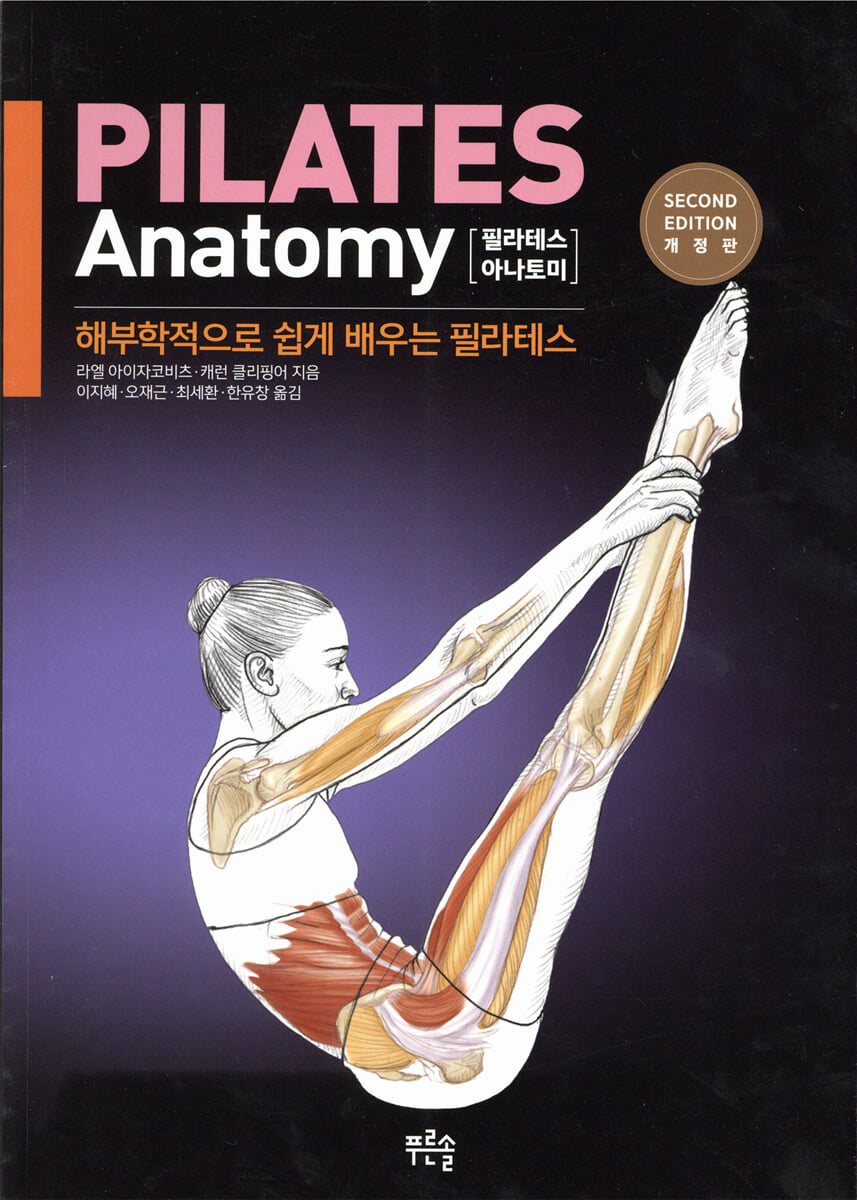
Pilates Anatomy
 |
Description
Book Introduction
“If you are a Pilates practitioner, you must read this book first.
Many people around the world who have already started Pilates have been delighted by this book.
You will be satisfied too.”
A unique book that Pilates practitioners will always refer to.
Pilates Anatomy
Pilates, a mainstream exercise method in everyday life
Pilates is an exercise method that focuses on training the body and mind, and has excellent effects such as increasing physical strength, flexibility, and body coordination, as well as reducing stress, improving concentration, and enhancing happiness.
Today, Pilates is one of the most popular exercise methods worldwide.
Recently, the number of Pilates practitioners has been increasing explosively both domestically and internationally.
Pilates is now accessible to everyone everywhere.
Pilates training is available in private studios, schools, fitness centers, and medical facilities.
People who practice Pilates range from top athletes to celebrities, people with limited physical abilities due to illness or injury, and even ordinary people who want to maintain a healthy body.
The age range is also wide, from kindergarteners to people in their 90s.
The reason Pilates was able to establish itself as a mainstream exercise method in such a short period of time is because it is accessible to everyone and its effects are outstanding.
Those who have tried various exercises but have not seen any significant results will find that if they try Pilates now, they will experience surprising results they could not have imagined.
Many people around the world who have already started Pilates have been delighted by this book.
You will be satisfied too.”
A unique book that Pilates practitioners will always refer to.
Pilates Anatomy
Pilates, a mainstream exercise method in everyday life
Pilates is an exercise method that focuses on training the body and mind, and has excellent effects such as increasing physical strength, flexibility, and body coordination, as well as reducing stress, improving concentration, and enhancing happiness.
Today, Pilates is one of the most popular exercise methods worldwide.
Recently, the number of Pilates practitioners has been increasing explosively both domestically and internationally.
Pilates is now accessible to everyone everywhere.
Pilates training is available in private studios, schools, fitness centers, and medical facilities.
People who practice Pilates range from top athletes to celebrities, people with limited physical abilities due to illness or injury, and even ordinary people who want to maintain a healthy body.
The age range is also wide, from kindergarteners to people in their 90s.
The reason Pilates was able to establish itself as a mainstream exercise method in such a short period of time is because it is accessible to everyone and its effects are outstanding.
Those who have tried various exercises but have not seen any significant results will find that if they try Pilates now, they will experience surprising results they could not have imagined.
- You can preview some of the book's contents.
Preview
index
introduction
CHAPTER 1 The Six Basic Principles of Pilates
SIX KEY PRINCIPLES OF PILATES
CHAPTER 2 Spine, Core, and Body Alignment
SPINE, CORE, AND BODY ALIGNMENT
CHAPTER 3 Muscle, Movement Analysis, and Mat Exercises
MUSCLES, MOVEMENT ANALYSIS, AND MAT WORK
CHAPTER 4 Basic Exercises on the Mat
FOUNDATION FOR A MAT SESSION
CHAPTER 5 Abdominal Exercises for Movement and Stabilization
ABDOMINAL WORK FOR MOVEMENT AND STABILIZATION
CHAPTER 6 Microsegmental Movements for a Flexible Spine
FINE ARTICULATION FOR A FLEXIBLE SPINE
CHAPTER 7 Trunk Lifts for a Functional Spine
BRIDGING FOR A FUNCTIONAL SPINE
CHAPTER 8 Lateral Exercises for Effective Core Workouts
SIDE EXERCISES FOR AN EFFECTIVE CORE
CHAPTER 9: Stretching Exercises for a Strong Back
EXTENSION EXERCISES FOR A STRONG BACK
CHAPTER 10 Customizing Your Pilates Program
CUSTOMIZING YOUR PILATES PROGRAM
Exercise Index
Muscle names
References
CHAPTER 1 The Six Basic Principles of Pilates
SIX KEY PRINCIPLES OF PILATES
CHAPTER 2 Spine, Core, and Body Alignment
SPINE, CORE, AND BODY ALIGNMENT
CHAPTER 3 Muscle, Movement Analysis, and Mat Exercises
MUSCLES, MOVEMENT ANALYSIS, AND MAT WORK
CHAPTER 4 Basic Exercises on the Mat
FOUNDATION FOR A MAT SESSION
CHAPTER 5 Abdominal Exercises for Movement and Stabilization
ABDOMINAL WORK FOR MOVEMENT AND STABILIZATION
CHAPTER 6 Microsegmental Movements for a Flexible Spine
FINE ARTICULATION FOR A FLEXIBLE SPINE
CHAPTER 7 Trunk Lifts for a Functional Spine
BRIDGING FOR A FUNCTIONAL SPINE
CHAPTER 8 Lateral Exercises for Effective Core Workouts
SIDE EXERCISES FOR AN EFFECTIVE CORE
CHAPTER 9: Stretching Exercises for a Strong Back
EXTENSION EXERCISES FOR A STRONG BACK
CHAPTER 10 Customizing Your Pilates Program
CUSTOMIZING YOUR PILATES PROGRAM
Exercise Index
Muscle names
References
Detailed image

Publisher's Review
Introduction to exercise based on Joseph Pilates' original text
Pilates, which Joseph Pilates created around 1920 under the name of 'contrology', was developed by the first generation of instructors who learned directly from him.
In particular, Lael Isakowitz, author of 『Pilates Anatomy』, has made significant contributions to the development and spread of Pilates over the past 40 years while working with them.
Additionally, co-author Karen Clippinger brings anatomical concepts to Pilates based on her 40 years of experience teaching anatomy.
There are many different branches and approaches to Pilates today.
Some forms focus primarily on the physical aspects of this exercise, while others emphasize the mind-body connection.
Pilates Anatomy bases most of its exercises on those in Joseph Pilates' book Return to Life Through Contrology.
This was intended to be universal, transcending individual approaches to Pilates or any particular Pilates sect.
A unique book worth referencing again and again
This book covers the basics of Pilates mat exercise from Chapter 1 to Chapter 3, introducing the basic principles of Pilates, the principles of body alignment, and the movements of major joints and muscles.
Chapters 4 through 9 describe Pilates mat exercises in detail, including basic exercises, abdominal exercises, spinal segment movements, trunk lifts, and lateral movements.
Finally, Chapter 10 synthesizes these exercises and explains how to customize your exercise program based on your individual needs and goals.
This book introduces over 46 exercises, focusing on the original mat exercises devised by Joseph Pilates.
Each exercise is explained in detail step by step, and the target muscles and accompanying muscles worked during the exercise are illustrated with color anatomical drawings, as if looking inside the body.
Therefore, readers will understand how the major muscles are used in a Pilates exercise, how subtle changes in breathing, alignment, posture, and movement can affect the effectiveness of the exercise, and how all four are fundamentally interconnected.
Additionally, each exercise is categorized into beginner, intermediate, and advanced levels to suit each individual's level and prevent injuries.
This revised edition includes more customized exercises (modified exercises, applied exercises, and advanced exercises) with exercise illustrations than the previous book, and the overall content has been improved.
Therefore, this book is an unparalleled Pilates book that readers with even the slightest interest in Pilates can refer to again and again.
Provides a solid foundation based on anatomy
This book is useful for physical therapists and others with extensive knowledge of human anatomy, as well as for beginners.
Readers will find supplemental anatomy information detailed in the illustrations showing target muscles, lists of key muscles, and technique instructions and exercise focuses.
In this way, by utilizing this information at different levels for each individual, we can maximize the effectiveness of our exercise while minimizing the risk of injury.
The author states, “The intention of this book is to provide everyone with a solid foundation based on anatomy to take Pilates seriously.”
Pilates, which Joseph Pilates created around 1920 under the name of 'contrology', was developed by the first generation of instructors who learned directly from him.
In particular, Lael Isakowitz, author of 『Pilates Anatomy』, has made significant contributions to the development and spread of Pilates over the past 40 years while working with them.
Additionally, co-author Karen Clippinger brings anatomical concepts to Pilates based on her 40 years of experience teaching anatomy.
There are many different branches and approaches to Pilates today.
Some forms focus primarily on the physical aspects of this exercise, while others emphasize the mind-body connection.
Pilates Anatomy bases most of its exercises on those in Joseph Pilates' book Return to Life Through Contrology.
This was intended to be universal, transcending individual approaches to Pilates or any particular Pilates sect.
A unique book worth referencing again and again
This book covers the basics of Pilates mat exercise from Chapter 1 to Chapter 3, introducing the basic principles of Pilates, the principles of body alignment, and the movements of major joints and muscles.
Chapters 4 through 9 describe Pilates mat exercises in detail, including basic exercises, abdominal exercises, spinal segment movements, trunk lifts, and lateral movements.
Finally, Chapter 10 synthesizes these exercises and explains how to customize your exercise program based on your individual needs and goals.
This book introduces over 46 exercises, focusing on the original mat exercises devised by Joseph Pilates.
Each exercise is explained in detail step by step, and the target muscles and accompanying muscles worked during the exercise are illustrated with color anatomical drawings, as if looking inside the body.
Therefore, readers will understand how the major muscles are used in a Pilates exercise, how subtle changes in breathing, alignment, posture, and movement can affect the effectiveness of the exercise, and how all four are fundamentally interconnected.
Additionally, each exercise is categorized into beginner, intermediate, and advanced levels to suit each individual's level and prevent injuries.
This revised edition includes more customized exercises (modified exercises, applied exercises, and advanced exercises) with exercise illustrations than the previous book, and the overall content has been improved.
Therefore, this book is an unparalleled Pilates book that readers with even the slightest interest in Pilates can refer to again and again.
Provides a solid foundation based on anatomy
This book is useful for physical therapists and others with extensive knowledge of human anatomy, as well as for beginners.
Readers will find supplemental anatomy information detailed in the illustrations showing target muscles, lists of key muscles, and technique instructions and exercise focuses.
In this way, by utilizing this information at different levels for each individual, we can maximize the effectiveness of our exercise while minimizing the risk of injury.
The author states, “The intention of this book is to provide everyone with a solid foundation based on anatomy to take Pilates seriously.”
GOODS SPECIFICS
- Publication date: April 28, 2021
- Page count, weight, size: 301 pages | 868g | 188*257*18mm
- ISBN13: 9791197208232
- ISBN10: 1197208232
You may also like
카테고리
korean


korean

![GQ KOREA Mark (Monthly): December [2025]](http://librairie.coreenne.fr/cdn/shop/files/8ef265dbbfbf186523ed75ba7319009d.jpg?v=1765340328&width=3840)


