

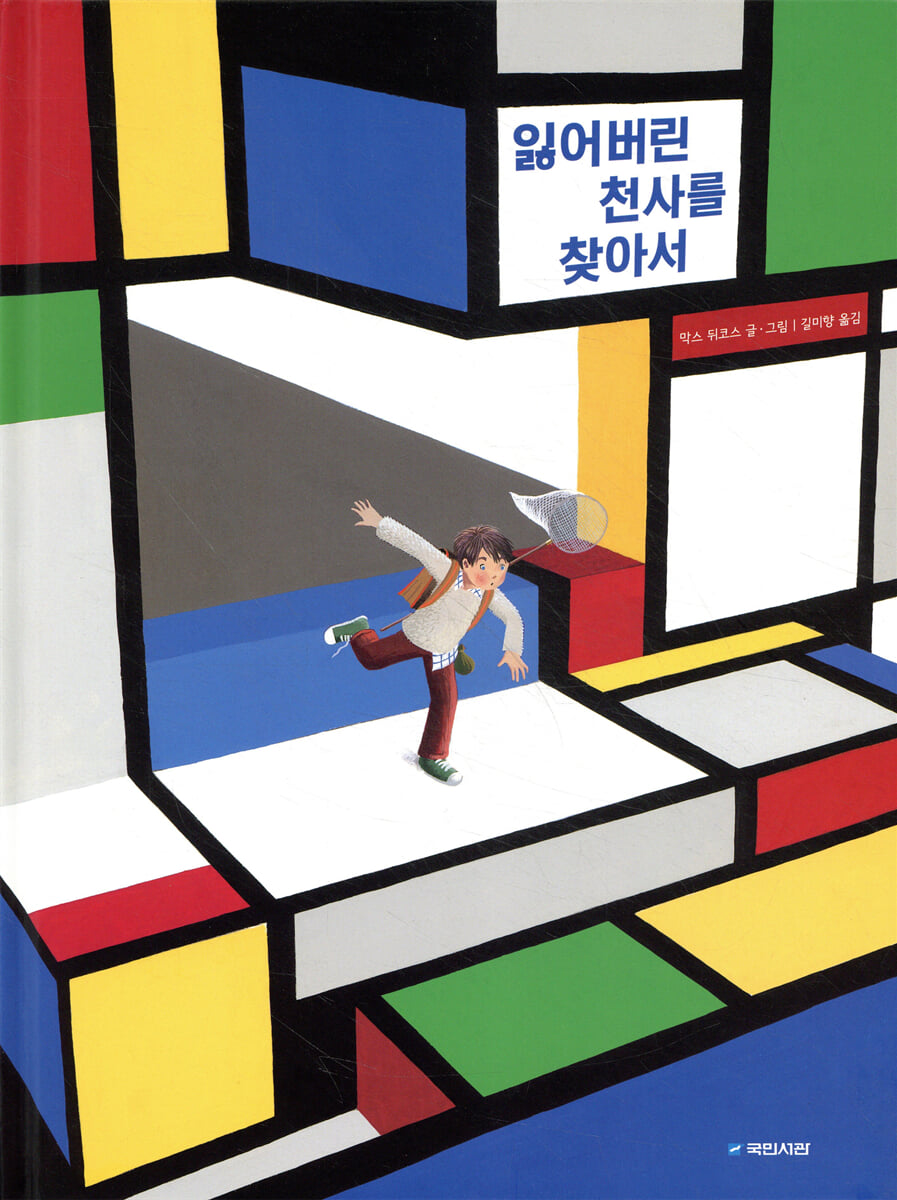
In search of the lost angel
 |
Description
Book Introduction
As interest in art education grows, it has become more common to take children on field trips to famous exhibitions.
But how should we explain paintings at an exhibition? This book teaches us that the most intelligent way to appreciate a painting is to engage with it with a pure heart.
Feeling and imagining what you see.
A way to increase interest in a painting is to start by feeling the atmosphere the painting gives through the color composition itself and having your own feelings in front of the painting.
The protagonist, Elua, talks to paintings and meets the characters in them.
The protagonist, Elua, is an odd kid who always comes in last in class, but she has a special experience at an art museum.
From somewhere he hears a voice saying, “Little one.” He goes to where the voice is coming from and sees a beautiful woman in a painting calling Elua.
The painting comes to life and speaks! As Venus weeps in grief over the loss of her angel, Elua promises to find the baby angel.
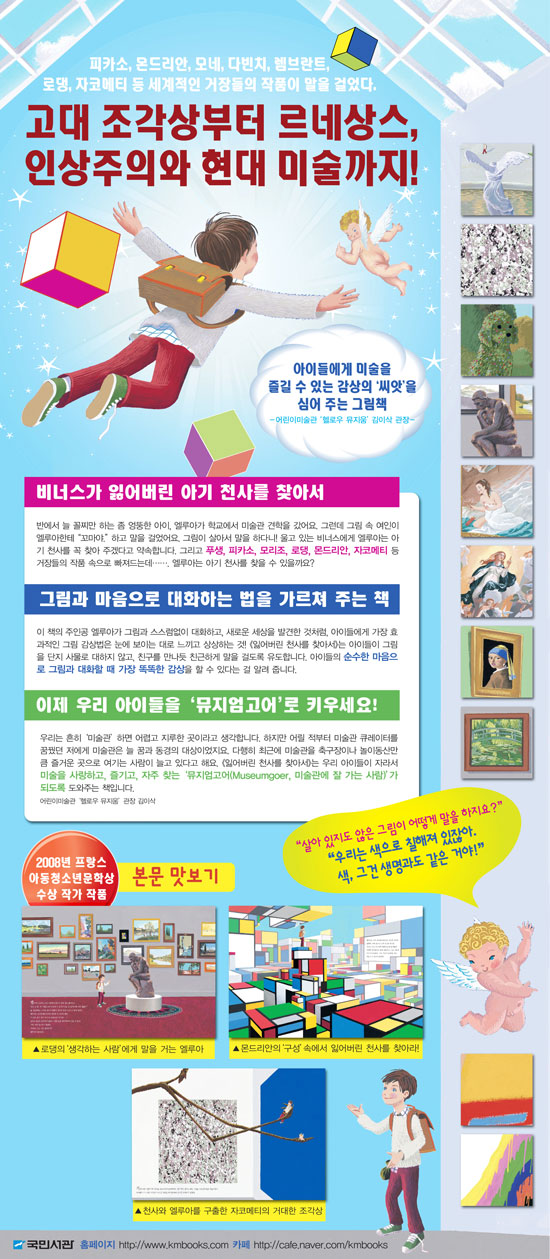
And in search of the baby angel, we search through every hall from the first floor to the last, and talk with the works of masters such as Poussin, Picasso, Morisot, Rodin, Mondrian, and Giacometti, and immerse ourselves in the world of the paintings.
The last chapter contains reference works from the picture book.
But how should we explain paintings at an exhibition? This book teaches us that the most intelligent way to appreciate a painting is to engage with it with a pure heart.
Feeling and imagining what you see.
A way to increase interest in a painting is to start by feeling the atmosphere the painting gives through the color composition itself and having your own feelings in front of the painting.
The protagonist, Elua, talks to paintings and meets the characters in them.
The protagonist, Elua, is an odd kid who always comes in last in class, but she has a special experience at an art museum.
From somewhere he hears a voice saying, “Little one.” He goes to where the voice is coming from and sees a beautiful woman in a painting calling Elua.
The painting comes to life and speaks! As Venus weeps in grief over the loss of her angel, Elua promises to find the baby angel.
And in search of the baby angel, we search through every hall from the first floor to the last, and talk with the works of masters such as Poussin, Picasso, Morisot, Rodin, Mondrian, and Giacometti, and immerse ourselves in the world of the paintings.
The last chapter contains reference works from the picture book.
- You can preview some of the book's contents.
Preview
Detailed image
Publisher's Review
* In search of Venus' lost baby angel
Elua is a bit of an odd kid who always comes in last in class.
One day, Elua went on a field trip to an art museum with her school friends.
Elua, who was getting bored, decided to kill time by sitting in a corner on the first floor of the art gallery.
But then, from somewhere, a voice called out, "Little one!" Going to where the sound was coming from, I saw a beautiful woman in a painting calling out to Elua.
The painting comes to life and speaks! As Venus weeps in grief over the loss of her angel, Elua promises to find the baby angel.
And in search of the baby angel, we search through every hall from the first floor to the last, and talk with the works of masters such as Poussin, Picasso, Morisot, Rodin, Mondrian, and Giacometti, and immerse ourselves in the world of the paintings.
Elua is afraid that she will be captured by the statue and turned to stone, or that she will never be able to escape from the blue painting, but she stands before the painting with a pounding heart, determined to keep her promise to Venus.
Will Elua be able to find the baby angel?
* Let's talk with pictures and hearts!
As interest in art education grows, famous art exhibitions are crowded with parents bringing their children.
However, most parents stop at simply reading pamphlets or books or playing audio guides to explain pictures to their children.
But the most effective way for children to appreciate a painting is to experience and imagine what they see! They should begin by sensing the mood the painting evokes through its color composition, and developing their own unique emotions before the painting.
When you feel the joy of letting your imagination run wild in a painting, you have truly appreciated the painting.
Just as the main character of this book, Elua, talks to paintings without hesitation, jumps into the world within the paintings, imagines, and discovers a new world.
In "Finding Lost Angels," we tell our friends that when they look at a painting, they should not treat it as just an object, but talk to it as if they were meeting a living friend.
It breaks the stereotypes that 'paintings are to be viewed silently from the outside' and 'paintings must be understood by connecting them to the artist's life and art history', and shows that the most intelligent appreciation can be had when one engages with paintings with a pure heart.
Even children who have felt burdened by the idea of 'art' will learn to appreciate art in a friendly and enjoyable way through this book.
* Now let’s raise our children as ‘museum goers’!
"In Search of the Lost Angel" is a book that helps our children grow up to be "museumgoers" (people who often go to art museums) who love, enjoy, and frequently visit art.
Although the setting is a French art museum, the content transcends space and can be applied to Korean art museums as well, providing tips on how to appreciate art.
This is a must-have book for our children who are busy doing their homework in front of their artwork.
In this book, the pictures speak to the children, and the children enter the pictures and talk to the characters in the pictures.
These fantasy elements are based on 'imagination-based storytelling' applied in appreciation learning.
The author's imagination stands out by presenting a fun and easy-to-understand story based on a solid theoretical foundation.
Additionally, the various works of famous artists that Elua encounters while searching for the baby angel provide a hidden picture-like pleasure.
- Kim Isaac, director of the children's art museum 'Hello Museum'
* This book contains over 30 works by historically significant artists, ranging from ancient sculptures and 16th-century Renaissance art to 19th-century Impressionist art and 20th-century modern art.
Information about the work is included on the attached page so that curious readers can find the original work.
Experience the joy of discovering masterpieces with the illustrations in the book!
Reference works
- Art museum garden
1. [Goddess of Victory of Samothrace]
2. [Puppy] Jeff Koons
- 1st floor: 16th-18th century art
3. [Still Life with a Chessboard] Bozin, Louvain
4. [Girl with a Pearl Earring] Johannes Vermeer
5. [Christ on the Cross] Velázquez
6. [The Last Supper] Leonardo da Vinci
7. [The Sleep of Venus] Boucher
8. [Self-portrait] Rembrandt van Rijn
9. [Autumn - Grapes from the Promised Land] Nicolas Poussin
- 2nd floor: 19th century art
10. [Haystacks at Sunrise] Claude Monet
11. [Japanese-style bridge] Claude Monet
12. [Poppies at Argenteuil] Claude Monet
13. [Amulet] Paul Serusier
14. [Mont Saint-Victoire] Paul Cézanne
15. [Vildavray] Camille Corot
16. [The Seine at Bougival] Alfred Sisley
17. [San Giorgio Maggiore - Dawn] William Turner
18. [The Thinker] Auguste Rodin
19. [Butterfly Collecting] Berthe Morisot
20. [Arearea - Joy] Paul Gauguin
21. [Assumption of the Virgin] Philippe de Champagne
- 3rd floor: 20th century art
22. [Walking Man] Alberto Giacometti
23. [Portrait] Pablo Picasso
24. [Composition A] Piet Mondrian
25. [Purple Fog] Jackson Pollock
26. [Beta Kappa] Moise Lewis
27. [Yellow Belt] Mark Rosk
28. [Mary Yong] Franz Kline
29. [Monochrome IKB71 California] Yves Klein
Elua is a bit of an odd kid who always comes in last in class.
One day, Elua went on a field trip to an art museum with her school friends.
Elua, who was getting bored, decided to kill time by sitting in a corner on the first floor of the art gallery.
But then, from somewhere, a voice called out, "Little one!" Going to where the sound was coming from, I saw a beautiful woman in a painting calling out to Elua.
The painting comes to life and speaks! As Venus weeps in grief over the loss of her angel, Elua promises to find the baby angel.
And in search of the baby angel, we search through every hall from the first floor to the last, and talk with the works of masters such as Poussin, Picasso, Morisot, Rodin, Mondrian, and Giacometti, and immerse ourselves in the world of the paintings.
Elua is afraid that she will be captured by the statue and turned to stone, or that she will never be able to escape from the blue painting, but she stands before the painting with a pounding heart, determined to keep her promise to Venus.
Will Elua be able to find the baby angel?
* Let's talk with pictures and hearts!
As interest in art education grows, famous art exhibitions are crowded with parents bringing their children.
However, most parents stop at simply reading pamphlets or books or playing audio guides to explain pictures to their children.
But the most effective way for children to appreciate a painting is to experience and imagine what they see! They should begin by sensing the mood the painting evokes through its color composition, and developing their own unique emotions before the painting.
When you feel the joy of letting your imagination run wild in a painting, you have truly appreciated the painting.
Just as the main character of this book, Elua, talks to paintings without hesitation, jumps into the world within the paintings, imagines, and discovers a new world.
In "Finding Lost Angels," we tell our friends that when they look at a painting, they should not treat it as just an object, but talk to it as if they were meeting a living friend.
It breaks the stereotypes that 'paintings are to be viewed silently from the outside' and 'paintings must be understood by connecting them to the artist's life and art history', and shows that the most intelligent appreciation can be had when one engages with paintings with a pure heart.
Even children who have felt burdened by the idea of 'art' will learn to appreciate art in a friendly and enjoyable way through this book.
* Now let’s raise our children as ‘museum goers’!
"In Search of the Lost Angel" is a book that helps our children grow up to be "museumgoers" (people who often go to art museums) who love, enjoy, and frequently visit art.
Although the setting is a French art museum, the content transcends space and can be applied to Korean art museums as well, providing tips on how to appreciate art.
This is a must-have book for our children who are busy doing their homework in front of their artwork.
In this book, the pictures speak to the children, and the children enter the pictures and talk to the characters in the pictures.
These fantasy elements are based on 'imagination-based storytelling' applied in appreciation learning.
The author's imagination stands out by presenting a fun and easy-to-understand story based on a solid theoretical foundation.
Additionally, the various works of famous artists that Elua encounters while searching for the baby angel provide a hidden picture-like pleasure.
- Kim Isaac, director of the children's art museum 'Hello Museum'
* This book contains over 30 works by historically significant artists, ranging from ancient sculptures and 16th-century Renaissance art to 19th-century Impressionist art and 20th-century modern art.
Information about the work is included on the attached page so that curious readers can find the original work.
Experience the joy of discovering masterpieces with the illustrations in the book!
Reference works
- Art museum garden
1. [Goddess of Victory of Samothrace]
2. [Puppy] Jeff Koons
- 1st floor: 16th-18th century art
3. [Still Life with a Chessboard] Bozin, Louvain
4. [Girl with a Pearl Earring] Johannes Vermeer
5. [Christ on the Cross] Velázquez
6. [The Last Supper] Leonardo da Vinci
7. [The Sleep of Venus] Boucher
8. [Self-portrait] Rembrandt van Rijn
9. [Autumn - Grapes from the Promised Land] Nicolas Poussin
- 2nd floor: 19th century art
10. [Haystacks at Sunrise] Claude Monet
11. [Japanese-style bridge] Claude Monet
12. [Poppies at Argenteuil] Claude Monet
13. [Amulet] Paul Serusier
14. [Mont Saint-Victoire] Paul Cézanne
15. [Vildavray] Camille Corot
16. [The Seine at Bougival] Alfred Sisley
17. [San Giorgio Maggiore - Dawn] William Turner
18. [The Thinker] Auguste Rodin
19. [Butterfly Collecting] Berthe Morisot
20. [Arearea - Joy] Paul Gauguin
21. [Assumption of the Virgin] Philippe de Champagne
- 3rd floor: 20th century art
22. [Walking Man] Alberto Giacometti
23. [Portrait] Pablo Picasso
24. [Composition A] Piet Mondrian
25. [Purple Fog] Jackson Pollock
26. [Beta Kappa] Moise Lewis
27. [Yellow Belt] Mark Rosk
28. [Mary Yong] Franz Kline
29. [Monochrome IKB71 California] Yves Klein
GOODS SPECIFICS
- Date of issue: November 10, 2009
- Format: Hardcover book binding method guide
- Page count, weight, size: 20 pages | 667g | 240*323*15mm
- ISBN13: 9788911028856
- ISBN10: 8911028851
You may also like
카테고리
korean


korean

![GQ KOREA Mark (Monthly): December [2025]](http://librairie.coreenne.fr/cdn/shop/files/8ef265dbbfbf186523ed75ba7319009d.jpg?v=1765340328&width=3840)


