

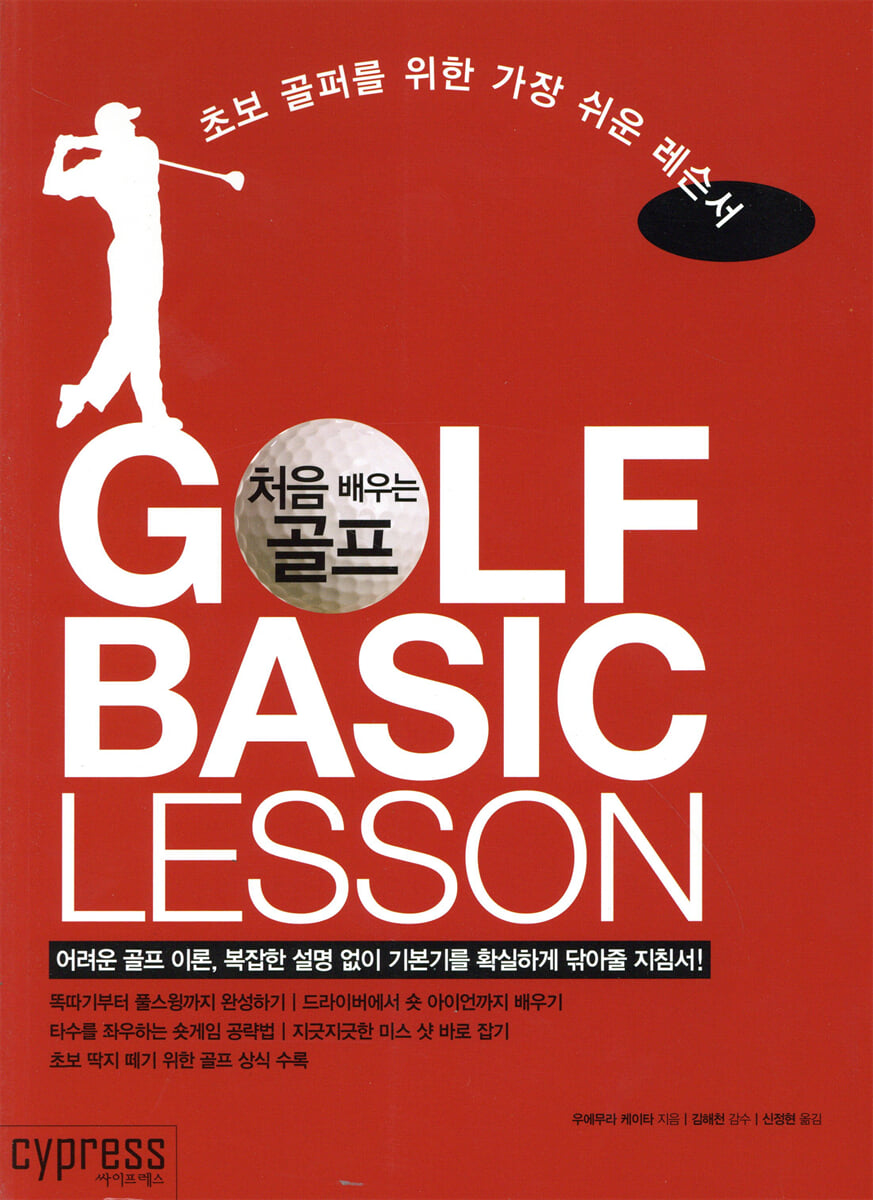
Golf Basic Lesson for Beginners
 |
Description
Book Introduction
This introductory book is for absolute beginners who are just starting out in golf. It contains the information beginners need in a concise manner, and helps them understand difficult golf theories and complex explanations by explaining them in an easy and simple way.
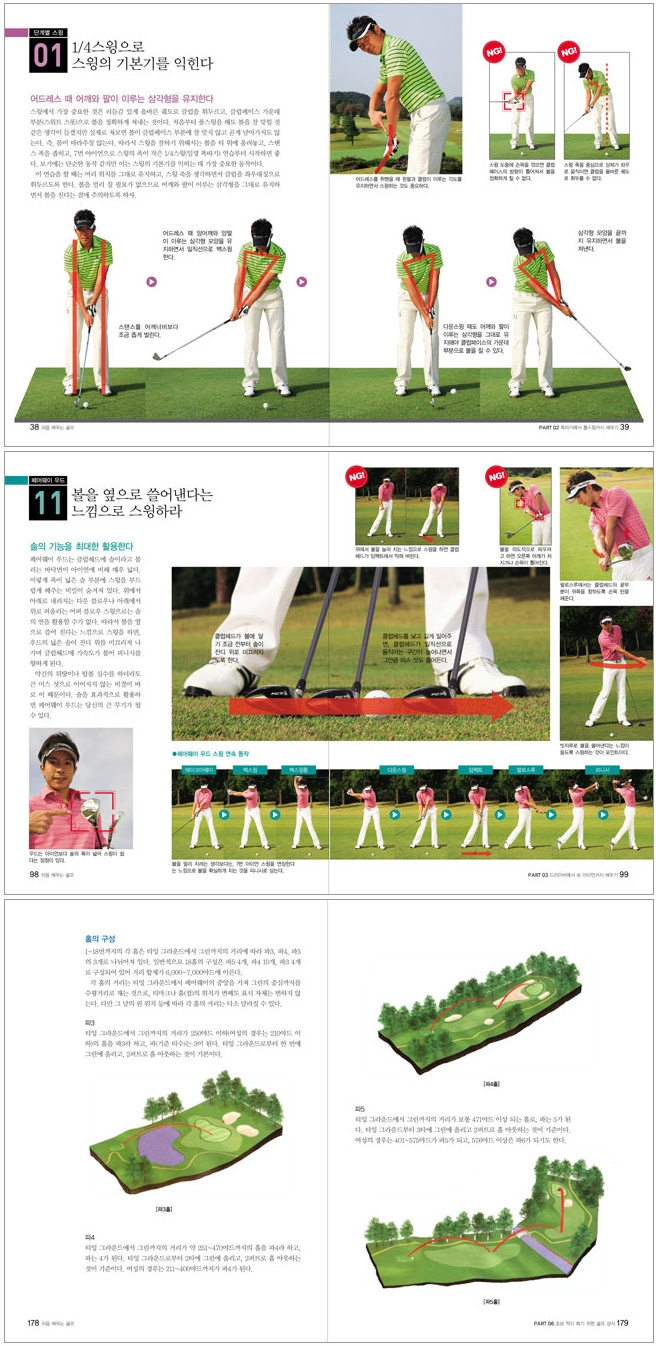
In accordance with the order in which lessons are taken at the golf practice range, the principles and basic posture of the golf swing are first familiarized, and the steps are presented sequentially, starting with the 7-iron straightening motion and completing the full swing.
Next, it introduces how to properly swing each type of club, from the driver to the short iron, and provides easy-to-understand instructions on various short game methods, such as approach shots, bunker shots, and putting, needed on the field, helping you develop a sense of real-life play.
In addition, it introduces solutions to typical miss shots that beginners find difficult, and provides detailed golf common sense to help you get rid of the beginner label, such as types and compositions of golf clubs, composition of golf courses, types of balls, how to write a score card, etiquette, and golf terminology.
In accordance with the order in which lessons are taken at the golf practice range, the principles and basic posture of the golf swing are first familiarized, and the steps are presented sequentially, starting with the 7-iron straightening motion and completing the full swing.
Next, it introduces how to properly swing each type of club, from the driver to the short iron, and provides easy-to-understand instructions on various short game methods, such as approach shots, bunker shots, and putting, needed on the field, helping you develop a sense of real-life play.
In addition, it introduces solutions to typical miss shots that beginners find difficult, and provides detailed golf common sense to help you get rid of the beginner label, such as types and compositions of golf clubs, composition of golf courses, types of balls, how to write a score card, etiquette, and golf terminology.
- You can preview some of the book's contents.
Preview
index
PART 01 Learning the Principles and Basic Posture of the Swing
·Weight shifting
01 Learn the feeling of shifting your weight by shaking your body from side to side.
02 Learn to rotate your arms by swinging the ball left and right.
03 Understand the balance between the upper and lower body
04 Movement of both arms and weight transfer occur simultaneously.
·Grip
05 The left hand grip is held with three fingers.
06 Hold your left thumb with your right palm.
07 Hold the left hand so that the back of the hand and the palm of the right hand point in the same direction.
·Address
08 Stand with your feet shoulder-width apart and distribute your weight 5:5 on both feet.
09 After adjusting the direction of the club face, determine your stance.
10 Addresses are taken in a certain order
PART 02 Learning from a straight shot to a full swing
·Step-by-step swing
01 Learn the basics of swinging with a 1/4 swing.
02 Takeaway: The club is parallel to the ground.
03 Start the swing while maintaining the triangle formed by the shoulders and arms.
04 Check the direction of the club face at waist height
05 In the half swing, the angle between the club and the arms is 90 degrees.
06 Extend the half swing to create a full swing.
07 Slowly rotate your left shoulder in a large circle.
08 You should feel the load on your right leg at the top of the backswing.
09 The downswing starts from the waist.
10 Push the club head strongly toward the target.
11 Swing the club as if throwing it towards the target.
12. Create a finishing position where you can stand on your left foot only.
13 A good sense of rhythm makes a good swing.
14 Smooth weight transfer increases swing speed
15 Swing on an inside-in orbit
·Swing continuous motion - front
·Swing continuous motion - above
·Swing Continuous Motion - Right Side
·Swing continuous motion - left side
PART 03 Learning from Driver to Short Irons
·screwdriver
01 Fairway stability is more important than distance.
02 Follow the order of movements to get the correct address.
03 Straighten your back and lower your right shoulder slightly.
04 To hit a long shot, make a full backswing.
05 Shift your weight to your left foot and swing with an upper blow.
06 Let's relax our body by practicing our left-hand swing.
07 Hold the grip softly to increase head speed
·Fairway wood
08 Aim for a safe spot in case you go off the green.
09 Wood's ball position is the lowest point of the swing path.
10 Maintain the spine angle at address throughout the swing.
Swing as if you are sweeping the ball sideways.
·Middle iron
12. Attack the green while avoiding obstacles such as bunkers.
13 Create the correct address based on the club face
The impact of the 14 iron occurs just before the bottom of the swing path.
·Short iron
If it's easy to aim for the 15th pin, attack it aggressively.
16 Keep your left arm and club shaft in a straight line.
17 Keep your backswing top and finish simple.
18 Use the natural rotation of your arms.
PART 04 Learning the Short Game That Affects Your Strokes
Approach shot
01 Develop a strategy to get the ball on the pin.
02 Distance control is determined by dividing the swing size into three stages.
03 Take a hands-first stance with both toes pointing to the left.
04 Hit the ball while maintaining the angle of your right wrist.
05 Use different clubs depending on the situation around the green.
06 If there is a bunker in front of the green, try a pitch shot.
Bunker shot
07 Bunker shot is when the sand moves the ball.
08 Open the clubface and lower the center of gravity.
09 Swing as if you are sweeping the sand under the ball.
·Putting
10. Know the slope of the putting line.
11 Align your putting grip and wrists in a straight line.
12 Stroke using the principle of pendulum motion
13 Keep both eyes parallel to the putting line.
14. For greens with slopes, aim for the imaginary hole.
15. Prioritize distance sense for long putts and direction for short putts.
PART 05: Correcting the Beginner's Chronic Mistake
·Practice method
01 Maximize the power of your swing
02 Catch the slice of the iron shot
03 Catch the slice on your driver shot
04 Increase the solidity of the driver impact
05 Grab the back of the iron shot
06 Catch the backspin and top ball of the approach shot
07 Practice your bunker shots on the practice mat.
08 The key to stable putting lies in the finish.
PART 06 Golf Common Sense to Get Rid of the Beginner Tag
01 Types of Clubs
02 Club Structure and Name
03 Club Selection Tips
04 Types of Golf Balls and Selection Tips
05 Golf Course Structure
06 How to calculate the number of strokes
07 How to Create a Score Card
08 9 types of ball pitches
09 Golf Etiquette for Beginners
10 Golf Terms
·Weight shifting
01 Learn the feeling of shifting your weight by shaking your body from side to side.
02 Learn to rotate your arms by swinging the ball left and right.
03 Understand the balance between the upper and lower body
04 Movement of both arms and weight transfer occur simultaneously.
·Grip
05 The left hand grip is held with three fingers.
06 Hold your left thumb with your right palm.
07 Hold the left hand so that the back of the hand and the palm of the right hand point in the same direction.
·Address
08 Stand with your feet shoulder-width apart and distribute your weight 5:5 on both feet.
09 After adjusting the direction of the club face, determine your stance.
10 Addresses are taken in a certain order
PART 02 Learning from a straight shot to a full swing
·Step-by-step swing
01 Learn the basics of swinging with a 1/4 swing.
02 Takeaway: The club is parallel to the ground.
03 Start the swing while maintaining the triangle formed by the shoulders and arms.
04 Check the direction of the club face at waist height
05 In the half swing, the angle between the club and the arms is 90 degrees.
06 Extend the half swing to create a full swing.
07 Slowly rotate your left shoulder in a large circle.
08 You should feel the load on your right leg at the top of the backswing.
09 The downswing starts from the waist.
10 Push the club head strongly toward the target.
11 Swing the club as if throwing it towards the target.
12. Create a finishing position where you can stand on your left foot only.
13 A good sense of rhythm makes a good swing.
14 Smooth weight transfer increases swing speed
15 Swing on an inside-in orbit
·Swing continuous motion - front
·Swing continuous motion - above
·Swing Continuous Motion - Right Side
·Swing continuous motion - left side
PART 03 Learning from Driver to Short Irons
·screwdriver
01 Fairway stability is more important than distance.
02 Follow the order of movements to get the correct address.
03 Straighten your back and lower your right shoulder slightly.
04 To hit a long shot, make a full backswing.
05 Shift your weight to your left foot and swing with an upper blow.
06 Let's relax our body by practicing our left-hand swing.
07 Hold the grip softly to increase head speed
·Fairway wood
08 Aim for a safe spot in case you go off the green.
09 Wood's ball position is the lowest point of the swing path.
10 Maintain the spine angle at address throughout the swing.
Swing as if you are sweeping the ball sideways.
·Middle iron
12. Attack the green while avoiding obstacles such as bunkers.
13 Create the correct address based on the club face
The impact of the 14 iron occurs just before the bottom of the swing path.
·Short iron
If it's easy to aim for the 15th pin, attack it aggressively.
16 Keep your left arm and club shaft in a straight line.
17 Keep your backswing top and finish simple.
18 Use the natural rotation of your arms.
PART 04 Learning the Short Game That Affects Your Strokes
Approach shot
01 Develop a strategy to get the ball on the pin.
02 Distance control is determined by dividing the swing size into three stages.
03 Take a hands-first stance with both toes pointing to the left.
04 Hit the ball while maintaining the angle of your right wrist.
05 Use different clubs depending on the situation around the green.
06 If there is a bunker in front of the green, try a pitch shot.
Bunker shot
07 Bunker shot is when the sand moves the ball.
08 Open the clubface and lower the center of gravity.
09 Swing as if you are sweeping the sand under the ball.
·Putting
10. Know the slope of the putting line.
11 Align your putting grip and wrists in a straight line.
12 Stroke using the principle of pendulum motion
13 Keep both eyes parallel to the putting line.
14. For greens with slopes, aim for the imaginary hole.
15. Prioritize distance sense for long putts and direction for short putts.
PART 05: Correcting the Beginner's Chronic Mistake
·Practice method
01 Maximize the power of your swing
02 Catch the slice of the iron shot
03 Catch the slice on your driver shot
04 Increase the solidity of the driver impact
05 Grab the back of the iron shot
06 Catch the backspin and top ball of the approach shot
07 Practice your bunker shots on the practice mat.
08 The key to stable putting lies in the finish.
PART 06 Golf Common Sense to Get Rid of the Beginner Tag
01 Types of Clubs
02 Club Structure and Name
03 Club Selection Tips
04 Types of Golf Balls and Selection Tips
05 Golf Course Structure
06 How to calculate the number of strokes
07 How to Create a Score Card
08 9 types of ball pitches
09 Golf Etiquette for Beginners
10 Golf Terms
Detailed image
Publisher's Review
The world's easiest golf introduction book, by, for, and about beginners.
The greatest feature of this book is that even beginners with little golf knowledge can easily understand it.
This textbook excludes as much golf theory or scientific facts that are difficult for beginners to understand, and is faithful to laying the foundation for beginners to hit the ball well.
Therefore, it is an excellent guide for beginners who find golf difficult or burdensome.
Recommended for these types of people!
*People who have decided to start playing golf
*For those who have just started playing golf
*People who vaguely feel that golf is difficult
*Those who still don't understand even after taking lessons
*Those who want to build basic skills through self-study
*People who don't feel like their skills are improving
*Those who have taken basic lessons but cannot get past the 100-step mark
*People who have no solid fundamentals and their swings are inconsistent
This is an introductory book for beginner golfers who are just starting out in golf.
This book concisely covers the essential information for beginners, and breaks down difficult golf theories and complex explanations in an easy and simple way.
In accordance with the order of lessons at the golf practice range, we first familiarize ourselves with the principles and basic posture of the golf swing, and then easily explained the steps from the 7-iron straightening motion to the full swing.
Next, we introduce how to properly swing each type of club, from the driver to the short iron, and easily teach various short game methods such as approach shots, bunker shots, and putting required on the field.
In addition, it introduces solutions to typical miss shots that beginners find difficult, and provides detailed golf common sense (types and configurations of golf clubs, composition of golf courses, types of balls, how to write a score card, etiquette, golf terminology, etc.) to help beginners get rid of their beginner status.
The greatest feature of this book is that even beginners with little golf knowledge can easily understand it.
This textbook excludes as much golf theory or scientific facts that are difficult for beginners to understand, and is faithful to laying the foundation for beginners to hit the ball well.
Therefore, it is an excellent guide for beginners who find golf difficult or burdensome.
Recommended for these types of people!
*People who have decided to start playing golf
*For those who have just started playing golf
*People who vaguely feel that golf is difficult
*Those who still don't understand even after taking lessons
*Those who want to build basic skills through self-study
*People who don't feel like their skills are improving
*Those who have taken basic lessons but cannot get past the 100-step mark
*People who have no solid fundamentals and their swings are inconsistent
This is an introductory book for beginner golfers who are just starting out in golf.
This book concisely covers the essential information for beginners, and breaks down difficult golf theories and complex explanations in an easy and simple way.
In accordance with the order of lessons at the golf practice range, we first familiarize ourselves with the principles and basic posture of the golf swing, and then easily explained the steps from the 7-iron straightening motion to the full swing.
Next, we introduce how to properly swing each type of club, from the driver to the short iron, and easily teach various short game methods such as approach shots, bunker shots, and putting required on the field.
In addition, it introduces solutions to typical miss shots that beginners find difficult, and provides detailed golf common sense (types and configurations of golf clubs, composition of golf courses, types of balls, how to write a score card, etiquette, golf terminology, etc.) to help beginners get rid of their beginner status.
GOODS SPECIFICS
- Date of publication: February 17, 2011
- Page count, weight, size: 196 pages | 662g | 188*257*20mm
- ISBN13: 9788996375753
- ISBN10: 8996375756
You may also like
카테고리
korean


korean

![GQ KOREA Mark (Monthly): December [2025]](http://librairie.coreenne.fr/cdn/shop/files/8ef265dbbfbf186523ed75ba7319009d.jpg?v=1765340328&width=3840)


