

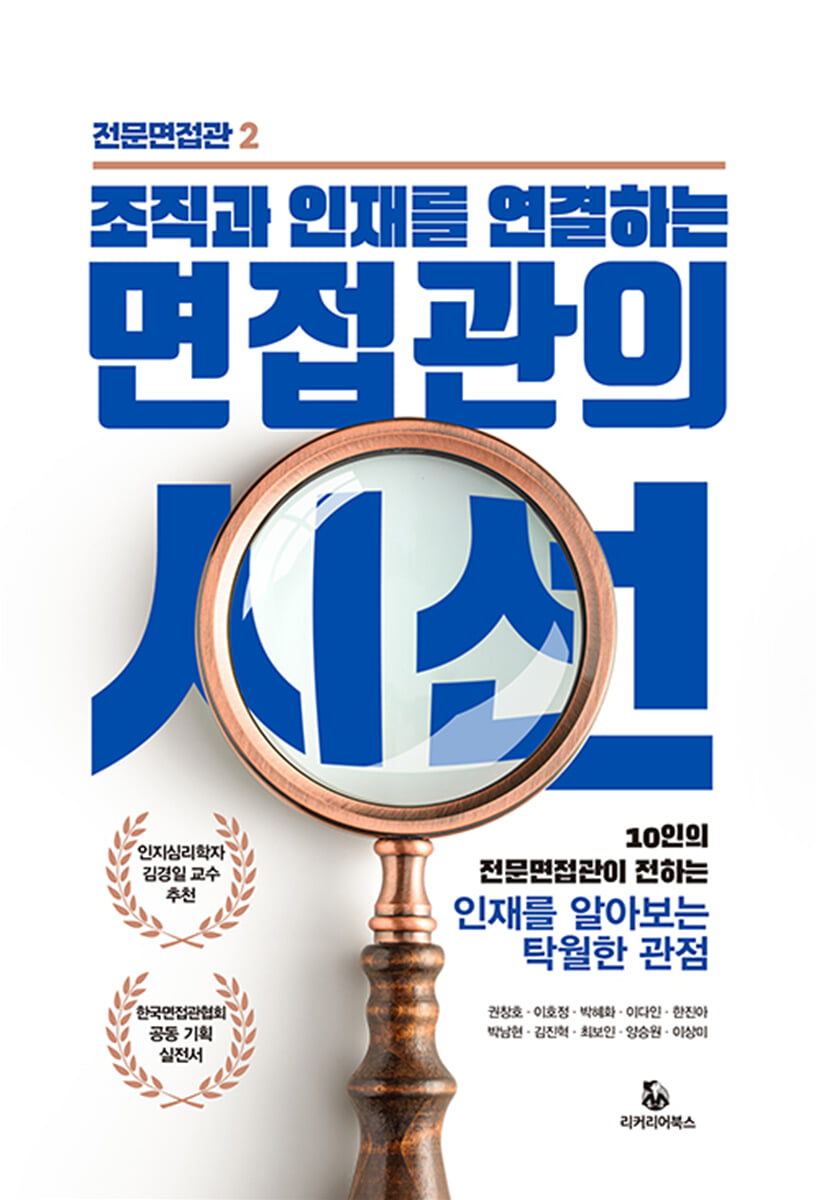
The interviewer's perspective on connecting organizations and talent
 |
Description
Book Introduction
A good interview starts with an eye for people, not a skill.
An interview is not a simple evaluation, but a selection process that designs the future of the organization.
Finding the right people is directly linked to a company's survival.
In today's rapidly changing technology and business environment, the driving force behind a company's vision lies in its people. Therefore, interviewers at the forefront of recruiting require precise insight and a deep perspective.
"The Interviewer's Perspective" is a practical guide written by ten experienced interviewers who have conducted countless interviews at various recruitment sites, including large corporations, public institutions, and private companies.
Rather than simply introducing techniques or procedures, he honestly explains the situations he experienced in the field, the basis for his judgment, the intention of the questions, the journey he took to become an interviewer, and the necessary capabilities.
This book provides candidates with strategies and insights to navigate the interview process, while interviewers receive practical guidance on developing a discerning eye for reading and selecting candidates. Insight for interviewers, direction for applicants.
This is a must-read for any leader who wants to develop an eye for people.
An interview is not a simple evaluation, but a selection process that designs the future of the organization.
Finding the right people is directly linked to a company's survival.
In today's rapidly changing technology and business environment, the driving force behind a company's vision lies in its people. Therefore, interviewers at the forefront of recruiting require precise insight and a deep perspective.
"The Interviewer's Perspective" is a practical guide written by ten experienced interviewers who have conducted countless interviews at various recruitment sites, including large corporations, public institutions, and private companies.
Rather than simply introducing techniques or procedures, he honestly explains the situations he experienced in the field, the basis for his judgment, the intention of the questions, the journey he took to become an interviewer, and the necessary capabilities.
This book provides candidates with strategies and insights to navigate the interview process, while interviewers receive practical guidance on developing a discerning eye for reading and selecting candidates. Insight for interviewers, direction for applicants.
This is a must-read for any leader who wants to develop an eye for people.
- You can preview some of the book's contents.
Preview
index
Chapter 1
Interviewer, the start of a second career
A New Challenge - Kwon Chang-ho / Change Management Expert
About the Author
From applicant to interviewer
1.
The beginning of a new journey
What should I do?
Career counseling and interviewers
2.
The Road to Professional Interviewing
Anyone can be an interviewer
Interviewer Introductory Course
What Interviewers Learn
Preparing for Interviewer Activities
First experience as an interviewer
3.
Why do interviewers have such a high-handed attitude?
Anyone can be a villain
Why Interviewers Feel Superior to Candidates
Interviewer's Virtues
4.
Tips learned in real-life (interview) situations
How should documents be evaluated?
The Importance of Interview Administrative Procedures
5.
One last word
Improvement areas felt during the interview
The Future of Interviewers
Chapter 2
It's my first time being an interviewer
The Anxiety of a Rookie Interviewer - Lee Ho-jeong / Interview Mental Guard
About the Author
As I go in, I wonder if I, who is anxious, can become an interviewer?
1.
Anxious interviewer
First anxiety - anticipatory anxiety
Second Anxiety - Performance Anxiety
Third Anxiety - Perfectionist Anxiety
2.
Thinking Interviewer
A New Perspective on Anxiety
Managing Anxiety
Cognitive Behavioral Therapy for Interviewers
interviewership
3.
Interviewer in Action
Learning
Training
Recording
Taking feedback
4.
One last word
Chapter 3
How are good questions created?
The Power of Questions to Lead People - Park Hye-hwa / Relationship Curator
About the Author
As you enter, questions get people talking.
1.
A 'real person' proven in the field
In an era where leaders aren't wanted, "I don't want to be promoted."
A true practical talent realized through listening to 1,000 calls a month
2.
The power of questions that bring out your true self
How will the 'alternative characters' appear in the interview room and reveal the truth?
Before blaming the given answer, let's examine the given question first.
3.
Interview skills gained through on-site experience
Leveraging Interview Coaching: "Tell Me Why You Failed"
Leadership is revealed through attitude, seen through the lens of field experience.
4.
My Future: A Deeper Journey as a Professional Interviewer
Interviewer who reads generations
Interviewer who knows the difference
A balanced interviewer
Interviewers who open the way together
The Path to Becoming an Interviewer - Da-in Lee / People Analyst
About the Author
Going in, what kind of interviewer are you?
Interviewer's knowledge
Asking about expertise: “You said you were an HR expert?”
Establishing Evaluation Criteria: Understanding Basic Occupational Skills
2.
Interviewer's Questioning Skills
Splitting the Questions: Experience Questions vs.
Situational Questions
Adding Depth to Your Questions: Lead and Probing Questions
Clear your head: Don't let today's interview be your last.
3.
Attitude that builds the interviewer's trust
Taking responsibility: doing something you don't want to do
Connected by Trust: It Starts with 'Recommendation' and Ends with 'Trust'
4.
Creating a Sustainable Interviewer Culture
Grow every day and work for a lifetime.
It's perfect for dying alone.
Growing together through culture.
The Interviewer's Two Views - Han Jin-ah / HR Career Planner
About the Author
What is more important than specifications when getting a job?
1.
A look toward the applicant
If I don't know myself, no one will know me.
Prepare for employment through injection
2.
Applicant Strategy: Finding a Job with Your Own Story
Breaking away from formality and embodying authenticity
What's wrong with me? Because it's me!
3.
Gaze toward the interviewer
Hiring Risks Created by Asking the Wrong Questions
Fair assessment completed with effective questions
4.
The Interviewer's Responsibility: Preparing for the Future
How to discover a candidate's capabilities
Setting a new standard
Interview Exploration Life - Namhyun Park / Interview Tutoring Expert Author Introduction
Entering the case of job seeker U
1.
Lessons from Professional Interviewer Training
Purpose of the interview
Understanding Structured Interviews
What the interviewer focuses on
2.
In a group counseling program
The interviewer I misunderstood
While preparing for the evaluation!
This is how to prepare for a real interview!
3.
What does the interviewer think?
The answer the interviewer likes
Answers that interviewers hate
4.
Communicative Interview
Chapter 4
The Interviewer's Two Weapons: Expertise and Branding
What Professional Interviewers Focus on - Jinhyeok Kim / HR Maestro
About the Author
As an interviewer, there are two things you should have as an expert.
1.
Focus on talent
Are you a talented person?
Samsung's management philosophy: "Talent First"
The 21st century's three hardships
Global talent war
2.
Focus on recruiting
Recruitment is everything
Now find a better expert
Who are the key talents?
Recruitment is all about sincerity
Is the era of public offering over?
3.
Focus on the interview
Talent selection is done by professional interviewers.
Spear and shield
The Importance of Interviews in Blind Recruitment
Was there anyone who reads faces?
This year I am going to fail.
The ABCs of Self-Certification from a Professional Interviewer - Choi Bo-in / HR Coaching Expert
About the Author
Introduction: Roles and Responsibilities of Professional Interviewers
1.
Interview requirements
The two-way nature of the interview
Talent, Right Person
Potential
2.
Why a professional interviewer?
Professionals and Amateurs
The need for professional interviewers
3.
Goal setting and self-certification by professional interviewers
A.sk: Ask a question
B.ehave: take action
C.onnect: connect
Five Basic SMART Goals for Professional Interviewers
4.
And to the applicants
Interviewer's Personal Branding - Yang Seung-won / Personal Branding Expert
As you can see, interviews are ultimately marketing. 1.
A marketer who became a professional interviewer
A 25-year veteran marketer, first encountering the professional interviewer role.
Both professional interviewers and marketers have a significant impact on a company's competitiveness.
2.
Interviewer vs. Marketer, Interviewer & Marketer
I want to know your mind. Designing effective interview questions is important.
3.
Efforts to grow into a professional interviewer
To avoid a failed interview
Things you shouldn't do
4.
Now, even interviewers are in the era of personal branding.
How to Build Your Personal Brand as a Professional Interviewer
Effective Personal Branding: Use Naver Blog
How do I make my blog more searchable?
Personal branding can be done in a variety of ways.
Chapter 5
Cooperation and coexistence with interviewers
How to Become an Irreplaceable External Interviewer - Lee Sang-mi, Director of Public Institution Recruitment
About the Author
Interviewer who coexists with public institutions
1.
It was different when I tried it - A public institution team leader who became both an internal and external interviewer.
2.
We Need Help - The Collaborative Roles of Internal and External Interviewers
The Role of Internal Interviewers
The role of external interviewers
How internal and external interviewers collaborate
3.
Expanding the Market - Understanding the Public Sector Recruitment Market
Introduction of blind recruitment
Mandatory use of more than half of external interviewers
Interviewers who complement blind hiring
4.
Survival of the Fittest: How to Become an Irreplaceable External Interviewer
understanding
Communication-based assessment
Symbiosis
Interviewer, the start of a second career
A New Challenge - Kwon Chang-ho / Change Management Expert
About the Author
From applicant to interviewer
1.
The beginning of a new journey
What should I do?
Career counseling and interviewers
2.
The Road to Professional Interviewing
Anyone can be an interviewer
Interviewer Introductory Course
What Interviewers Learn
Preparing for Interviewer Activities
First experience as an interviewer
3.
Why do interviewers have such a high-handed attitude?
Anyone can be a villain
Why Interviewers Feel Superior to Candidates
Interviewer's Virtues
4.
Tips learned in real-life (interview) situations
How should documents be evaluated?
The Importance of Interview Administrative Procedures
5.
One last word
Improvement areas felt during the interview
The Future of Interviewers
Chapter 2
It's my first time being an interviewer
The Anxiety of a Rookie Interviewer - Lee Ho-jeong / Interview Mental Guard
About the Author
As I go in, I wonder if I, who is anxious, can become an interviewer?
1.
Anxious interviewer
First anxiety - anticipatory anxiety
Second Anxiety - Performance Anxiety
Third Anxiety - Perfectionist Anxiety
2.
Thinking Interviewer
A New Perspective on Anxiety
Managing Anxiety
Cognitive Behavioral Therapy for Interviewers
interviewership
3.
Interviewer in Action
Learning
Training
Recording
Taking feedback
4.
One last word
Chapter 3
How are good questions created?
The Power of Questions to Lead People - Park Hye-hwa / Relationship Curator
About the Author
As you enter, questions get people talking.
1.
A 'real person' proven in the field
In an era where leaders aren't wanted, "I don't want to be promoted."
A true practical talent realized through listening to 1,000 calls a month
2.
The power of questions that bring out your true self
How will the 'alternative characters' appear in the interview room and reveal the truth?
Before blaming the given answer, let's examine the given question first.
3.
Interview skills gained through on-site experience
Leveraging Interview Coaching: "Tell Me Why You Failed"
Leadership is revealed through attitude, seen through the lens of field experience.
4.
My Future: A Deeper Journey as a Professional Interviewer
Interviewer who reads generations
Interviewer who knows the difference
A balanced interviewer
Interviewers who open the way together
The Path to Becoming an Interviewer - Da-in Lee / People Analyst
About the Author
Going in, what kind of interviewer are you?
Interviewer's knowledge
Asking about expertise: “You said you were an HR expert?”
Establishing Evaluation Criteria: Understanding Basic Occupational Skills
2.
Interviewer's Questioning Skills
Splitting the Questions: Experience Questions vs.
Situational Questions
Adding Depth to Your Questions: Lead and Probing Questions
Clear your head: Don't let today's interview be your last.
3.
Attitude that builds the interviewer's trust
Taking responsibility: doing something you don't want to do
Connected by Trust: It Starts with 'Recommendation' and Ends with 'Trust'
4.
Creating a Sustainable Interviewer Culture
Grow every day and work for a lifetime.
It's perfect for dying alone.
Growing together through culture.
The Interviewer's Two Views - Han Jin-ah / HR Career Planner
About the Author
What is more important than specifications when getting a job?
1.
A look toward the applicant
If I don't know myself, no one will know me.
Prepare for employment through injection
2.
Applicant Strategy: Finding a Job with Your Own Story
Breaking away from formality and embodying authenticity
What's wrong with me? Because it's me!
3.
Gaze toward the interviewer
Hiring Risks Created by Asking the Wrong Questions
Fair assessment completed with effective questions
4.
The Interviewer's Responsibility: Preparing for the Future
How to discover a candidate's capabilities
Setting a new standard
Interview Exploration Life - Namhyun Park / Interview Tutoring Expert Author Introduction
Entering the case of job seeker U
1.
Lessons from Professional Interviewer Training
Purpose of the interview
Understanding Structured Interviews
What the interviewer focuses on
2.
In a group counseling program
The interviewer I misunderstood
While preparing for the evaluation!
This is how to prepare for a real interview!
3.
What does the interviewer think?
The answer the interviewer likes
Answers that interviewers hate
4.
Communicative Interview
Chapter 4
The Interviewer's Two Weapons: Expertise and Branding
What Professional Interviewers Focus on - Jinhyeok Kim / HR Maestro
About the Author
As an interviewer, there are two things you should have as an expert.
1.
Focus on talent
Are you a talented person?
Samsung's management philosophy: "Talent First"
The 21st century's three hardships
Global talent war
2.
Focus on recruiting
Recruitment is everything
Now find a better expert
Who are the key talents?
Recruitment is all about sincerity
Is the era of public offering over?
3.
Focus on the interview
Talent selection is done by professional interviewers.
Spear and shield
The Importance of Interviews in Blind Recruitment
Was there anyone who reads faces?
This year I am going to fail.
The ABCs of Self-Certification from a Professional Interviewer - Choi Bo-in / HR Coaching Expert
About the Author
Introduction: Roles and Responsibilities of Professional Interviewers
1.
Interview requirements
The two-way nature of the interview
Talent, Right Person
Potential
2.
Why a professional interviewer?
Professionals and Amateurs
The need for professional interviewers
3.
Goal setting and self-certification by professional interviewers
A.sk: Ask a question
B.ehave: take action
C.onnect: connect
Five Basic SMART Goals for Professional Interviewers
4.
And to the applicants
Interviewer's Personal Branding - Yang Seung-won / Personal Branding Expert
As you can see, interviews are ultimately marketing. 1.
A marketer who became a professional interviewer
A 25-year veteran marketer, first encountering the professional interviewer role.
Both professional interviewers and marketers have a significant impact on a company's competitiveness.
2.
Interviewer vs. Marketer, Interviewer & Marketer
I want to know your mind. Designing effective interview questions is important.
3.
Efforts to grow into a professional interviewer
To avoid a failed interview
Things you shouldn't do
4.
Now, even interviewers are in the era of personal branding.
How to Build Your Personal Brand as a Professional Interviewer
Effective Personal Branding: Use Naver Blog
How do I make my blog more searchable?
Personal branding can be done in a variety of ways.
Chapter 5
Cooperation and coexistence with interviewers
How to Become an Irreplaceable External Interviewer - Lee Sang-mi, Director of Public Institution Recruitment
About the Author
Interviewer who coexists with public institutions
1.
It was different when I tried it - A public institution team leader who became both an internal and external interviewer.
2.
We Need Help - The Collaborative Roles of Internal and External Interviewers
The Role of Internal Interviewers
The role of external interviewers
How internal and external interviewers collaborate
3.
Expanding the Market - Understanding the Public Sector Recruitment Market
Introduction of blind recruitment
Mandatory use of more than half of external interviewers
Interviewers who complement blind hiring
4.
Survival of the Fittest: How to Become an Irreplaceable External Interviewer
understanding
Communication-based assessment
Symbiosis
Detailed image

Into the book
Anyone who sits down at an interview will inevitably feel nervous, and the degree of nervousness will vary from person to person.
A good interviewer should be able to reduce tension, create an environment where the candidate can fully demonstrate their talents and abilities, and be able to verify the candidate's abilities through appropriate questions.
---From "Interviewer, The Beginning of a Second Career"
To resolve anxiety, you need stability.
Anxiety arises when you lose your connection to yourself, to others, to nature, or to some higher power.
Feeling disconnected and isolated is a threat to stability and well-being.
Anxiety is often caused by the perception of being at risk without a sense of connection.
Therefore, to manage anxiety before and after the interview, I would like to suggest gaining a sense of stability through connections with fellow interviewers, such as through gatherings and learning.
---From "The Anxiety of a Beginner Interviewer"
“A good question is not about judging a person, but about understanding them, discovering them, and opening up a path together.”
---From “The Power of Questions to Lead People”
Being recommended means you have gained someone's trust.
That moment is the first step into the world of interviewing.
But that's just the beginning.
To establish yourself as a true interviewer, you need to constantly demonstrate your abilities and grow based on trust and relationships.
---From "The Path to Becoming an Interviewer"
Our experience is valuable in itself.
But what's important is how you take it out and release it.
It must be made into a powerful tool that can concretely reveal values and capabilities, rather than a simple record of the past.
---From "The Interviewer's Two Views"
"Here lies the biggest misconception applicants have about interviewers.
In fact, interviewers don't want applicants to feel pressured.
---From "Interview Exploration Life"
Talent must have both ability and potential.
Capacity is reality, possibility is future.
Companies hire based on applicants' capabilities and invest in their potential.
In an era of uncertainty and shortening cycles of change, organizations must find candidates with the responsibility, challenge, and collaborative skills to meet their needs.
The people who select talent are professional interviewers.
An important person who chooses important people.
---From "What Do Professional Interviewers Focus On?"
With AI and technology rapidly spreading across the hiring landscape, the role of professional interviewers who understand people and identify the right fit for your organization has become more crucial than ever. Therefore, I propose a framework for setting goals for professional interviewers, organized into an ABC framework.
---From "The ABCs of Self-Certification from Professional Interviewers"
Marketers and interviewers are both like soccer players.
Marketers are like strikers. Even if they don't score 99 out of 100 times, if they can successfully score one goal, they become heroes who plan successful marketing campaigns that can boost a company.
However, interviewers are like goalkeepers. Even if they successfully block 99 goals, they will still fail to prevent one goal. If they select the wrong person, they will become a traitor who will harm the organization.
---From "Interviewer's Personal Branding"
Before the interview begins, ask the internal interviewer what the public institution currently needs, what kind of person they are looking for, and what characteristics applicants with which they have demonstrated success in the relevant job series or position.
This information will then allow you to begin the interview with a clearer goal of what to focus on today.
… such conversations give internal interviewers a chance to convey the company’s position.
It also serves as an opportunity for external interviewers, as experts, to determine how much control they should have over the interview on the day.
At the very least, it's likely to give the impression that the external interviewer is curious about the organization's position and takes the opinions of internal employees seriously.
Even a simple question like "Is there anything I should refer to?" is fine.
A good interviewer should be able to reduce tension, create an environment where the candidate can fully demonstrate their talents and abilities, and be able to verify the candidate's abilities through appropriate questions.
---From "Interviewer, The Beginning of a Second Career"
To resolve anxiety, you need stability.
Anxiety arises when you lose your connection to yourself, to others, to nature, or to some higher power.
Feeling disconnected and isolated is a threat to stability and well-being.
Anxiety is often caused by the perception of being at risk without a sense of connection.
Therefore, to manage anxiety before and after the interview, I would like to suggest gaining a sense of stability through connections with fellow interviewers, such as through gatherings and learning.
---From "The Anxiety of a Beginner Interviewer"
“A good question is not about judging a person, but about understanding them, discovering them, and opening up a path together.”
---From “The Power of Questions to Lead People”
Being recommended means you have gained someone's trust.
That moment is the first step into the world of interviewing.
But that's just the beginning.
To establish yourself as a true interviewer, you need to constantly demonstrate your abilities and grow based on trust and relationships.
---From "The Path to Becoming an Interviewer"
Our experience is valuable in itself.
But what's important is how you take it out and release it.
It must be made into a powerful tool that can concretely reveal values and capabilities, rather than a simple record of the past.
---From "The Interviewer's Two Views"
"Here lies the biggest misconception applicants have about interviewers.
In fact, interviewers don't want applicants to feel pressured.
---From "Interview Exploration Life"
Talent must have both ability and potential.
Capacity is reality, possibility is future.
Companies hire based on applicants' capabilities and invest in their potential.
In an era of uncertainty and shortening cycles of change, organizations must find candidates with the responsibility, challenge, and collaborative skills to meet their needs.
The people who select talent are professional interviewers.
An important person who chooses important people.
---From "What Do Professional Interviewers Focus On?"
With AI and technology rapidly spreading across the hiring landscape, the role of professional interviewers who understand people and identify the right fit for your organization has become more crucial than ever. Therefore, I propose a framework for setting goals for professional interviewers, organized into an ABC framework.
---From "The ABCs of Self-Certification from Professional Interviewers"
Marketers and interviewers are both like soccer players.
Marketers are like strikers. Even if they don't score 99 out of 100 times, if they can successfully score one goal, they become heroes who plan successful marketing campaigns that can boost a company.
However, interviewers are like goalkeepers. Even if they successfully block 99 goals, they will still fail to prevent one goal. If they select the wrong person, they will become a traitor who will harm the organization.
---From "Interviewer's Personal Branding"
Before the interview begins, ask the internal interviewer what the public institution currently needs, what kind of person they are looking for, and what characteristics applicants with which they have demonstrated success in the relevant job series or position.
This information will then allow you to begin the interview with a clearer goal of what to focus on today.
… such conversations give internal interviewers a chance to convey the company’s position.
It also serves as an opportunity for external interviewers, as experts, to determine how much control they should have over the interview on the day.
At the very least, it's likely to give the impression that the external interviewer is curious about the organization's position and takes the opinions of internal employees seriously.
Even a simple question like "Is there anything I should refer to?" is fine.
---From "How to Become an Irreplaceable External Interviewer"
Publisher's Review
Features of this book
· Interview story about understanding people, not the technique of selecting people
- The vivid experiences of 10 current interviewers who have conducted dozens of real-life interviews.
- An honest confession about what you see and how you judge the moment you sit down with an applicant.
· Real stories inside and outside the interview room
- The experience of a middle-aged man who challenged himself as an interviewer as a second career after retirement.
- The trial and error and growth process of a novice interviewer
- The hard work and practical know-how to create good questions
- From public institutions to large corporations, the changing trends in the hiring landscape
· A cross-generational, empathetic essay
- Storytelling that middle-aged and older people, HR professionals, and job seekers can all relate to.
- Presenting the 'problem of empathy' and 'clues to a solution' from each person's perspective.
· Revisiting the essence of the interview
A new perspective on interviewing as a "relationship design" rather than an "evaluation technique."
I recommend this to these people
- Middle-aged and older people preparing for a second career after retirement - Realistic advice for the new challenge of becoming an interviewer.
- Recruiters for corporations and public institutions - Improve interview expertise and strengthen practical skills
- Job seekers and those looking to change jobs - Understand the interviewer's true intentions and evaluation criteria.
- A leader who wants to develop a discerning eye for people - Understanding the essence of recruitment that designs the future of an organization
"The Interviewer's Perspective" is the true story of the human interactions hidden behind the word "interview." While most interview-related books focus on techniques and procedures, this book captures the experiences and insights of ten interviewers who deeply contemplated the process of "getting to know the real person."
An interview is not just a simple hiring process.
It is a crucial moment where one person's potential and the future of an organization meet, and the interviewer becomes the gateway connecting the person and the organization.
Who you choose determines the success or failure of your organization, and that decision has a profound impact on its future performance and culture.
This book honestly shares the stories of current interviewers who have worked on the front lines of recruitment, the real-world experiences they have encountered and learned, the skills and attitudes essential for developing as an interviewer, and how to develop the discerning eye to discern a candidate's true potential.
It provides a concrete roadmap for prospective interviewers, insightful insights for current interviewers, and an opportunity for job seekers to understand the interviewer's true intentions.
For all those faced with the question, "How should we view people?", this book will go beyond simple instructions and become a practical guide that connects people and organizations.
· Interview story about understanding people, not the technique of selecting people
- The vivid experiences of 10 current interviewers who have conducted dozens of real-life interviews.
- An honest confession about what you see and how you judge the moment you sit down with an applicant.
· Real stories inside and outside the interview room
- The experience of a middle-aged man who challenged himself as an interviewer as a second career after retirement.
- The trial and error and growth process of a novice interviewer
- The hard work and practical know-how to create good questions
- From public institutions to large corporations, the changing trends in the hiring landscape
· A cross-generational, empathetic essay
- Storytelling that middle-aged and older people, HR professionals, and job seekers can all relate to.
- Presenting the 'problem of empathy' and 'clues to a solution' from each person's perspective.
· Revisiting the essence of the interview
A new perspective on interviewing as a "relationship design" rather than an "evaluation technique."
I recommend this to these people
- Middle-aged and older people preparing for a second career after retirement - Realistic advice for the new challenge of becoming an interviewer.
- Recruiters for corporations and public institutions - Improve interview expertise and strengthen practical skills
- Job seekers and those looking to change jobs - Understand the interviewer's true intentions and evaluation criteria.
- A leader who wants to develop a discerning eye for people - Understanding the essence of recruitment that designs the future of an organization
"The Interviewer's Perspective" is the true story of the human interactions hidden behind the word "interview." While most interview-related books focus on techniques and procedures, this book captures the experiences and insights of ten interviewers who deeply contemplated the process of "getting to know the real person."
An interview is not just a simple hiring process.
It is a crucial moment where one person's potential and the future of an organization meet, and the interviewer becomes the gateway connecting the person and the organization.
Who you choose determines the success or failure of your organization, and that decision has a profound impact on its future performance and culture.
This book honestly shares the stories of current interviewers who have worked on the front lines of recruitment, the real-world experiences they have encountered and learned, the skills and attitudes essential for developing as an interviewer, and how to develop the discerning eye to discern a candidate's true potential.
It provides a concrete roadmap for prospective interviewers, insightful insights for current interviewers, and an opportunity for job seekers to understand the interviewer's true intentions.
For all those faced with the question, "How should we view people?", this book will go beyond simple instructions and become a practical guide that connects people and organizations.
GOODS SPECIFICS
- Date of issue: September 15, 2025
- Page count, weight, size: 384 pages | 508g | 148*210*19mm
- ISBN13: 9791198710727
- ISBN10: 1198710721
You may also like
카테고리
korean


korean

![ELLE 엘르 스페셜 에디션 A형 : 12월 [2025]](http://librairie.coreenne.fr/cdn/shop/files/b8e27a3de6c9538896439686c6b0e8fb.jpg?v=1766436872&width=3840)


