

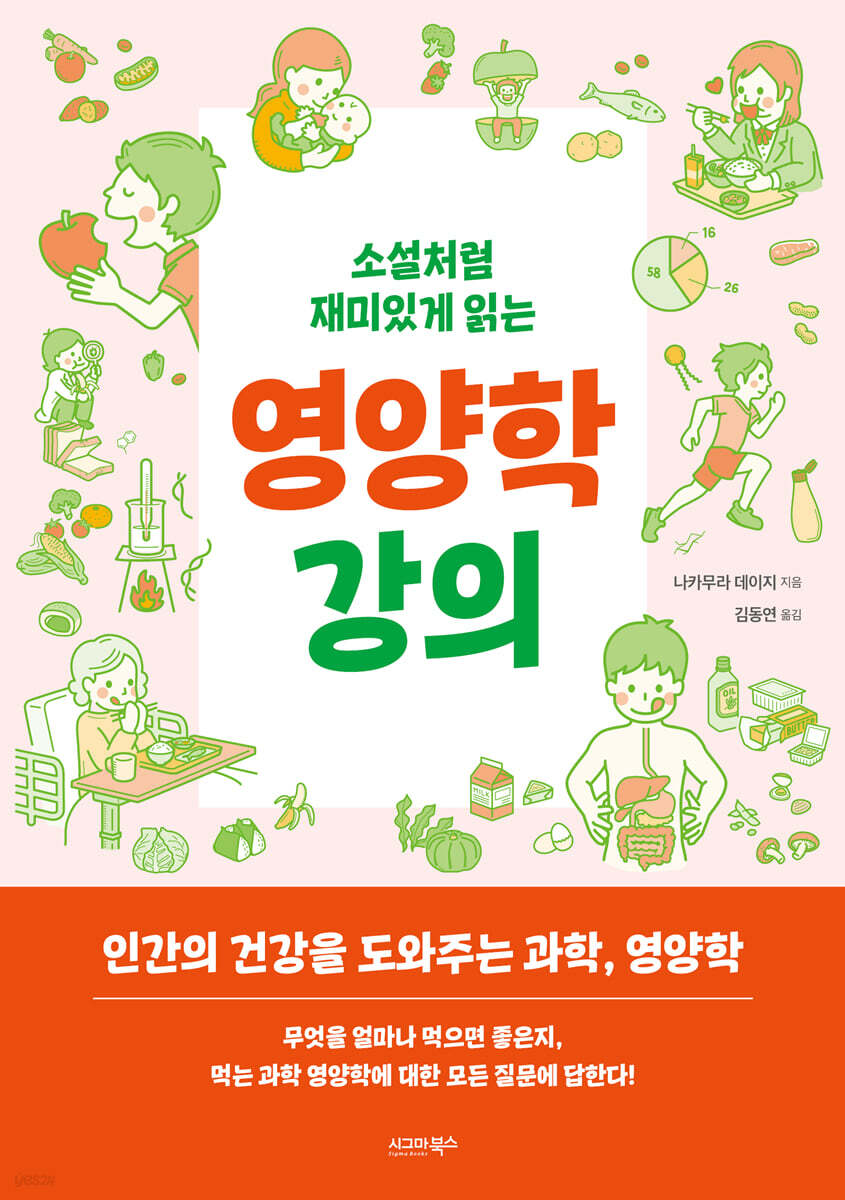
Nutrition lecture
 |
Description
Book Introduction
What and how much should I eat?
The science of eating: Nutrition answers all your questions!
When we say 'nutrition', many people think of it as something boring and dull.
Sometimes I wonder if it is really called ‘academic’.
In an age where everything is abundant, you might think that there is no need for diseases like malnutrition that are caused by not eating enough.
However, as we enter an era of excess, a new type of nutritional 'deficiency' is emerging.
Diets that are baseless and claim to be healthy or fit tempt us with plausible names and theories.
"Nutrition Lectures That Are as Fun to Read as a Novel" is a lecture that explains from the basics what a "balanced, good diet" and "nutritious food" are.
It scientifically explains how omnivorous humans should choose and eat food well to sustain life and live a healthy life.
This book explains all knowledge about nutrition, including nutrition, nutrients, and the process of food intake, digestion, absorption, and metabolism, step by step.
The science of eating: Nutrition answers all your questions!
When we say 'nutrition', many people think of it as something boring and dull.
Sometimes I wonder if it is really called ‘academic’.
In an age where everything is abundant, you might think that there is no need for diseases like malnutrition that are caused by not eating enough.
However, as we enter an era of excess, a new type of nutritional 'deficiency' is emerging.
Diets that are baseless and claim to be healthy or fit tempt us with plausible names and theories.
"Nutrition Lectures That Are as Fun to Read as a Novel" is a lecture that explains from the basics what a "balanced, good diet" and "nutritious food" are.
It scientifically explains how omnivorous humans should choose and eat food well to sustain life and live a healthy life.
This book explains all knowledge about nutrition, including nutrition, nutrients, and the process of food intake, digestion, absorption, and metabolism, step by step.
- You can preview some of the book's contents.
Preview
index
Entering
Chapter 1: What is Nutrition?
What is Nutrition and Dietetics?
History of Nutrition
Human body composition and nutrition
Cells, Genes, and Nutrition
Food ingredients and nutrition
Health and Nutrition
Medical care, welfare and nutrition
Chapter 2 Types and Roles of Nutrients
Protein: The main component of the human body
Lipids: There are many different types
Carbohydrates: The Best Source of Energy
Vitamins: The Body's Lubricant
Minerals: Regulate and structure the body
The role of protein and its deficiency and excess
The role of lipids and their deficiency and excess
The role of carbohydrates and their deficiency and excess
The role of dietary fiber and deficiency and excess
The role of vitamins and their deficiency and excess
The role of minerals and deficiencies and excesses
The role of water and its intake
Chapter 3 Physiology of Nutrients
ingestion
Appetite center and its regulatory functions
What is hunger?
Appetite and hunger are different concepts.
taste
Adjust intake according to nutritional sense
digestion
digestive system
absorption
Principle of absorption
Absorption route
excretion
Digestion and absorption of nutrients
Protein metabolism
Lipid metabolism
Carbohydrate metabolism
Vitamin metabolism
Mineral metabolism
Chapter 4 Energy Metabolism
Life Energy and Food Energy
Energy metabolism in the human body
Calculating estimated energy needs
Chapter 5 Life Cycle and Nutrition
Physical changes during pregnancy and lactation
Pregnancy and Nutrition
Diseases that are likely to occur during pregnancy
Breastfeeding and Nutrition
Physiology of growth
Nutrition for newborns and infants
Nutritional disorders in newborns and infants
Infant nutrition
nutritional disorders in infants
Nutrition in childhood
Menstruation during puberty and adolescence
Nutrition during adolescence and youth
Nutritional problems during childhood, adolescence, and adolescence
Physiology of adulthood
Adult nutrition and lifestyle diseases
Physiology of old age
Nutritional imbalance in old age
Chapter 6: Patient Nutrition Management, Foods for Special Medical Purposes, and Health Functional Foods
Diet
obesity
underweight
protein deficiency
Vitamin and mineral deficiencies
diabetes
dyslipidemia
Hyperuricemia and gout
high blood pressure
anemia
food allergies
cancer
surgical operation
nutritional supplements
Foods for special medical purposes
Health functional foods
Chapter 7: Health Promotion: Past and Present
From improving nutrition to promoting health
Health Japan 21
Dietary intake standards
Dietary Guidelines
The double burden of nutritional imbalance
Building a pleasant and sustainable society and nutrition
Going Out_The Key to Super-Aging Society and Environmental Issues is Nutrition
References
Chapter 1: What is Nutrition?
What is Nutrition and Dietetics?
History of Nutrition
Human body composition and nutrition
Cells, Genes, and Nutrition
Food ingredients and nutrition
Health and Nutrition
Medical care, welfare and nutrition
Chapter 2 Types and Roles of Nutrients
Protein: The main component of the human body
Lipids: There are many different types
Carbohydrates: The Best Source of Energy
Vitamins: The Body's Lubricant
Minerals: Regulate and structure the body
The role of protein and its deficiency and excess
The role of lipids and their deficiency and excess
The role of carbohydrates and their deficiency and excess
The role of dietary fiber and deficiency and excess
The role of vitamins and their deficiency and excess
The role of minerals and deficiencies and excesses
The role of water and its intake
Chapter 3 Physiology of Nutrients
ingestion
Appetite center and its regulatory functions
What is hunger?
Appetite and hunger are different concepts.
taste
Adjust intake according to nutritional sense
digestion
digestive system
absorption
Principle of absorption
Absorption route
excretion
Digestion and absorption of nutrients
Protein metabolism
Lipid metabolism
Carbohydrate metabolism
Vitamin metabolism
Mineral metabolism
Chapter 4 Energy Metabolism
Life Energy and Food Energy
Energy metabolism in the human body
Calculating estimated energy needs
Chapter 5 Life Cycle and Nutrition
Physical changes during pregnancy and lactation
Pregnancy and Nutrition
Diseases that are likely to occur during pregnancy
Breastfeeding and Nutrition
Physiology of growth
Nutrition for newborns and infants
Nutritional disorders in newborns and infants
Infant nutrition
nutritional disorders in infants
Nutrition in childhood
Menstruation during puberty and adolescence
Nutrition during adolescence and youth
Nutritional problems during childhood, adolescence, and adolescence
Physiology of adulthood
Adult nutrition and lifestyle diseases
Physiology of old age
Nutritional imbalance in old age
Chapter 6: Patient Nutrition Management, Foods for Special Medical Purposes, and Health Functional Foods
Diet
obesity
underweight
protein deficiency
Vitamin and mineral deficiencies
diabetes
dyslipidemia
Hyperuricemia and gout
high blood pressure
anemia
food allergies
cancer
surgical operation
nutritional supplements
Foods for special medical purposes
Health functional foods
Chapter 7: Health Promotion: Past and Present
From improving nutrition to promoting health
Health Japan 21
Dietary intake standards
Dietary Guidelines
The double burden of nutritional imbalance
Building a pleasant and sustainable society and nutrition
Going Out_The Key to Super-Aging Society and Environmental Issues is Nutrition
References
Detailed image

Into the book
Since ancient times, food has been considered the source of life and living, and from this perspective, numerous health and wellness methods have been created.
Not only that, but the treatment also includes diet, which has supported human health and medicine for a long time.
However, these methods remained mostly empirical practices, such as food selection and classification, consumption of certain effective foods, and exclusion of harmful foods, and did not develop into part of life science.
Nutrition, on the other hand, has developed into a discipline that seeks the source of life in food.
As a result, nutrition has been able to scientifically elucidate the relationship between food, life, and health through nutrients by identifying the components that sustain life and clarifying the foods that contain those components.
--- p.21
Protein comes from the Greek word meaning 'first, most important'.
Proteins are made up of amino acids, which contain nitrogen in addition to carbon, hydrogen, and oxygen, and are the main components of organs, muscles, skin, hair, hormones, enzymes, and antibodies.
In other words, the main component that makes up the human body is protein.
Unlike carbohydrates and lipids, which are also energy sources, proteins contain about 16% nitrogen and cannot be replaced by carbohydrates or lipids.
--- p.44
When blood sugar levels rise after a meal, the satiety center is stimulated by glucose, causing a feeling of fullness.
When the satiety center sends information to the body that it has received sufficient energy, food intake is stopped.
On the other hand, as time passes after a meal and the body's energy is consumed, blood sugar levels drop, and to replenish this, body fat is broken down, releasing free fatty acids.
When the feeding center is excited by the stimulation of free fatty acids in the blood, a feeling of hunger is felt, which soon leads to food intake.
--- p.89
In the liver, bile acids are synthesized from cholesterol, and these bile acids are secreted into the duodenum to aid in the digestion and absorption of lipids.
Bile acids are surfactants with both water-soluble and fat-soluble portions.
These properties allow water and fat soluble substances to mix, contributing to the digestion and absorption of fat.
It acts as a surfactant, so to speak, like soap.
About 95% of bile acids that have completed their function are reabsorbed in the ileum and returned to the liver for reuse (enterohepatic circulation).
About 5% that is not reabsorbed is excreted in the stool.
These metabolisms are the main route by which cholesterol is excreted from the body.
--- p.121
As we age, the efficiency of protein utilization decreases, so we must actively consume protein foods.
Fat is an important nutrient that provides energy efficiently due to its high energy density.
Analysis of nutrient intake in the elderly showed that in addition to protein, intake of antioxidant vitamins such as vitamin C and vitamin E, as well as vitamin D and folic acid also tended to decrease.
To prevent locomotive syndrome (motor phase syndrome), it is emphasized that sufficient intake of calcium, vitamin K, vitamin B6, and vitamin B12 is necessary.
--- p.166
Diabetes is a disease in which blood sugar levels become abnormally high due to insufficient insulin secreted from the pancreas or impaired insulin function.
If this hyperglycemic state persists for a long time, it can cause abnormalities in carbohydrate or fat metabolism, which can lead to complications such as arteriosclerosis, kidney disease, retinopathy, and neuropathy (Figure 3).
The basic principle of a diabetic diet is to keep various metabolic processes, including carbohydrate metabolism, as close to normal as possible, and to prevent complications by preventing the worsening of the disease.
--- p.179
There is no special diet that directly increases the effectiveness of cancer treatment.
However, diet is used as an adjuvant therapy when undergoing cancer treatment such as surgery, radiation therapy, and chemotherapy.
As cancer progresses, symptoms or side effects of surgery, radiation therapy, chemotherapy, etc. can impair the ability to eat, chew, swallow, digest, and absorb food.
As a result, if nutritional status deteriorates, it can impair the effectiveness of various treatments, delay recovery, and lower the patient's quality of life.
Therefore, it is necessary to restore the patient's nutritional status by utilizing various nutritional supplement methods.
Not only that, but the treatment also includes diet, which has supported human health and medicine for a long time.
However, these methods remained mostly empirical practices, such as food selection and classification, consumption of certain effective foods, and exclusion of harmful foods, and did not develop into part of life science.
Nutrition, on the other hand, has developed into a discipline that seeks the source of life in food.
As a result, nutrition has been able to scientifically elucidate the relationship between food, life, and health through nutrients by identifying the components that sustain life and clarifying the foods that contain those components.
--- p.21
Protein comes from the Greek word meaning 'first, most important'.
Proteins are made up of amino acids, which contain nitrogen in addition to carbon, hydrogen, and oxygen, and are the main components of organs, muscles, skin, hair, hormones, enzymes, and antibodies.
In other words, the main component that makes up the human body is protein.
Unlike carbohydrates and lipids, which are also energy sources, proteins contain about 16% nitrogen and cannot be replaced by carbohydrates or lipids.
--- p.44
When blood sugar levels rise after a meal, the satiety center is stimulated by glucose, causing a feeling of fullness.
When the satiety center sends information to the body that it has received sufficient energy, food intake is stopped.
On the other hand, as time passes after a meal and the body's energy is consumed, blood sugar levels drop, and to replenish this, body fat is broken down, releasing free fatty acids.
When the feeding center is excited by the stimulation of free fatty acids in the blood, a feeling of hunger is felt, which soon leads to food intake.
--- p.89
In the liver, bile acids are synthesized from cholesterol, and these bile acids are secreted into the duodenum to aid in the digestion and absorption of lipids.
Bile acids are surfactants with both water-soluble and fat-soluble portions.
These properties allow water and fat soluble substances to mix, contributing to the digestion and absorption of fat.
It acts as a surfactant, so to speak, like soap.
About 95% of bile acids that have completed their function are reabsorbed in the ileum and returned to the liver for reuse (enterohepatic circulation).
About 5% that is not reabsorbed is excreted in the stool.
These metabolisms are the main route by which cholesterol is excreted from the body.
--- p.121
As we age, the efficiency of protein utilization decreases, so we must actively consume protein foods.
Fat is an important nutrient that provides energy efficiently due to its high energy density.
Analysis of nutrient intake in the elderly showed that in addition to protein, intake of antioxidant vitamins such as vitamin C and vitamin E, as well as vitamin D and folic acid also tended to decrease.
To prevent locomotive syndrome (motor phase syndrome), it is emphasized that sufficient intake of calcium, vitamin K, vitamin B6, and vitamin B12 is necessary.
--- p.166
Diabetes is a disease in which blood sugar levels become abnormally high due to insufficient insulin secreted from the pancreas or impaired insulin function.
If this hyperglycemic state persists for a long time, it can cause abnormalities in carbohydrate or fat metabolism, which can lead to complications such as arteriosclerosis, kidney disease, retinopathy, and neuropathy (Figure 3).
The basic principle of a diabetic diet is to keep various metabolic processes, including carbohydrate metabolism, as close to normal as possible, and to prevent complications by preventing the worsening of the disease.
--- p.179
There is no special diet that directly increases the effectiveness of cancer treatment.
However, diet is used as an adjuvant therapy when undergoing cancer treatment such as surgery, radiation therapy, and chemotherapy.
As cancer progresses, symptoms or side effects of surgery, radiation therapy, chemotherapy, etc. can impair the ability to eat, chew, swallow, digest, and absorb food.
As a result, if nutritional status deteriorates, it can impair the effectiveness of various treatments, delay recovery, and lower the patient's quality of life.
Therefore, it is necessary to restore the patient's nutritional status by utilizing various nutritional supplement methods.
--- p.191
Publisher's Review
Why is a 'well-balanced diet' important?
What exactly is a 'nutritious food'?
Everything about nutrition, the science that helps people stay healthy!
Health in today's world is different from the past.
A few decades ago, when everything was scarce, focusing on 'eating well' solved most of our problems.
But now it's different.
Eating too much, eating excessively, eating when you don't need it, and eating in an unbalanced way are problems.
Rather, it is more so because people do not know what and how much they should eat to live a healthy life.
In addition, as life expectancy increases and we enter an era of 100-year lifespans, nutrition in old age is also emerging as an important issue.
To extend a healthy lifespan beyond simply living longer, we must be free from the diseases that plague old age, and for that to happen, we need a healthy diet, which is the basis of life.
"Nutrition Lectures: A Fun Novel" provides easy-to-understand information about the food we eat every day, starting from the basics.
You'll gain knowledge that will help you make your own dietary choices and serve as a foundation for questions like, "What and how much should I eat? What foods are nutritious? What happens to my body if I consume too much or too little?"
If you want to improve your eating habits and nutrition, this book will help.
Daily meals for a healthy life,
Let's practice 'eating well' through nutrition!
The ideal energy intake ratio for an adult is 10-15% protein, 15-30% fat, and 45-75% carbohydrates.
If any one nutrient is out of range, problems can arise due to deficiency or excess.
Beyond simply maintaining a balanced diet, you should limit your intake of unhealthy foods like saturated fat, sugar, pesticides, additives, and ultra-processed foods, and consume a variety of foods, not only from different food groups but also within each group.
This will reduce mortality and non-communicable disease rates.
Although the human act of eating is simple, its effects and influence are enormous.
This book is all about nutrition, which can help people live healthier lives.
This book consists of a total of 7 chapters.
Chapters 1 and 2 cover the definition of nutrition, its impact, and the types and roles of nutrients.
We have summarized the functions of each nutrient, including protein, vitamins, and minerals, as well as deficiencies and excesses.
Chapter 3 examines in detail the role and regulation of the appetite center when consuming food, the digestion of food, absorption of nutrients, and the excretion process.
Chapter 4 explains how humans obtain life energy from nutrients and the principles of human energy metabolism.
Chapter 5 is about understanding the physiological characteristics of each human life cycle and what appropriate nutrition is, and explains in detail the principles of nutritional imbalance in old age.
Chapter 6 covers how nutritional management is implemented in the medical field.
In particular, it organizes representative diseases that require nutritional management, such as obesity, underweight, diabetes, dyslipidemia, hypertension, anemia, food allergies, and cancer.
Finally, Chapter 7 discusses the importance of nutritional management.
What exactly is a 'nutritious food'?
Everything about nutrition, the science that helps people stay healthy!
Health in today's world is different from the past.
A few decades ago, when everything was scarce, focusing on 'eating well' solved most of our problems.
But now it's different.
Eating too much, eating excessively, eating when you don't need it, and eating in an unbalanced way are problems.
Rather, it is more so because people do not know what and how much they should eat to live a healthy life.
In addition, as life expectancy increases and we enter an era of 100-year lifespans, nutrition in old age is also emerging as an important issue.
To extend a healthy lifespan beyond simply living longer, we must be free from the diseases that plague old age, and for that to happen, we need a healthy diet, which is the basis of life.
"Nutrition Lectures: A Fun Novel" provides easy-to-understand information about the food we eat every day, starting from the basics.
You'll gain knowledge that will help you make your own dietary choices and serve as a foundation for questions like, "What and how much should I eat? What foods are nutritious? What happens to my body if I consume too much or too little?"
If you want to improve your eating habits and nutrition, this book will help.
Daily meals for a healthy life,
Let's practice 'eating well' through nutrition!
The ideal energy intake ratio for an adult is 10-15% protein, 15-30% fat, and 45-75% carbohydrates.
If any one nutrient is out of range, problems can arise due to deficiency or excess.
Beyond simply maintaining a balanced diet, you should limit your intake of unhealthy foods like saturated fat, sugar, pesticides, additives, and ultra-processed foods, and consume a variety of foods, not only from different food groups but also within each group.
This will reduce mortality and non-communicable disease rates.
Although the human act of eating is simple, its effects and influence are enormous.
This book is all about nutrition, which can help people live healthier lives.
This book consists of a total of 7 chapters.
Chapters 1 and 2 cover the definition of nutrition, its impact, and the types and roles of nutrients.
We have summarized the functions of each nutrient, including protein, vitamins, and minerals, as well as deficiencies and excesses.
Chapter 3 examines in detail the role and regulation of the appetite center when consuming food, the digestion of food, absorption of nutrients, and the excretion process.
Chapter 4 explains how humans obtain life energy from nutrients and the principles of human energy metabolism.
Chapter 5 is about understanding the physiological characteristics of each human life cycle and what appropriate nutrition is, and explains in detail the principles of nutritional imbalance in old age.
Chapter 6 covers how nutritional management is implemented in the medical field.
In particular, it organizes representative diseases that require nutritional management, such as obesity, underweight, diabetes, dyslipidemia, hypertension, anemia, food allergies, and cancer.
Finally, Chapter 7 discusses the importance of nutritional management.
GOODS SPECIFICS
- Date of issue: September 10, 2025
- Page count, weight, size: 216 pages | 374g | 148*210*13mm
- ISBN13: 9791168624016
- ISBN10: 1168624010
You may also like
카테고리
korean


korean

![GQ KOREA Mark (Monthly): December [2025]](http://librairie.coreenne.fr/cdn/shop/files/8ef265dbbfbf186523ed75ba7319009d.jpg?v=1765340328&width=3840)


