

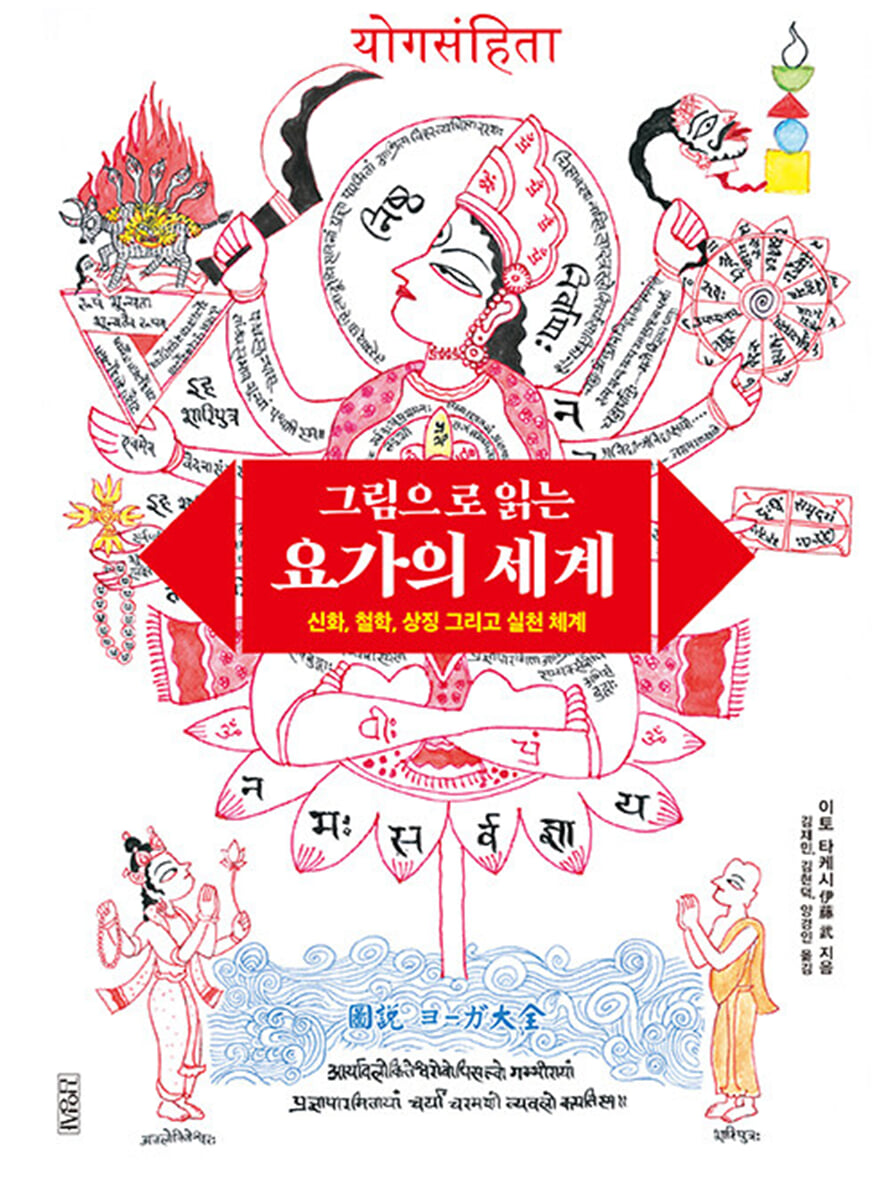
The World of Yoga in Pictures
 |
Description
Book Introduction
Everything about yoga, from the broad and fascinating world of yoga
Takeshi Ito, a Japanese yoga researcher who has dedicated his life to studying and practicing yoga, introduces everything about 'Indian yoga.'
Since his early twenties, the author has traveled throughout India and neighboring countries such as Nepal, Sri Lanka, and Thailand, conducting field research and delving into related literature and academic research to explore all aspects of yoga.
The results of such exploration were published in books, each divided into fields such as mythology, marma, chakras, mandalas, food culture, martial arts, and temples.
This book is the result of the author's lifelong research and exploration, and is a condensed version of everything about yoga, complete with interesting and unique illustrations and charts drawn by the author himself.
Takeshi Ito, a Japanese yoga researcher who has dedicated his life to studying and practicing yoga, introduces everything about 'Indian yoga.'
Since his early twenties, the author has traveled throughout India and neighboring countries such as Nepal, Sri Lanka, and Thailand, conducting field research and delving into related literature and academic research to explore all aspects of yoga.
The results of such exploration were published in books, each divided into fields such as mythology, marma, chakras, mandalas, food culture, martial arts, and temples.
This book is the result of the author's lifelong research and exploration, and is a condensed version of everything about yoga, complete with interesting and unique illustrations and charts drawn by the author himself.
- You can preview some of the book's contents.
Preview
index
Entering · 013
Part 1: Knowledge
Chapter 1: Basic Knowledge of Yoga - God and Buddha
1.
Gayatri (G?yatr?) - God Becomes Light · 030
2.
Veda - Purusha, the Incident of the Body Dismemberment · 039
3.
Atman (?tman) - My essence is Brahman · 045
4.
S??khya - The Conflict Between Puru and Kuri · 049
5.
Buddha - The Story of Sāṣṭhya · 058
6.
Bhava-cakra - Buddhism in a Picture · 065
7.
Yoga - Putting a Bell on Your Heart · 074
8.
Ashtanga (A????ga) - Systematization of Yoga · 078
9.
Sadhu (S?dhu) - A person who establishes a vow (vratā) · 084
10.
Karma Yoga - For Working People · 088
11.
The Guru-Disciple Relationship Is More Important Than the Father-Son Relationship · 095
12.
Puranas - The Basics of Indian Mythology · 101
Chapter 2: Yoga Thought - The Yoga Sutra and the Heart Sutra
13.
Patanjali - The Close Connection Between Yoga and Sanskrit · 114
14.
Yoga-s?r??i - Yoga is the Nirodha of the Vritti of the Citta · 121
15.
Raja Yoga (R?ja-yoga) - The King's Yoga? The Royal Path to Yoga? · 132
16.
Prajn?p?ramit?-h?daya - The Heart of the Goddess · 137
17.
Citta - The Mind Creates the World · 146
18.
Sa?sk?ra - The Veil of the Mind · 152
19.
Nirodha - Exterminates or Suppresses? · 156
20.
Ishwara (??vara) - Shiva and Avalokiteshvara · 161
21.
Shunyata (??nyat?) - Neither one (Vedanta) nor two (Samkhya) · 167
22.
Tara (T?r?) - Goddess of Salvation · 173
23.
Mantra - Simple Yoga for Everyone · 178
24.
Tantra - The Vajra World · 182
Chapter 3: The Cosmology of Yoga - From the Vedas to the Chakras
25.
Mandira - Secrets of the Universe · 200
26.
Linga (Li?ga) - Connecting Heaven and Earth · 206
27.
Panca-bh?ta - Abstracted Energy · 213
28.
Vedi - The Falcon's Altar Flies · 216
29.
Stupa - Buddha Design · 220
30.
Vastu Purusha - The Whole Universe in One Picture · 225
31.
Loka-p?la - The Master of Indian Feng Shui · 231
32.
Mandala (Ma??ala) - Like CG · 239
33.
Yantra - Like a Matrix · 245
34.
Meru - The Modifiable Universe · 251
35.
Garbha-g?ha - The Birthplace of the Universe · 260
36.
K?udra-a??a - The Human Body as a Microcosm · 265
Chapter 4: The Yoga View of the Body - From Sexual Yoga to Hatha Yoga
37.
N?tha-sa?prad?ya - The Great Sage of Hatha Yoga · 272
38.
Sumaṇa Sadhana (?ma??na-s?dhana) - The Religion of the Forest of Corpses · 279
39.
Kap?lin - The Most Sacred People Because They Are Most Impurity · 287
40.
Hatha Yoga - Power Up Your Achievement Machine · 293
41.
Dakini (??kin?) - A Witch's Tradition · 298
42.
Mani Padme (Ma?i-padme) - Sexual Yoga · 303
43.
Chandari (Ca???l?) - Energy of Achievement · 308
44.
Mahamudra (Mah?-mudr?) - The Yoga of Death · 313
45.
Chinna Munda (Chinna-mu???) - Goddess of Hatha Yoga · 318
46.
Adiguru (?di-guru) - The True Meaning of the Guru Story · 323
47.
Asana (?sana) - The skeletal practice of Hatha Yoga · 330
48.
Hatha Shastra (Ha?ha-??stra) - A Textbook of Hatha Yoga · 335
Chapter 5: The Physiology of Yoga - The Body Made of Prana
49.
Prana (Pr??a) - The Wind Blowing Through the Universe · 340
50.
Marman - The Crossroads of the Winds · 345
51.
Ayurveda - The Foundations of Indian Medicine · 350
52.
Marma-vidyya (Marma-vidy?) - The Science of Vital Points · 356
53.
Shukshma Shari'ra (??k?ma-?ar?ra) - The Body of Image · 374
54.
Nadi (N???) - The Path of Prana · 378
55.
Ida Pingale (I??-pi?gale) - The Way of the Moon, the Way of the Sun · 384
56.
Sushumna (Su?um??) - The Time Tunnel of the Human Universe · 388
57.
Amrita - A Subtle (Spiritual) Brain Drug · 392
58.
Pancamaya-kosha - The Shimmering Body · 396
59.
Chakras - Not "Opening" but "Curving" · 400
60.
Kundalini (Ku??alin?) - Originally in the belly · 409
Part 2: Practice
Chapter 6: The Medicine of Yoga - Health of Body and Mind
61.
Catv?ri ?rya-saty?ni - The Equation of Healing · 418
62.
Bhai?ajya - The Secret of Creating a Spring of Nectar · 421
63.
Mit?h?ra - A little lacking in food · 427
64.
Antar-homa - Using incineration as a sacrificial fire · 432
65.
Agnisara-dhauti - Equipping the Abdominal Homadan · 436
66.
Siddha-vidhy? - The Complete Integration of Yoga and Medicine · 439
67.
Brahmacharya - Should I ejaculate? Should I not? · 444
68.
Shatkarman (?a?-karman) - First, clean from mouth to anus · 448
69.
Ritucharya (?tu-cary?) - It's absurd to do yoga in a hot place · 457
70.
Haridr (Haridr?) - The Spice of Gold · 461
71.
Tulasi (Tulas?) - The Herb That Creates Holy Places · 465
72.
Chili (Cill?) - The Spice of Asceticism · 469
Chapter 7: Yoga Breathing - He who controls prana controls the mind.
73.
Pranayama (Pr???y?ma) - Prana Techniques, Not Breathing · 474
74.
Manas - A person with impaired vision and limbs · 478
75.
Nadi Shodhana (N???-?odhana) - The Power of Images Takes Effect · 482
76.
Kumbhaka - The Pot as a Form of Pranayama · 487
77.
Bandha - Patience is the Secret · 491
78.
Mudra (Mudr?) - Containing Prana · 495
79.
Sukha-p?rvaka - Balance of Right and Left Sides and Kundalini Awakening · 499
80.
Kriya Yoga - Unity of Body, Speech, and Mind · 504
81.
Bhastrika (Bhastrik?) - Heating Prana · 510
82.
Vajra-japa - Yoga from the Heart Sutra · 514
83.
Pranava Pranayama (Pra?ava-Pr???y?ma) - Turning the Whole Body into an Instrument (Aum · 518)
84.
Nada Anusandhana (N?da-anu-sa?dh?na) - The Practice of Contemplating Sound [觀音行] · 521
Chapter 8: The Story of Yoga Asanas - Seeing Tantric Teachings Through the Body
85.
Vrikshasana (Vikshasana) - Living Like a Tree · 528
86.
Surya Namaskara (S?rya-namask?ra) - The Wheel of Time · 533
87.
Pita (P??ha) - Seat of God · 540
88.
Si?ha-?sana - The Lion of Ah?um · 546
89.
Shirsha Asana (??r?a-?sana) - Putting the Earth on Your Head · 553
90.
Bhuja?ga-?sana - World of 33 · 559
91.
Shalabha Asana (?alabha-?sana) - Garuda's Mysterious Name · 568
92.
Hala Asana - Cultivating the Body to Gain Treasures · 575
93.
Matsya-?sana - The Basic Form of Life · 584
94.
Matsyendra-?sana - Beyond the Binary · 589
95.
Pa?cimott?na-?sana - The Victory of Saraswati · 598
96.
Shava Asana (?ava-?sana) - Shiva is just a corpse · 605
Chapter 9: The Tantric Rituals of Yoga - From Outer Worship to Inner Worship
97.
Puja (P?j?) - Sacred Play · 614
98.
Arati (?rati) - Vedic Altar Setting · 619
99.
Namas - A Yoga Greeting · 622
100.
Sima Bandha (S?m?-bandha) - Marking a territory · 628
101.
Ishta-devat? (I??a-devat?) - Principal Buddha or Guardian Deity · 634
102.
Sakama Gayatri (Sak?ma-g?yatr?) - Must have spiritual power · 640
103.
Pratishtha (Prati??h?) - Inflow of the Soul · 648
104.
Dhyana - Beginning with Visualization · 652
105.
Prasada - God's Gift · 658
106.
Nyasa - World Collection · 663
107.
Antar-y?ga - Raja Yoga in Tantra · 667
108.
Pranava (Pra-?ava) - Beginning with Om and Ending with Om · 672
Going out · 686
Translator's Notes · 688
References · 692
If you have any questions about this book, please contact us below.
Editorial Department: Jeong Seon-gyeong 02-3668-3242 | sugati@gimmyoung.com
Public Relations Office: Choi Jeong-eun 02-3668-3207 | rachoi@gimmyoung.com
Marketing Department Park Yu-jin 02-3668-3250 | youjin@gimmyoung.com
Part 1: Knowledge
Chapter 1: Basic Knowledge of Yoga - God and Buddha
1.
Gayatri (G?yatr?) - God Becomes Light · 030
2.
Veda - Purusha, the Incident of the Body Dismemberment · 039
3.
Atman (?tman) - My essence is Brahman · 045
4.
S??khya - The Conflict Between Puru and Kuri · 049
5.
Buddha - The Story of Sāṣṭhya · 058
6.
Bhava-cakra - Buddhism in a Picture · 065
7.
Yoga - Putting a Bell on Your Heart · 074
8.
Ashtanga (A????ga) - Systematization of Yoga · 078
9.
Sadhu (S?dhu) - A person who establishes a vow (vratā) · 084
10.
Karma Yoga - For Working People · 088
11.
The Guru-Disciple Relationship Is More Important Than the Father-Son Relationship · 095
12.
Puranas - The Basics of Indian Mythology · 101
Chapter 2: Yoga Thought - The Yoga Sutra and the Heart Sutra
13.
Patanjali - The Close Connection Between Yoga and Sanskrit · 114
14.
Yoga-s?r??i - Yoga is the Nirodha of the Vritti of the Citta · 121
15.
Raja Yoga (R?ja-yoga) - The King's Yoga? The Royal Path to Yoga? · 132
16.
Prajn?p?ramit?-h?daya - The Heart of the Goddess · 137
17.
Citta - The Mind Creates the World · 146
18.
Sa?sk?ra - The Veil of the Mind · 152
19.
Nirodha - Exterminates or Suppresses? · 156
20.
Ishwara (??vara) - Shiva and Avalokiteshvara · 161
21.
Shunyata (??nyat?) - Neither one (Vedanta) nor two (Samkhya) · 167
22.
Tara (T?r?) - Goddess of Salvation · 173
23.
Mantra - Simple Yoga for Everyone · 178
24.
Tantra - The Vajra World · 182
Chapter 3: The Cosmology of Yoga - From the Vedas to the Chakras
25.
Mandira - Secrets of the Universe · 200
26.
Linga (Li?ga) - Connecting Heaven and Earth · 206
27.
Panca-bh?ta - Abstracted Energy · 213
28.
Vedi - The Falcon's Altar Flies · 216
29.
Stupa - Buddha Design · 220
30.
Vastu Purusha - The Whole Universe in One Picture · 225
31.
Loka-p?la - The Master of Indian Feng Shui · 231
32.
Mandala (Ma??ala) - Like CG · 239
33.
Yantra - Like a Matrix · 245
34.
Meru - The Modifiable Universe · 251
35.
Garbha-g?ha - The Birthplace of the Universe · 260
36.
K?udra-a??a - The Human Body as a Microcosm · 265
Chapter 4: The Yoga View of the Body - From Sexual Yoga to Hatha Yoga
37.
N?tha-sa?prad?ya - The Great Sage of Hatha Yoga · 272
38.
Sumaṇa Sadhana (?ma??na-s?dhana) - The Religion of the Forest of Corpses · 279
39.
Kap?lin - The Most Sacred People Because They Are Most Impurity · 287
40.
Hatha Yoga - Power Up Your Achievement Machine · 293
41.
Dakini (??kin?) - A Witch's Tradition · 298
42.
Mani Padme (Ma?i-padme) - Sexual Yoga · 303
43.
Chandari (Ca???l?) - Energy of Achievement · 308
44.
Mahamudra (Mah?-mudr?) - The Yoga of Death · 313
45.
Chinna Munda (Chinna-mu???) - Goddess of Hatha Yoga · 318
46.
Adiguru (?di-guru) - The True Meaning of the Guru Story · 323
47.
Asana (?sana) - The skeletal practice of Hatha Yoga · 330
48.
Hatha Shastra (Ha?ha-??stra) - A Textbook of Hatha Yoga · 335
Chapter 5: The Physiology of Yoga - The Body Made of Prana
49.
Prana (Pr??a) - The Wind Blowing Through the Universe · 340
50.
Marman - The Crossroads of the Winds · 345
51.
Ayurveda - The Foundations of Indian Medicine · 350
52.
Marma-vidyya (Marma-vidy?) - The Science of Vital Points · 356
53.
Shukshma Shari'ra (??k?ma-?ar?ra) - The Body of Image · 374
54.
Nadi (N???) - The Path of Prana · 378
55.
Ida Pingale (I??-pi?gale) - The Way of the Moon, the Way of the Sun · 384
56.
Sushumna (Su?um??) - The Time Tunnel of the Human Universe · 388
57.
Amrita - A Subtle (Spiritual) Brain Drug · 392
58.
Pancamaya-kosha - The Shimmering Body · 396
59.
Chakras - Not "Opening" but "Curving" · 400
60.
Kundalini (Ku??alin?) - Originally in the belly · 409
Part 2: Practice
Chapter 6: The Medicine of Yoga - Health of Body and Mind
61.
Catv?ri ?rya-saty?ni - The Equation of Healing · 418
62.
Bhai?ajya - The Secret of Creating a Spring of Nectar · 421
63.
Mit?h?ra - A little lacking in food · 427
64.
Antar-homa - Using incineration as a sacrificial fire · 432
65.
Agnisara-dhauti - Equipping the Abdominal Homadan · 436
66.
Siddha-vidhy? - The Complete Integration of Yoga and Medicine · 439
67.
Brahmacharya - Should I ejaculate? Should I not? · 444
68.
Shatkarman (?a?-karman) - First, clean from mouth to anus · 448
69.
Ritucharya (?tu-cary?) - It's absurd to do yoga in a hot place · 457
70.
Haridr (Haridr?) - The Spice of Gold · 461
71.
Tulasi (Tulas?) - The Herb That Creates Holy Places · 465
72.
Chili (Cill?) - The Spice of Asceticism · 469
Chapter 7: Yoga Breathing - He who controls prana controls the mind.
73.
Pranayama (Pr???y?ma) - Prana Techniques, Not Breathing · 474
74.
Manas - A person with impaired vision and limbs · 478
75.
Nadi Shodhana (N???-?odhana) - The Power of Images Takes Effect · 482
76.
Kumbhaka - The Pot as a Form of Pranayama · 487
77.
Bandha - Patience is the Secret · 491
78.
Mudra (Mudr?) - Containing Prana · 495
79.
Sukha-p?rvaka - Balance of Right and Left Sides and Kundalini Awakening · 499
80.
Kriya Yoga - Unity of Body, Speech, and Mind · 504
81.
Bhastrika (Bhastrik?) - Heating Prana · 510
82.
Vajra-japa - Yoga from the Heart Sutra · 514
83.
Pranava Pranayama (Pra?ava-Pr???y?ma) - Turning the Whole Body into an Instrument (Aum · 518)
84.
Nada Anusandhana (N?da-anu-sa?dh?na) - The Practice of Contemplating Sound [觀音行] · 521
Chapter 8: The Story of Yoga Asanas - Seeing Tantric Teachings Through the Body
85.
Vrikshasana (Vikshasana) - Living Like a Tree · 528
86.
Surya Namaskara (S?rya-namask?ra) - The Wheel of Time · 533
87.
Pita (P??ha) - Seat of God · 540
88.
Si?ha-?sana - The Lion of Ah?um · 546
89.
Shirsha Asana (??r?a-?sana) - Putting the Earth on Your Head · 553
90.
Bhuja?ga-?sana - World of 33 · 559
91.
Shalabha Asana (?alabha-?sana) - Garuda's Mysterious Name · 568
92.
Hala Asana - Cultivating the Body to Gain Treasures · 575
93.
Matsya-?sana - The Basic Form of Life · 584
94.
Matsyendra-?sana - Beyond the Binary · 589
95.
Pa?cimott?na-?sana - The Victory of Saraswati · 598
96.
Shava Asana (?ava-?sana) - Shiva is just a corpse · 605
Chapter 9: The Tantric Rituals of Yoga - From Outer Worship to Inner Worship
97.
Puja (P?j?) - Sacred Play · 614
98.
Arati (?rati) - Vedic Altar Setting · 619
99.
Namas - A Yoga Greeting · 622
100.
Sima Bandha (S?m?-bandha) - Marking a territory · 628
101.
Ishta-devat? (I??a-devat?) - Principal Buddha or Guardian Deity · 634
102.
Sakama Gayatri (Sak?ma-g?yatr?) - Must have spiritual power · 640
103.
Pratishtha (Prati??h?) - Inflow of the Soul · 648
104.
Dhyana - Beginning with Visualization · 652
105.
Prasada - God's Gift · 658
106.
Nyasa - World Collection · 663
107.
Antar-y?ga - Raja Yoga in Tantra · 667
108.
Pranava (Pra-?ava) - Beginning with Om and Ending with Om · 672
Going out · 686
Translator's Notes · 688
References · 692
If you have any questions about this book, please contact us below.
Editorial Department: Jeong Seon-gyeong 02-3668-3242 | sugati@gimmyoung.com
Public Relations Office: Choi Jeong-eun 02-3668-3207 | rachoi@gimmyoung.com
Marketing Department Park Yu-jin 02-3668-3250 | youjin@gimmyoung.com
Detailed image

Into the book
The term 'Hatha Yoga' first appears in Buddhist literature.
It was probably Buddhism that introduced the concept of 'chakra'.
Hatha yoga is a type of yoga that grew out of Buddhist Tantra, the so-called later Esoteric Buddhism.
The person who compiled the Hatha Yoga that was passed down from Buddhism was Goraksha, who appeared around the 12th century.
He was both a Hindu and a Buddhist.
As mentioned earlier, there is a sect called Gorakshanati (Gorak?an?th?, Natapa), which means 'followers of Goraksha'.
There are numerous Hindu texts on Hatha Yoga, but none of the extant ones go back further than the Goraksha Hundred Hymns (Gorakāṇaṇataka) written by Goraksha.
--- From "Entering"
This is completely different from the usage of Swatmarama, who calls Raja Yoga the 'highest yoga'.
'Easy yoga even for a king'
Come to think of it, there are many legends in India about a king who was not only very busy but also obsessed with the senses, but who received enlightenment from a traveling sadhu (Fig.
(Quoted from the previous book, 84 Esoteric Buddhist Practitioners, by Kankana Jeon).
In any case, the idea of connecting Raja Yoga with the Yoga Sutras did not yet exist during Apte's time in the late 19th century.
So-called Raja Yoga, like Dynamic Yoga or Hot Yoga, is probably a new wave that was created in the 20th century.
--- 「14.
From "Yoga Sutra"
Although the Yoga Sutras show Buddhist influence throughout, Chapter 4 is particularly strongly influenced by Vasubandhu's Yogacara theory.
Vasubandhu was a contemporary of Kumarajiva (about 400 years ago).
Therefore, the Yoga Sutra was established in its current form after that.
--- 「17.
From "Chitta"
The Vijñāṇa idea that 'phenomena do not have substance' is in sharp contrast to the Yoga Sutra (especially Chapter 4, 'The Sovereign'), but this idea was inherited by later Vedanta philosophy.
However, in Vedanta, all things are illusions or delusions (maya) without substance, but only Brahman is real.
In this way, the philosophies of Brahmanism and Buddhism developed while influencing each other, as if playing catch.
--- 「18.
From "Sanskara"
By comparing the original texts of the Heart Sutra and the Yoga Sutra, we can see that there was close interaction between Buddhism, Brahmanism, and Hinduism in 4th and 5th century India.
The skill of the compiler of the Yoga Sutras is by no means praiseworthy, but thanks to him, the Heart Sutra became easier to understand, and furthermore, the various aspects of yoga at that time, which were not given much importance in the 'Eight Branches' system, are now being handed down to the present.
This text also teaches that yoga, which was considered a collateral branch, became mainstream during the Esoteric Buddhism period (6th to 12th centuries).
--- 「23.
From "Mantra"
In esoteric Buddhism, the unity of the macrocosm and the microcosm is considered to be 'enlightenment.'
In that case, it can be said that the universe itself is expressed as a personification of the Mahavairocana Buddha or a stylized mandala, and that it is achieved (siddha) (i.e., enlightened) by manipulating the image and becoming one with the Mahavairocana Buddha or the mandala through rituals.
Above all, these ideas did not suddenly spring up from the Diamond Sutra.
It was formed gradually over a long period of time, and its origin is the Heart Sutra.
The Yoga Sutras were established a little later than the Heart Sutra.
This text made a declaration that influenced the direction of subsequent Indian thought.
Yoga is the nirodha of the vritti of the chitta.
This definition of yoga was accepted by all schools of India, regardless of whether they were Brahmanical or Buddhist.
But no matter how hard you try, it is impossible to stop all the thoughts bubbling up from the depths of the vast unconscious.
So what if we say that we use images to stop our minds?
This is how the Diamond Sutra appeared.
--- 「24.
From "Tantra"
This body is a temple that serves Purusha, the universal being.
Like many traditional temples, this body of water temple has a garden, a river, a main hall or front building, and a gate.
The same goes for the ‘five elements’ of earth, water, fire, wind, and air that make up the universe.
Although we will explain in detail later which part of the body each of these corresponds to, observing one's own body as a temple is a yogic secret recorded in many tantric texts.
(…) Chakras are a concept unique to Tantra Yoga.
And in Tantra, chakras do not 'exist' in the human body from the beginning.
It is of this nature that it ‘builds up’.
--- 「36.
From "Kushdra Anda"
Hatha yoga developed in a non-Aryan matriarchal culture, which was completely different from the Brahmin culture that gave birth to the Yoga Sutras.
For this reason, the reality of this yoga is hardly known even in India.
The great sages of Hatha Yoga, Matsyendra and Goraksha, were originally practitioners of the later Esoteric School.
In that sense, Hatha Yoga is called a descendant of Kukai Esoteric Buddhism (middle Esoteric Buddhism), and from the texts they recorded, such as “The Wisdom of Goraksha,” we can see that Hatha Yoga inherited the ideas and practices of later Esoteric Buddhism.
Later esoteric Buddhism began when sexual yoga was introduced into middle esoteric Buddhism.
Therefore, sexual yoga and later esoteric Buddhism become the keys to a correct understanding of Hatha Yoga.
--- 「Chapter 4.
From “The Yoga View of the Body”
In other words, Hatha Yoga is based on the ‘emptiness’ concept of Mahayana Buddhism.
In Buddhism, 'wisdom (prajn?)' and 'expedient means (up?ya)' are also placed at opposite poles.
The two melt into one at the lowest part of the body, becoming 'bodhicitta' and rising towards emptiness.
This process is the ten steps of Bodhisattva (→ 22.
It is comparable to Tara.
However, since contemplation alone does not provide a significant sense of accomplishment, physical techniques for manipulating prana are added.
--- 「40.
From "Hatha Yoga"
In Hatha Yoga, asanas are sometimes deliberately called 'pitta'.
It has multiple meanings.
One is to distinguish it from ‘asana as asceticism’ as we saw in the previous chapter.
Also, the pedestal of Shiva Linga as the body of God, that is, Yoni, is called 'Pita'. In other words, it is Pita because it is an asana to make my body into a pedestal for the manifestation of God Shiva.
And another thing, in Hatha Yoga, the practice of asana and the meditation of traveling the great path (nadi) within the body to the holy place (marma) are performed simultaneously.
That's why it's pita.
(…)
The important thing is to breathe slowly through your nose.
And then we focus our consciousness on one point of the body, namely the blood vessels, marma, or chakra.
I want you to think of the focus as the main thing, and the pose as something that comes with it.
For example, the 'tree pose' described earlier. It looks simple, but it is surprisingly difficult.
It is rather difficult to remain upright for even a few seconds.
As soon as I close my eyes, I feel uneasy and feel like I might collapse at any moment.
But if you focus your consciousness on the Talahridaya Marma, which is located at the exact center of the sole of your foot, you will miraculously become stable.
In other words, the tree pose is thought to be a pose done to focus consciousness on the marma on the soles of the feet.
--- 「87.
From "Pita"
The method of contemplation is the foundation of yoga meditation.
It is the level of yoga that has been passed down from the ancient Vedas to the medieval Tantra.
The ideal state that the Yoga Sutras aim for is one of no thoughts or feelings, but it is impossible to suddenly not think or have thoughts.
Rather, on the contrary, it fills the mind with thoughts and ideas.
Even so, it is not about randomly chasing after the thoughts that come to mind.
By setting the order and following the steps, you first roughly outline the shape and then gradually focus on it and vividly observe the details.
In other words, it means creating an illusion with one's own will.
By observing, the mind finally becomes one.
A state of focused thought, called Dhyana in the Yoga Sutras.
There, the subject of the self-concept disappears.
There is only the act of observing.
(…)
However, (…) the observation is quite difficult at first.
In yoga, it is practiced using a technique called tr??aka.
It is a technique of staring.
Any object will do, but a candle is easy to practice with at first.
Sit in the yoga position, calm your mind, and focus your gaze.
I don't think about anything.
Just stare.
(…) just stare… .
There is no self there.
There is only the act of staring.
This creates a welcome.
It allows you to control the flames at any time, with your eyes open or closed, at your own will.
It was probably Buddhism that introduced the concept of 'chakra'.
Hatha yoga is a type of yoga that grew out of Buddhist Tantra, the so-called later Esoteric Buddhism.
The person who compiled the Hatha Yoga that was passed down from Buddhism was Goraksha, who appeared around the 12th century.
He was both a Hindu and a Buddhist.
As mentioned earlier, there is a sect called Gorakshanati (Gorak?an?th?, Natapa), which means 'followers of Goraksha'.
There are numerous Hindu texts on Hatha Yoga, but none of the extant ones go back further than the Goraksha Hundred Hymns (Gorakāṇaṇataka) written by Goraksha.
--- From "Entering"
This is completely different from the usage of Swatmarama, who calls Raja Yoga the 'highest yoga'.
'Easy yoga even for a king'
Come to think of it, there are many legends in India about a king who was not only very busy but also obsessed with the senses, but who received enlightenment from a traveling sadhu (Fig.
(Quoted from the previous book, 84 Esoteric Buddhist Practitioners, by Kankana Jeon).
In any case, the idea of connecting Raja Yoga with the Yoga Sutras did not yet exist during Apte's time in the late 19th century.
So-called Raja Yoga, like Dynamic Yoga or Hot Yoga, is probably a new wave that was created in the 20th century.
--- 「14.
From "Yoga Sutra"
Although the Yoga Sutras show Buddhist influence throughout, Chapter 4 is particularly strongly influenced by Vasubandhu's Yogacara theory.
Vasubandhu was a contemporary of Kumarajiva (about 400 years ago).
Therefore, the Yoga Sutra was established in its current form after that.
--- 「17.
From "Chitta"
The Vijñāṇa idea that 'phenomena do not have substance' is in sharp contrast to the Yoga Sutra (especially Chapter 4, 'The Sovereign'), but this idea was inherited by later Vedanta philosophy.
However, in Vedanta, all things are illusions or delusions (maya) without substance, but only Brahman is real.
In this way, the philosophies of Brahmanism and Buddhism developed while influencing each other, as if playing catch.
--- 「18.
From "Sanskara"
By comparing the original texts of the Heart Sutra and the Yoga Sutra, we can see that there was close interaction between Buddhism, Brahmanism, and Hinduism in 4th and 5th century India.
The skill of the compiler of the Yoga Sutras is by no means praiseworthy, but thanks to him, the Heart Sutra became easier to understand, and furthermore, the various aspects of yoga at that time, which were not given much importance in the 'Eight Branches' system, are now being handed down to the present.
This text also teaches that yoga, which was considered a collateral branch, became mainstream during the Esoteric Buddhism period (6th to 12th centuries).
--- 「23.
From "Mantra"
In esoteric Buddhism, the unity of the macrocosm and the microcosm is considered to be 'enlightenment.'
In that case, it can be said that the universe itself is expressed as a personification of the Mahavairocana Buddha or a stylized mandala, and that it is achieved (siddha) (i.e., enlightened) by manipulating the image and becoming one with the Mahavairocana Buddha or the mandala through rituals.
Above all, these ideas did not suddenly spring up from the Diamond Sutra.
It was formed gradually over a long period of time, and its origin is the Heart Sutra.
The Yoga Sutras were established a little later than the Heart Sutra.
This text made a declaration that influenced the direction of subsequent Indian thought.
Yoga is the nirodha of the vritti of the chitta.
This definition of yoga was accepted by all schools of India, regardless of whether they were Brahmanical or Buddhist.
But no matter how hard you try, it is impossible to stop all the thoughts bubbling up from the depths of the vast unconscious.
So what if we say that we use images to stop our minds?
This is how the Diamond Sutra appeared.
--- 「24.
From "Tantra"
This body is a temple that serves Purusha, the universal being.
Like many traditional temples, this body of water temple has a garden, a river, a main hall or front building, and a gate.
The same goes for the ‘five elements’ of earth, water, fire, wind, and air that make up the universe.
Although we will explain in detail later which part of the body each of these corresponds to, observing one's own body as a temple is a yogic secret recorded in many tantric texts.
(…) Chakras are a concept unique to Tantra Yoga.
And in Tantra, chakras do not 'exist' in the human body from the beginning.
It is of this nature that it ‘builds up’.
--- 「36.
From "Kushdra Anda"
Hatha yoga developed in a non-Aryan matriarchal culture, which was completely different from the Brahmin culture that gave birth to the Yoga Sutras.
For this reason, the reality of this yoga is hardly known even in India.
The great sages of Hatha Yoga, Matsyendra and Goraksha, were originally practitioners of the later Esoteric School.
In that sense, Hatha Yoga is called a descendant of Kukai Esoteric Buddhism (middle Esoteric Buddhism), and from the texts they recorded, such as “The Wisdom of Goraksha,” we can see that Hatha Yoga inherited the ideas and practices of later Esoteric Buddhism.
Later esoteric Buddhism began when sexual yoga was introduced into middle esoteric Buddhism.
Therefore, sexual yoga and later esoteric Buddhism become the keys to a correct understanding of Hatha Yoga.
--- 「Chapter 4.
From “The Yoga View of the Body”
In other words, Hatha Yoga is based on the ‘emptiness’ concept of Mahayana Buddhism.
In Buddhism, 'wisdom (prajn?)' and 'expedient means (up?ya)' are also placed at opposite poles.
The two melt into one at the lowest part of the body, becoming 'bodhicitta' and rising towards emptiness.
This process is the ten steps of Bodhisattva (→ 22.
It is comparable to Tara.
However, since contemplation alone does not provide a significant sense of accomplishment, physical techniques for manipulating prana are added.
--- 「40.
From "Hatha Yoga"
In Hatha Yoga, asanas are sometimes deliberately called 'pitta'.
It has multiple meanings.
One is to distinguish it from ‘asana as asceticism’ as we saw in the previous chapter.
Also, the pedestal of Shiva Linga as the body of God, that is, Yoni, is called 'Pita'. In other words, it is Pita because it is an asana to make my body into a pedestal for the manifestation of God Shiva.
And another thing, in Hatha Yoga, the practice of asana and the meditation of traveling the great path (nadi) within the body to the holy place (marma) are performed simultaneously.
That's why it's pita.
(…)
The important thing is to breathe slowly through your nose.
And then we focus our consciousness on one point of the body, namely the blood vessels, marma, or chakra.
I want you to think of the focus as the main thing, and the pose as something that comes with it.
For example, the 'tree pose' described earlier. It looks simple, but it is surprisingly difficult.
It is rather difficult to remain upright for even a few seconds.
As soon as I close my eyes, I feel uneasy and feel like I might collapse at any moment.
But if you focus your consciousness on the Talahridaya Marma, which is located at the exact center of the sole of your foot, you will miraculously become stable.
In other words, the tree pose is thought to be a pose done to focus consciousness on the marma on the soles of the feet.
--- 「87.
From "Pita"
The method of contemplation is the foundation of yoga meditation.
It is the level of yoga that has been passed down from the ancient Vedas to the medieval Tantra.
The ideal state that the Yoga Sutras aim for is one of no thoughts or feelings, but it is impossible to suddenly not think or have thoughts.
Rather, on the contrary, it fills the mind with thoughts and ideas.
Even so, it is not about randomly chasing after the thoughts that come to mind.
By setting the order and following the steps, you first roughly outline the shape and then gradually focus on it and vividly observe the details.
In other words, it means creating an illusion with one's own will.
By observing, the mind finally becomes one.
A state of focused thought, called Dhyana in the Yoga Sutras.
There, the subject of the self-concept disappears.
There is only the act of observing.
(…)
However, (…) the observation is quite difficult at first.
In yoga, it is practiced using a technique called tr??aka.
It is a technique of staring.
Any object will do, but a candle is easy to practice with at first.
Sit in the yoga position, calm your mind, and focus your gaze.
I don't think about anything.
Just stare.
(…) just stare… .
There is no self there.
There is only the act of staring.
This creates a welcome.
It allows you to control the flames at any time, with your eyes open or closed, at your own will.
--- 「104.
From "Diyana"
From "Diyana"
Publisher's Review
No one knew exactly
All About Yoga
Takeshi Ito, a Japanese yoga researcher in the field, introduces everything about 'authentic yoga from India', which he has devoted his life to studying and practicing since 1979, when he was in his early 20s.
Since his early twenties, the author has traveled throughout India and neighboring countries such as Nepal, Sri Lanka, and Thailand, conducting field research and delving into related literature and academic research to explore all aspects of yoga.
This book, “The World of Yoga in Pictures,” is a compilation of the author’s research and investigation into yoga in India, presented in a single volume using interesting and unique illustrations and tables drawn by the author himself.
The author explains the birth, development, and historical differentiation of yoga through in-depth documentary research.
In particular, the explanation of the similarities and differences between Raja Yoga and Hatha Yoga, and the investigation into the ways in which Buddhism and yoga have influenced each other, are attracting great attention.
Systematic composition divided into theory and practice
Explained with over 200 interesting diagrams drawn by the author himself.
Mythology and philosophy, symbolism and culture, and medicine, physiology and practice
This book is largely divided into two parts: basic knowledge and theory, and consists of nine chapters and 108 keywords.
Part 1, Knowledge, consists of five chapters that explain the basic knowledge and theories of yoga, including its philosophy, cosmology, body, and physiology. Part 2, Practice, consists of four chapters that cover practical aspects such as medicine, breathing, asana, and esoteric rituals.
Chapters 1 to 5 belong to Part 1, Knowledge.
Chapter 1, 'Basic Knowledge of Yoga', covers basic yoga terms such as Gayatri, Vedanta, Atman, and Sankhya.
Chapter 2, ‘Thoughts on Yoga’, reexamines the thoughts on yoga by comparing the Yoga Sutras and the Heart Sutra.
Chapter 3, 'Yoga's Cosmological View', examines Indian religious symbols.
The Vedic altars, stupas, temples, mandalas, yantras, and diagrams of the human body with chakras all represent the one universe, and Tantric yoga is accompanied by these symbols.
Chapter 4, “The Yoga View of the Body,” examines the development of Hatha Yoga, which regards one’s own body as a “tool for liberation,” through the Buddhist text “Biographies of the 84 Achievers.”
Chapter 5, 'The Physiology of Yoga', is the physiology of prana (pra??).
Although the definition of yoga is 'stopping the mind', it explains that Hatha Yoga is the view that the root of life phenomena, including the mind, is prana.
Chapters 6 to 9 are assigned to Part 2, Practice.
Chapter 6, “The Medicine of Yoga,” examines the relationship between yoga and Ayurveda.
Chapter 7, 'Yoga Breathing', explains in detail the control of prana (?y?ma).
Chapter 8, 'The Story of Yoga Asanas', describes the secrets of asanas.
It describes in detail the myths, practice methods, precautions, and benefits associated with major asanas such as Vriksha, Surya Namaskara, and Bhujanga.
Chapter 9, 'Tantric Rituals of Yoga', provides an easy-to-understand explanation of puja (p?j?).
It is important to understand puja, because not only Tantra, but all yoga and all arts of India are practiced within the paradigm of puja, a ritual of worshipping the divine.
Additionally, over 200 interesting illustrations and tables drawn by the author himself help make even complex and difficult content easier to understand.
The author's vivid experiences, drawn from extensive field research, make the writing as enjoyable as telling a friend about India's actual spiritual culture and unique episodes.
Three experts specializing in yoga, Sanskrit, and Buddhism
A comprehensive yoga guide, meticulously crafted for accurate translation.
This book is a masterpiece that culminates the author's lifelong research and fieldwork, painstakingly translated into Korean by three experts specializing in yoga philosophy and practice, Indian Sanskrit literature, and Buddhist philosophy.
Among the three translators, Professor Kim Jae-min of Dongguk University's Department of Convergence Yoga has extensive professional knowledge and experience in both the theory and practice of yoga.
Kim Hyeon-deok, a researcher at the Institute of Humanities at Kyungpook National University, majored in Sanskrit literature at the University of Tokyo, Japan, and has verified the Sanskrit of all ancient scriptures and terminology related to Indian culture and yoga.
Dr. Yang Kyung-in reviewed the Buddhist content and translated it into accurate expressions.
In the “Recommendation” for Professor Kim Jae-min’s translation of “Yoga Dictionary” (by Georg Feuerstein), Jeong Seung-seok, director of the Institute of Indian Philosophy and Buddhism, highly praises the value of this book, saying, “In Japan, “Illustrated Yoga Encyclopedia” (2011) was published, which shares the same purpose as this dictionary and aims to popularize essential knowledge in an effective way using graphic illustrations.”
This book systematically and deeply explains all aspects of yoga, including mythology, philosophy, symbols, history, system, physiology, practices, rituals, and local Indian practice culture.
Each content is organically linked to the other, providing in-depth explanations of mythology, philosophy, and actual practice methods.
By examining the process of change from ancient times to the present diachronically, and comparing and explaining the similarities and differences between Sankhya, Vedanta, Buddhist Tantra (Esoteric Buddhism), and Hatha Yoga, one can naturally gain insight within a single overall structure.
It covers a wide range of topics from the basics to advanced yoga, and provides very useful information to those who want to systematically learn about the history, philosophy, mythology, physiology, asanas, and rituals of yoga.
All About Yoga
Takeshi Ito, a Japanese yoga researcher in the field, introduces everything about 'authentic yoga from India', which he has devoted his life to studying and practicing since 1979, when he was in his early 20s.
Since his early twenties, the author has traveled throughout India and neighboring countries such as Nepal, Sri Lanka, and Thailand, conducting field research and delving into related literature and academic research to explore all aspects of yoga.
This book, “The World of Yoga in Pictures,” is a compilation of the author’s research and investigation into yoga in India, presented in a single volume using interesting and unique illustrations and tables drawn by the author himself.
The author explains the birth, development, and historical differentiation of yoga through in-depth documentary research.
In particular, the explanation of the similarities and differences between Raja Yoga and Hatha Yoga, and the investigation into the ways in which Buddhism and yoga have influenced each other, are attracting great attention.
Systematic composition divided into theory and practice
Explained with over 200 interesting diagrams drawn by the author himself.
Mythology and philosophy, symbolism and culture, and medicine, physiology and practice
This book is largely divided into two parts: basic knowledge and theory, and consists of nine chapters and 108 keywords.
Part 1, Knowledge, consists of five chapters that explain the basic knowledge and theories of yoga, including its philosophy, cosmology, body, and physiology. Part 2, Practice, consists of four chapters that cover practical aspects such as medicine, breathing, asana, and esoteric rituals.
Chapters 1 to 5 belong to Part 1, Knowledge.
Chapter 1, 'Basic Knowledge of Yoga', covers basic yoga terms such as Gayatri, Vedanta, Atman, and Sankhya.
Chapter 2, ‘Thoughts on Yoga’, reexamines the thoughts on yoga by comparing the Yoga Sutras and the Heart Sutra.
Chapter 3, 'Yoga's Cosmological View', examines Indian religious symbols.
The Vedic altars, stupas, temples, mandalas, yantras, and diagrams of the human body with chakras all represent the one universe, and Tantric yoga is accompanied by these symbols.
Chapter 4, “The Yoga View of the Body,” examines the development of Hatha Yoga, which regards one’s own body as a “tool for liberation,” through the Buddhist text “Biographies of the 84 Achievers.”
Chapter 5, 'The Physiology of Yoga', is the physiology of prana (pra??).
Although the definition of yoga is 'stopping the mind', it explains that Hatha Yoga is the view that the root of life phenomena, including the mind, is prana.
Chapters 6 to 9 are assigned to Part 2, Practice.
Chapter 6, “The Medicine of Yoga,” examines the relationship between yoga and Ayurveda.
Chapter 7, 'Yoga Breathing', explains in detail the control of prana (?y?ma).
Chapter 8, 'The Story of Yoga Asanas', describes the secrets of asanas.
It describes in detail the myths, practice methods, precautions, and benefits associated with major asanas such as Vriksha, Surya Namaskara, and Bhujanga.
Chapter 9, 'Tantric Rituals of Yoga', provides an easy-to-understand explanation of puja (p?j?).
It is important to understand puja, because not only Tantra, but all yoga and all arts of India are practiced within the paradigm of puja, a ritual of worshipping the divine.
Additionally, over 200 interesting illustrations and tables drawn by the author himself help make even complex and difficult content easier to understand.
The author's vivid experiences, drawn from extensive field research, make the writing as enjoyable as telling a friend about India's actual spiritual culture and unique episodes.
Three experts specializing in yoga, Sanskrit, and Buddhism
A comprehensive yoga guide, meticulously crafted for accurate translation.
This book is a masterpiece that culminates the author's lifelong research and fieldwork, painstakingly translated into Korean by three experts specializing in yoga philosophy and practice, Indian Sanskrit literature, and Buddhist philosophy.
Among the three translators, Professor Kim Jae-min of Dongguk University's Department of Convergence Yoga has extensive professional knowledge and experience in both the theory and practice of yoga.
Kim Hyeon-deok, a researcher at the Institute of Humanities at Kyungpook National University, majored in Sanskrit literature at the University of Tokyo, Japan, and has verified the Sanskrit of all ancient scriptures and terminology related to Indian culture and yoga.
Dr. Yang Kyung-in reviewed the Buddhist content and translated it into accurate expressions.
In the “Recommendation” for Professor Kim Jae-min’s translation of “Yoga Dictionary” (by Georg Feuerstein), Jeong Seung-seok, director of the Institute of Indian Philosophy and Buddhism, highly praises the value of this book, saying, “In Japan, “Illustrated Yoga Encyclopedia” (2011) was published, which shares the same purpose as this dictionary and aims to popularize essential knowledge in an effective way using graphic illustrations.”
This book systematically and deeply explains all aspects of yoga, including mythology, philosophy, symbols, history, system, physiology, practices, rituals, and local Indian practice culture.
Each content is organically linked to the other, providing in-depth explanations of mythology, philosophy, and actual practice methods.
By examining the process of change from ancient times to the present diachronically, and comparing and explaining the similarities and differences between Sankhya, Vedanta, Buddhist Tantra (Esoteric Buddhism), and Hatha Yoga, one can naturally gain insight within a single overall structure.
It covers a wide range of topics from the basics to advanced yoga, and provides very useful information to those who want to systematically learn about the history, philosophy, mythology, physiology, asanas, and rituals of yoga.
GOODS SPECIFICS
- Date of issue: July 2, 2025
- Format: Hardcover book binding method guide
- Page count, weight, size: 692 pages | 1,288g | 171*230*40mm
- ISBN13: 9791173322228
- ISBN10: 1173322221
You may also like
카테고리
korean


korean

![GQ KOREA Mark (Monthly): December [2025]](http://librairie.coreenne.fr/cdn/shop/files/8ef265dbbfbf186523ed75ba7319009d.jpg?v=1765340328&width=3840)


