

This is retail media
 |
Description
Book Introduction
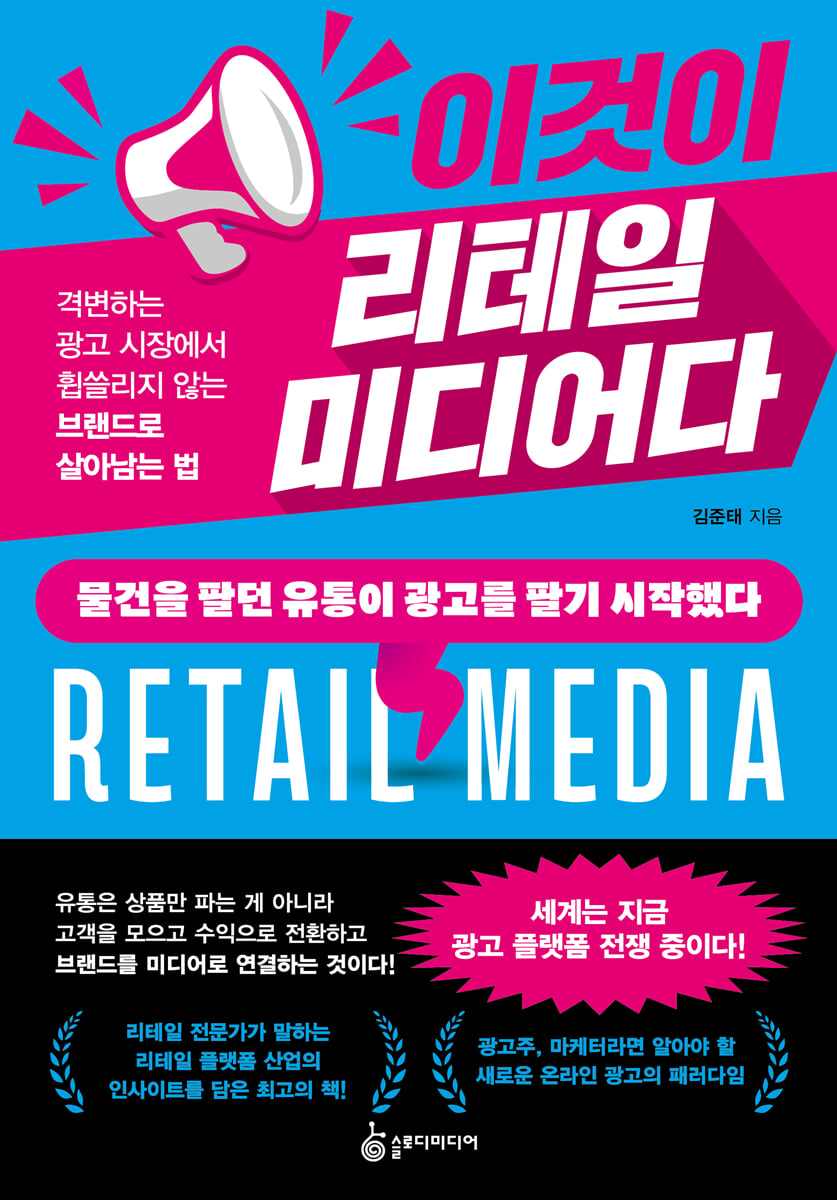
***** The best book filled with insights into the retail platform industry from retail experts!
***** The new paradigm of online advertising that advertisers and marketers need to know
Distribution, which used to sell goods, started selling advertisements!
The world is now in an advertising platform war!
Distribution is not just about selling products, but also about gathering customers.
Converting it into revenue and connecting your brand to media!
Retail platforms, advertising is now their main business!
Now, the entire customer journey from seeing an ad, clicking on it, making a purchase, and leading to the next purchase all takes place within a single platform.
Ads are mixed in with your search results, there's a banner next to your cart, and another recommendation appears right after you check out.
Advertising is no longer a means of 'attracting' consumers from outside, but has transformed into a form that follows the flow of customers on distribution platforms.
Now distribution is advertising, and advertising is purchasing.
Retail has become the stage for advertising, and advertising completes the transition within distribution.
This trend of change is called ‘Retail Media’.
This book summarizes the present and future of the retail media business, at the forefront of change.
It's not just about following trends.
We'll explain, in a simple and step-by-step manner, why distribution embraces advertising, how advertising generates purchases, how data refines advertising, and how technology automates conversion.
It contains real-life examples from major domestic and international companies, as well as structures and strategies that can be understood from a practitioner's perspective.
We hope to provide practical insights to brands, advertisers, platform operators, and marketers looking at retail media.
***** The new paradigm of online advertising that advertisers and marketers need to know
Distribution, which used to sell goods, started selling advertisements!
The world is now in an advertising platform war!
Distribution is not just about selling products, but also about gathering customers.
Converting it into revenue and connecting your brand to media!
Retail platforms, advertising is now their main business!
Now, the entire customer journey from seeing an ad, clicking on it, making a purchase, and leading to the next purchase all takes place within a single platform.
Ads are mixed in with your search results, there's a banner next to your cart, and another recommendation appears right after you check out.
Advertising is no longer a means of 'attracting' consumers from outside, but has transformed into a form that follows the flow of customers on distribution platforms.
Now distribution is advertising, and advertising is purchasing.
Retail has become the stage for advertising, and advertising completes the transition within distribution.
This trend of change is called ‘Retail Media’.
This book summarizes the present and future of the retail media business, at the forefront of change.
It's not just about following trends.
We'll explain, in a simple and step-by-step manner, why distribution embraces advertising, how advertising generates purchases, how data refines advertising, and how technology automates conversion.
It contains real-life examples from major domestic and international companies, as well as structures and strategies that can be understood from a practitioner's perspective.
We hope to provide practical insights to brands, advertisers, platform operators, and marketers looking at retail media.
- You can preview some of the book's contents.
Preview
index
Recommendation :: 6
Prologue: Distribution, which used to sell goods, began selling advertising::8
Part 1: How Distribution Became Advertising
1.
Why Distribution Turned into Advertising :: 19
Why Distribution Became a Billboard :: 20
Why are advertising dollars focused on distribution rather than broadcasting and the media? :: 27
How Retail Media Works :: 30
How Distribution Became Media :: 34
2.
The world is now in an advertising platform war :: 38
Distribution companies are now media companies :: 39
The reason advertising is profitable is confidence, not numbers :: 41
The success or failure of advertising depends not on conversion rates, but on context. :: 43
Retail Media's Position in the Digital Advertising Market :: 44
Retail Media Is No Longer a Trend :: 45
3.
Where is Korea's Retail Media Now? :: 48
Who Was Faster in Shifting Distributor Advertising? :: 49
Data reacts first :: 51
Offline Distributors' Response and Purchase Conversion Strategies :: 53
Structural Opportunities and Risks in the Domestic Market :: 54
Future Growth Potential and Strategic Points::56
Part 2: How Retail Media Evolved in Korea
1.
Advertising that Designs Sales Beyond Recommendations :: 61
Advertising has evolved from 'recommendations' :: 62
Sales-Linked Advertising Products: Algorithms Drive the Movement :: 63
A structure that makes it easy for advertisers to enter and grow :: 65
Advertising Effectiveness in Numbers :: 67
Recommended Ads: A Strategic Tool Beyond Simple Automation :: 68
2.
Coupang's Search Power: Why It's Also Successful with Advertising :: 70
Advertising that has taken over online platforms :: 71
Coupang, strong in search, even stronger in advertising :: 72
A Seller-Driven Advertising Ecosystem :: 74
Coupang Advertising Performance: The Numbers Speak for It :: 76
The Competitive Edge of Coupang's Advertising Model: Its "Self-Containing Structure" :: 81
Coupang's Recommended Ads That Are Attractive to Everyone :: 82
3.
From Portal to Commerce: The Evolution of Naver-Style Advertising :: 85
Naver Expands from Search Portal to Commerce Media :: 86
Advertising Models That Resonate with the Buyer's Journey :: 87
Advertising Structuring in the Naver Shopping Ecosystem :: 92
Advanced Advertiser-Centric System :: 95
The Lab of E-Commerce Advertising Strategy :: 95
4.
The Big Three Offline Retailers Are Now Advertising Platforms :: 99
Offline media transformation begins with integration:: 100
Shinsegae Group: Every Space Becomes an Advertisement :: 101
Lotte Distribution Group: Every point of distribution is connected to advertising :: 108
Hyundai Department Store Group Designs Content-Based Commerce and Premium Advertising Space :: 113
Whoever owns their platform dominates advertising :: 114
5.
The Era of Experiential Spaces Becoming Advertisements :: 117
Experiential space is media :: 118
Membership and Data-Driven Targeted Advertising :: 119
Media Strategy Based on Beauty Content :: 120
Structural Characteristics of Olive Young Retail Media :: 124
Advertising in Experiential Retail :: 126
Part 3: The Technology That Drives Advertising: Talking Data
1.
The Era of Designing Advertising with Your Data :: 131
What Powers Advertising? :: 132
How Retail Media Can Seize the Opportunity in a Cookie-Free World :: 134
How to Use First-Party Data Effectively :: 137
Why First-Party Advertising Is More Powerful :: 140
Data drives advertising, and advertising drives the platform :: 142
2.
Technology that Makes Advertising Move 'On its Own' :: 145
Why Recommendation Algorithms Drive Conversions :: 146
How AI Recommendation Systems Work :: 148
How to Predict the Potential of a Transition :: 152
Representative Cases Using Recommendation Algorithms :: 154
Recommendations are a strategy, not a skill :: 158
3.
Advertising Effectiveness and Measurement Technology :: 161
Trust in Retail Media Begins with Performance Measurement :: 162
How are performance metrics designed? :: 164
Why Real-Time Reporting Matters: 166
Sophisticated Measurement Becomes Strategy :: 166
Retail Media Speaks in Numbers :: 168
Part 4: Advertising or Strategy: The True Role of Retail Media
1.
Successful retail media have something in common: 173
What Structure Does a Successful Retail Media Have? :: 174
What's Needed for Retail Media Success? :: 180
2.
Strategies from Brand, Distribution, and Advertiser Perspectives :: 182
Retail media strategies vary depending on who's watching :: 182
Different roles, but the same direction :: 188
Epilogue: Why We're Talking About Retail Media Now :: 191
Americas :: 193
Prologue: Distribution, which used to sell goods, began selling advertising::8
Part 1: How Distribution Became Advertising
1.
Why Distribution Turned into Advertising :: 19
Why Distribution Became a Billboard :: 20
Why are advertising dollars focused on distribution rather than broadcasting and the media? :: 27
How Retail Media Works :: 30
How Distribution Became Media :: 34
2.
The world is now in an advertising platform war :: 38
Distribution companies are now media companies :: 39
The reason advertising is profitable is confidence, not numbers :: 41
The success or failure of advertising depends not on conversion rates, but on context. :: 43
Retail Media's Position in the Digital Advertising Market :: 44
Retail Media Is No Longer a Trend :: 45
3.
Where is Korea's Retail Media Now? :: 48
Who Was Faster in Shifting Distributor Advertising? :: 49
Data reacts first :: 51
Offline Distributors' Response and Purchase Conversion Strategies :: 53
Structural Opportunities and Risks in the Domestic Market :: 54
Future Growth Potential and Strategic Points::56
Part 2: How Retail Media Evolved in Korea
1.
Advertising that Designs Sales Beyond Recommendations :: 61
Advertising has evolved from 'recommendations' :: 62
Sales-Linked Advertising Products: Algorithms Drive the Movement :: 63
A structure that makes it easy for advertisers to enter and grow :: 65
Advertising Effectiveness in Numbers :: 67
Recommended Ads: A Strategic Tool Beyond Simple Automation :: 68
2.
Coupang's Search Power: Why It's Also Successful with Advertising :: 70
Advertising that has taken over online platforms :: 71
Coupang, strong in search, even stronger in advertising :: 72
A Seller-Driven Advertising Ecosystem :: 74
Coupang Advertising Performance: The Numbers Speak for It :: 76
The Competitive Edge of Coupang's Advertising Model: Its "Self-Containing Structure" :: 81
Coupang's Recommended Ads That Are Attractive to Everyone :: 82
3.
From Portal to Commerce: The Evolution of Naver-Style Advertising :: 85
Naver Expands from Search Portal to Commerce Media :: 86
Advertising Models That Resonate with the Buyer's Journey :: 87
Advertising Structuring in the Naver Shopping Ecosystem :: 92
Advanced Advertiser-Centric System :: 95
The Lab of E-Commerce Advertising Strategy :: 95
4.
The Big Three Offline Retailers Are Now Advertising Platforms :: 99
Offline media transformation begins with integration:: 100
Shinsegae Group: Every Space Becomes an Advertisement :: 101
Lotte Distribution Group: Every point of distribution is connected to advertising :: 108
Hyundai Department Store Group Designs Content-Based Commerce and Premium Advertising Space :: 113
Whoever owns their platform dominates advertising :: 114
5.
The Era of Experiential Spaces Becoming Advertisements :: 117
Experiential space is media :: 118
Membership and Data-Driven Targeted Advertising :: 119
Media Strategy Based on Beauty Content :: 120
Structural Characteristics of Olive Young Retail Media :: 124
Advertising in Experiential Retail :: 126
Part 3: The Technology That Drives Advertising: Talking Data
1.
The Era of Designing Advertising with Your Data :: 131
What Powers Advertising? :: 132
How Retail Media Can Seize the Opportunity in a Cookie-Free World :: 134
How to Use First-Party Data Effectively :: 137
Why First-Party Advertising Is More Powerful :: 140
Data drives advertising, and advertising drives the platform :: 142
2.
Technology that Makes Advertising Move 'On its Own' :: 145
Why Recommendation Algorithms Drive Conversions :: 146
How AI Recommendation Systems Work :: 148
How to Predict the Potential of a Transition :: 152
Representative Cases Using Recommendation Algorithms :: 154
Recommendations are a strategy, not a skill :: 158
3.
Advertising Effectiveness and Measurement Technology :: 161
Trust in Retail Media Begins with Performance Measurement :: 162
How are performance metrics designed? :: 164
Why Real-Time Reporting Matters: 166
Sophisticated Measurement Becomes Strategy :: 166
Retail Media Speaks in Numbers :: 168
Part 4: Advertising or Strategy: The True Role of Retail Media
1.
Successful retail media have something in common: 173
What Structure Does a Successful Retail Media Have? :: 174
What's Needed for Retail Media Success? :: 180
2.
Strategies from Brand, Distribution, and Advertiser Perspectives :: 182
Retail media strategies vary depending on who's watching :: 182
Different roles, but the same direction :: 188
Epilogue: Why We're Talking About Retail Media Now :: 191
Americas :: 193
Detailed image
.jpg)
Into the book
Advertising always seeks to capture the attention of consumers. Not only TV commercials, but also crowded spaces like subways and movie theaters are always filled with ads.
However, it is not easy to determine whether an advertisement is truly effective or who sees it and takes action.
Even if you spend a huge budget and measure performance with estimates like "exposures" or "awareness surveys," you cannot gauge how far you are from your customers.
But now that distance has completely disappeared.
The entire customer journey from seeing an ad, clicking on it, making a purchase, and leading to the next purchase takes place on a single platform.
Ads are mixed in with your search results, there's a banner next to your shopping cart, and another recommendation appears right after you check out.
Advertising is no longer a means of 'attracting' consumers from outside.
--- p.8
As distribution platforms have evolved to follow the flow of customers, distribution has become advertising and advertising has become purchase.
Retail has become the stage for advertising, and advertising completes the purchase conversion process on distribution platforms.
This trend of change is called 'Retail Media'.
--- p.9
When did distribution become advertising? It's difficult to pinpoint the exact starting point, but the concept of retail media began to take shape in 2012, when Amazon began disclosing advertising revenue separately.
In just a few years, Amazon has become the third largest digital advertising market in the US, behind Google and Meta.
In this process, the act of shopping as a distribution channel has transformed into an advertising platform that most closely resembles a purchase conversion, and this trend continues in Korea. With retail media businesses fully launched based on commerce platforms like SSG.COM, Coupang, and Naver, the advertising aspect of distribution is becoming a reality.
With offline distributors also joining this trend, we have now entered an era where the entire distribution industry is an advertising platform.
--- p.10
This book aims to summarize the present and future of the retail media business, at the forefront of these changes.
We aim to explain, in a simple and step-by-step manner, why distribution embraces advertising, how advertising generates purchases, how data refines advertising, and how technology automates purchase conversions.
It contains real-life examples from major domestic and international companies, as well as structures and strategies that can be understood from a practitioner's perspective.
We hope to provide practical insights to brands, advertisers, platform operators, and marketers looking at retail media.
Retail media is not just another name for advertising.
It's a new ecosystem created by the complex intertwining of e-commerce, offline distribution, content, customer data, and machine learning technologies.
While traditional advertising relied on the power of the medium, retail media exists by permeating platforms and customer flows.
Only those who understand this flow can more effectively promote their products, grow their brands, and win in the market.
Distribution is no longer just about selling products.
It is a media that captures customer attention, converts that attention into profits, and connects brands and consumers.
Rather than talking about the future of distribution, it's time to rewrite the future of media.
--- p.11
Retail media isn't simply about "renting advertising space," it's about integrating advertising throughout the customer journey, designing where and how to drive conversion.
Customers search, click on products, add them to their shopping cart, and complete checkout.
In all these moments, advertisements are strategically placed.
It's not an 'advertisement pulled in from outside', but it flows along with the journey.
Retail media is evolving beyond the concept of exposure to a revenue model centered on purchase conversion.
This change isn't just about adding advertising products.
This signals a fundamental shift in the distribution platform's overall revenue structure and business strategy.
Retail media is not a fusion of distribution and advertising, but rather a redrawing of the boundaries between the two industries and a shift toward a platform-centric business model.
--- pp.19-20
Traditional advertising was distant from customers. TV commercials only worked when customers held the remote control, and subway screen ads were only meaningful when passengers looked at them.
Advertising is always based on the expectation of “who will see it?”, but that response is always just an estimate.
But today's consumers go directly to the platform to find the brand.
Searching for products, comparing options, adding to cart, and considering payment all happen in real time, all within one space.
Now, advertising is integrated into the flow, and is exposed to customers when they are most focused: right before they decide.
Advertising no longer finds customers.
Advertising follows the customer's journey.
At this point, distribution became a billboard, and advertising was no longer just a "promotional item" but the centerpiece of the business model.
--- p.21
This is retail media.
It seems like the customer chose it, but it follows a flow that has already been designed.
In this way, advertising has evolved from a tool that 'pulls' customers from outside the shopping experience to a structure that 'flows with' customers' gaze during their shopping journey.
Amazon's retail media structure alone generated advertising revenue of approximately $37 billion (approximately 50 trillion won) in 2022, making it the world's third-largest digital advertising platform, following Google and Meta.
This growth trend continued into 2023, with advertising revenue reaching approximately $46.9 billion.
By 2024, advertising revenue is projected to reach $14.3 billion through the third quarter, up 19% year-over-year, and annual advertising revenue is projected to exceed $50 billion.
--- p.24
Brands are no longer satisfied with just 'advertising that's seen by a lot of people.'
We want to show ads within the platform to customers with a high probability of conversion, right before they make a purchase.
This is not simply a matter of choice; it acts as a powerful regulator that changes the flow of advertising budgets itself.
At one time, the success of an advertisement was measured by whether it appeared on a TV program with high viewership ratings or on the front page of a major portal site.
But now, the important metric is not 'how many people saw it' but 'how many people actually bought it'.
More budget is allocated to traffic with a clear destination—conversion—than to impressions with no measurable impact. Retail media targets this very point.
The key is that advertising works throughout the customer's purchasing journey.
Customers search, browse, add items to their cart, and complete checkout.
--- p.27
The same goes for Olive Young.
Beauty brands that open stores here are reducing their advertising budgets on traditional media and allocating more budget to retail media focused on purchase conversion, such as content-based promotions, review-based recommendation ads, and in-app banner ads.
This is because the entire process from advertising execution → customer response → purchase → review creation is organically connected on a single platform.
Advertising dollars are now shifting from "showing more" to "converting more."
A single line in a customer review now generates more sales than a TV commercial.
Retail media is becoming a strategic tool for brands to leverage performance-driven marketing and for distributors to create a new revenue pipeline through advertising.
--- p.30
Distribution was not the media from the beginning.
It was a space where products were displayed and sold, and all customers had to do was select items, put them in their shopping cart, and pay.
But now, advertisements are placed in every space where customers stay.
From signage on shelves, to digital screens at store entrances, to recommendation banners on app main screens, advertisements now follow customers wherever their eyes land.
Distribution is now not just a space for selling goods, but also a media platform that generates advertising revenue.
In other words, distribution, which used to be a place to gather customers, has now shifted to a structure where money is made through advertising. This is the core of retail media.
Every space a customer occupies becomes advertising inventory, and the behavioral data they leave behind becomes the basis for precise targeting and recommendations.
All processes take place naturally on the distribution platform.
--- p.34
Distribution has become not a ‘store’ but a ‘media that designs data flow.’
And advertising, distribution, purchase conversion, technology, customers, and data are organically linked within a single system.
Within this structure, retail media is not simply a supplementary business, but rather the new essence of the distribution platform and the central axis of the business.
--- p.35
The biggest appeal of retail media isn't the ability to place advertisements, but rather that it's a rare business for distribution companies that offers both high profitability and asset efficiency.
The existing distribution model has high fixed costs such as logistics centers, warehouses, and delivery infrastructure, and the margins on product sales are low.
It takes a long time to generate profits and operating efficiency is likely to be low.
However, since retail media is structured to sell exposure space (inventory) within existing platforms as advertising products, it can generate high profits without additional costs.
In this respect, retail media is closer to a ‘space monetization’ model than a ‘sales business.’
--- p.41
It would be a mistake to view retail media as a new endeavor or an emerging trend.
Because it's a new pivot that fundamentally changes the landscape of the global digital advertising market. The advertising market is always changing.
Once upon a time, search was the center of attention, and later social media became the main stage for advertising budgets.
Now, the focus has shifted to distribution platforms, or commerce.
It's not because new channels have emerged, but because of the clear and powerful structural advantages that only retail media possesses.
--- p.45
Coupang has a strong infrastructure in logistics and rocket delivery.
By placing ads on products that can be shipped immediately, customers' purchasing resistance is reduced and advertising effectiveness naturally increases.
Recently, sophisticated segmentation strategies have been attempted, such as differentiating ad exposure based on membership level or offering promotional ads only to certain customer segments. SSG.COM differentiates itself through premium targeting and integration with offline channels.
We design an advertising strategy that integrates online and offline by reflecting behavioral data from customers visiting offline stores such as department stores and E-Mart in digital advertising.
In particular, AI-based recommendation ads are designed to appear "unlike ads," based on customer browsing behavior and shopping cart data. In this way, each platform is structuring its advertising offerings around its strengths.
Beyond selling exposure, it is evolving into a media system that designs purchase conversions.
--- p.51
Advertising is now evolving beyond mere "showing" to become a strategic tool that drives purchases and generates revenue. SSG.COM's AI-based recommendation advertising system is a prime example.
On the surface, it appears to be an advertisement that automatically displays products that are suitable for the customer.
But behind the scenes, sophisticated customer analysis algorithms and predictive models are at work.
The system automatically places products at the time and location with the highest likelihood of conversion by analyzing the customer's shopping cart history, recent searches, browsing behavior, and click flow by category.
--- p.61
A particularly noteworthy aspect of Coupang's retail media strategy is its design philosophy of minimizing the burden of advertising operations.
Without requiring advertisers to set complex targets or conditions, the algorithm automatically analyzes customer behavior data to optimize ads.
This serves as a factor that lowers the barrier to entry for small and medium-sized sellers who do not have advertising expertise.
The ease of participating in advertising means that advertising products will soon become more popular.
In the past, only brands above a certain size could utilize advertising, but now a self-serve ecosystem is being created where anyone can run ads and see results.
A key role in this structure is played by the advertising performance reporting system.
Coupang provides real-time dashboard-style reports for advertisers.
Advertisers can intuitively check key metrics such as daily budget consumption, number of clicks, conversion rate, and ROAS without separate analysis work.
--- p.74
The greatest strength of Naver Shopping search ads is that they are directly connected to customers' purchasing intent.
Customers aren't just browsing for information; they're already considering a purchase when they begin their search with a specific product name or keyword.
This moment is when the likelihood of a purchase conversion is highest, and Naver displays the advertiser's product at this very point.
This structure does not end with simply exposing the advertisement, but acts as a link that leads directly to purchase action after clicking.
By bidding on keywords of their choice, advertisers can reach customers at moments when their needs are clear, thereby realizing a performance-based advertising model.
Naver's shopping search ads are structured to transform customers' search behavior into advertising moments, demonstrating the most important aspect of retail media: precise advertising timing.
--- p.88
Shinsegae's strategy is considered the most structured retail media design case among traditional distribution companies.
This is because it is a platform equipped with both technology and infrastructure, and the entire customer journey, from store visits to mobile apps, ad exposure, and purchase conversion, is integrated into a single advertising flow.
As a result, Shinsegae was able to consistently design brand experiences across both online and offline channels, and advertisers were able to secure an environment where they could simultaneously enhance both purchase conversion rates and brand awareness.
Retail media is no longer an 'online-only' strategy.
Shinsegae is proving that proposition by transforming the assets of offline distributors into media.
--- p.107
Lotte is actively developing an integrated retail media strategy that organically connects digital advertising assets with offline spaces.
Like Shinsegae, Lotte is converting all physical touchpoints—including in-store digital signage, outdoor billboards, last-mile delivery boxes, and elevator LCDs—into advertising inventory, and these advertising assets are linked in real time to digital advertising campaigns.
At the entrance of Lotte Department Store, a media wall (large digital screen) is installed, and messages about special events held by Lotte ON, an online mall, are broadcast in real time, and the delivery boxes containing products ordered by customers have promotional stickers of the corresponding brands attached.
This is a customer journey design that seamlessly connects advertising messages from before purchase (searching → during purchase (store contact → after purchase (delivery and unboxing).
--- p.110
The Olive Young app operates a personalized advertising system based on first-party data by analyzing customers' search history, purchase history, and shopping cart information.
This system automatically exposes products that match customers' interests through push notifications, personalized in-app banners, and curated recommended content, and more precisely guides them to convert into purchases.
Customers who frequently search for or purchase skincare products are automatically offered information on new products, special promotions, and discounts in the form of banners or notifications, precisely aligning the timing of ad exposure with customer purchasing behavior.
This structure creates a virtuous cycle in which advertising, customer behavior, reviews, and purchase conversion are organically linked within the digital environment.
This type of recommendation advertising system helps customers quickly and easily find the products they want within the app, and provides advertisers with a solution that delivers higher purchase conversion rates and efficient advertising performance.
--- p.123
Distributors such as Coupang, Naver, SSG.COM, and Olive Young are securing sophisticated, real-time data on customers' searches, clicks, shopping carts, purchases, and payment history directly from their platforms.
Unlike third-party cookies, this data is behavioral information collected with the customer's consent, making it a stable asset that can be used for targeting without legal restrictions.
In other words, we have entered an era where externally tracked advertising will disappear, but advertising designed within one's own platform will become more powerful.
Retail media is emerging as the most advantageous advertising platform within this structure, enabling real-time ad exposure tailored to customer behavior and accurate prediction of purchase conversions. The first-party data provided by retail media provides advertisers with the opportunity to develop precise targeting and efficient advertising strategies without relying on external data.
--- p.136
Advertising based on first-party data is a game-changing tool for advertising strategy.
In the past, how many people were exposed to an advertisement was important, but now, to whom, when, and in what context the advertisement is shown has become even more important.
The key is first-party data.
This data reflects customers' real interests and purchasing behavior.
The traces a customer leaves behind—searches, clicks, shopping carts, and purchase history—tell us which brands they prefer, which products they hesitated to buy, and when they're likely to return.
This information will soon become the basis for accurate targeting.
For example, if you show related products to customers who have repeatedly browsed a specific category, the ad becomes more than just "visible"; it becomes "attractive."
--- p.140
We no longer live in an era where people manually target and distribute advertising space. AI analyzes data on the behavior of hundreds of thousands of customers every second and automatically delivers tailored advertisements.
This structure drastically reduces advertisers' resources and increases the reliability of performance-based operations.
Advertisers no longer have to worry about who to show their ads to.
Since the performance is structured by an algorithm by simply setting a budget, you can focus on strategic operations.
This is how AI technology really works in retail media.
The new role of advertising technology is not ‘technology that shows a lot,’ but ‘technology that reaches precisely.’
--- p.146
What makes retail media fundamentally different from traditional advertising media is that advertising performance can be quantified based on conversion metrics.
While traditional advertising media evaluated value solely on exposure, retail media can track the entire customer journey in real time and accurately measure the process from exposure → click → shopping cart → purchase → repeat purchase.
The accuracy of these performance measurements is retail media's greatest strength.
From the advertiser's perspective, they can accurately measure whether their ads lead to actual purchases, giving them a clear understanding of their advertising's effectiveness and ROI.
This is a key element that differentiates retail media from traditional advertising media, as it measures actual advertising performance based on customers' actual behavior.
--- p.162
What kind of structure does successful retail media have? Retail media goes beyond simply selling advertising products; it's a complex revenue model that predicts customer behavior, adapts brand strategies, and drives purchase conversions using technology.
The key to retail media is having a system that is structurally designed to create a sustainable business model.
To achieve this, a strategic approach is needed, considering future growth potential beyond short-term campaign operations or ad sales. For retail media to become a sustainable and scalable business, its systems must be able to provide long-term stability, not just short-term results.
The four core elements that make up this structure are traffic, accounts, technology, and data, which organically combine to form the foundation for making retail media a successful advertising model.
However, it is not easy to determine whether an advertisement is truly effective or who sees it and takes action.
Even if you spend a huge budget and measure performance with estimates like "exposures" or "awareness surveys," you cannot gauge how far you are from your customers.
But now that distance has completely disappeared.
The entire customer journey from seeing an ad, clicking on it, making a purchase, and leading to the next purchase takes place on a single platform.
Ads are mixed in with your search results, there's a banner next to your shopping cart, and another recommendation appears right after you check out.
Advertising is no longer a means of 'attracting' consumers from outside.
--- p.8
As distribution platforms have evolved to follow the flow of customers, distribution has become advertising and advertising has become purchase.
Retail has become the stage for advertising, and advertising completes the purchase conversion process on distribution platforms.
This trend of change is called 'Retail Media'.
--- p.9
When did distribution become advertising? It's difficult to pinpoint the exact starting point, but the concept of retail media began to take shape in 2012, when Amazon began disclosing advertising revenue separately.
In just a few years, Amazon has become the third largest digital advertising market in the US, behind Google and Meta.
In this process, the act of shopping as a distribution channel has transformed into an advertising platform that most closely resembles a purchase conversion, and this trend continues in Korea. With retail media businesses fully launched based on commerce platforms like SSG.COM, Coupang, and Naver, the advertising aspect of distribution is becoming a reality.
With offline distributors also joining this trend, we have now entered an era where the entire distribution industry is an advertising platform.
--- p.10
This book aims to summarize the present and future of the retail media business, at the forefront of these changes.
We aim to explain, in a simple and step-by-step manner, why distribution embraces advertising, how advertising generates purchases, how data refines advertising, and how technology automates purchase conversions.
It contains real-life examples from major domestic and international companies, as well as structures and strategies that can be understood from a practitioner's perspective.
We hope to provide practical insights to brands, advertisers, platform operators, and marketers looking at retail media.
Retail media is not just another name for advertising.
It's a new ecosystem created by the complex intertwining of e-commerce, offline distribution, content, customer data, and machine learning technologies.
While traditional advertising relied on the power of the medium, retail media exists by permeating platforms and customer flows.
Only those who understand this flow can more effectively promote their products, grow their brands, and win in the market.
Distribution is no longer just about selling products.
It is a media that captures customer attention, converts that attention into profits, and connects brands and consumers.
Rather than talking about the future of distribution, it's time to rewrite the future of media.
--- p.11
Retail media isn't simply about "renting advertising space," it's about integrating advertising throughout the customer journey, designing where and how to drive conversion.
Customers search, click on products, add them to their shopping cart, and complete checkout.
In all these moments, advertisements are strategically placed.
It's not an 'advertisement pulled in from outside', but it flows along with the journey.
Retail media is evolving beyond the concept of exposure to a revenue model centered on purchase conversion.
This change isn't just about adding advertising products.
This signals a fundamental shift in the distribution platform's overall revenue structure and business strategy.
Retail media is not a fusion of distribution and advertising, but rather a redrawing of the boundaries between the two industries and a shift toward a platform-centric business model.
--- pp.19-20
Traditional advertising was distant from customers. TV commercials only worked when customers held the remote control, and subway screen ads were only meaningful when passengers looked at them.
Advertising is always based on the expectation of “who will see it?”, but that response is always just an estimate.
But today's consumers go directly to the platform to find the brand.
Searching for products, comparing options, adding to cart, and considering payment all happen in real time, all within one space.
Now, advertising is integrated into the flow, and is exposed to customers when they are most focused: right before they decide.
Advertising no longer finds customers.
Advertising follows the customer's journey.
At this point, distribution became a billboard, and advertising was no longer just a "promotional item" but the centerpiece of the business model.
--- p.21
This is retail media.
It seems like the customer chose it, but it follows a flow that has already been designed.
In this way, advertising has evolved from a tool that 'pulls' customers from outside the shopping experience to a structure that 'flows with' customers' gaze during their shopping journey.
Amazon's retail media structure alone generated advertising revenue of approximately $37 billion (approximately 50 trillion won) in 2022, making it the world's third-largest digital advertising platform, following Google and Meta.
This growth trend continued into 2023, with advertising revenue reaching approximately $46.9 billion.
By 2024, advertising revenue is projected to reach $14.3 billion through the third quarter, up 19% year-over-year, and annual advertising revenue is projected to exceed $50 billion.
--- p.24
Brands are no longer satisfied with just 'advertising that's seen by a lot of people.'
We want to show ads within the platform to customers with a high probability of conversion, right before they make a purchase.
This is not simply a matter of choice; it acts as a powerful regulator that changes the flow of advertising budgets itself.
At one time, the success of an advertisement was measured by whether it appeared on a TV program with high viewership ratings or on the front page of a major portal site.
But now, the important metric is not 'how many people saw it' but 'how many people actually bought it'.
More budget is allocated to traffic with a clear destination—conversion—than to impressions with no measurable impact. Retail media targets this very point.
The key is that advertising works throughout the customer's purchasing journey.
Customers search, browse, add items to their cart, and complete checkout.
--- p.27
The same goes for Olive Young.
Beauty brands that open stores here are reducing their advertising budgets on traditional media and allocating more budget to retail media focused on purchase conversion, such as content-based promotions, review-based recommendation ads, and in-app banner ads.
This is because the entire process from advertising execution → customer response → purchase → review creation is organically connected on a single platform.
Advertising dollars are now shifting from "showing more" to "converting more."
A single line in a customer review now generates more sales than a TV commercial.
Retail media is becoming a strategic tool for brands to leverage performance-driven marketing and for distributors to create a new revenue pipeline through advertising.
--- p.30
Distribution was not the media from the beginning.
It was a space where products were displayed and sold, and all customers had to do was select items, put them in their shopping cart, and pay.
But now, advertisements are placed in every space where customers stay.
From signage on shelves, to digital screens at store entrances, to recommendation banners on app main screens, advertisements now follow customers wherever their eyes land.
Distribution is now not just a space for selling goods, but also a media platform that generates advertising revenue.
In other words, distribution, which used to be a place to gather customers, has now shifted to a structure where money is made through advertising. This is the core of retail media.
Every space a customer occupies becomes advertising inventory, and the behavioral data they leave behind becomes the basis for precise targeting and recommendations.
All processes take place naturally on the distribution platform.
--- p.34
Distribution has become not a ‘store’ but a ‘media that designs data flow.’
And advertising, distribution, purchase conversion, technology, customers, and data are organically linked within a single system.
Within this structure, retail media is not simply a supplementary business, but rather the new essence of the distribution platform and the central axis of the business.
--- p.35
The biggest appeal of retail media isn't the ability to place advertisements, but rather that it's a rare business for distribution companies that offers both high profitability and asset efficiency.
The existing distribution model has high fixed costs such as logistics centers, warehouses, and delivery infrastructure, and the margins on product sales are low.
It takes a long time to generate profits and operating efficiency is likely to be low.
However, since retail media is structured to sell exposure space (inventory) within existing platforms as advertising products, it can generate high profits without additional costs.
In this respect, retail media is closer to a ‘space monetization’ model than a ‘sales business.’
--- p.41
It would be a mistake to view retail media as a new endeavor or an emerging trend.
Because it's a new pivot that fundamentally changes the landscape of the global digital advertising market. The advertising market is always changing.
Once upon a time, search was the center of attention, and later social media became the main stage for advertising budgets.
Now, the focus has shifted to distribution platforms, or commerce.
It's not because new channels have emerged, but because of the clear and powerful structural advantages that only retail media possesses.
--- p.45
Coupang has a strong infrastructure in logistics and rocket delivery.
By placing ads on products that can be shipped immediately, customers' purchasing resistance is reduced and advertising effectiveness naturally increases.
Recently, sophisticated segmentation strategies have been attempted, such as differentiating ad exposure based on membership level or offering promotional ads only to certain customer segments. SSG.COM differentiates itself through premium targeting and integration with offline channels.
We design an advertising strategy that integrates online and offline by reflecting behavioral data from customers visiting offline stores such as department stores and E-Mart in digital advertising.
In particular, AI-based recommendation ads are designed to appear "unlike ads," based on customer browsing behavior and shopping cart data. In this way, each platform is structuring its advertising offerings around its strengths.
Beyond selling exposure, it is evolving into a media system that designs purchase conversions.
--- p.51
Advertising is now evolving beyond mere "showing" to become a strategic tool that drives purchases and generates revenue. SSG.COM's AI-based recommendation advertising system is a prime example.
On the surface, it appears to be an advertisement that automatically displays products that are suitable for the customer.
But behind the scenes, sophisticated customer analysis algorithms and predictive models are at work.
The system automatically places products at the time and location with the highest likelihood of conversion by analyzing the customer's shopping cart history, recent searches, browsing behavior, and click flow by category.
--- p.61
A particularly noteworthy aspect of Coupang's retail media strategy is its design philosophy of minimizing the burden of advertising operations.
Without requiring advertisers to set complex targets or conditions, the algorithm automatically analyzes customer behavior data to optimize ads.
This serves as a factor that lowers the barrier to entry for small and medium-sized sellers who do not have advertising expertise.
The ease of participating in advertising means that advertising products will soon become more popular.
In the past, only brands above a certain size could utilize advertising, but now a self-serve ecosystem is being created where anyone can run ads and see results.
A key role in this structure is played by the advertising performance reporting system.
Coupang provides real-time dashboard-style reports for advertisers.
Advertisers can intuitively check key metrics such as daily budget consumption, number of clicks, conversion rate, and ROAS without separate analysis work.
--- p.74
The greatest strength of Naver Shopping search ads is that they are directly connected to customers' purchasing intent.
Customers aren't just browsing for information; they're already considering a purchase when they begin their search with a specific product name or keyword.
This moment is when the likelihood of a purchase conversion is highest, and Naver displays the advertiser's product at this very point.
This structure does not end with simply exposing the advertisement, but acts as a link that leads directly to purchase action after clicking.
By bidding on keywords of their choice, advertisers can reach customers at moments when their needs are clear, thereby realizing a performance-based advertising model.
Naver's shopping search ads are structured to transform customers' search behavior into advertising moments, demonstrating the most important aspect of retail media: precise advertising timing.
--- p.88
Shinsegae's strategy is considered the most structured retail media design case among traditional distribution companies.
This is because it is a platform equipped with both technology and infrastructure, and the entire customer journey, from store visits to mobile apps, ad exposure, and purchase conversion, is integrated into a single advertising flow.
As a result, Shinsegae was able to consistently design brand experiences across both online and offline channels, and advertisers were able to secure an environment where they could simultaneously enhance both purchase conversion rates and brand awareness.
Retail media is no longer an 'online-only' strategy.
Shinsegae is proving that proposition by transforming the assets of offline distributors into media.
--- p.107
Lotte is actively developing an integrated retail media strategy that organically connects digital advertising assets with offline spaces.
Like Shinsegae, Lotte is converting all physical touchpoints—including in-store digital signage, outdoor billboards, last-mile delivery boxes, and elevator LCDs—into advertising inventory, and these advertising assets are linked in real time to digital advertising campaigns.
At the entrance of Lotte Department Store, a media wall (large digital screen) is installed, and messages about special events held by Lotte ON, an online mall, are broadcast in real time, and the delivery boxes containing products ordered by customers have promotional stickers of the corresponding brands attached.
This is a customer journey design that seamlessly connects advertising messages from before purchase (searching → during purchase (store contact → after purchase (delivery and unboxing).
--- p.110
The Olive Young app operates a personalized advertising system based on first-party data by analyzing customers' search history, purchase history, and shopping cart information.
This system automatically exposes products that match customers' interests through push notifications, personalized in-app banners, and curated recommended content, and more precisely guides them to convert into purchases.
Customers who frequently search for or purchase skincare products are automatically offered information on new products, special promotions, and discounts in the form of banners or notifications, precisely aligning the timing of ad exposure with customer purchasing behavior.
This structure creates a virtuous cycle in which advertising, customer behavior, reviews, and purchase conversion are organically linked within the digital environment.
This type of recommendation advertising system helps customers quickly and easily find the products they want within the app, and provides advertisers with a solution that delivers higher purchase conversion rates and efficient advertising performance.
--- p.123
Distributors such as Coupang, Naver, SSG.COM, and Olive Young are securing sophisticated, real-time data on customers' searches, clicks, shopping carts, purchases, and payment history directly from their platforms.
Unlike third-party cookies, this data is behavioral information collected with the customer's consent, making it a stable asset that can be used for targeting without legal restrictions.
In other words, we have entered an era where externally tracked advertising will disappear, but advertising designed within one's own platform will become more powerful.
Retail media is emerging as the most advantageous advertising platform within this structure, enabling real-time ad exposure tailored to customer behavior and accurate prediction of purchase conversions. The first-party data provided by retail media provides advertisers with the opportunity to develop precise targeting and efficient advertising strategies without relying on external data.
--- p.136
Advertising based on first-party data is a game-changing tool for advertising strategy.
In the past, how many people were exposed to an advertisement was important, but now, to whom, when, and in what context the advertisement is shown has become even more important.
The key is first-party data.
This data reflects customers' real interests and purchasing behavior.
The traces a customer leaves behind—searches, clicks, shopping carts, and purchase history—tell us which brands they prefer, which products they hesitated to buy, and when they're likely to return.
This information will soon become the basis for accurate targeting.
For example, if you show related products to customers who have repeatedly browsed a specific category, the ad becomes more than just "visible"; it becomes "attractive."
--- p.140
We no longer live in an era where people manually target and distribute advertising space. AI analyzes data on the behavior of hundreds of thousands of customers every second and automatically delivers tailored advertisements.
This structure drastically reduces advertisers' resources and increases the reliability of performance-based operations.
Advertisers no longer have to worry about who to show their ads to.
Since the performance is structured by an algorithm by simply setting a budget, you can focus on strategic operations.
This is how AI technology really works in retail media.
The new role of advertising technology is not ‘technology that shows a lot,’ but ‘technology that reaches precisely.’
--- p.146
What makes retail media fundamentally different from traditional advertising media is that advertising performance can be quantified based on conversion metrics.
While traditional advertising media evaluated value solely on exposure, retail media can track the entire customer journey in real time and accurately measure the process from exposure → click → shopping cart → purchase → repeat purchase.
The accuracy of these performance measurements is retail media's greatest strength.
From the advertiser's perspective, they can accurately measure whether their ads lead to actual purchases, giving them a clear understanding of their advertising's effectiveness and ROI.
This is a key element that differentiates retail media from traditional advertising media, as it measures actual advertising performance based on customers' actual behavior.
--- p.162
What kind of structure does successful retail media have? Retail media goes beyond simply selling advertising products; it's a complex revenue model that predicts customer behavior, adapts brand strategies, and drives purchase conversions using technology.
The key to retail media is having a system that is structurally designed to create a sustainable business model.
To achieve this, a strategic approach is needed, considering future growth potential beyond short-term campaign operations or ad sales. For retail media to become a sustainable and scalable business, its systems must be able to provide long-term stability, not just short-term results.
The four core elements that make up this structure are traffic, accounts, technology, and data, which organically combine to form the foundation for making retail media a successful advertising model.
--- p.174
Publisher's Review
“Where are we advertising now?”
‘The place where conversion can be made’, ‘the closest point of contact with customers’
If you've figured out the answer, retail media is for you too.
It's not just a trend
It will be the starting point for a new strategy.
Global commerce companies such as Amazon, Walmart, and Target are already using retail media networks as their "second business engine."
However, there were few practical guides on this in Korea.
This book reflects the realities of the Korean market while sharply pointing out its connections to global trends.
Rather than simply introducing the topic, we clearly convey, through data and examples, why you should pay attention to retail media now.
When we understand how platforms we use every day, like Coupang, Naver, and SSG.COM, utilize our data and what strategies they employ to expose products, we feel like we're becoming smarter consumers.
It feels like I've caught a glimpse of the hidden story behind the advertising that takes place within the platform.
If you love shopping or are interested in the flow of commerce, I highly recommend this book.
‘The place where conversion can be made’, ‘the closest point of contact with customers’
If you've figured out the answer, retail media is for you too.
It's not just a trend
It will be the starting point for a new strategy.
Global commerce companies such as Amazon, Walmart, and Target are already using retail media networks as their "second business engine."
However, there were few practical guides on this in Korea.
This book reflects the realities of the Korean market while sharply pointing out its connections to global trends.
Rather than simply introducing the topic, we clearly convey, through data and examples, why you should pay attention to retail media now.
When we understand how platforms we use every day, like Coupang, Naver, and SSG.COM, utilize our data and what strategies they employ to expose products, we feel like we're becoming smarter consumers.
It feels like I've caught a glimpse of the hidden story behind the advertising that takes place within the platform.
If you love shopping or are interested in the flow of commerce, I highly recommend this book.
GOODS SPECIFICS
- Date of issue: June 30, 2025
- Page count, weight, size: 196 pages | 146*209*20mm
- ISBN13: 9791167852670
- ISBN10: 1167852672
You may also like
카테고리
korean


korean

![GQ KOREA Mark (Monthly): December [2025]](http://librairie.coreenne.fr/cdn/shop/files/8ef265dbbfbf186523ed75ba7319009d.jpg?v=1765340328&width=3840)


