

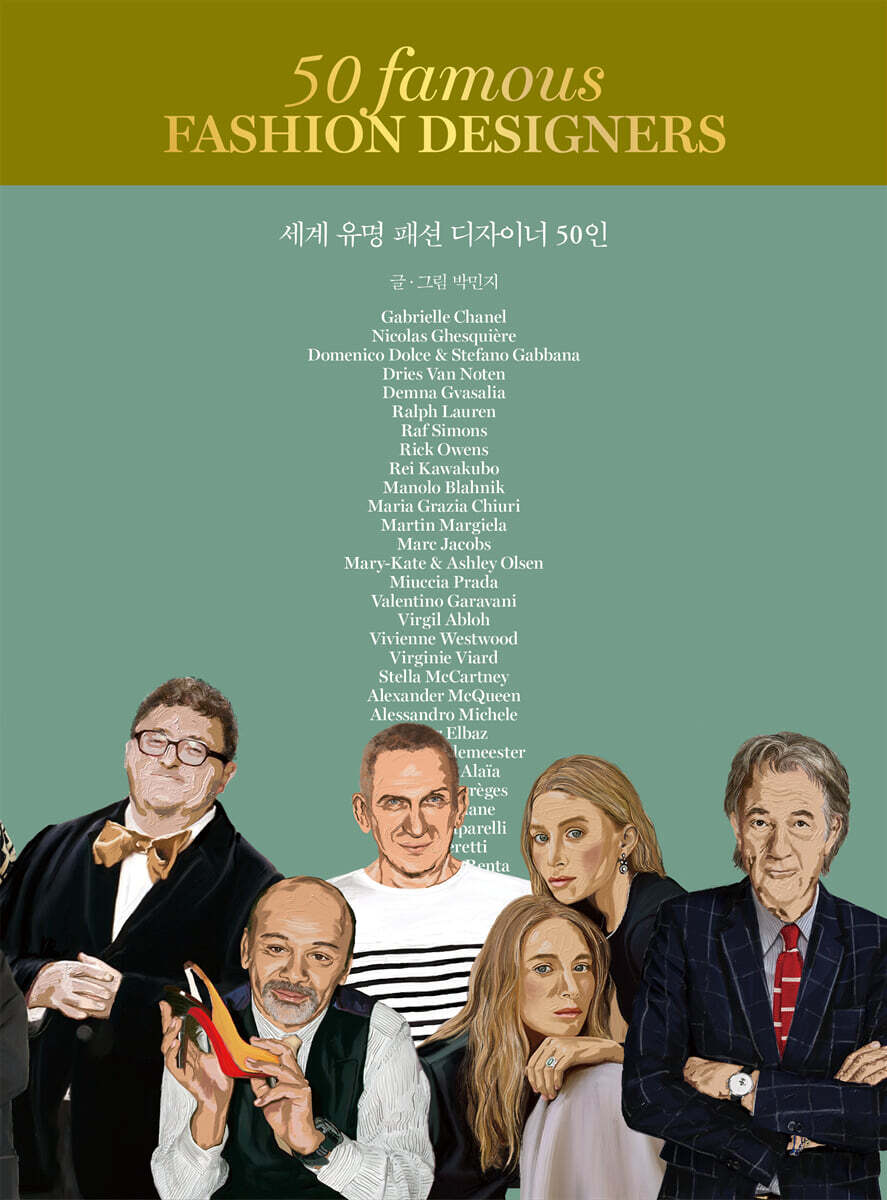
50 World-renowned Fashion Designers
 |
Description
Book Introduction
If you've read "Fashion Designer, To You with a Bright Future," it's time to open this book.
For those who dream of fashion, this is not just a simple biography,
It tells the history of the designer's life and attitude.
This is a must-read for fashion design students, fashion majors, young people dreaming of becoming designers, and fashion enthusiasts interested in the stories behind brands.
Author Park Min-ji, through her previous work, "Fashion Designer, To You Who Has a Bright Future," gave courage to those who dream of fashion to take their first step.
This new book offers a "next step" for those contemplating their future direction, suggesting that we consider together, beyond the profession of designer, the "attitude toward designing life."
"50 World-renowned Fashion Designers" is a sensational fashion figure archive and educational book centered around the designers' philosophies and lives.
This book does not simply list or chronologically organize achievements.
From Chanel and Balenciaga to Prada and Phoebe Philo, this book features 50 of the most influential designers of the 20th century and beyond, offering a detailed look into each designer's signature works, creative motivations, historical background, and attitude toward life.
As we follow their struggles and creative process, we naturally come to realize that fashion is ultimately a 'language of self-expression' that transcends trends.
Additionally, the 100 or so full-color illustrations included with the text were drawn by Park Min-ji, a current fashion designer and author.
It is structured to allow you to visually experience each designer's style and worldview, providing both the pleasure of reading and viewing.
As the saying goes, “You see as much as you know,” the more you understand a fashion designer, the more you look at the brand.
The more you learn about the philosophy and aesthetics behind logos and images, the more you can make choices that fit your tastes and values.
This book is not just about becoming a 'fashion savvy person', but about learning how to choose what and how to live.
What makes this book special, above all, is that the author is a fashion designer who has been working in the field for over 20 years.
A brief encounter with a famous designer in Paris, the world-class designers he met at work when he was just starting out as a designer, the vivid impressions he had of the brand at that time, and the unique emotions conveyed through their attitudes, atmosphere, and speech are all naturally incorporated into the author's own language.
All of these moments are not mere information, but rather ‘stories learned through experience’, providing deep immersion to the reader.
Therefore, this book is not a biographical book that collects information, but rather a sensory archive that allows you to 'feel and understand' the designer.
For those studying fashion, this book will be a realistic career path, and for those who love fashion, it will be a book that will provide vivid empathy.
Key points of this book
1.
From Chanel and Balenciaga to Prada and Phoebe Philo? Korea's first fashion archive compiles 50 designers active from the 20th century to the present.
2.
An illustrated art book written and illustrated by the author, a fashion designer.
3.
A comprehensive guide for everyone, from specialists to enthusiasts.
4.
A book that asks about one's "attitude toward life" through fashion.
5.
A visual book that fills both sight and emotion
For those who dream of fashion, this is not just a simple biography,
It tells the history of the designer's life and attitude.
This is a must-read for fashion design students, fashion majors, young people dreaming of becoming designers, and fashion enthusiasts interested in the stories behind brands.
Author Park Min-ji, through her previous work, "Fashion Designer, To You Who Has a Bright Future," gave courage to those who dream of fashion to take their first step.
This new book offers a "next step" for those contemplating their future direction, suggesting that we consider together, beyond the profession of designer, the "attitude toward designing life."
"50 World-renowned Fashion Designers" is a sensational fashion figure archive and educational book centered around the designers' philosophies and lives.
This book does not simply list or chronologically organize achievements.
From Chanel and Balenciaga to Prada and Phoebe Philo, this book features 50 of the most influential designers of the 20th century and beyond, offering a detailed look into each designer's signature works, creative motivations, historical background, and attitude toward life.
As we follow their struggles and creative process, we naturally come to realize that fashion is ultimately a 'language of self-expression' that transcends trends.
Additionally, the 100 or so full-color illustrations included with the text were drawn by Park Min-ji, a current fashion designer and author.
It is structured to allow you to visually experience each designer's style and worldview, providing both the pleasure of reading and viewing.
As the saying goes, “You see as much as you know,” the more you understand a fashion designer, the more you look at the brand.
The more you learn about the philosophy and aesthetics behind logos and images, the more you can make choices that fit your tastes and values.
This book is not just about becoming a 'fashion savvy person', but about learning how to choose what and how to live.
What makes this book special, above all, is that the author is a fashion designer who has been working in the field for over 20 years.
A brief encounter with a famous designer in Paris, the world-class designers he met at work when he was just starting out as a designer, the vivid impressions he had of the brand at that time, and the unique emotions conveyed through their attitudes, atmosphere, and speech are all naturally incorporated into the author's own language.
All of these moments are not mere information, but rather ‘stories learned through experience’, providing deep immersion to the reader.
Therefore, this book is not a biographical book that collects information, but rather a sensory archive that allows you to 'feel and understand' the designer.
For those studying fashion, this book will be a realistic career path, and for those who love fashion, it will be a book that will provide vivid empathy.
Key points of this book
1.
From Chanel and Balenciaga to Prada and Phoebe Philo? Korea's first fashion archive compiles 50 designers active from the 20th century to the present.
2.
An illustrated art book written and illustrated by the author, a fashion designer.
3.
A comprehensive guide for everyone, from specialists to enthusiasts.
4.
A book that asks about one's "attitude toward life" through fashion.
5.
A visual book that fills both sight and emotion
- You can preview some of the book's contents.
Preview
index
1.
Gabrielle Chanel [Brand name: CHANEL]
2.
Nicolas Ghesquière [Brand name: BALENCIAGA, LOUIS VUITTON]
3.
Domenico Dolce & Stefano Gabbana [Brand Name: DOLCE & GABBANA]
4.
Dries Van Noten [Brand Name: DRIES VAN NOTEN]
5.
Demna Gvasalia [Brand name: VETEMENTS, BALENCIAGA]
6.
Ralph Lauren [Brand Name: RALPH LAUREN]
7.
Raf Simons [Brand Name: RAF SIMONS, JIL SANDER, CHRISTIAN DIOR, PRADA]
8.
Rick Owens [Brand Name: RICK OWENS]
9.
Rei Kawakubo [Brand name: COMME DES GARCONS]
10.
Manolo Blahnik [Brand name: MANOLO BLAHNIK]
11.
Maria Grazia Chiuri [Brand Name: CHRISTIAN DIOR]
12.
Martin Margiela [Brand name: MAISON MARGIELA]
13.
Marc Jacobs [Brand Name: MARC JACOBS]
14.
Mary-Kate & Ashley Olsen [Brand Name: THE ROW]
15.
Miuccia Prada [Brand Name: PRADA]
16.
Valentino Garavani [Brand Name: VALENTINO]
17.
Virgil Abloh [Brand Name: OFF-WHITE? LOUIS VUITTON]
18.
Vivienne Westwood [Brand Name: VIVIENNE WESTWOOD]
19.
Virginie Viard [Brand Name: CHANEL]
20.
Stella McCartney [Brand Name: STELLA MCCARTNEY]
21.
Alexander McQueen [Brand Name: ALEXANDER MCQUEEN]
22.
Alessandro Michele [Brand name: GUCCI]
23.
Albert Elbaz [Brand name: LANVIN]
24.
Ann Demeulmeester [Brand name: ANN DEMEULEMEESTER]
25.
Azzedine Alaia [Brand name: ALAIA]
26.
André Courrèges [Brand name: COURREGES]
27.
Hedi Slimane [Brand Name: SAINT LAURENT? CHRISTIAN DIOR? CELINE]
28.
Elsa Schiaparelli [Brand Name: SCHIAPARELLI]
29.
Elsa Peretti [Brand name: TIFFANY & CO.]
30.
Oscar de la Renta [Brand name: OSCAR DE LA RENTA]
31.
Hubert de Givenchy [Brand name: GIVENCHY]
32.
Yves Saint Laurent [Brand name: SAINT LAURENT]
33.
Jean Paul Gaultier [Brand name: JEAN PAUL GAULTIER]
34.
Gianni Versace [Brand name: VERSACE]
35.
Jonathan Anderson [Brand Name: JW ANDERSON ? LOEWE]
36.
Giorgio Armani [Brand name: ARMANI]
37.
John Galliano [Brand Name: John Galliano? CHRISTIAN DIOR? MAISON MARGIELA]
38.
Jil Sander [Brand name: JIL SANDER]
39.
Calvin Klein [Brand Name: CALVIN KLEIN]
40.
Karl Lagerfeld [Brand name: CHANEL, FENDI]
41.
Consuelo Castiglioni [Brand name: MARNI]
42.
Christian Dior [Brand Name: CHRISTIAN DIOR]
43.
Christian Louboutin [Brand name: CHRISTIAN LOUBOUTIN]
44.
Cristóbal Balenciaga [Brand name: BALENCIAGA]
45.
Christophe Lemaire [Brand name: LEMAIRE]
46.
Thom Browne [Brand Name: THOM BROWNE]
47.
Tom Ford [Brand Name: TOM FORD]
48.
Paul Smith [Brand name: PAUL SMITH]
49.
Phoebe Philo [Brand Name: CELINE]
50.
Helmut Lang [Brand name: HELMUT LANG]
Gabrielle Chanel [Brand name: CHANEL]
2.
Nicolas Ghesquière [Brand name: BALENCIAGA, LOUIS VUITTON]
3.
Domenico Dolce & Stefano Gabbana [Brand Name: DOLCE & GABBANA]
4.
Dries Van Noten [Brand Name: DRIES VAN NOTEN]
5.
Demna Gvasalia [Brand name: VETEMENTS, BALENCIAGA]
6.
Ralph Lauren [Brand Name: RALPH LAUREN]
7.
Raf Simons [Brand Name: RAF SIMONS, JIL SANDER, CHRISTIAN DIOR, PRADA]
8.
Rick Owens [Brand Name: RICK OWENS]
9.
Rei Kawakubo [Brand name: COMME DES GARCONS]
10.
Manolo Blahnik [Brand name: MANOLO BLAHNIK]
11.
Maria Grazia Chiuri [Brand Name: CHRISTIAN DIOR]
12.
Martin Margiela [Brand name: MAISON MARGIELA]
13.
Marc Jacobs [Brand Name: MARC JACOBS]
14.
Mary-Kate & Ashley Olsen [Brand Name: THE ROW]
15.
Miuccia Prada [Brand Name: PRADA]
16.
Valentino Garavani [Brand Name: VALENTINO]
17.
Virgil Abloh [Brand Name: OFF-WHITE? LOUIS VUITTON]
18.
Vivienne Westwood [Brand Name: VIVIENNE WESTWOOD]
19.
Virginie Viard [Brand Name: CHANEL]
20.
Stella McCartney [Brand Name: STELLA MCCARTNEY]
21.
Alexander McQueen [Brand Name: ALEXANDER MCQUEEN]
22.
Alessandro Michele [Brand name: GUCCI]
23.
Albert Elbaz [Brand name: LANVIN]
24.
Ann Demeulmeester [Brand name: ANN DEMEULEMEESTER]
25.
Azzedine Alaia [Brand name: ALAIA]
26.
André Courrèges [Brand name: COURREGES]
27.
Hedi Slimane [Brand Name: SAINT LAURENT? CHRISTIAN DIOR? CELINE]
28.
Elsa Schiaparelli [Brand Name: SCHIAPARELLI]
29.
Elsa Peretti [Brand name: TIFFANY & CO.]
30.
Oscar de la Renta [Brand name: OSCAR DE LA RENTA]
31.
Hubert de Givenchy [Brand name: GIVENCHY]
32.
Yves Saint Laurent [Brand name: SAINT LAURENT]
33.
Jean Paul Gaultier [Brand name: JEAN PAUL GAULTIER]
34.
Gianni Versace [Brand name: VERSACE]
35.
Jonathan Anderson [Brand Name: JW ANDERSON ? LOEWE]
36.
Giorgio Armani [Brand name: ARMANI]
37.
John Galliano [Brand Name: John Galliano? CHRISTIAN DIOR? MAISON MARGIELA]
38.
Jil Sander [Brand name: JIL SANDER]
39.
Calvin Klein [Brand Name: CALVIN KLEIN]
40.
Karl Lagerfeld [Brand name: CHANEL, FENDI]
41.
Consuelo Castiglioni [Brand name: MARNI]
42.
Christian Dior [Brand Name: CHRISTIAN DIOR]
43.
Christian Louboutin [Brand name: CHRISTIAN LOUBOUTIN]
44.
Cristóbal Balenciaga [Brand name: BALENCIAGA]
45.
Christophe Lemaire [Brand name: LEMAIRE]
46.
Thom Browne [Brand Name: THOM BROWNE]
47.
Tom Ford [Brand Name: TOM FORD]
48.
Paul Smith [Brand name: PAUL SMITH]
49.
Phoebe Philo [Brand Name: CELINE]
50.
Helmut Lang [Brand name: HELMUT LANG]
Detailed image

Into the book
We are familiar with foreign brands such as Chanel, Hermes, and Louis Vuitton.
However, although there are books covering the history of these brands, there are not many books that introduce the designers who founded the brands or the designers who are currently leading the brands by carrying on the tradition.
I think it would be useful to many people if this information were compiled into a book and published.
The criteria for selecting the 50 fashion designers in planning this book were that they were figures who had achieved fame in the past and whose presence is still clearly recognized today.
Of course, there are many more great fashion designers, but I believe that knowing just these 50 will give you a rough idea of the major fashion designers of the 20th century and beyond.
---From "INTRODUCTION"
Comme des Garçons, famous for its heart logo with eyes, is considered a brand that has achieved commercial success through creative logo play.
The heart logo played a very important role in helping the avant-garde brand Comme des Garçons become recognized as a popular brand.
If you're launching a brand, creating an iconic logo like this is everyone's dream and challenge.
---From "Rei Kawakubo"
A brand with a large, nameless white rectangular label attached carelessly with four threads.
Maison Margiela, owned by Martin Margiela, is a man who has kept himself completely out of the media, refusing interviews or official photos (although his face is known through a few photos).
It's not just a white label, there are labels with numbers from 0 to 23, circled around the corresponding number depending on the product group.
---From "Martin Margiela"
During my time studying abroad in Paris, the person who was the most talked about was Christophe Lemaire.
I often talked with my school friends about who started working at which house, which designer had an eccentric personality, etc.
But everyone was full of praise for Christophe Lemaire.
At the time, he was the creative director of Lacoste, and there was constant praise for his skills and character.
I also wanted to work with him, but unfortunately, I didn't get the chance.
---From "Christophe Lemaire"
While all brands aim to be 'ageless', some brands are better suited to different ages.
In my 20s, I mainly wore Marc Jacobs, Miu Miu, and Prada, and in my 30s, I enjoyed Celine, Isabel Marant, Dries Van Noten, and Prada.
Now that I'm in my 40s, I wear Jil Sander and Prada the most.
There are brands I no longer wear as I get older, but even now in my 40s, I still enjoy wearing Prada.
As a consumer who has consistently liked and worn Prada for over 20 years, I believe that Prada's greatest strength lies in its truly 'ageless' design.
Prada is young, sophisticated, modern, and has a unique charm that is not dull.
There is no doubt that Prada will always be in my wardrobe as time goes by and I will continue to buy from it in the future.
---From "Miuccia Prada"
It's no exaggeration to say that Phoebe Philo's Celine dominated my 30s.
When her first collection was released, everyone quietly started following her.
At the time, fashion designers waited for Celine's collections and used them as a benchmark for popularity.
The clothes usually shown on fashion shows are not something we can easily wear in our daily lives, and are mainly for superstars or the wealthy.
But Phoebe Philo's Celine was for working women like us, simple yet chic.
However, although there are books covering the history of these brands, there are not many books that introduce the designers who founded the brands or the designers who are currently leading the brands by carrying on the tradition.
I think it would be useful to many people if this information were compiled into a book and published.
The criteria for selecting the 50 fashion designers in planning this book were that they were figures who had achieved fame in the past and whose presence is still clearly recognized today.
Of course, there are many more great fashion designers, but I believe that knowing just these 50 will give you a rough idea of the major fashion designers of the 20th century and beyond.
---From "INTRODUCTION"
Comme des Garçons, famous for its heart logo with eyes, is considered a brand that has achieved commercial success through creative logo play.
The heart logo played a very important role in helping the avant-garde brand Comme des Garçons become recognized as a popular brand.
If you're launching a brand, creating an iconic logo like this is everyone's dream and challenge.
---From "Rei Kawakubo"
A brand with a large, nameless white rectangular label attached carelessly with four threads.
Maison Margiela, owned by Martin Margiela, is a man who has kept himself completely out of the media, refusing interviews or official photos (although his face is known through a few photos).
It's not just a white label, there are labels with numbers from 0 to 23, circled around the corresponding number depending on the product group.
---From "Martin Margiela"
During my time studying abroad in Paris, the person who was the most talked about was Christophe Lemaire.
I often talked with my school friends about who started working at which house, which designer had an eccentric personality, etc.
But everyone was full of praise for Christophe Lemaire.
At the time, he was the creative director of Lacoste, and there was constant praise for his skills and character.
I also wanted to work with him, but unfortunately, I didn't get the chance.
---From "Christophe Lemaire"
While all brands aim to be 'ageless', some brands are better suited to different ages.
In my 20s, I mainly wore Marc Jacobs, Miu Miu, and Prada, and in my 30s, I enjoyed Celine, Isabel Marant, Dries Van Noten, and Prada.
Now that I'm in my 40s, I wear Jil Sander and Prada the most.
There are brands I no longer wear as I get older, but even now in my 40s, I still enjoy wearing Prada.
As a consumer who has consistently liked and worn Prada for over 20 years, I believe that Prada's greatest strength lies in its truly 'ageless' design.
Prada is young, sophisticated, modern, and has a unique charm that is not dull.
There is no doubt that Prada will always be in my wardrobe as time goes by and I will continue to buy from it in the future.
---From "Miuccia Prada"
It's no exaggeration to say that Phoebe Philo's Celine dominated my 30s.
When her first collection was released, everyone quietly started following her.
At the time, fashion designers waited for Celine's collections and used them as a benchmark for popularity.
The clothes usually shown on fashion shows are not something we can easily wear in our daily lives, and are mainly for superstars or the wealthy.
But Phoebe Philo's Celine was for working women like us, simple yet chic.
---From "Phoebe Philo"
Publisher's Review
Fashion, the path to finding my identity
Fashion is not just a way to 'wear clothes'; it is a tool to express one's identity.
So, choosing clothes is not simply a matter of fashion or economic circumstances, but is connected to deep considerations about how to express and reveal oneself to the world.
For example, some days I want to look neat and tidy to prove that my life is like that, and other days I want to express leisure and joy with bright colors.
Even without any special effort, the clothes we wear naturally reflect our mood of the day and our attitude toward life.
In this way, fashion becomes an expression of myself, either unconsciously or intentionally.
The lives and designs of the 50 world-renowned designers featured in this book further clarify that fashion is more than just external decoration; it serves as a way to express oneself.
For example, Gabrielle Chanel wanted to give women freedom and independence through her designs.
This is also intertwined with the changing role of women in society at the time.
Elsa Schiaparelli, on the other hand, sought to break down the boundaries of existing fashion through bold and creative designs and productions, boldly revealing her inner self full of artistry.
Their clothes are evaluated as 'works of art' that convey a message beyond mere fashion.
In this way, each designer expresses his or her identity through fashion, and those who wear their work also reveal their individuality and beliefs through it.
The modern society we live in is not an era where consumers move according to established trends.
It has been a long time since personal taste became important and a culture of freely expressing one's identity through fashion and accessories has taken root.
Some people will find comfort in the classicism of Ralph Lauren, while others will express their individuality with the vibrant colors and patterns of Versace.
Also, even if we don't necessarily follow a specific brand or trend, we each express our thoughts in our own way.
So, in the end, fashion is not something grand, but rather a process of finding out what clothes best suit us.
In other words, aren't we constantly creating 'me' through the small choices we make every morning when choosing clothes?
If you start your morning with this mindset, this book will be a great guide to keep by your side.
50 People You Must Know If You Love Fashion
There are countless great fashion designers.
But it is not easy to know and understand the lives of all of them.
So, this book selects 50 designers that fashion lovers should know and encapsulates their lives and values.
We know a lot about luxury goods, but we don't know how they connect to the world's questions and what history they have developed into today.
A piece of clothing born from the tip of a designer's pen sometimes reflects society or becomes a metaphor for an individual's identity.
This is because clothing is not simply a tool to cover or protect the body, but a mirror that reflects the values of the times while communicating with the ever-changing times.
Dozens of designers, including Gabrielle Chanel, Valentino Garavani, and Cristóbal Balenciaga, introduced in this book are representative figures of the fashion of an era.
They wrote their own stories through 'fashion', just like masters of music or literature.
With his delicate sensibility and creativity, he sometimes broke down social standards, and at other times, he visually expressed people's desires and ideals.
In that sense, perhaps the process of creating a single garment is like realizing a single world.
And they tried to bring the world and lifestyle they dreamed of into reality through details such as lines, forms, shapes, textures, and colors.
When we think of 'fashion', we tend to think of images of glamorous runways and luxury brands.
But it's good to remember that behind it are the names of countless designers.
In reality, not many people understand their lives, philosophy, and the meaning contained in their designs.
As a result, we often pass over the clothes we wear and consume without understanding their true value.
But isn't wearing clothes without knowing the story behind them like reading a novel without context?
However, the narratives of the 50 people in this book will serve as a foundation for understanding fashion and the work of fashion houses as a single 'value'.
The author, who has been working in the field as a fashion designer for over 20 years, carefully selects and introduces little-known aspects of the lives of fashion designers and their must-know works.
We take a deep look at how each designer interacted with their time and how their designs have evolved with the times.
In it, we will be able to discover how the art of 'fashion' has become a record and voice of the times.
When a piece of clothing speaks to us, we encounter the person who made it and his times.
Through this book, you will encounter the stories hidden behind beautiful and vivid designs, as well as the dreams, challenges, and concerns contained in every moment leading up to the design's completion.
We invite you to the rich world of the art of clothing.
The Life of a Fashion Designer That Illuminates My Tomorrow
There are times when I envy the daily lives of someone who lives a glamorous life.
But life is just life.
This means that even if the individuality and shape are different, the essence does not change.
The meaning and concerns that permeate life exist for everyone.
So, taking a deep look at those who have taken steps ahead of us and are living their lives helps us gauge the direction we should take going forward.
Even fashion designers who live in such a glamorous spotlight have their own set of worries and failures.
And the reason they gained fame may be because of their courageous, sometimes flexible, and sometimes firm attitude in overcoming such difficulties.
Looking at the footsteps of others and figuring out the direction I should take becomes a stepping stone to living a little wiser life.
In that sense, rather than exaggerating someone's success, this book focuses on the struggles, adversities, and flow of life.
If you look at the books published by fashion designers in Korea, most of them are books that collect collections and talk about the design characteristics.
However, art cannot be appreciated without considering the connection between life and the work.
Only by looking into the life of the person who created the work can we gain a more accurate and richer understanding.
They must have passed through countless deep and dark tunnels before releasing a single work into the world.
But I know very well that the light I found at the end was not just the flashy result of success.
Perhaps what they wanted was not the achievement of success, but the moment of encountering true beauty itself.
A designer's work is not an answer to worries and failures.
Rather, it is closer to a constant question directed towards it.
There must have been countless worries, hesitations, and moments of choice before a single piece of clothing was completed.
Don't we ask ourselves the same questions every day as we face decisions, big and small?
Because I constantly ask myself how I should live, what I should strive for, and what true beauty is, and I seek the answers to become a better person.
Observing the attitudes and values that 50 fashion designers display through their lives is ultimately no different from asking deeper and more solid questions about our own lives.
When we have to endure times when the world is oblivious or when the shadow of hardship falls, the path they chose will serve as a mirror for us to reflect on.
So, it is no exaggeration to say that their lives and fashions contained in this book will give us the strength to read about our distant future.
Fashion is not just a way to 'wear clothes'; it is a tool to express one's identity.
So, choosing clothes is not simply a matter of fashion or economic circumstances, but is connected to deep considerations about how to express and reveal oneself to the world.
For example, some days I want to look neat and tidy to prove that my life is like that, and other days I want to express leisure and joy with bright colors.
Even without any special effort, the clothes we wear naturally reflect our mood of the day and our attitude toward life.
In this way, fashion becomes an expression of myself, either unconsciously or intentionally.
The lives and designs of the 50 world-renowned designers featured in this book further clarify that fashion is more than just external decoration; it serves as a way to express oneself.
For example, Gabrielle Chanel wanted to give women freedom and independence through her designs.
This is also intertwined with the changing role of women in society at the time.
Elsa Schiaparelli, on the other hand, sought to break down the boundaries of existing fashion through bold and creative designs and productions, boldly revealing her inner self full of artistry.
Their clothes are evaluated as 'works of art' that convey a message beyond mere fashion.
In this way, each designer expresses his or her identity through fashion, and those who wear their work also reveal their individuality and beliefs through it.
The modern society we live in is not an era where consumers move according to established trends.
It has been a long time since personal taste became important and a culture of freely expressing one's identity through fashion and accessories has taken root.
Some people will find comfort in the classicism of Ralph Lauren, while others will express their individuality with the vibrant colors and patterns of Versace.
Also, even if we don't necessarily follow a specific brand or trend, we each express our thoughts in our own way.
So, in the end, fashion is not something grand, but rather a process of finding out what clothes best suit us.
In other words, aren't we constantly creating 'me' through the small choices we make every morning when choosing clothes?
If you start your morning with this mindset, this book will be a great guide to keep by your side.
50 People You Must Know If You Love Fashion
There are countless great fashion designers.
But it is not easy to know and understand the lives of all of them.
So, this book selects 50 designers that fashion lovers should know and encapsulates their lives and values.
We know a lot about luxury goods, but we don't know how they connect to the world's questions and what history they have developed into today.
A piece of clothing born from the tip of a designer's pen sometimes reflects society or becomes a metaphor for an individual's identity.
This is because clothing is not simply a tool to cover or protect the body, but a mirror that reflects the values of the times while communicating with the ever-changing times.
Dozens of designers, including Gabrielle Chanel, Valentino Garavani, and Cristóbal Balenciaga, introduced in this book are representative figures of the fashion of an era.
They wrote their own stories through 'fashion', just like masters of music or literature.
With his delicate sensibility and creativity, he sometimes broke down social standards, and at other times, he visually expressed people's desires and ideals.
In that sense, perhaps the process of creating a single garment is like realizing a single world.
And they tried to bring the world and lifestyle they dreamed of into reality through details such as lines, forms, shapes, textures, and colors.
When we think of 'fashion', we tend to think of images of glamorous runways and luxury brands.
But it's good to remember that behind it are the names of countless designers.
In reality, not many people understand their lives, philosophy, and the meaning contained in their designs.
As a result, we often pass over the clothes we wear and consume without understanding their true value.
But isn't wearing clothes without knowing the story behind them like reading a novel without context?
However, the narratives of the 50 people in this book will serve as a foundation for understanding fashion and the work of fashion houses as a single 'value'.
The author, who has been working in the field as a fashion designer for over 20 years, carefully selects and introduces little-known aspects of the lives of fashion designers and their must-know works.
We take a deep look at how each designer interacted with their time and how their designs have evolved with the times.
In it, we will be able to discover how the art of 'fashion' has become a record and voice of the times.
When a piece of clothing speaks to us, we encounter the person who made it and his times.
Through this book, you will encounter the stories hidden behind beautiful and vivid designs, as well as the dreams, challenges, and concerns contained in every moment leading up to the design's completion.
We invite you to the rich world of the art of clothing.
The Life of a Fashion Designer That Illuminates My Tomorrow
There are times when I envy the daily lives of someone who lives a glamorous life.
But life is just life.
This means that even if the individuality and shape are different, the essence does not change.
The meaning and concerns that permeate life exist for everyone.
So, taking a deep look at those who have taken steps ahead of us and are living their lives helps us gauge the direction we should take going forward.
Even fashion designers who live in such a glamorous spotlight have their own set of worries and failures.
And the reason they gained fame may be because of their courageous, sometimes flexible, and sometimes firm attitude in overcoming such difficulties.
Looking at the footsteps of others and figuring out the direction I should take becomes a stepping stone to living a little wiser life.
In that sense, rather than exaggerating someone's success, this book focuses on the struggles, adversities, and flow of life.
If you look at the books published by fashion designers in Korea, most of them are books that collect collections and talk about the design characteristics.
However, art cannot be appreciated without considering the connection between life and the work.
Only by looking into the life of the person who created the work can we gain a more accurate and richer understanding.
They must have passed through countless deep and dark tunnels before releasing a single work into the world.
But I know very well that the light I found at the end was not just the flashy result of success.
Perhaps what they wanted was not the achievement of success, but the moment of encountering true beauty itself.
A designer's work is not an answer to worries and failures.
Rather, it is closer to a constant question directed towards it.
There must have been countless worries, hesitations, and moments of choice before a single piece of clothing was completed.
Don't we ask ourselves the same questions every day as we face decisions, big and small?
Because I constantly ask myself how I should live, what I should strive for, and what true beauty is, and I seek the answers to become a better person.
Observing the attitudes and values that 50 fashion designers display through their lives is ultimately no different from asking deeper and more solid questions about our own lives.
When we have to endure times when the world is oblivious or when the shadow of hardship falls, the path they chose will serve as a mirror for us to reflect on.
So, it is no exaggeration to say that their lives and fashions contained in this book will give us the strength to read about our distant future.
GOODS SPECIFICS
- Date of issue: June 10, 2025
- Page count, weight, size: 336 pages | 1,218g | 185*248*36mm
- ISBN13: 9791173183263
You may also like
카테고리
korean


korean

![GQ KOREA Mark (Monthly): December [2025]](http://librairie.coreenne.fr/cdn/shop/files/8ef265dbbfbf186523ed75ba7319009d.jpg?v=1765340328&width=3840)


