

Dreaming of harmony in the city
 |
Description
Book Introduction
You are a plant
How much do you know?
The challenge thrown at us living in the era of climate crisis
A sharp yet affectionate question
A landscape architect who has been studying the 'lungs of the city'
Dreaming of a future where people and plants coexist
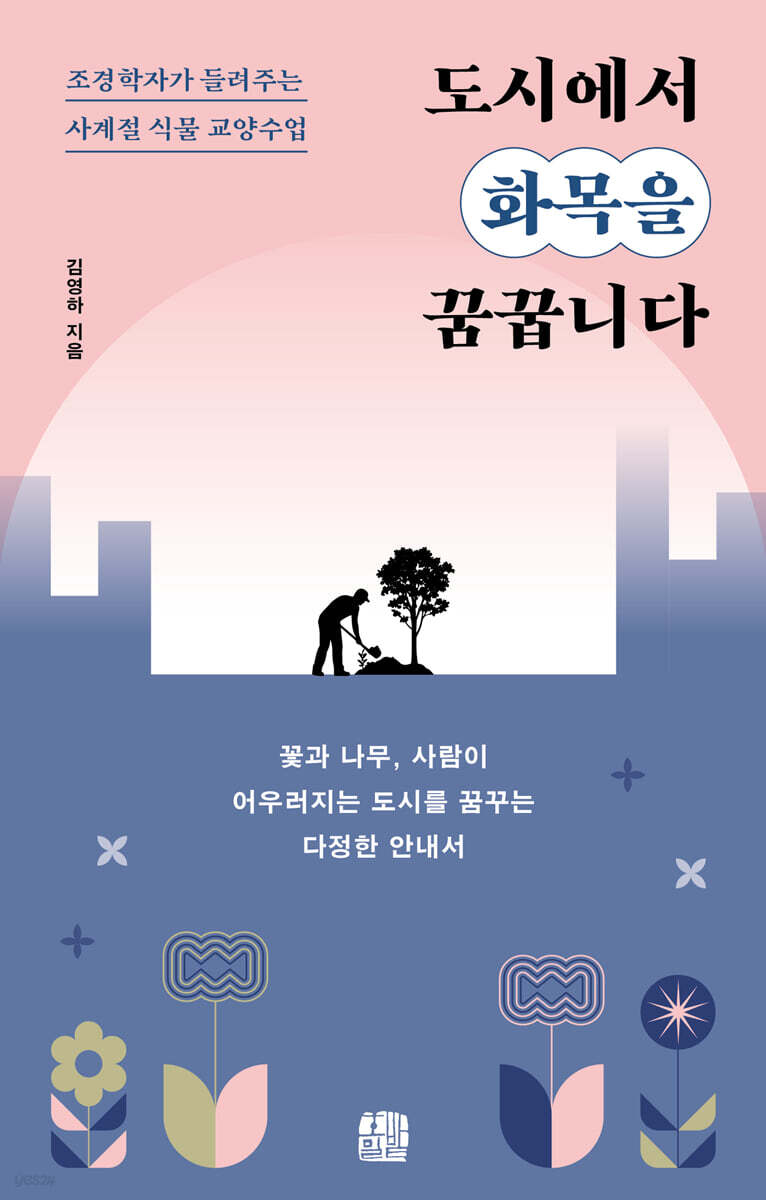
A special educational book that looks at the harmony between cities and nature through the eyes of a landscape architect is being published.
It is a journey of ecological imagination, from the evolution of plants to the democracy and citizen participation of gardens.
In increasingly desolate cities, the relationship between people and plants is becoming increasingly disconnected.
To regain lost connections and achieve ecological coexistence, the author emphasizes that we must change our perception of plants.
Plants are not simply 'background' or 'decoration', but 'companions' that live with us.
How can modern people, forced to live in the city, experience, appreciate, and coexist with nature? This book proposes a "garden culture" that goes beyond the existing park-centric institutional spaces and fosters citizen participation and collaboration.
In order to convey the content, which may feel somewhat difficult or rigid, at a general level, the content was divided into ‘1st semester’, ‘2nd semester’, and ‘seasonal semester’, and organized as if taking a one-year liberal arts course.
Not only does it convey humanistic knowledge in a friendly and warm tone, as if speaking to the reader, but it also conveys the joy of plants by introducing the flowers and trees around us that bloom and fall in each of the four seasons, along with photos.
It is a perfect size to fit in one hand, making it perfect for reading outdoors while looking directly at flowers and trees.
This four-season course, presented from the profound perspective of a landscape architect, is not simply a celebration of nature, but rather an excellent guide to how flowers and trees can harmonize with us.
How much do you know?
The challenge thrown at us living in the era of climate crisis
A sharp yet affectionate question
A landscape architect who has been studying the 'lungs of the city'
Dreaming of a future where people and plants coexist
A special educational book that looks at the harmony between cities and nature through the eyes of a landscape architect is being published.
It is a journey of ecological imagination, from the evolution of plants to the democracy and citizen participation of gardens.
In increasingly desolate cities, the relationship between people and plants is becoming increasingly disconnected.
To regain lost connections and achieve ecological coexistence, the author emphasizes that we must change our perception of plants.
Plants are not simply 'background' or 'decoration', but 'companions' that live with us.
How can modern people, forced to live in the city, experience, appreciate, and coexist with nature? This book proposes a "garden culture" that goes beyond the existing park-centric institutional spaces and fosters citizen participation and collaboration.
In order to convey the content, which may feel somewhat difficult or rigid, at a general level, the content was divided into ‘1st semester’, ‘2nd semester’, and ‘seasonal semester’, and organized as if taking a one-year liberal arts course.
Not only does it convey humanistic knowledge in a friendly and warm tone, as if speaking to the reader, but it also conveys the joy of plants by introducing the flowers and trees around us that bloom and fall in each of the four seasons, along with photos.
It is a perfect size to fit in one hand, making it perfect for reading outdoors while looking directly at flowers and trees.
This four-season course, presented from the profound perspective of a landscape architect, is not simply a celebration of nature, but rather an excellent guide to how flowers and trees can harmonize with us.
- You can preview some of the book's contents.
Preview
index
Introduction: Is Your Family Harmonious? 06
Before the semester begins, a taster quiz for liberal arts classes: How much do you know about plants? 18
[Spring, 1st semester]
Chapter 1.
Have you ever looked into the plants around us? _The Journey of Plants' Emergence and Evolution Through Earth's Time
Was Earth "Blue" from the Beginning? 27
How did plants take root on Earth? 33
A 'flower' has bloomed on Earth.
40
Chapter 2.
When was the last time you smelled a flower? _The first greeting from the plants unfolding before your eyes.
50 Flowering Trees That Awaken from Winter Sleep
59 Flowering Trees that Brighten Spring
Chapter 3.
Why must humans live with plants? _Breathing and Food: The Foundation of Life Provided by Plants
Where does oxygen come from? 92
We are beings who live by eating ○○○ from plants.
99
Human Civilization: From a Seed to a Grain 106
[Summer, seasonal semester]
Chapter 4.
Let's immerse ourselves in the joy of "today" while viewing summer flowers. _The wonders of life discovered in the lush green season.
Flowering Trees that Announce the Beginning of Summer 119
Flowering Trees that Illuminate Summer 144
[Fall, 2nd semester]
Chapter 5.
Where can we find the answers for the future? _Thinking for Coevolution in an Age of Crisis
Can you imagine humanity in 10 years? 166
175 In the direction of life, beyond the age of speed
Do you know how to protect our table? 181
Chapter 6.
Let's take a closer look at the city's colors, dyed by plants. Learn the wisdom of plants in the waning season.
Trees that bloom even in autumn 192
200 Autumn Leaves More Beautiful Than Flowers
Chapter 7.
Why should we garden? _From parks to gardens, beyond nature deprivation to community
Have you heard of "nature deficiency syndrome"? 210
When and how did "parks" come into being? 216
Towards an Era of Gardens Embracing Everyone's Memories 226
[Winter, Closing Ceremony]
Let us dream of a harmonious city and think of flowers even in winter.
236
supplement
Presentation 246 for a reading group for city dwellers living with plants
References 250
Before the semester begins, a taster quiz for liberal arts classes: How much do you know about plants? 18
[Spring, 1st semester]
Chapter 1.
Have you ever looked into the plants around us? _The Journey of Plants' Emergence and Evolution Through Earth's Time
Was Earth "Blue" from the Beginning? 27
How did plants take root on Earth? 33
A 'flower' has bloomed on Earth.
40
Chapter 2.
When was the last time you smelled a flower? _The first greeting from the plants unfolding before your eyes.
50 Flowering Trees That Awaken from Winter Sleep
59 Flowering Trees that Brighten Spring
Chapter 3.
Why must humans live with plants? _Breathing and Food: The Foundation of Life Provided by Plants
Where does oxygen come from? 92
We are beings who live by eating ○○○ from plants.
99
Human Civilization: From a Seed to a Grain 106
[Summer, seasonal semester]
Chapter 4.
Let's immerse ourselves in the joy of "today" while viewing summer flowers. _The wonders of life discovered in the lush green season.
Flowering Trees that Announce the Beginning of Summer 119
Flowering Trees that Illuminate Summer 144
[Fall, 2nd semester]
Chapter 5.
Where can we find the answers for the future? _Thinking for Coevolution in an Age of Crisis
Can you imagine humanity in 10 years? 166
175 In the direction of life, beyond the age of speed
Do you know how to protect our table? 181
Chapter 6.
Let's take a closer look at the city's colors, dyed by plants. Learn the wisdom of plants in the waning season.
Trees that bloom even in autumn 192
200 Autumn Leaves More Beautiful Than Flowers
Chapter 7.
Why should we garden? _From parks to gardens, beyond nature deprivation to community
Have you heard of "nature deficiency syndrome"? 210
When and how did "parks" come into being? 216
Towards an Era of Gardens Embracing Everyone's Memories 226
[Winter, Closing Ceremony]
Let us dream of a harmonious city and think of flowers even in winter.
236
supplement
Presentation 246 for a reading group for city dwellers living with plants
References 250
Into the book
The word ‘family’ is a combination of the characters ‘house’ (家) and ‘yard’ (庭).
This means that a home is not complete with just a house.
Families need a garden, a space where they can stay together, look out, sit face to face and talk.
--- p.6
Edward Wilson, a biology professor at Harvard University, says:
“Deep within human nature lies a love of life.” Perhaps we are drawn to plants because we discover within them the potential for life and renewal.
It is time to reclaim the emotional feelings we are losing through the plants that bloom with all their might in the garden.
--- p.9
After symbiotic organisms like lichens began to colonize land, marine green algae continued to evolve as they made landfall.
Around the seaside puddle, sprouts with unclear distinctions between roots, stems, and leaves have sprouted.
This is the 'Bryophyte', which can be said to be the first terrestrial plant.
--- p.29
Flowers are plant organs that bloom and wither according to seasonal changes, and induce reproduction or activity in certain organisms while harmonizing with the flow of nature.
When a plant blooms a flower, it means that the plant is sending a signal to other life forms on Earth.
We humans are no exception.
--- p.44
After the beginning of spring, the beginning of spring, and the beginning of the snow melting, flower buds begin to appear one by one on the bare branches of winter.
On the day when frogs wake up, when Gyeongchip comes, plants that bloom before leaves welcome spring in the city.
The first plant to welcome spring is the plum blossom.
--- p.50
The yellow flowers of the Cornelian cherry tree should be viewed closely rather than from a distance.
(…) When the yellow flowers of the Cornelian cherry blossoms bloom, go up to the tree and admire the yellow fireworks that silently burst.
A sparkling joy will be added to the dull and dull daily life that felt gray.
--- p.50
We must not forget.
The fact is that the optimal oxygen concentration in the Earth's atmosphere is not simply maintained, but is the result of plants constantly producing it through photosynthesis at every moment.
It is an urgent time to shift our perception from viewing plants and the world as resources for humans and consumer goods for mood enhancement to viewing them as "partners in symbiosis."
--- p.104
In conclusion, it was by cultivating wild cereals such as rice, wheat, corn, barley, and sorghum that humans were able to choose cultural evolution and give birth to civilization.
In other words, humans reached civilized life through co-evolution with plants.
--- p.109
Plants growing on soil may seem fixed in place at first glance, but they are actually constantly changing.
It turns its head to follow the sun, twists its body to follow the light, and its roots grope through the unseen depths of the earth in search of waterways.
It reads the changing seasons, sheds its leaves, and silently endures unexpected droughts and pests.
Through plants, we learn that 'living' means doing our best in the given situation.
--- p.118
The cross-shaped petals of the dogwood are not actually 'petals'.
Although the leaves are modified bracts, they can be mistaken for flower petals to our eyes, and this is a product of evolution to attract insects.
--- p.128
There are also plants that make their presence known around us through their fragrance.
It is a climbing plant called Masakjul.
Near Haebancheon, where I often take walks, the concrete wall beneath the Gimhae light rail bridge pier has been planted with azaleas, filling the otherwise bleak gray space with greenery.
Before the hot summer arrives, as you pass through the space filled with moss-covered trees, a sweet jasmine-like scent is carried on the wind and tickles your nose.
--- p.133
Anyone living in an apartment in Korea passes by a Japanese maple tree without even knowing it.
(…) The leaves of the Awae tree are thick and contain a lot of moisture, making it a suitable tree species for fire prevention.
When a fire breaks out in an apartment and the fire spreads, the moisture in the wood escapes and forms bubbles, creating a fire barrier.
It is a natural digestive system created by nature.
--- p.141
The biggest global environmental problem facing humanity today is, no matter what anyone says, the climate crisis caused by global warming.
Since the 2015 Paris Agreement, the world has made a common commitment to limit the increase in the global average temperature to 1.5°C compared to pre-industrial levels.
However, with the global average temperature rising by more than 1.55℃ in 2024, the 1.5℃ limit that humanity had been trying to protect has finally been broken.
--- p.170
Just as plants and bees call each other to bloom, humans too must join hands with nature.
To overcome this crisis, humanity needs a shift in thinking toward sustainability, one that coexists with the natural ecosystem.
--- p.179
Do you remember how past human civilizations "selected" nature by focusing on specific crops like rice? While this allowed humanity to solve hunger and develop civilization, it also reduced natural diversity and disrupted the ecosystem's balance.
The perspective that evaluates the value of natural ecosystems based on human needs must now be criticized.
--- p.183
Flowers and trees convey so much to us simply by their very existence, yet we often forget to even look up at them while living among them.
(…) Now, let us slowly look at the flowers and trees quietly blooming and changing colors around us, and listen to the lessons the plants are teaching us.
--- p.191
Nature is not just a background; it is a living space, a living space that heals our bodies and minds.
While restoring human relationships is important, reconnecting with nature is the path to finding a truly enriching life.
In it we can become healthy again.
--- p.214
Early parks were spaces for 'public hygiene' and 'health' rather than 'recreational spaces'.
Doctor John Snow discovered that cholera was caused by contaminated water, and social reformer Octavia Hill proposed public parks for workers.
The urban parks born in this context have become a breathing space for a healthy city, literally the 'lungs of the city.'
--- p.221
Anyone can create a garden.
It doesn't have to be large, and it doesn't have to have a legally designated site.
Even empty spaces next to apartment flower beds, rooftops, and alleyways can become gardens.
Through the process of selecting, planting, cultivating, and caring for the plants, this small space is transformed from a simple green space into a space where people's relationships and memories grow.
--- p.230
If parks provide a space to breathe in the heart of the city, gardens connect disconnected relationships.
In alleys, under walls, on rooftops, they reconnect people, plants and people, and become small, strong connections that restore us.
The most important thing is that a garden is not something that someone else does for you, but rather an attitude toward life that you create and nurture together.
--- p.231
Now, go one step further than just looking at the plants. Approach them first, call their names, and become their companions.
This means that a home is not complete with just a house.
Families need a garden, a space where they can stay together, look out, sit face to face and talk.
--- p.6
Edward Wilson, a biology professor at Harvard University, says:
“Deep within human nature lies a love of life.” Perhaps we are drawn to plants because we discover within them the potential for life and renewal.
It is time to reclaim the emotional feelings we are losing through the plants that bloom with all their might in the garden.
--- p.9
After symbiotic organisms like lichens began to colonize land, marine green algae continued to evolve as they made landfall.
Around the seaside puddle, sprouts with unclear distinctions between roots, stems, and leaves have sprouted.
This is the 'Bryophyte', which can be said to be the first terrestrial plant.
--- p.29
Flowers are plant organs that bloom and wither according to seasonal changes, and induce reproduction or activity in certain organisms while harmonizing with the flow of nature.
When a plant blooms a flower, it means that the plant is sending a signal to other life forms on Earth.
We humans are no exception.
--- p.44
After the beginning of spring, the beginning of spring, and the beginning of the snow melting, flower buds begin to appear one by one on the bare branches of winter.
On the day when frogs wake up, when Gyeongchip comes, plants that bloom before leaves welcome spring in the city.
The first plant to welcome spring is the plum blossom.
--- p.50
The yellow flowers of the Cornelian cherry tree should be viewed closely rather than from a distance.
(…) When the yellow flowers of the Cornelian cherry blossoms bloom, go up to the tree and admire the yellow fireworks that silently burst.
A sparkling joy will be added to the dull and dull daily life that felt gray.
--- p.50
We must not forget.
The fact is that the optimal oxygen concentration in the Earth's atmosphere is not simply maintained, but is the result of plants constantly producing it through photosynthesis at every moment.
It is an urgent time to shift our perception from viewing plants and the world as resources for humans and consumer goods for mood enhancement to viewing them as "partners in symbiosis."
--- p.104
In conclusion, it was by cultivating wild cereals such as rice, wheat, corn, barley, and sorghum that humans were able to choose cultural evolution and give birth to civilization.
In other words, humans reached civilized life through co-evolution with plants.
--- p.109
Plants growing on soil may seem fixed in place at first glance, but they are actually constantly changing.
It turns its head to follow the sun, twists its body to follow the light, and its roots grope through the unseen depths of the earth in search of waterways.
It reads the changing seasons, sheds its leaves, and silently endures unexpected droughts and pests.
Through plants, we learn that 'living' means doing our best in the given situation.
--- p.118
The cross-shaped petals of the dogwood are not actually 'petals'.
Although the leaves are modified bracts, they can be mistaken for flower petals to our eyes, and this is a product of evolution to attract insects.
--- p.128
There are also plants that make their presence known around us through their fragrance.
It is a climbing plant called Masakjul.
Near Haebancheon, where I often take walks, the concrete wall beneath the Gimhae light rail bridge pier has been planted with azaleas, filling the otherwise bleak gray space with greenery.
Before the hot summer arrives, as you pass through the space filled with moss-covered trees, a sweet jasmine-like scent is carried on the wind and tickles your nose.
--- p.133
Anyone living in an apartment in Korea passes by a Japanese maple tree without even knowing it.
(…) The leaves of the Awae tree are thick and contain a lot of moisture, making it a suitable tree species for fire prevention.
When a fire breaks out in an apartment and the fire spreads, the moisture in the wood escapes and forms bubbles, creating a fire barrier.
It is a natural digestive system created by nature.
--- p.141
The biggest global environmental problem facing humanity today is, no matter what anyone says, the climate crisis caused by global warming.
Since the 2015 Paris Agreement, the world has made a common commitment to limit the increase in the global average temperature to 1.5°C compared to pre-industrial levels.
However, with the global average temperature rising by more than 1.55℃ in 2024, the 1.5℃ limit that humanity had been trying to protect has finally been broken.
--- p.170
Just as plants and bees call each other to bloom, humans too must join hands with nature.
To overcome this crisis, humanity needs a shift in thinking toward sustainability, one that coexists with the natural ecosystem.
--- p.179
Do you remember how past human civilizations "selected" nature by focusing on specific crops like rice? While this allowed humanity to solve hunger and develop civilization, it also reduced natural diversity and disrupted the ecosystem's balance.
The perspective that evaluates the value of natural ecosystems based on human needs must now be criticized.
--- p.183
Flowers and trees convey so much to us simply by their very existence, yet we often forget to even look up at them while living among them.
(…) Now, let us slowly look at the flowers and trees quietly blooming and changing colors around us, and listen to the lessons the plants are teaching us.
--- p.191
Nature is not just a background; it is a living space, a living space that heals our bodies and minds.
While restoring human relationships is important, reconnecting with nature is the path to finding a truly enriching life.
In it we can become healthy again.
--- p.214
Early parks were spaces for 'public hygiene' and 'health' rather than 'recreational spaces'.
Doctor John Snow discovered that cholera was caused by contaminated water, and social reformer Octavia Hill proposed public parks for workers.
The urban parks born in this context have become a breathing space for a healthy city, literally the 'lungs of the city.'
--- p.221
Anyone can create a garden.
It doesn't have to be large, and it doesn't have to have a legally designated site.
Even empty spaces next to apartment flower beds, rooftops, and alleyways can become gardens.
Through the process of selecting, planting, cultivating, and caring for the plants, this small space is transformed from a simple green space into a space where people's relationships and memories grow.
--- p.230
If parks provide a space to breathe in the heart of the city, gardens connect disconnected relationships.
In alleys, under walls, on rooftops, they reconnect people, plants and people, and become small, strong connections that restore us.
The most important thing is that a garden is not something that someone else does for you, but rather an attitude toward life that you create and nurture together.
--- p.231
Now, go one step further than just looking at the plants. Approach them first, call their names, and become their companions.
--- p.244
Publisher's Review
The era of climate crisis
What we really need
Thoughts on plants
Flowers and trees in the city
And dream of 'harmony' among people!
Plants are creatures that appeared on Earth before humans.
About 500 million years ago, complex marine life migrated onto land and evolved, marking the beginning of plant history, and humans appeared much later.
So how much do we really know about plants?
Author Kim Young-ha is a landscape architect who has long pondered the coexistence of people and plants while researching the necessity of urban green spaces and parks.
He examines the climate crisis that began by destroying the habitat of plants and the current state of humanity, and suggests a shift in thinking that is desperately needed now for a future where plants and humans can breathe together.
The air we breathe, the energy and nutrients we consume ultimately come from plants.
However, flowers and trees in the city are still treated as landscaping or sometimes are carelessly discarded.
But if we look closely, we can see that plants are beings that convey great wonders to us and are living beings that we live with.
As we hold our smartphones and converse with AI, it's time to slow down and listen to what plants are whispering.
If you can take a closer look at the plants you encounter on your way to and from work, in the park in front of your house, or in an alley you pass by without a second thought, you can sufficiently induce reflection on life even in everyday life.
Growing flowers and trees is cultivating the mind.
And furthermore, it is also a matter of fostering harmonious relationships between people.
If you follow the four seasons' liberal arts class guided by a landscape architect, you will understand that where there are plants, life grows, where life grows, conversation blooms, and where conversation blooms, the fruit of 'harmony' is borne.
What we really need
Thoughts on plants
Flowers and trees in the city
And dream of 'harmony' among people!
Plants are creatures that appeared on Earth before humans.
About 500 million years ago, complex marine life migrated onto land and evolved, marking the beginning of plant history, and humans appeared much later.
So how much do we really know about plants?
Author Kim Young-ha is a landscape architect who has long pondered the coexistence of people and plants while researching the necessity of urban green spaces and parks.
He examines the climate crisis that began by destroying the habitat of plants and the current state of humanity, and suggests a shift in thinking that is desperately needed now for a future where plants and humans can breathe together.
The air we breathe, the energy and nutrients we consume ultimately come from plants.
However, flowers and trees in the city are still treated as landscaping or sometimes are carelessly discarded.
But if we look closely, we can see that plants are beings that convey great wonders to us and are living beings that we live with.
As we hold our smartphones and converse with AI, it's time to slow down and listen to what plants are whispering.
If you can take a closer look at the plants you encounter on your way to and from work, in the park in front of your house, or in an alley you pass by without a second thought, you can sufficiently induce reflection on life even in everyday life.
Growing flowers and trees is cultivating the mind.
And furthermore, it is also a matter of fostering harmonious relationships between people.
If you follow the four seasons' liberal arts class guided by a landscape architect, you will understand that where there are plants, life grows, where life grows, conversation blooms, and where conversation blooms, the fruit of 'harmony' is borne.
GOODS SPECIFICS
- Date of issue: November 4, 2025
- Page count, weight, size: 254 pages | 288g | 115*180*16mm
- ISBN13: 9791168262461
- ISBN10: 1168262461
You may also like
카테고리
korean


korean

![GQ KOREA Mark (Monthly): December [2025]](http://librairie.coreenne.fr/cdn/shop/files/8ef265dbbfbf186523ed75ba7319009d.jpg?v=1765340328&width=3840)


