

How long will you live with the flow?
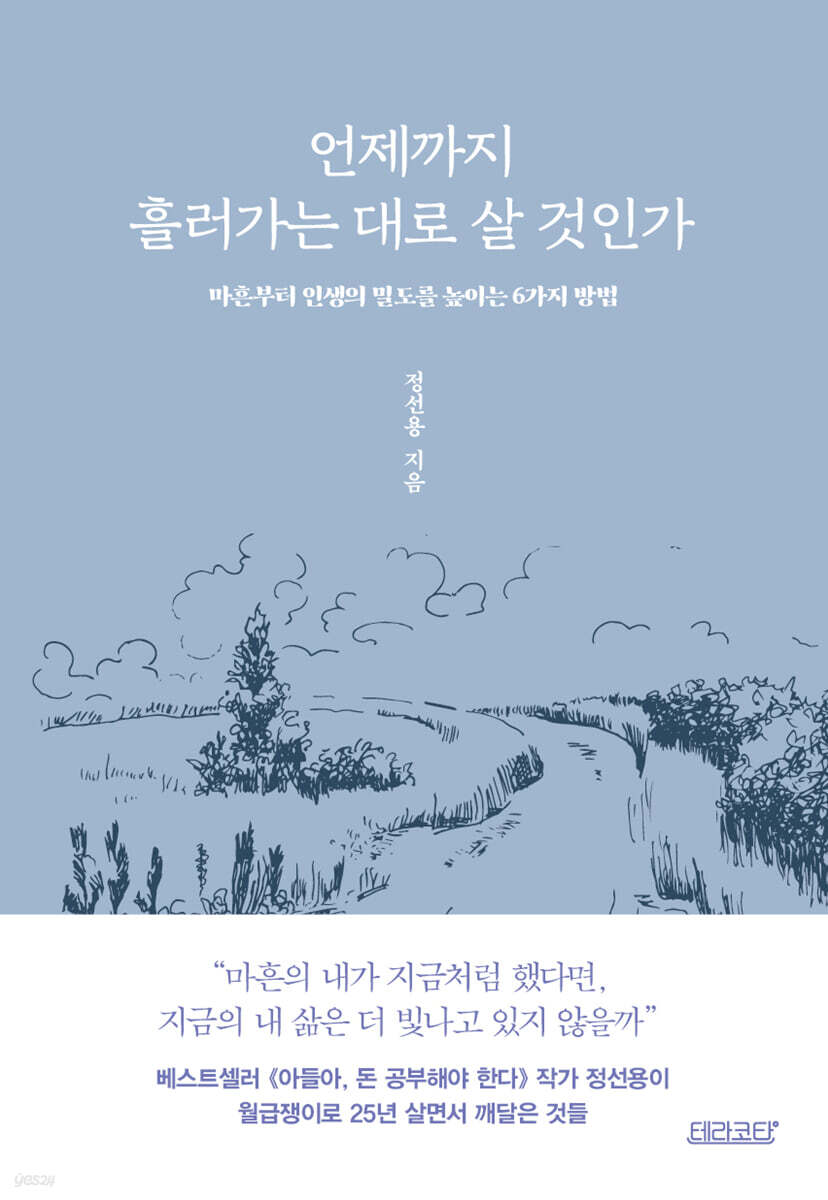 |
Description
Book Introduction
Bestseller "Son, You Must Study Money" author Jeong Seon-yong
Things I've learned from living as a salaried worker for 25 years
Author Jeong Seon-yong, who delivered a resonant message to over 100,000 readers with his book, “Son, You Must Study Money.”
He returned with a book titled "How Long Will You Go With the Flow?", which contains realistic advice for the 40-50 age group who need to prepare for early retirement.
He had been dedicated to his job for 25 years at a major distribution company, even working on holidays and overtime, but was suddenly laid off in 2020.
Four years have passed since he left his job, but he still faces difficult situations and reflects on what was wrong with his work life.
At forty, I don't think about preparing because I think it's still a long way to fifty.
You realize it after you retire at 50, but by then it's already too late and you give up.
So, he says he wrote this book because he felt sorry for his juniors who are running towards a difficult future without any plan.
Author Jeong Seon-yong emphasizes that we should begin minimal retirement preparations starting in our forties, when the existing grammar of life begins to break down, and shift our center of gravity from the outside in.
This book teaches you how to increase the density of your life from your forties to your sixties, using money, work and play, health, habits, and relationships as keywords, based on a completely different grammar of life that he realized.
Things I've learned from living as a salaried worker for 25 years
Author Jeong Seon-yong, who delivered a resonant message to over 100,000 readers with his book, “Son, You Must Study Money.”
He returned with a book titled "How Long Will You Go With the Flow?", which contains realistic advice for the 40-50 age group who need to prepare for early retirement.
He had been dedicated to his job for 25 years at a major distribution company, even working on holidays and overtime, but was suddenly laid off in 2020.
Four years have passed since he left his job, but he still faces difficult situations and reflects on what was wrong with his work life.
At forty, I don't think about preparing because I think it's still a long way to fifty.
You realize it after you retire at 50, but by then it's already too late and you give up.
So, he says he wrote this book because he felt sorry for his juniors who are running towards a difficult future without any plan.
Author Jeong Seon-yong emphasizes that we should begin minimal retirement preparations starting in our forties, when the existing grammar of life begins to break down, and shift our center of gravity from the outside in.
This book teaches you how to increase the density of your life from your forties to your sixties, using money, work and play, health, habits, and relationships as keywords, based on a completely different grammar of life that he realized.
- You can preview some of the book's contents.
Preview
index
Prologue: For the "Bean Sprout Generation" Who Has Lost Their Way to Life
A letter to my forty-year-old self
PART 1: How to Stop Wasting Your Forties Living with the Flow
Chapter 1: What to Prepare for from the Age of Forty
01 If I lived to be forty again
02 Five Essentials for Salaried Workers to Prepare Before Retirement
03 Remember the order on your way to work and retirement.
04 Three things to study when you're in your forties
Chapter 2: "Money Studies": The Essentials for Financial Independence
01 The money I have makes me independent.
02 The order of studying for the rich is important.
03 Where do I stand now?
04 How to Walk the Labyrinthine Path of Riches
05 To save money well, you must spend it well.
06 The Secret to Getting Rich through Loans
Chapter 3: Real Investment is Self-Development
01 The Best Self-Development Tool: Writing
02 Writing that changes the level of life
03 There is a separate way to write well.
04 Things You Need for a Writing Recipe
05 The first step to starting a business while working
06 Production and distribution field experience required at the company
07 Certificates are a social symbol of self-development.
Chapter 4: Establishing Work for a Healthy Life
01 Have you ever treated work like play?
02 A dream that turns work into a hobby and play
03 A life where work and play become one
04 Go beyond your limits and make it a game.
05 Skill is the only independent variable for success
PART 2: A 10-Year Life Map Redrawed at Fifty
Chapter 1: A Map of Life to Draw After Fifty
01 The illusion that retirement is still far away
02 A time when sweat and tears are needed again, rather than mere hope.
Chapter 2: "Habit Study": Improving Time Efficiency
01 Immersion and good habits that control time
02 Live life as if it were just one day
03 Good habits to build little by little every day
04 Life routine that makes you a person with strong roots
05 How to Make Time Your Ally
06 Basics of Creating Your Own Good Habits
Chapter 3: "Studying Physical Strength" for a Healthy Body
01 Diet management that even cuts out ramen
02 Exercise management for slow aging
03 Sleep Management that Affects Quality of Life
04 Mind care that leads to physical health
05 Disease Management for a Healthy 100-Year-Old
06 A good environment for creating a healthy body and mind
07 The true taste of life is felt only when the senses reach their limit.
Chapter 4: "Studying Solitude" for Self-Reliance in Human Relationships
01 Three Pains Caused by Interpersonal Relationships After Retirement
02 Remodeling your marital relationship after retirement
03 The Balance of Life to Pursue in Pain and Boredom
04 Why You Should Prepare for Retirement in the City
05 The Life of the Beautiful 'Back Thing'
06 The loneliness that makes me stronger than I am now
Epilogue: The moment you retire, your transformation begins.
A letter to my forty-year-old self
PART 1: How to Stop Wasting Your Forties Living with the Flow
Chapter 1: What to Prepare for from the Age of Forty
01 If I lived to be forty again
02 Five Essentials for Salaried Workers to Prepare Before Retirement
03 Remember the order on your way to work and retirement.
04 Three things to study when you're in your forties
Chapter 2: "Money Studies": The Essentials for Financial Independence
01 The money I have makes me independent.
02 The order of studying for the rich is important.
03 Where do I stand now?
04 How to Walk the Labyrinthine Path of Riches
05 To save money well, you must spend it well.
06 The Secret to Getting Rich through Loans
Chapter 3: Real Investment is Self-Development
01 The Best Self-Development Tool: Writing
02 Writing that changes the level of life
03 There is a separate way to write well.
04 Things You Need for a Writing Recipe
05 The first step to starting a business while working
06 Production and distribution field experience required at the company
07 Certificates are a social symbol of self-development.
Chapter 4: Establishing Work for a Healthy Life
01 Have you ever treated work like play?
02 A dream that turns work into a hobby and play
03 A life where work and play become one
04 Go beyond your limits and make it a game.
05 Skill is the only independent variable for success
PART 2: A 10-Year Life Map Redrawed at Fifty
Chapter 1: A Map of Life to Draw After Fifty
01 The illusion that retirement is still far away
02 A time when sweat and tears are needed again, rather than mere hope.
Chapter 2: "Habit Study": Improving Time Efficiency
01 Immersion and good habits that control time
02 Live life as if it were just one day
03 Good habits to build little by little every day
04 Life routine that makes you a person with strong roots
05 How to Make Time Your Ally
06 Basics of Creating Your Own Good Habits
Chapter 3: "Studying Physical Strength" for a Healthy Body
01 Diet management that even cuts out ramen
02 Exercise management for slow aging
03 Sleep Management that Affects Quality of Life
04 Mind care that leads to physical health
05 Disease Management for a Healthy 100-Year-Old
06 A good environment for creating a healthy body and mind
07 The true taste of life is felt only when the senses reach their limit.
Chapter 4: "Studying Solitude" for Self-Reliance in Human Relationships
01 Three Pains Caused by Interpersonal Relationships After Retirement
02 Remodeling your marital relationship after retirement
03 The Balance of Life to Pursue in Pain and Boredom
04 Why You Should Prepare for Retirement in the City
05 The Life of the Beautiful 'Back Thing'
06 The loneliness that makes me stronger than I am now
Epilogue: The moment you retire, your transformation begins.
Detailed image

Into the book
It is said that a philosopher fell into a puddle while looking at the stars in the night sky.
It is said that the farmer who had passed by first, avoiding the puddle, turned around and looked at the philosopher and laughed.
What you need at forty is the wisdom to live with the reality presented before you, like a farmer.
A wise forty-year-old should know the value of work and salary while at work.
That alone can help you get through the retirement hole with ease.
I hope my juniors realize that fact before it's too late.
You get paid the same and do the same work, but what matters is how you view it.
Everything we encounter in our daily lives has its own value.
The moment we awaken to how that value works, we can see a new world.
--- From "PART 1 If I Live to Be Forty Again"
Forty is a crucial moment just before the turning point in life.
Before reaching the turning point, it's time to reflect on your current lifestyle.
People in their forties are typically the main force responsible for raising children, pursuing personal and social development through work, and taking responsibility for a generation.
Forty is the beginning of middle age.
As a time of transition between youth and middle age, it is important to understand how we perceive this period.
If you do your self-development properly in your forties, it can be a time of growth for the second act of your life, or it can be a time of stagnation that causes you to hit rock bottom in the second act of your life.
(Omitted) If you are not prepared for life in your forties, you may experience serious depression, anxiety, suicidal thoughts, drug abuse, isolation from society, and mental illness in your later years.
When you are fully prepared for life at forty, you will have high self-esteem, a generous heart toward others, and a positive attitude toward work.
--- From "PART 1: Certification is a social symbol of self-development"
Learning and making choices are necessary to relearn the grammar of life that we encounter in our fifties.
The way to learn is to study with your body.
There are two ways to study with your body.
One way to study is by multiplication.
The other is the addition method.
If you study mainly by multiplying in your younger days, usually in your 20s and 30s, you should study by adding rather than multiplying in your 40s and 50s.
After the age of forty, you must concentrate with all your might on adding even one bit of knowledge.
You have to study in a way that you learn one thing at a time, but one thing at a time, and it builds up.
From the age of forty, slow learning is effective.
Ultimately, during the rainy season, you should definitely have an umbrella, even if it is inconvenient.
--- From "PART 2: The Illusion That Retirement Is Still Far Away"
If you're living as a retiree after 50, you need to have your own time management method to manage your time efficiently.
To do this, you need to have 'good habits' that effectively control physical time and the ability to 'immerse yourself' that effectively controls psychological time.
While good habits are built on physical time through action, immersion is about perceiving the world, turning inward rather than outward, and settling into the bottom of the mind.
Good habits and the ability to focus are essential life tools for life after retirement.
--- From "PART 2: Immersion and Good Habits for Controlling Time"
They say, “If you repeat it 100 times, it becomes your weapon.”
Looking back on my life, 'habits' have played a significant role.
If we look a little deeper, the greatest teacher we have encountered in life is 'repetition'.
The helper that makes that repetition most efficient is the 'very small habit'.
Whether they are successful people or billionaires, if you look at their daily lives with a magnifying glass, you will find that they have their own very small habits.
To take control of your time and live proactively after retirement, you need to develop some very small habits of your own.
It is said that the farmer who had passed by first, avoiding the puddle, turned around and looked at the philosopher and laughed.
What you need at forty is the wisdom to live with the reality presented before you, like a farmer.
A wise forty-year-old should know the value of work and salary while at work.
That alone can help you get through the retirement hole with ease.
I hope my juniors realize that fact before it's too late.
You get paid the same and do the same work, but what matters is how you view it.
Everything we encounter in our daily lives has its own value.
The moment we awaken to how that value works, we can see a new world.
--- From "PART 1 If I Live to Be Forty Again"
Forty is a crucial moment just before the turning point in life.
Before reaching the turning point, it's time to reflect on your current lifestyle.
People in their forties are typically the main force responsible for raising children, pursuing personal and social development through work, and taking responsibility for a generation.
Forty is the beginning of middle age.
As a time of transition between youth and middle age, it is important to understand how we perceive this period.
If you do your self-development properly in your forties, it can be a time of growth for the second act of your life, or it can be a time of stagnation that causes you to hit rock bottom in the second act of your life.
(Omitted) If you are not prepared for life in your forties, you may experience serious depression, anxiety, suicidal thoughts, drug abuse, isolation from society, and mental illness in your later years.
When you are fully prepared for life at forty, you will have high self-esteem, a generous heart toward others, and a positive attitude toward work.
--- From "PART 1: Certification is a social symbol of self-development"
Learning and making choices are necessary to relearn the grammar of life that we encounter in our fifties.
The way to learn is to study with your body.
There are two ways to study with your body.
One way to study is by multiplication.
The other is the addition method.
If you study mainly by multiplying in your younger days, usually in your 20s and 30s, you should study by adding rather than multiplying in your 40s and 50s.
After the age of forty, you must concentrate with all your might on adding even one bit of knowledge.
You have to study in a way that you learn one thing at a time, but one thing at a time, and it builds up.
From the age of forty, slow learning is effective.
Ultimately, during the rainy season, you should definitely have an umbrella, even if it is inconvenient.
--- From "PART 2: The Illusion That Retirement Is Still Far Away"
If you're living as a retiree after 50, you need to have your own time management method to manage your time efficiently.
To do this, you need to have 'good habits' that effectively control physical time and the ability to 'immerse yourself' that effectively controls psychological time.
While good habits are built on physical time through action, immersion is about perceiving the world, turning inward rather than outward, and settling into the bottom of the mind.
Good habits and the ability to focus are essential life tools for life after retirement.
--- From "PART 2: Immersion and Good Habits for Controlling Time"
They say, “If you repeat it 100 times, it becomes your weapon.”
Looking back on my life, 'habits' have played a significant role.
If we look a little deeper, the greatest teacher we have encountered in life is 'repetition'.
The helper that makes that repetition most efficient is the 'very small habit'.
Whether they are successful people or billionaires, if you look at their daily lives with a magnifying glass, you will find that they have their own very small habits.
To take control of your time and live proactively after retirement, you need to develop some very small habits of your own.
--- From "PART 2: Good Habits to Create Little by Little Every Day"
Publisher's Review
Realistic Advice for Forty-Somethings Drowning in the Sweetness of a Paycheck
According to the 2024 Economically Active Population Survey by Statistics Korea, the average retirement age is 49.3 years old.
If the average age of those who resign is 49.3, this means that resignation is likely to occur in the late forties.
This means that people in their 40s are close to retirement, and even people in their 30s should be slowly preparing for retirement.
But the reality is different.
Because I feel reassured that I still have options until my early forties.
But even in my late forties, the places I was told to go to disappeared in an instant.
Here, I am feeling unspoken pressure to leave the job I was working so hard at.
Therefore, the early forties are the last opportunity to make minimal retirement preparations.
If you miss this opportunity, life after fifty could be a hellishly difficult one.
Author Jeong Seon-yong said that the moment he was notified of his retirement, he felt like he had become useless to society overnight.
He confesses that he continued to work, intoxicated by the sweetness of his salary, but failed to properly prepare for life after his fifties, and is now wandering further at the crossroads between retirement and retirement.
In this book, he offers realistic advice to office workers in their forties, saying that they should start with earned income but prepare to become capitalists and businessmen before it is too late.
A wise forty-year-old who lives in the present reality will know the value of work and salary while at the company, and with that alone, he or she can easily overcome the crisis of retirement.
The Rich Study You Must Do Before Your Life Ends
When writer Jeong Seon-yong retired, he thought, 'I've worked tirelessly for 25 years, so why is it still so hard?'
I realized that the reason was that I was stuck in the life of a worker who depended on a salary and the title attached to my name.
I wanted to believe that because I was an employee of a large corporation, was earning a high salary, and had built up a decent network of connections, I was living a life that put me in the top few percent.
But after retiring, he says that all of that went down the drain in an instant.
As he looked closely at the essence of a worker's life at this point of its end, he began to see the reasons for the failures of his father and grandfather.
To become rich, you must possess three conditions: be at the time of wealth, be in the place of wealth, and have the talent to catch wealth.
He could not become rich because he, his father, and his grandfather all missed out on the conditions for wealth.
The study of wealth is about 'the time and place of wealth, and how to cultivate the qualities of wealth.'
This book emphasizes that to achieve financial independence after fifty, you must start studying to become rich from the age of forty.
Economic and management knowledge is too academic and difficult to apply in reality.
You may have marketing theories and economic theories in your head, but they don't translate into real wealth.
Therefore, individuals must study money through financial management to achieve financial stability or even become rich.
Forty: A Time of Growth or a Time of Stagnation?
It is important to invest for retirement before retirement.
However, the most effective target for investment is ‘oneself’.
In other words, the real investment is ‘self-development.’
The best means of self-development, a way to bring out your own inherent strengths, is writing.
Author Jeong Seon-yong says writing helped him find an extraordinary path in life after retirement.
After retirement, the business cards disappeared, but through writing, I was able to prove myself even without a business card.
When you turn forty, you are given the opportunity to do more things.
Rather than complaining that it's hard because there's a lot of work, you should use that work as a foundation for building your career.
We also need to change our lifestyle from one focused solely on work to one that incorporates play and hobbies into our daily lives.
When preparing for re-employment or starting a business, you can find clues in how to balance play and work.
Author Jeong Seon-yong said, “Forty is an important moment right before the turning point of life.
Before reaching the turning point, we need to look back on our current lifestyle.
Otherwise, you could just let time pass by and lose the 10 years before you turn 50,” he says.
This book emphasizes that if you properly pursue self-development in your forties, it can be a time of growth for your second life, or it can be a time of stagnation that leads to a fall into the abyss.
Starting at fifty, you need to re-map your life for the next ten years.
As we live in this world, we come across important turning points in our lives.
Especially after the age of forty, a typical turning point is retirement.
After retirement, your lifestyle also changes rapidly.
This book emphasizes that if you are at the turning point of retirement, it is important to study broadly to map out the life you will need in your fifties.
After retirement, you need to change your lifestyle by filling your overflowing time in your own way.
The best way to manage your time is to create habits.
It is important to have good life routines and habits that can lead you through your day.
The time of retirement is sixty-five.
That's your last chance to prepare for your later years.
This book emphasizes two things that are essential for a happy old age.
One is physical health, and the other is restoring happy human relationships.
Sleep, diet, and exercise are necessary for physical health.
Your 60s are your last chance to maintain your physical health, and you should maintain it through quality sleep, a natural diet, and aerobic exercise.
The best way to restore human relationships is to learn how to be alone.
Retirement makes life tiring again.
Author Jeong Seon-yong said, “At the moment of retirement, you must press the reset button on your life.
“Once you hit the reset button, you will have the will to find the map and compass for your next life,” he says.
Whether you're forty or fifty, you're facing a final turning point in your life.
Will you let your guard down and let the opportunity slip away into the past, or will you seize it and build a new life?
All your choices are right in front of you, so grab them now.
According to the 2024 Economically Active Population Survey by Statistics Korea, the average retirement age is 49.3 years old.
If the average age of those who resign is 49.3, this means that resignation is likely to occur in the late forties.
This means that people in their 40s are close to retirement, and even people in their 30s should be slowly preparing for retirement.
But the reality is different.
Because I feel reassured that I still have options until my early forties.
But even in my late forties, the places I was told to go to disappeared in an instant.
Here, I am feeling unspoken pressure to leave the job I was working so hard at.
Therefore, the early forties are the last opportunity to make minimal retirement preparations.
If you miss this opportunity, life after fifty could be a hellishly difficult one.
Author Jeong Seon-yong said that the moment he was notified of his retirement, he felt like he had become useless to society overnight.
He confesses that he continued to work, intoxicated by the sweetness of his salary, but failed to properly prepare for life after his fifties, and is now wandering further at the crossroads between retirement and retirement.
In this book, he offers realistic advice to office workers in their forties, saying that they should start with earned income but prepare to become capitalists and businessmen before it is too late.
A wise forty-year-old who lives in the present reality will know the value of work and salary while at the company, and with that alone, he or she can easily overcome the crisis of retirement.
The Rich Study You Must Do Before Your Life Ends
When writer Jeong Seon-yong retired, he thought, 'I've worked tirelessly for 25 years, so why is it still so hard?'
I realized that the reason was that I was stuck in the life of a worker who depended on a salary and the title attached to my name.
I wanted to believe that because I was an employee of a large corporation, was earning a high salary, and had built up a decent network of connections, I was living a life that put me in the top few percent.
But after retiring, he says that all of that went down the drain in an instant.
As he looked closely at the essence of a worker's life at this point of its end, he began to see the reasons for the failures of his father and grandfather.
To become rich, you must possess three conditions: be at the time of wealth, be in the place of wealth, and have the talent to catch wealth.
He could not become rich because he, his father, and his grandfather all missed out on the conditions for wealth.
The study of wealth is about 'the time and place of wealth, and how to cultivate the qualities of wealth.'
This book emphasizes that to achieve financial independence after fifty, you must start studying to become rich from the age of forty.
Economic and management knowledge is too academic and difficult to apply in reality.
You may have marketing theories and economic theories in your head, but they don't translate into real wealth.
Therefore, individuals must study money through financial management to achieve financial stability or even become rich.
Forty: A Time of Growth or a Time of Stagnation?
It is important to invest for retirement before retirement.
However, the most effective target for investment is ‘oneself’.
In other words, the real investment is ‘self-development.’
The best means of self-development, a way to bring out your own inherent strengths, is writing.
Author Jeong Seon-yong says writing helped him find an extraordinary path in life after retirement.
After retirement, the business cards disappeared, but through writing, I was able to prove myself even without a business card.
When you turn forty, you are given the opportunity to do more things.
Rather than complaining that it's hard because there's a lot of work, you should use that work as a foundation for building your career.
We also need to change our lifestyle from one focused solely on work to one that incorporates play and hobbies into our daily lives.
When preparing for re-employment or starting a business, you can find clues in how to balance play and work.
Author Jeong Seon-yong said, “Forty is an important moment right before the turning point of life.
Before reaching the turning point, we need to look back on our current lifestyle.
Otherwise, you could just let time pass by and lose the 10 years before you turn 50,” he says.
This book emphasizes that if you properly pursue self-development in your forties, it can be a time of growth for your second life, or it can be a time of stagnation that leads to a fall into the abyss.
Starting at fifty, you need to re-map your life for the next ten years.
As we live in this world, we come across important turning points in our lives.
Especially after the age of forty, a typical turning point is retirement.
After retirement, your lifestyle also changes rapidly.
This book emphasizes that if you are at the turning point of retirement, it is important to study broadly to map out the life you will need in your fifties.
After retirement, you need to change your lifestyle by filling your overflowing time in your own way.
The best way to manage your time is to create habits.
It is important to have good life routines and habits that can lead you through your day.
The time of retirement is sixty-five.
That's your last chance to prepare for your later years.
This book emphasizes two things that are essential for a happy old age.
One is physical health, and the other is restoring happy human relationships.
Sleep, diet, and exercise are necessary for physical health.
Your 60s are your last chance to maintain your physical health, and you should maintain it through quality sleep, a natural diet, and aerobic exercise.
The best way to restore human relationships is to learn how to be alone.
Retirement makes life tiring again.
Author Jeong Seon-yong said, “At the moment of retirement, you must press the reset button on your life.
“Once you hit the reset button, you will have the will to find the map and compass for your next life,” he says.
Whether you're forty or fifty, you're facing a final turning point in your life.
Will you let your guard down and let the opportunity slip away into the past, or will you seize it and build a new life?
All your choices are right in front of you, so grab them now.
GOODS SPECIFICS
- Date of issue: February 28, 2025
- Page count, weight, size: 296 pages | 466g | 145*210*19mm
- ISBN13: 9791193540176
- ISBN10: 1193540178
You may also like
카테고리
korean


korean

![GQ KOREA Mark (Monthly): December [2025]](http://librairie.coreenne.fr/cdn/shop/files/8ef265dbbfbf186523ed75ba7319009d.jpg?v=1765340328&width=3840)


