

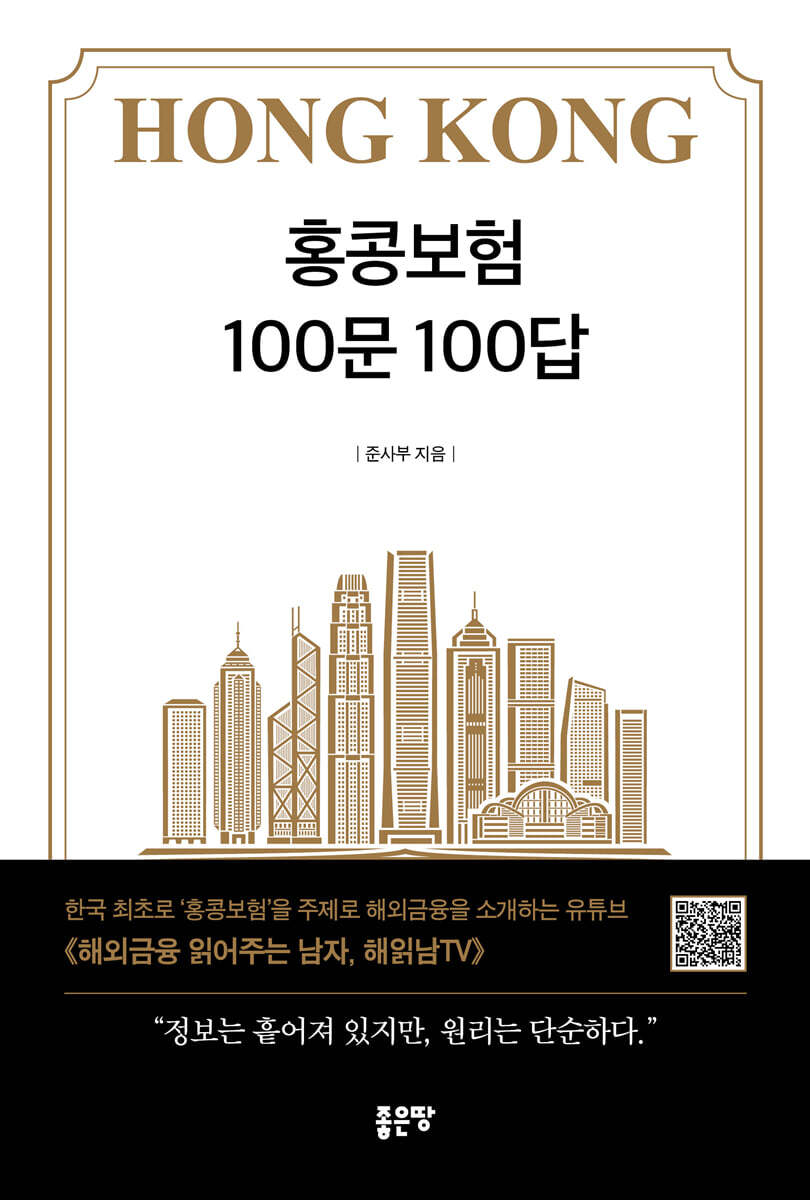
100 Questions and Answers on Hong Kong Insurance
 |
Description
Book Introduction
"100 Questions and Answers on Hong Kong Insurance" is a guide that systematically answers questions about overseas finance, especially Hong Kong insurance.
Drawing on extensive experience in asset management, the author explains the unfamiliar and complex structure and advantages of Hong Kong insurance in a way that readers can easily understand.
In addition to its attractive features such as high returns and inheritance/gift design features, it also presents a balanced perspective by considering the risks of exchange rate losses and institutional limitations.
The book is structured in a question-and-answer format with 100 questions, covering a wide range of topics, from the starting point of "Why Hong Kong Insurance Now?" to structure, profitability, taxes, risks, practical use cases, and advanced topics.
Rather than simply a theoretical book, it contains realistic examples and specific figures to help readers make decisions tailored to their own situations.
This book is suitable for a wide range of readers, from office workers considering financial investment strategies to wealthy individuals interested in global asset management.
Drawing on extensive experience in asset management, the author explains the unfamiliar and complex structure and advantages of Hong Kong insurance in a way that readers can easily understand.
In addition to its attractive features such as high returns and inheritance/gift design features, it also presents a balanced perspective by considering the risks of exchange rate losses and institutional limitations.
The book is structured in a question-and-answer format with 100 questions, covering a wide range of topics, from the starting point of "Why Hong Kong Insurance Now?" to structure, profitability, taxes, risks, practical use cases, and advanced topics.
Rather than simply a theoretical book, it contains realistic examples and specific figures to help readers make decisions tailored to their own situations.
This book is suitable for a wide range of readers, from office workers considering financial investment strategies to wealthy individuals interested in global asset management.
- You can preview some of the book's contents.
Preview
index
About the Author (Junsabu)
introduction
PART 1.
Why 'Hong Kong Insurance' now?
- A part that intuitively explains the background and necessity of Hong Kong insurance.
Chapter 1.
Why isn't Hong Kong insurance well known in Korea?
Chapter 2.
Why is it important to have dollar assets in Korea now?
Chapter 3.
What exactly is 'offshore insurance'?
Chapter 4.
Why has Hong Kong become a hub for offshore insurance?
Chapter 5.
Five reasons why Korean finance is lagging behind Hong Kong
Chapter 6.
Why do wealthy people insist on Hong Kong insurance?
Chapter 7.
What are the most common misconceptions about Hong Kong insurance?
Chapter 8.
Can ordinary office workers also sign up for Hong Kong insurance?
Chapter 9.
Is purchasing Hong Kong insurance a win-win or a loss for Korea?
Chapter 10.
How is Hong Kong's health insurance different from Korea's?
PART 2.
Understanding the structure and core
- Explanation of the basic structure for understanding the core mechanisms of Hong Kong insurance.
Chapter 11.
Why is Hong Kong Insurance a non-dividend insurance policy?
Chapter 12.
What is the difference between dividend insurance and variable insurance?
Chapter 13.
How can I change the insured person in Hong Kong Insurance?
Chapter 14.
Do you pay your insurance premiums in one lump sum (annual payment) or in installments (monthly payment)?
Chapter 15.
How many years do I have to pay insurance premiums?
Chapter 16.
Can I sign up without a health checkup?
Chapter 17.
Isn't the insurance claim process difficult?
Chapter 18.
How do I receive the insurance money?
Chapter 19.
Is early withdrawal free?
Chapter 20.
Can I receive it monthly like a pension?
PART 3.
Profitability and safety
- A multi-faceted analysis of the actual profitability and stability of Hong Kong insurance.
Chapter 21.
7% compound interest per year, is it really possible?
Chapter 22.
When does the cancellation refund exceed the principal?
Chapter 23.
What are the differences between life insurance in Korea and Hong Kong?
Chapter 24.
How much of the insurance business expenses are deducted?
Chapter 25.
Will the design promises be kept? (Performance rate)
Chapter 26.
Are the design documents reissued every year?
Chapter 27.
Is it possible to get a discount on insurance premiums?
Chapter 28.
How can I make an additional payment?
Chapter 29.
What are the key points to keep in mind when designing a product?
Chapter 30.
Where can I check the damage cases?
PART 4.
A realistic look at taxes and regulations
- Practical tax strategies covering gifts, inheritance, and foreign currency asset design.
Chapter 31.
Are withdrawals from savings insurance taxable in Korea?
Chapter 32.
What is the Foreign Financial Account Reporting System?
Chapter 33.
How do I report my overseas financial accounts using Hometax?
Chapter 34.
Do I have to pay gift/inheritance tax on Hong Kong insurance?
Chapter 35.
What are the advantages of Hong Kong insurance as a tax-saving strategy?
Chapter 36.
Can I receive tax-free benefits like Korean savings insurance?
Chapter 37.
Are there any regulations regarding Hong Kong insurance under Korean law?
Chapter 38.
Are there any Korean laws regarding exile?
Chapter 39.
Is it okay to send insurance premiums overseas?
Chapter 40.
Can I proceed without a tax accountant or expert?
PART 5.
Resolving risks and concerns
- Accurately identify and resolve the anxiety factors that readers are most curious about.
Chapter 41.
How big is the risk of foreign exchange loss?
Chapter 42.
What happens to my money if the insurance company goes bankrupt?
Chapter 43.
What happens if I stop paying midway?
Chapter 44.
Could the person introducing me be a scammer?
Chapter 45.
How can I avoid underselling?
Chapter 46.
Who protects Hong Kong insurance consumers?
Chapter 47.
Could I be subject to an IRS investigation?
Chapter 48.
Could this violate the Foreign Exchange Management Act?
Chapter 49.
Are there any issues with overseas accounts when receiving insurance money?
Chapter 50.
What should I consider when signing up for insurance?
PART 6.
Practical application strategies and examples
- Learn how Hong Kong insurance can be used in everyday life through practical examples.
Chapter 51.
Is it suitable for preparing children's education funds?
Chapter 52.
Can I also get funding for studying abroad?
Chapter 53.
Is it possible to save for retirement with Hong Kong insurance?
Chapter 54.
How do I use the inheritance funds?
Chapter 55.
Is there any way to prevent retirement bankruptcy with Hong Kong insurance?
Chapter 56.
Are there any cases where actual doctors have signed up?
Chapter 57.
What about the case of an elderly couple in their 80s visiting in person and signing up?
Chapter 58.
What is the actual case of a gift prepared by a master craftsman for his grandson?
Chapter 59.
I heard there are a lot of insurance touts on the streets of Hong Kong. Is that true?
Chapter 60.
How do I withdraw insurance money?
PART 7.
Practical Q&A
- The procedures and management methods that actual subscribers are most curious about
Chapter 61.
What are the registration procedures and required documents?
Chapter 62.
Is it helpful for immigrants abroad?
Chapter 63.
Is it beneficial to sign up in my child's name?
Chapter 64.
What must I check in the contract?
Chapter 65.
What procedures should I follow to cancel?
Chapter 66.
Do I need to manage it after signing up?
Chapter 67.
Are there any separate fees for subscribers?
Chapter 68.
Where do global insurance companies invest?
Chapter 69.
Can I sign up under a corporate name?
Chapter 70.
What are some strategies frequently used by high net worth individuals?
PART 8.
Advanced Strategy and Future Prospects
- In-depth topics of interest to high-income earners, retirees, and global investors.
Chapter 71.
Can I use my retirement benefits for Hong Kong insurance?
Chapter 72.
Why is Korea's national competitiveness ranking important?
Chapter 73.
Can US citizens also join?
Chapter 74.
Which company's products have the best returns?
Chapter 75.
What will Korea's global status be in 2050?
Chapter 76.
Where do I report Hong Kong insurance losses?
Chapter 77.
How do you determine the timing of termination?
Chapter 78.
Who is Hong Kong Insurance Best for?
Chapter 79.
What was the last financial product chosen by the late Hong Kong actor Ma Yanfang, leaving behind 17 billion won?
Chapter 80.
What do people say they regret after signing up?
Chapter 81.
Five reasons why Korean finance is lagging behind Hong Kong
Chapter 82.
How does it compare to Singapore insurance?
Chapter 83.
What happens to existing contracts when the law changes?
Chapter 84.
How about a 6% guaranteed interest rate on an American pension?
Chapter 85.
What happens to the insurance if the policyholder dies?
Chapter 86.
What news about Hong Kong insurance has recently appeared in the domestic media?
Chapter 87.
If a worker in their 30s or 40s signs up, how much can they receive in retirement?
Chapter 88.
Will China Risk Affect Hong Kong Insurance?
Chapter 89.
What types of insurance fraud are there in Hong Kong?
Chapter 90.
Is Hong Kong Insurance a Valid Asset Diversification Strategy?
Chapter 91.
Can I trust information from blogs or YouTube?
Chapter 92.
What if I lose my copy of the contract?
Chapter 93.
What's the hidden truth about Hong Kong insurance withdrawals that 99% of Koreans don't know?
Chapter 94.
Homeowners' Pension vs. Hong Kong Insurance: Which Should You Choose?
Chapter 95.
What are the major insurance companies and products in Hong Kong?
Chapter 96.
How do Japanese people view Hong Kong insurance?
Chapter 97.
How do Chinese people view Hong Kong insurance?
Chapter 98.
How do Taiwanese view Hong Kong insurance?
Chapter 99.
Why can't Korean insurance companies enter the Hong Kong insurance market?
Chapter 100.
What does the future hold for the Hong Kong insurance market?
References
introduction
PART 1.
Why 'Hong Kong Insurance' now?
- A part that intuitively explains the background and necessity of Hong Kong insurance.
Chapter 1.
Why isn't Hong Kong insurance well known in Korea?
Chapter 2.
Why is it important to have dollar assets in Korea now?
Chapter 3.
What exactly is 'offshore insurance'?
Chapter 4.
Why has Hong Kong become a hub for offshore insurance?
Chapter 5.
Five reasons why Korean finance is lagging behind Hong Kong
Chapter 6.
Why do wealthy people insist on Hong Kong insurance?
Chapter 7.
What are the most common misconceptions about Hong Kong insurance?
Chapter 8.
Can ordinary office workers also sign up for Hong Kong insurance?
Chapter 9.
Is purchasing Hong Kong insurance a win-win or a loss for Korea?
Chapter 10.
How is Hong Kong's health insurance different from Korea's?
PART 2.
Understanding the structure and core
- Explanation of the basic structure for understanding the core mechanisms of Hong Kong insurance.
Chapter 11.
Why is Hong Kong Insurance a non-dividend insurance policy?
Chapter 12.
What is the difference between dividend insurance and variable insurance?
Chapter 13.
How can I change the insured person in Hong Kong Insurance?
Chapter 14.
Do you pay your insurance premiums in one lump sum (annual payment) or in installments (monthly payment)?
Chapter 15.
How many years do I have to pay insurance premiums?
Chapter 16.
Can I sign up without a health checkup?
Chapter 17.
Isn't the insurance claim process difficult?
Chapter 18.
How do I receive the insurance money?
Chapter 19.
Is early withdrawal free?
Chapter 20.
Can I receive it monthly like a pension?
PART 3.
Profitability and safety
- A multi-faceted analysis of the actual profitability and stability of Hong Kong insurance.
Chapter 21.
7% compound interest per year, is it really possible?
Chapter 22.
When does the cancellation refund exceed the principal?
Chapter 23.
What are the differences between life insurance in Korea and Hong Kong?
Chapter 24.
How much of the insurance business expenses are deducted?
Chapter 25.
Will the design promises be kept? (Performance rate)
Chapter 26.
Are the design documents reissued every year?
Chapter 27.
Is it possible to get a discount on insurance premiums?
Chapter 28.
How can I make an additional payment?
Chapter 29.
What are the key points to keep in mind when designing a product?
Chapter 30.
Where can I check the damage cases?
PART 4.
A realistic look at taxes and regulations
- Practical tax strategies covering gifts, inheritance, and foreign currency asset design.
Chapter 31.
Are withdrawals from savings insurance taxable in Korea?
Chapter 32.
What is the Foreign Financial Account Reporting System?
Chapter 33.
How do I report my overseas financial accounts using Hometax?
Chapter 34.
Do I have to pay gift/inheritance tax on Hong Kong insurance?
Chapter 35.
What are the advantages of Hong Kong insurance as a tax-saving strategy?
Chapter 36.
Can I receive tax-free benefits like Korean savings insurance?
Chapter 37.
Are there any regulations regarding Hong Kong insurance under Korean law?
Chapter 38.
Are there any Korean laws regarding exile?
Chapter 39.
Is it okay to send insurance premiums overseas?
Chapter 40.
Can I proceed without a tax accountant or expert?
PART 5.
Resolving risks and concerns
- Accurately identify and resolve the anxiety factors that readers are most curious about.
Chapter 41.
How big is the risk of foreign exchange loss?
Chapter 42.
What happens to my money if the insurance company goes bankrupt?
Chapter 43.
What happens if I stop paying midway?
Chapter 44.
Could the person introducing me be a scammer?
Chapter 45.
How can I avoid underselling?
Chapter 46.
Who protects Hong Kong insurance consumers?
Chapter 47.
Could I be subject to an IRS investigation?
Chapter 48.
Could this violate the Foreign Exchange Management Act?
Chapter 49.
Are there any issues with overseas accounts when receiving insurance money?
Chapter 50.
What should I consider when signing up for insurance?
PART 6.
Practical application strategies and examples
- Learn how Hong Kong insurance can be used in everyday life through practical examples.
Chapter 51.
Is it suitable for preparing children's education funds?
Chapter 52.
Can I also get funding for studying abroad?
Chapter 53.
Is it possible to save for retirement with Hong Kong insurance?
Chapter 54.
How do I use the inheritance funds?
Chapter 55.
Is there any way to prevent retirement bankruptcy with Hong Kong insurance?
Chapter 56.
Are there any cases where actual doctors have signed up?
Chapter 57.
What about the case of an elderly couple in their 80s visiting in person and signing up?
Chapter 58.
What is the actual case of a gift prepared by a master craftsman for his grandson?
Chapter 59.
I heard there are a lot of insurance touts on the streets of Hong Kong. Is that true?
Chapter 60.
How do I withdraw insurance money?
PART 7.
Practical Q&A
- The procedures and management methods that actual subscribers are most curious about
Chapter 61.
What are the registration procedures and required documents?
Chapter 62.
Is it helpful for immigrants abroad?
Chapter 63.
Is it beneficial to sign up in my child's name?
Chapter 64.
What must I check in the contract?
Chapter 65.
What procedures should I follow to cancel?
Chapter 66.
Do I need to manage it after signing up?
Chapter 67.
Are there any separate fees for subscribers?
Chapter 68.
Where do global insurance companies invest?
Chapter 69.
Can I sign up under a corporate name?
Chapter 70.
What are some strategies frequently used by high net worth individuals?
PART 8.
Advanced Strategy and Future Prospects
- In-depth topics of interest to high-income earners, retirees, and global investors.
Chapter 71.
Can I use my retirement benefits for Hong Kong insurance?
Chapter 72.
Why is Korea's national competitiveness ranking important?
Chapter 73.
Can US citizens also join?
Chapter 74.
Which company's products have the best returns?
Chapter 75.
What will Korea's global status be in 2050?
Chapter 76.
Where do I report Hong Kong insurance losses?
Chapter 77.
How do you determine the timing of termination?
Chapter 78.
Who is Hong Kong Insurance Best for?
Chapter 79.
What was the last financial product chosen by the late Hong Kong actor Ma Yanfang, leaving behind 17 billion won?
Chapter 80.
What do people say they regret after signing up?
Chapter 81.
Five reasons why Korean finance is lagging behind Hong Kong
Chapter 82.
How does it compare to Singapore insurance?
Chapter 83.
What happens to existing contracts when the law changes?
Chapter 84.
How about a 6% guaranteed interest rate on an American pension?
Chapter 85.
What happens to the insurance if the policyholder dies?
Chapter 86.
What news about Hong Kong insurance has recently appeared in the domestic media?
Chapter 87.
If a worker in their 30s or 40s signs up, how much can they receive in retirement?
Chapter 88.
Will China Risk Affect Hong Kong Insurance?
Chapter 89.
What types of insurance fraud are there in Hong Kong?
Chapter 90.
Is Hong Kong Insurance a Valid Asset Diversification Strategy?
Chapter 91.
Can I trust information from blogs or YouTube?
Chapter 92.
What if I lose my copy of the contract?
Chapter 93.
What's the hidden truth about Hong Kong insurance withdrawals that 99% of Koreans don't know?
Chapter 94.
Homeowners' Pension vs. Hong Kong Insurance: Which Should You Choose?
Chapter 95.
What are the major insurance companies and products in Hong Kong?
Chapter 96.
How do Japanese people view Hong Kong insurance?
Chapter 97.
How do Chinese people view Hong Kong insurance?
Chapter 98.
How do Taiwanese view Hong Kong insurance?
Chapter 99.
Why can't Korean insurance companies enter the Hong Kong insurance market?
Chapter 100.
What does the future hold for the Hong Kong insurance market?
References
Detailed image
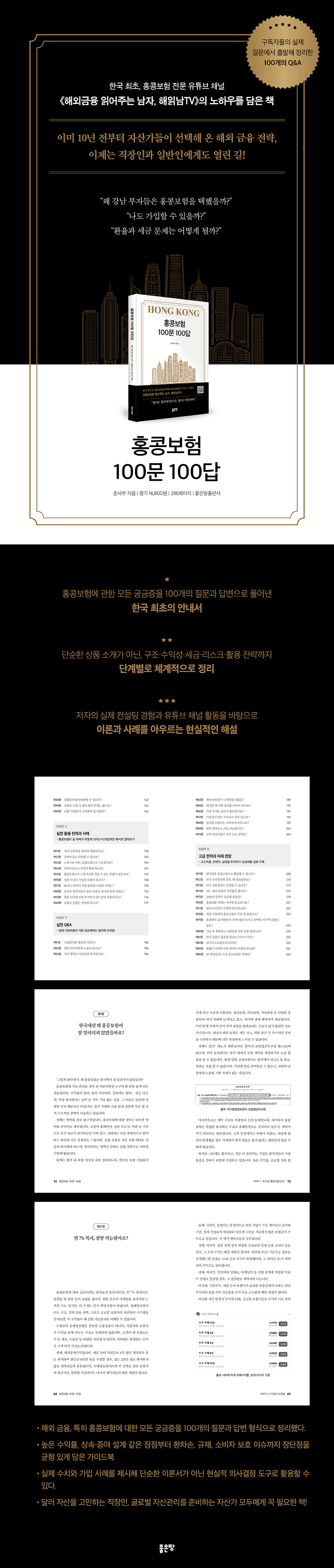
Publisher's Review
- Are you still unaware of Hong Kong Insurance, which is sought after by the wealthy in Gangnam?
- 100 questions and realistic solutions will open a new path for asset management!
"100 Questions and Answers on Hong Kong Insurance" is a systematic and practical guide for those curious about overseas finance, especially Hong Kong insurance.
Drawing on over 10 years of experience in asset management and inheritance consulting for foreign insurance companies, the author unravels the often unfamiliar and challenging world of Hong Kong insurance in a way that readers can appreciate.
As stated in the introduction, the purpose of this book is not to recommend a specific product or to induce subscription, but to help readers answer the questions of 'why, how, and when' for themselves.
The book consists of 100 questions, starting with the question, "Why Hong Kong Insurance Now?" and gradually covering structure, profitability, taxes, risks, practical application strategies, and advanced topics.
For example, it explains why Hong Kong insurance is not well known in Korea, the necessity of dollar assets, the concept and advantages of offshore insurance, and the structural background that inevitably leads Korean finance to fall behind Hong Kong, leading readers to view Hong Kong insurance within the larger picture of the financial environment.
It also provides a wealth of practical examples and figures, providing a concrete picture that goes beyond theoretical explanations.
The book's strength is its balanced perspective.
In addition to the attractive advantages of Hong Kong insurance, such as high returns and inheritance and gift planning capabilities, it also addresses realistic risks such as exchange rate loss risk, legal restrictions, and limitations in consumer protection.
Thanks to this, readers can access objective information rather than one-sided propaganda, and can devise their own advantageous strategies.
This guide will serve as a helpful guide for anyone interested in asset management, from ordinary office workers considering financial investment options to wealthy individuals interested in global asset management.
- 100 questions and realistic solutions will open a new path for asset management!
"100 Questions and Answers on Hong Kong Insurance" is a systematic and practical guide for those curious about overseas finance, especially Hong Kong insurance.
Drawing on over 10 years of experience in asset management and inheritance consulting for foreign insurance companies, the author unravels the often unfamiliar and challenging world of Hong Kong insurance in a way that readers can appreciate.
As stated in the introduction, the purpose of this book is not to recommend a specific product or to induce subscription, but to help readers answer the questions of 'why, how, and when' for themselves.
The book consists of 100 questions, starting with the question, "Why Hong Kong Insurance Now?" and gradually covering structure, profitability, taxes, risks, practical application strategies, and advanced topics.
For example, it explains why Hong Kong insurance is not well known in Korea, the necessity of dollar assets, the concept and advantages of offshore insurance, and the structural background that inevitably leads Korean finance to fall behind Hong Kong, leading readers to view Hong Kong insurance within the larger picture of the financial environment.
It also provides a wealth of practical examples and figures, providing a concrete picture that goes beyond theoretical explanations.
The book's strength is its balanced perspective.
In addition to the attractive advantages of Hong Kong insurance, such as high returns and inheritance and gift planning capabilities, it also addresses realistic risks such as exchange rate loss risk, legal restrictions, and limitations in consumer protection.
Thanks to this, readers can access objective information rather than one-sided propaganda, and can devise their own advantageous strategies.
This guide will serve as a helpful guide for anyone interested in asset management, from ordinary office workers considering financial investment options to wealthy individuals interested in global asset management.
GOODS SPECIFICS
- Date of issue: September 10, 2025
- Page count, weight, size: 296 pages | 152*225*20mm
- ISBN13: 9791138846936
- ISBN10: 1138846937
You may also like
카테고리
korean


korean

![GQ KOREA Mark (Monthly): December [2025]](http://librairie.coreenne.fr/cdn/shop/files/8ef265dbbfbf186523ed75ba7319009d.jpg?v=1765340328&width=3840)


