

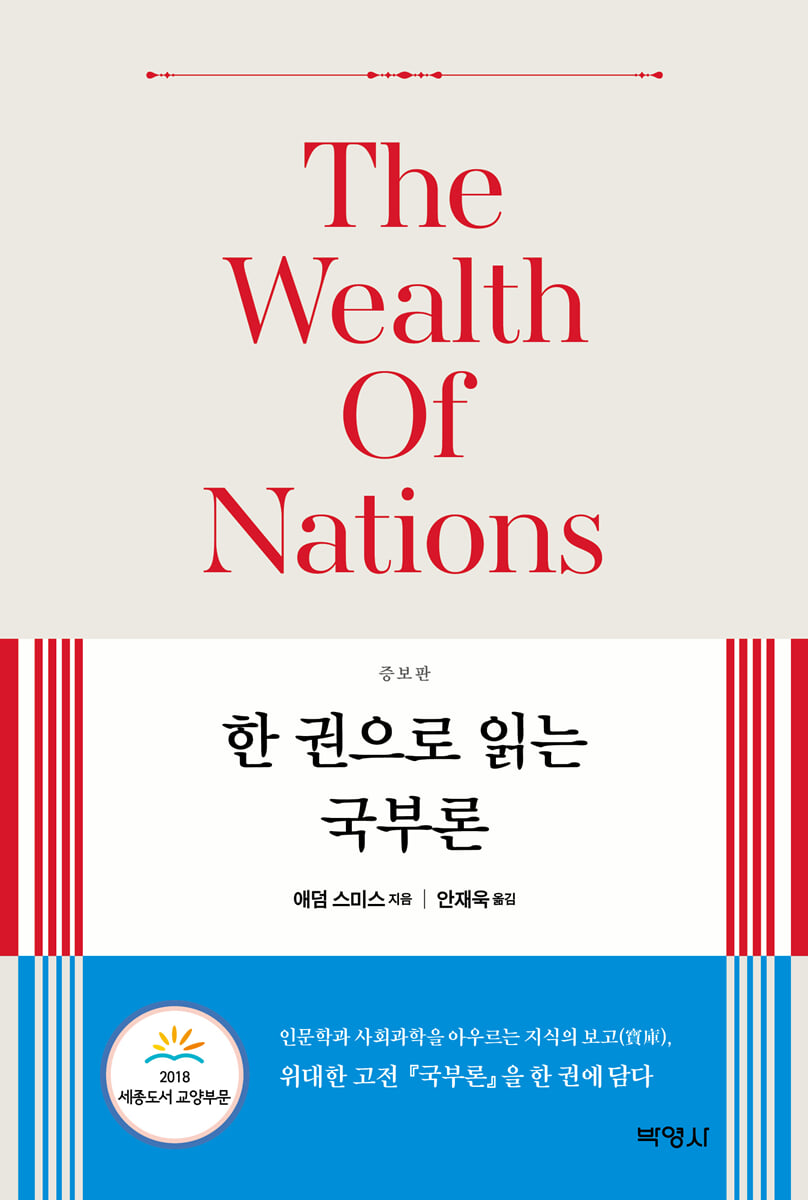
The Wealth of Nations in One Volume
 |
Description
Book Introduction
It has been four years since the first edition was published.
I have been disappointed that the first edition did not include some important topics.
This was especially true regarding national debt.
To alleviate such regrets, we have included information on national debt in this expanded edition.
Recently, our country's national debt has grown like a snowball.
In 2021, the national debt (D1), which includes the debt of the central and local governments, reached 965.3 trillion won, or 47.3% of GDP.
In 2022, the size is expected to increase to 1,068.3 trillion won, or 50.2%.
According to the [FISCAL MONITOR] report released by the IMF in November 2021, Korea's national debt growth rate over the next five years will be the fastest among 35 advanced countries.
It is projected that the ratio of national debt (D2), which includes the debt of non-profit public institutions such as the National Pension Service and National Health Insurance, to government debt (D1) in 2026, will increase to 66.7%.
Nevertheless, it has been difficult to find a correct perspective on how national debt affects the national economy and the lives of its citizens.
Adam Smith wrote in detail about the evils of national debt in The Wealth of Nations.
I hope that through 『The Wealth of Nations』, you will gain a clear understanding of the impact national debt has on the national economy and the lives of its citizens.
I have been disappointed that the first edition did not include some important topics.
This was especially true regarding national debt.
To alleviate such regrets, we have included information on national debt in this expanded edition.
Recently, our country's national debt has grown like a snowball.
In 2021, the national debt (D1), which includes the debt of the central and local governments, reached 965.3 trillion won, or 47.3% of GDP.
In 2022, the size is expected to increase to 1,068.3 trillion won, or 50.2%.
According to the [FISCAL MONITOR] report released by the IMF in November 2021, Korea's national debt growth rate over the next five years will be the fastest among 35 advanced countries.
It is projected that the ratio of national debt (D2), which includes the debt of non-profit public institutions such as the National Pension Service and National Health Insurance, to government debt (D1) in 2026, will increase to 66.7%.
Nevertheless, it has been difficult to find a correct perspective on how national debt affects the national economy and the lives of its citizens.
Adam Smith wrote in detail about the evils of national debt in The Wealth of Nations.
I hope that through 『The Wealth of Nations』, you will gain a clear understanding of the impact national debt has on the national economy and the lives of its citizens.
index
Preface to the Augmented Edition ·3
Translator's Preface ·5
Preface and Book Structure ·10
1
The cause of increasing labor productivity and the order in which the products of that labor are naturally distributed among various classes of people.
(Chapter 1, Chapter 2, Chapter 3, Chapter 4, Chapter 7, Chapter 8)
Division of Labor (Chapter 1) ·15
The Principle of Division of Labor (Chapter 2) ·23
Division of labor is limited by the size of the market (Chapter 3) ·27
The Origin and Use of Money (Chapter 4) ·31
Natural and Market Prices of Commodities (Chapter 7) ·37
Labor Wages (Chapter 8) ·47
2
Characteristics, accumulation and use of assets
(Introduction, Chapter 1, Chapter 2, Chapter 3)
Introduction ·71
Classification of Assets (Chapter 1) ·75
The maintenance costs of money and national capital, which are considered specific sectors of society's total assets (Chapter 2) ·83
Accumulation of Capital and Productive and Unproductive Labor (Chapter 3) ·93
3
Differences in the increase of national wealth among countries
(Chapter 1, Chapter 2, Chapter 3, Chapter 4)
Natural Growth of Wealth (Chapter 1) ·113
The Decline of Agriculture in Ancient Europe after the Fall of the Roman Empire (Chapter 2) ·119
The Rise and Development of Large and Small Cities after the Fall of the Roman Empire (Chapter 3) ·131
How Did Urban Commerce Contribute to Rural Development? (Chapter 4) ·141
4
Doctrines of political economy
(Introduction, Chapter 1, Chapter 2, Chapter 3 Section 2, Chapter 7 Section 3, Chapter 9)
Introduction ·157
The Principles of Commercialism or Mercantilism (Chapter 1) ·159
Import Restrictions on Domestically Producible Goods (Chapter 2) ·171
Import Restrictions from Countries with Unfavorable Trade Balances (Chapter 3) ·183
The Irrationality of Excessive Regulation as Seen from Other Principles (Section 2) ·183
On Colonies (Chapter 7) ·193
On the Benefits Europe Gains from the Development of the American and East Indian Routes (Section 3) ·193
Physiocratism: A political economic theory that regards land production as the sole and primary source of wealth and income for every nation (Chapter 9) ·201
5
income of the king or state
(Chapter 1, Section 1, Section 2, Section 3 (2) (3), Chapter 3)
The King's or State's Guard (Chapter 1) ·219
Defense Expenditure (Section 1) ·219
Legal Expenses (Section 2) ·229
Costs of Public Works and Public Institutions (Section 3) ·235
Public Debt (Chapter 3) ·261
Translator's Note ·279
Search ·284
Translator's Preface ·5
Preface and Book Structure ·10
1
The cause of increasing labor productivity and the order in which the products of that labor are naturally distributed among various classes of people.
(Chapter 1, Chapter 2, Chapter 3, Chapter 4, Chapter 7, Chapter 8)
Division of Labor (Chapter 1) ·15
The Principle of Division of Labor (Chapter 2) ·23
Division of labor is limited by the size of the market (Chapter 3) ·27
The Origin and Use of Money (Chapter 4) ·31
Natural and Market Prices of Commodities (Chapter 7) ·37
Labor Wages (Chapter 8) ·47
2
Characteristics, accumulation and use of assets
(Introduction, Chapter 1, Chapter 2, Chapter 3)
Introduction ·71
Classification of Assets (Chapter 1) ·75
The maintenance costs of money and national capital, which are considered specific sectors of society's total assets (Chapter 2) ·83
Accumulation of Capital and Productive and Unproductive Labor (Chapter 3) ·93
3
Differences in the increase of national wealth among countries
(Chapter 1, Chapter 2, Chapter 3, Chapter 4)
Natural Growth of Wealth (Chapter 1) ·113
The Decline of Agriculture in Ancient Europe after the Fall of the Roman Empire (Chapter 2) ·119
The Rise and Development of Large and Small Cities after the Fall of the Roman Empire (Chapter 3) ·131
How Did Urban Commerce Contribute to Rural Development? (Chapter 4) ·141
4
Doctrines of political economy
(Introduction, Chapter 1, Chapter 2, Chapter 3 Section 2, Chapter 7 Section 3, Chapter 9)
Introduction ·157
The Principles of Commercialism or Mercantilism (Chapter 1) ·159
Import Restrictions on Domestically Producible Goods (Chapter 2) ·171
Import Restrictions from Countries with Unfavorable Trade Balances (Chapter 3) ·183
The Irrationality of Excessive Regulation as Seen from Other Principles (Section 2) ·183
On Colonies (Chapter 7) ·193
On the Benefits Europe Gains from the Development of the American and East Indian Routes (Section 3) ·193
Physiocratism: A political economic theory that regards land production as the sole and primary source of wealth and income for every nation (Chapter 9) ·201
5
income of the king or state
(Chapter 1, Section 1, Section 2, Section 3 (2) (3), Chapter 3)
The King's or State's Guard (Chapter 1) ·219
Defense Expenditure (Section 1) ·219
Legal Expenses (Section 2) ·229
Costs of Public Works and Public Institutions (Section 3) ·235
Public Debt (Chapter 3) ·261
Translator's Note ·279
Search ·284
Publisher's Review
The argument is that the government issuing public bonds to finance its fiscal deficit undermines the private sector's ability to save and accumulate, thus hindering the growth of national wealth.
In fact, when the government issues bonds, it does not create new funds.
It is about transferring private savings into the hands of the government.
In other words, it is about shifting the use of savings from what people want to use them for to what bureaucrats and politicians want to use them for.
Because most of the use is politically determined, funds that would have been better spent in private hands are used inefficiently.
So, our society's savings, which are the source of capital accumulation that promotes economic growth, are wasted, slowing down economic growth and destroying national wealth.
In fact, national debt is a debt that the government must repay.
As the government raises taxes to pay off this debt, the tax burden on citizens increases, which further reduces saving and further harms economic growth.
Moreover, the government uses inflationary policies to lower the value of the currency to reduce the debt burden.
Because inflation reduces the real burden of debt.
This method is a policy that governments have enjoyed using since ancient times.
Adam Smith, in The Wealth of Nations, criticizes this behavior as morally wrong.
Over the years, I have received encouragement and support from many readers who have read the first edition, saying that it has made reading 『The Wealth of Nations』 easier and has been of great help.
There were a few awkward sentences in the first edition, so they were revised and supplemented in this expanded edition.
I would like to express my sincere gratitude to the readers who sent me their support and encouragement, and also extend my deepest gratitude to Park Young-sa's Chairman Jong-man Ahn, CEO Sang-jun Ahn, and Director Sang-ho Jo of Park Young-sa for redesigning and publishing this expanded edition, and to Manager Song-i Park for her hard work in editing and proofreading.
Written by Jae-wook Ahn in August 2022
In fact, when the government issues bonds, it does not create new funds.
It is about transferring private savings into the hands of the government.
In other words, it is about shifting the use of savings from what people want to use them for to what bureaucrats and politicians want to use them for.
Because most of the use is politically determined, funds that would have been better spent in private hands are used inefficiently.
So, our society's savings, which are the source of capital accumulation that promotes economic growth, are wasted, slowing down economic growth and destroying national wealth.
In fact, national debt is a debt that the government must repay.
As the government raises taxes to pay off this debt, the tax burden on citizens increases, which further reduces saving and further harms economic growth.
Moreover, the government uses inflationary policies to lower the value of the currency to reduce the debt burden.
Because inflation reduces the real burden of debt.
This method is a policy that governments have enjoyed using since ancient times.
Adam Smith, in The Wealth of Nations, criticizes this behavior as morally wrong.
Over the years, I have received encouragement and support from many readers who have read the first edition, saying that it has made reading 『The Wealth of Nations』 easier and has been of great help.
There were a few awkward sentences in the first edition, so they were revised and supplemented in this expanded edition.
I would like to express my sincere gratitude to the readers who sent me their support and encouragement, and also extend my deepest gratitude to Park Young-sa's Chairman Jong-man Ahn, CEO Sang-jun Ahn, and Director Sang-ho Jo of Park Young-sa for redesigning and publishing this expanded edition, and to Manager Song-i Park for her hard work in editing and proofreading.
Written by Jae-wook Ahn in August 2022
GOODS SPECIFICS
- Date of issue: September 1, 2022
- Page count, weight, size: 292 pages | 364g | 153*224*15mm
- ISBN13: 9791130316130
- ISBN10: 1130316130
You may also like
카테고리
korean


korean

![ELLE 엘르 스페셜 에디션 A형 : 12월 [2025]](http://librairie.coreenne.fr/cdn/shop/files/b8e27a3de6c9538896439686c6b0e8fb.jpg?v=1766436872&width=3840)


