

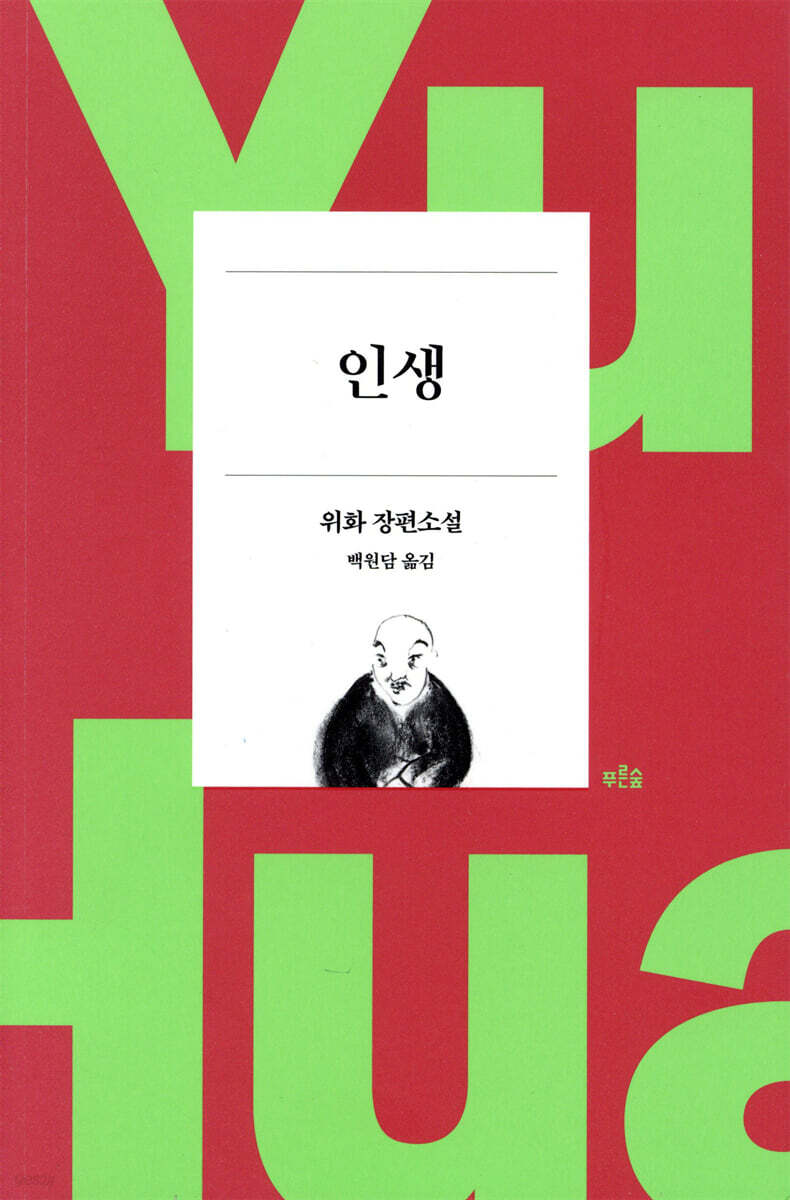
life
 |
Description
Book Introduction
The great writer Wi Hwa who touched the hearts of people all over the world
Revised editions of 『Life』 and 『The Story of Heo Sam-gwan Selling Blood』 published to commemorate the 40th anniversary of his debut!
It has risen to the ranks of modern classics
A story that will remain valid forever as long as 'life' continues.
To commemorate the 40th anniversary of the debut of Yu Hua, a writer representing modern Chinese literature worldwide, revised editions of his representative works, “Life” and “The Story of Xu Sam-gwan Selling Blood,” have been published by Purunsup Publishing.
This is the first revision in 16 years since the publication of the 3rd edition in 2007.
Since their first publication in Korea in 1996, these two works have been greatly loved by many generations for over 30 years, and now they can be seen in a new form.
Internally, translators Choi Yong-man and Baek Won-dam meticulously reworked the sentences to ensure perfection, and externally, they broke away from the traditional design and emphasized the classic aspects with a modern design.
Wei Hua, along with Mo Yan, winner of the Nobel Prize in Literature, and Yan Lianke, winner of the Lu Xun Literature Prize, are giants representing modern Chinese literature.
『Life』 and 『The Story of Selling Blood』 are representative works that best embody Wi Hwa's penmanship, which has movedly portrayed humanism that shines even brighter in the midst of difficult adversity.
Not only did it create a 'Wei Hua craze' in Korea in the 2000s, but it was also translated into over 45 countries and touched the hearts of people around the world.
It is now time to witness with our own eyes the quality of a story that remains valid forever as long as life continues.
Revised editions of 『Life』 and 『The Story of Heo Sam-gwan Selling Blood』 published to commemorate the 40th anniversary of his debut!
It has risen to the ranks of modern classics
A story that will remain valid forever as long as 'life' continues.
To commemorate the 40th anniversary of the debut of Yu Hua, a writer representing modern Chinese literature worldwide, revised editions of his representative works, “Life” and “The Story of Xu Sam-gwan Selling Blood,” have been published by Purunsup Publishing.
This is the first revision in 16 years since the publication of the 3rd edition in 2007.
Since their first publication in Korea in 1996, these two works have been greatly loved by many generations for over 30 years, and now they can be seen in a new form.
Internally, translators Choi Yong-man and Baek Won-dam meticulously reworked the sentences to ensure perfection, and externally, they broke away from the traditional design and emphasized the classic aspects with a modern design.
Wei Hua, along with Mo Yan, winner of the Nobel Prize in Literature, and Yan Lianke, winner of the Lu Xun Literature Prize, are giants representing modern Chinese literature.
『Life』 and 『The Story of Selling Blood』 are representative works that best embody Wi Hwa's penmanship, which has movedly portrayed humanism that shines even brighter in the midst of difficult adversity.
Not only did it create a 'Wei Hua craze' in Korea in the 2000s, but it was also translated into over 45 countries and touched the hearts of people around the world.
It is now time to witness with our own eyes the quality of a story that remains valid forever as long as life continues.
- You can preview some of the book's contents.
Preview
Detailed image

Into the book
“Fugui.”
My father called my name once and then tapped the edge of the bed and said,
“Sit down.”
As I sat next to him with my heart pounding, I felt my father caressing my hand.
But that hand was as cold as ice, and my heart froze along with it.
My father spoke lightly.
“Fugui, gambling debt is still debt.
It has been said since ancient times that there is no way to avoid paying off a debt.
Our land of about 100 mu and this house are all mortgaged, so people will bring coins tomorrow.
“I am old and cannot carry it, so you carry it and pay off the debt.”
After my father finished speaking, he sighed deeply again.
When I heard those words, my eyes felt watery.
I knew my father had no intention of making a life-or-death decision with me.
But my father's words tormented me, as if my head had been cut off with a dull knife and still hung there.
My father slapped my hand and said:
“Go to sleep.”
--- p.52
The bike is back and our house is complete.
I also have an assistant to help me with my work.
It was only then that I began to cherish my woman.
This is something that the bicycle has been telling me, but I haven't really felt it myself.
I used to say to my bike:
“You go to the ridge and rest for a while.”
Didn't you say that the bicycle was a girl who grew up in the castle?
It was heartbreaking to see her so delicate working.
When the bicycle was told to rest, he said with a pleasant smile.
“It’s not hard.”
My mother used to say that if people can live happily, they don't have to fear poverty.
The biker took off his cheongsam and wore plain clothes like me, working hard all day long, barely able to breathe, but always with a smile on his face.
Fengsha was a good kid too.
--- p.83
Fengsha didn't seem to hear, and unexpectedly, Yuqing turned around and looked at me.
The child continued to walk, led by Fengsha's hand, but his head was turned towards me.
I screamed again.
“Fengsha! Youqing!”
As Yuqing grabbed my sister, Fengxia turned towards me.
I quickly ran towards the children, bent my knees, and asked Fengxia.
“Fengsha, do you recognize me?”
Fengsha opened her eyes wide and looked at me for a long time before moving her lips.
But there is no sound.
I told Fengsha.
“I am your father.”
Then Fengsha burst into laughter.
But even though I opened my mouth wide, no sound came out.
I had a feeling something was off, but I didn't think about it any further.
--- p.111
I thought that I was the one who should have died, but someone else died.
I survived the battlefield, and when I returned home, Long'er died in my place.
It seems like our family did a good job of cherishing our ancestors' graves.
Anyway, I told myself.
“I have to live properly from now on.”
--- p.115
“Yuching! Yuching!”
The guy tilted his head to the side and answered in a listless voice.
I also lowered my voice and spoke.
“Let’s go home quickly and eat porridge.”
When he heard the words "let's eat porridge," he suddenly got up and shouted as if he had gained strength from somewhere.
“Are you eating porridge?”
I was startled and said in a hurry.
“Speak a little more quietly.”
The reason the bicycle hid the rice inside his clothes was to keep others from noticing.
After everyone returned home, I closed the door and locked it.
Only then did the bike feel relieved and take out the small sack of rice from its chest.
Half of it was poured into a pot, water was added, and Fengsha turned on the fire to boil the porridge.
Then he told Yu-Ching to stand behind the door and look through the gap to see if any villagers were coming or not.
As the water boiled, the smell of rice filled the whole house.
Yu-Ching couldn't stand it any longer and ran to the pot, sniffing the air.
“It smells good.”
--- p.182
I saw Chunseong off to the village entrance.
Chunseong stopped me and told me to come out.
I stood at the entrance to the village and watched Chunsung leave.
Chunseong was hit so hard that he started limping.
It looked like it would be very difficult to walk with your head down.
I was still uneasy, so I shouted again.
“Chunseong, promise me you’ll stay alive.”
Chunseong walked a few steps, turned around, and said.
“I promise.”
My father called my name once and then tapped the edge of the bed and said,
“Sit down.”
As I sat next to him with my heart pounding, I felt my father caressing my hand.
But that hand was as cold as ice, and my heart froze along with it.
My father spoke lightly.
“Fugui, gambling debt is still debt.
It has been said since ancient times that there is no way to avoid paying off a debt.
Our land of about 100 mu and this house are all mortgaged, so people will bring coins tomorrow.
“I am old and cannot carry it, so you carry it and pay off the debt.”
After my father finished speaking, he sighed deeply again.
When I heard those words, my eyes felt watery.
I knew my father had no intention of making a life-or-death decision with me.
But my father's words tormented me, as if my head had been cut off with a dull knife and still hung there.
My father slapped my hand and said:
“Go to sleep.”
--- p.52
The bike is back and our house is complete.
I also have an assistant to help me with my work.
It was only then that I began to cherish my woman.
This is something that the bicycle has been telling me, but I haven't really felt it myself.
I used to say to my bike:
“You go to the ridge and rest for a while.”
Didn't you say that the bicycle was a girl who grew up in the castle?
It was heartbreaking to see her so delicate working.
When the bicycle was told to rest, he said with a pleasant smile.
“It’s not hard.”
My mother used to say that if people can live happily, they don't have to fear poverty.
The biker took off his cheongsam and wore plain clothes like me, working hard all day long, barely able to breathe, but always with a smile on his face.
Fengsha was a good kid too.
--- p.83
Fengsha didn't seem to hear, and unexpectedly, Yuqing turned around and looked at me.
The child continued to walk, led by Fengsha's hand, but his head was turned towards me.
I screamed again.
“Fengsha! Youqing!”
As Yuqing grabbed my sister, Fengxia turned towards me.
I quickly ran towards the children, bent my knees, and asked Fengxia.
“Fengsha, do you recognize me?”
Fengsha opened her eyes wide and looked at me for a long time before moving her lips.
But there is no sound.
I told Fengsha.
“I am your father.”
Then Fengsha burst into laughter.
But even though I opened my mouth wide, no sound came out.
I had a feeling something was off, but I didn't think about it any further.
--- p.111
I thought that I was the one who should have died, but someone else died.
I survived the battlefield, and when I returned home, Long'er died in my place.
It seems like our family did a good job of cherishing our ancestors' graves.
Anyway, I told myself.
“I have to live properly from now on.”
--- p.115
“Yuching! Yuching!”
The guy tilted his head to the side and answered in a listless voice.
I also lowered my voice and spoke.
“Let’s go home quickly and eat porridge.”
When he heard the words "let's eat porridge," he suddenly got up and shouted as if he had gained strength from somewhere.
“Are you eating porridge?”
I was startled and said in a hurry.
“Speak a little more quietly.”
The reason the bicycle hid the rice inside his clothes was to keep others from noticing.
After everyone returned home, I closed the door and locked it.
Only then did the bike feel relieved and take out the small sack of rice from its chest.
Half of it was poured into a pot, water was added, and Fengsha turned on the fire to boil the porridge.
Then he told Yu-Ching to stand behind the door and look through the gap to see if any villagers were coming or not.
As the water boiled, the smell of rice filled the whole house.
Yu-Ching couldn't stand it any longer and ran to the pot, sniffing the air.
“It smells good.”
--- p.182
I saw Chunseong off to the village entrance.
Chunseong stopped me and told me to come out.
I stood at the entrance to the village and watched Chunsung leave.
Chunseong was hit so hard that he started limping.
It looked like it would be very difficult to walk with your head down.
I was still uneasy, so I shouted again.
“Chunseong, promise me you’ll stay alive.”
Chunseong walked a few steps, turned around, and said.
“I promise.”
--- p.248
Publisher's Review
What exactly is 'life'?
World-renowned master Wei Hua confronts a huge question
An answer written with humanism and humor
Since his debut, Wihwa has been confronting huge questions head-on for the past 40 years.
As a writer, his ambition was to create a story set against the backdrop of the turbulent 100-year history of 20th-century China in the 1900s, reflecting on where we came from and envisioning where we are headed.
『Yuanqing』, which deals with the early 20th century, 『Brothers』, which deals with the late 20th century, and 『Life』 and 『The Story of Selling Blood』, which are set in the mid-20th century, can be grouped together as Wei Hua's 'Chinese 20th Century Four-part Work'.
The reason why 『Life』 and 『The Story of Heo Sam-gwan Selling Blood』, which belong to the middle period, are selected as Wi Hwa's representative works is likely not unrelated to the fact that Wi Hwa himself went through that period.
『Life』 and 『The Story of Heo Sam-gwan Selling Blood』 are answers that Wi Hwa, who stands on the turbulent path of history, directly ponders on what life really is.
"Life" is not only Wei Hua's representative work, but is also considered a masterpiece of modern Chinese literature.
In 1949, half a century later, Chinese history changed dramatically when Mao Zedong officially declared the establishment of the People's Republic of China.
"Life" is a work set in the 1950s, just after that.
Through the tragic life of the landowner 'Fugui', who fell from grace in an instant, it captures the cruel social upheaval of the revolutionary period and the noble footsteps of a human being who did not give up on life even in such an unbearably desperate situation.
It is a story that plants an undying hope in the hearts of those who are deeply frustrated.
You can see the essence of 'humanism', a keyword representing the conflict.
"Life" was included in Chinese language textbooks and has sold over 20 million copies, excluding countless pirated copies.
Although 『The Story of Heo Sam-gwan Selling Blood』 is set in a similar time period, the atmosphere is quite different.
In 『The Story of Heo Sam-gwan Selling Blood』, what is emphasized as much as humanism is Wei Hua's unique 'humor'.
The story warmly portrays the enduring love between family members through the poor life of 'Heo Sam-gwan', who supports his family even by selling his blood, which is like his life.
Just like in “Life,” even when social upheaval hits, Heo Sam-gwan’s family is plagued by “vulgar” problems.
The husband is having an affair, the three sons are constantly causing trouble, and the wife never stops complaining.
If Fugui's life was about 'enduring', Heo Sam-gwan's life seems to be about 'just coping'.
It is a story that gives us the strength to live without losing our smile even in a tragic life.
『The Story of Selling Blood』 received rave reviews worldwide, and became the best-selling Chinese novel in Korea.
If 『Life』 answers the question of why we should live life, 『The Story of Heo Sam-gwan Selling Blood』 seems to answer the question of how we should live life.
The fact that 『Life』 and 『The Story of Selling Blood』, despite being set in modern China that may seem unfamiliar, have been loved for a long time around the world is undoubtedly because the grand thematic consciousness of this kind has a power that transcends region and time.
In times of poverty, in times of abundance
To live a beautiful life above all else
In the preface to this revised edition, Wihwa said:
“(In both works) the times depicted were times of material poverty, but readers felt the beauty of life within them, and that beautiful feeling continued into the modern era of material abundance.
It is a deep comfort to me as a writer that a novel allows readers to experience the beauty of both past and present life at the same time.
(…) Because beauty in life is sometimes unrelated to poverty and abundance, and can never be measured solely by poverty and wealth.” If beauty in life is not absent even in times of poverty, and not abundant even in times of abundance, then where can we find beauty? We can certainly find clues in 『Life』 and 『The Story of Heo Sam-gwan Selling Blood』.
The power to live a better life.
It is contained in 『Life』 and 『The Story of Heo Sam-gwan Selling Blood』.
World-renowned master Wei Hua confronts a huge question
An answer written with humanism and humor
Since his debut, Wihwa has been confronting huge questions head-on for the past 40 years.
As a writer, his ambition was to create a story set against the backdrop of the turbulent 100-year history of 20th-century China in the 1900s, reflecting on where we came from and envisioning where we are headed.
『Yuanqing』, which deals with the early 20th century, 『Brothers』, which deals with the late 20th century, and 『Life』 and 『The Story of Selling Blood』, which are set in the mid-20th century, can be grouped together as Wei Hua's 'Chinese 20th Century Four-part Work'.
The reason why 『Life』 and 『The Story of Heo Sam-gwan Selling Blood』, which belong to the middle period, are selected as Wi Hwa's representative works is likely not unrelated to the fact that Wi Hwa himself went through that period.
『Life』 and 『The Story of Heo Sam-gwan Selling Blood』 are answers that Wi Hwa, who stands on the turbulent path of history, directly ponders on what life really is.
"Life" is not only Wei Hua's representative work, but is also considered a masterpiece of modern Chinese literature.
In 1949, half a century later, Chinese history changed dramatically when Mao Zedong officially declared the establishment of the People's Republic of China.
"Life" is a work set in the 1950s, just after that.
Through the tragic life of the landowner 'Fugui', who fell from grace in an instant, it captures the cruel social upheaval of the revolutionary period and the noble footsteps of a human being who did not give up on life even in such an unbearably desperate situation.
It is a story that plants an undying hope in the hearts of those who are deeply frustrated.
You can see the essence of 'humanism', a keyword representing the conflict.
"Life" was included in Chinese language textbooks and has sold over 20 million copies, excluding countless pirated copies.
Although 『The Story of Heo Sam-gwan Selling Blood』 is set in a similar time period, the atmosphere is quite different.
In 『The Story of Heo Sam-gwan Selling Blood』, what is emphasized as much as humanism is Wei Hua's unique 'humor'.
The story warmly portrays the enduring love between family members through the poor life of 'Heo Sam-gwan', who supports his family even by selling his blood, which is like his life.
Just like in “Life,” even when social upheaval hits, Heo Sam-gwan’s family is plagued by “vulgar” problems.
The husband is having an affair, the three sons are constantly causing trouble, and the wife never stops complaining.
If Fugui's life was about 'enduring', Heo Sam-gwan's life seems to be about 'just coping'.
It is a story that gives us the strength to live without losing our smile even in a tragic life.
『The Story of Selling Blood』 received rave reviews worldwide, and became the best-selling Chinese novel in Korea.
If 『Life』 answers the question of why we should live life, 『The Story of Heo Sam-gwan Selling Blood』 seems to answer the question of how we should live life.
The fact that 『Life』 and 『The Story of Selling Blood』, despite being set in modern China that may seem unfamiliar, have been loved for a long time around the world is undoubtedly because the grand thematic consciousness of this kind has a power that transcends region and time.
In times of poverty, in times of abundance
To live a beautiful life above all else
In the preface to this revised edition, Wihwa said:
“(In both works) the times depicted were times of material poverty, but readers felt the beauty of life within them, and that beautiful feeling continued into the modern era of material abundance.
It is a deep comfort to me as a writer that a novel allows readers to experience the beauty of both past and present life at the same time.
(…) Because beauty in life is sometimes unrelated to poverty and abundance, and can never be measured solely by poverty and wealth.” If beauty in life is not absent even in times of poverty, and not abundant even in times of abundance, then where can we find beauty? We can certainly find clues in 『Life』 and 『The Story of Heo Sam-gwan Selling Blood』.
The power to live a better life.
It is contained in 『Life』 and 『The Story of Heo Sam-gwan Selling Blood』.
GOODS SPECIFICS
- Date of issue: September 12, 2023
- Page count, weight, size: 312 pages | 502g | 140*210*30mm
- ISBN13: 9791156754312
- ISBN10: 1156754313
You may also like
카테고리
korean


korean

![ELLE 엘르 스페셜 에디션 A형 : 12월 [2025]](http://librairie.coreenne.fr/cdn/shop/files/b8e27a3de6c9538896439686c6b0e8fb.jpg?v=1766436872&width=3840)


