

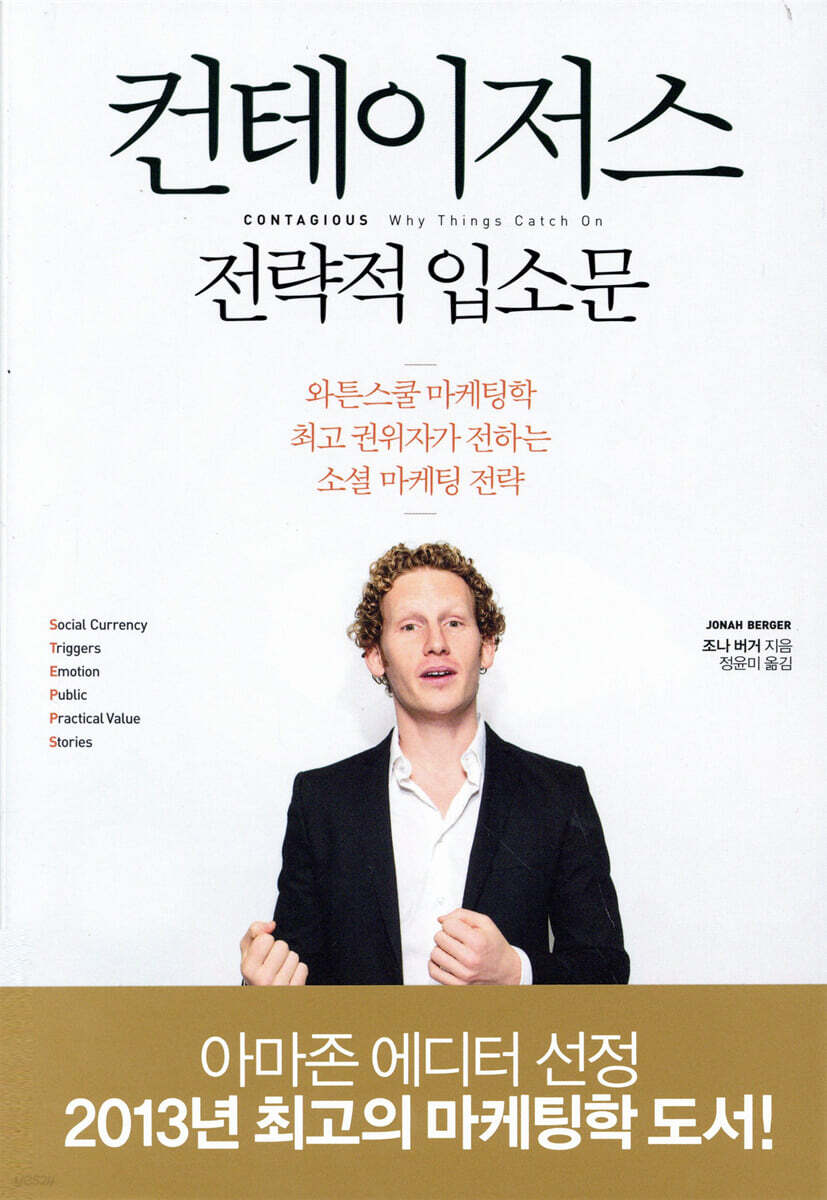
Contagious Strategic Word of Mouth
 |
Description
Book Introduction
The Principles of Viral Marketing: Creating Explosive Trends There are products that seem to have no special features but become wildly popular, while there are also products that have seen declining sales despite advertisements that garnered enough attention to be included in the Guinness Book of World Records. It is confusing to us that simply spending a huge amount of money on advertising here and there does not guarantee success in promoting a product. Wharton School marketing professor Jonah Berger analyzed the causes of marketing success and failure by examining real-life cases of unpredictable trends like this. It provides an exciting explanation of 'viral marketing', which is evolving especially with the advent of social media. There's also the viral success of Subway thanks to the story of Jared Fogle, who lost 250 pounds by eating only Subway sandwiches. People spread this interesting story without any intention of promoting Subway. But as word of mouth spread, Subway also became a subject of interest, and information about the brand spread through the stories. This is also a case that falls under the ‘law of storytelling’ of viral marketing. While the marketing effects of advertising, special sales, and celebrity invitations cannot be ignored, they come at a tremendous cost. For marketers tired of trying to come up with new promotional methods, this book introduces six viral marketing principles called "STEPPS." Smart consumers trust information from acquaintances more than from advertisements. Viral marketing is a method that utilizes this principle, and its greatest advantage is that anyone can engage in impactful marketing, even those who cannot afford separate marketing costs. Watch the video "Contagious Strategic Word of Mouth" *Click* |
- You can preview some of the book's contents.
Preview
index
Contagious Strategic Word of Mouth
Prologue - The Secret of Fashion
CHAPTER 1.
The Law of Social Currency
Create a new currency
Have inner extraordinaryness
Leveraging game mechanics
Instilling a sense of belonging and "insider" in customers
The moment you offer a reward, intrinsic motivation disappears.
A secret that must not be kept
CHAPTER 2.
Law of Instruments
We mention brands more than 3 billion times every day.
Issues that quickly spread by word of mouth
Immediate and ongoing word of mouth
The influence of triggers on behavior
The worst song ever to become a hit
The occasion highlights existence.
Expand Habitat
What is an effective trigger?
Context determines effectiveness
Why Trivial Topics Spark Conversation
CHAPTER 3.
The Law of Emotion
An Internet space that realizes the desire to share
Systematically analyze email sharing articles
The Amazing Power of Awe
Emotions that suppress the desire to share
Pull the spark
Focus on emotions
Aim for a powerful emotional awakening effect.
Make fun of Twitter opinions
Exercise makes you a chatterbox
CHAPTER 4, THE LAW OF POPULARITY
Social proof determines life and death
The surprising power of observability
Grab the public's attention with a mustache
How to advertise yourself
Livestrong Band Targeting Behavioral Residue
The First Lady's drug promotion campaign?
CHAPTER 5.
The Law of Practical Value
Standards for exceptional discounts
Unraveling the Psychology of Trading with Prospect Theory
Emphasize outstanding value
Something more valuable than money
Everyone has altruism
CHAPTER 6.
The law of narrative
Gossip spreads information
A story about a friend who is more trustworthy than advertising
Build a Trojan Horse
Evian's sales fell despite its Guinness World Records-winning ad.
Epilogue - Go Ahead with STEPPS
Acknowledgements
References
Search
Prologue - The Secret of Fashion
CHAPTER 1.
The Law of Social Currency
Create a new currency
Have inner extraordinaryness
Leveraging game mechanics
Instilling a sense of belonging and "insider" in customers
The moment you offer a reward, intrinsic motivation disappears.
A secret that must not be kept
CHAPTER 2.
Law of Instruments
We mention brands more than 3 billion times every day.
Issues that quickly spread by word of mouth
Immediate and ongoing word of mouth
The influence of triggers on behavior
The worst song ever to become a hit
The occasion highlights existence.
Expand Habitat
What is an effective trigger?
Context determines effectiveness
Why Trivial Topics Spark Conversation
CHAPTER 3.
The Law of Emotion
An Internet space that realizes the desire to share
Systematically analyze email sharing articles
The Amazing Power of Awe
Emotions that suppress the desire to share
Pull the spark
Focus on emotions
Aim for a powerful emotional awakening effect.
Make fun of Twitter opinions
Exercise makes you a chatterbox
CHAPTER 4, THE LAW OF POPULARITY
Social proof determines life and death
The surprising power of observability
Grab the public's attention with a mustache
How to advertise yourself
Livestrong Band Targeting Behavioral Residue
The First Lady's drug promotion campaign?
CHAPTER 5.
The Law of Practical Value
Standards for exceptional discounts
Unraveling the Psychology of Trading with Prospect Theory
Emphasize outstanding value
Something more valuable than money
Everyone has altruism
CHAPTER 6.
The law of narrative
Gossip spreads information
A story about a friend who is more trustworthy than advertising
Build a Trojan Horse
Evian's sales fell despite its Guinness World Records-winning ad.
Epilogue - Go Ahead with STEPPS
Acknowledgements
References
Search
Publisher's Review
Contagious Strategic Word of Mouth
Amazon Editors' Choice: Best Marketing Book of 2013!
New York Times bestseller!
A book endorsed by Chip Heath of "Stick" and Charles Duhigg of "The Power of Habit"!
What makes a trend explode?
The Principles of Viral Marketing That Have Received Attention from Marketers Worldwide
There are products, people, and ideas that seem to be nothing special or don't seem to have spent a lot of money on advertising, yet they become wildly popular.
But even leading marketing experts shake their heads, dismissing these trends as unanalyzable and "random," and the causes seem so inexplicable.
There are products that have seen declining sales despite advertisements that garnered enough attention to be included in the Guinness Book of World Records, while songs that are criticized as poor by critics still dominate the charts.
In other words, the fact that product promotion is not always successful just because you spend a lot of money advertising everywhere is a source of confusion for marketing managers.
Why are these things happening today? Wharton School marketing professor Jonah Berger examines real-life examples of these seemingly unpredictable trends, analyzing the causes of marketing success and failure. He offers a compelling account of the evolution of "viral marketing"—a strategy that spreads word of mouth—in the face of a new media landscape, particularly the rise of social media.
Is viral marketing simply a matter of chance? Wharton School professor Jonah Berger analyzes cases to reveal that viral marketing isn't a mere coincidence, but rather a series of core principles that permeate it.
In addition to teaching marketing at Wharton School, Jonah Berger also lectures and advises at global companies such as Microsoft, Google, Facebook, and GlaxoSmithKline. To closely analyze the causes of viral effects, he has spent 10 years studying all kinds of cases with high social impact, from products and brands that became sensational hits, to the New York Times' 'most emailed articles,' YouTube videos, high-profile election promises, bestselling books, and especially popular baby names.
His research and interviews with experts from various fields clearly reveal the seemingly incomprehensible principles of word-of-mouth.
Representative examples analyzed by Jonah Berger include:
* Vivid examples of success through word of mouth
Blendtech, a mixer company that achieved 700% growth thanks to a YouTube video made with a budget of $50
ㆍThe "worst song ever" "Friday" ranked on Billboard's Hot 100 with a surge in plays every Friday.
The book "The Fierce Men" saw a 45% increase in sales after a negative review in the New York Times.
Hotmail, which attracted 350 million subscribers with a single line in an email
Dove, which achieved double-digit sales growth by inducing discussion on beauty standards
Viral Marketing: 6 Steps
The most special way to turn the ordinary into the extraordinary
Marketing methods such as advertising everywhere, running huge sales, and inviting celebrities to promote products may still be effective.
However, this costs a huge amount of money, so marketers are always scratching their heads trying to come up with new promotional methods.
What they absolutely need are the six viral marketing principles, STEPPS, presented in this book.
Modern consumers, skeptical and savvy, trust information from acquaintances more than advertising.
Viral marketing is a method that utilizes this principle, and its greatest advantage is that anyone can engage in impactful marketing, even those who cannot afford separate marketing costs.
Jonah Berger argues that if you keep in mind and firmly implement the six viral marketing principles he presents, you can successfully achieve viral marketing that achieves maximum effect at minimum cost.
6 Key Rules of Social Marketing STEPPS
1.
The Law of Social Currency: People share stories that leave a positive impression on others.
2.
The Law of Triggers: People share what comes to mind easily.
3.
The Law of Emotion: People share emotional topics that touch their hearts.
4.
The Law of Public: People imitate and share what stands out.
5.
The Law of Practical Value: People share useful information that will help others.
6.
The Law of Stories: People share compelling and engaging stories.
Enjoy viral marketing as a strategy, not a coincidence!
What if your sales spike without spending a single penny, but you can't figure out why? It's not something you can just dismiss as a coincidence.
In fact, the chocolate bar Mars was bewildered by its rapid increase in sales without any special marketing efforts.
This can be explained by the 'law of opportunity'.
At that time, when NASA's Pathfinder arrived at Mars and the media reported on it every day, people thought of the chocolate bar with the same name, Mars, and among all the chocolate bars, they ended up buying Mars.
According to the trigger principle that 'people share what comes to mind easily, and this triggers action', Mars became the 'habitat' of the chocolate bar Mars, which led to an association, and this triggered the action of purchasing.
Meanwhile, the Apple laptop logo also has a hidden viral marketing principle.
Originally, Apple's PowerBook had its logo upside down when in use, showing it to people around it.
Jobs, who was concerned about this problem, drew the logo upside down so that the apple shape would appear straight to the observer's eyes in order to take full advantage of the psychology of people who copy what they see with their eyes.
Viral marketing is a representative example of where the 'law of popularity' can be applied.
There's also the viral success of Subway thanks to the story of Jared Fogle, who lost 250 pounds by eating only Subway sandwiches.
People spread this interesting story without any intention of promoting Subway.
But as word of mouth spread, Subway also became a subject of interest, and information about the brand spread through the stories.
This is also a case that falls under the ‘law of storytelling’ of viral marketing.
If you understand the principles, you can strategically control even phenomena that might otherwise be overlooked as coincidences and turn them into trends.
The STEPPS principle can be applied not only to marketers trying to promote their products, but also to local coffee shop owners trying to attract customers, movie theaters trying to attract audiences, politicians trying to promote their campaigns, environmentalists running campaigns—anyone who wonders, "How can I sell this product?" or "What methods can I use to spread this idea?"
It's not just luck that gets people's attention, nor is it popularity for some mysterious reason we don't know.
The same principle applies to every trend that sweeps our society.
There are certain tricks to getting people to save paper, watch documentaries, try new services, or support a particular candidate.
The six principles introduced in this book are the secret.
- In the text
Amazon Editors' Choice: Best Marketing Book of 2013!
New York Times bestseller!
A book endorsed by Chip Heath of "Stick" and Charles Duhigg of "The Power of Habit"!
What makes a trend explode?
The Principles of Viral Marketing That Have Received Attention from Marketers Worldwide
There are products, people, and ideas that seem to be nothing special or don't seem to have spent a lot of money on advertising, yet they become wildly popular.
But even leading marketing experts shake their heads, dismissing these trends as unanalyzable and "random," and the causes seem so inexplicable.
There are products that have seen declining sales despite advertisements that garnered enough attention to be included in the Guinness Book of World Records, while songs that are criticized as poor by critics still dominate the charts.
In other words, the fact that product promotion is not always successful just because you spend a lot of money advertising everywhere is a source of confusion for marketing managers.
Why are these things happening today? Wharton School marketing professor Jonah Berger examines real-life examples of these seemingly unpredictable trends, analyzing the causes of marketing success and failure. He offers a compelling account of the evolution of "viral marketing"—a strategy that spreads word of mouth—in the face of a new media landscape, particularly the rise of social media.
Is viral marketing simply a matter of chance? Wharton School professor Jonah Berger analyzes cases to reveal that viral marketing isn't a mere coincidence, but rather a series of core principles that permeate it.
In addition to teaching marketing at Wharton School, Jonah Berger also lectures and advises at global companies such as Microsoft, Google, Facebook, and GlaxoSmithKline. To closely analyze the causes of viral effects, he has spent 10 years studying all kinds of cases with high social impact, from products and brands that became sensational hits, to the New York Times' 'most emailed articles,' YouTube videos, high-profile election promises, bestselling books, and especially popular baby names.
His research and interviews with experts from various fields clearly reveal the seemingly incomprehensible principles of word-of-mouth.
Representative examples analyzed by Jonah Berger include:
* Vivid examples of success through word of mouth
Blendtech, a mixer company that achieved 700% growth thanks to a YouTube video made with a budget of $50
ㆍThe "worst song ever" "Friday" ranked on Billboard's Hot 100 with a surge in plays every Friday.
The book "The Fierce Men" saw a 45% increase in sales after a negative review in the New York Times.
Hotmail, which attracted 350 million subscribers with a single line in an email
Dove, which achieved double-digit sales growth by inducing discussion on beauty standards
Viral Marketing: 6 Steps
The most special way to turn the ordinary into the extraordinary
Marketing methods such as advertising everywhere, running huge sales, and inviting celebrities to promote products may still be effective.
However, this costs a huge amount of money, so marketers are always scratching their heads trying to come up with new promotional methods.
What they absolutely need are the six viral marketing principles, STEPPS, presented in this book.
Modern consumers, skeptical and savvy, trust information from acquaintances more than advertising.
Viral marketing is a method that utilizes this principle, and its greatest advantage is that anyone can engage in impactful marketing, even those who cannot afford separate marketing costs.
Jonah Berger argues that if you keep in mind and firmly implement the six viral marketing principles he presents, you can successfully achieve viral marketing that achieves maximum effect at minimum cost.
6 Key Rules of Social Marketing STEPPS
1.
The Law of Social Currency: People share stories that leave a positive impression on others.
2.
The Law of Triggers: People share what comes to mind easily.
3.
The Law of Emotion: People share emotional topics that touch their hearts.
4.
The Law of Public: People imitate and share what stands out.
5.
The Law of Practical Value: People share useful information that will help others.
6.
The Law of Stories: People share compelling and engaging stories.
Enjoy viral marketing as a strategy, not a coincidence!
What if your sales spike without spending a single penny, but you can't figure out why? It's not something you can just dismiss as a coincidence.
In fact, the chocolate bar Mars was bewildered by its rapid increase in sales without any special marketing efforts.
This can be explained by the 'law of opportunity'.
At that time, when NASA's Pathfinder arrived at Mars and the media reported on it every day, people thought of the chocolate bar with the same name, Mars, and among all the chocolate bars, they ended up buying Mars.
According to the trigger principle that 'people share what comes to mind easily, and this triggers action', Mars became the 'habitat' of the chocolate bar Mars, which led to an association, and this triggered the action of purchasing.
Meanwhile, the Apple laptop logo also has a hidden viral marketing principle.
Originally, Apple's PowerBook had its logo upside down when in use, showing it to people around it.
Jobs, who was concerned about this problem, drew the logo upside down so that the apple shape would appear straight to the observer's eyes in order to take full advantage of the psychology of people who copy what they see with their eyes.
Viral marketing is a representative example of where the 'law of popularity' can be applied.
There's also the viral success of Subway thanks to the story of Jared Fogle, who lost 250 pounds by eating only Subway sandwiches.
People spread this interesting story without any intention of promoting Subway.
But as word of mouth spread, Subway also became a subject of interest, and information about the brand spread through the stories.
This is also a case that falls under the ‘law of storytelling’ of viral marketing.
If you understand the principles, you can strategically control even phenomena that might otherwise be overlooked as coincidences and turn them into trends.
The STEPPS principle can be applied not only to marketers trying to promote their products, but also to local coffee shop owners trying to attract customers, movie theaters trying to attract audiences, politicians trying to promote their campaigns, environmentalists running campaigns—anyone who wonders, "How can I sell this product?" or "What methods can I use to spread this idea?"
It's not just luck that gets people's attention, nor is it popularity for some mysterious reason we don't know.
The same principle applies to every trend that sweeps our society.
There are certain tricks to getting people to save paper, watch documentaries, try new services, or support a particular candidate.
The six principles introduced in this book are the secret.
- In the text
GOODS SPECIFICS
- Date of publication: September 26, 2013
- Format: Hardcover book binding method guide
- Page count, weight, size: 368 pages | 598g | 145*210*30mm
- ISBN13: 9788954622431
- ISBN10: 8954622437
You may also like
카테고리
korean


korean

![ELLE 엘르 스페셜 에디션 A형 : 12월 [2025]](http://librairie.coreenne.fr/cdn/shop/files/b8e27a3de6c9538896439686c6b0e8fb.jpg?v=1766436872&width=3840)


