

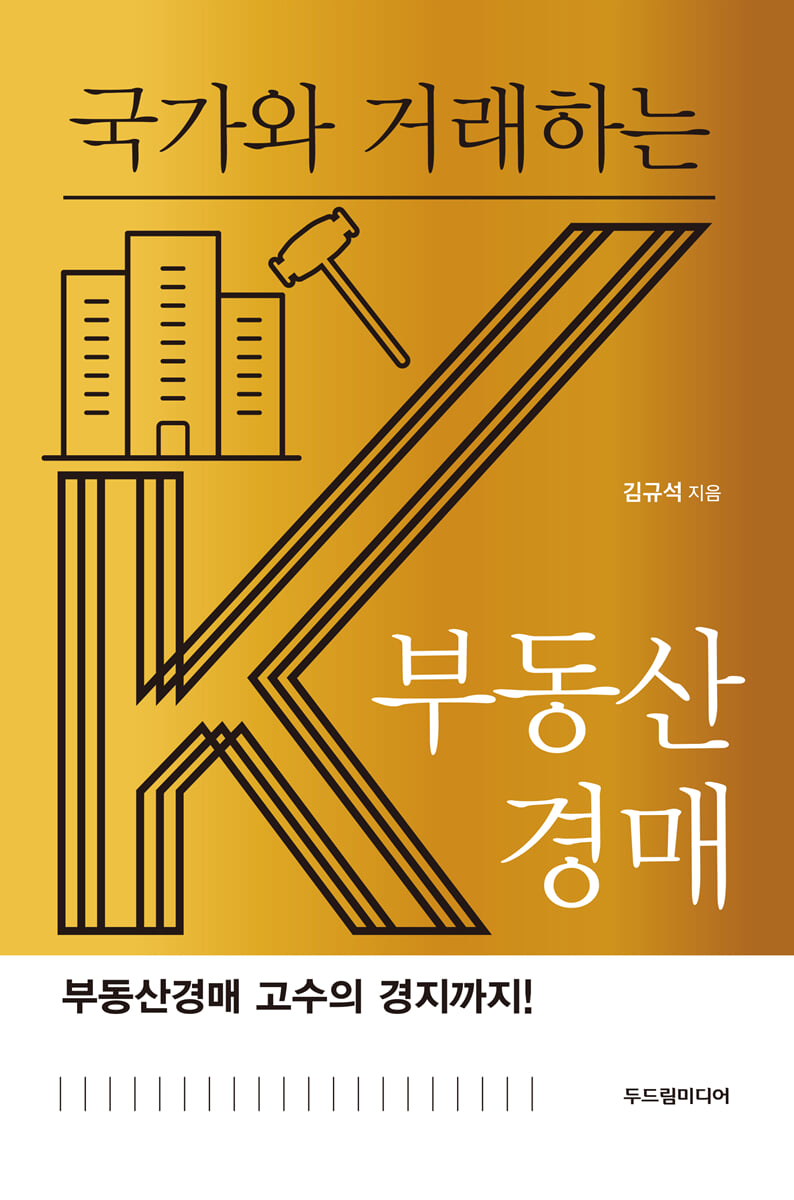
K Real Estate Auction
 |
Description
Book Introduction
Solving the real estate auction problem with the 'rights analysis formula'!
Many people feel that real estate auctions are difficult.
Unfamiliar legal terms, complicated registers, uncertain bidding processes, etc…
The author also experienced the same difficulties when he entered the auction business without studying law.
However, I learned this by reading countless books and case laws and experiencing it firsthand in the field.
“Rights analysis is not a feeling, it’s a formula.”
This book systematically organizes the core principles and practical processes of real estate auctions, focusing on the 'rights analysis formula' that was born in this way.
Based on the Civil Execution Act, the Civil Code, and Supreme Court precedents, it is structured to be easy for beginners to understand, while also providing a path to advanced study so that even experienced practitioners can continue with in-depth analysis.
The author's know-how, accumulated over 33 years of running a real estate academy and assisting countless students in bidding and winning bids, is contained in this book.
This book will most realistically prove the truth that 'knowledge is power'.
Many people feel that real estate auctions are difficult.
Unfamiliar legal terms, complicated registers, uncertain bidding processes, etc…
The author also experienced the same difficulties when he entered the auction business without studying law.
However, I learned this by reading countless books and case laws and experiencing it firsthand in the field.
“Rights analysis is not a feeling, it’s a formula.”
This book systematically organizes the core principles and practical processes of real estate auctions, focusing on the 'rights analysis formula' that was born in this way.
Based on the Civil Execution Act, the Civil Code, and Supreme Court precedents, it is structured to be easy for beginners to understand, while also providing a path to advanced study so that even experienced practitioners can continue with in-depth analysis.
The author's know-how, accumulated over 33 years of running a real estate academy and assisting countless students in bidding and winning bids, is contained in this book.
This book will most realistically prove the truth that 'knowledge is power'.
index
Prologue: We'll walk you through the real estate auction process from beginner to expert.
Chapter 1: From Auction Application to Sale Preparation
1.
Compulsory and voluntary auctions
2.
Sale (auction) procedures
3.
How to sell
4.
Preparation for sale (bidding)
5.
Notice and announcement of sale date and sale decision date
6.
New sale and resale
7.
Dividend request and dividend request deadline
8.
Tenant's Rights Report and Distribution Request Application
9.
Changes in the sale schedule
10.
Reasons for cancellation of sale procedure
11.
Withdrawal of auction application
Chapter 2 From Bidding to Transfer of Ownership
1.
Prohibition on purchase requests from debtors, etc.
2.
Documents to prepare when bidding
3.
Implementation of sale (bidding)
4.
Three principles that must be followed for successful bidding and winning the bid
5.
Things to keep in mind when preparing a bid form
6.
If the bid is invalid
7.
Reasons for sale approval and denial of sale
8.
Immediate appeal
9.
Payment of sales price
10.
Special payment methods such as offset
11.
Court action in case of non-payment of sales price
12.
Transfer of ownership registration
Chapter 3: Succeeding in India (Brightness)
1.
Management orders and delivery (clarification) orders
2.
Information on India (Brightness)
3.
Method of naming when only luggage (movable property) is left behind
4.
Request for military assistance
5.
Criminal Laws That Are Helpful to Know at Auctions
6.
About the defamation suit
Chapter 4: Understanding Real Rights in Real Estate Auctions
1.
Property rights and claims
2.
Types of property rights
3.
surface rights
4.
Separate superficies
5.
statutory superficies
6.
Requirements for establishing a statutory superficies
7.
customary statutory ground rent
8.
Grave site rights
9.
Statutory ground rights of trees
10.
easement
11.
leasehold
12.
Mortgages and lien rights
13.
lien
14.
Kindergarten
15.
Necessary and beneficial costs
Chapter 5. Things to Check When Analyzing Rights
1.
Essential Checkpoints for Rights Analysis
2.
Precautions when auctioning shares
3.
Shareholders' preemptive right and preemptive purchase notification
4.
subrogation
5.
Buildings other than those mentioned
6.
Separate land registration
7.
Unregistered land rights
8.
Property whose acquisition may be invalidated
9.
the most senior tenant
10.
Delinquent management fee
11.
Acquisition of land, blind land, and private land where construction has been suspended
12.
Things to consider when auctioning a factory or factory site
13.
Things to keep in mind when auctioning farmland
14.
Buildings such as illegal buildings
15.
Land use, change of use, building coverage ratio and floor area ratio
Chapter 6: Understanding the Rights Analysis Formula
1.
Ranking of rights and classification of small tenants
2.
Right to extinguish, right to takeover, and right to cancellation
3.
Rights Analysis Formula
4.
Characteristics of usufruct and usufruct acquired
5.
Tenant's rights under the Lease Protection Act and the Housing and Commercial Building Lease Protection Act
6.
Extinction and acquisition of surface rights
7.
Attachment
8.
Demand for distribution and payment of distribution by the person with the right to seize
9.
provisional disposition
10.
Analysis of rights when there is a priority provisional disposition registration
11.
registration
12.
Analysis of rights when there is a priority registration
13.
Advance registration
14.
Repurchase registration
15.
Analysis of rights when there is a priority redemption registration
Chapter 7: Lease Protection Act and Practical Key Rights Analysis
1.
A strong tenant with no dividend demands
2.
If the tenant is a concurrent owner and does not have a demand for distribution
3.
Small deposits by region and period under the Housing Lease Protection Act
4.
Commercial Building Lease Protection Act Regional and Periodic Limit Conversion Deposit and Small-Amount Conversion Deposit
5.
Power of opposition and priority right of payment under the Lease Protection Act
6.
Recovering the deposit of the lessee and the lessee
7.
First-priority mortgage without auction application or distribution request
8.
Priority mortgage for which an auction application or distribution request has been made
9.
Analysis of statutory superficies rights
10.
Regional Rights Analysis
11.
Registration of transfer of ownership claim without auction application or distribution request
12.
Registration of a claim for transfer of ownership after the statute of limitations has expired
13.
Preemptive injunction without auction application or distribution request
14.
Subordinate injunction that does not expire
15.
Provisional disposition registration that can extinguish even the first priority
16.
Analysis of child custody rights
17.
Priority redemption registration with remaining redemption period
18.
Formal auction for division of shared property
Chapter 1: From Auction Application to Sale Preparation
1.
Compulsory and voluntary auctions
2.
Sale (auction) procedures
3.
How to sell
4.
Preparation for sale (bidding)
5.
Notice and announcement of sale date and sale decision date
6.
New sale and resale
7.
Dividend request and dividend request deadline
8.
Tenant's Rights Report and Distribution Request Application
9.
Changes in the sale schedule
10.
Reasons for cancellation of sale procedure
11.
Withdrawal of auction application
Chapter 2 From Bidding to Transfer of Ownership
1.
Prohibition on purchase requests from debtors, etc.
2.
Documents to prepare when bidding
3.
Implementation of sale (bidding)
4.
Three principles that must be followed for successful bidding and winning the bid
5.
Things to keep in mind when preparing a bid form
6.
If the bid is invalid
7.
Reasons for sale approval and denial of sale
8.
Immediate appeal
9.
Payment of sales price
10.
Special payment methods such as offset
11.
Court action in case of non-payment of sales price
12.
Transfer of ownership registration
Chapter 3: Succeeding in India (Brightness)
1.
Management orders and delivery (clarification) orders
2.
Information on India (Brightness)
3.
Method of naming when only luggage (movable property) is left behind
4.
Request for military assistance
5.
Criminal Laws That Are Helpful to Know at Auctions
6.
About the defamation suit
Chapter 4: Understanding Real Rights in Real Estate Auctions
1.
Property rights and claims
2.
Types of property rights
3.
surface rights
4.
Separate superficies
5.
statutory superficies
6.
Requirements for establishing a statutory superficies
7.
customary statutory ground rent
8.
Grave site rights
9.
Statutory ground rights of trees
10.
easement
11.
leasehold
12.
Mortgages and lien rights
13.
lien
14.
Kindergarten
15.
Necessary and beneficial costs
Chapter 5. Things to Check When Analyzing Rights
1.
Essential Checkpoints for Rights Analysis
2.
Precautions when auctioning shares
3.
Shareholders' preemptive right and preemptive purchase notification
4.
subrogation
5.
Buildings other than those mentioned
6.
Separate land registration
7.
Unregistered land rights
8.
Property whose acquisition may be invalidated
9.
the most senior tenant
10.
Delinquent management fee
11.
Acquisition of land, blind land, and private land where construction has been suspended
12.
Things to consider when auctioning a factory or factory site
13.
Things to keep in mind when auctioning farmland
14.
Buildings such as illegal buildings
15.
Land use, change of use, building coverage ratio and floor area ratio
Chapter 6: Understanding the Rights Analysis Formula
1.
Ranking of rights and classification of small tenants
2.
Right to extinguish, right to takeover, and right to cancellation
3.
Rights Analysis Formula
4.
Characteristics of usufruct and usufruct acquired
5.
Tenant's rights under the Lease Protection Act and the Housing and Commercial Building Lease Protection Act
6.
Extinction and acquisition of surface rights
7.
Attachment
8.
Demand for distribution and payment of distribution by the person with the right to seize
9.
provisional disposition
10.
Analysis of rights when there is a priority provisional disposition registration
11.
registration
12.
Analysis of rights when there is a priority registration
13.
Advance registration
14.
Repurchase registration
15.
Analysis of rights when there is a priority redemption registration
Chapter 7: Lease Protection Act and Practical Key Rights Analysis
1.
A strong tenant with no dividend demands
2.
If the tenant is a concurrent owner and does not have a demand for distribution
3.
Small deposits by region and period under the Housing Lease Protection Act
4.
Commercial Building Lease Protection Act Regional and Periodic Limit Conversion Deposit and Small-Amount Conversion Deposit
5.
Power of opposition and priority right of payment under the Lease Protection Act
6.
Recovering the deposit of the lessee and the lessee
7.
First-priority mortgage without auction application or distribution request
8.
Priority mortgage for which an auction application or distribution request has been made
9.
Analysis of statutory superficies rights
10.
Regional Rights Analysis
11.
Registration of transfer of ownership claim without auction application or distribution request
12.
Registration of a claim for transfer of ownership after the statute of limitations has expired
13.
Preemptive injunction without auction application or distribution request
14.
Subordinate injunction that does not expire
15.
Provisional disposition registration that can extinguish even the first priority
16.
Analysis of child custody rights
17.
Priority redemption registration with remaining redemption period
18.
Formal auction for division of shared property
Into the book
Current status survey
After the execution court has made a decision to commence an auction, it must immediately order the execution officer to investigate the current status of the real estate, the possession relationship, the amount of rent or deposit, and other conditions.
This is because it is necessary to disclose the status of real estate for auction and provide information to prospective bidders.
When a bailiff inspects real estate, he or she may take prescribed measures with respect to the real estate.
That is, they can enter the building to investigate the current situation, and can ask questions to the debtor or a third party occupying the building or request the presentation of documents.
Additionally, appropriate measures may be taken, such as opening locked doors, when necessary to enter or exit a building.
--- p.24
Reasons for refusal to sell frequently occurring in auction practice
· Regarding purchaser qualifications: Those prohibited from applying for purchase, those who cannot participate in bidding, etc.
· Regarding the bidding price: whether there is surplus potential, whether there is over-auction, etc.
· Regarding significant defects in the sales property specification: omission of a priority tenant, discrepancies between court records and the real estate list, etc.
· Compliance with special sale conditions: Failure to submit agricultural land acquisition qualification certificate, etc.
· Failure to deliver the auction commencement decision notice to the owner
· Related to the entry of the bid price in the bid form, etc.: amount modification, etc.
· If a copy of the decision to suspend execution is submitted before the sale decision date after the end of the sale period
--- p.66
* Supreme Court precedents in cases where customary statutory ground rent is not established
Even if the land and building belonged to the same owner and the building or land became different owners due to sale or other reasons, if there was an agreement between the parties to demolish the building, the building owner does not have a customary statutory superficies right for the building against the land owner.
(Supreme Court 1999.
12.
10.
Sentence 98da58467)
--- p.123
To become an auction expert
If you want to achieve something, you have to make consistent efforts.
There is no success without effort.
The age-old truth that “Knock and the door will be opened!” is a very important and necessary truth in our auction investment technology.
Moreover, the truth that “knowledge is power” is also true.
So, wouldn't you be more than happy if you could enter the path of becoming an auction master through this book?
After the execution court has made a decision to commence an auction, it must immediately order the execution officer to investigate the current status of the real estate, the possession relationship, the amount of rent or deposit, and other conditions.
This is because it is necessary to disclose the status of real estate for auction and provide information to prospective bidders.
When a bailiff inspects real estate, he or she may take prescribed measures with respect to the real estate.
That is, they can enter the building to investigate the current situation, and can ask questions to the debtor or a third party occupying the building or request the presentation of documents.
Additionally, appropriate measures may be taken, such as opening locked doors, when necessary to enter or exit a building.
--- p.24
Reasons for refusal to sell frequently occurring in auction practice
· Regarding purchaser qualifications: Those prohibited from applying for purchase, those who cannot participate in bidding, etc.
· Regarding the bidding price: whether there is surplus potential, whether there is over-auction, etc.
· Regarding significant defects in the sales property specification: omission of a priority tenant, discrepancies between court records and the real estate list, etc.
· Compliance with special sale conditions: Failure to submit agricultural land acquisition qualification certificate, etc.
· Failure to deliver the auction commencement decision notice to the owner
· Related to the entry of the bid price in the bid form, etc.: amount modification, etc.
· If a copy of the decision to suspend execution is submitted before the sale decision date after the end of the sale period
--- p.66
* Supreme Court precedents in cases where customary statutory ground rent is not established
Even if the land and building belonged to the same owner and the building or land became different owners due to sale or other reasons, if there was an agreement between the parties to demolish the building, the building owner does not have a customary statutory superficies right for the building against the land owner.
(Supreme Court 1999.
12.
10.
Sentence 98da58467)
--- p.123
To become an auction expert
If you want to achieve something, you have to make consistent efforts.
There is no success without effort.
The age-old truth that “Knock and the door will be opened!” is a very important and necessary truth in our auction investment technology.
Moreover, the truth that “knowledge is power” is also true.
So, wouldn't you be more than happy if you could enter the path of becoming an auction master through this book?
--- p.312
Publisher's Review
Everything you need to know about real estate auctions, even for beginners!
This book provides readers who find real estate auctions difficult with the "rights analysis formula," perfected through 33 years of practical experience.
First, Chapter 1 explains the entire process from auction application to sale preparation step by step, clearly establishing the flow of the procedure.
Chapter 2 covers the practical process from bidding and winning the bid, to payment and transfer of ownership, guiding even first-time bidders to follow along safely.
Chapter 3 presents useful legal and practical measures in actual fields, focusing on the most realistic task after winning the bid: delivery (clearance).
Chapter 4 organizes the concept and types of real rights, which are the root of rights analysis, and lays the foundation for independently interpreting complex registers and rights relationships.
Chapter 5 analyzes practical risk factors that must be checked before bidding on a case-by-case basis to prevent risks that may arise after the successful bid.
Chapter 6 helps readers structurally understand various rights, including the right to cancel, the right to take over, and the right to seizure and provisional registration, through the 'rights analysis formula', which is the core of this book.
Finally, Chapter 7 covers advanced levels of practical rights analysis, including the Housing and Commercial Lease Protection Act, and refines analytical skills through complex cases encountered in actual auction sites.
From beginners just starting out in auctions to intermediate and advanced traders with practical experience.
This book will guide anyone through the real estate auction process with safety and confidence.
This book provides readers who find real estate auctions difficult with the "rights analysis formula," perfected through 33 years of practical experience.
First, Chapter 1 explains the entire process from auction application to sale preparation step by step, clearly establishing the flow of the procedure.
Chapter 2 covers the practical process from bidding and winning the bid, to payment and transfer of ownership, guiding even first-time bidders to follow along safely.
Chapter 3 presents useful legal and practical measures in actual fields, focusing on the most realistic task after winning the bid: delivery (clearance).
Chapter 4 organizes the concept and types of real rights, which are the root of rights analysis, and lays the foundation for independently interpreting complex registers and rights relationships.
Chapter 5 analyzes practical risk factors that must be checked before bidding on a case-by-case basis to prevent risks that may arise after the successful bid.
Chapter 6 helps readers structurally understand various rights, including the right to cancel, the right to take over, and the right to seizure and provisional registration, through the 'rights analysis formula', which is the core of this book.
Finally, Chapter 7 covers advanced levels of practical rights analysis, including the Housing and Commercial Lease Protection Act, and refines analytical skills through complex cases encountered in actual auction sites.
From beginners just starting out in auctions to intermediate and advanced traders with practical experience.
This book will guide anyone through the real estate auction process with safety and confidence.
GOODS SPECIFICS
- Date of issue: November 15, 2025
- Page count, weight, size: 320 pages | 152*225*30mm
- ISBN13: 9791124026014
- ISBN10: 1124026010
You may also like
카테고리
korean


korean

![ELLE 엘르 스페셜 에디션 A형 : 12월 [2025]](http://librairie.coreenne.fr/cdn/shop/files/b8e27a3de6c9538896439686c6b0e8fb.jpg?v=1766436872&width=3840)


