

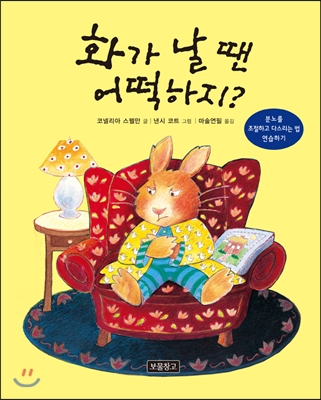
What do you do when you get angry?
 |
Description
Book Introduction
"What Should I Do When I Get Angry?" is a picture book that helps readers understand the nature of the emotion called "anger," and further presents specific, practical and realistic methods for calming down their anger.
The book's ability to objectively view the seemingly vague emotion of "anger" from a perspective that is accessible to children is a strength that is not easily found in other picture books.
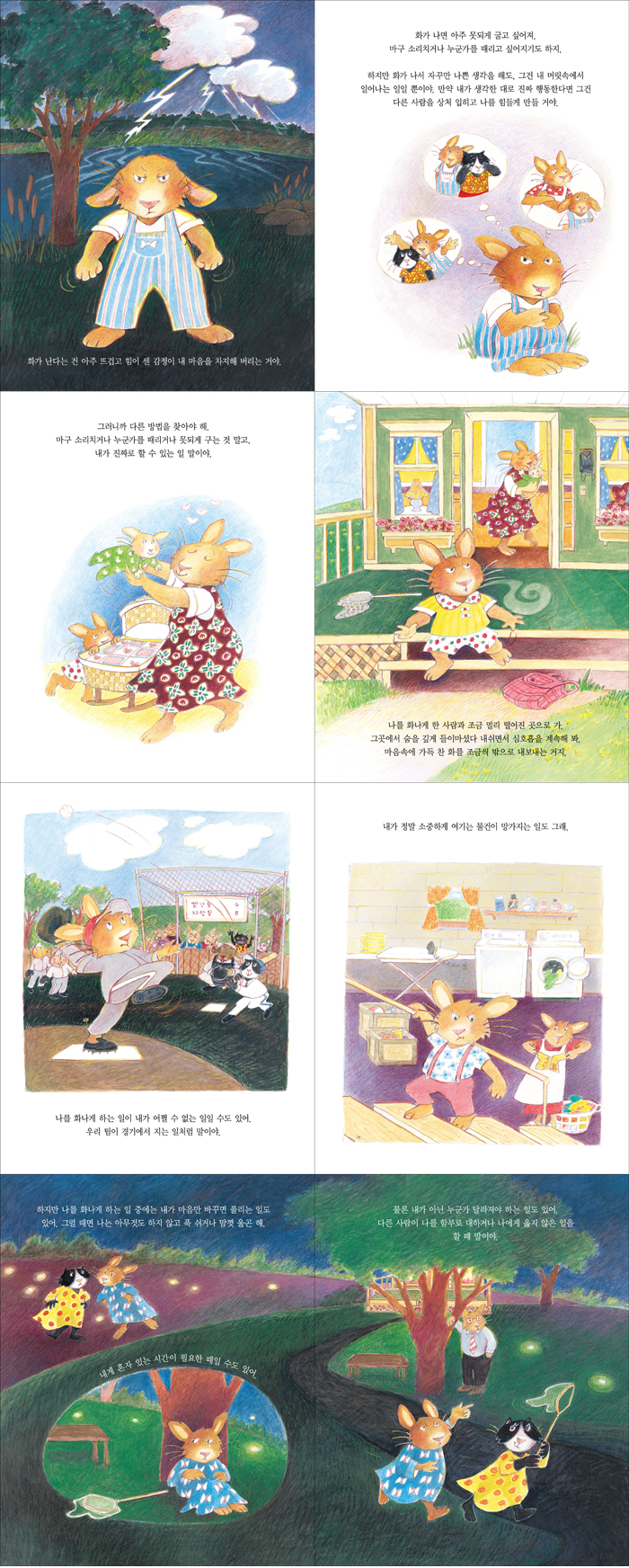
It also provides examples of seemingly small things that children can try right away, such as getting away from someone who upsets them, taking deep breaths, going for a run, or focusing on a favorite hobby.
By reading together with your child, looking at examples that serve as good guides, and talking honestly about your own real-life experiences, you can discover your child's own "anger-calming method."
The book's ability to objectively view the seemingly vague emotion of "anger" from a perspective that is accessible to children is a strength that is not easily found in other picture books.
It also provides examples of seemingly small things that children can try right away, such as getting away from someone who upsets them, taking deep breaths, going for a run, or focusing on a favorite hobby.
By reading together with your child, looking at examples that serve as good guides, and talking honestly about your own real-life experiences, you can discover your child's own "anger-calming method."
- You can preview some of the book's contents.
Preview
Detailed image
Publisher's Review
To parents who are confused by their child's anger
Cornelia Spellman, author of the picture book "What Do I Do When I'm Angry?", is a social worker who has counseled children and families before becoming a children's book author.
The author, who has been communicating with children for a long time, wants to propose a direct and practical solution, just like in the sexual violence prevention guidebook, “I Protect My Body,” the first book in the [Character Education Treasure Chest].
Spellman advises making a clear distinction between the "emotion" itself, which arises spontaneously in the mind, and the "actions that follow from that emotion."
Everyone has moments when they get angry.
This does not mean that we deny the existence of all negative emotions and thoughts that arise naturally in our minds.
It is dangerous to tell a child not to get angry unconditionally and to say that expressing anger is strange or bad.
Denying, hiding, and suppressing emotions that have already arisen naturally in your heart is a temporary expedient and can lead to worse side effects later on.
"What to do when you get angry" talks about how to dismiss the negative, or so-called "bad" thoughts that come with anger by saying, "That's just something going on in my head."
Controlling your emotions to keep those negative thoughts from turning into action isn't easy, even for adults, but as with all character education, nothing is more important than the first steps a child takes.
Parents have the greatest influence on a child's emotions and ability to regulate them.
Children not only feel joy and sorrow greatly depending on their parents' actions, but they also tend to imitate how they express and deal with their emotions.
In that sense, this book conveys 'a letter to parents' rather than simply the author's words.
Here, the author urges parents to provide ample praise and encouragement when their children succeed in regulating their emotions on their own, and above all, to set an example for their children.
If you've hurt someone because of your feelings, try to make amends and do better next time, so we can "properly convey to our children what our advice means."
By fully conveying the significance of picture books in this way, parents can learn how to utilize them most effectively.
If there were more wise parents who didn't just say, "Don't be so angry!" and properly showed our children, as the author said, "how valuable it is to resolve conflicts without harming others," wouldn't the world become a little more peaceful?
Cornelia Spellman, author of the picture book "What Do I Do When I'm Angry?", is a social worker who has counseled children and families before becoming a children's book author.
The author, who has been communicating with children for a long time, wants to propose a direct and practical solution, just like in the sexual violence prevention guidebook, “I Protect My Body,” the first book in the [Character Education Treasure Chest].
Spellman advises making a clear distinction between the "emotion" itself, which arises spontaneously in the mind, and the "actions that follow from that emotion."
Everyone has moments when they get angry.
This does not mean that we deny the existence of all negative emotions and thoughts that arise naturally in our minds.
It is dangerous to tell a child not to get angry unconditionally and to say that expressing anger is strange or bad.
Denying, hiding, and suppressing emotions that have already arisen naturally in your heart is a temporary expedient and can lead to worse side effects later on.
"What to do when you get angry" talks about how to dismiss the negative, or so-called "bad" thoughts that come with anger by saying, "That's just something going on in my head."
Controlling your emotions to keep those negative thoughts from turning into action isn't easy, even for adults, but as with all character education, nothing is more important than the first steps a child takes.
Parents have the greatest influence on a child's emotions and ability to regulate them.
Children not only feel joy and sorrow greatly depending on their parents' actions, but they also tend to imitate how they express and deal with their emotions.
In that sense, this book conveys 'a letter to parents' rather than simply the author's words.
Here, the author urges parents to provide ample praise and encouragement when their children succeed in regulating their emotions on their own, and above all, to set an example for their children.
If you've hurt someone because of your feelings, try to make amends and do better next time, so we can "properly convey to our children what our advice means."
By fully conveying the significance of picture books in this way, parents can learn how to utilize them most effectively.
If there were more wise parents who didn't just say, "Don't be so angry!" and properly showed our children, as the author said, "how valuable it is to resolve conflicts without harming others," wouldn't the world become a little more peaceful?
GOODS SPECIFICS
- Date of issue: December 30, 2015
- Format: Hardcover book binding method guide
- Page count, weight, size: 24 pages | 296g | 203*253*15mm
- ISBN13: 9788961705226
- ISBN10: 8961705229
You may also like
카테고리
korean


korean

![GQ KOREA Mark (Monthly): December [2025]](http://librairie.coreenne.fr/cdn/shop/files/8ef265dbbfbf186523ed75ba7319009d.jpg?v=1765340328&width=3840)


