

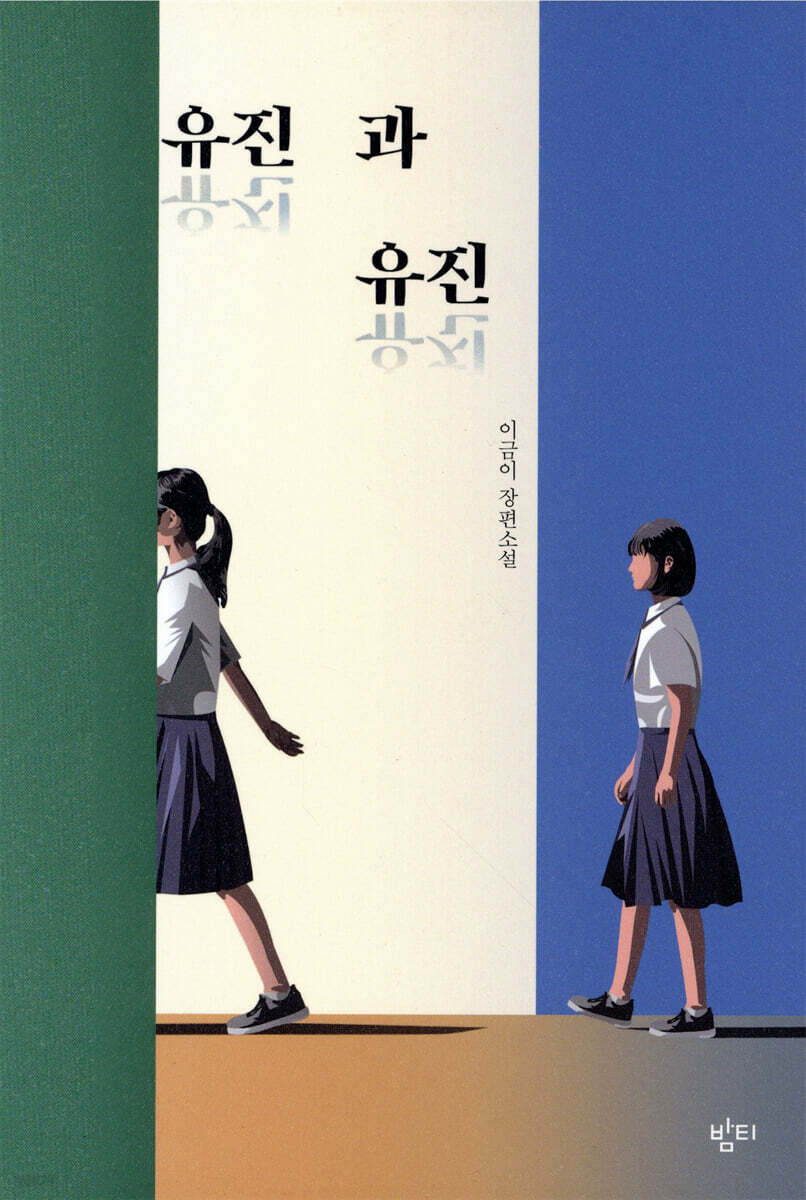
Eugene and Eugene
 |
Description
Book Introduction
Why “It’s Not Your Fault” Still Matters - 16 years after its publication, it is considered the starting point and representative work of Korean youth literature. To the youth who still have their ‘wings built from wounds’ broken, A new face, a sense of the times, and the unwavering empathy and comfort it delivers. A revised edition of "Eugene and Eugene," which has served as a driving force in Korean youth literature for the past 16 years, bringing laughter and tears to hundreds of thousands of readers, has been released. 『Eugene and Eugene』 is a full-length novel by author Lee Geum-i, published in 2004, which was the birth year of Korean youth literature, and was intended to be a full-fledged youth novel. This work, which is the first novel to capture the 'here and now' of our youth through their perspectives and voices, has steadily received love from all generations, including not only youth but also children and adults, and has established itself as a 'legendary steady seller.' "Eugene and Eugene" has garnered significant attention not only because it is the first youth novel and representative work of author Lee Geum, who is considered one of the greatest children's and young adult writers of this era, but also because it confronts the social issue of child sexual abuse and the everyday violence and wounds experienced by young people. But in today's world, where victims of sexual violence are expected to be victims themselves, this work remains a literary testament to the importance of the recognition and language of "it's not your fault." It is also a sympathetic encouragement that helps young people, who often have their ‘wings built from wounds’ broken, to spread their wings. I once again recommend this classic, refined with a fresh face and a contemporary sensibility, to everyone, including young people. |
- You can preview some of the book's contents.
Preview
index
Pretend not to know me
He keeps saying he knows me
Our Spring
My life is like a tightrope walk, where one mistake could send me crashing down.
The blue new leaves that sprout where the flowers have withered are the tears of the flowers.
Child in puzzle board
I want to leave home
I want to smash my head
As you live
What happened?
What's happening to that kid?
Nothing happened to you
That kid from a strange place
Icarus of the Underground
It's not my fault
Where the train goes
Another me
Icarus of the Sea
Reading the work (Borin)
Author's Note
He keeps saying he knows me
Our Spring
My life is like a tightrope walk, where one mistake could send me crashing down.
The blue new leaves that sprout where the flowers have withered are the tears of the flowers.
Child in puzzle board
I want to leave home
I want to smash my head
As you live
What happened?
What's happening to that kid?
Nothing happened to you
That kid from a strange place
Icarus of the Underground
It's not my fault
Where the train goes
Another me
Icarus of the Sea
Reading the work (Borin)
Author's Note
Into the book
The hallways on the first day of the new school year smell like the dust that has been trapped inside all summer.
---From the "first sentence"
“Hey, you’re not that little Eugene?” The kid looked dumbfounded, as if I was pretending not to know.
Seeing her so confident, I wonder if there's something I'm missing. I should ask my mom about the neighborhood and kindergarten she mentioned.
--- p.22
I had to tell that story to my mom and dad again that night.
My mom burst into tears and hugged me, and my dad banged his fist on the wall.
At that time, my feelings were… …, sad, scary, and sweet at the same time.
When I thought my younger sibling had taken all of my parents' love and attention away, it was such a happy feeling to be held in my mother's arms and hear her confession of love mixed with tears.
--- p.75
Although I've only lived for a little over twenty years, I feel like life doesn't have anything to do with anyone.
okay.
I don't know who started it, but in the end, it is you who makes yourself.
I think it's up to you whether you turn the wounds and pain you receive in life into medals for your life or just scars.
--- p.200
Little Yujin, who heard what Geonwoo's mom said, held my hand tightly.
His hand was trembling.
It felt like a deeper comfort than when Sora hugged her, even more than when her mother was angry.
This child seems like another me.
I found Little Eugene's hand and held it.
When I felt that tiny, soft hand that fit perfectly in my hand, I thought of the child as a small bird with a broken wing.
--- p.248
Icarus was seen rising again.
He was getting ready to fly again.
Knowing that his wings were made from wounds, I prayed with all my heart that he would fly.
Even if he falls again, he will fly high and high.
---From the "first sentence"
“Hey, you’re not that little Eugene?” The kid looked dumbfounded, as if I was pretending not to know.
Seeing her so confident, I wonder if there's something I'm missing. I should ask my mom about the neighborhood and kindergarten she mentioned.
--- p.22
I had to tell that story to my mom and dad again that night.
My mom burst into tears and hugged me, and my dad banged his fist on the wall.
At that time, my feelings were… …, sad, scary, and sweet at the same time.
When I thought my younger sibling had taken all of my parents' love and attention away, it was such a happy feeling to be held in my mother's arms and hear her confession of love mixed with tears.
--- p.75
Although I've only lived for a little over twenty years, I feel like life doesn't have anything to do with anyone.
okay.
I don't know who started it, but in the end, it is you who makes yourself.
I think it's up to you whether you turn the wounds and pain you receive in life into medals for your life or just scars.
--- p.200
Little Yujin, who heard what Geonwoo's mom said, held my hand tightly.
His hand was trembling.
It felt like a deeper comfort than when Sora hugged her, even more than when her mother was angry.
This child seems like another me.
I found Little Eugene's hand and held it.
When I felt that tiny, soft hand that fit perfectly in my hand, I thought of the child as a small bird with a broken wing.
--- p.248
Icarus was seen rising again.
He was getting ready to fly again.
Knowing that his wings were made from wounds, I prayed with all my heart that he would fly.
Even if he falls again, he will fly high and high.
--- p.287~288
Publisher's Review
A pioneer of Korean youth literature and a timeless masterpiece
“Eugene and Eugene” was first published in 2004, before the concept of “youth literature” was even established in Korea.
Before, for a long time, only Western classics, masterpieces, or our modern and contemporary novels were available to young people.
With the publication of this novel, young people were finally able to read and respond to a work that represented and vividly depicted their own hearts, circumstances, desires, pain, dreams, language, and lives.
The pioneering significance of this novel, which opened the floodgates for youth literature by telling the story of youth 'here and now,' is by no means insignificant.
Furthermore, this work has shone not only as a leader but also as a representative one.
It has met hundreds of thousands of readers across time and generations and has been loved by readers of all ages.
Readers across generations have responded to this work's unique insight into the wounds and interrelationships of children, adolescents, and adults.
This work has thus established itself as a representative work of Korean youth literature, and author Lee Geum-i, who has been active for nearly 40 years, is recognized as the greatest storyteller of this era, encompassing all of Korean children's and youth literature.
Accordingly, Lee Geum-i has been officially nominated as the 2020 Korean candidate for the Hans Christian Andersen Award, the world's most prestigious children's and young adult literature award that evaluates the overall achievements of an author.
A problematic work that painfully confronts child sexual abuse and the wounds of adolescence.
This work, which deals with the problematic issue of child sexual abuse, received explosive attention immediately after its publication.
This is because it was a heavy social issue and an unprecedented subject matter in the domestic children’s and youth literature world.
The two main characters, Eugene and Doo, are victims of sexual violence at the same kindergarten.
After that, they each lived their own lives and met again when they were 15 years old.
Two Eugenes who went through the same thing but lived very different lives due to their parents' different responses.
Their story unfolds captivatingly as they confront lost memories, uncovered wounds, and unexpected aftereffects.
The painful truths of the two Eugenes are gradually revealed through mysterious narrative devices and dense psychological descriptions.
Moreover, this work intersects specific events focused on within the diverse network of relationships between characters and the broader life as a whole, and very persuasively portrays deep insights into what "wounds" are for children, adolescents, and adults, how they arise, and how to deal with them.
Furthermore, although the material is heavy, it is not portrayed as only dark. By closely following the lively daily lives of teenagers and humorously depicting their thoughts and language, it expands the story into a more universal one by depicting how the violence and wounds that permeate their daily lives shake up their lives.
As Eugene and Eugene recognize each other as “another me,” and pledge to fly high with “wings made from wounds,” even if they fall, the reader is left with a hopeful gaze that is “sad, scary, and yet sweet.”
“It’s not your fault,” and an intimate story the author has long kept hidden.
Although it has received consistent love from readers for 16 years since its publication, the author says that preparing the revised edition is not always joyful.
Sexual crimes against children are evolving and increasing day by day, and the general reality of youth cannot be said to have improved.
Secondary harm and violence, which demand victimhood from sexual crime victims or turn victims into perpetrators, are also rampant.
In the midst of all this, the most important perception and language is still “it’s not your fault.”
In a society where such simple words are difficult to utter, this work serves as literary evidence that the phrase “It’s not your fault” is still sorely needed, and it serves as a reason for revision and rereading.
In addition, there is one more reason for publishing this revised edition.
This is contained in the “Author’s Note” included in the revised edition, where the author mentions the real reason for writing this work and the motivation behind using child sexual abuse as the subject matter.
As he revealed that he was revealing “a story that had not been revealed for a long time,” I recommend that you read the book to find out how the author’s intimate confession connects with the theme of this work.
Today's classics, in tune with changing human rights awareness and gender sensitivity.
This work is the first book in the newly launched 'Lee Geum-i Youth Literature' series.
“This is a youth literature series by author Lee Geum-i that examines the ‘here and now’ of youth on the brink, resonates with their hearts entangled with dreams and wounds, and cheers for a bright future.” This series is a reorganization and revision of the youth literature works the author has published so far.
This revision and serialization is not simply a matter of changing the book's clothes.
As times change, human rights awareness and adult sensitivity improve and standards rise, and this is a task of imbuing the changing sense of the times.
The revised edition of 『Eugene and Eugene』 also took pains to carefully review and correct expressions that did not meet the standards.
Additionally, we have significantly revised the sentences to make them easier and more comfortable to read without changing the content, and have made some improvements to the detailed settings and descriptions to enhance plausibility and make them more natural.
By doing this, we have made this work not just another old, famous work with an outdated sense of the times, but a classic that is truly reborn day by day.
“Eugene and Eugene” was first published in 2004, before the concept of “youth literature” was even established in Korea.
Before, for a long time, only Western classics, masterpieces, or our modern and contemporary novels were available to young people.
With the publication of this novel, young people were finally able to read and respond to a work that represented and vividly depicted their own hearts, circumstances, desires, pain, dreams, language, and lives.
The pioneering significance of this novel, which opened the floodgates for youth literature by telling the story of youth 'here and now,' is by no means insignificant.
Furthermore, this work has shone not only as a leader but also as a representative one.
It has met hundreds of thousands of readers across time and generations and has been loved by readers of all ages.
Readers across generations have responded to this work's unique insight into the wounds and interrelationships of children, adolescents, and adults.
This work has thus established itself as a representative work of Korean youth literature, and author Lee Geum-i, who has been active for nearly 40 years, is recognized as the greatest storyteller of this era, encompassing all of Korean children's and youth literature.
Accordingly, Lee Geum-i has been officially nominated as the 2020 Korean candidate for the Hans Christian Andersen Award, the world's most prestigious children's and young adult literature award that evaluates the overall achievements of an author.
A problematic work that painfully confronts child sexual abuse and the wounds of adolescence.
This work, which deals with the problematic issue of child sexual abuse, received explosive attention immediately after its publication.
This is because it was a heavy social issue and an unprecedented subject matter in the domestic children’s and youth literature world.
The two main characters, Eugene and Doo, are victims of sexual violence at the same kindergarten.
After that, they each lived their own lives and met again when they were 15 years old.
Two Eugenes who went through the same thing but lived very different lives due to their parents' different responses.
Their story unfolds captivatingly as they confront lost memories, uncovered wounds, and unexpected aftereffects.
The painful truths of the two Eugenes are gradually revealed through mysterious narrative devices and dense psychological descriptions.
Moreover, this work intersects specific events focused on within the diverse network of relationships between characters and the broader life as a whole, and very persuasively portrays deep insights into what "wounds" are for children, adolescents, and adults, how they arise, and how to deal with them.
Furthermore, although the material is heavy, it is not portrayed as only dark. By closely following the lively daily lives of teenagers and humorously depicting their thoughts and language, it expands the story into a more universal one by depicting how the violence and wounds that permeate their daily lives shake up their lives.
As Eugene and Eugene recognize each other as “another me,” and pledge to fly high with “wings made from wounds,” even if they fall, the reader is left with a hopeful gaze that is “sad, scary, and yet sweet.”
“It’s not your fault,” and an intimate story the author has long kept hidden.
Although it has received consistent love from readers for 16 years since its publication, the author says that preparing the revised edition is not always joyful.
Sexual crimes against children are evolving and increasing day by day, and the general reality of youth cannot be said to have improved.
Secondary harm and violence, which demand victimhood from sexual crime victims or turn victims into perpetrators, are also rampant.
In the midst of all this, the most important perception and language is still “it’s not your fault.”
In a society where such simple words are difficult to utter, this work serves as literary evidence that the phrase “It’s not your fault” is still sorely needed, and it serves as a reason for revision and rereading.
In addition, there is one more reason for publishing this revised edition.
This is contained in the “Author’s Note” included in the revised edition, where the author mentions the real reason for writing this work and the motivation behind using child sexual abuse as the subject matter.
As he revealed that he was revealing “a story that had not been revealed for a long time,” I recommend that you read the book to find out how the author’s intimate confession connects with the theme of this work.
Today's classics, in tune with changing human rights awareness and gender sensitivity.
This work is the first book in the newly launched 'Lee Geum-i Youth Literature' series.
“This is a youth literature series by author Lee Geum-i that examines the ‘here and now’ of youth on the brink, resonates with their hearts entangled with dreams and wounds, and cheers for a bright future.” This series is a reorganization and revision of the youth literature works the author has published so far.
This revision and serialization is not simply a matter of changing the book's clothes.
As times change, human rights awareness and adult sensitivity improve and standards rise, and this is a task of imbuing the changing sense of the times.
The revised edition of 『Eugene and Eugene』 also took pains to carefully review and correct expressions that did not meet the standards.
Additionally, we have significantly revised the sentences to make them easier and more comfortable to read without changing the content, and have made some improvements to the detailed settings and descriptions to enhance plausibility and make them more natural.
By doing this, we have made this work not just another old, famous work with an outdated sense of the times, but a classic that is truly reborn day by day.
GOODS SPECIFICS
- Publication date: November 5, 2020
- Page count, weight, size: 304 pages | 356g | 135*200*30mm
- ISBN13: 9791197120541
- ISBN10: 1197120548
You may also like
카테고리
korean


korean

![ELLE 엘르 스페셜 에디션 A형 : 12월 [2025]](http://librairie.coreenne.fr/cdn/shop/files/b8e27a3de6c9538896439686c6b0e8fb.jpg?v=1766436872&width=3840)


